There is a category of wine drinker who passes over the big, concentrated Napa Cabernets and goes straight for the Margaux. They are not chasing power. They are chasing something harder to define — finesse, silk on the palate, the suggestion of depth rather than the announcement of it. In pu-erh tea, those drinkers end up in Yiwu (易武).
Yiwu sheng pu-erh occupies a singular position in the pu-erh world. It is not the loudest or the most immediately impressive. But it is arguably the most refined, the most historically significant, and — when sourced from genuine ancient-tree material and aged correctly — among the most complex fermented teas produced anywhere on earth. Understanding Yiwu means understanding what pu-erh can aspire to be.
Geography & Location
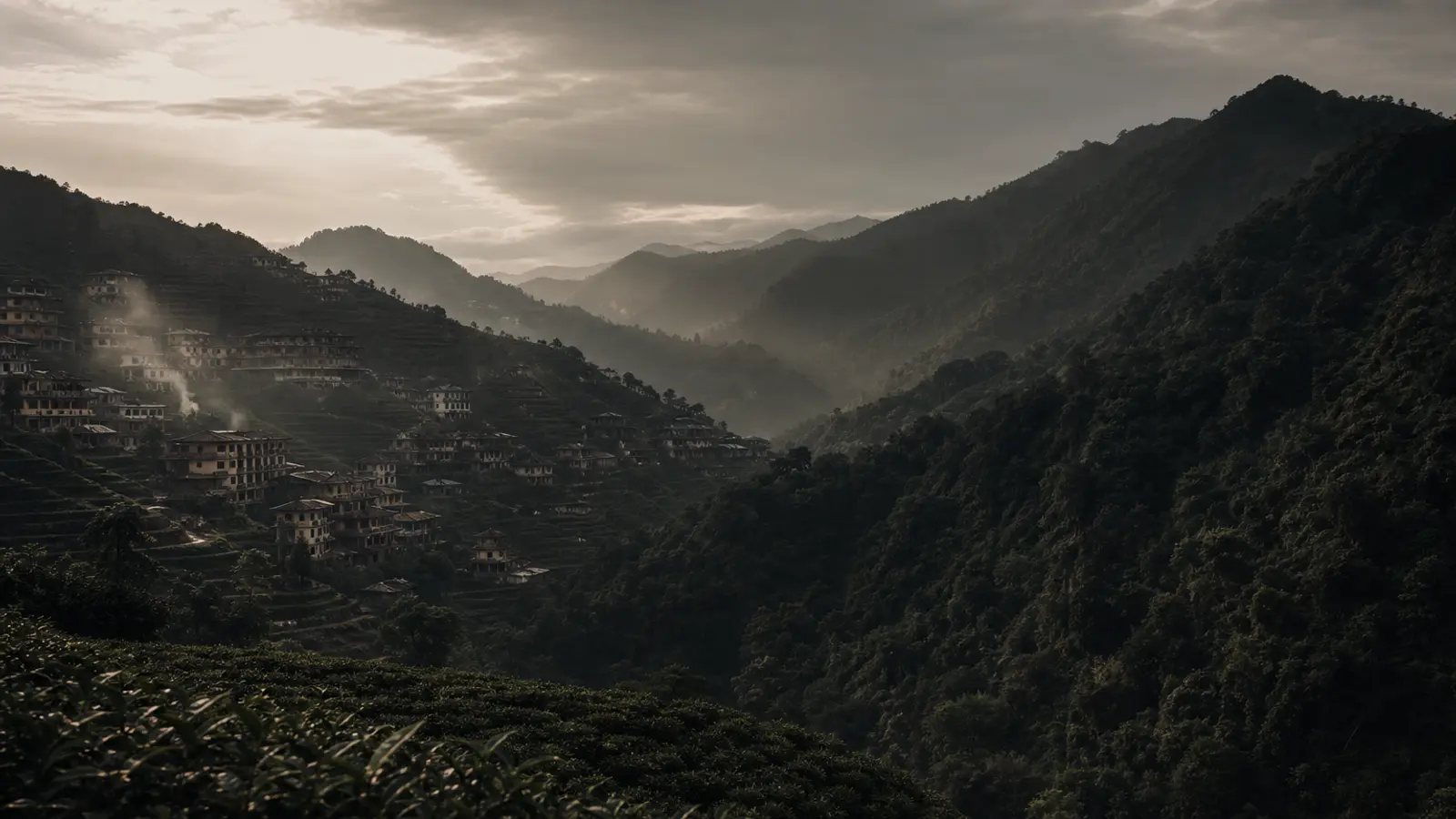
Yiwu sits in the southeastern corner of Xishuangbanna (西双版纳) prefecture, Yunnan province, China, at approximately 21.85°N, 101.56°E. The town itself is a modest place — a few thousand residents, old wooden buildings, the kind of main street you could walk end to end in ten minutes. But the land surrounding it, rolling through hills and river valleys toward the Lao border, contains some of the most consequential tea-growing terrain in the world.
The region covers a diffuse network of villages and mountain areas rather than a single bounded zone. Key micro-regions — Mahei (麻黑), Guafengzhai (刮风寨), Wangong (弯弓), Tongqinghe (同庆河), and the adjacent area of Yibang (倚邦) — each occupy their own geographic pocket, separated by ridgelines, river valleys, and elevation shifts that translate directly into distinct cup profiles. This fragmentation is essential to understand. “Yiwu” is not one tea; it is a family of teas sharing a regional identity the way Burgundy contains both Chambolle-Musigny and Gevrey-Chambertin.
The Ancient Tea Horse Road (茶马古道, Chǎ Mǎ Gǔ Dào) began in Yiwu. Caravans loaded with compressed pu-erh cakes left this town for Tibet, Southeast Asia, and beyond for centuries. That road was not metaphorical infrastructure — it was a literal track through the mountains, and its starting point explains why Yiwu became the commercial and cultural center of pu-erh production during the Qing Dynasty. History embedded itself in this landscape, and you pay for that history every time you buy a Yiwu cake today.
Climate & Elevation
Elevation across the Yiwu growing zone ranges from approximately 1,200m to 1,800m, with most premium old-growth gardens sitting between 1,400m and 1,700m. This is a sweet spot for Camellia sinensis var. assamica — high enough for cool nights that slow leaf development and concentrate aromatic compounds, low enough for the tropical warmth and moisture that the assamica cultivar needs.
The climate is a tropical monsoon pattern with two sharply defined seasons. The wet season runs from May through October, delivering the bulk of annual rainfall — recorded at 1,400–1,600mm per year. The dry season from November through April is cooler and drier, with morning mists lingering in the valleys well into mid-morning. Average annual temperature sits at 17–20°C, though individual micro-climates vary considerably by slope aspect and canopy cover.
Spring harvest — typically March through April, before the rains fully arrive — produces Yiwu’s most prized material. The leaves that emerge after the dry season’s dormancy concentrate sugars and aromatic compounds that define the honeyed, floral character associated with the region. Autumn harvest (September–October) produces a second flush that is softer and less complex by most accounts, often used for blends or sold at lower premiums.
The combination of elevation-induced diurnal temperature variation and monsoon moisture creates conditions that researchers link to high concentrations of aromatic terpenoids and catechins in the leaf — the compounds that underpin both the fresh sweetness of young Yiwu sheng and its aging potential over decades.
Soil & Terroir
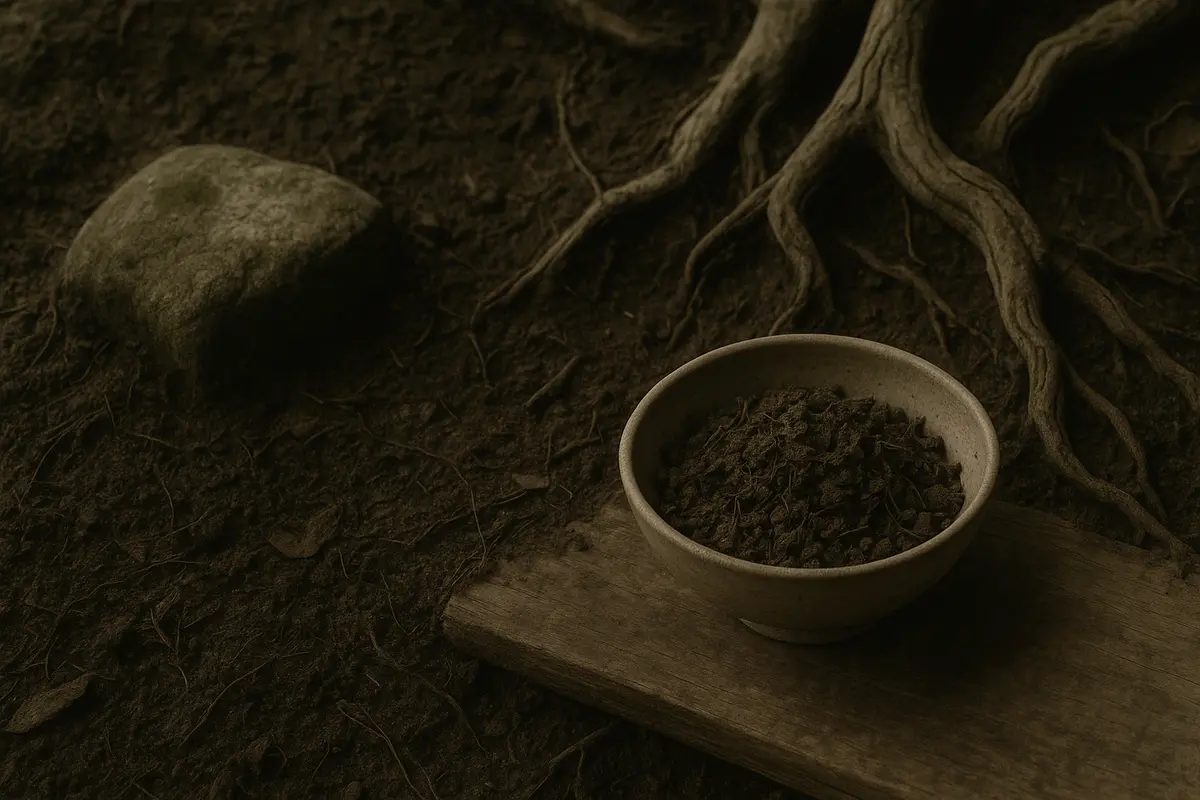
Yiwu’s soils are primarily laterite red earth (红壤, hóng rǎng) mixed with sandstone weathering products. This combination produces several characteristics relevant to tea quality. The laterite fraction drains quickly, preventing root rot and forcing roots to extend deep in search of moisture — a pattern associated with old-growth trees whose root systems access mineral layers unavailable to shallow-planted plantation bushes. The sandstone fraction contributes mineral complexity without excessive clay retention.
Soil pH across the main growing areas falls between 4.5 and 5.5 — moderately to strongly acidic, which is standard for high-quality tea terroir. This acidity influences the availability of iron, aluminum, and trace minerals to the plant, contributing to what tasters describe as a mineral undercurrent beneath Yiwu’s dominant honey and floral notes.
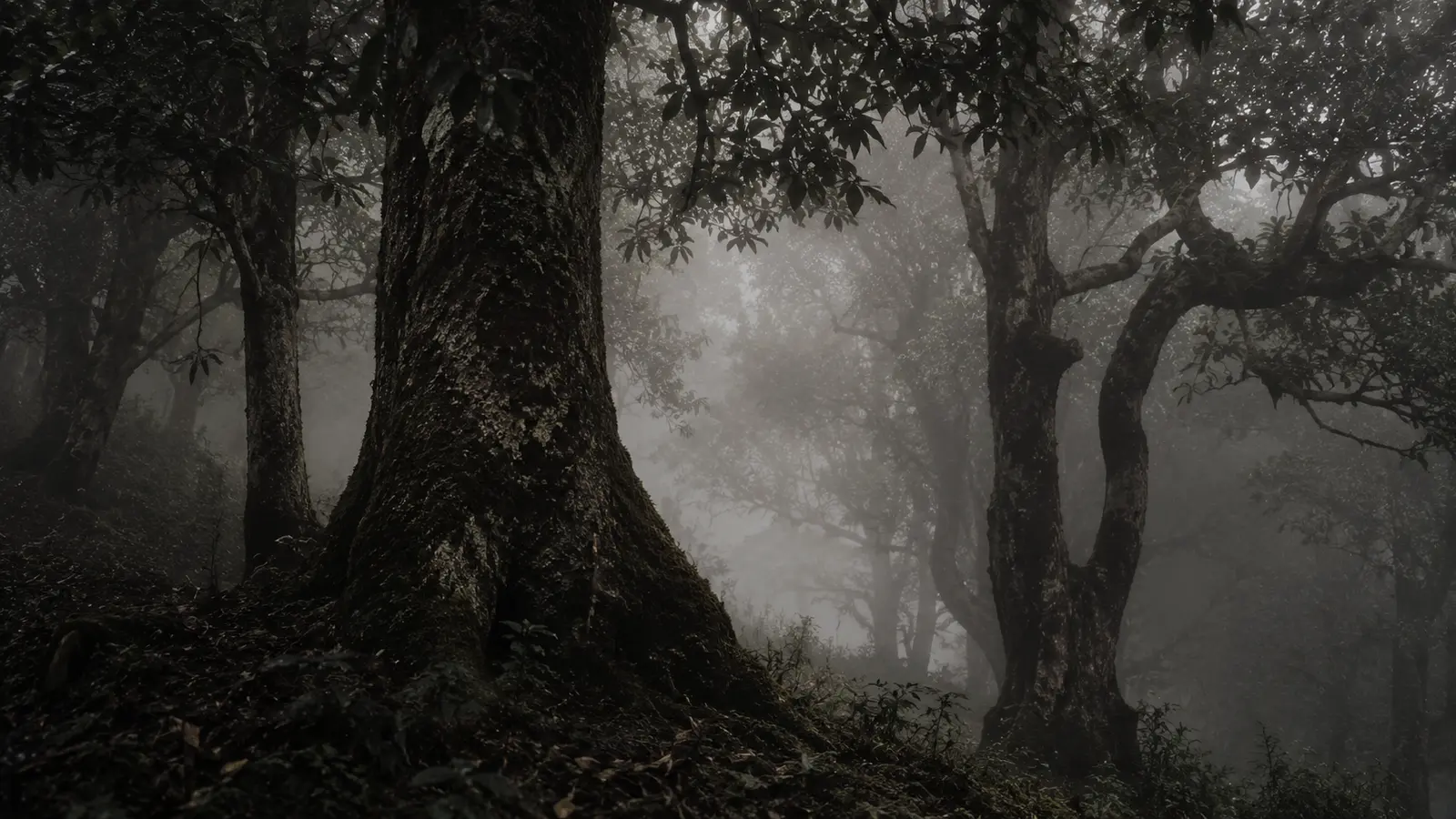
Canopy cover matters here in ways that differ from many other pu-erh origins. Traditional Yiwu old-growth gardens are not cleared monocultures. They are integrated into mixed forest — tea trees growing alongside fruit trees, timber species, and understory plants. This agroforestry model reduces UV stress on the leaf, modulates temperature extremes, and likely contributes to the complexity of volatile compounds through shared mycorrhizal networks and microclimatic variation within individual gardens. The contrast with bare-soil plantation cultivation, where light exposure and soil chemistry are radically different, helps explain why material from genuine old-growth settings tastes unlike commercial-grade product from the same nominal region.
Key Cultivars & Tea Types
The dominant cultivar throughout greater Yiwu is the large-leaf assamica type (大叶种, dàyèzhǒng) common across Xishuangbanna. Within Yiwu proper, most old-growth trees are classified as Yiwu Dayezhong — a local population of large-leaf trees with high catechin content, relatively high amino acid levels, and the genetic profile associated with the honeyed sweetness the region produces.
The notable exception is Yibang (倚邦), technically adjacent to Yiwu and sometimes grouped with it. Yibang contains a significant proportion of small-leaf cultivar trees (小叶种, xiǎoyèzhǒng), which produce a lighter, more delicate style with higher floral aromatics and lower body weight than standard Yiwu. Yibang pu-erh is its own subject, but collectors who love the elegant end of the Yiwu spectrum often find Yibang compelling — it takes the refinement theme and pushes it further still.
Tea produced in Yiwu is almost exclusively sheng pu-erh (生普洱) — the uncooked, naturally fermented type that undergoes gradual transformation over years and decades of storage. Shou pu-erh (熟普洱), the wet-piled accelerated fermentation style, is rarely produced from Yiwu material of any distinction. The economics alone argue against it: you do not wet-pile gushu leaf worth hundreds of dollars per kilogram.
Processing Traditions
Yiwu follows the standard sheng pu-erh processing sequence: withering, sha qing (殺青, kill-green), rolling, and sun-drying to produce maocha (毛茶, raw loose-leaf), which is then steamed and compressed into cakes, bricks, or other shapes before aging.
What distinguishes Yiwu processing is its traditional approach to kill-green. Where some origins — particularly those in Bulang mountain — apply heavier wok heat to drive off volatile aromatics and produce a more robust, heat-processed character, Yiwu’s traditional practice uses gentler temperatures and shorter wok contact. Multiple producers and researchers report this preference consistently. The practical effect is that more of the floral and honey-forward volatile compounds survive into the finished cake. The tea arrives at the consumer with more of its aromatic complexity intact, a quality that also means it can appear “green” and even slightly astringent in youth before storage transforms those raw edges into the complexity collectors pursue.
The withering step in Yiwu is typically brief — a few hours in ambient conditions — allowing slight moisture reduction without promoting significant oxidation before kill-green. Rolling is light to moderate, aimed at breaking cell walls enough to facilitate later aging reactions without excessive tearing of the leaf. Sun-drying is conducted outdoors on bamboo mats or elevated racks, with total drying time weather-dependent but typically one to two days in spring conditions.
Compression is traditionally done by hand or foot-press in smaller operations, producing the slightly looser compression associated with better aeration during aging. Machine-pressed cakes are more uniform but some collectors maintain that hand-pressed cakes age more evenly — though this claim is difficult to test rigorously given the other variables involved.
Characteristic Flavor Signatures
Yiwu sheng pu-erh is the most immediately approachable major pu-erh origin for drinkers new to the category. Low bitterness, minimal astringency, and a soft, almost silky mouthfeel define the entry. Where Bulang mountain teas announce themselves with bitter force and Menghai (勐海) material from many factories delivers thick, heavy texture, Yiwu asks you to lean in and listen.
The characteristic signature reads roughly as follows in a quality young Yiwu sheng:
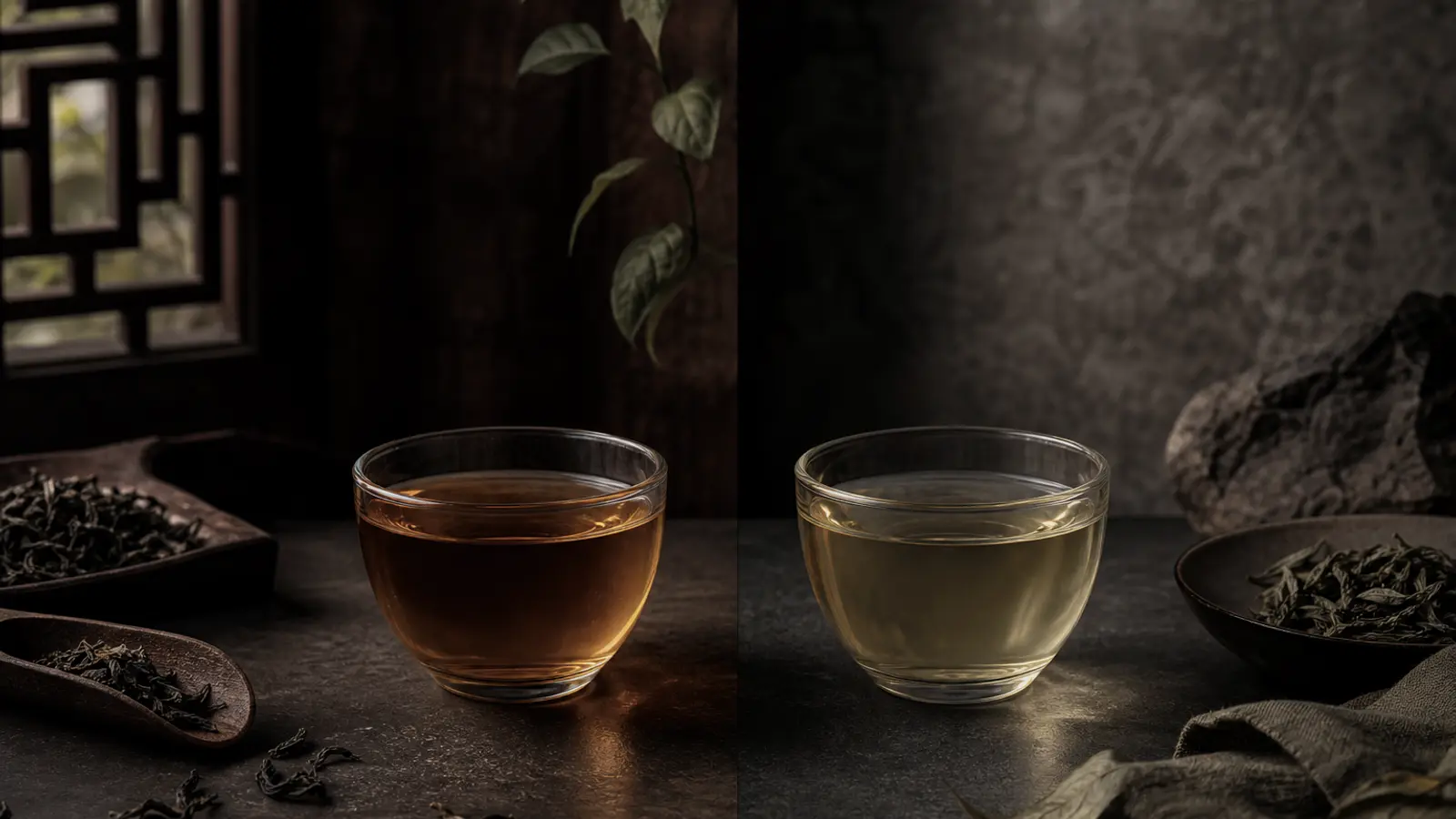
Aroma: Fresh florals — often orchid or lilac — with an underlying honey sweetness. Light stone fruit (apricot, peach). Some spring Yiwu material shows a gentle camphor note even young, which intensifies dramatically with aging.
Initial taste: Soft and sweet, low bitterness. The sweetness is not sugary — it reads more as the natural glucose and fructose complexity of a ripe fruit, layered rather than flat.
Mid-palate: Where Yiwu earns its reputation. A silky, sometimes almost oily texture coats the mouth. This is attributed in part to the high polysaccharide content of old-tree material and the specific processing that preserves structural compounds.
Huigan (回甘): The returning sweetness, felt in the throat and often ascending to the roof of the mouth, is Yiwu’s most discussed quality attribute. In genuine old-growth material, this huigan (回甘) can persist for 10–15 minutes after swallowing, cycling between sweet and faintly cooling sensations. It is the clearest marker separating quality Yiwu from imitation.
Finish: Long, clean, with floral and mineral echoes.
Across multiple steeps — Yiwu gushu brewed gongfu (功夫) style typically yields 8–12 quality infusions — the profile evolves. Early steeps emphasize florals; middle steeps deepen into honey and stone fruit; later steeps often show a mineral, almost woody character. The transitions are smooth rather than abrupt, which is part of the aesthetic appeal.
Village Flavor Differences
Mahei (麻黑): The most widely available named Yiwu village. Classic balanced expression — soft, honeyed, moderate body. Considered the standard-bearer for accessible Yiwu character. Aging potential is good, though some collectors consider it the least extreme of the main villages.
Guafengzhai (刮风寨): Wilder, more intense. Trees here are accessed by a significant trek, and the remoteness shows in the cup — more pronounced qi (氣, the physical sensations the tea produces in the body), slightly more structural complexity, a deeper mineral note beneath the honey. Considered by many serious collectors the most compelling Yiwu expression for long-term aging. Also the most counterfeited.
Wangong (弯弓): Ancient gardens, rare production, stratospheric pricing. The profile reported by multiple sources describes a particularly deep sweetness with extraordinary complexity, and what some describe as a specific “ancient forest” quality — layered, dark, and slow to reveal itself. Verification of authenticity is extremely difficult for buyers outside established trusted relationships.
Tongqinghe (同庆河): Remote and less frequently discussed, but material from here reportedly skews toward the more powerful end of the Yiwu spectrum — more body, more grip — while retaining the regional honey-sweet signature. Less counterfeited than Guafengzhai simply because fewer buyers know to ask for it.
Yibang (倚邦): Adjacent, small-leaf cultivar territory. Lighter body, higher floral aromatics, distinct from the main Yiwu style but sharing its commitment to elegance over force. Worth treating as its own sub-origin rather than a variation of Yiwu proper.
Quality Indicators & Authentication
Yiwu is a moderately to highly counterfeited origin. The premium commanded by named villages — especially Guafengzhai and Wangong — creates strong economic incentive to label lower-grade material with prestigious village names. This is not unique to Yiwu; it mirrors the appellation fraud problems seen in Burgundy and Champagne. But the scale in Yiwu is significant enough that buyers should approach without naivety.
Tree material indicators: Genuine gushu (古樹, ancient tree, also written 古树) material should show larger, more complex leaf sets with visible age characteristics. Plantation material (台地, táidì) is more uniform, smaller-leafed in relative terms, and lacks the visible variation in leaf size and color that mixed-age old-growth canopy produces. Gushu maocha should have visible older leaf alongside new growth — old trees do not produce perfectly uniform flush.
Taste markers: Plantation Yiwu is sweet and pleasant but thin. The huigan (回甘) is present but brief. Old-tree material shows a depth and persistence of sweetness that is qualitatively different — not just more intense but more layered, and the physical qi sensation (tingling in the chest, warmth spreading through the body) is more pronounced. These are subjective markers, but experienced tasters report consistent patterns.
Price as signal: If a seller offers “Guafengzhai gushu” at prices equivalent to general Yiwu plantation grade, the material is almost certainly not what it claims. Genuine single-village gushu maocha from Guafengzhai trades at $500–2,000+ per kilogram at source during peak spring harvest. The math does not allow for a $40 retail cake.
Provenance transparency: The most reliable source of genuine named-village Yiwu is direct relationships with specific producers, verified by others in the collecting community who have made the trip. Without that chain of verification, treat village claims on commercially available cakes as aspirational rather than guaranteed.
Historical Significance of Yiwu in the Pu-erh World
The weight of history here is not decoration — it directly affects how Yiwu is valued today.
During the Qing Dynasty (清朝, 1644–1912), Yiwu was the most productive and commercially important of the Six Famous Tea Mountains (六大茶山, Liù Dà Chá Shān) of Xishuangbanna. Merchants from Yunnan and further afield established trading houses in the town, pressing compressed teas for the imperial court, for Tibet, and for export along the Tea Horse Road. The most revered names in historical pu-erh — Tongqinghao (同慶號), Songpinhao (宋聘號), Fuyuanchang (福元昌) — were Yiwu enterprises. Cakes from these brands, when authenticated, sell for extraordinary sums at auction. A genuine 1920s Songpinhao cake is one of the most valuable teas in existence.
This lineage matters because it established Yiwu as the reference point for aged pu-erh quality. When collectors in Hong Kong, Taiwan, and the mainland began seriously evaluating aged pu-erh from the mid-20th century onward, the best examples they encountered were frequently Yiwu-origin. The flavor profile they came to associate with aged pu-erh excellence — camphor, aged honey, dried fruit, deep sweetness — was largely Yiwu’s profile. That association became self-reinforcing: Yiwu commanded premiums, premiums attracted attention, attention validated the premiums.
Yiwu suffered significant disruption during the 20th century. The productive old gardens declined under various pressures, and the Cultural Revolution period saw substantial deforestation and replanting with lower-grade material. The recovery of genuine old-growth Yiwu as a commercial category is largely a post-1990s phenomenon, coinciding with the broader pu-erh revival driven initially by collectors in Taiwan and Hong Kong.
Aging Trajectory and Yiwu’s Long Game
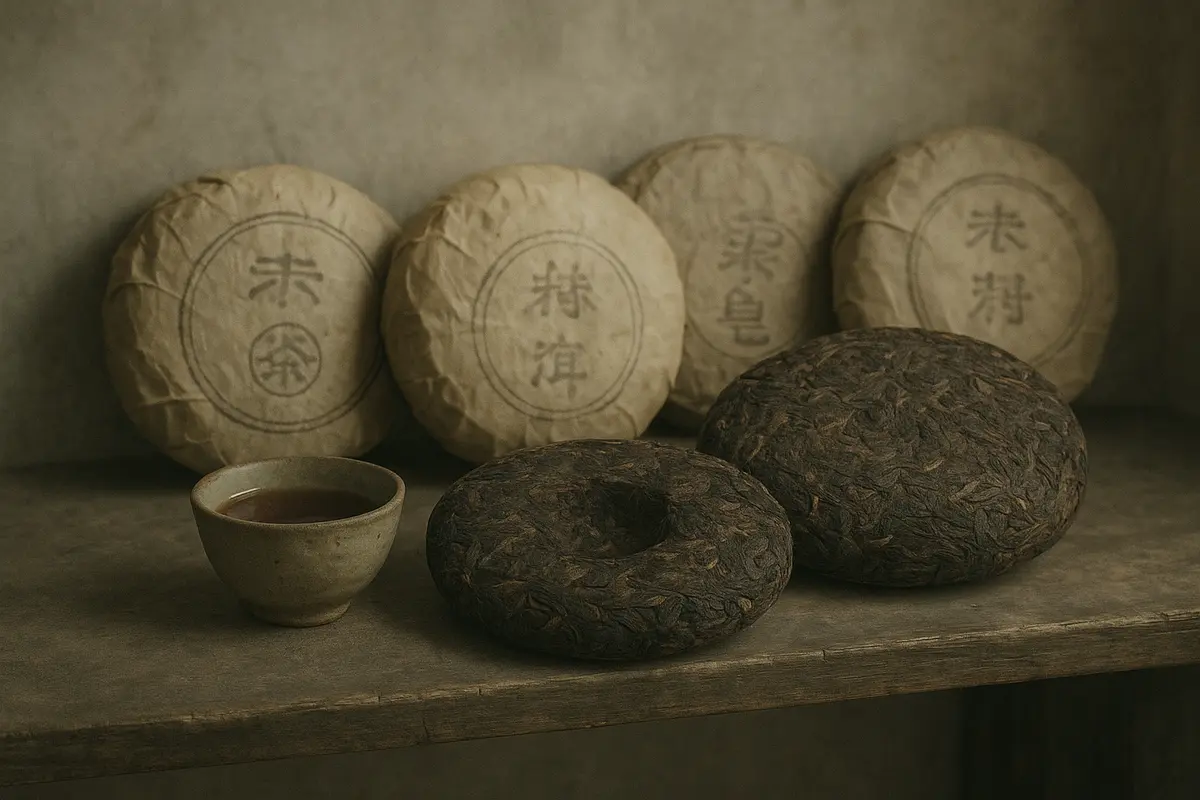
Young Yiwu sheng is often misread by first-time buyers. The soft entry, low bitterness, and gentle sweetness can read as pleasant but unserious — not the aggressive, complex experience some expect from premium pu-erh. This is the trap. Yiwu is not built for immediate gratification in the way that Laobanzhang (老班章) material announces itself with force. It is built for time.
According to multiple sources in the collecting community who have tracked Yiwu cakes across 10, 20, and 30+ year periods, the transformation is as follows: the floral, honey-forward youth gives way to deeper camphor (樟香, zhāng xiāng) notes through the 5–15 year window. Bitterness, if present in youth, integrates. Astringency softens and converts to body. By the 15–25 year mark in good storage conditions, Yiwu develops a complexity that involves dried fruit (plum, jujube), aged wood, mineral depth, and the sustained camphor-honey integration that defines what collectors call “classic Yiwu aged character.”
Proper storage conditions for this transformation are 60–75% relative humidity, 20–28°C, good airflow without desiccation, and isolation from odor sources. Both dry storage (primarily Yunnan) and traditional humid storage (historically Guangdong and Hong Kong) have been used for Yiwu. Dry-stored Yiwu aged over 20+ years tends toward cleaner, more camphor-and-honey profiles. Traditionally humid-stored Yiwu shows faster fermentation progression but can introduce earthy or woody notes that not all collectors prefer.
The aging premium on Yiwu is real and substantial. A well-stored 2003 Yiwu gushu cake worth $50–80 new might trade for $400–1,200+ today depending on storage history and reputation. This speculative dimension drives significant buying, which in turn inflates prices for new material and creates incentive for counterfeiting at every level of the supply chain.
Price Ranges
Prices below are for raw maocha (毛茶) at the source level, or equivalent retail, per 100g. Retail cake pricing varies by producer, compression, and market but follows the underlying maocha cost logic.
| Material Grade | Price Range (per 100g) | Notes |
|---|---|---|
| Plantation / Taidi (台地) | $2–5 | Machine-harvested, flat flavor, widely blended |
| Young-tree / Small-tree (小树) | $8–20 | Under 100 years, some character, limited aging upside |
| Mid-range single-tree material | $20–60 | Unverified “old tree” claims common at this level |
| Verified gushu – general Yiwu | $30–120 | Quality varies; sourcing relationship matters |
| Mahei (麻黑) gushu | $60–180 | Most accessible named village; some counterfeiting |
| Guafengzhai (刮风寨) gushu | $100–300+ | High demand, high counterfeiting risk |
| Wangong (弯弓) gushu | $150–400+ | Rare; verification extremely difficult without direct sourcing |
| Aged cakes (10–20 years, good storage) | $80–500+ per cake | Depends heavily on provenance and storage history |
| Vintage reference cakes (30+ years) | Market price; $500–$5,000+ per cake | Auction-grade material; authentication required |
Regional market prices (direct purchase in Yunnan) run 20–40% lower than international export pricing for current-harvest material. The premium reflects shipping, import costs, and the markup layers added by intermediary traders. Buyers purchasing directly in Menghai or Yiwu town will pay less per gram but face the same authentication challenges — provenance transparency is a problem at every price point without direct producer relationships.
Quality Indicators at Purchase
For buyers approaching the market without direct sourcing relationships, several practical filters apply:
-
Prioritize producer transparency over village names. A cake sold as “Yiwu spring 2024” from a producer with a documented track record is more reliable than a cake labeled “Guafengzhai ancient tree” with no verifiable backstory.
-
Taste young before committing to volume. Request samples before purchasing full cakes or larger lots. Young Yiwu gushu should show a distinctive soft entry, present but non-aggressive huigan (回甘), and a textural quality that distinguishes it from plantation-grade material even at comparable price points.
-
Be skeptical of heroic village claims at non-heroic prices. The math of production costs, transport, and vendor margins is not flexible. If Wangong gushu trades at $150–400 per 100g at origin, a retail cake selling below those figures with no explanation is almost certainly blended or mislabeled.
-
Consider the aging infrastructure you have. If you cannot store at 60–75% humidity consistently, Yiwu gushu’s aging potential is inaccessible. In that case, purchasing 10+ year aged cakes from verified storage may produce better results than gambling on young material you will store imperfectly.
-
Start with Mahei. For Yiwu beginners, Mahei (麻黑) is the most accessible entry point — widely available, reasonably authenticated at quality producers, and representative of the regional character without the price ceiling of Guafengzhai or Wangong. Understand the baseline before pursuing the extremes.
Yiwu is where pu-erh becomes an argument for patience. The young cakes ask you to trust a process you cannot fully observe, committing resources to a transformation that will unfold over years you haven’t lived yet. The historical record suggests the trust is warranted — no region has produced more revered aged pu-erh, and the flavor trajectory from gentle spring sweetness to complex camphor-honey depth is among the most extraordinary things that happens to a fermented tea. But the path requires honest sourcing, proper storage, and the willingness to leave the tea alone long enough for it to become what it is capable of becoming.
That is the Yiwu proposition. It is not for everyone. For those it suits, there is nothing quite like it.