Laobanzhang pu-erh (老班章) occupies a position in the tea world with no real parallel — not just expensive, but mythologized. The name alone moves money. It appears on wrappers from roadside stalls in Xishuangbanna and on ultra-premium pressed cakes that trade between collectors at prices that would embarrass a Grand Cru Burgundy. The problem, and it is a serious problem, is that the overwhelming majority of what is sold under this name is not genuine. Conservative industry estimates place the fake rate above 90%. My own research suggests the real figure is probably higher.
This article is not a celebration of Laobanzhang. It is an honest account of what makes the genuine article so extraordinary, why the counterfeiting economy around it is so entrenched, and what that means for anyone trying to actually acquire and drink authentic material. I have not brewed verified-authentic single-village Laobanzhang gushu (古樹, old tree) myself — the supply conditions make that genuinely difficult to guarantee. What follows is grounded in documented sources, the accounts of researchers and traders who operate at source, and direct knowledge of Bulang Mountain material that borders this village.
Geography & Location
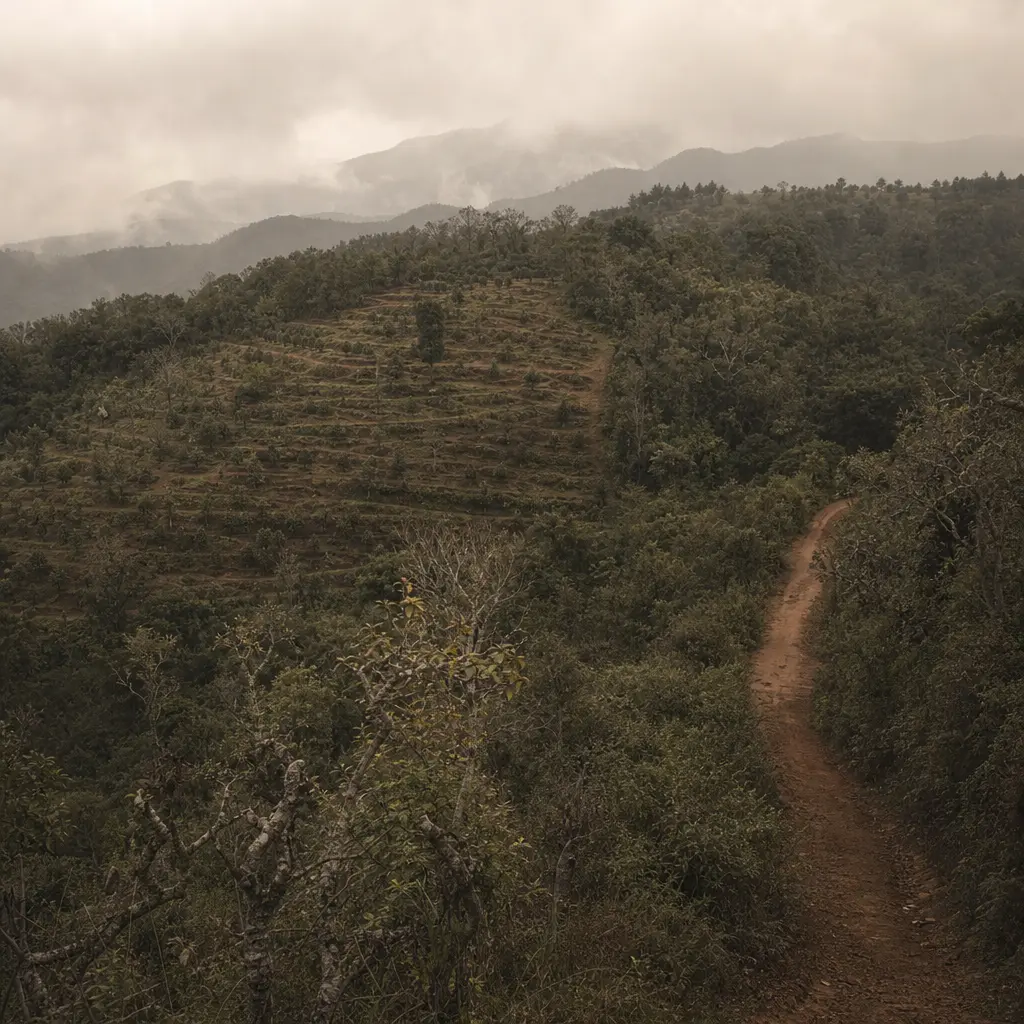
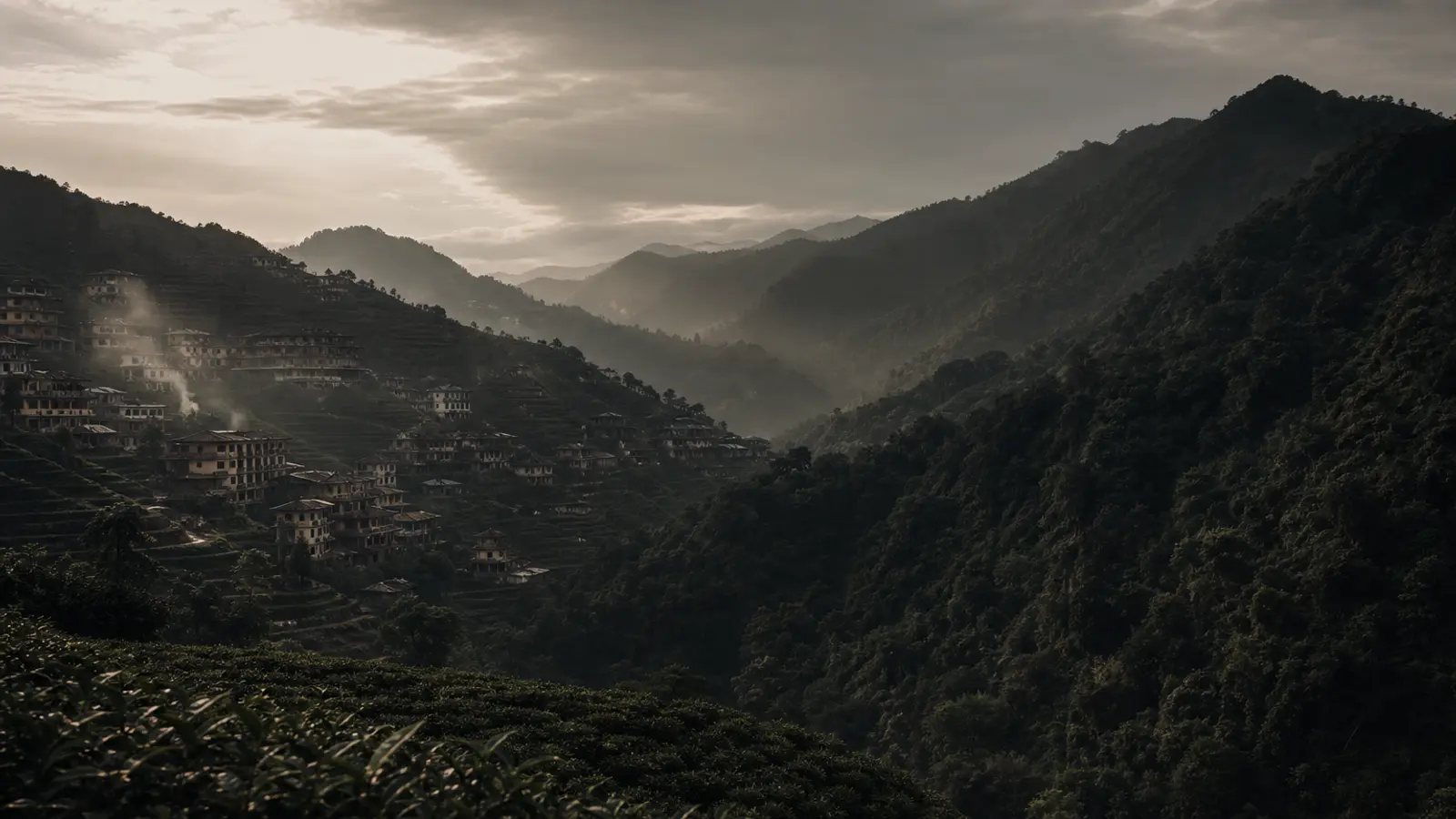
Laobanzhang (老班章) village sits at approximately 21.6°N, 100.4°E within Bulang Mountain (布朗山, Bùlǎng Shān), Menghai County (勐海縣), Xishuangbanna Dai Autonomous Prefecture (西雙版納傣族自治州), Yunnan Province. Elevation centers around 1,700 meters, with the broader garden territory ranging from roughly 1,600 to 1,800m.
The village is Hani (哈尼) ethnic minority — a detail that matters culturally and practically. The Hani have cultivated these mountains for centuries, and the specific management traditions that shaped Laobanzhang’s old trees reflect Hani agricultural knowledge rather than the standardized plantation practices that define lower-grade commercial pu-erh production.
By road, Laobanzhang is roughly 35 kilometers from Menghai town, a distance that was until recently a significant deterrent to casual visitors. The road improvements funded by tea income have changed that calculation entirely. During spring harvest season, the village now receives more outsider traffic than its population of a few hundred permanent residents would suggest possible.
Neighboring villages matter for authentication purposes. Xinbanzhang (新班章) sits close by. Banjia (班加), Naka (那卡), and Laomane (老曼峨) are all within Bulang Mountain territory. Material from these villages can be excellent on its own terms, but it is not Laobanzhang. Blending or mislabeling adjacent-village material as Laobanzhang is one of the most common forms of adulteration — both because the proximity produces some flavor similarity and because the geography provides cover for vague provenance claims.
Climate & Elevation
The climate at Laobanzhang fits the broader Bulang Mountain pattern: subtropical highland monsoon, with a pronounced wet season from May through October delivering the majority of annual rainfall (approximately 1,500–1,700mm) and a dry, cool season from November through April that includes the critical spring pre-rain harvest window.
At 1,700m, temperatures are meaningfully cooler than the valley floor. Daytime highs in the growing season run 20–28°C, with nights dropping to 10–15°C. This diurnal range — the gap between day and night temperature — concentrates flavor compounds in the leaf. Slower growth at higher elevation means each cell division accumulates more of the catechins, polyphenols, and amino acids that translate into sensory intensity.
The dry season is critical. Spring harvest (明前, míngqián, “before Qingming” and the subsequent weeks) draws on trees that have metabolized a full winter’s worth of stored energy with minimal water. The resulting leaf is dense, resinous, and rich. This is why spring Laobanzhang material commands the highest premiums and why the harvest period is so compressed — a window of perhaps four to six weeks during which conditions produce the most desirable chemistry.
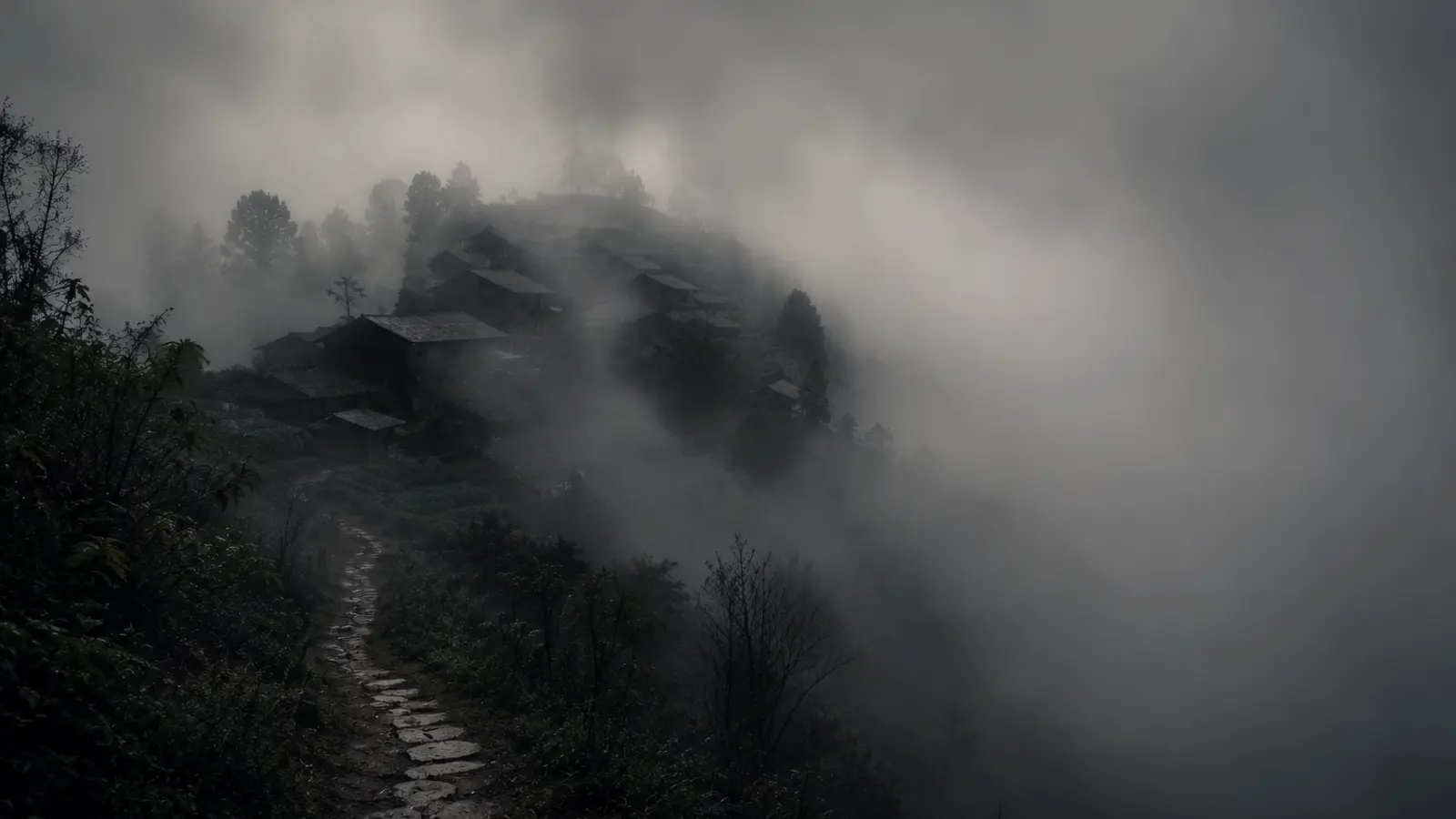
Mist and cloud coverage are regular features of the mountain, contributing to the diffuse light that old-growth trees thrive in. Laobanzhang is not unusual among Yunnan highland tea regions in this regard, but the combination of elevation, moisture management, and old tree root depth creates specific soil interactions that distinguish it even from adjacent plots at nominally similar altitudes.
Soil & Terroir
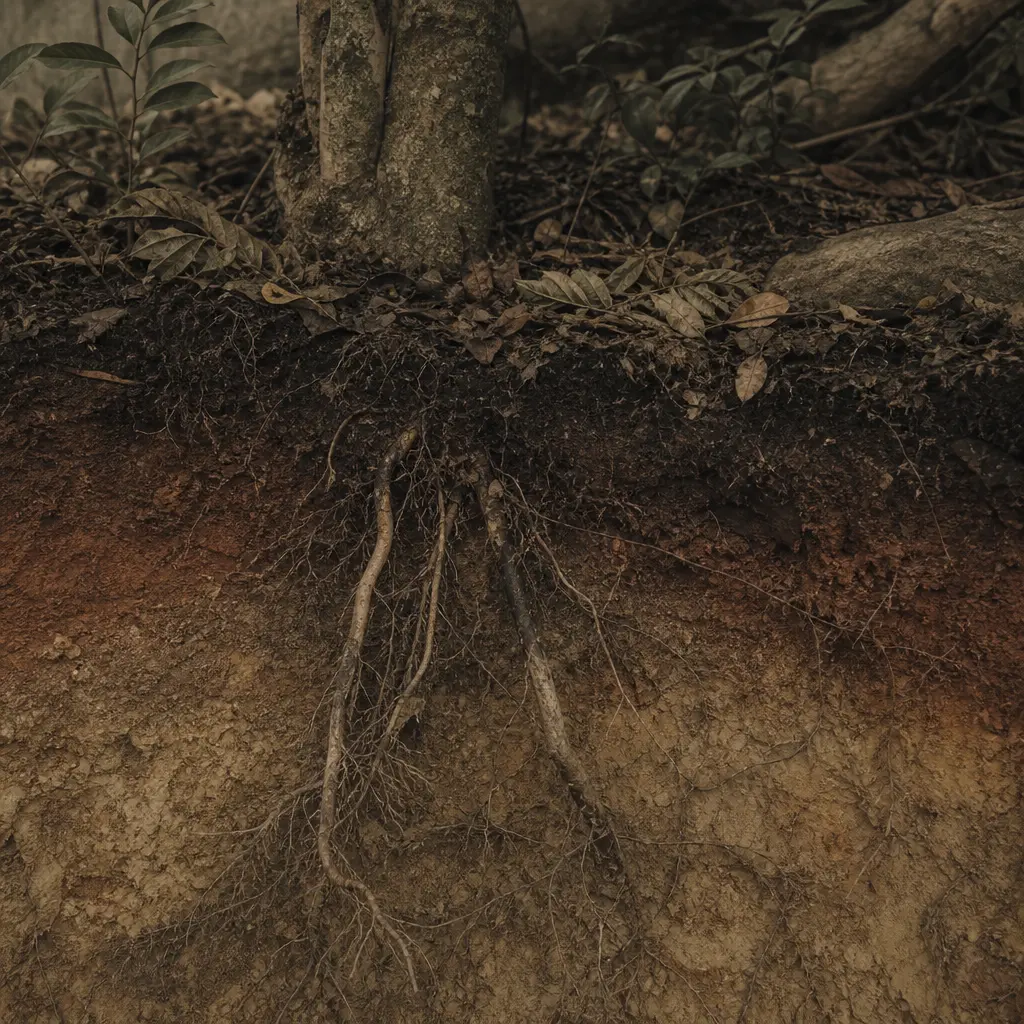
The soils of Bulang Mountain are primarily red laterite and yellow forest soils derived from ancient granite and metamorphic parent material. These are acidic, well-drained, low in nitrogen but mineral-rich — exactly the conditions that force deep root development and slow, concentrated growth.
Laobanzhang’s old trees have root systems that reach several meters down, accessing mineral layers unavailable to younger plantation trees grown in shallow, fertilized beds. This is the central argument for why gushu material tastes different from plantation material beyond just age: the mineral uptake profile is genuinely distinct. Whether specific minerals can be traced to the characteristic tobacco and stone fruit notes in authentic Laobanzhang is a hypothesis with suggestive but not conclusive research support. For a broader treatment of how soil and elevation shape tea flavor, see our guide to tea terroir.
The forest garden system (茶林, chálín) that surrounds old Laobanzhang trees is also relevant. These trees grow among native forest species — not in cleared rows. Shade, root competition, biodiversity, and organic matter cycling all differ from monoculture plantings. The organic matter in the topsoil layer is typically deeper in forest garden systems, and the mycorrhizal networks around old tea tree roots are more developed. What this means for flavor chemistry is an active area of research; what it means observably is that old-growth forest garden material has sensory qualities that plantation material does not replicate.
Key Cultivars & Tea Types
The dominant cultivar in Laobanzhang is a large-leaf (大葉種, dàyèzhǒng) Yunnan variety, likely descended from ancient tea tree populations that the Hani managed rather than systematically bred. These are not modern cultivars with controlled parentage — they are old genotypes with centuries of site adaptation.
The primary commercial output is sheng pu-erh (生普洱), pressed as cakes (餅茶, bǐngchá), with maocha (毛茶, raw processed leaf) being the form in which material is traded most actively at origin. Shou pu-erh (熟普洱) exists but is not what the Laobanzhang premium is built on — the expense and the mythology attach almost entirely to sheng, specifically aged and aging sheng from verified old-tree sources.
Gushu (古樹) designation requires trees of at least 100 years, with serious collectors focusing on material from trees estimated at 200–500+ years. The age distinction matters not just as prestige but as flavor: older trees show more complex secondary metabolism, and their leaf has measurably higher levels of certain polyphenol complexes associated with the thick, coating mouthfeel Laobanzhang is known for.
Younger plantation trees (台地, táidì) within or near the village exist and are harvested commercially. Their output is categorically different in quality and is the source of much mislabeling — material from these younger trees is sold as if it were gushu.
Processing Traditions
Processing at source follows the standard sheng pu-erh production sequence: hand-picking, solar withering (萎凋, wēidiāo), kill-green (殺青, shāqīng) in a wok over direct heat, rolling (揉捻, róuniǎn), and sun-drying on bamboo mats. The resulting material is maocha.
The kill-green step at Laobanzhang has historically been done in large iron woks heated by wood fire, with manual stirring. The heat level and duration of this step directly affect the enzyme deactivation and residual moisture that determine aging potential. Wok temperature is typically 180–220°C for Yunnan-style kill-green; shorter, hotter treatments preserve more aromatic volatiles while insufficient heat allows oxidative browning that compromises the aging trajectory.
Pressing into cakes uses stone molds, with dried leaf heated over steam to improve malleability before compression. Pressure and density affect how air circulates within the cake during aging — tighter compression slows early fermentation, which is generally desirable for sheng intended for long aging.
The critical point about processing at Laobanzhang is this: even correctly processed maocha from genuine old trees can be compromised by poor handling after the fact. Contamination with non-Laobanzhang material during weighing, storage in shared facilities, or pressing at off-site facilities are all documented risks in the supply chain between harvest and final compressed cake.
Characteristic Flavor Signatures
This is where Laobanzhang pu-erh diverges sharply from almost anything else in tea, and it is worth being precise about what the genuine profile actually is — because knowing it is the first tool in identifying what is not it.
The defining characteristic is the kugan (苦甘) dynamic: extreme bitterness (苦, kǔ) that converts rapidly and powerfully into huigan (回甘, huígān — returning sweetness). Every pu-erh from reasonable material shows some version of this. Laobanzhang’s version is categorically more intense in both dimensions. The initial bitterness is not merely present — it lands hard, filling the mouth, sometimes with a slight numbing quality on the tongue’s posterior third. Then, within 30 to 60 seconds, the conversion begins. Not a gentle sweetening but a wave — a surge of sweetness that amplifies rather than merely replacing the bitter sensation.
This sweetness can persist for 20 to 30 minutes after swallowing. Multiple accounts from verifiable sources describe finishing a session and still experiencing active huigan an hour later. I do not have firsthand verification of this extreme duration, but the pattern across multiple independent accounts suggests it reflects genuine chemistry rather than enthusiasm.
The body (體感, tǐgǎn) is described consistently as thick, dense, muscular. Not the viscous quality of roasted oolongs or the richness of well-aged shou — something more structural, like biting into something with actual resistance. The mouthfeel coats and lingers.
Aroma spans tobacco leaf (a characteristic that appears in descriptions from independent tasters across multiple years), dark honey, wet stone or mineral, and occasional forest floor notes that become more prominent with age. Young sheng Laobanzhang often shows a fresh intensity that some describe as slightly medicinal or camphor-adjacent before the aromatics settle into the cup.
The qi (氣, the physiological sensation associated with drinking strong tea) is potent. Warmth in the chest, sometimes in the hands and face, with a full-body sensation that can be disorienting for drinkers who have not encountered it before. This is not mysticism — it reflects the catechin and caffeine concentrations in old-tree material from a site that produces unusually dense leaf chemistry. Sensitive drinkers should approach with a small leaf-to-water ratio initially. For more on what this sensation actually involves, our article on what qi in tea means takes an honest, skeptical look at the evidence.
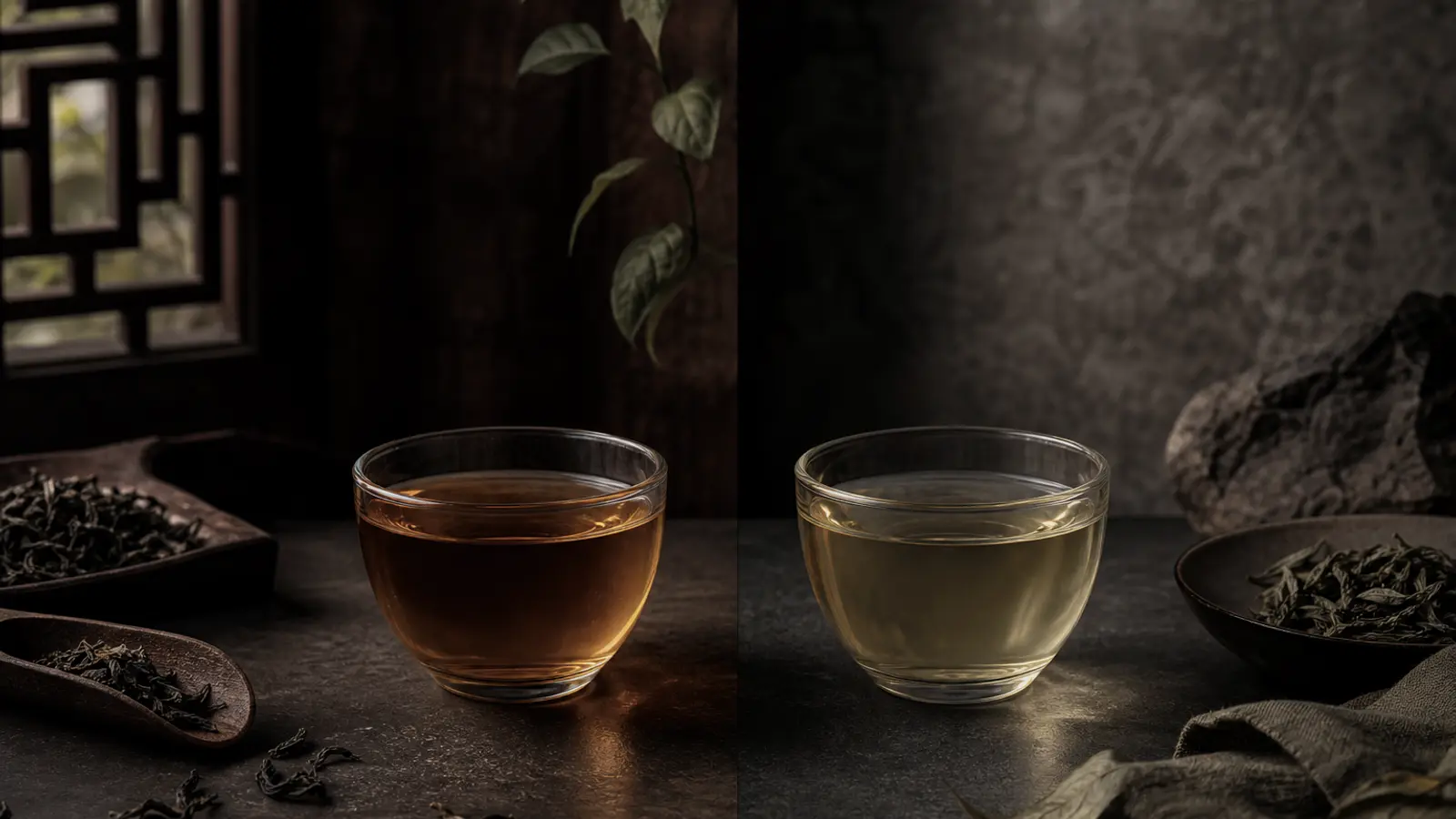
The color of properly brewed young sheng Laobanzhang in the cup: bright yellow-gold, clear, with good translucency. Not the pale straw of weak or lower-grade material, not the amber-brown of oversteeping or compromised leaf.
The Romanée-Conti Problem
Laobanzhang is to pu-erh what Romanée-Conti is to Burgundy. The name itself carries a price premium that disconnects from the product in the bottle — or in the cake wrapper. Most people who have “tasted Romanée-Conti” have tasted something mislabeled, allocated fraudulently, or substituted at some point in the service chain. The same is true of Laobanzhang at an even more extreme ratio.
The honest statement is this: if you have not visited the village, do not know the specific producer, and paid consumer retail prices, the probability that you have tasted genuine single-village gushu Laobanzhang is low. This is not an insult — it is math. Approximately 40–60 tons of genuine gushu maocha is produced annually from the old trees. At 357 grams per standard cake, that produces somewhere between 112,000 and 168,000 cakes worth of material per year — globally — before accounting for the portion that stays in China for domestic consumption, the portion that ages in collectors’ storage, and the portion purchased directly by single buyers.
Against that supply, the volume of product labeled “Laobanzhang” sold annually runs into thousands of tons. The discrepancy is not a rounding error. It is industrial-scale fraud.
Quality Indicators & Authentication
Authentic Laobanzhang leaf shows specific physical characteristics that are useful as a starting point, though they are not foolproof because skilled counterfeiters know them too.
Dry leaf: Large, with prominent main stem and serrated leaf edges. The surface shows abundant trichomes (茸毛, róngmáo) giving a silvery-gray sheen, especially visible on the buds and young leaves. Leaf surface has a slightly waxy texture when handled. The stem cross-section on broken pieces should show a clean white interior without browning.
Wet leaf after steeping: Full unfurling with good elasticity. Leaf should show intact cell structure without the mashing quality of mechanically processed or over-rolled material. Stems remain firm. The back of the leaf shows the trichome density clearly after rehydration.
Liquor: Bright yellow-gold in young sheng, clear and luminous. Cloudiness in young sheng suggests processing issues or storage problems. The color deepens with age but should retain translucency.
Taste sequence: Bitterness arrives immediately and strongly. It should be clean — not metallic, not astringent in a drying way, not sharp. Within 30–60 seconds, huigan begins. If bitterness persists without transformation after 90 seconds, treat that as a significant red flag. If bitterness is mild or absent, it is almost certainly not genuine Laobanzhang.
Price reality: Any Laobanzhang product priced below $2 per gram is essentially certainly not genuine single-village gushu material. At current source prices of $50–200+ per gram for verified maocha, even with generous markup assumptions, the math does not allow for affordable retail pricing of authentic material. A 357g cake of genuine spring gushu Laobanzhang, traced from a documented producer, currently trades in the range of several thousand to tens of thousands of dollars. Products priced at $50 or $100 for a full cake are not this product.
Provenance documentation: Serious producers offer GPS coordinates for individual trees, harvest records by date and picker, and increasingly, blockchain or QR-code tracking systems that link the physical product to documented source data. The absence of this documentation does not prove a fake, but its presence is one of the stronger positive indicators available short of a farm visit. Understanding how to read the wrapper itself is a foundational skill — our guide to reading a pu-erh tea wrapper covers what the labels, neifei, and factory codes actually mean.
Red flags summary:
- Price below $2/g for the finished product
- Bitterness that persists without conversion to sweetness
- Thin, astringent body without muscular density
- Wrapper text claiming “Laobanzhang” without producer name, tree location, or harvest date
- Suspiciously uniform appearance — real gushu material shows natural variation in leaf size and color
- Seller unable or unwilling to explain the supply chain between village and product in your hand
The Counterfeiting Economy
The fake Laobanzhang supply chain is not a cottage industry of opportunistic mislabeling. It is a structured system with dedicated participants at every level.
At the lowest tier, generic bitter pu-erh material from Yunnan plantation sources — or sometimes from entirely different provinces — is pressed and wrapped in packaging that says “老班章” (Laobanzhang). This material costs perhaps $5–15 per kilogram for the maocha; by the time it is wrapped and sold as Laobanzhang, margins are substantial.
A more sophisticated tier uses genuine Bulang Mountain material from adjacent villages — Xinbanzhang, Banjia, or Laomane — which has real terroir character and genuine bitterness. Some of this material has legitimate merit as a tea. The fraud is solely in calling it Laobanzhang. Because these neighboring villages have overlapping flavor characteristics, especially the bitterness that consumers associate with the Laobanzhang profile, the counterfeit can survive casual sensory evaluation.
The highest tier of fake is genuinely sophisticated: material blended specifically to mimic the Laobanzhang profile, sometimes including bitter compounds added to non-Bulang material, pressed using authentic-looking molds, and wrapped with convincing provenance documentation that cannot actually be verified. These fakes can fool experienced tasters in blind sessions and have reportedly circulated in high-end collector markets.
The village’s own wealth has complicated this picture. Laobanzhang’s tea income has been transformative — paved roads, substantial new construction, a standard of living that is strikingly high by rural Yunnan standards. That wealth creates a local interest in maintaining the premium that funds it. But it also creates incentives that cut against authenticity: pressure to harvest from trees of ambiguous age, to tolerate the market conditions that trade on the village name globally, and to manage the influx of outside buyers who arrive with cash during harvest season and cannot reliably verify what they are buying.
Price Ranges
Pricing for Laobanzhang operates at several levels, and clarity about which level you are dealing with is essential.
At-source maocha, documented old-tree, spring harvest: $50–200+ per gram, or $50,000–200,000+ per kilogram. Peak spring 2023 and 2024 harvests reportedly saw single-tree material exceed these figures for particularly notable specimens. These prices are set by direct negotiation between buyers and individual Hani families at origin.
Finished pressed cakes, documented producer, spring gushu: Individual 357g cakes from verifiable producers with documented provenance typically start around $3,000–5,000 USD and extend upward to $20,000+ for material from named trees with exceptional track records. Aged cakes (10+ years) from documented sources command additional premium.
Legitimate small-tree or young-tree Laobanzhang material (台地, táidì): Material from younger plantation trees within or near the village area, honestly labeled as such, might trade for $50–200 per cake. This is genuinely Laobanzhang village material but is not gushu and should not be priced or represented as old-tree.
The retail market: Most of what you will encounter at consumer prices — $30–200 per cake — is not what any of the above describes. It may be good tea. It is almost certainly not single-village gushu Laobanzhang.
The international export price typically runs 20–40% above Chinese domestic prices for the same documented material, reflecting logistics, import costs, and the premium for internationally-accessible certification documentation.
Buying Advice
The guidance here is simple and deliberately uncomfortable.
Unless you have an established relationship with a producer who can demonstrate provenance through specific documentation — GPS-tagged tree records, dated harvest receipts, farm visit history, or verifiable third-party authentication — assume that any Laobanzhang product at consumer retail prices is not genuine single-village old-tree material.
This is not cynicism. It is what the supply numbers require. When the authentic annual output of a product is measured in tens of tons and the market for that product’s label trades in thousands of tons, the arithmetic is not ambiguous.
What to do instead: if what you actually want is the flavor profile associated with Laobanzhang — intense bitterness converting to powerful huigan, dense body, strong qi — there are legitimate pathways. High-quality gushu material from documented producers in Bulang Mountain (布朗山) more broadly, from Bada Mountain (巴達山), or from Lao Man’e (老曼峨) can deliver genuine versions of that experience at prices that are still serious but verifiable. The experience may not carry the Laobanzhang name, but it will be what it claims to be.
If what you want is specifically Laobanzhang, be prepared to spend accordingly and to do the provenance work. Visit the village if possible. Work with buyers who have documented source relationships. Accept that verified authentic material is extraordinarily expensive and that there is no shortcut that preserves both authenticity and affordability.
The wine parallel is exact: genuine Romanée-Conti is genuinely extraordinary. The mystique of the name is not entirely manufactured — the wine earns its mythology in the glass. The same is true of Laobanzhang when you can actually confirm you are drinking it. The problem, in both cases, is that most of what trades under the name is not what it claims. That reality does not diminish the genuine article. It means you have to be serious about establishing what you are actually drinking before drawing conclusions about it.
Laobanzhang pu-erh is the most famous tea on earth for reasons that are real. It is the most faked tea on earth for reasons that are equally real. Those two facts are inseparable, and understanding both is the only honest starting point for engaging with it.