Yunnan province produces all of China’s genuine pu-erh (普洱茶), but Yunnan is large, and where a tea grows shapes everything about it. Two prefectures dominate the conversation: Menghai (勐海) in the south and Lincang (临沧) in the northwest. They sit perhaps 300 kilometers apart by road, yet they produce teas that feel like different languages spoken in the same family.
Understanding the menghai vs lincang pu-erh divide is one of the most practical frameworks a pu-erh drinker can develop. It explains why a Dayi factory cake and a single-estate Bingdao cake feel so different in the cup, and it sharpens your instincts when reading vendor listings or navigating tea markets.
The Short Answer
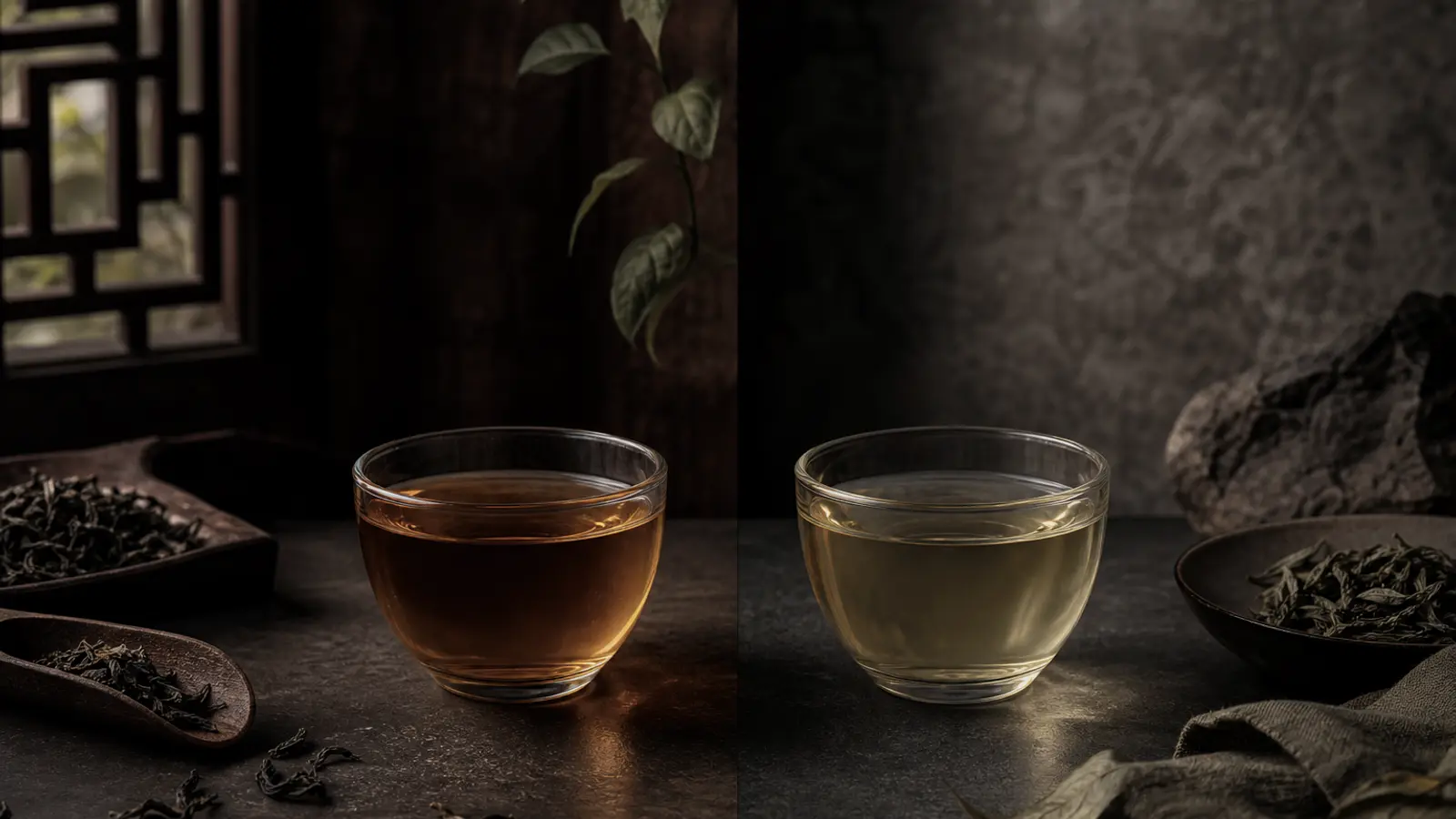
Menghai County produces pu-erh with deeper body, pronounced bitterness-to-sweetness conversion, and the dense, structured character that dominates the aged pu-erh market. Lincang Prefecture produces brighter, more aromatic, immediately expressive sheng with higher fragrance and lighter astringency. Menghai is structure and patience; Lincang is aroma and accessibility.
At a Glance:
| Menghai (勐海) | Lincang (临沧) | |
|---|---|---|
| Dominant Sensory Style | Bold, bitter-entry, powerful huigan; earthy shou | Sweet, floral, cooling, aromatic; lighter bitterness |
| Factory Presence | Dominant — Dayi, Xiaguan, many others | Limited — mostly small/independent |
| Aging Track Record | 40+ years of documented data | Less established; fewer aged references |
| Price Range | $8–$800+ per 100g (wide spectrum) | $20–$1,200+ per 100g (skews high) |
| Wine Parallel | Bordeaux | Rhône Valley |
| Best For | Aging projects, beginners via factory teas, shou exploration | Aromatic freshness, collector single-origins, terroir study |
Menghai Region Tea: Infrastructure, History, and Power
Menghai county sits in Xishuangbanna (西双版纳) prefecture, close to the Myanmar and Laos borders. Elevations across its key mountain sub-regions range from roughly 1,400 to 1,900 meters. The climate is subtropical — warm, humid, distinct wet and dry seasons — and the forests contain some of the oldest Camellia sinensis var. assamica trees in documented existence.
The Sub-Regions That Matter
Bulang Mountain (布朗山) is the most discussed. Within it, Lao Ban Zhang village produces what many consider the benchmark for aged sheng power: thick, bitter-entering, with a huigan (回甘, returning sweetness) that builds for minutes. Genuine, authenticated Lao Ban Zhang commands prices of $300–$800+ per 100g at current market, and counterfeiting is endemic. Lao Man’e (老曼峨) sits nearby, offering comparable intensity at somewhat lower prices.
Nannuo Mountain (南糯山) is quieter in international collector conversation but carries a strong track record. Teas here tend toward floral and approachable compared to Bulang’s aggression, with good aging potential.
Jingmai Mountain (景迈山) — officially spanning both Menghai and Pu’er prefectures — produces teas famous for a distinctive honey and orchid character. Jingmai’s ancient tea forests were designated a UNESCO World Heritage Site in 2023.
Shou Pu-erh Was Born Here
In 1973, technicians at Menghai Tea Factory refined the wo dui (渥堆, wet-pile fermentation) process that creates shou (熟普, ripe) pu-erh. This accelerated fermentation method compresses years of natural aging into weeks, producing the dark, earthy, smooth teas that now represent a significant portion of global pu-erh consumption. Menghai’s dominance in shou production is structural — the infrastructure, the knowledge base, and the scale all began here.
The factory’s output ranges from the ubiquitous 7572 recipe (a benchmark shou blend, widely available at $25–$50 for a 357g cake depending on vintage) to premium productions that carry serious secondary market prices.
Lincang Tea Region: The New Frontier
Lincang prefecture lies northwest of Xishuangbanna, with key producing areas sitting at 1,500–2,500 meters — notably higher than many Menghai sub-regions. The Lancang River (澜沧江) runs through the region, and its valleys create microclimates that vary dramatically across short distances.
The big three terroirs driving Lincang’s current reputation surge:
Bingdao (冰岛, “Ice Island”) is arguably the most hyped tea address in China right now. Single-village productions from ancient trees sell for prices that rival Lao Ban Zhang on a per-gram basis — often $400–$1,200+ per 100g for authenticated old-arbor material — and the tea delivers a sweet, cooling, intensely aromatic experience unlike anything from the Bulang mountains. The name refers to a village in Shuangjiang (双江) county; the “ice” in the name reflects the cool sensation (冰凉感) that spreads across the mouth after swallowing. Access to genuine Bingdao material is difficult and expensive for international buyers.
Xigui (昔归) grows at lower elevation along the Lancang River, producing a tea that stands apart from most Lincang profiles: more savory, deeper, more muscular. It has attracted serious collector attention while remaining somewhat more approachable in price than Bingdao — though “approachable” is relative; old-arbor Xigui runs $100–$400 per 100g at current market.
Baiyingshan (白莺山) receives less international coverage than the other two but carries genuine interest among researchers because it hosts some of the widest varietal diversity in Yunnan — multiple ancient tea tree varieties documented in a single location, some appearing to represent transitional forms between wild and cultivated assamica.
Fewer Big Factories, More Direct Sourcing
Lincang has no equivalent of Dayi. The factory presence is smaller, the production more fragmented, and more of what reaches international buyers comes through smaller brokers, direct-from-village sourcing, or boutique vendors who have cultivated farmer relationships. This raises traceability in theory but also amplifies the labeling and authentication problems that affect the entire pu-erh market.
Side-by-Side Comparison
| Menghai (勐海) | Lincang (临沧) | |
|---|---|---|
| Prefecture | Xishuangbanna | Lincang |
| Key Sub-Regions | Bulang, Nannuo, Jingmai | Bingdao, Xigui, Baiyingshan |
| Factory Presence | Dominant — Dayi, Xiaguan, many others | Limited — mostly small/independent |
| Price Range | $8–$800+ per 100g (wide spectrum) | $20–$1,200+ per 100g (skews high) |
| Dominant Sensory Style | Bold, bitter-entry, powerful huigan; earthy shou | Sweet, floral, cooling, aromatic; lighter bitterness |
| Shou Production | Birthplace; major global producer | Minor |
| Aging Track Record | 40+ years of documented data | Less established; fewer aged references |
| Best Known For | Lao Ban Zhang power, Dayi factory productions, shou pu-erh | Bingdao sweetness, Xigui depth, premium collector teas |
| Sourcing Model | Factory-dominant; also artisanal | Independent-dominant; direct-from-farmer |
| Wine Parallel | Bordeaux | Rhône Valley |
| Best For | Aging projects, beginners via factory teas, shou exploration | Aromatic freshness, collector single-origins, terroir study |
The Aging Question
This is where the comparison becomes practically important for anyone pressing or buying teas with a 10–20 year horizon.
Menghai has the track record. There are warehouses of aged Menghai-region sheng from the 1980s, 1990s, and early 2000s that have been systematically tasted and documented by collectors, researchers, and auction houses. The transformation arc for Menghai teas — particularly from the Bulang mountains — is reasonably well understood: bitterness softens over 10–15 years in good storage, camphor and plum notes develop, the liquor deepens in color, and the huigan extends. Factory productions like Dayi’s 7542 recipe have been tasted at multiple age points across different storage conditions. There is a reference library.
Lincang’s aging trajectory is less established. The premium Lincang teas that dominate current collector conversation have mostly been produced — or at least reached significant international distribution — within the last 15 years. There are older Lincang-region teas in Taiwan and Hong Kong collections, but the specific sub-regions driving today’s prices (Bingdao especially) lack the decades-long documented transformation data that Menghai possesses. Whether a $600/100g Bingdao cake pressed today becomes extraordinary in 20 years or merely good is a genuine unknown. The comparatively lower bitterness and tannin structure in many Lincang teas also raises questions among experienced collectors about whether they carry the transformative potential of more assertive Bulang-mountain material.
This is not a knock on Lincang. It is an honest appraisal of where the evidence currently sits.
Flavor Profiles: What to Expect in the Cup
Menghai
Lao Ban Zhang and neighboring Bulang villages are intense. Expect strong bitterness (苦, kǔ) on the first two to three steeps, a pronounced astringency, and then — if the tea is good — a deep returning sweetness that spreads across the jaw and throat. The body is thick. The aftertaste lingers.
More accessible Menghai productions (factory blends, Nannuo teas) offer softer versions of these qualities: floral notes, approachable bitterness, good body without the aggression. Jingmai productions skew honeyed and perfumed.
Menghai shou, when well-made, offers dark chocolate, forest floor, dried jujube, and smooth, coating mouthfeel — the earthy style that represents pu-erh to most of the world.
Lincang
Bingdao’s flavor signature is sui generis: a pronounced sweetness that appears immediately, a cooling sensation (the “ice” quality that named the village), florals that read as orchid or osmanthus, and a remarkably clean finish. Bitterness is present but subordinate. The overall impression is brightness.
Xigui behaves differently — it has more grip and savory depth than most Lincang teas, which is why it holds its own in aging conversations even within a region where the case for long-term cellaring is less established.
Which Region Suits You?
Start with Menghai if:
- You are new to sheng pu-erh and want affordable reference points
- You are exploring shou pu-erh
- You are planning an aging project and want documented precedents for how teas evolve
- Budget matters — Menghai’s factory tier offers genuine quality at $15–$40 per cake
Start with Lincang if:
- You are already comfortable with sheng pu-erh and want to explore terroir-driven single-origins
- You prefer less bitterness and more aromatic brightness in your cup
- You are drawn to the collector tier and have budget for Bingdao or Xigui material
- You want to taste teas that are generating serious discussion in the current market
The two regions are not rivals. Serious pu-erh drinkers eventually drink both, because they genuinely taste different, and understanding that difference is part of building a coherent palate. The Bordeaux drinker and the Rhône drinker are often the same person on different nights.
Authentication and What to Watch For
Both regions suffer from significant labeling fraud at the premium end. Lao Ban Zhang fakes are so common that tea traders have a saying: the annual production claimed on labels vastly exceeds the actual harvest capacity of the village. Bingdao has the same problem. Neither region’s prestige names can be taken on faith without a trusted supply chain.
For Menghai factory productions — Dayi in particular — authentication is somewhat more tractable because large-batch factory teas have batch codes, QR systems, and enough collector documentation that forgeries are identifiable with experience. This is another practical advantage of the factory-dominated Menghai system for buyers who don’t have established farmer relationships.
Final Take
Menghai (勐海) and Lincang (临沧) are the two pillars of serious Yunnan pu-erh, and they pull in different directions. Menghai offers institutional depth, proven aging data, accessible entry points, and the full shou tradition. Lincang offers terroir excitement, aromatic distinctiveness, and the frisson of a region whose ceiling has not yet been established.
Neither is complete without the other. If you’re building a pu-erh education, tasting one without the other is like studying French wine without crossing from Bordeaux into the Rhône. For a deeper look at how pu-erh ages across different regions and storage conditions, the transformation data remains one of the most compelling reasons to invest time in both.