At a Glance:
| Attribute | Yiwu (易武) | Bingdao (冰島) |
|---|---|---|
| Dominant Flavor | Wildflower honey, orchid, soft spice | Rock sugar, crystal sweetness, light floral |
| Mouthfeel Signature | Silky, layered, medium body | Light, bright, mineral-clean |
| Hou Yun Duration | Long — floral, deep resonance | Medium — cooling, mentholated |
| Aging Potential | Proven — 30+ year reference points exist | Promising — 10–15 year data only |
| Price Range (per gram) | ~$1–$8 for verified single-origin | ~$8–$25 for core village material |
| Wine Parallel | Burgundy Pinot Noir | Mosel Riesling |
Two mountains. Two entirely different ideas about what premium sheng pu-erh (生普) should taste like.
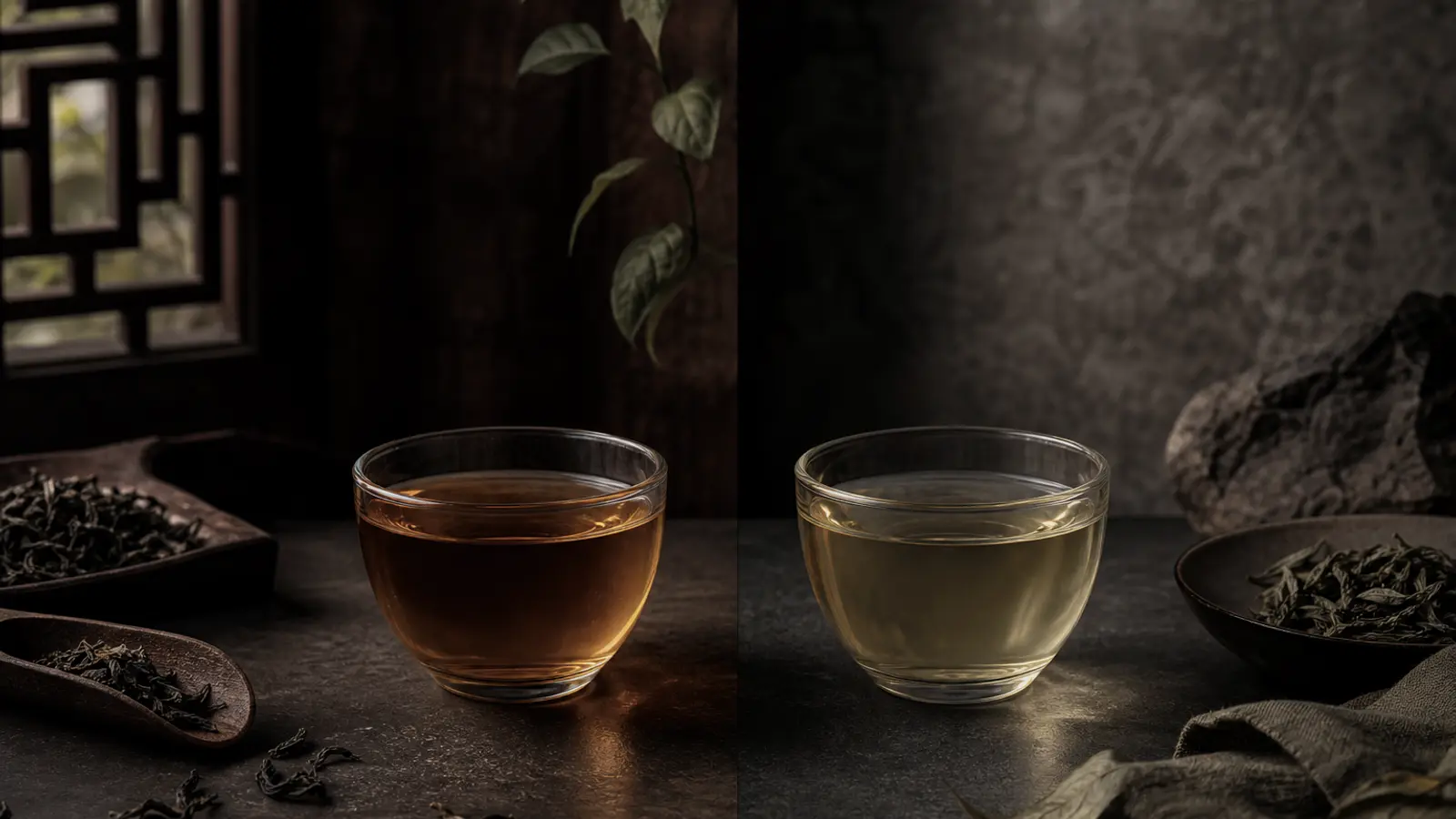
Yiwu (易武) and Bingdao (冰島) sit at the top of the sheng market — both commanding serious prices, both capable of producing teas that stop a session cold. But the experience of drinking one versus the other is not interchangeable. Yiwu moves quietly, building toward a long resonance in the throat. Bingdao announces itself immediately, with a sweetness so clean it reads almost as a physical sensation. Choosing between them isn’t a matter of quality. It’s a matter of temperament.
What Is the Difference Between Yiwu and Bingdao Pu-erh?
Yiwu (易武) produces soft, sweet, honey-and-stone-fruit sheng that ages gracefully over decades. Bingdao (冰岛) delivers immediate intensity — rock sugar sweetness, thick mouthfeel, and cooling throat sensation from the first steep. Yiwu rewards patience; Bingdao rewards the present moment. Both are among Yunnan’s most sought-after origins.
What Separates These Two Origins
Before comparing cup for cup, it helps to understand the geographic and cultural distance between these regions.
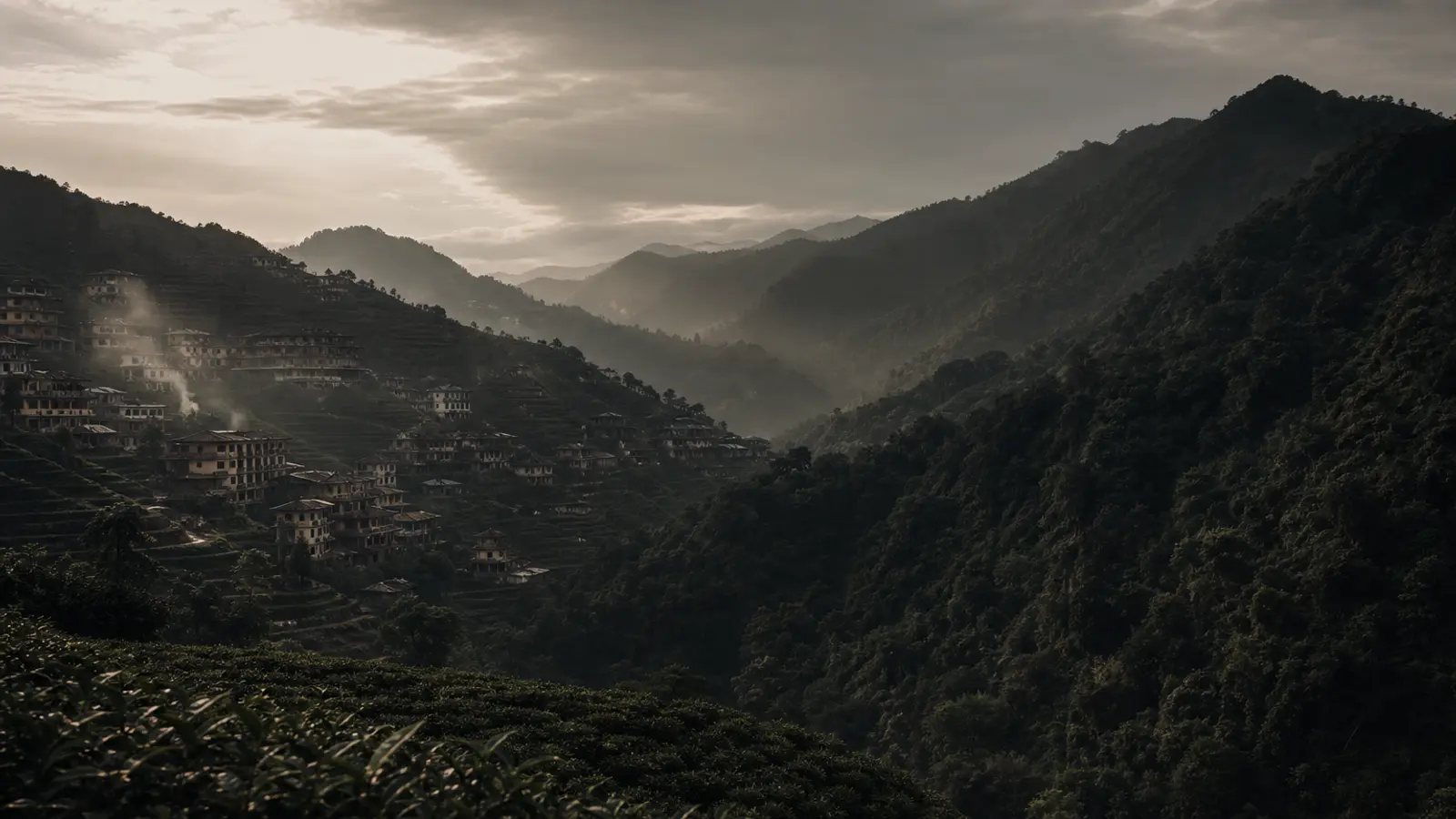
Yiwu sits in Xishuangbanna (西雙版納), the historical heartland of Yunnan tea. It’s part of the Six Ancient Tea Mountains (六大茶山), the same corridor that supplied compressed cakes to the Tea Horse Road (茶馬古道) for centuries. The mountain gardens sit at around 1,400 meters. The climate is humid and warm, the soils deep and lateritic. Yiwu trees are old — many in the hundreds of years — and the processing tradition here is arguably more historically documented than anywhere else in Yunnan.
Bingdao sits in Lincang (臨滄) prefecture, within the Mengku (勐庫) growing area of Shuangjiang county. The five core Bingdao villages — Bingdao, Nanduo, Nuowu, Baqia, and Di’e — occupy elevations around 1,800 meters, meaningfully higher than Yiwu. The name 冰島 translates literally as “Ice Island,” a reference to the cold that descends on these high ridges. The trees are old here too, and the local Mengku Dayezhong (勐庫大葉種) cultivar is recognized as one of the more distinctive large-leaf varieties in Yunnan.
Both origins produce what I’d classify as a floral, long-finish style — but the channels through which they express that style are completely different.
Yiwu vs Bingdao: Taste Difference
Yiwu: The Burgundy of Sheng
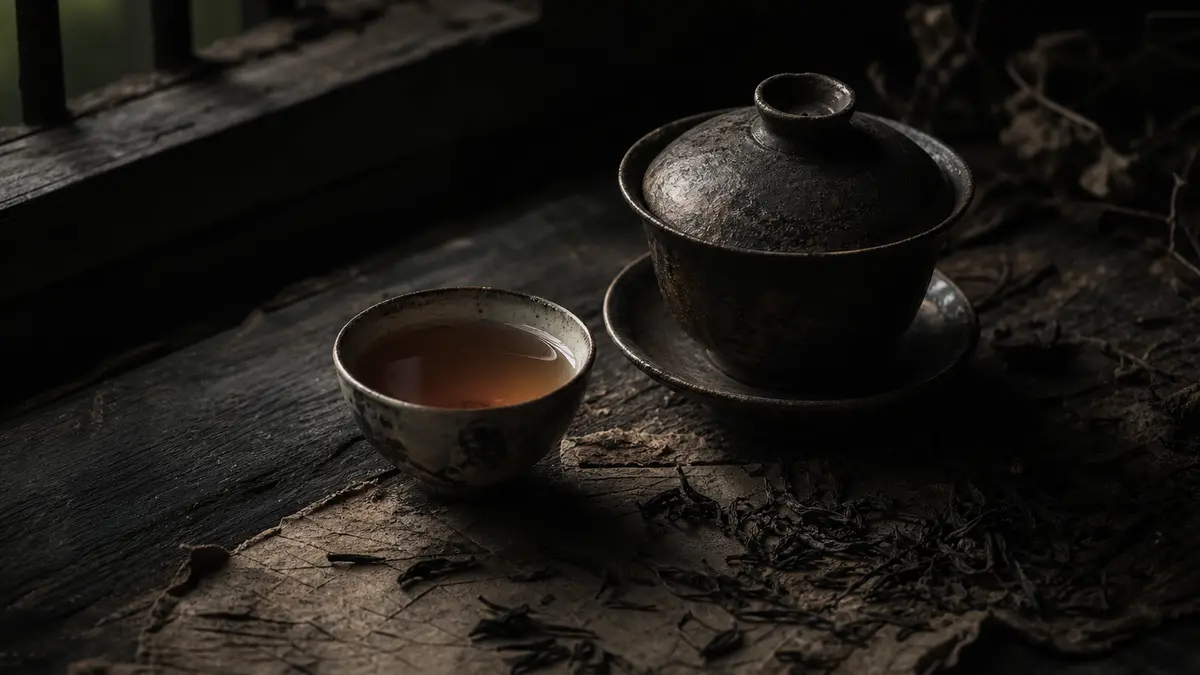
Yiwu’s flavor profile is built on restraint and depth. The first steeps open with wildflower aromatics — think light orchid and dried honeysuckle — underscored by a gentle, warm sweetness that reads as honey rather than sugar. There’s no aggression in the mouthfeel. The texture is silky, almost weightless on entry, but it doesn’t disappear; it accumulates.
The signature of great Yiwu is the hou yun (喉韻), the throat resonance that develops several seconds after the swallow. In the best examples, this sensation persists through three or four breaths, a low hum of coolness and floral depth that sits behind the sternum. This is not a loud experience. It rewards attention.
The Burgundy parallel holds up under scrutiny. Like Pinot Noir from the Côte de Nuits, Yiwu achieves complexity through layering rather than concentration. What you notice on the third steep is different from what you noticed on the first, and by steep seven the tea has shifted register entirely — the florals recede and something darker, more mineral, emerges. This evolution within a single session mirrors what great aged Yiwu does over decades in a storage environment.
And that aging pedigree is real. Reference cakes from the 1990s and early 2000s — factory productions from that era using Yiwu material — are among the most sought-after lots in the secondary sheng market. The transformation is well-documented: the florals deepen into dried fruit and camphor, the body gains weight, the huigan (回甘 “returning sweetness”) becomes more pronounced and longer-lasting. No other origin has as clear a 30-year roadmap.
Bingdao: The Mosel Riesling of Sheng
Bingdao operates on different logic entirely. The defining quality here is sweetness — not a cloying or heavy sweetness, but something crystalline and almost shockingly clean. Multiple experienced tasters reach for the same descriptor: rock sugar (冰糖, bīng táng) dissolving slowly on the tongue. The name of the village and this flavor association are not coincidental.
Where Yiwu builds, Bingdao arrives. The sweetness is present in the first steep and it persists across the session with unusual consistency. The sheng jin (生津 “saliva generation”) — the rush of salivation triggered by certain high-quality teas — is one of the most intense I’ve encountered in any sheng, appearing quickly and lingering through several steeps. The mouthfeel is lighter than Yiwu, with a mineral brightness that keeps the sweetness from feeling one-dimensional.
This is where the Mosel comparison earns its place. The great Mosel Rieslings achieve something similar: sweetness that reads as precision rather than indulgence, held in tension by acidity and slate minerality. Bingdao’s elevation — those extra 400 meters above Yiwu — almost certainly contributes to its clarity. Cooler growing conditions slow maturation, concentrate flavors, and produce the kind of brisk mineral backbone that prevents the sweetness from collapsing.
The hou yun in Bingdao is present but expresses differently from Yiwu. It tends toward a cooling, almost mentholated sensation rather than the deep floral resonance of Yiwu. Both are legitimate. They’re just aimed at different sensory targets.
Side-by-Side Comparison
| Attribute | Yiwu (易武) | Bingdao (冰島) |
|---|---|---|
| Region | Xishuangbanna, Six Ancient Tea Mountains | Lincang, Mengku / Shuangjiang |
| Elevation | ~1,400m | ~1,800m |
| Dominant Flavor | Wildflower honey, orchid, soft spice | Rock sugar, crystal sweetness, light floral |
| Mouthfeel Signature | Silky, layered, medium body | Light, bright, mineral-clean |
| Hou Yun Duration | Long — floral, deep resonance | Medium — cooling, mentholated |
| Sheng Jin Intensity | Moderate to strong | Very strong |
| Aging Potential | Proven — 30+ year reference points exist | Promising — 10–15 year data only |
| Price Range (per gram) | ~$1–$8 for verified single-origin | ~$8–$25 for core village material |
| Wine Parallel | Burgundy Pinot Noir | Mosel Riesling |
Yiwu vs Bingdao: Price Comparison
A note on prices: the Yiwu range is wide because the name covers a large area — material from peripheral villages is far cheaper than tea from famous old-growth plots like Mahei (麻黑) or Tongqing (同慶). Bingdao’s range reflects verified core-village material; anything labeled “Bingdao” at $1–$2 per gram should be treated with significant skepticism given the region’s documented scarcity.
The Authenticity Problem — Especially for Bingdao
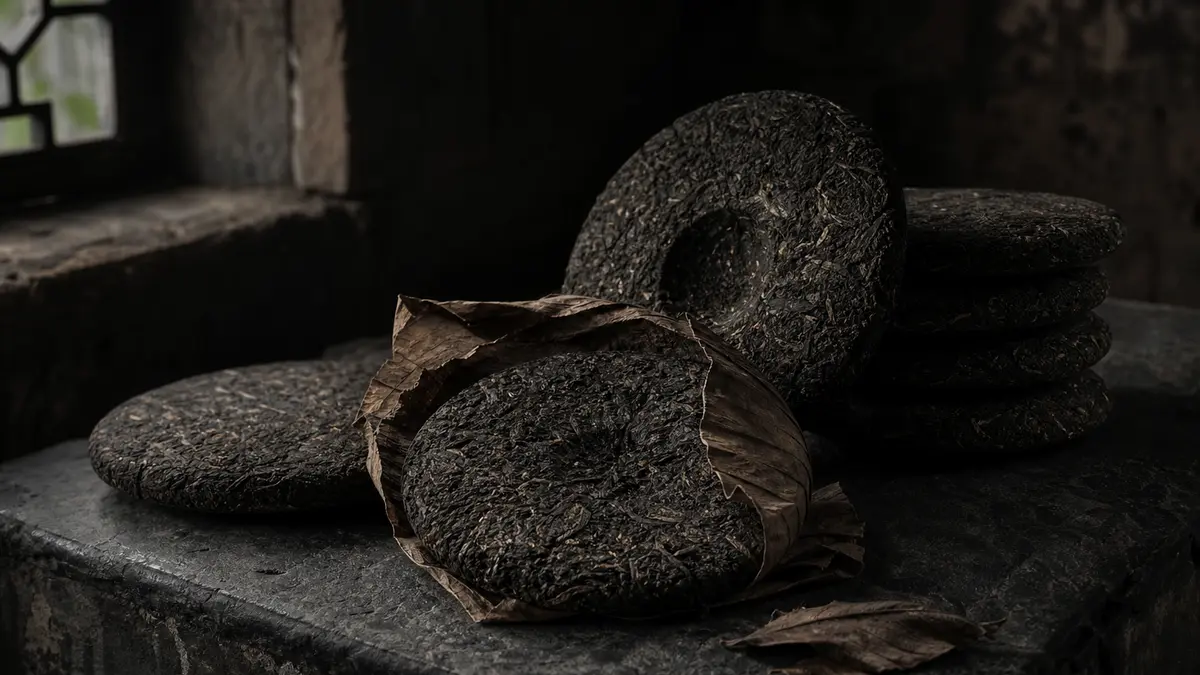
Both names are heavily counterfeited, but Bingdao faces a more acute problem. The five core villages produce a genuinely limited annual harvest. Estimates suggest the entire authentic output from the historic old-tree plots could be measured in a few hundred kilograms of finished material per year — a figure dwarfed by the amount of tea sold under the Bingdao name in global markets.
Yiwu has the same counterfeiting pressures but benefits from a more developed authentication culture. Reputable producers in Yiwu have been operating for longer, and the regional government and tea industry have invested more in traceability infrastructure. For a deeper look at how pu-erh tea ages and what to expect from verified material over time, that context is worth understanding before committing to either origin at the high end.
The practical implication: if you’re spending at the high end of either range, the provenance documentation matters as much as the price itself. When a Bingdao cake arrives without credible sourcing — no producer name, no harvest documentation, no relationship-based chain of custody — assume blended material at best.
Aging: The Yiwu Advantage
For collectors building a cellar with 20-year horizons, Yiwu’s track record is a genuine differentiator.
The mechanism is well-understood. Yiwu’s relatively humid microclimate and softer, less astringent raw material create conditions where the slow oxidative and microbial transformations of aging work gracefully. The tannin structure in Yiwu is present but fine-grained — it integrates rather than softens awkwardly. By year ten to fifteen, a well-stored Yiwu cake has already shifted register. By thirty years, the transformation can be profound.
Bingdao’s aging trajectory is genuinely less certain — not because anyone doubts the tea’s quality, but because the premium single-village market for Bingdao is roughly twenty years old. We have some ten- and fifteen-year reference points from early productions, and the results are encouraging: the sweetness persists longer than skeptics predicted, and the mineral structure appears to provide a good foundation for development. But we’re working from limited data. A collector buying Bingdao for aging is, to use the wine parallel, buying a premier cru from a new appellation that shows every sign of greatness but lacks the 50-year vertical that would make the case conclusively.
For drinking young and over the medium term (five to ten years), this distinction matters less. Both teas reward relatively early drinking in ways that, say, Laobanzhang’s more aggressive profile does not.
Which Should You Buy First?
The honest answer depends entirely on what you’re looking for.
Choose Yiwu if:
- You value gradual complexity over immediate impact
- You’re building a collection with serious aging goals
- The interplay of floral aromatics and slow-developing hou yun matches your sensory preferences
- Historical prestige and a documented production lineage matter to you
Choose Bingdao if:
- You’re drawn to vivid, crystalline sweetness as a primary experience
- Sheng jin — that intense, rushing salivation — is something you find rewarding
- You’re buying primarily to drink now or within the next decade
- You’re willing to pay a premium for one of the most distinctive flavor profiles in the category
The price gap is real, and it should factor honestly into your decisions. Verified Yiwu from a reputable producer delivers extraordinary value relative to its position in the premium tier. Bingdao at its legitimate price point is expensive by any measure — it has moved into territory where even experienced collectors ask whether the experience justifies the cost. My view is that it does, but narrowly and only when the sourcing is beyond question.
Two Peaks, One Category
Yiwu and Bingdao don’t compete with each other in any meaningful sense. They’re answering different questions about what sheng pu-erh can be.
Yiwu asks: how much complexity can emerge from restraint, from a tea that rewards patience and attention across decades? Bingdao asks: how clean, how sweet, how crystalline can a tea be without losing depth?
Both questions have extraordinary answers. The comparison table can tell you the facts. Only a session with each — brewed carefully in a gaiwan (蓋碗), water at 95°C, leaves given room to open — will tell you which question you actually want to live with.