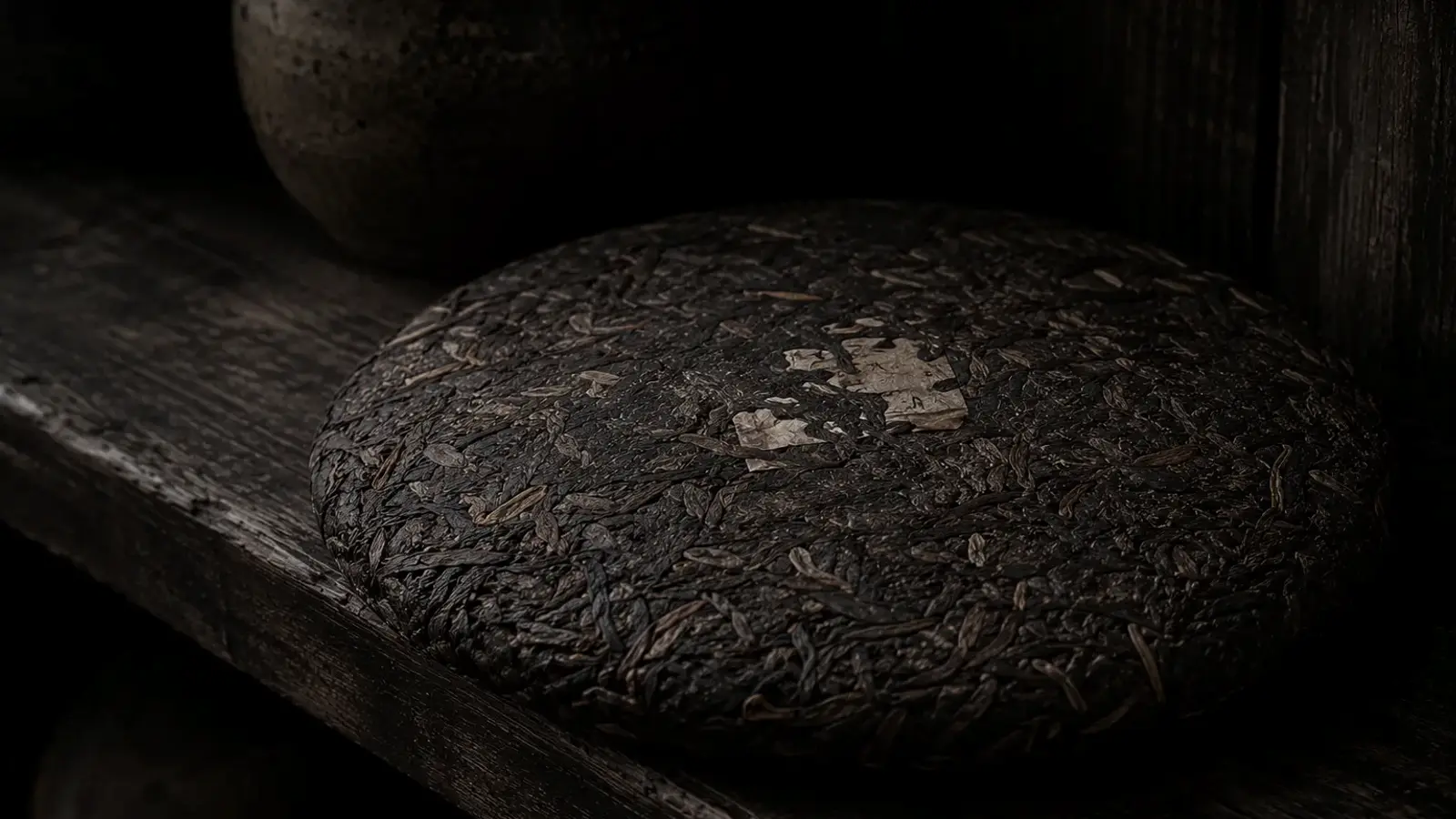
Pu-erh aging (普洱茶陳化) is the reason collectors store cakes in dedicated rooms, pay four-figure sums for single beengs, and argue endlessly about humidity readings. It is also one of the most misunderstood processes in all of tea. Time alone does not make a good aged pu-erh. Nor does any particular storage method guarantee a great outcome. What actually happens inside a compressed cake over years and decades is a cascade of microbial, enzymatic, and oxidative reactions — and the results at 5, 10, and 20 years are genuinely different drinks.
I’ve tasted pu-erh aged across that full spectrum. Two experiences anchor my understanding of what the far end of the timeline actually delivers: a 1988 Honghe Tea Company (HTC) aged sheng that had spent over 35 years in traditional Kunming dry storage, and a 1993 Liu Bao (六堡茶) with over 30 years behind it. Both were revelations. Neither tasted like “old tea.” They tasted like something else entirely — compressed time made liquid.
This guide works through the aging timeline in real terms: what’s happening chemically, what you taste at each stage, and how storage decisions made today shape what you’ll drink in 2045.
What Actually Happens During Pu-erh Aging
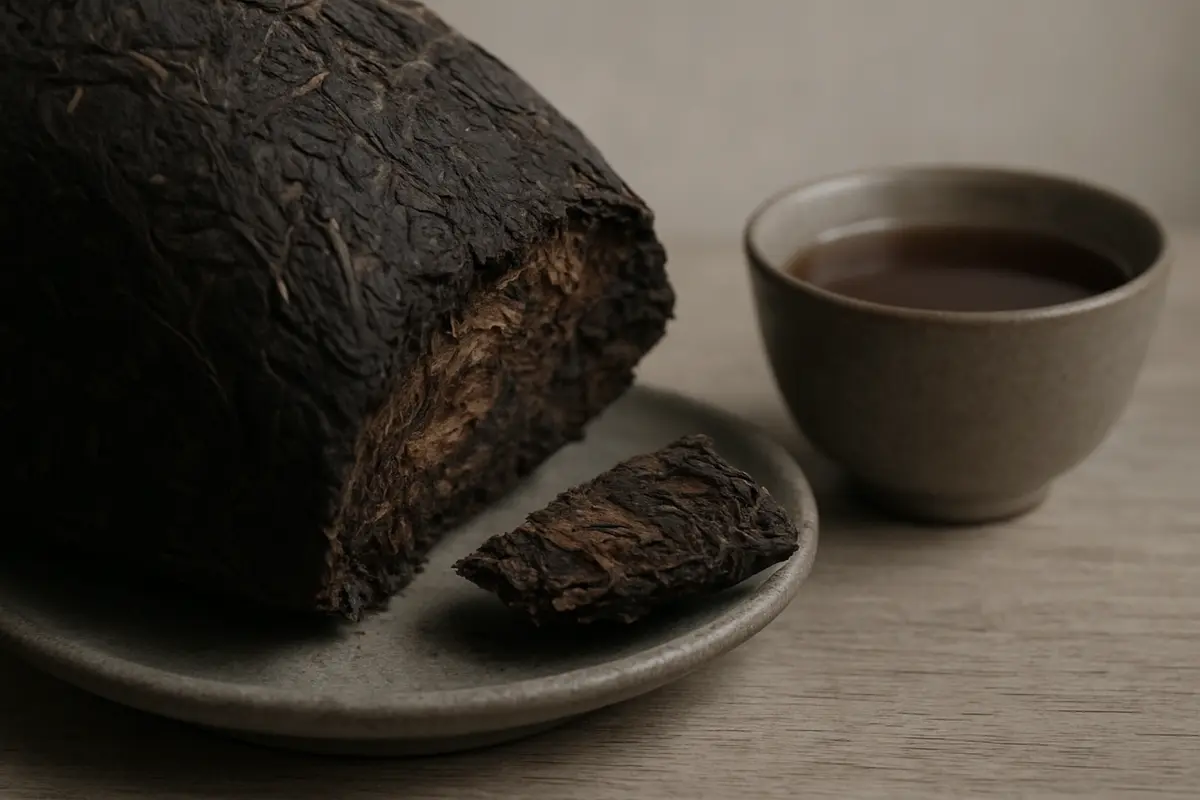
Before the timeline, the mechanism. Sheng pu-erh (生茶) is made from sun-dried maocha (毛茶) that retains its native enzymes and a diverse microbial community. When compressed into cakes and stored in appropriate conditions, several overlapping processes unfold simultaneously.
Enzymatic oxidation continues slowly, darkening the liquor and converting catechins into theaflavins and thearubigins — the same compounds that develop in black tea during processing, but here happening over years rather than hours.
Microbial fermentation driven by bacteria, yeasts, and fungi — most notably Aspergillus niger in wet storage conditions — breaks down cell walls, converts starches and simple sugars, and produces new aromatic compounds. This is the process that converts raw astringency into viscosity and aged sweetness.
Polyphenol polymerization is the long game. Catechins (the primary astringent compounds in young sheng) link together into larger molecules that bind less aggressively to salivary proteins. This is the direct parallel to Bordeaux aging: young Cabernet Sauvignon has aggressive tannins that grip the palate; after 10–15 years in bottle, those same tannins have polymerized into softer, more complex structures. Pu-erh undergoes the identical chemistry, just in compressed leaf rather than grape must.
Aromatic compound evolution means fresh top notes — the camphor, orchid, smoke, and green character of young sheng — gradually give way to deeper base notes: leather, earth, dried longan, dark chocolate, old wood, medicinal herbs.
The rate of all these processes is controlled almost entirely by storage environment. This is the central truth of pu-erh aging: storage conditions matter more than time.
The Three Storage Paradigms
Dry Storage (干仓, Gān Cāng)
Dry storage means ambient humidity below roughly 75% RH with good air circulation. Traditionally associated with Kunming and Taiwan storage, it produces the slowest aging curve and the cleanest outcome. Teas retain more of their original character, develop camphorous and medicinal notes over decades, and rarely show mold. The trade-off: a 20-year dry-stored sheng may still have noticeable structure and some grip. The 1988 HTC sheng I mentioned had been dry-stored in Kunming for most of its life. At 35+ years, the liquor was a deep amber-garnet, the mouthfeel extraordinarily silky, and there was an herbal camphor backbone that I can only describe as aged library mixed with dried apricot and dark honey. The astringency was entirely gone. What remained was pure texture and depth.
Wet Storage (湿仓, Shī Cāng)
Wet storage — historically practiced in Hong Kong warehouses, and still common in parts of Guangdong, Malaysia, and Southeast Asia — pushes humidity above 80–85% RH, often with elevated temperatures. Microbial activity accelerates dramatically. A wet-stored cake can develop “aged” characteristics in 5–8 years that might take 15–20 years in dry storage. The signature is a distinctive earthy, humid-basement, sometimes petrichor character that divides opinion sharply. Done well, it produces complex, dark, extremely smooth teas. Done poorly, it produces cakes with off-putting ammonia or “wet dog” notes that never fully resolve.
Natural or “Traditional” Storage
Most real-world storage falls somewhere between the two poles. A Hong Kong tong warehouse in summer at 78% RH and 85°F is not “wet storage” by historical standards but is far from clinical dry storage. Malaysian tropical storage — a growing category — operates at 80–85% RH year-round and produces an accelerated but cleaner aging curve than aggressive Hong Kong wet storage. The 1993 Liu Bao I’ve experienced had spent most of its life in traditional Guangxi storage: moderately humid, naturally ventilated, in bamboo baskets. At 30+ years, it produced a liquor the color of strong puer broth — deep reddish-brown — with a sweetness I can only compare to dried jujube and a mouthfeel like broth. No sharpness anywhere.
The Aging Timeline: Stage by Stage
Young Sheng (0–3 Years)
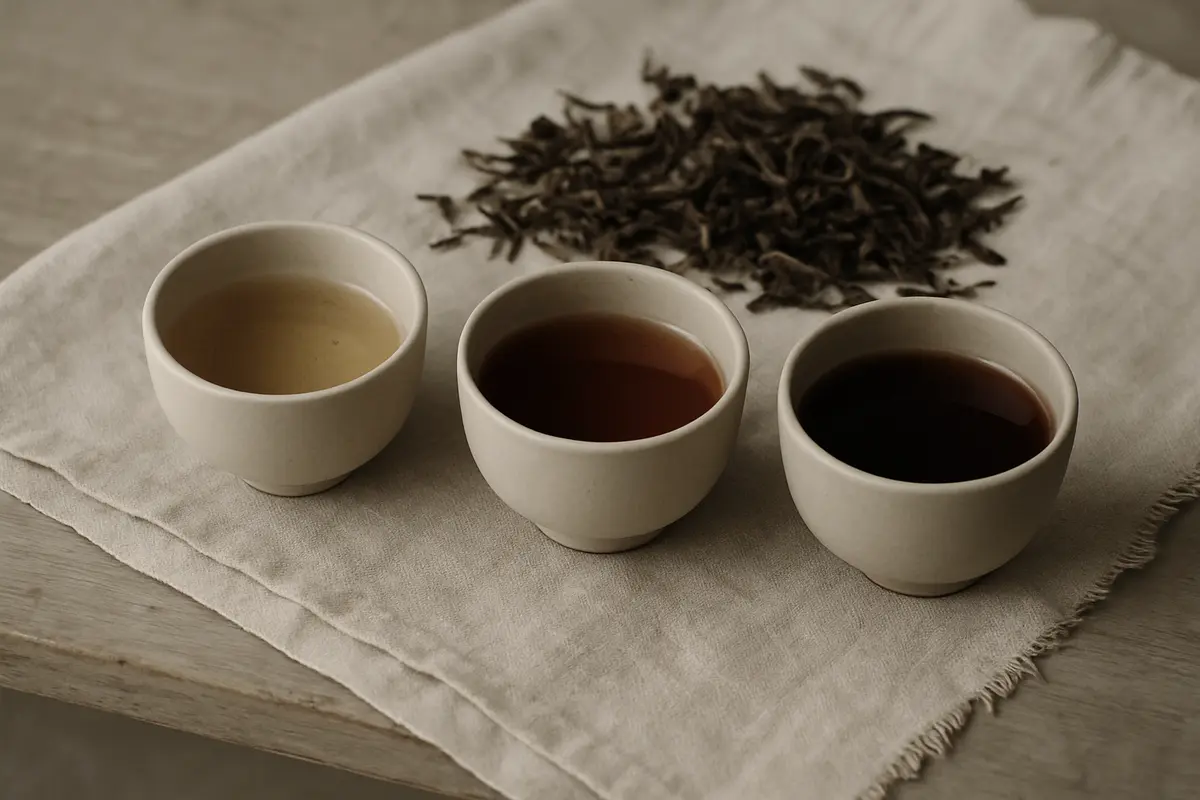
Young sheng is a lively, sometimes aggressive drink. The liquor ranges from pale gold to light green-gold. Aromas include fresh grass, wildflowers, smoke, stone fruit, and sometimes a pronounced bitterness.
Mouthfeel can be quite astringent — that grip of tannins across the palate and tongue. But the best young shengs also show powerful huigan (回甘), the returning sweetness that rises in the throat minutes after swallowing. This is one of the primary quality indicators at this stage.
Some young shengs are genuinely pleasant to drink immediately. Others are primarily valued as investment in future aging. A young cake from a reputable Menghai or Yiwu producer selling in the $30–$80 range (357g beeng) is reasonable entry territory. Premium single-mountain productions from famous villages like Laobanzhang (老班章) or Bingdao (冰岛) can run $200–$2,000+ new.
The Awkward Period (3–8 Years)
This is the stage pu-erh drinkers warn beginners about. The bright, high notes of youth have faded. The complex, deep character of aged tea has not yet arrived. The tea can taste flat, muted, or simply not particularly interesting. Some describe it as “closed” — like a young Burgundy six years out from harvest that’s gone into a shell.
Astringency may still be present but without the fresh energy of young sheng to make it interesting. If you open a cake at year five and find it unremarkable, put it back.
This period varies by origin, storage, and compression density. Tightly compressed 357g beengs in dry storage may stay in this phase longer than looser compressions or teas in more active storage environments.
Five-Year Sheng
At five years in reasonable storage, a well-made sheng starts to show real development. The liquor deepens from light gold toward amber. Smoke and green characters have mostly integrated. You start to see the emergence of dried fruit notes — apricot, plum skin — and the beginning of a warming earthiness.
Mouthfeel softens slightly. The hard tannin edge is still present but less confrontational. Huigan typically strengthens at this stage, which is one of the more reliable quality signals for aging potential.
This is not yet a “finished” aged tea. It’s a transitional state — more interesting than years three or four, but still clearly incomplete.
Ten-Year Sheng
Ten years in proper storage is where sheng starts to become something genuinely different from the tea it was when pressed. Liquor color has reached deep amber to light copper. The aroma profile has shifted meaningfully: dried fruits, leather, wood, incense, sometimes a dried herb or camphor quality begins to emerge.
Mouthfeel is markedly smoother. Tannin integration is real and noticeable. The tea has weight without grip. Huigan is typically well-developed, producing a sustained sweetness that lingers.
A high-quality 10-year sheng from verified storage typically trades in the $60–$200 per beeng range depending on origin and storage reputation. This is where pricing starts to diverge significantly from the underlying leaf quality — you’re paying for verified time, not just terroir.
Twenty-Year Sheng
This is where pu-erh aging produces results unavailable anywhere else in the tea world. A genuinely well-stored 20-year sheng has undergone a near-complete transformation.
Liquor: deep reddish amber to garnet, depending on storage style. Dry-stored teas tend more amber; humid-stored teas run darker toward ruby-brown.
Aroma: the camphor, dried longan, old wood, leather, and sometimes a distinctive plum or jujube sweetness. Smoke is fully resolved into something warmer and more complex. There’s often a mineral quality — almost like wet slate.
Mouthfeel: this is where the transformation is most obvious. The tannin polymerization that’s been happening for two decades produces a texture that tea writers reach for the word “silky” to describe, inadequately. It’s more than smooth — there’s a viscosity and a coating quality that’s unlike any other beverage I know. The 1988 HTC sheng at 35+ years had this quality to an extreme degree: it coated the palate like a very fine broth. Swallowing felt like it took longer than it should.
Flavor: dried fruit, dark honey, old forest floor, camphor, aged wood. The bitterness of youth is entirely gone. What remains is sweetness of a particular kind — not sugar-sweet but deep, resonant, and mineral.
This is the Bordeaux parallel made manifest. A great aged sheng at 20 years has done what a great aged Bordeaux does: converted the aggressive tannin structure of youth into something integrated, complex, and deeply pleasurable.
The Full Aging Comparison
| Stage | Liquor Color | Aroma | Mouthfeel | Flavor Profile | Huigan |
|---|---|---|---|---|---|
| Young (0–3 yr) | Pale gold to light amber | Grass, flowers, smoke, stone fruit | Brisk, astringent, gripping | Fresh, bitter, fruity, bright | Present but variable |
| Awkward (3–8 yr) | Light amber | Muted, transitional | Medium grip, less defined | Flat, mineral, dull top notes | Can weaken temporarily |
| 5-Year | Amber | Dried fruit emerging, smoke integrating | Softening, some grip remains | Apricot, plum skin, warm earth | Strengthening |
| 10-Year | Deep amber to copper | Dried fruit, leather, light camphor | Smooth, weight without grip | Leather, wood, incense, dark fruit | Well-developed, lasting |
| 20-Year | Reddish amber to garnet | Camphor, longan, old wood, jujube | Silky, coating, viscous | Forest floor, dark honey, dried fruit, mineral | Deep, sustained, remarkable |
Why Shou Ages Differently
Shou pu-erh (熟茶), created through the accelerated wodui (渥堆) pile fermentation process developed in the 1970s, is a fundamentally different aging proposition than sheng.
Wodui compresses decades of microbial transformation into 45–60 days. The result is a tea that already tastes “aged” — earthy, dark, smooth — from the moment it’s pressed. The primary aging task for shou is not transformation but refinement.
Fresh shou often carries a distinctive “pile smell” (堆味, duī wèi): a barnyard, slightly fermented earthiness that can be off-putting. With 2–5 years of rest, this typically resolves into a cleaner earthiness. Beyond 5 years, shou develops additional sweetness, the earthiness becomes more complex (mushroom, dark wood, aged leather rather than raw fermentation), and the mouthfeel can become very plush.
But the dramatic arc — the transition from sharp and astringent to silky and complex — that defines sheng aging simply doesn’t happen with shou. The tea has already undergone its transformation. Aging shou is more like aging a ready-to-drink style versus aging a structured, cellar-worthy wine.
Premium aged shou exists and is genuinely excellent. But if you’re aging tea for the transformation, sheng is the answer.
Storage Conditions at Home: The Practical Reality
Aging pu-erh at home is achievable. It requires controlling four variables:
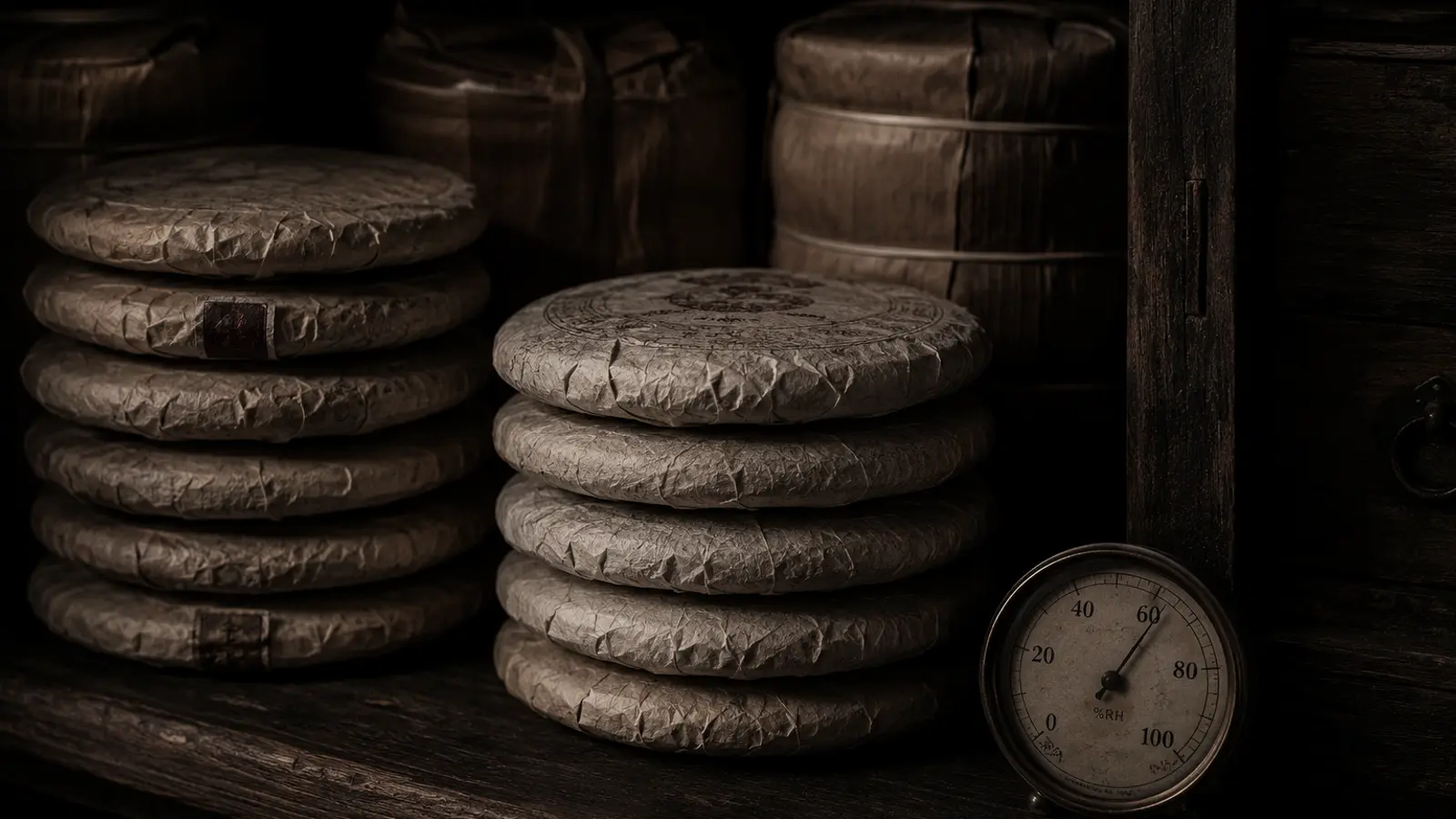
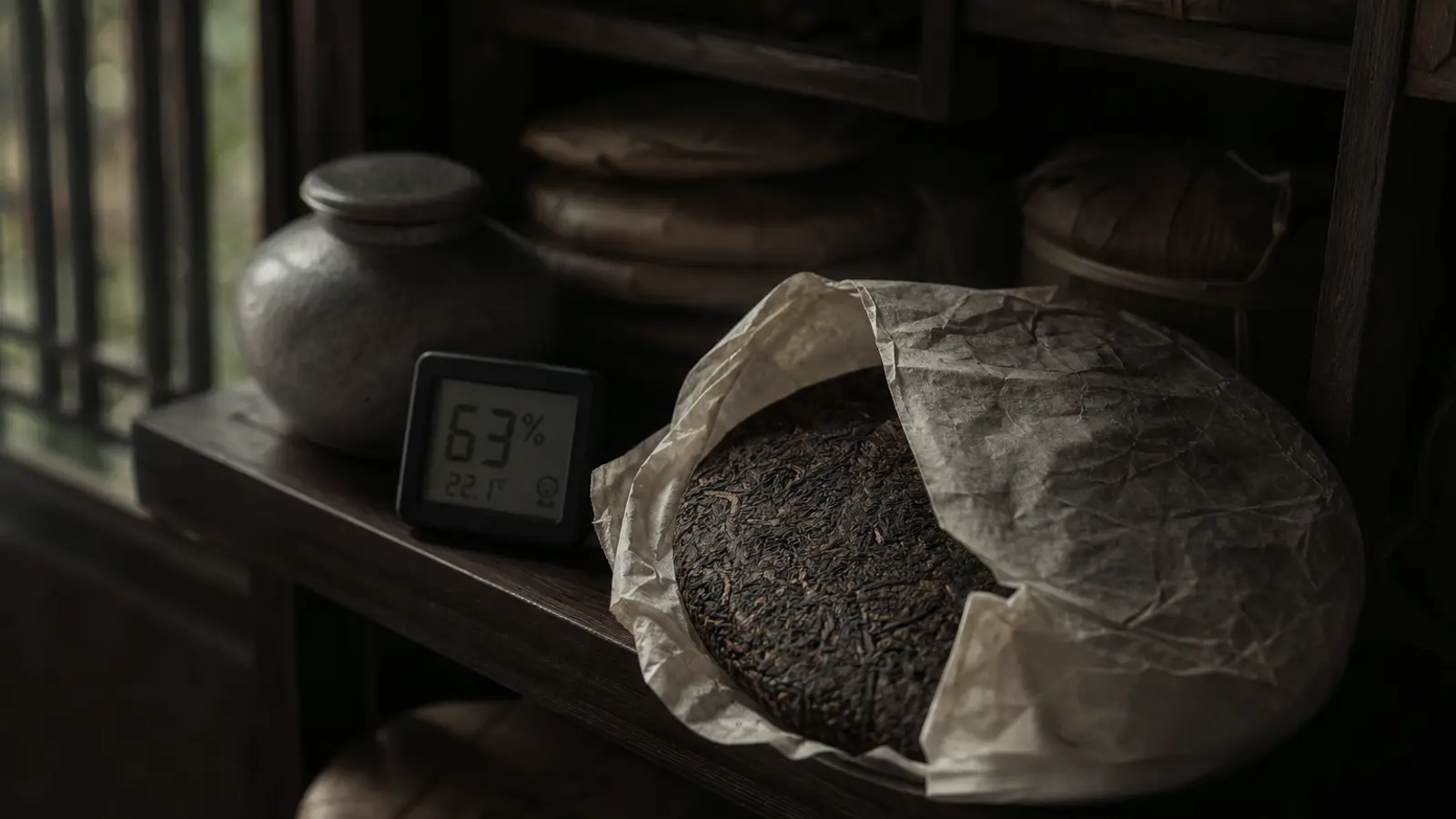
Humidity: 60–75% RH for dry storage, 70–80% RH for more active storage. Below 60% and aging slows dramatically. Above 85% sustained and you risk mold. A digital hygrometer ($15–$30) is essential.
Temperature: Stable temperatures between 65–80°F (18–27°C) support aging without inviting unwanted microbial activity. Fluctuation is more damaging than any specific number within that range.
Odor isolation: Pu-erh is extraordinarily absorbent. It will pick up kitchen smells, paint odors, coffee, cleaning products — anything ambient. Store it in a dedicated cabinet, room, or sealed environment away from strong-smelling sources.
Air circulation: Some airflow is beneficial; sealed airtight storage slows aging significantly. Occasional airing (opening your storage space for an hour every few weeks) helps.
A food-safe storage cabinet with a small humidifier and hygrometer works well for most home quantities. For serious aging at scale, a dedicated room with humidity control is the professional approach. Tropical climates (high humidity, warm temperatures year-round) naturally approximate traditional Hong Kong storage and can produce good results with minimal intervention. For a deeper look at region-specific approaches, see our guide on how to store pu-erh tea in tropical climates.
The Provenance Problem: Buying Aged Tea
Here’s where I need to be direct. The aged pu-erh market has a significant fraud problem. Teas are misdated, storage conditions are misrepresented, and genuinely old material is mixed with young leaf to stretch supply. This is not hypothetical — it’s a documented, ongoing issue in both the Chinese market and among Western importers.
The practical implications:
A vendor selling “20-year-old sheng” at $40 per beeng is almost certainly selling something else. Genuine 20-year aged material in good storage from reputable sources costs real money — typically $150–$500+ per 357g cake depending on the production.
Buy from vendors who can tell you specifically: where the tea was stored, for how long, and ideally who stored it. The best Western vendors in the aged pu-erh space provide this information as standard.
When possible, taste before committing to multiple cakes. Samples from reputable vendors are worth the cost.
The 1988 HTC and 1993 Liu Bao I’ve referenced came through sources with documented storage chains. I’m describing what that level of aging actually produces because I’ve tasted it. I can’t verify every bottle on a retailer’s shelf, and neither should you accept claimed age at face value without corroboration. Learning how to read a pu-erh tea wrapper is one practical step toward identifying what you’re actually buying.
Does Pu-erh Age the Way Wine Does?
The comparison is genuinely useful, not just marketing. Bordeaux ages because of tannin polymerization, slow oxidation through cork, and the development of secondary and tertiary aromatic compounds over time. Young Bordeaux from a great vintage is often aggressive, tannic, and demanding. The same wine at 20 years has integrated that structure into complexity.
Sheng pu-erh undergoes analogous chemistry. The catechin compounds that create astringency in young sheng polymerize over years into larger, softer molecules. The aromatic compounds present in young leaf transform into entirely different aromatic profiles. Storage conditions (the wine cave equivalent) and starting material quality both matter enormously.
The differences: pu-erh aging is largely microbially driven in ways wine aging is not, the timeline can extend well beyond anything wine achieves (100-year-old shengs exist and are reportedly still evolving), and the storage conditions required are higher humidity than any wine cellar would tolerate.
But the fundamental insight holds. Buying young pu-erh from a good source and storing it well is the pu-erh equivalent of buying Bordeaux futures: you’re acquiring time, not just leaf. If you’re coming from a wine background, our piece on wine to tea palate transfer covers how to map what you already know onto the tea world.