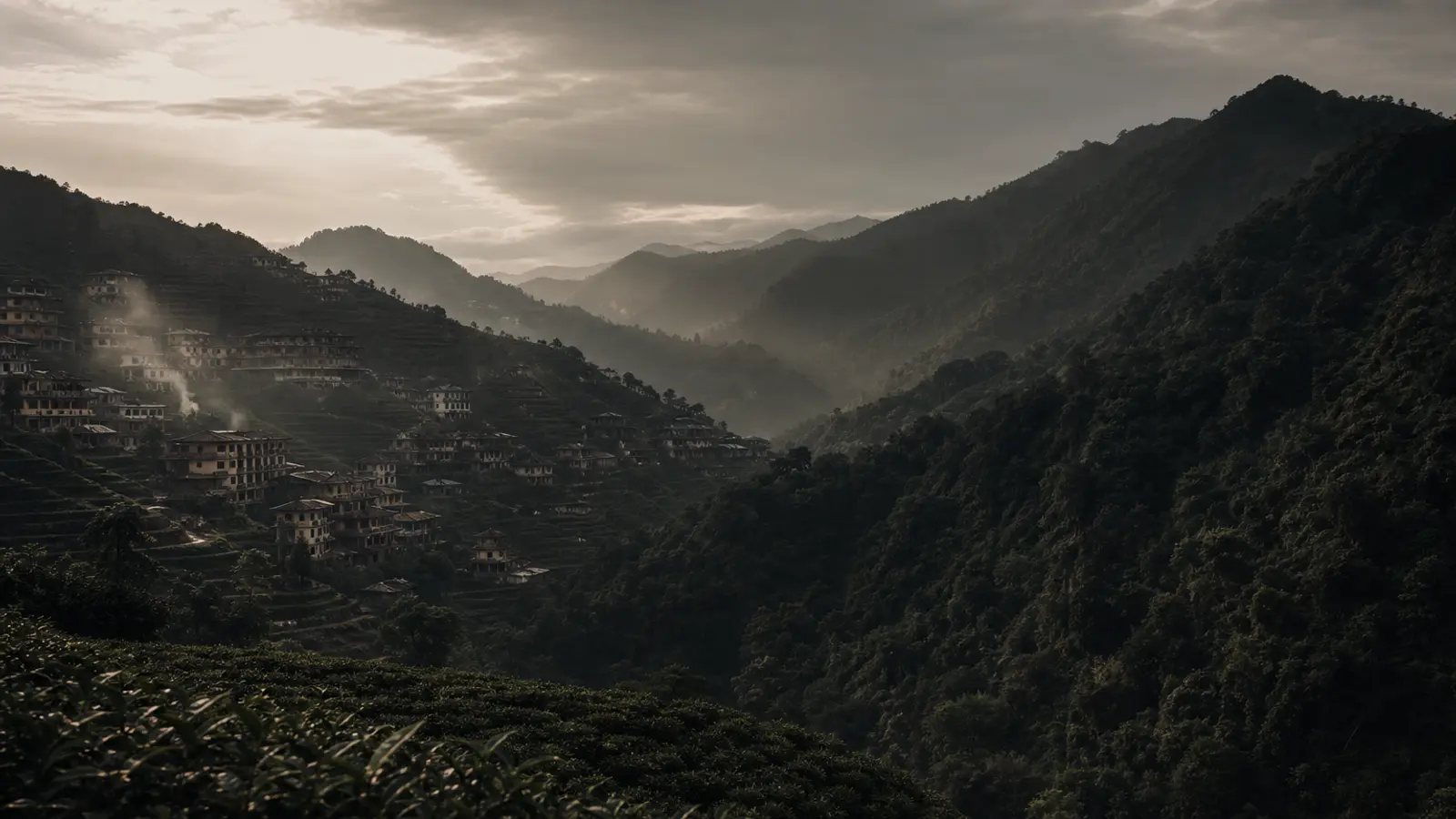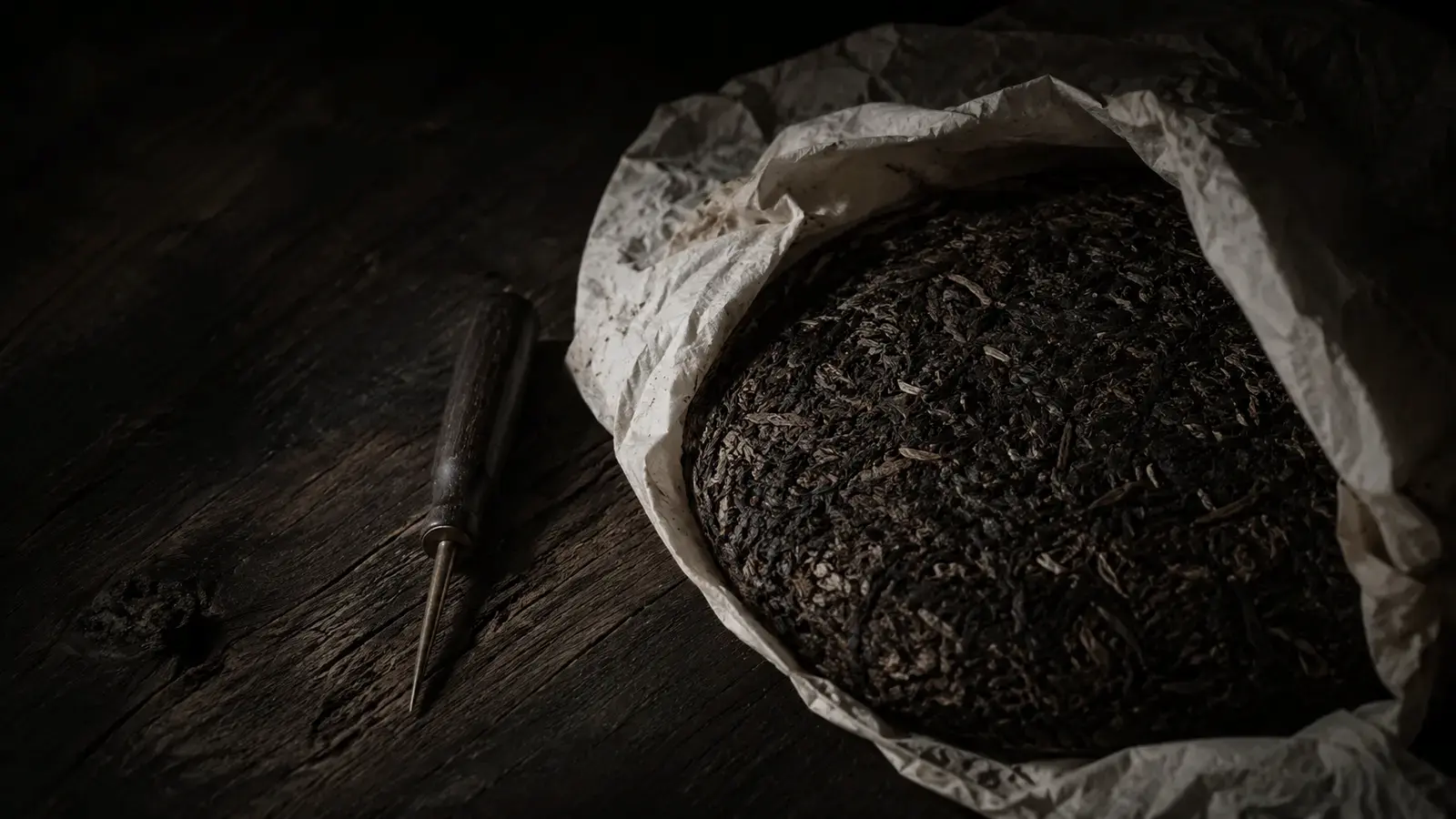
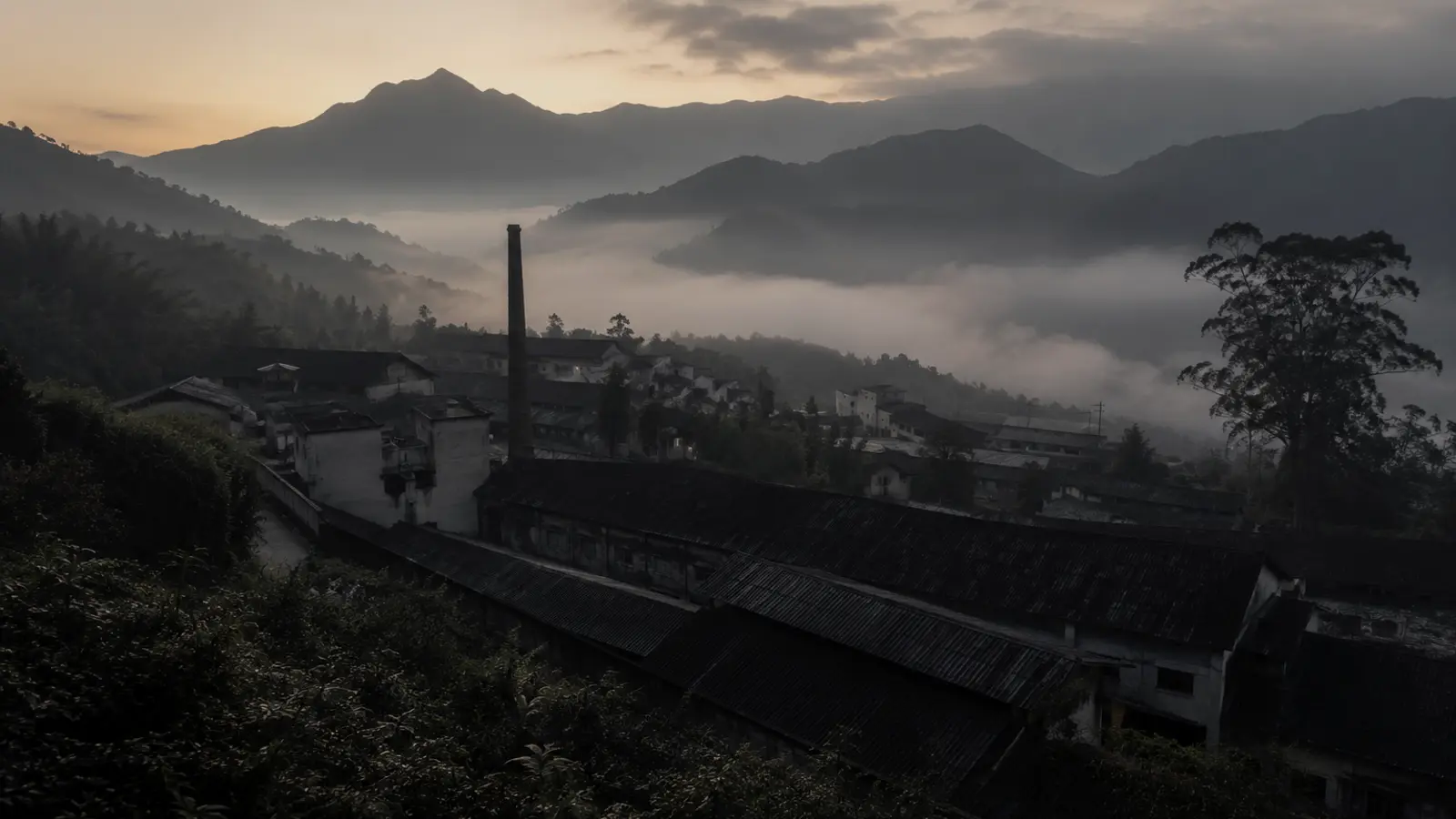
Menghai (勐海) county sits in China’s Xishuangbanna (西双版纳) prefecture at approximately 21.9°N, 100.4°E — a name that appears on more pu-erh cakes than any other place on earth. To understand what that name actually means, you need to hold two realities simultaneously: one of the world’s great industrial tea operations and a patchwork of mountain ranges producing some of pu-erh’s most compelling single-origin material. The factory and the mountain exist in the same county, often within sight of each other. They tell different stories. Both are true.
This is the central tension of the menghai tea region, and navigating it is essential for anyone serious about pu-erh.
Geography & Location
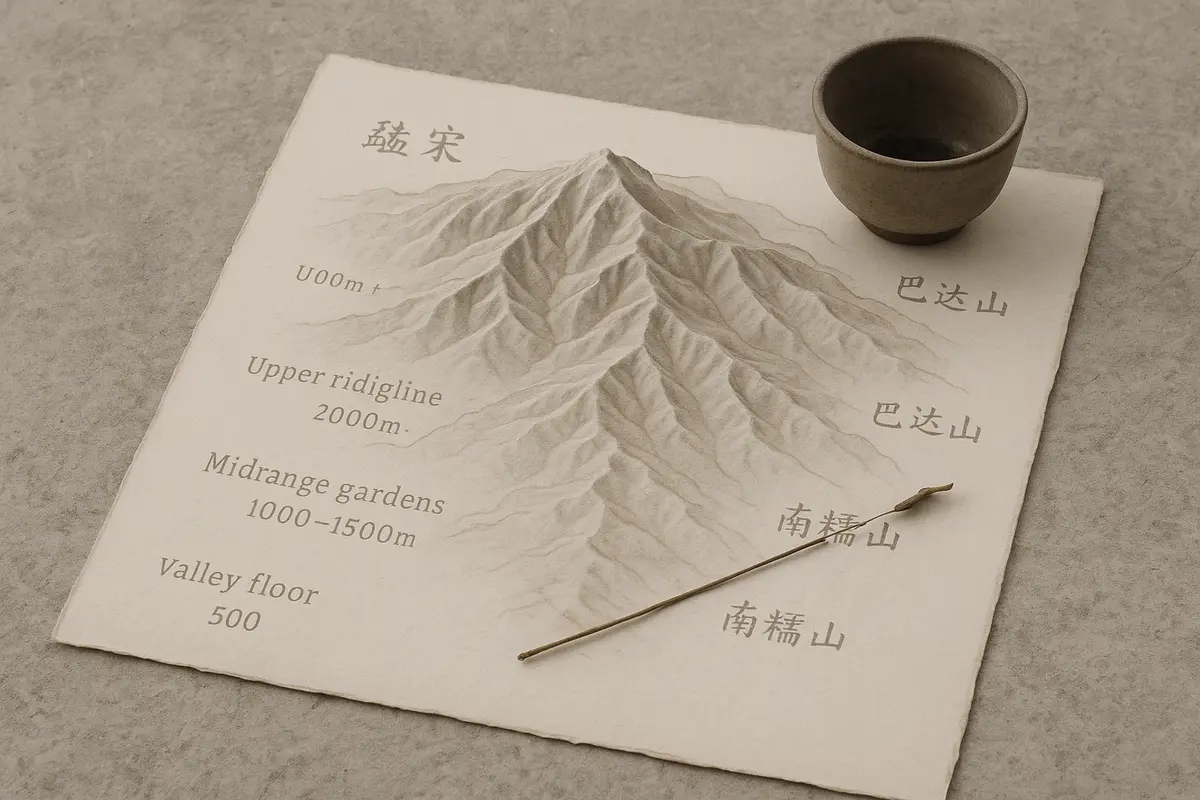
Menghai county covers roughly 5,500 square kilometers in the southwest corner of Yunnan province, bordering Myanmar to the west. The county seat, Menghai town (勐海镇), sits at about 1,150 meters elevation — comfortably subtropical, warm year-round, never cold enough to threaten the tea trees on the slopes above it. The geography is strongly tiered. Valley floors run as low as 500 meters and support plantation agriculture, including modern tea cultivation, rubber, and rice. The midrange elevations — 1,000 to 1,500 meters — are where most of the county’s working tea gardens sit, both plantation and older mixed-forest plots. The upper ridgelines push past 2,000 meters; Bada Mountain (巴达山) and the ranges behind Meng Song (勐宋) reach up to approximately 2,100 meters.
The county is bisected by river drainages feeding the Mekong basin. These watercourses create microclimatic variation — fog-filled valleys in the morning, rapid temperature drops at altitude after sunset — that shapes leaf chemistry in ways still being mapped systematically.
Four named mountain sub-regions carry the most reputational weight in Menghai county: Meng Song, Bulang (布朗山), Bada, and Nannuo (南糯山). Each has its own article or deserves one; this piece treats the county as a whole with Meng Song as the firsthand anchor. Bulang and Nannuo are covered in dedicated origin profiles.
Climate & Elevation
Menghai county receives 1,200–1,400mm of annual rainfall, distributed very unevenly across a pronounced monsoon cycle. The wet season runs approximately May through October; the dry season, November through April, can be strikingly arid. This seasonal rhythm drives tea growth cycles — the spring flush (明前 míngqián or 春茶 chūnchá) and autumn flush (秋茶 qiūchá) are the primary harvests, with a smaller summer crop that most serious producers downgrade.
The diurnal temperature swing at higher elevations matters more for quality than the annual average. At 1,800 meters on Meng Song or Bada, daytime temperatures in spring may reach 22–24°C, while nights drop to 8–12°C. This swing slows catechin metabolism in the leaf, concentrating the precursors to bitterness and astringency that — when material is good and processing is correct — convert to the deep huigan (回甘, bittersweet aftertaste) that defines great sheng pu-erh.
Lower elevation gardens, including most plantation material feeding the factories, experience less dramatic temperature swings. The cup reflects this: smoother, faster-developing, often more approachable young but with less structural complexity for long aging.
Elevation is not a simple proxy for quality, but it is a useful initial filter. When I see a Menghai county sheng labeled as valley floor material, I adjust my expectations accordingly.
Soil & Terroir
Soil composition in Menghai county varies as much as elevation. Valley floors and lower slopes are predominantly laterite — iron-rich, reddish, moderately fertile, well-draining. This soil supports vigorous vegetative growth but doesn’t concentrate mineral tension in the leaf the way higher-altitude soils do.
Midrange and higher mountain soils shift toward granite-derived sandy loams with clay inclusions. These soils drain quickly, stress the tea tree gently, and contribute to the mineral register — the slate, wet stone, and chalky notes that distinguish serious Menghai mountain sheng from more agricultural lowland material. Bada Mountain specifically is noted for its red sandstone and granite mix. Ancient wild-growing tea trees there (some estimated at several hundred years old, though precise dating is difficult) have root systems extending deep into fractured rock, drawing trace minerals unavailable in cultivated plots. The resulting leaf character is often described as more savagely bitter than cultivated ancient-tree material from the same county, with a correspondingly dramatic but slower-developing sweetness arc.
The presence of shade trees in older mixed-forest gardens — at Meng Song and parts of Bada in particular — also modifies terroir functionally. Shade slows photosynthesis, raises chlorophyll, and produces more amino acid content in the leaf relative to catechins. This shifts flavor toward umami and sustained sweetness alongside the bitterness, rather than raw astringency alone.
Key Cultivars & Tea Types
The dominant cultivar across Menghai county is Camellia sinensis var. assamica — the large-leafed Assam variety of tea that can grow into substantial trees given centuries of neglect by human harvesting standards. This is the biotype responsible for pu-erh’s characteristic muscular tannin structure.
Within assamica, Menghai county hosts several named local cultivars. Menghai Da Ye (勐海大叶, “Menghai large leaf”) is the most widely referenced, the regional landrace that forms the backbone of both factory blends and most single-origin production. Nannuo Shan also has its own distinct local selections; Bada’s wild populations are genetically more diverse and sometimes classified separately from managed assamica plots. Some research suggests the wild trees in Bada may include transitional forms between cultivated assamica and truly feral Camellia populations, but this remains contested in the botanical literature.
The tea types produced from Menghai county material include:
- Sheng pu-erh (生普洱): Raw, minimally processed, pressed into cakes or other shapes. The mountain teas — Meng Song, Bada, Bulang, Nannuo — are predominantly sold as sheng.
- Shou pu-erh (熟普洱): Pile-fermented using the wo dui (渥堆) technique developed in part at Menghai Tea Factory. Factory shou dominates production volumes; single-origin shou exists but is rarer and commands premium prices.
- Loose-leaf mao cha (毛茶): Uncompressed raw processed leaf, sold to factories and blenders or direct to consumers.
- Compressed bricks, tuo cha (沱茶), and other shapes: Factory formats primarily, though craft producers use them too.
Processing Traditions
Menghai county’s processing traditions split cleanly along the factory/mountain divide.
Factory processing is highly mechanized and rigorously standardized. Dayi’s Menghai Tea Factory runs continuous production at industrial scale. Sheng cakes are blended from multiple sources, graded by leaf size and quality, and mixed according to fixed recipes. Shou production uses wo dui pile fermentation — moistened mao cha piled to 1–1.5 meters, covered with cloth, and allowed to ferment via microbial activity at controlled humidity and temperature for 45–60 days. The result is a tea that has undergone a physical and chemical transformation analogous to accelerated aging, producing the earthy, smooth, sweet-dark character of finished shou without decades of natural storage. This technique was refined and scaled at Menghai Tea Factory beginning in 1973, building on earlier fermentation experiments in Guangzhou and Kunming; the factory’s role in systematizing wo dui is considered its most significant technical contribution to the industry.
Mountain processing at the craft level follows the traditional sequence for sheng: fresh leaf harvesting (hand-picked, typically a bud with two or three leaves), brief withering, wok-kill-green (杀青 shāqīng) in a large iron pan over wood or gas fire to halt oxidation, hand-rolling to shape the leaf and break cells, sun-drying to produce finished mao cha, and pressing into cakes using stone molds with steam. At each step, variation is enormous. Kill-green temperature and duration, rolling intensity, drying time — all affect the final cup. Higher-temperature kill-green produces a more pronounced roasted note; lower-temperature or shorter kill-green preserves more volatile aromatics and raw catechin structure, which extends aging potential but makes young teas rougher.
For Meng Song material specifically, processing tends to preserve the leaf’s innate muscular structure. The bitterness that characterizes Meng Song sheng is not a processing artifact — it is the leaf’s contribution, and processing choices at honest producers preserve rather than mask it.
Characteristic Flavor Signatures
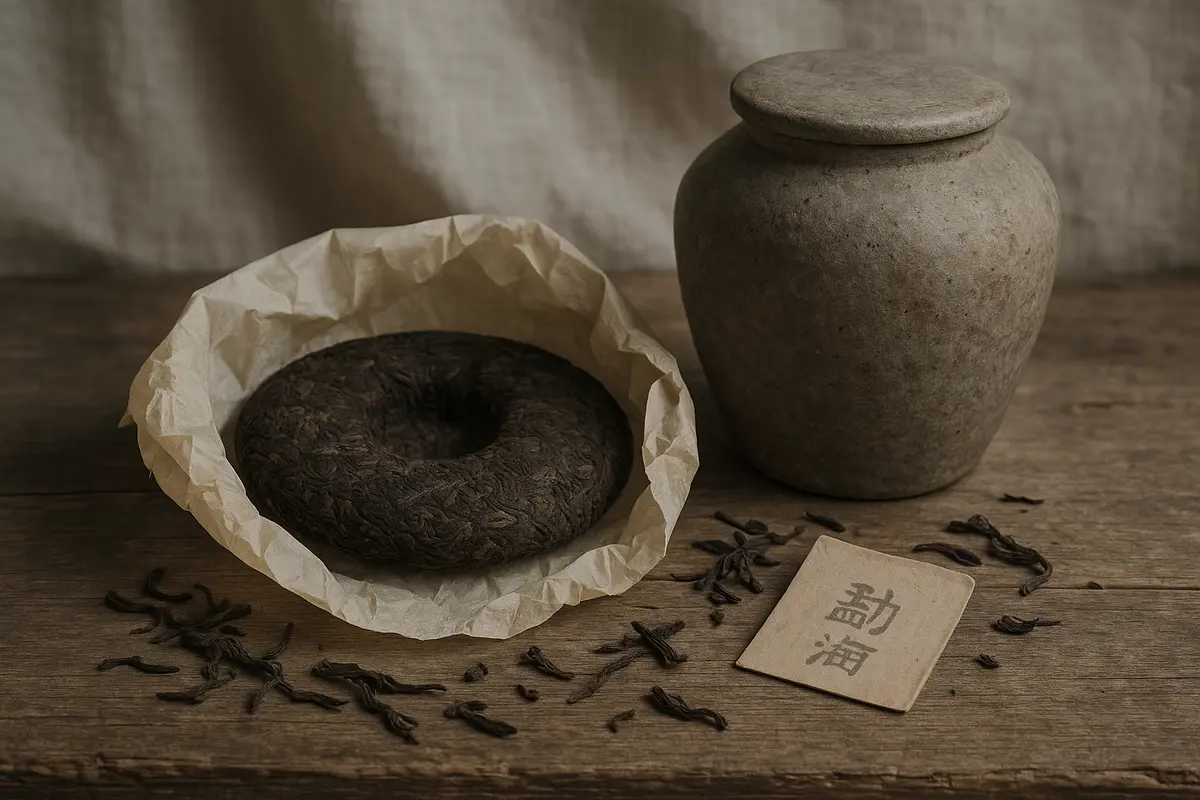
This is where the factory/mountain distinction produces its most dramatic divergence.
Dayi Factory Pu-erh
The Dayi 7572 shou — the flagship shou recipe, first produced in the 1970s using leaves graded 7 (medium-fine) with a recipe coded in 1975, factory number 2 — has a flavor profile defined by consistency rather than complexity: earthy, dark, smooth, with notes of dried jujube, dark chocolate, forest floor, and a clean finish. It is technically well-made. It is broadly appealing. It is not an exciting cup if you are looking for origin character, because origin character is precisely what the blending and fermentation process is designed to metabolize into something uniform.
The 7542 sheng — same recipe-number logic, a blend of grade-4 leaves with a 1975 recipe origin — is a younger-drinking cake with light floral notes, green-grain astringency, and straightforward bitter-sweet structure. It ages predictably. Hundreds of thousands of cakes are produced annually. It is, in wine terms, the Mouton Cadet of pu-erh: consistent, recognizable, the safe choice, not the exciting one.
This is not a dismissal. The 7542 and 7572 are genuine benchmarks. They are how most of the world learned what pu-erh tastes like.
Meng Song Mountain Pu-erh
My most direct experience with Menghai county as terroir rather than brand comes from a Meng Song shou — single-origin pile-fermented material from the Meng Song growing area. On the Steep Atlas 10-Dimension (10D) profile, this tea scored 61 out of 100, which it shares with only one other tea in the collection (a Zi Ya Purple Bud sheng). That score reflects genuine distinction across multiple dimensions.
The cup: muscular body from the first steep, with a grippy, almost chewy mouthfeel that coats the entire palate. A pronounced bitterness arrives mid-palate — not the sharp edge of tannic astringency but a deep, resonant bitterness, like very dark chocolate or unsweetened espresso. Then the conversion begins. Within 30–45 seconds, that bitterness starts to transform into a spreading sweetness that moves from the back of the tongue upward and outward — the huigan (回甘) arc that I consider the most diagnostic indicator of high-quality Yunnan material. On this tea, the arc is dramatic and sustained.
The 10D scores break down as follows:
| Dimension | Score (out of 10) |
|---|---|
| Body | 8 |
| Huigan (回甘) | 8 |
| Flavor Transition | 8 |
| Cha Qi (茶氣) | 7 |
| Steep Endurance | 6 |
| Aroma | 6 |
| Clarity | 7 |
| Complexity | 7 |
| Finish Length | 7 |
| Balance | 7 |
The cha qi (茶氣) — the physical sensation of the tea’s effect on the body — is notably potent. I use this term carefully, aware that it sits in contested territory between sensory description and subjective interpretation. For a deeper examination of what cha qi actually means, see What Is Qi in Tea? On this tea, the physical effect was real: warmth spreading through the chest and upper body within the first few steeps, a mild heightening of alertness distinct from caffeine stimulation alone. Whether this reflects the specific alkaloid and theanine profile of high-altitude Meng Song material or is partly perceptual context, I can’t say definitively. But it was consistent across multiple sessions.
Steep endurance was the relative weakness at 6/10 — the tea gave its best performance in steeps 2 through 6, with later infusions losing structural complexity faster than I would expect from a tea of this overall caliber. This may be specific to this producer’s processing or to the nature of shou material from this area. Meng Song sheng (raw) from quality producers tends to show similar structural signatures: pronounced bitterness with strong huigan potential, significant body, and what tea writers often describe as a “wild” or “high-mountain” quality that distinguishes it from the rounder profiles of lower-altitude Menghai material. The mountain sits at 1,600–1,800 meters elevation in the northeastern part of the county, with tea gardens spread across multiple villages including Naka (那卡), which has its own developing reputation.
Bada Mountain
Bada (巴达) material is often described as the most “wild” of the major Menghai sub-regions. The presence of genuinely ancient trees — some specimens in Bada’s primary protected forest are estimated at 800–1,000 years old, making them among the oldest confirmed tea trees in Yunnan — creates leaf with exceptionally thick cell walls, high catechin concentration, and slow fermentation kinetics. Young Bada sheng is typically aggressive: strong bitterness, significant astringency, rough in the early steeps. Aged Bada from good vintages is among the most sought-after material from the county.
Quality Indicators & Authentication
The menghai tea region has a layered authentication problem, and clarity here matters for anyone spending serious money.
Factory Tier
Dayi is the most counterfeited pu-erh brand in the world. The brand’s recipe cakes — particularly older vintages from the 1990s and early 2000s — trade on a collector market where a single 357g cake from the right year can sell for thousands of dollars. Authentication requires examining wrapper printing resolution, inner ticket (内飞 nèifēi) characteristics, factory neipiao codes, and the character of the cake itself. For collectors entering this market, third-party authentication through experienced traders is essential.
Current production Dayi is more straightforward: buy from authorized retailers, check batch coding. The counterfeiting problem is concentrated in vintage and limited-release products. Recipe number decoding: the standard Dayi recipe number formula is [year of recipe][leaf grade][factory code]. Factory code 2 = Menghai. So 7542 = recipe from 1975, grade 4 leaf, Menghai factory. 7572 = recipe from 1975, grade 7 leaf, Menghai factory. 8582 = recipe from 1985, grade 8 leaf with grade 2 surface, Menghai factory.
Mountain Tier
Single-origin mountain pu-erh from Menghai county presents different authentication challenges. There is no regulated appellation system for Meng Song, Bada, or most other mountain sub-regions. A “Meng Song gushu” (古樹, old tree) label requires only that a seller choose to write it. Verification is genuinely difficult: DNA testing of tea material is possible but not widely used commercially; organoleptic assessment by experienced tasters is the practical standard; relationships with known producers or villages reduce fraud risk.
Red flags to watch for: unusually low price for claimed gushu material; sellers without documented sourcing relationships; blended material sold as single-tree or single-village; compressed cakes lacking inner tickets.
Quality indicators for legitimate mountain Menghai sheng include:
- Visible leaf quality: whole, large-leaf material with visible tip hair (白毫 báiháo) for spring material
- Compression density: tight enough to hold shape, loose enough to separate cleanly
- Aroma of dry cake: floral, hay, slight tobacco — absent the musty or sour notes indicating poor drying or storage
- First steep clarity: liquor should be clear to slightly hazy, not turbid or brown-grey
- Bitterness quality: present and clean, converting to sweetness — not the flat, lingering bitterness of poorly processed or stored material
Price Ranges
The menghai tea region spans the widest price range of any pu-erh county — possibly of any tea region on earth.
Factory production (current):
- Dayi 7572 shou 357g cake: $10–20 depending on batch year and retailer
- Dayi 7542 sheng 357g cake: $15–30
- Other current Dayi recipes: $8–50
Factory production (vintage):
- 2000s Dayi recipes in good storage: $100–600+ per cake
- 1990s “88 Qing” (八八青) and comparable cakes: $2,000–10,000+
- Pre-1990s factory production: collector market prices, highly variable, authentication risk high
Single-origin mountain sheng (per 100g loose or compressed equivalent):
- Entry-level Menghai county plantation or mid-grade: $5–20
- Named mountain (Meng Song, Bada, Nannuo) from smaller producers: $20–80
- Certified or well-documented gushu from reputable sources: $80–200
- Premium Naka village (那卡, a Meng Song sub-area with strong reputation) or single-tree material: $200–500+
There is a documented gap between in-region pricing (buying directly in Menghai town or Jinghong markets) and international export pricing. A cake that retails for the equivalent of $15 in Xishuangbanna may cost $40–60 from a Western importer — markup that reflects shipping, import duties, and the cost of curation and trust. This is not necessarily illegitimate; good importers add genuine value through sourcing relationships and quality filtering. But understanding the gap helps calibrate expectations.
The Factory and the Mountain: A Synthesis
The wine parallel that best frames the menghai tea region is Bordeaux — not as flattery but as structural analogy.
Bordeaux is simultaneously the name on millions of bottles of serviceable $12 grocery-store red and the name on some of the most expensive and age-worthy wines in the world. The industrial tier and the prestige tier share geography, grape variety, and basic technique, while diverging almost completely in intent, economics, and result. The word “Bordeaux” on a label tells you almost nothing useful without additional information.
Menghai works the same way. “Menghai” on a pu-erh cake tells you which county’s name the producer chose to write. It could mean a Dayi 7572 shou fermented from blended Yunnan leaf — reliable, affordable, the Mouton Cadet of pu-erh. Or it could mean single-origin Meng Song gushu sheng harvested from 400-year-old trees at 1,800 meters, processed by a village cooperative, pressed in limited quantities — the single-vineyard St-Émilion equivalent, specific, expressive, genuinely worth the price difference if you can verify provenance.
What changed modern pu-erh is that Menghai Tea Factory’s industrialization made pu-erh globally accessible. Before the factory-scale wo dui process, pu-erh required years of storage to become approachable. The 1973 refinement of pile fermentation at Menghai meant a consumer in Hong Kong, or eventually in California or Berlin, could buy a cake and drink it without waiting a decade. This is a genuine contribution to tea culture globally, even if the cup itself isn’t revelatory.
The tradeoff is that factory pu-erh created a mental model of “what pu-erh tastes like” that is accurate only for factory pu-erh. Someone who has only tasted 7572 shou has not tasted what Meng Song mountain material tastes like. The dark earthy smoothness of well-made shou and the grippy, bittersweet muscularity of high-mountain sheng are both real, both legitimate — but they are barely the same beverage. For those curious how pu-erh ages over time, the divergence between factory and mountain material becomes even more pronounced across decades of storage.
My Meng Song shou experience sits at an interesting intersection: it’s a pile-fermented tea (shou, like the factory product) but from identified single-origin mountain material, processed at smaller scale with higher-quality leaf. It scores 61/100 on our profile — meaning it’s distinguished enough to rank at the top of what I’ve tasted from this region, with an eight-out-of-ten body, an eight-out-of-ten huigan arc, and a flavor transition score that few teas of any type match. That performance comes from the mountain, not the factory.
Understanding that distinction is, essentially, the whole education.
Bulang Mountain and Nannuo Mountain are each covered in dedicated origin profiles. For context on sheng versus shou processing, see the sheng vs. shou guide. For navigating factory recipe numbers and wrapper decoding, see the pu-erh wrapper decoder. For how to store and age both factory and single-origin material, see the pu-erh aging and storage guide.