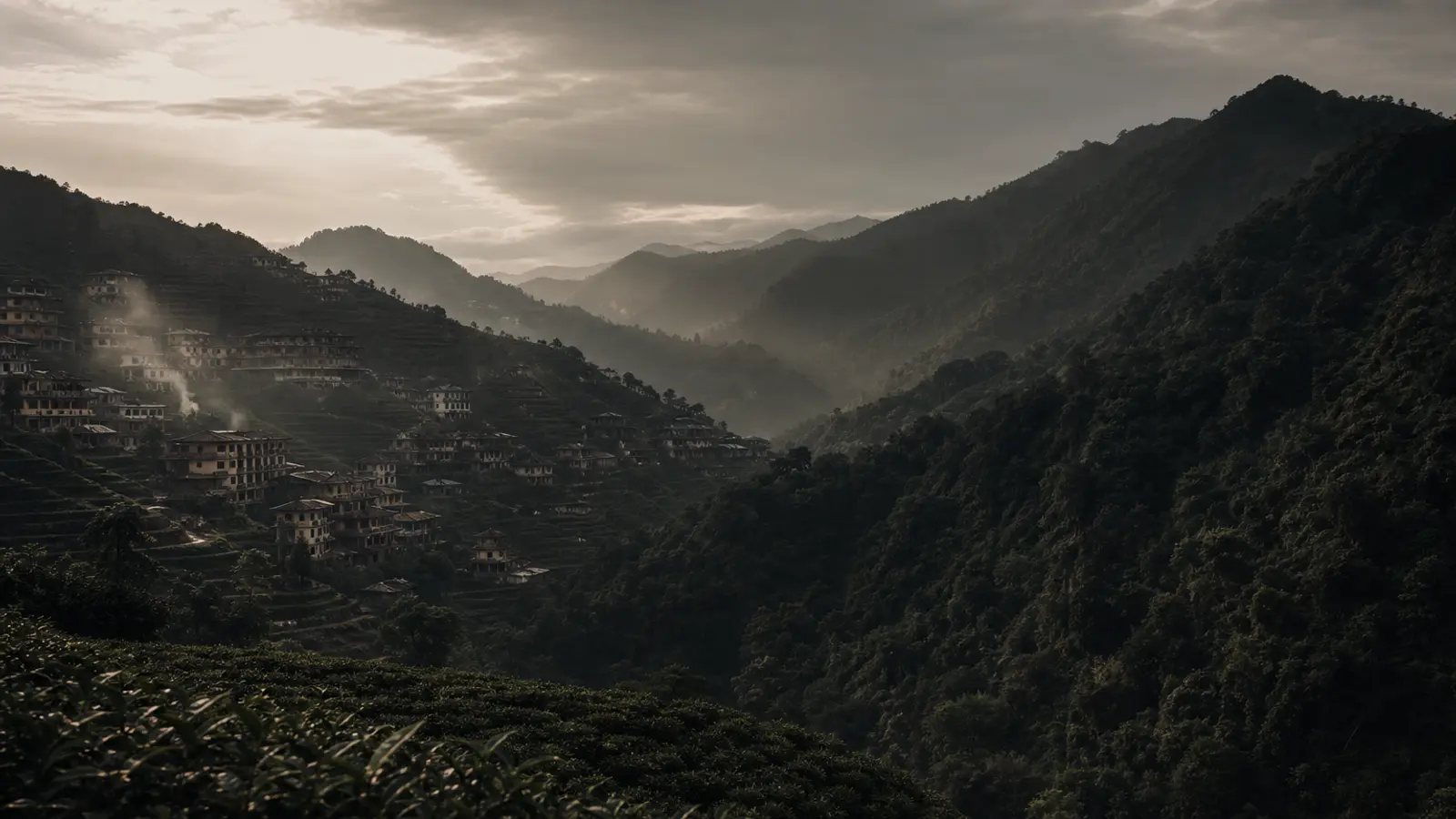
Twenty-one years old. Bulang Mountain leaf pressed under a generic CNNP “Zhong Cha” wrapper by a small farmer in 2005, then dry-stored in Guangdong. This is not Lao Ban Zhang (老班章) village tea — the pricing makes that clear, and honesty matters more than borrowed prestige. What it is: genuine Bulang Mountain terroir, broader area leaf, aged for over two decades in warm controlled storage. And it is the best tea I have tasted to date.
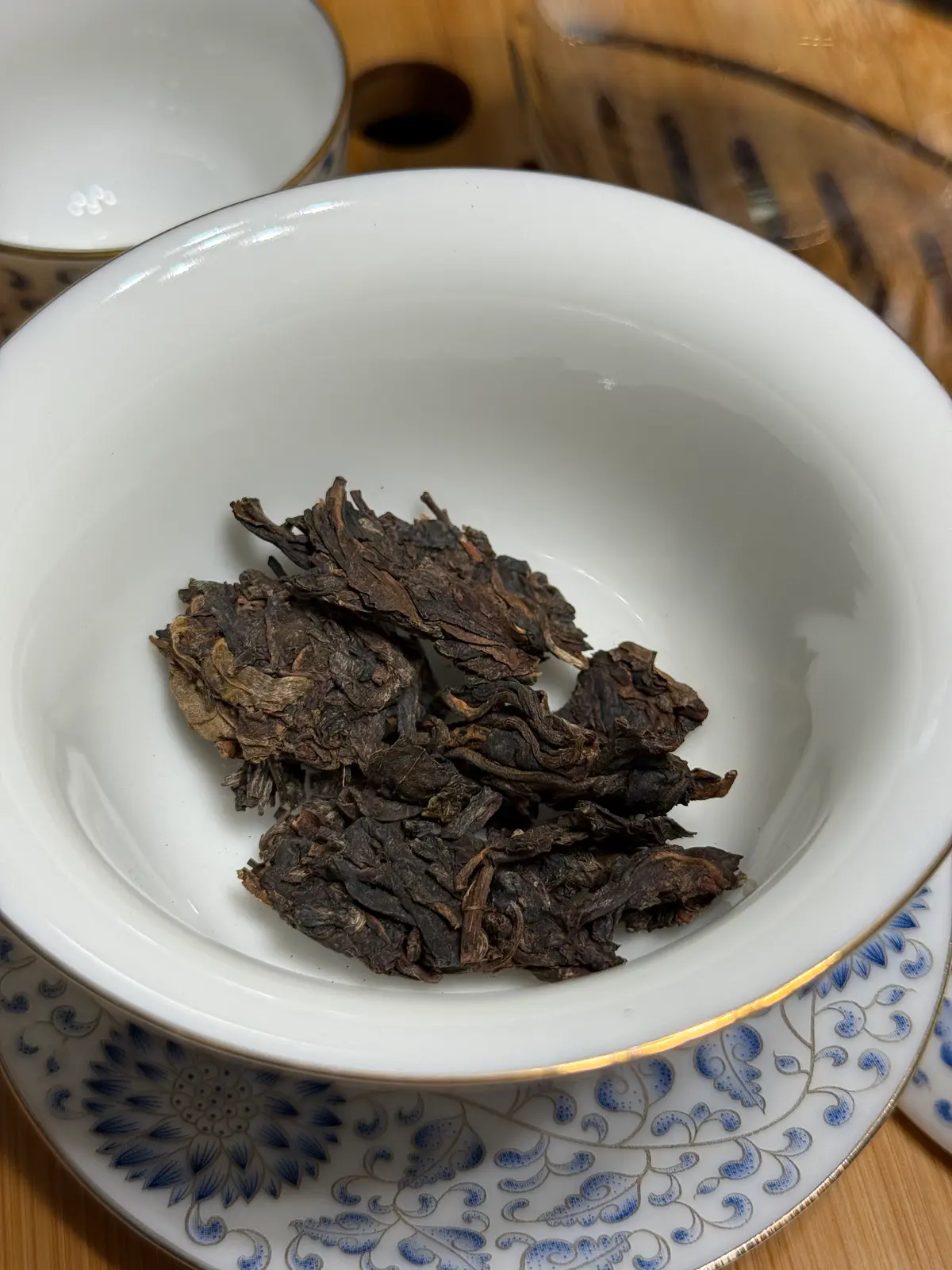
Dry Leaf
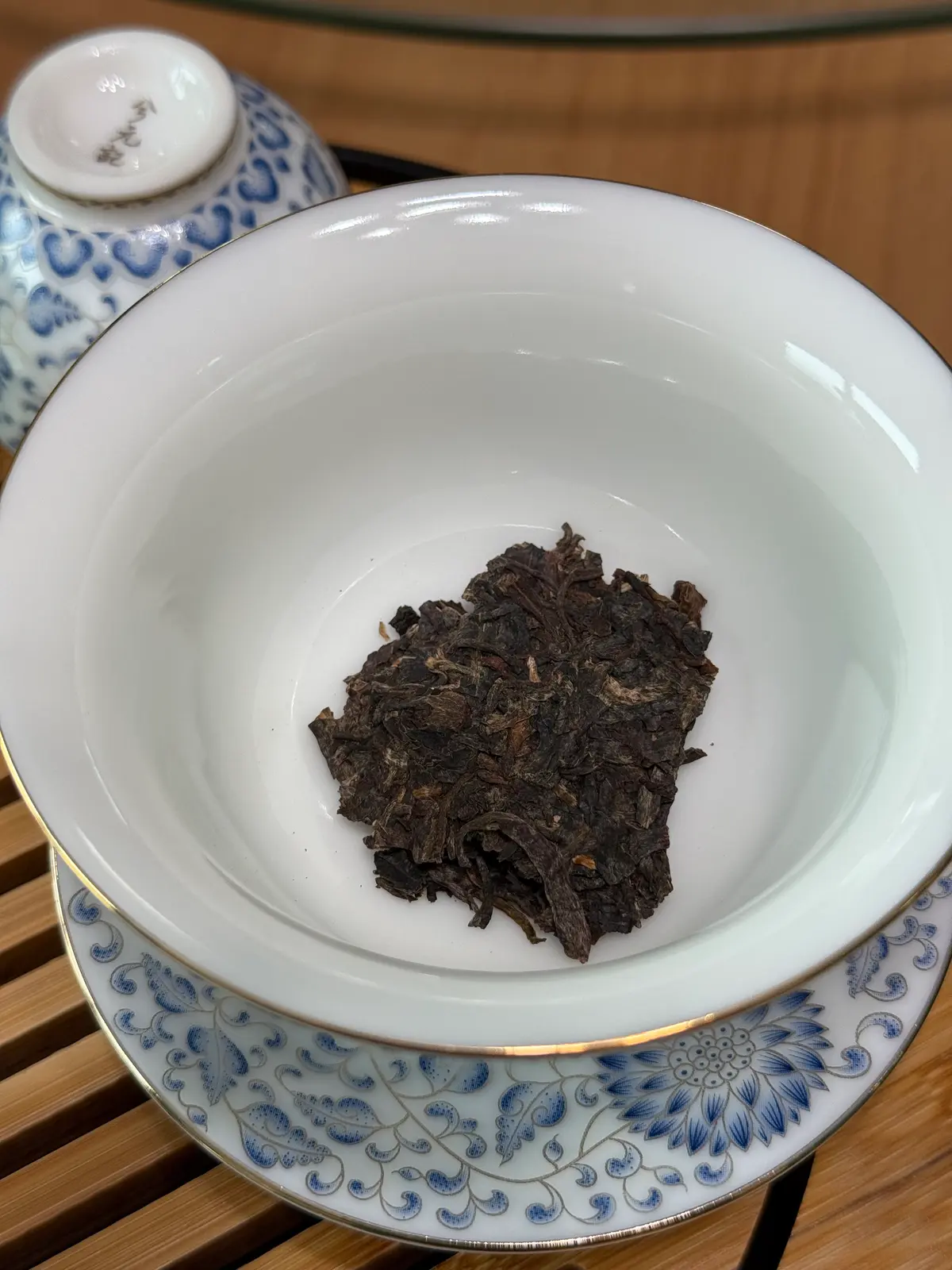
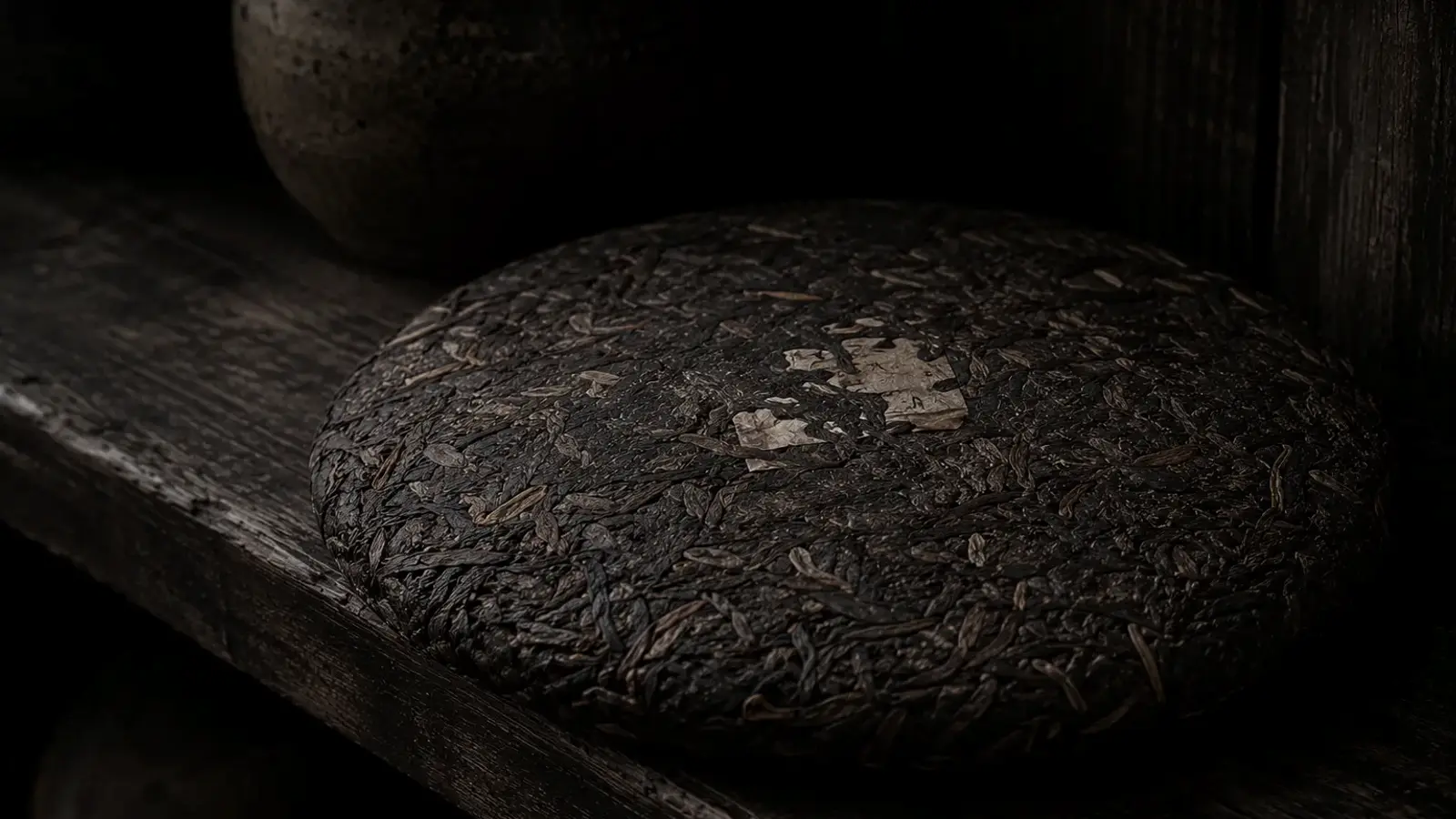
Compressed cake, dark leaf with visible age. Aroma quiet in dry state — like most well-aged sheng, it reveals itself in water, not in the hand.
The Session
Two rinses at 100°C before the first steep. The rinse water alone carried warmth and promise.
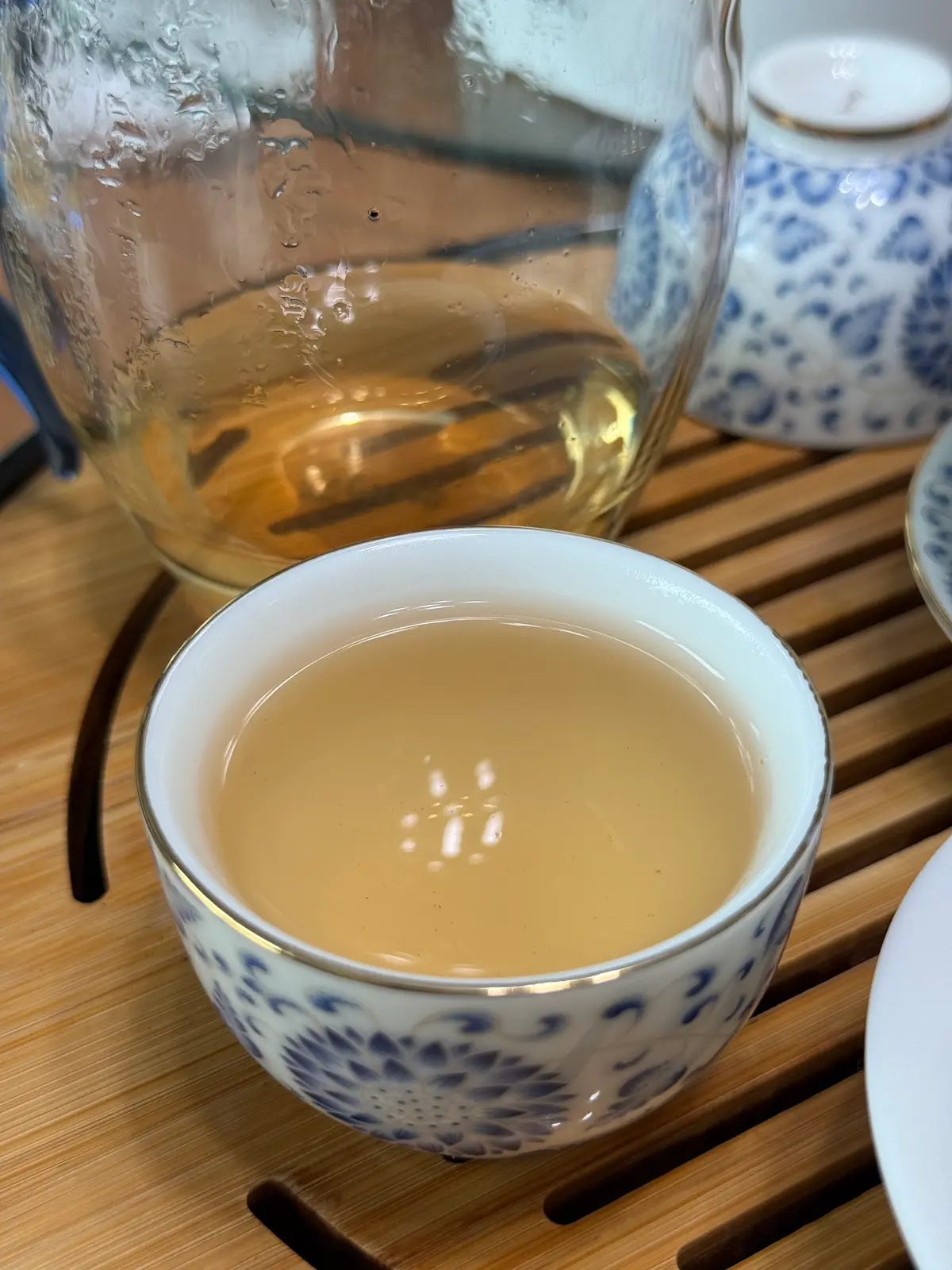
Steeps 1-2 (sweet-forward): Sweet entry with extraordinary complexity. The sweetness is immediately present but structured — not the one-dimensional sweetness of underdosed shou or young sweet sheng. Multiple layers detectable from the first sip. A gentle bitterness sits underneath the sweetness, providing architectural support without dominating. The balance between sweet and bitter is perfectly calibrated — neither overwhelms.
“Sweet but complex, not overly sweet because it has a gentle and nice bitterness to hold up the structure.” That single sentence is the palate statement. This is a Barolo drinker’s tea.
Steeps 3-4 (bitter-forward pivot): The session flips. Bitterness moves to the foreground, sweetness moves behind it. The orange deepens. The polyphenols and catechins from deeper in the leaf are now extracting. But the sweetness doesn’t disappear — it transforms into huigan (回甘) that floods the mouth after each swallow. This is the classic Bulang Mountain arc: the tea challenges you with bitterness, then rewards you with sweetness. The conversion is powerful and fast.
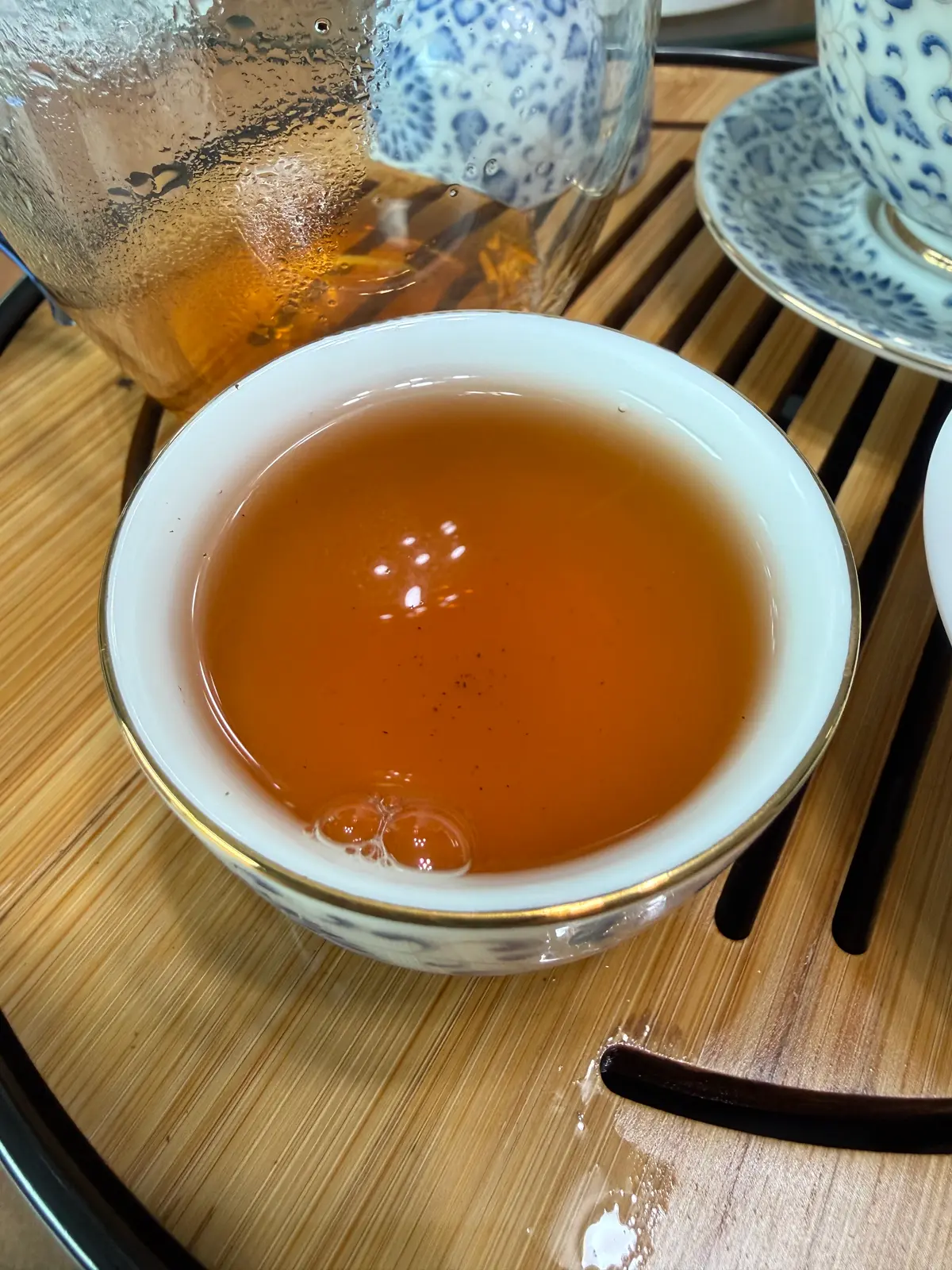
Steeps 5-7 (projected from steep 4 trajectory and Bulang terroir profile): The bitter-sweet negotiation continues with increasing complexity. Hardwood incense notes become more prominent. The forest floor quality from the wet leaf aroma translates into the cup as an earthy depth underneath the bitterness. Body remains thick and substantial.
Steeps 8-12 (projected): Bitterness recedes, a clean woody sweetness remains. The incense character lingers. The tea fades gracefully rather than collapsing — a sign of genuine Bulang mountain material with real endurance.
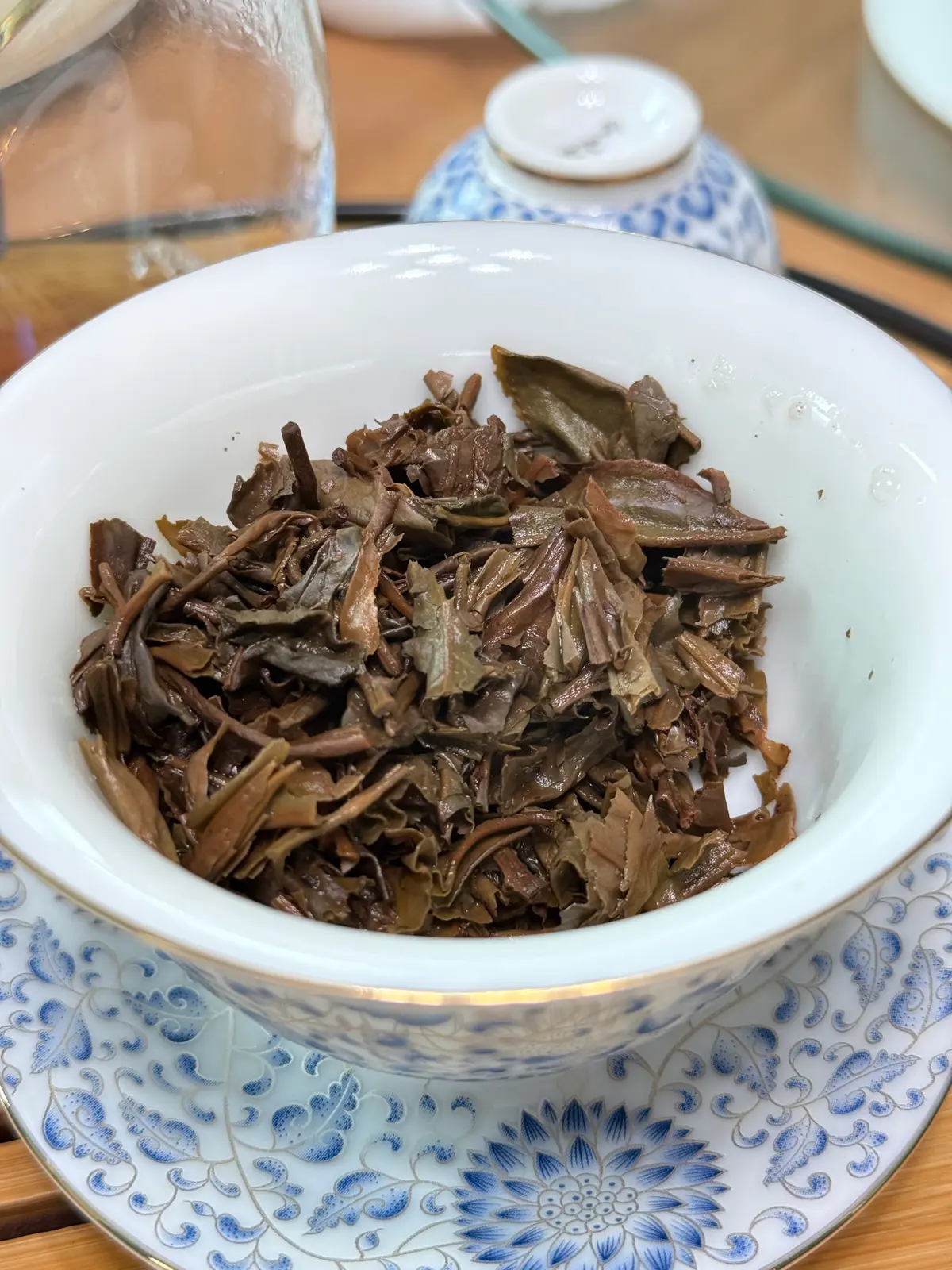
Flavor Profile
Front: Sweetness with architecture — multiple layers from the first sip, gentle bitterness providing the bones.
Mid: The session flips by steeps 3-4. Bitterness moves forward, sweetness transforms into huigan that floods the mouth after each swallow. Hardwood incense developing.
Finish: Clean woody sweetness and hardwood incense, with forest floor depth underneath.
Mouthfeel & Huigan
The mouthfeel is the defining quality of this tea. Thick — visibly thick when pouring, palpably thick on the tongue. Smooth despite the bitterness — 21 years of aging have rounded the tannin structure so it grips without scratching. Full-bodied in a way that lighter terroirs (Yiwu, Jingmai) cannot replicate. The viscosity coats the entire mouth and persists between steeps.
The huigan is the most powerful experienced to date. More powerful than the Meng Song shou’s dramatic bitterness-to-sweetness arc. More powerful than the 2006 Yiwu’s gentle sweetness. This is earned sweetness — the kind that only Bulang’s aggressive polyphenol content can produce after decades of aging have partially converted the bitterness but left enough to drive the huigan engine.
Qi Notes
Strong — consistent with Bulang Mountain’s reputation for potent cha qi (茶氣). Warming, focused, grounding. The body responds with a spreading warmth that accompanies the bitterness-to-sweetness arc in the mouth. This is a “sit back and receive” tea, not a “stay alert and analyze” tea.
Value Assessment
At roughly $0.35 per gram for 21-year-old Bulang Mountain sheng, this represents extraordinary value. True Lao Ban Zhang material at this age trades at multiples of this price. The CNNP wrapper and farmer provenance keep the cost accessible while the terroir delivers Bulang character without compromise.
Verdict
The best tea tasted to date. The tea that confirmed aged Bulang/Ban Zhang sheng as the primary direction for future exploration. Every quality marker aligns with palate preference: thick body, structured bitterness, earned sweetness, hardwood incense aroma, powerful huigan, strong qi.
This is not Yiwu’s silk and peaches. This is not shou’s velvet comfort. This is aged Barolo — not the young, aggressive, tannin-heavy version that punishes you, but the 15-20 year bottle where the tannins have integrated, the tar and roses have emerged, and the wine rewards patience with extraordinary complexity. Structure, earned sweetness, architectural complexity. This palate lives on Bulang Mountain.
This tea's strongest axis is Body (9/10). Also notable: Aroma, Huigan, Finish Length, Steep Endurance, Cha Qi.