Jingmai Mountain sits at approximately 22.2°N, 99.9°E in Lancang Lahu Autonomous County (澜沧拉祜族自治县), part of Pu’er prefecture (普洱市) in southwest Yunnan. It lies in the watershed between the Lancang River (澜沧江) — the upper reaches of the Mekong — and its tributaries, within the broader Xishuangbanna-adjacent zone that contains most of Yunnan’s great ancient tea forests.
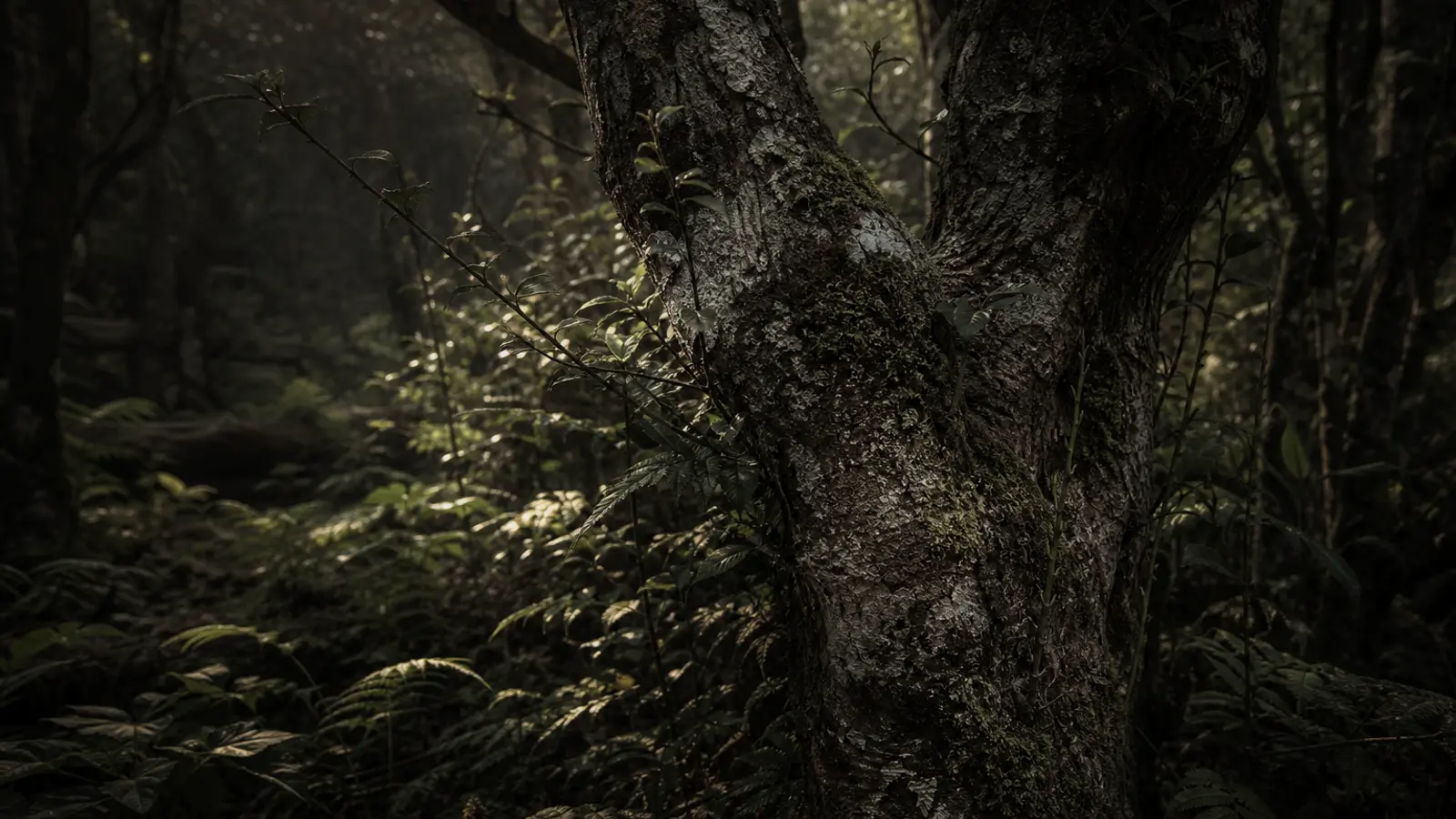
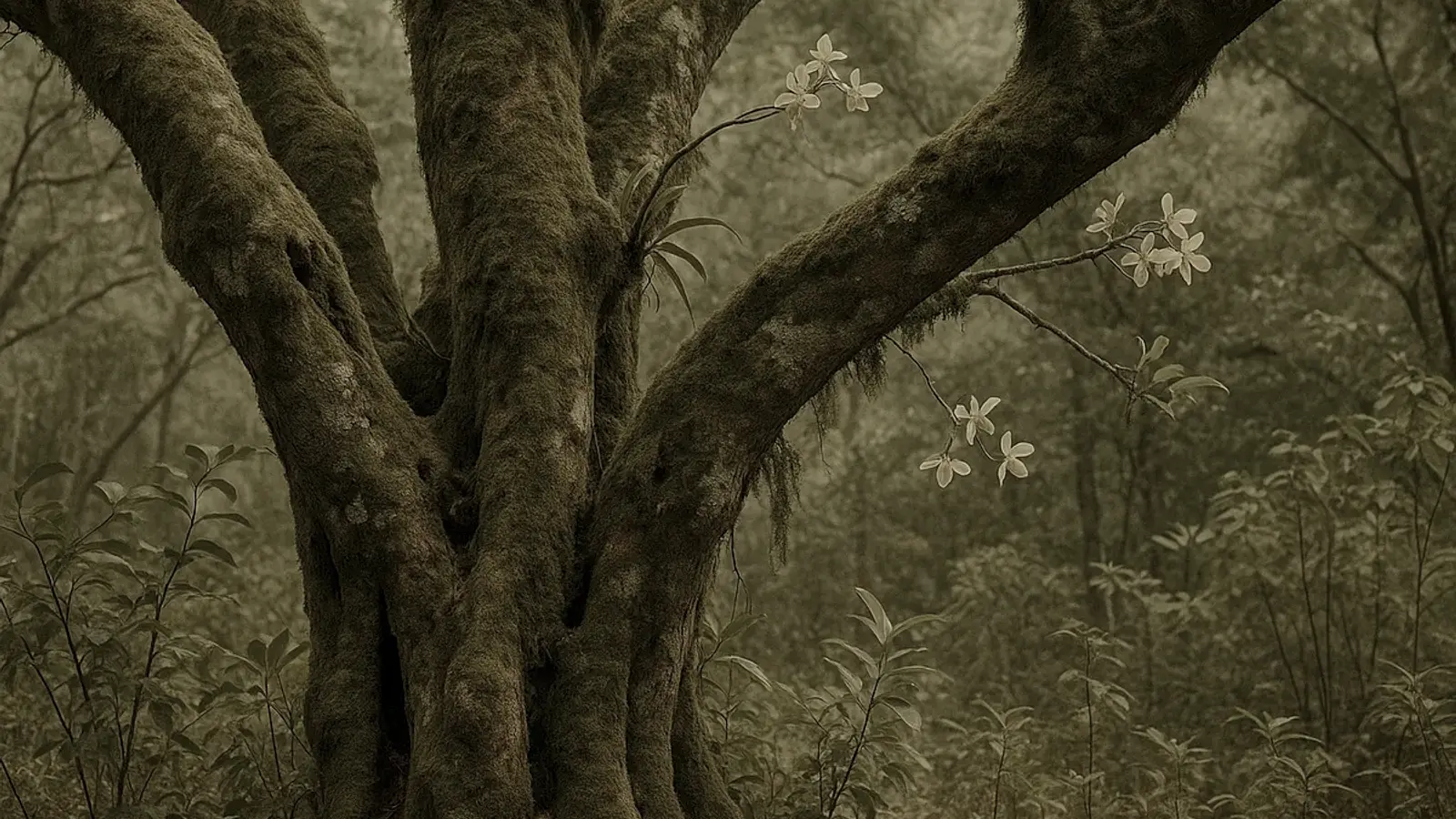
There is a place in Yunnan where tea is not cultivated so much as cohabited. On Jingmai Mountain (景迈山), in Lancang county, Pu’er prefecture, ancient tea trees grow inside a living forest — canopied by camphor, threaded with wild fruit trees, draped in parasitic orchids — and have done so, without interruption, for somewhere around 1,800 years. The tea that comes from this ecosystem is unlike anything produced on a managed hillside. It carries the forest inside it.
In 2023, UNESCO agreed. The Ancient Tea Landscapes of Jingmai Mountain (景迈山古茶林文化景观) became the first tea landscape in the world to receive World Cultural Heritage designation. That distinction matters not just as a headline but as a precise description of what Jingmai is: a cultural landscape, not a farm. The designation protects both the ecology and the living communities — Bulang (布朗族), Dai (傣族), and Hani (哈尼族) ethnic minorities — who have maintained this relationship with the forest across dozens of generations.
For the pu-erh drinker, the practical result is one of the most aromatically distinctive teas on earth.
Geography & Location
Jingmai Mountain sits at approximately 22.2°N, 99.9°E in Lancang Lahu Autonomous County (澜沧拉祜族自治县), part of Pu’er prefecture (普洱市) in southwest Yunnan. It lies in the watershed between the Lancang River (澜沧江) — the upper reaches of the Mekong — and its tributaries, within the broader Xishuangbanna-adjacent zone that contains most of Yunnan’s great ancient tea forests.
The mountain is not a single peak but a series of ridges and valleys. The core ancient tea forests occupy elevations from roughly 1,200m to 1,600m, with the most-cited gardens centering around 1,400m. At that altitude you are neither in the cloud-forest extremes of the highest Yiwu sub-mountains nor in the lowland heat that pushes some Xishuangbanna gardens toward faster, coarser growth. It is a temperate middle ground — which, as we will see, has a lot to do with the tea’s character.
The landscape encompasses nine traditional villages, including Mangjing (芒景), the primary Bulang village, and Jingmai (景迈) village itself. These settlements are not incidental to the forest; they are structurally integrated into it, and their spatial relationship with the tea trees is part of what UNESCO chose to protect.
From a wine-geography standpoint, Jingmai Mountain functions less like a single appellation and more like a nested set: the mountain overall, then the ridge-and-valley sub-units, then specific village territories, then individual forest blocks. Serious buyers and producers increasingly specify at the village or forest level, though the wider “Jingmai” identity dominates the market.
Climate & Elevation
The climate at Jingmai is subtropical, meaningfully moderated by altitude. Annual rainfall runs approximately 1,400–1,500mm, concentrated in the May–October monsoon season. The dry season from November through March brings sharply reduced precipitation and cooler nights — the combination that slows tea tree growth, concentrating nutrients and flavor compounds in new spring flush material.
Mean annual temperature at garden elevation hovers around 18–20°C. Diurnal temperature variation — the spread between daytime highs and overnight lows — is significant enough to stress the trees in a productive direction during growing season. This thermal cycling is one of the classic mechanisms for aromatic compound development in slow-grown tea leaves.
Morning mist is not incidental here. The forest canopy generates its own microclimate: tree cover holds humidity near the ground, diffuses direct sunlight reaching the tea trees below, and creates the dappled, indirect light conditions under which the best slow-grown pu-erh material typically develops. Unlike an open-field plantation, the canopy above Jingmai’s ancient tea trees moderates temperature extremes, reduces UV stress, and maintains soil moisture through the dry season more effectively than bare cultivation could.
The 1,400m elevation range sits in a productive sweet spot for Yunnan: high enough to slow growth and concentrate flavor, low enough to avoid the frost risk and very short growing seasons of higher elevations.
Soil & Terroir
The dominant soil type at Jingmai is red laterite (红壤), a characteristic of the region’s subtropical weathering profile. Laterite soils are ancient, heavily leached, and typically low in soluble minerals — which tends to produce lean, aromatic teas rather than rich, heavily structured ones. This aligns precisely with Jingmai’s flavor identity.
What distinguishes Jingmai soil from other Yunnan laterite sites is the organic matter load. Centuries of mixed-forest canopy decomposition — fallen camphor leaves, orchid debris, wild fruit tree litter — have built an unusually thick forest-floor mulch layer. This organic horizon contributes nitrogen and microbiotic complexity that a managed tea garden, regularly cleared, cannot replicate. Tea tree roots in the ancient forests penetrate deeply through this horizon into subsoil, accessing mineral profiles that shallow plantation roots never reach.
The camphor trees (樟树, zhāngshu) deserve specific attention. Camphor is chemically active — its volatile compounds saturate the air and the surrounding soil in ways that may directly influence nearby tea trees. Whether this operates through root-zone chemistry, airborne volatile uptake by tea leaves, or some combination remains an area of active inquiry. The association is documented by local growers and widely credited in the pu-erh trade, even if the mechanism is not fully characterized. What is certain is that Jingmai’s ancient forest ecosystem is chemically complex in ways that a monoculture cannot be.
The parasitic orchids (寄生兰, jìshēng lán) that colonize the branches of ancient tea trees at Jingmai have become something of a signature image for the region. Their presence is sometimes cited in marketing language that exceeds what the evidence supports. What is reasonable to say: their presence indicates a healthy, biodiverse epiphytic environment that is incompatible with pesticide use or intensive management. They are a reliable ecological indicator, if not a proven flavor driver.
Key Cultivars & Tea Types
Jingmai’s ancient tea trees belong predominantly to the broad Camellia sinensis var. assamica (阿萨姆变种) group, specifically large-leaf (大叶种, dàyè zhǒng) landrace populations. These are not commercially bred cultivars selected for yield or pest resistance; they are genetically diverse, locally adapted populations that have co-evolved with this specific forest environment over centuries.
Tree age estimates vary considerably. The ancient forest designation encompasses trees estimated at 300 to 1,000+ years old. These figures come from a combination of trunk diameter measurement, local genealogical records, and dendrochronological estimation — none of which is perfectly precise for multi-stemmed or coppiced trees. The Bulang oral histories associated with specific trees extend back further than any scientific verification method can currently confirm. What is not in dispute is that the oldest trees in the forest are genuinely ancient by any horticultural standard.
Younger trees are present too. Not every tree in the Jingmai landscape is 500 years old. The UNESCO-listed area includes a mix of ancient forest trees, “big tree” (大树, dàshù) material roughly 100–300 years old, and some terrace-style gardens with younger trees. Serious buyers specify: gushu (古树, ancient tree), dàshù (big tree), or tái dì (台地, terrace garden). The price and flavor profile differences are substantial.
The primary tea type produced from Jingmai material is sheng pu-erh (生普洱茶) — raw pu-erh, processed through the traditional sun-dried maocha pathway and typically compressed into cakes. Shou pu-erh (熟普洱茶), the wet-piled ripe style, is also produced using Jingmai-region material, particularly from larger manufacturers sourcing blended leaf. Single-origin aged sheng is where Jingmai’s terroir signature is most legible.
Processing Traditions
Standard sheng pu-erh processing applies at Jingmai: fresh-plucked leaf is withered briefly, then kill-greened (杀青, shāqīng) in a hot wok or drum to halt oxidation, hand-rolled or machine-rolled, and then sun-dried (晒青, shàiqīng) to produce maocha (毛茶). The maocha is then pressed under steam into cakes, bricks, or tuos, wrapped, and stored.
What distinguishes some Jingmai producers — particularly those focused specifically on the region’s floral aromatics — is a technique borrowed from white tea and oolong processing: an extended pre-kill-green wither (萎凋, wěidiāo). Where standard sheng processing minimizes the time between plucking and kill-green to preserve freshness, a deliberate light wither of several hours at lower temperatures allows some enzymatic activity to develop floral ester compounds before the heat halt. The result is a maocha with elevated lanhua xiang (蘭花香, orchid aroma) compared to material processed with minimal wither.
This technique is not universally applied at Jingmai — it is a producer choice — and it represents a processing intervention that genuinely affects the finished tea’s aromatics. When evaluating Jingmai sheng, it is worth knowing whether the producer uses extended wither, because it can be difficult to attribute all of Jingmai’s floral character to terroir alone when processing variables are in play.
The altitude and the forest microclimate also affect natural wither during transport from forest garden to processing station — leaf picked in a cool, mist-filtered forest canopy and transported down to a village for processing will undergo some degree of ambient wither regardless of intent. This structural characteristic of Jingmai harvesting may itself contribute to the region’s aromatic baseline.
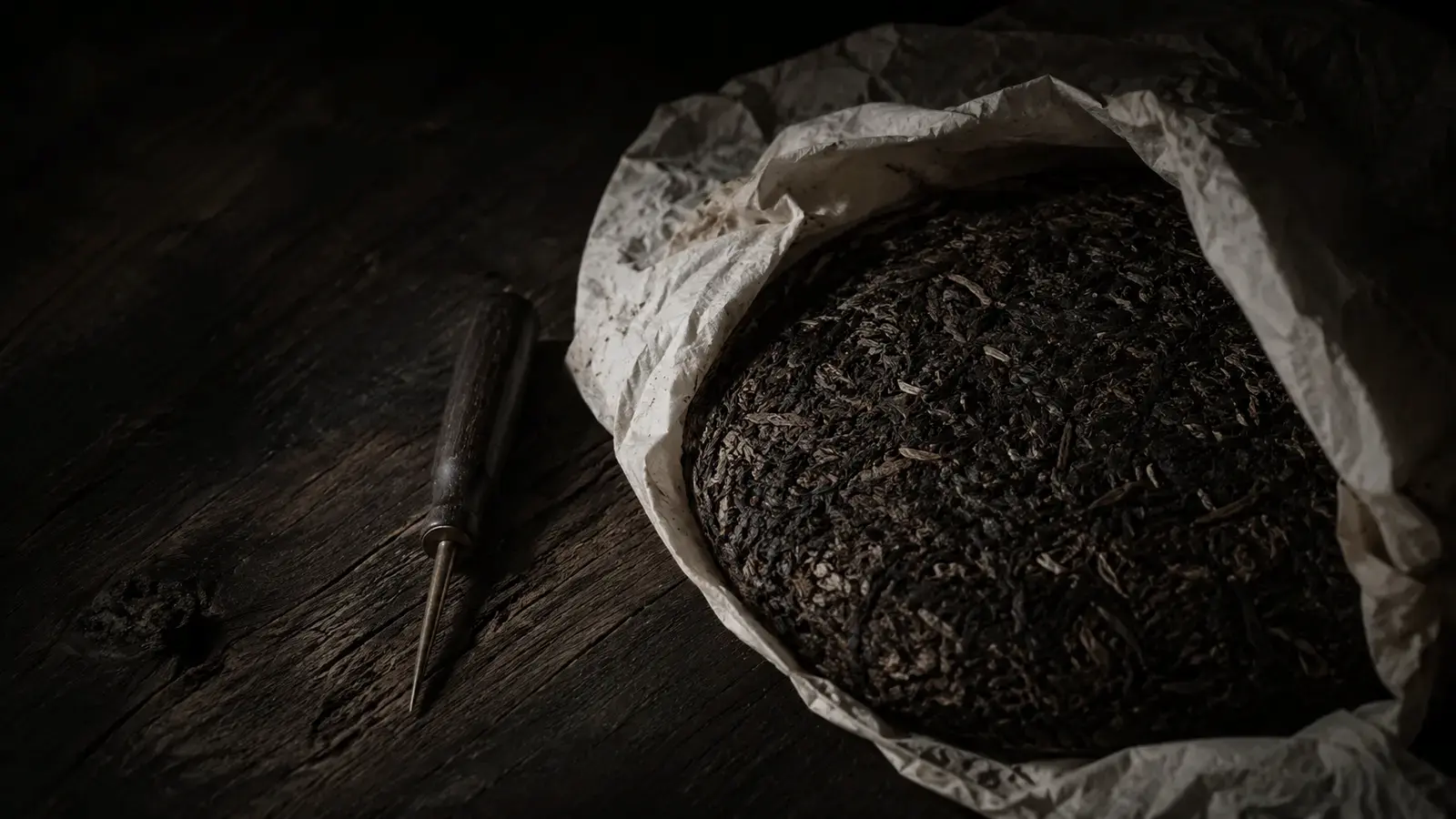
Compression is conventional for market teas: 357g cakes (饼, bǐng) are standard, though smaller 200g cakes, 250g bricks (砖, zhuān), and 100g tuos (沱, tuó) appear frequently.
Characteristic Flavor Signatures
Jingmai sheng pu-erh is the Condrieu of the pu-erh world: aromatic, floral, immediately captivating, with a distinctive perfume that announces itself from the first steep. Where Condrieu is defined by viognier’s apricot-and-violet aromatics above all else, Jingmai is defined by lanhua xiang — the orchid fragrance that the region’s ancient forest seems uniquely positioned to generate.
In the cup, young Jingmai sheng typically presents:
- Aroma: Orchid, honeysuckle, light camphor, sometimes fresh hay or rice. The floral top note is immediate and pronounced.
- Taste: Moderate sweetness upfront, light to medium body, a gentle astringency that resolves quickly and cleanly.
- Huigan (回甘): The returning sweetness appears within the first minute after swallowing, often described as honey-like rather than the more mineral or cooling huigan of Bulang or Yiwu.
- Texture: Lighter than Yiwu, less gripping than Bulang. Silk rather than velvet.
- Finish: Clean, lingering floral sweetness. Not long by the standards of the great structured Yunnan teas, but consistent and pure.
With age — 5 to 15 years — Jingmai sheng transforms in a manner that distinguishes it from most Yunnan regions: the floral character is unusually persistent. Where Bulang and Laobanzhang tend to evolve away from their young-tea profiles into earthier, more complex aged expressions, Jingmai retains recognizable orchid notes well into its mid-life. This is a documented pattern among serious aged-Jingmai collectors, though the mechanism is not fully explained. It may relate to the specific terpenoid and floral ester profiles generated by the ecosystem, which appear more stable under aging conditions than the grassy-vegetal compounds that typically dominate young sheng.
The fair critique of Jingmai: compared to Yiwu or aged Bulang, it can read as one-dimensional. Its aromatic identity is clear and consistent, but the layered mid-palate complexity that distinguishes the highest-tier aged teas is not always present. Some drinkers prize exactly this clarity — a focused expression rather than a complex one. The wine parallel holds: there are Condrieu lovers who find red Burgundy overwrought, and Burgundy lovers who find Condrieu one-note. Both positions are coherent.
Quality Indicators & Authentication
Jingmai’s UNESCO status and its relatively moderate price point (by ancient-tree Yunnan standards) have made it both a genuine treasure and a frequent target for blending, substitution, and mislabeling.
Several quality indicators are worth understanding:
Tree age and source specificity: Genuine gushu Jingmai from the ancient forest core is harvested from trees in a mixed-canopy agroforestry setting. The leaf from these trees tends to be smaller and more irregular than plantation leaf, with more variation in leaf size within a picking. Uniform, large, visually perfect leaves in a “gushu” cake warrant skepticism.
Floral aromatics as terroir marker: The lanhua xiang should be present in quality Jingmai maocha and finished cakes. It is not a reliable sole authentication marker — processing can generate orchid notes in other material — but its absence in a claimed Jingmai gushu cake is a warning sign.
Camphor notes: Genuine ancient-forest Jingmai, particularly from trees near camphor companions, often carries a subtle camphor or cool-wood note in the dry leaf and first steep. This is not overwhelming but detectable.
Vendor provenance claims: The UNESCO designation has clarified the protected landscape boundary, which provides some legal structure for authenticity claims within China. However, this does not prevent mislabeling of non-Jingmai material as Jingmai in the export market. Provenance documentation from established producers who can trace to specific village or forest blocks offers more confidence than generic “Jingmai Mountain” labeling.
Compression and cake characteristics: Many respected Jingmai producers use relatively loose compression for ancient-forest material, which allows the dry-stored cakes to breathe and age more evenly. Very hard compression is more typical of plantation or commercial blended material.
Cultural Significance & the UNESCO Designation
The UNESCO inscription of the Ancient Tea Landscapes of Jingmai Mountain in September 2023 was the culmination of over a decade of nomination work and represents a globally significant precedent: it is the first tea cultural landscape to receive World Heritage designation.
The listing encompasses approximately 2,800 hectares of ancient tea forest, interspersed with the nine traditional villages and their surrounding managed gardens. Critically, it is a cultural heritage designation — meaning the intangible practices and community relationships are protected alongside the physical landscape. This includes:
- The Bulang ethnic minority’s spiritual and ceremonial relationship with tea trees, including tree-worship practices and rituals that mark the planting season
- The Dai community’s traditional land-use practices that have maintained the agroforestry structure across generations
- Traditional knowledge systems governing harvest timing, pruning, and ecosystem management
- The physical layout of the villages within the forest, which is itself part of the heritage
The Bulang people credit a legendary ancestor, Paleng (帕哎冷), with planting the first ancient tea gardens at Jingmai approximately 1,800 years ago. This founding narrative is central to local cultural identity and has been part of the UNESCO documentation. Whether 1,800 years is archaeologically verifiable is less important than what it represents: continuous human-forest relationship across a timespan that dwarfs the history of most agricultural systems in the world.
For the tea buyer, the UNESCO designation has practical implications beyond prestige. It establishes legal protections against deforestation or agricultural intensification within the heritage zone. It also creates international visibility that has drawn government investment in sustainable tourism and quality certification infrastructure. The long-term effect should be more rather than less protection of the ecosystem that makes Jingmai tea what it is.
Price Ranges
Jingmai pu-erh occupies a relatively accessible tier within the ancient-tree Yunnan market — substantially below Laobanzhang (老班章) and top Yiwu material, and roughly comparable to or slightly above Bulang, depending on specific material.
| Material Category | Regional Market (approx.) | International Export (approx.) |
|---|---|---|
| Gushu maocha (古树毛茶), premium village lots | $80–$400 per 100g | $100–$500 per 100g |
| Ancient forest pressed cake, single-village | $30–$150 per 100g equivalent | $40–$200 per 100g equivalent |
| Big tree (大树) material, established producers | $15–$50 per 100g | $20–$80 per 100g |
| Standard Jingmai area blended sheng | $3–$15 per 100g | $5–$25 per 100g |
| Aged Jingmai sheng (10+ years), reputable storage | $30–$120+ per 100g | $50–$250+ per 100g |
These ranges are approximate and reflect a market that moves with annual harvest conditions, producer reputation, and the increasing international attention following the UNESCO designation. Post-2023, Jingmai prices have edged upward as heritage designation awareness has driven new buyer interest.
The value proposition remains strong relative to fame: Jingmai is arguably better-known than its price would suggest for comparable material from Yiwu or Laobanzhang. For buyers seeking genuine ancient-tree pu-erh with a distinctive aromatic profile at a price below the top-tier peaks, Jingmai ancient forest material represents genuine quality at a rational price point.
Prices are higher in Kunming, Beijing, and Shanghai markets — where Jingmai’s UNESCO status commands a premium among Chinese collectors — than in the Lancang region itself, where direct-from-producer buying remains possible. Export prices to Western markets typically reflect the Kunming retail tier plus international logistics, though occasionally favorable sourcing can match regional pricing.
Aging Jingmai Pu-erh
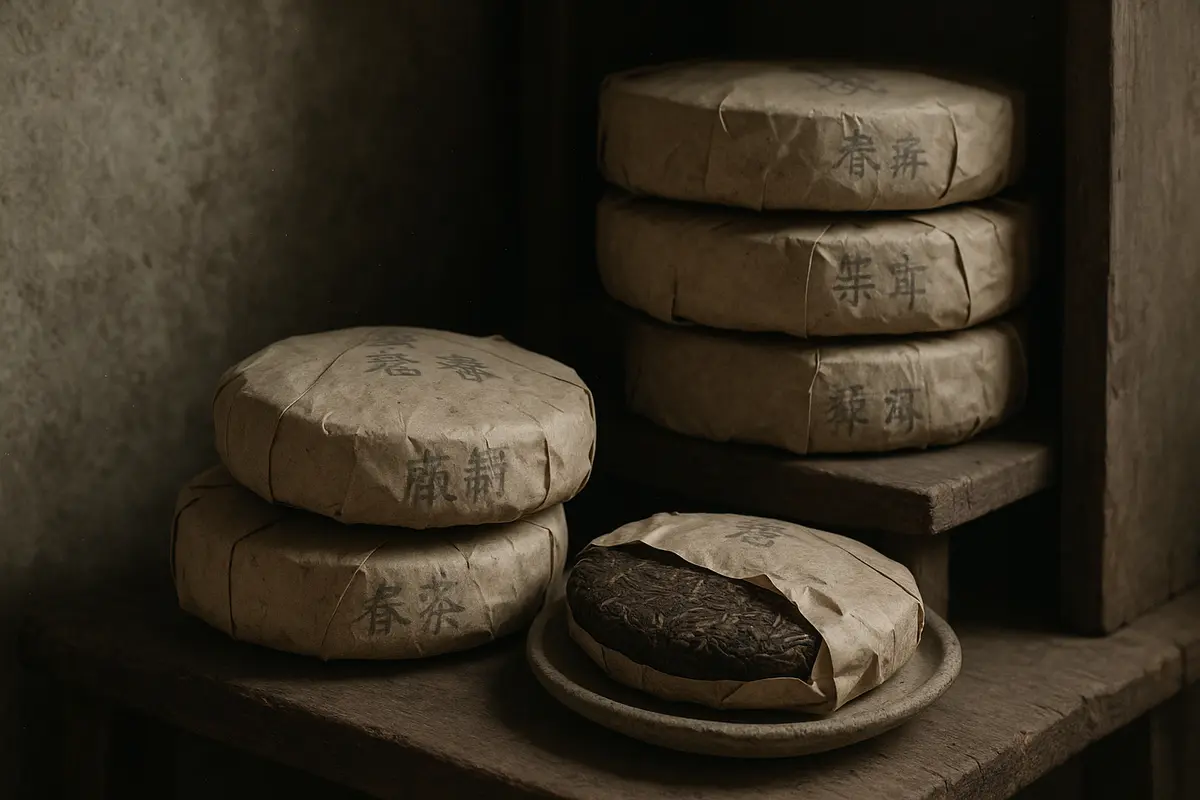
The conventional wisdom on Jingmai in aging discussions is nuanced. Its lighter body and lower astringency mean it integrates more quickly than high-tannin material like Bulang Mountain, producing approachable aged expression earlier in its arc — a 5-year Jingmai is often more drinking-ready than a 5-year Bulang of comparable quality. This is not a deficiency but a characteristic: different timelines for different styles.
The persistence of floral aromatics through aging — the genuine surprise of a well-stored 10 or 15-year Jingmai cake still showing orchid notes — is one of the region’s most distinctive traits in the collector community. This makes Jingmai interesting precisely because it ages differently: rather than transforming toward earthiness on the Bulang timeline, it maintains a floral-sweet character longer, then transitions more gradually.
Storage conditions affect this trajectory significantly. Dry storage (干仓, gān cāng) — controlled humidity, clean air, no wet-piling or high-humidity acceleration — preserves the floral character best for long-term aging. Wet storage or tropical ambient storage accelerates earthiness development at the expense of floral persistence. Collectors specifically seeking to track Jingmai’s aromatic arc over time typically prefer dry storage.
The question of very long-term aging — 30, 50 years — is genuinely open. There are not enough old, well-documented, single-origin Jingmai cakes in circulation to establish a reliable aging curve at that timescale. The region’s reputation as a collector’s tea is relatively recent in the broader pu-erh timeline; most serious Jingmai aging data is in the 5–20 year range.
Jingmai in Context: How It Sits Among the Great Yunnan Regions
To place Jingmai within the geography of great Yunnan pu-erh, a brief orientation helps.
Laobanzhang (老班章, in Bulang Mountain) is the most powerful, structured, and expensive of the modern Yunnan benchmarks — heavy body, intense bitterness that converts to deep huigan, maximum aging potential. It is the region for collectors who want the most.
Yiwu (易武, in the ancient Six Tea Mountains) is the classic elegant expression: silky texture, layered complexity, soft bitterness, long development arc. It draws the most wine-Burgundy comparisons for its combination of complexity and refinement.
Jingmai occupies a different register entirely: not the most powerful, not the most complex, but the most aromatically expressive. Its floral signature is immediate and distinctive in a way neither Laobanzhang nor Yiwu can replicate. Think of it as the aromatic varietal of the Yunnan appellation system — the one you reach for when you want perfume and clarity rather than structure or depth.
This positioning also explains Jingmai’s relative value: it is not competing for the “most collectible” tier that Laobanzhang and top Yiwu occupy. It is instead the tea most likely to convert a newcomer to pu-erh through sheer aromatic appeal, and the one most likely to remain in regular rotation for an experienced drinker who values floral expression alongside their more structured material.
The ancient forest ecosystem, the UNESCO protected landscape, the living Bulang and Dai cultural traditions, and the floral orchid fragrance that somehow persists through decades of aging — Jingmai pu-erh is not the most extreme expression of what Yunnan can do, but it may be the most itself. A forest that has been tended for 1,800 years tends to know what it is.