Dry Leaf
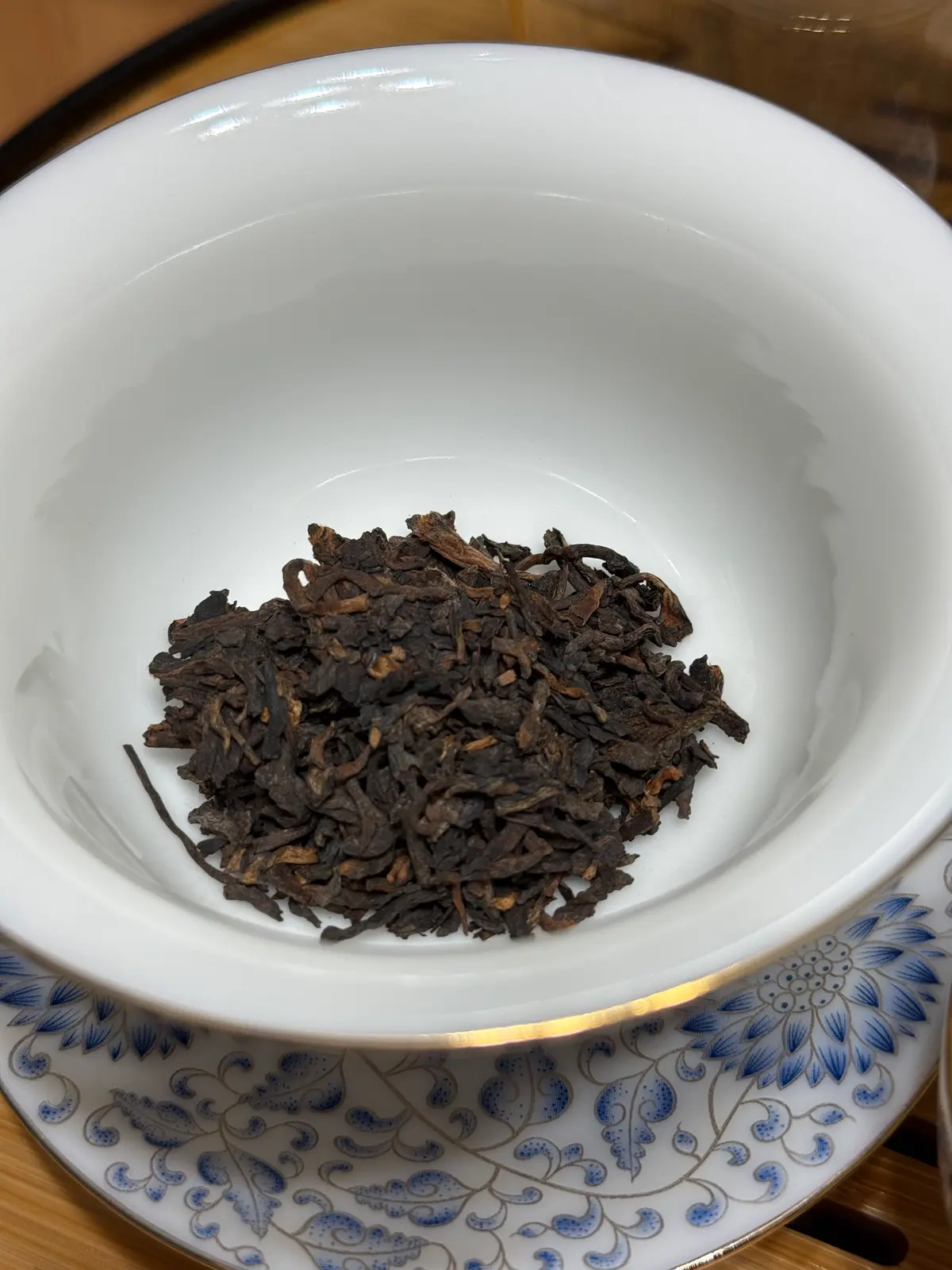
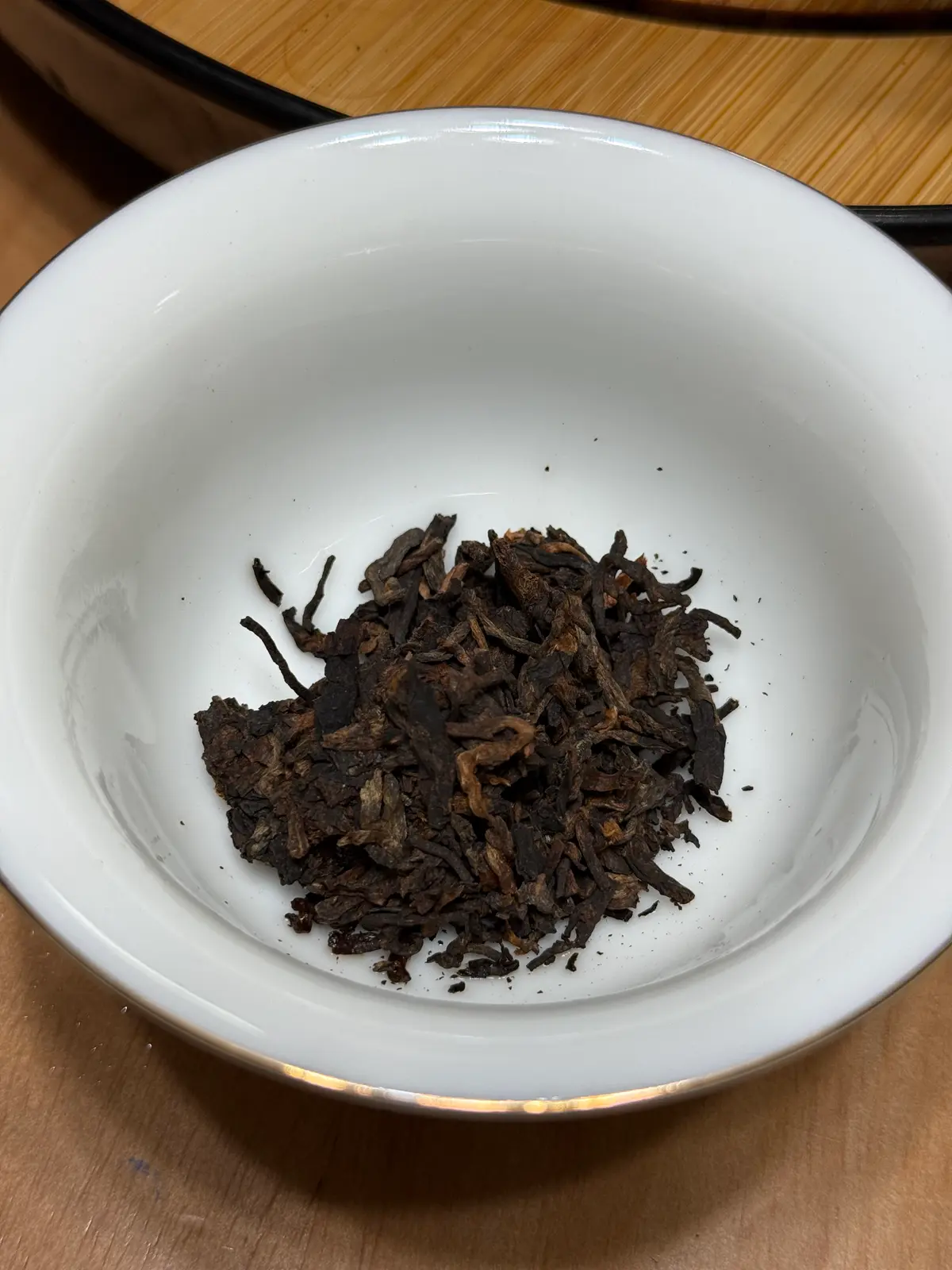
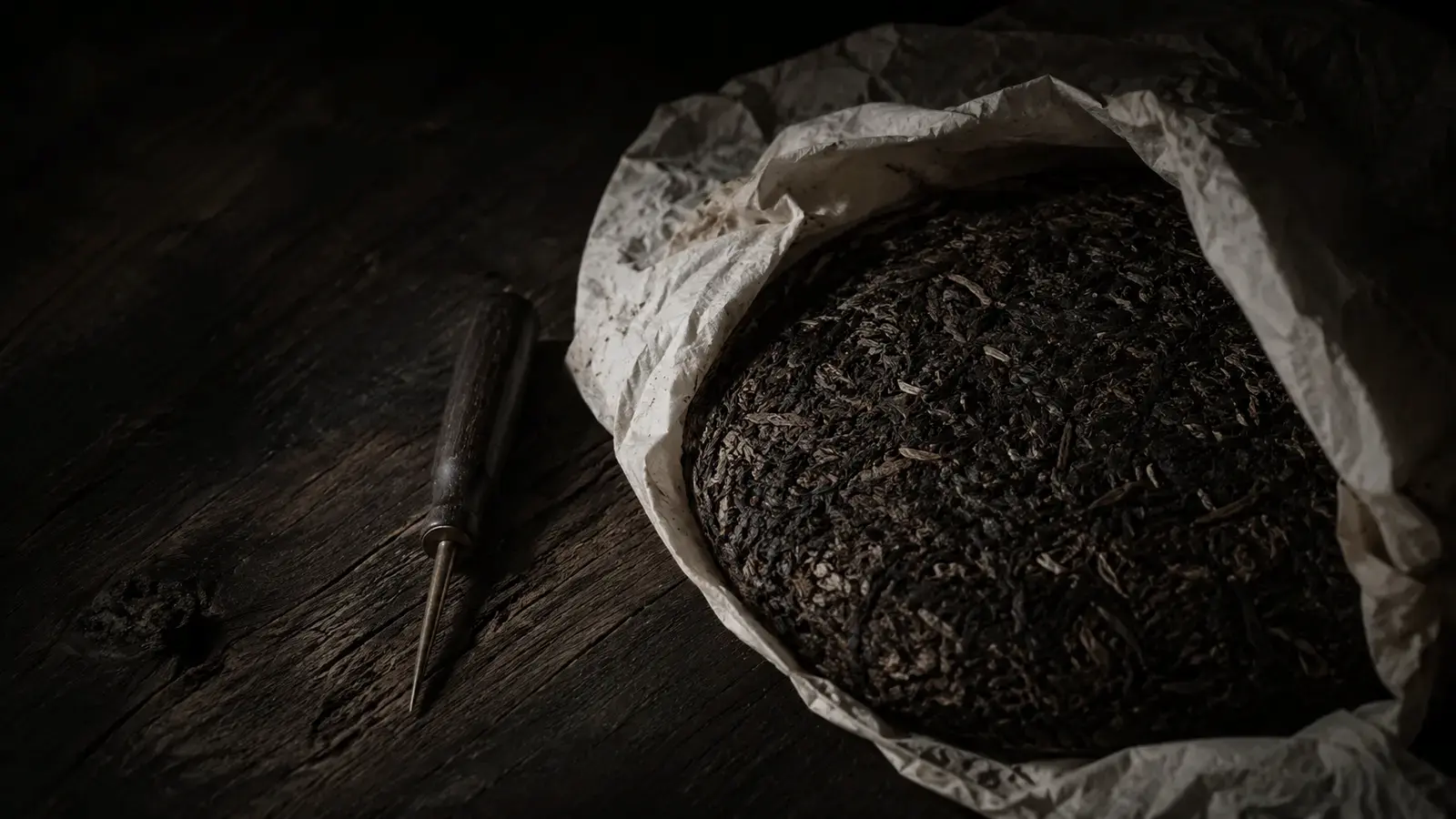
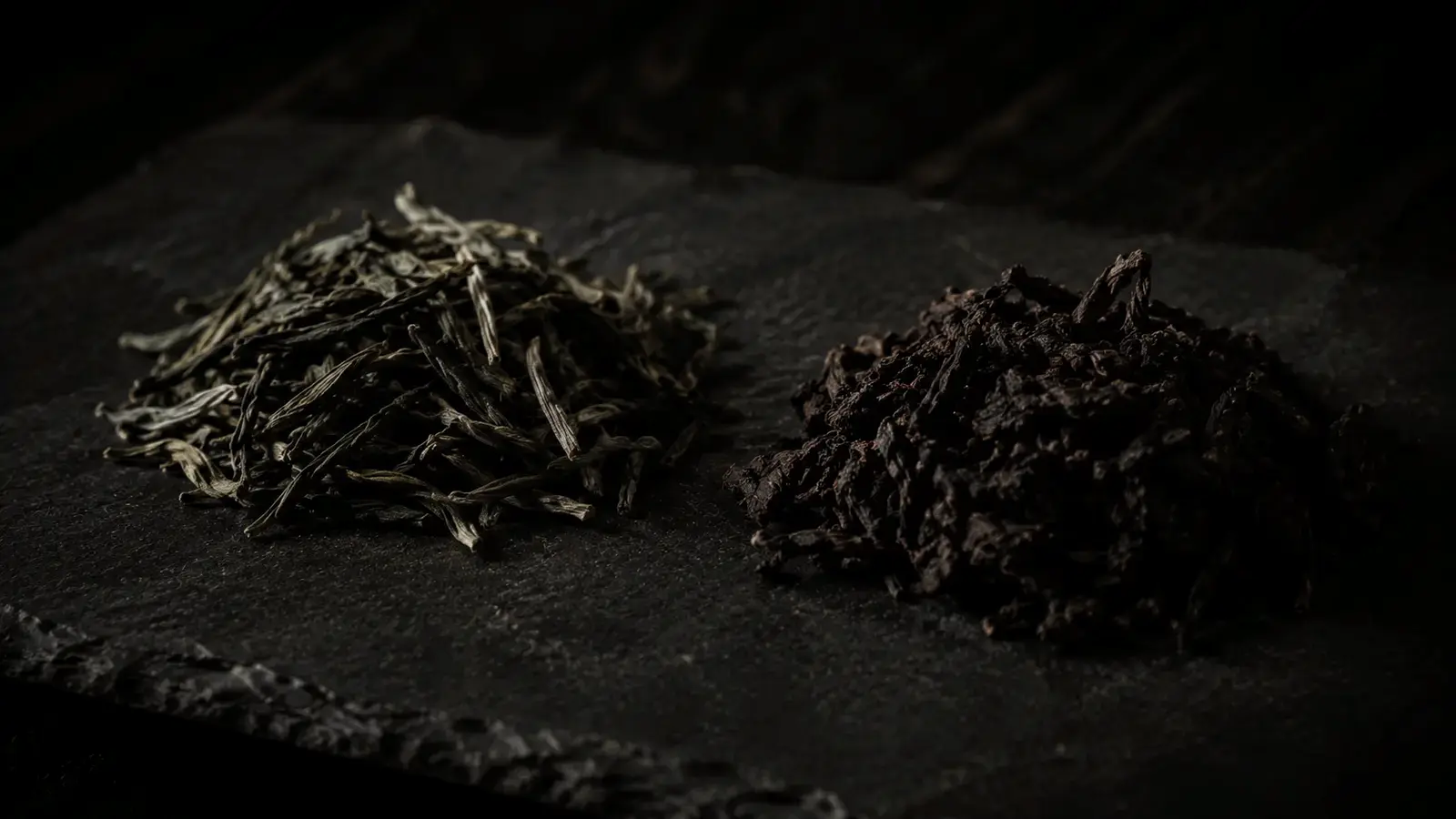
Tight, dark, compressed. Finer and darker than the Meng Song cake — Jingmai’s tradition of thorough rolling produces tighter, more uniform leaf. The dry aroma is subtle but distinct: a faint floral sweetness underneath the standard shou earthiness. Not immediately dramatic.
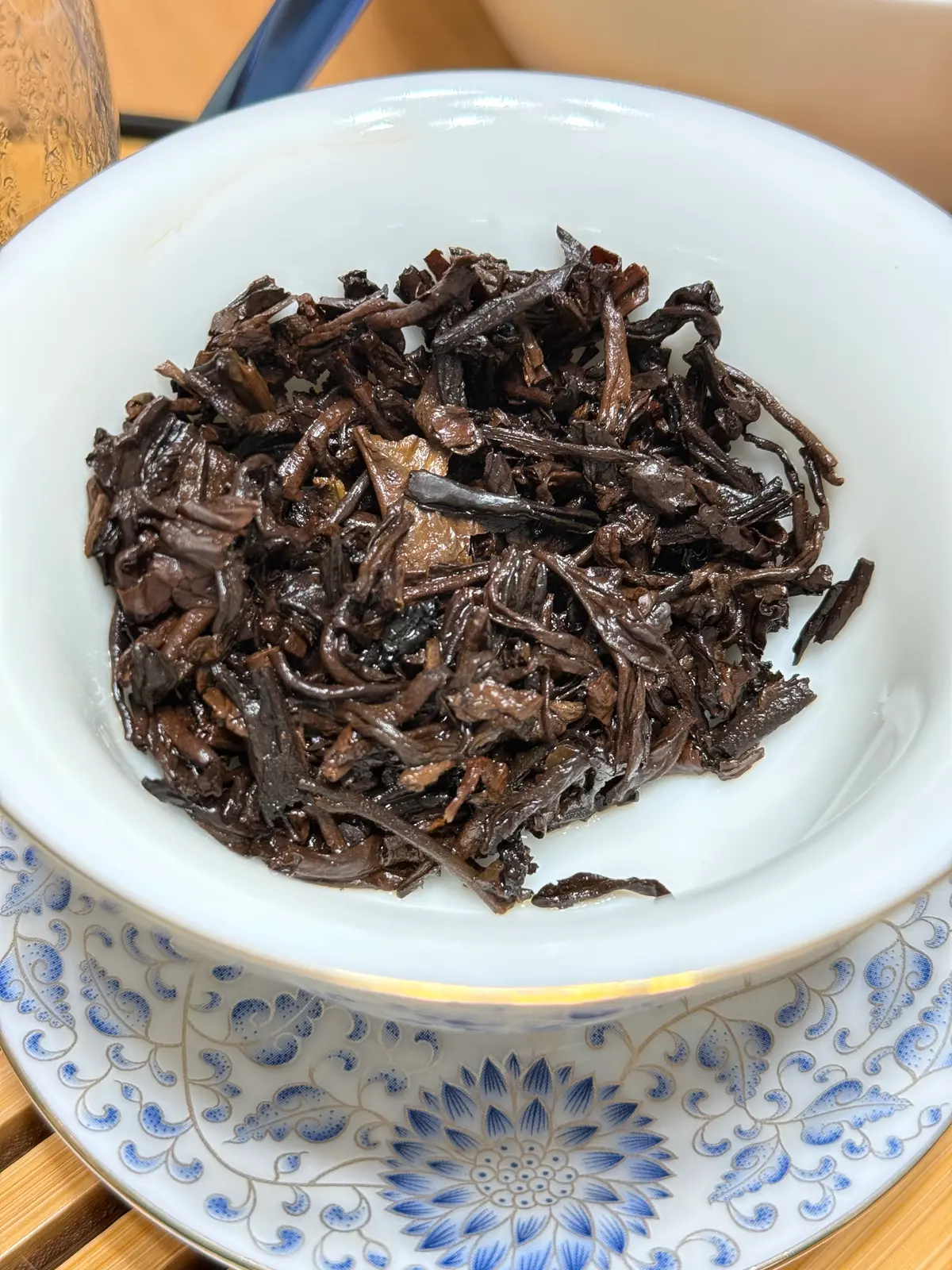
Wet leaf after rinse: orchid. This is Jingmai’s signature — 兰花香 (lán huā xiāng), the orchid fragrance that Chinese tea literature calls “the highest level of pu-erh aroma.” Not perfumed, not heavy. Clean, lifted, unmistakably floral. The gaiwan lid carried it clearly. A fragrance I haven’t encountered in any shou before. Underneath the orchid, a warm spice and sweet earth.
The Session
Brewed at 100°C in a 100ml gaiwan with approximately 6.5g of leaf. Two rinses.
Liquor: rich reddish-amber, clean and clear. Not as ink-dark as the Meng Song. More translucent, more luminous. Eight years of post-fermentation mellowing visible in the clarity.
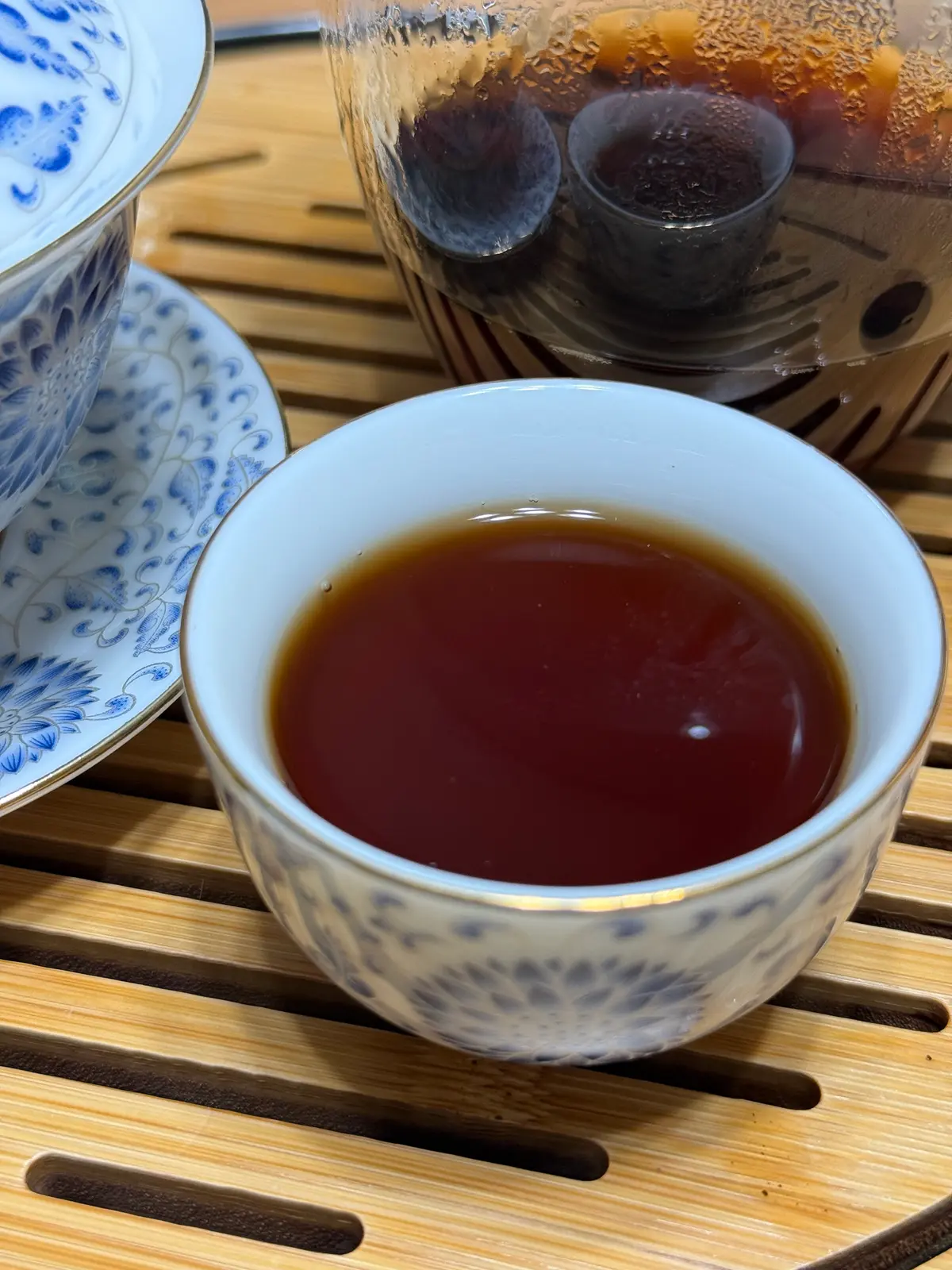
Steep 1 (8s): Thick sweetness — immediate, enveloping, the defining first impression. Not the one-dimensional sweetness that triggers the “too sweet” alarm. This sweetness has weight. Viscous, coating, substantial — the liquor has body that you can feel sitting on the tongue. Jingmai’s famous viscosity is real. The orchid translates from aroma into the tea soup: a floral sweetness woven through a rich, almost honeyed base.
Steep 2 (10s): The structure arrives. A bitter-spicy quality pushing through the sweetness — not the dark cacao bitterness of Meng Song, something different. Peppery. Warm. The Chinese term is 辛 (xīn) — a peppery warmth that adds architecture to the sweetness without overpowering it. The combination is unexpected: orchid fragrance above, honey sweetness in the middle, pepper-spice underneath. Three distinct layers in one sip.
Steep 3 (12s): The bitter-spice fully developed. The sweetness steps back, the structure steps forward. Exactly the kind of movement this palate craves — the tea is negotiating, not just delivering. The orchid still present in the cup-bottom aroma. Astringency mild but real — a gentle grip that reminds you this is mountain tea, not factory product.
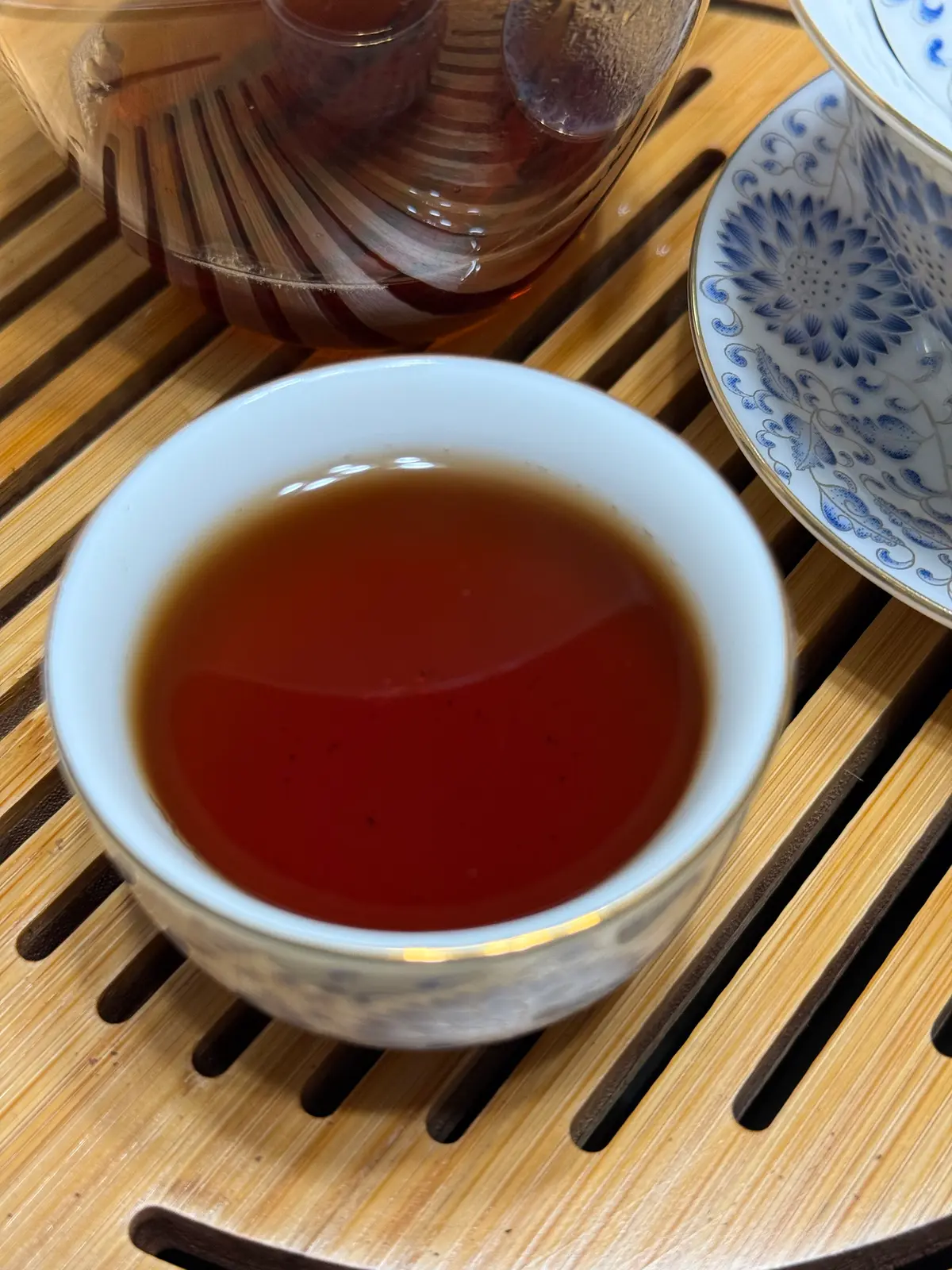
Steep 4 (15s): The return. Sweetness coming back, but transformed — richer, deeper, more complex than the opening sweetness. The bitter-spice phase primed the palate, and now the returning sweetness registers with more intensity. Not the sledgehammer huigan of Ban Zhang or Meng Song. Something more graceful. The sweetness doesn’t flood — it settles.
Steep 5 (20s): The sweet plateau. Honeyed warmth, a dried fruit quality developing — dates, maybe longan. The orchid fragrance now fully integrated into the flavor rather than sitting on top. Body still thick, still coating.
Steep 6 (25s): Sweetness sustained but the complexity underneath is what holds attention. Warm grain, a distant woody sweetness, the spice now a gentle background warmth. The aftertaste extends — long, clean, sweet. This is the 回韻 (huí yùn, returning resonance) that Jingmai is known for.
Steep 7 (30s): Lighter, still sweet, still thick. The mountain’s character becoming more apparent as the fermentation flavors exhaust — a wild forest quality, 山野氣韻 (shān yě qì yùn), that comes from trees growing intertwined with camphor, ancient hardwoods, and orchids in the forest canopy.
Steep 8 (45s): Gentle fade. Clean, sweet, warm. Still pleasant.
Steep 9+ (60s+): Thinning gracefully. A clean honey-orchid sweetness remaining. Nine to ten steeps total.
Flavor Profile
Front: Thick sweetness — honey, orchid, immediately enveloping and viscous. Not thin, not hollow. Sweetness with body.
Mid: Bitter-spice structure — peppery warmth (辛) providing architecture. The negotiation between sweet and spice is the session’s core dynamic.
Finish: Returning sweetness, deeper and richer than the opening. Dried fruit warmth, long orchid-honey aftertaste that extends for minutes.
Mouthfeel & Huigan
Thick. Genuinely, measurably thick. The viscosity is the first thing that registers and the last thing that leaves. Chinese sources describe Jingmai tea soup as so viscous that bubbles float in the center of the cup rather than drifting to the walls. That’s not a metaphor — you can see it. This is not Meng Song’s muscular density. Jingmai’s thickness is softer, rounder, more enveloping. Like the difference between a full-bodied red wine and a rich, thick white. Both heavy in the glass. Completely different texture.
Huigan: present and persistent, but expressed through a different mechanism than Menghai-terroir shou. Meng Song’s huigan was a dramatic bitterness-to-sweetness conversion — you suffered, then you were rewarded. Jingmai’s huigan is a return after a brief spice-structure interlude. Sweetness → spice → deeper sweetness. Less dramatic. More elegant. The sweetness that returns in steeps 4-6 is richer than the sweetness that opened the session, which means the spice phase serves a purpose — it resets the palate so the returning sweetness reads as new rather than continuous.
Qi Notes
Noticeable. Not the potent dizziness-risk of Meng Song or the cha zui danger of aged sheng. A steady, spreading warmth. Grounding without heaviness. Present, real, not overpowering. Good for afternoon sessions.
Value Assessment
For an eight-year-old Jingmai Mountain shou with genuine ancient garden material and UNESCO heritage terroir, this represents fair value. The orchid fragrance alone distinguishes it from every other shou in the collection.
Verdict
This tea is not Ban Zhang. It’s not trying to be. Where Ban Zhang demands respect through bitterness and rewards it through power, Jingmai earns respect through fragrance and rewards it through texture. The orchid is genuine — 兰花香, the aroma Chinese tea culture places at the top of the pu-erh fragrance hierarchy. Not everyone agrees. My palate still gravitates toward structure and density over fragrance and elegance. But after the Yiwu taught me to respect what silk and peach can do, Jingmai is teaching me to respect what orchid and viscosity can do. The thick sweetness gave my palate enough body to stay engaged. The spice structure gave it enough architecture to prevent the “too sweet” response. This mountain found the way in.
The wine parallel: Châteauneuf-du-Pape Blanc — Roussanne and Grenache Blanc from sun-baked Rhône stones. Rich, honeyed, floral, substantial body, warm spice underneath. Not the lean precision of Chablis. Not the power of Barolo. A warm, generous, perfumed wine that convinces through texture rather than structure.
This tea's strongest axis is Aroma (8/10).