My first Yunnan shou. After weeks of Thai craft shou — smooth, sweet, immediately gratifying — I opened a sample from Meng Song mountain in Menghai county, Xishuangbanna. Menghai area tea gardens, 1,400-1,800m elevation. Spring 2018 harvest, wet-piled through 2019, pressed June 2019. The birthplace of shou pu-erh. My first thought, written down mid-session: “This is why China is the land of tea.”
Dry Leaf
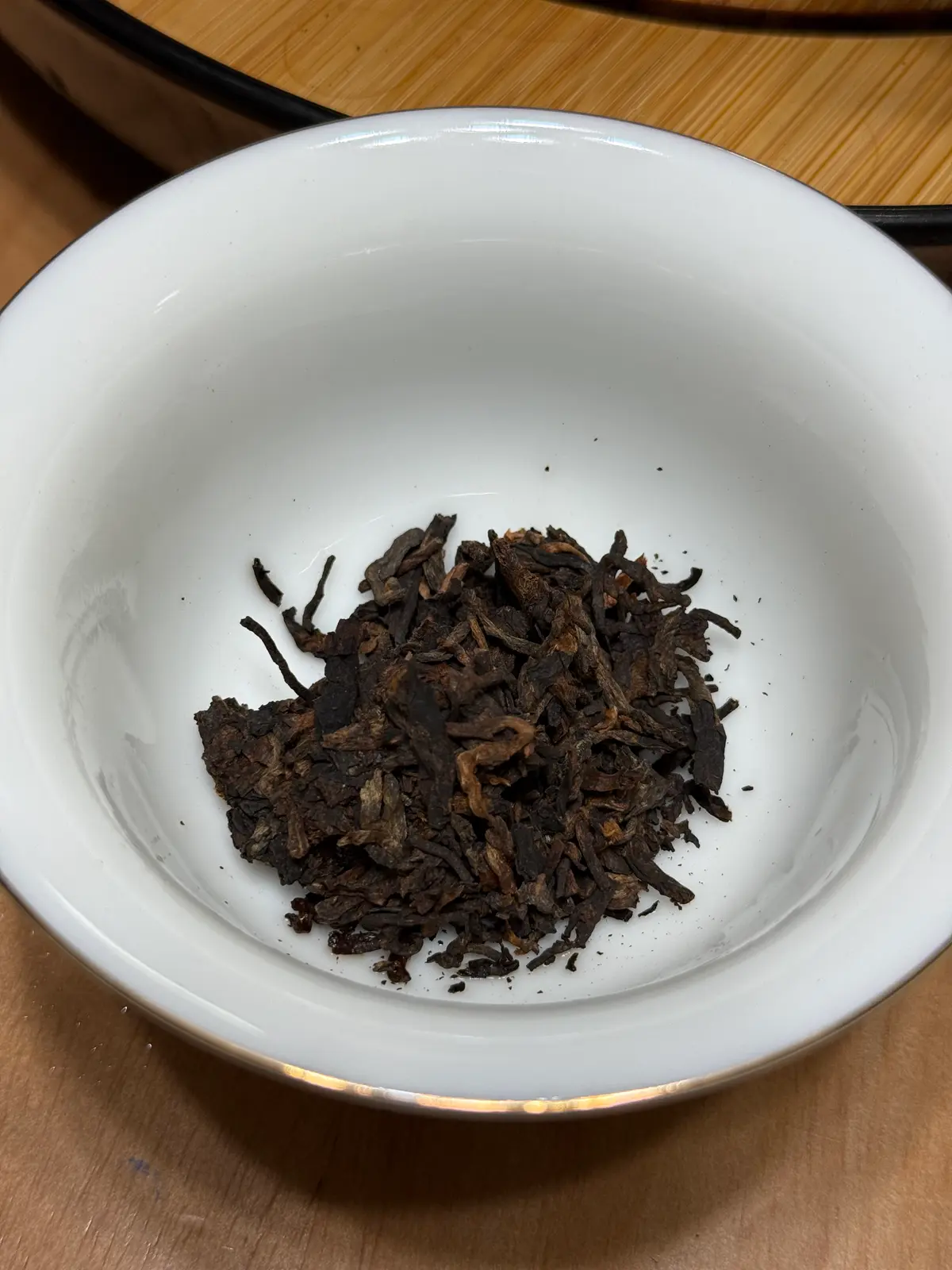
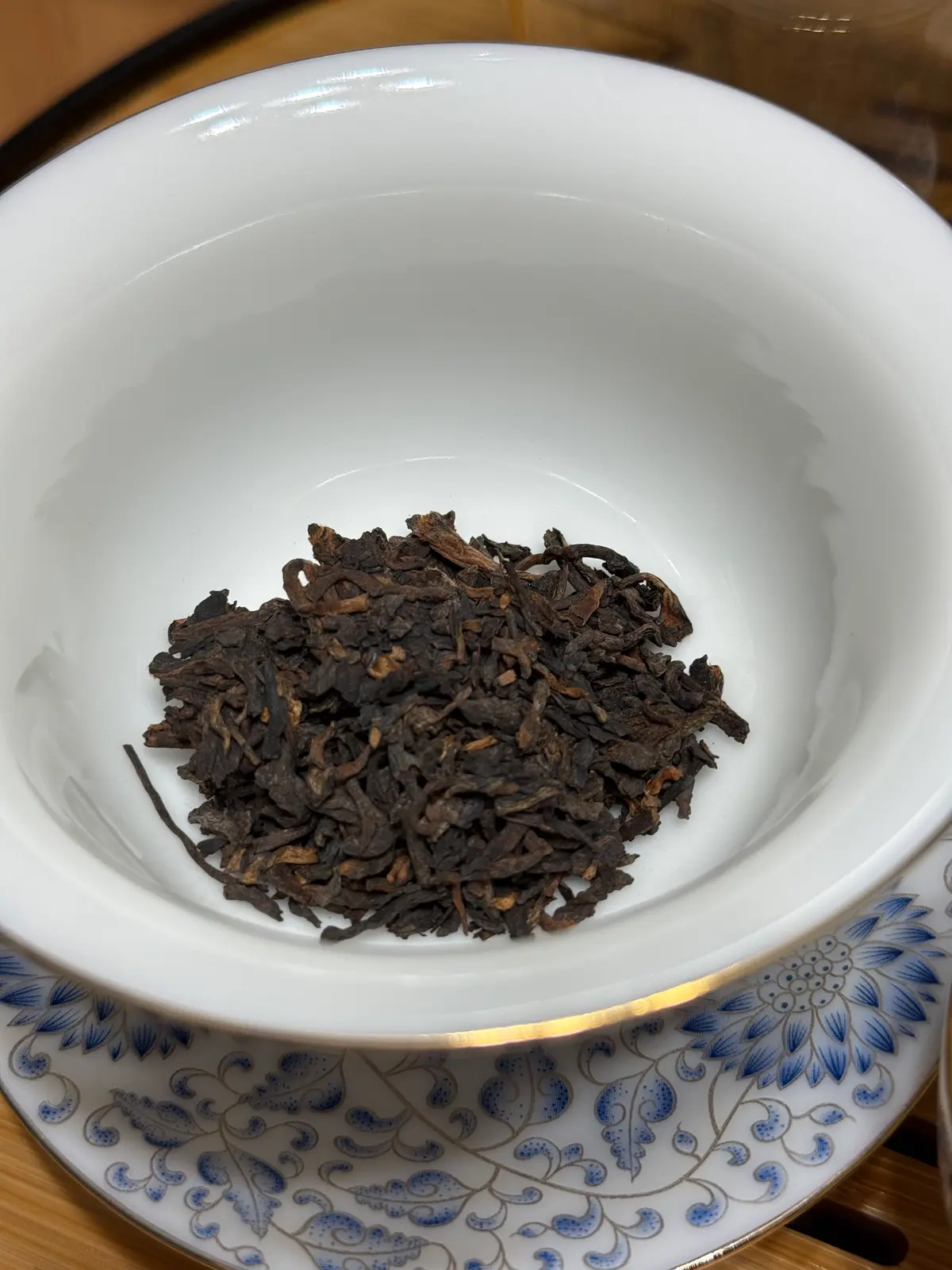
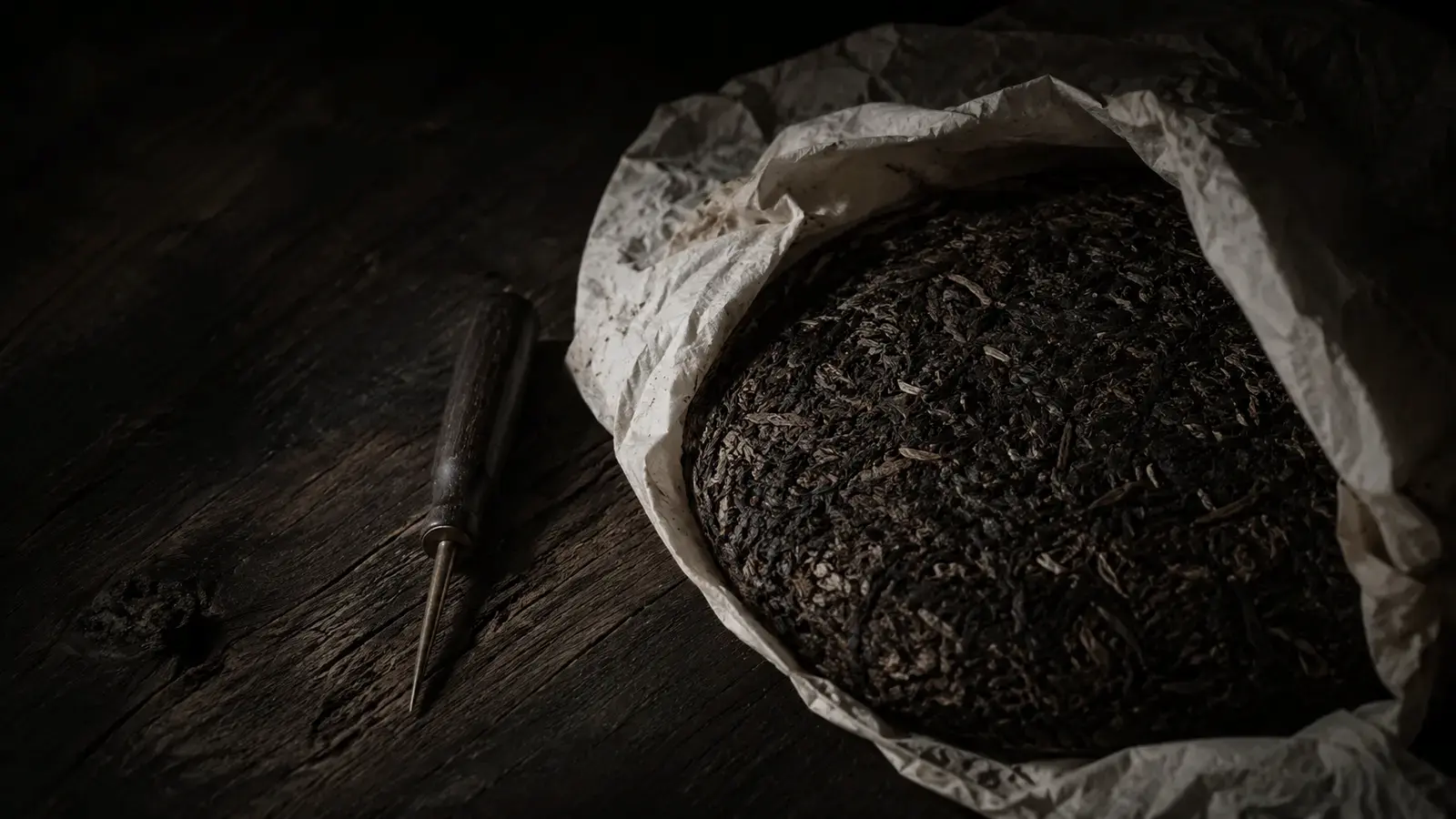
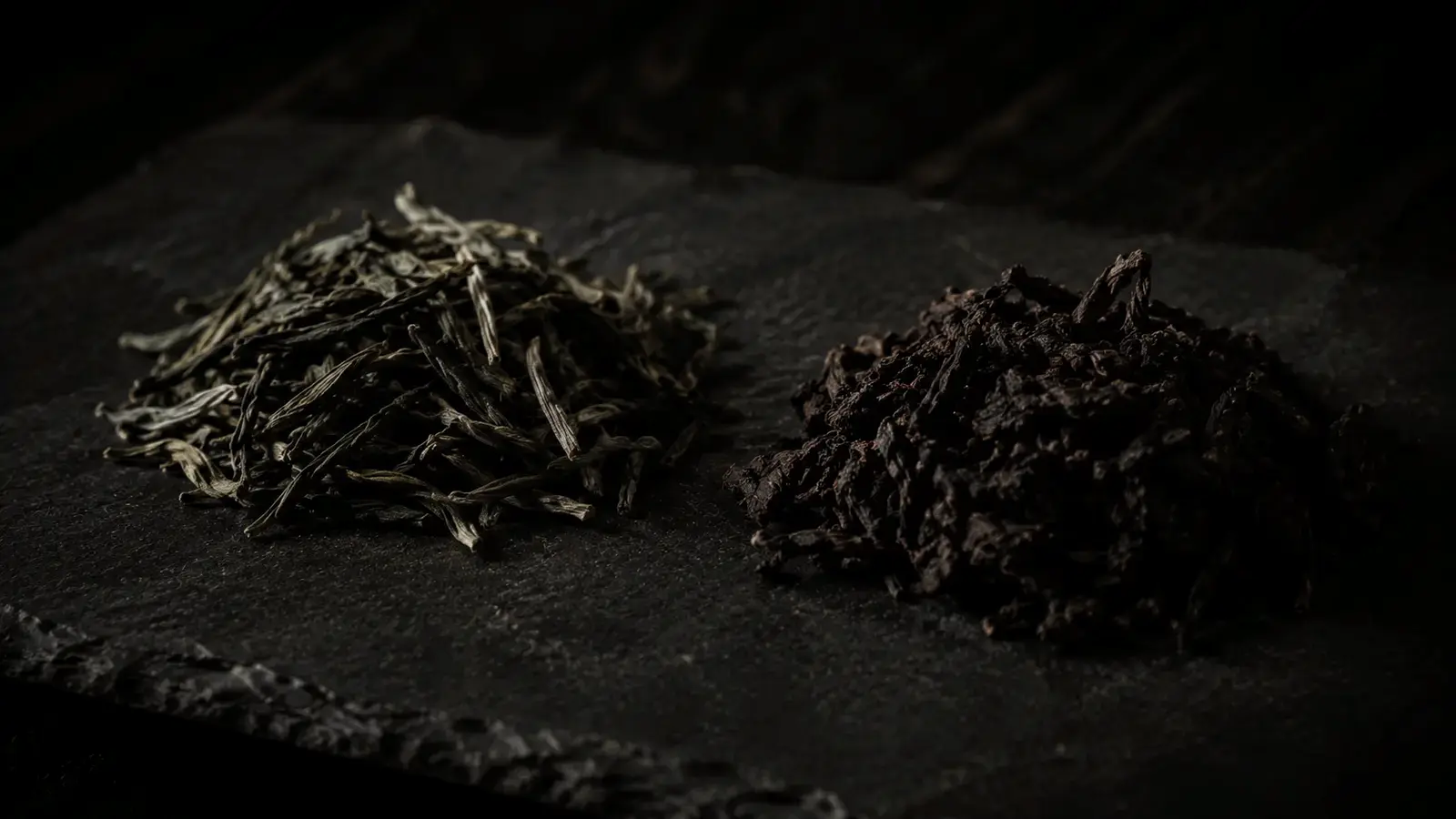
Dark, compressed cake. Standard shou appearance — nothing visually unusual. The story is inside, not on the surface. Breaking off 6.8g from the edge with a tea pick.
The Session
The first steep shocked me. Not just the flavor — the color. Dark, dense, visibly thicker than anything I’d poured from my Thai shous. The liquor looked heavier in the pitcher. And the taste: bitterness. Real bitterness. Not harsh, not aggressive, but present in a way my Thai shous never were. “Dark dark cacao chocolate” is what I wrote.
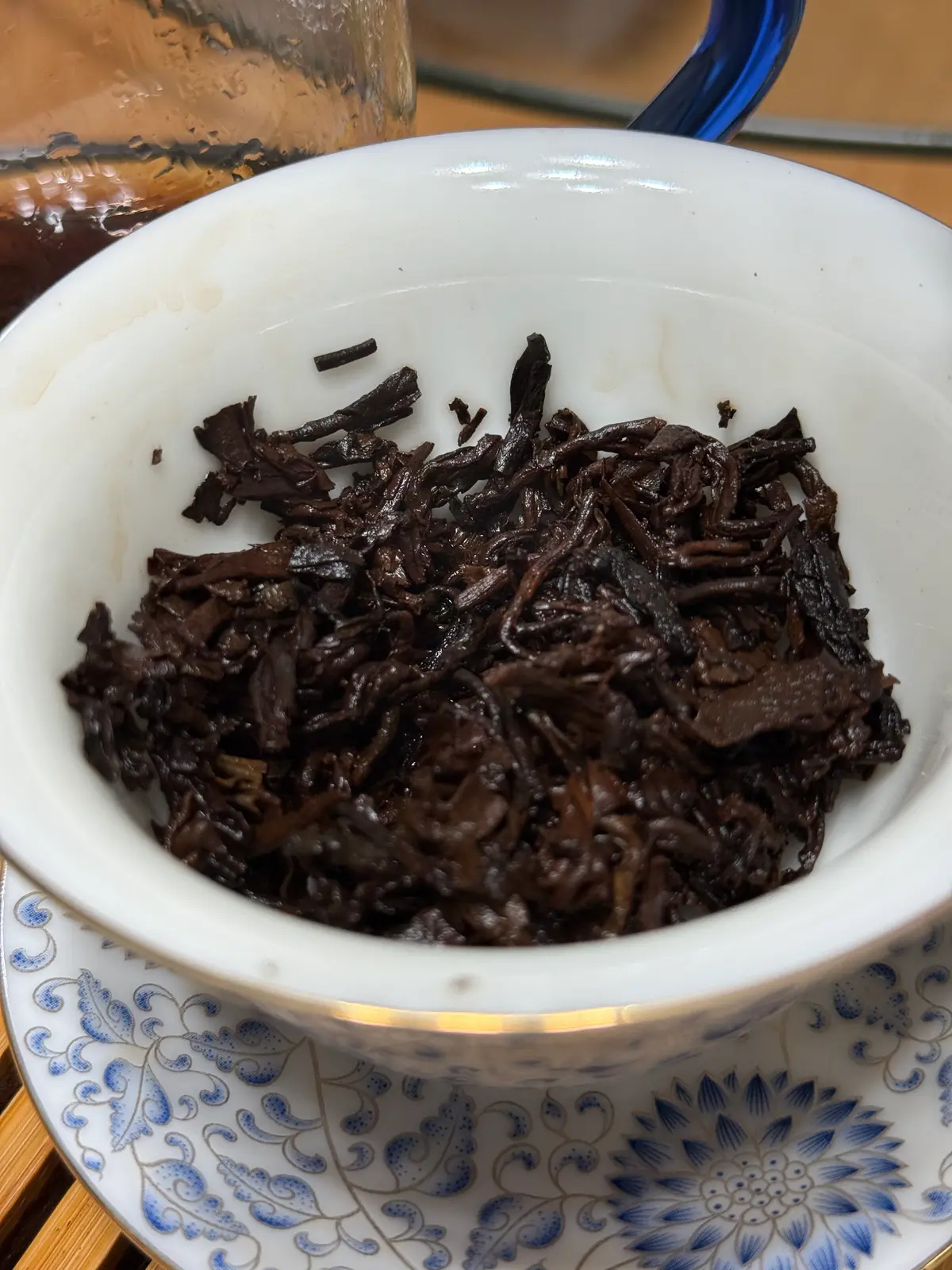
This was the moment I understood that Thai shou and Yunnan shou are not on a quality ladder. They are different accents of the same language. Thai shou welcomes you with sweetness. Yunnan shou from Menghai mountain challenges you first. The bitterness is the handshake. The sweetness comes later — but it comes harder.
By steep 4-5, the arc completed. The bitterness that had dominated steeps 1-2 converted into sweetness that flooded my mouth with more intensity than any Thai huigan I’d experienced. The priming effect is real — the palate, having endured bitterness, perceives the arriving sweetness as more dramatic. This is the Menghai huigan mechanism. My Thai shous whispered their sweetness. Meng Song announced it.
Something I noted carefully: “Bitter didn’t mean not smooth, and bitter didn’t mean BITTER.” This distinction matters. The bitterness had a muscular quality but it didn’t scrape or attack. It coexisted with smoothness — structure and texture simultaneously, like a Barolo that’s tannic but silky. This coexistence is what separates good Menghai shou from cheap bitter shou.
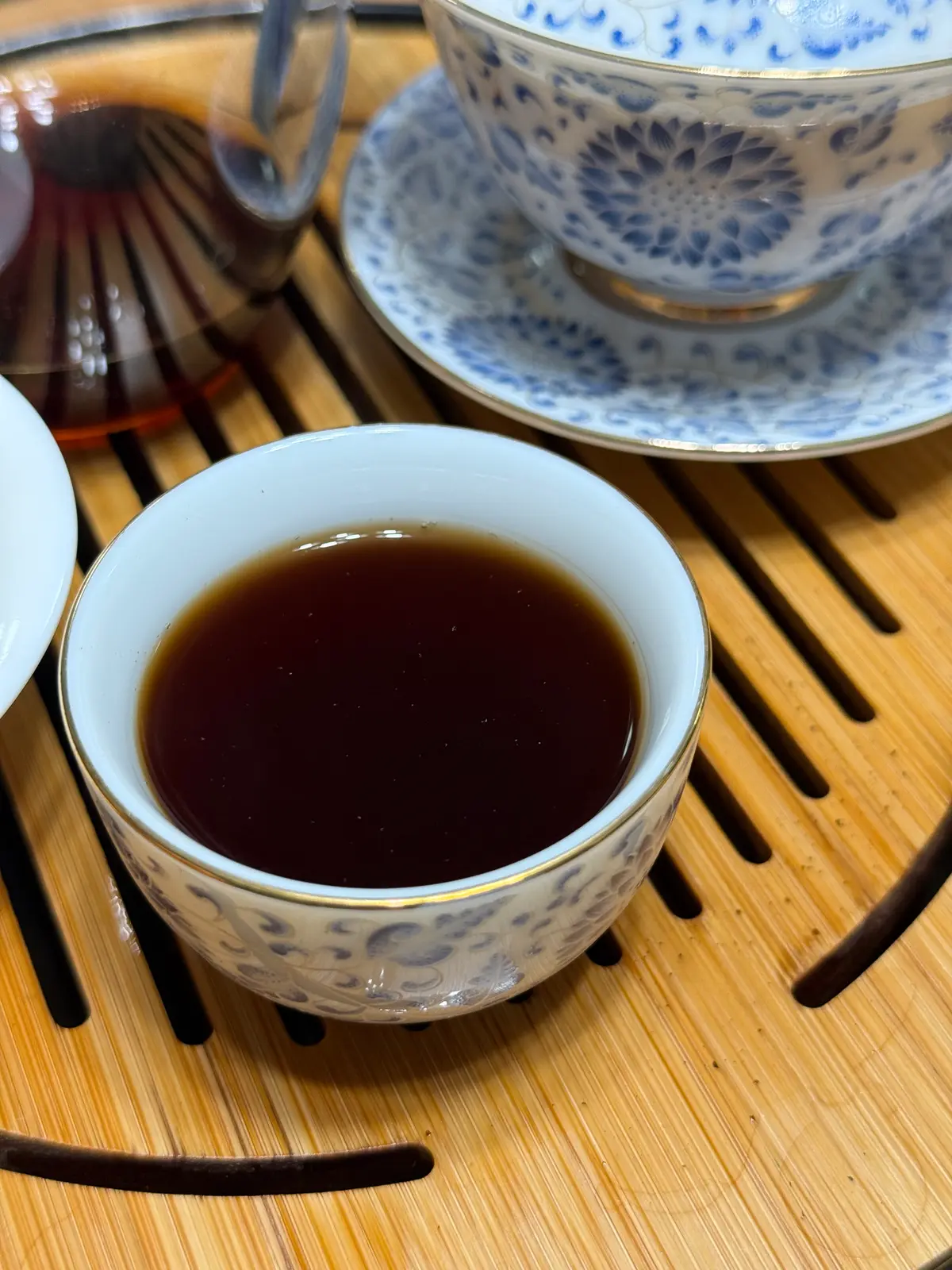
By steeps 7-8, the tea had lightened considerably. The chocolate and bitterness were gone. In their place was something I recognized from a completely different part of my life: 보리차 (barley tea). That clean, grain-like, toasty sweetness that every Korean household knows. The Yunnan mountain shou, at the end of its arc, whispered in Korean. A beautiful and unexpected exit.
Session 2 was brewed in a Jian Shui Shi Piao pot with my wife. The clay added a subtle smoothness to the texture. The qi hit harder this time — mild dizziness, the same vasodilation effect I’d experienced with the 1988 aged sheng. Meng Song’s cha qi is genuinely potent. Eat before brewing this one.
Flavor Profile
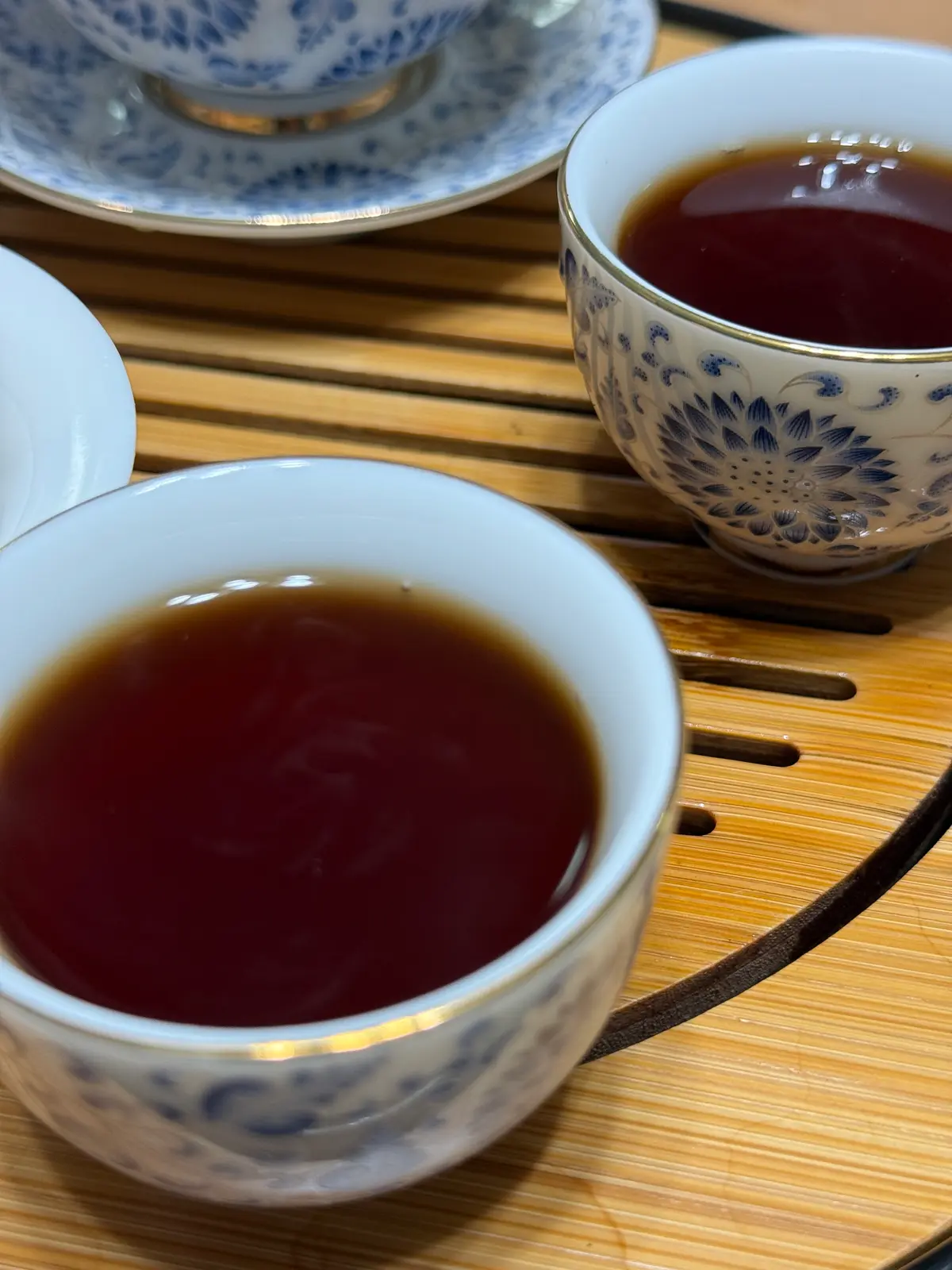
Front: Dark chocolate — not the milk chocolate of Thai craft shou or the 80% dark cacao of Zi Ya Purple Bud. This is raw cacao territory. Mineral, bitter, uncompromising.
Mid: Where the magic happens: the bitterness-to-sweetness conversion that defines Menghai terroir. Steep 1-2 bitter, steep 4-5 sweet, and the transition between them is the most dramatic huigan arc in my collection at time of first tasting.
Finish: In early steeps, a dark herbal sweetness — licorice-adjacent, a depth that the Thai shous don’t have. In the final steeps, the 보리차 character emerges: clean, grain-like, toasty, and gently sweet.
Mouthfeel & Huigan
“So deep, rich.” The body is thick, muscular, grippier than Thai shou. Menghai mountain material produces a denser tea soup from higher polyphenol content — trees under more stress at higher altitude creating more raw material for fermentation to work with. The mouthfeel has authority that gentler Thai terroir doesn’t produce. Not better. Different. More demanding.
The huigan is the standout quality. At time of first tasting, this was the most powerful bitterness-to-sweetness conversion I’d experienced. The mechanism was educational: bitter steeps prime the palate, and the arriving sweetness registers with amplified intensity. Thai shous bypass this mechanism by delivering sweetness upfront. Meng Song forces the full arc. The reward is proportional to the challenge.
Qi Notes
Very potent. Meng Song is known for strong cha qi in both sheng and shou forms. Session 1 at 8 PM produced noticeable warming and grounding. Session 2 caused mild dizziness — a clear signal to eat before sessions with this tea. The qi is accumulative: it builds across steeps rather than hitting immediately, and lingers after the session ends.
한증막 (outdoor Korean sauna) — the camphor-wood-resinous aromatic family that has become our household’s signature detection — was present in the wet leaf aroma. My wife and I have now independently identified this aromatic register across Thai aged sheng (1988 HTC — 편백나무), Myanmar shou (Zi Ya — 목욕탕), and now Yunnan shou (Meng Song — 한증막). Same terpene family, different expressions across different origins and processing methods.
Value Assessment
For a 7-year-old Menghai area shou with genuine mountain material, this represents strong value. A full cake would be a justified purchase for daily drinking.
Verdict
The tea that divided my education into “before Yunnan” and “after Yunnan.” Everything prior — Thai shou, Thai sheng, hei cha — was the prologue. Meng Song was the first chapter of the real book. Not because Thai tea is lesser, but because Yunnan terroir demands something of you that Thai terroir doesn’t. The bitterness is the price of admission. The huigan is the reward. The 보리차 fade at the end is the gentle goodnight.
“This is why China is the land of tea.” I wrote it during the session. I meant it.
This tea's strongest axis is Body (8/10). Also notable: Huigan, Flavor Transition, Cha Qi.