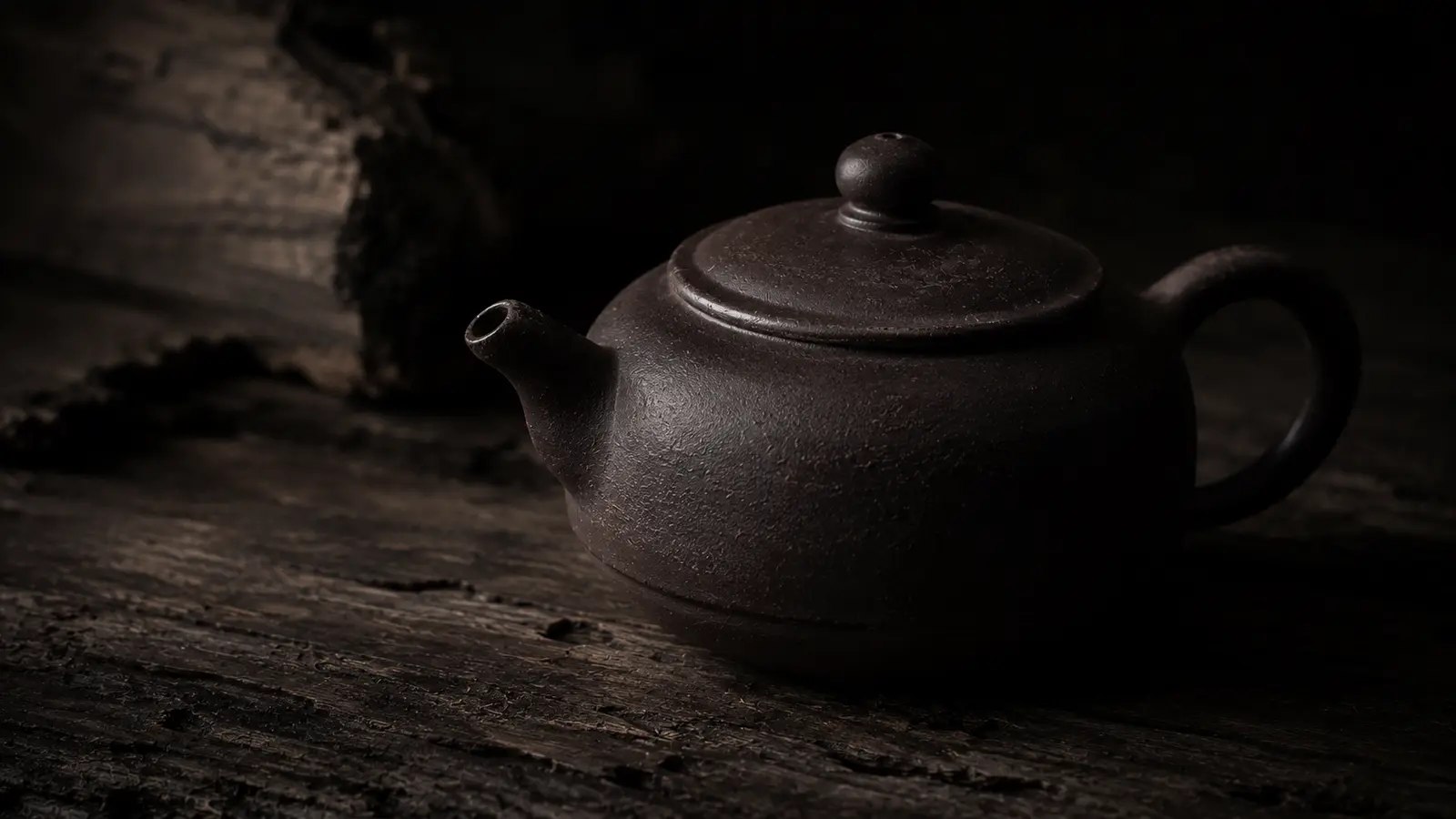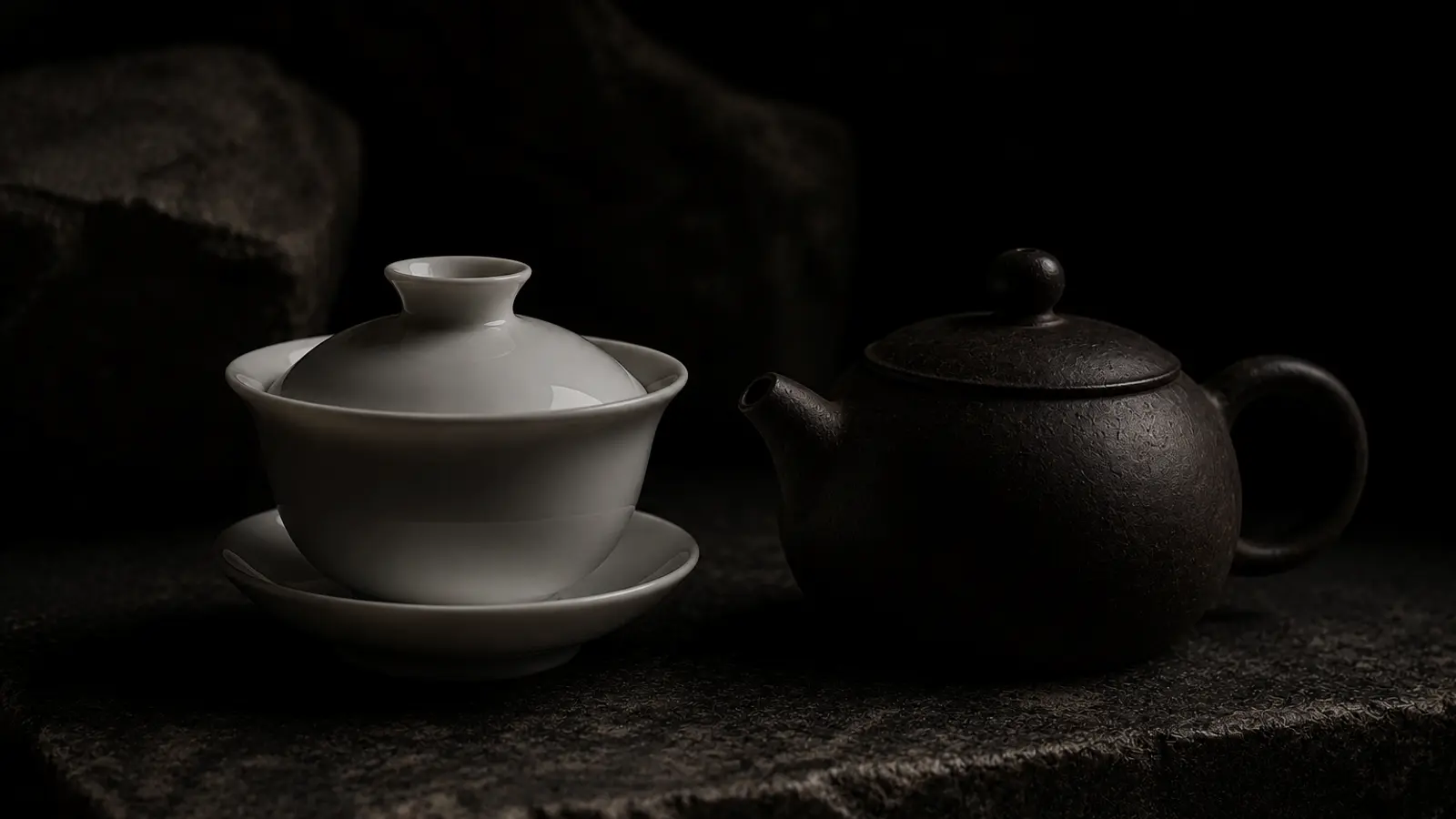
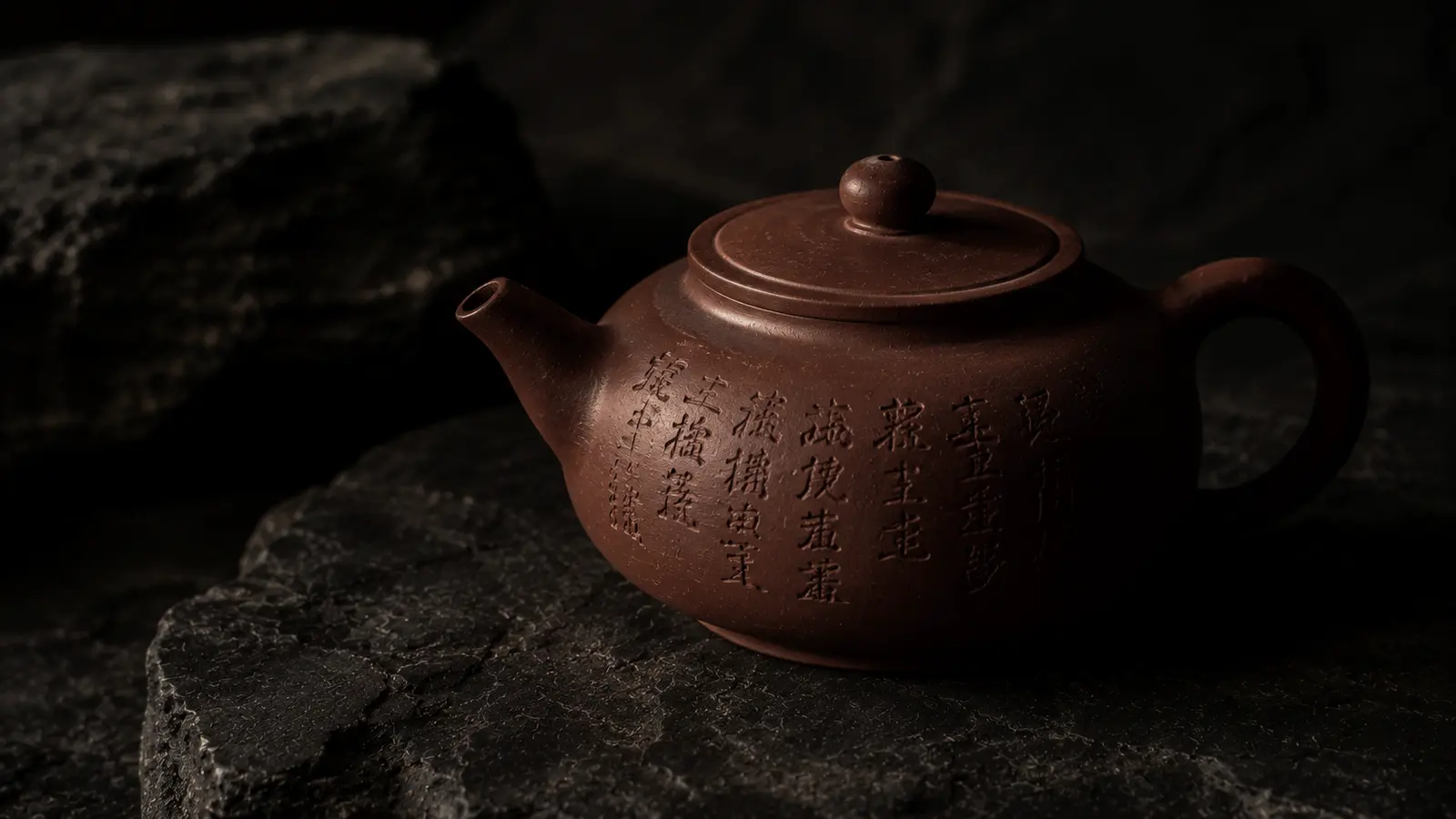
Almost every serious Western tea drinker has heard of Yixing. Far fewer have heard of Jian Shui (建水). That gap is not a reflection of quality or history—it reflects how unevenly Chinese ceramics culture has been translated into English. Jian Shui pottery (建水陶) from southern Yunnan province is one of China’s officially recognized Four Famous Ceramics, has over 900 years of continuous production, and produces teapots of genuine technical and aesthetic distinction. It deserves serious attention.
I have a Jian Shui shi piao (石瓢) pot on order from a reputable Yunnan craft vendor right now. The process of choosing it taught me more about this tradition than months of reading. I’ll share both the research and the practical sourcing experience below.
What Is Jian Shui Pottery?
Jian Shui pottery is an unglazed ceramic tradition originating in Jian Shui county (建水县), a small city in Honghe Prefecture in southern Yunnan province. Chinese cultural authorities classify it alongside Yixing purple clay (宜兴紫砂), Guangxi Nixing pottery (广西坭兴陶), and Sichuan Rongchang pottery (荣昌陶) as one of the Four Famous Ceramics of China (中国四大名陶).
Production in Jian Shui dates back at least to the Song dynasty—around the 10th to 13th centuries—with evidence of kilns producing stoneware from that period. By the Yuan and Ming dynasties, Jian Shui kilns were producing celadon and blue-and-white ware that reached significant regional prominence. The distinctive unglazed purple and red clay teaware tradition that defines the category today developed primarily from the Qing dynasty onward.
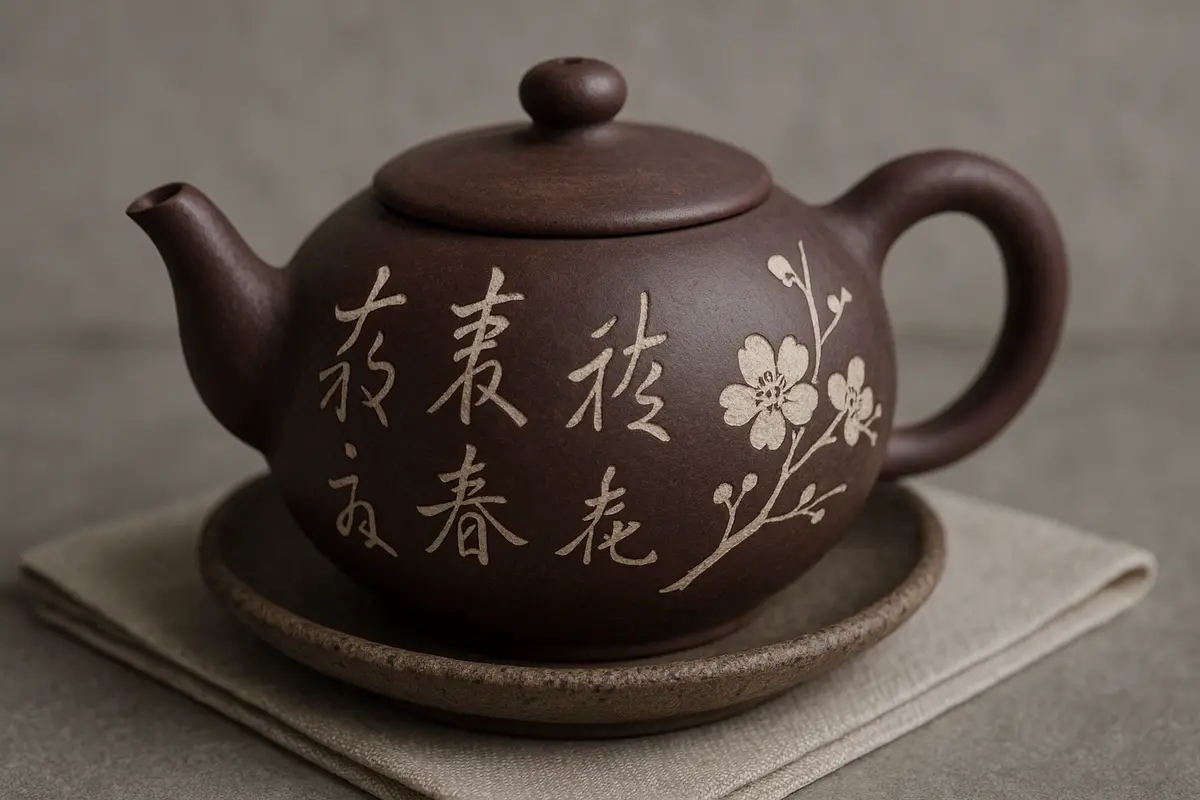
What makes Jian Shui pottery immediately recognizable is not the clay alone but the surface decoration: carved and inlaid designs of calligraphy, classical paintings, and botanical motifs executed directly on the clay body before firing. This technique—unique to Jian Shui among major Chinese ceramic traditions—is discussed in detail below.
The Clay Itself: Mineral Profile and Firing
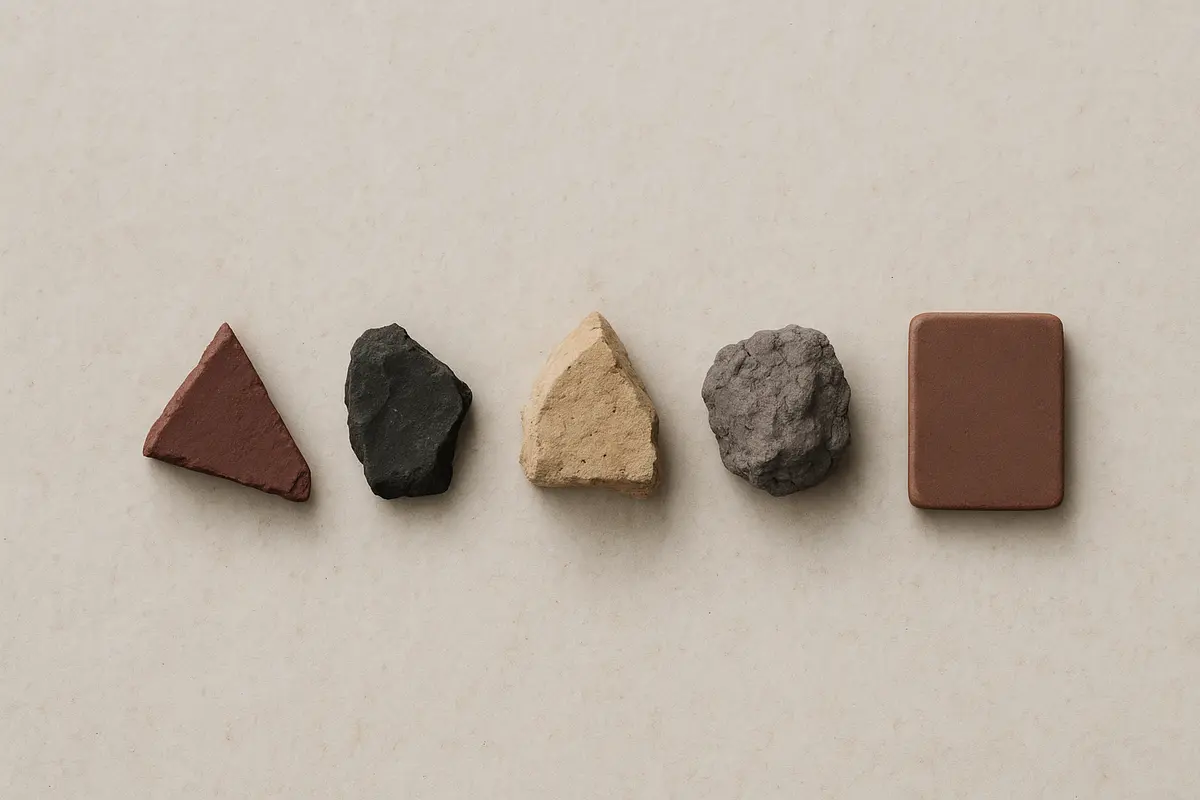
Jian Shui clay comes from deposits in and around Jian Shui county. The local earth contains multiple color seams—iron-rich red and purple clays, lighter buff and white clays, and near-black material—all of which potters use both separately and in combination to achieve the colored inlay contrasts that define the aesthetic.
The clay fires hard. Very hard. At kiln temperatures typically ranging from 1100°C to 1200°C, Jian Shui clay sinters into a dense, semi-vitrified body with a fine pore structure that distinguishes it from the more porous Yixing zisha. The fired result rings with a clear, almost metallic tone when tapped—experienced buyers use this as a quality check, similar to tapping a Yixing pot for resonance.
That density matters for tea. Where Yixing zisha retains a relatively open pore structure that actively absorbs tea oils and aromatics over hundreds of sessions, Jian Shui’s finer pores mean slower, more gradual seasoning. The surface the clay presents to your tea is different: smoother at a microscopic level, less aggressively absorptive.
The clay composition also differs meaningfully from Yixing. Yixing zisha is primarily a kaolinite-rich clay with significant iron oxide content. Jian Shui clay has a different mineral balance—specific proportions vary by deposit layer and have not been as exhaustively published in ceramics literature. What is consistently documented is that the fired density and hardness exceed typical Yixing output at comparable firing temperatures.
The Defining Technique: Carved and Inlaid Decoration
This is the feature that has no direct equivalent in any other major Chinese ceramic tradition, and understanding it is essential to understanding Jian Shui.
The process:
- The teapot body is thrown or hand-built to its basic form, then allowed to reach leather-hard stage—firm enough to carve but not yet dry.
- Skilled artisans carve calligraphy, paintings (plum blossoms, bamboo, landscapes, scholars’ rocks) or abstract patterns directly into the clay surface using metal tools. The carved lines are typically deep and clean.
- Contrasting colored clay—white against a red body, red against a black body, or combinations—is pressed into the carved recesses and allowed to harden.
- The surface is scraped back and refined, so the inlaid clay sits flush with the surrounding body.
- After firing, the pot is hand-burnished with smooth stones through many cycles of progressive polishing. No glaze is applied. The final sheen comes entirely from mechanical polishing of the fired clay surface.
The result is a teapot that looks, at first glance, like it might be glazed or lacquered. It is neither. The mirror-like zones of the polished surface are the clay itself, compressed and smoothed by hand.
The calligraphy on a quality Jian Shui pot is not decorative afterthought—it is central to the object’s value. Many of the best Jian Shui pieces are collaborations between a pottery master (who forms and fires the piece) and a calligrapher or painter (who executes the carved design). Collectors track both names. A pot bearing the carved work of a respected calligrapher alongside the forming work of a recognized pottery artist commands prices that reflect both contributions.
This dual-authorship tradition has no real parallel in Yixing collecting, where the potter’s name on the stamp (款识) is the primary value marker.
Brewing Characteristics: What Jian Shui Does in the Cup
I want to be honest about the limits of my firsthand experience here: my Jian Shui shi piao is still in transit. What follows combines research into the tradition with conversations with vendors and collectors who have used these pots extensively.
Heat retention. The dense, semi-vitrified clay body retains heat well. This is an asset for pu-erh and dark oolongs, which benefit from sustained brewing temperatures. It can be a liability for greens or light oolongs where you want rapid cooling between steeps.
Flavor neutrality. This is the most discussed property among people who use both Jian Shui and Yixing pots. The consensus—though it is not unanimous—is that Jian Shui presents a more neutral clay interaction with the tea than typical Yixing zisha. A new Yixing pot in a strong zisha like zi ni (紫泥) or hong ni (红泥) can impose noticeable mineral or clay flavor for dozens of sessions before settling. Jian Shui, with its finer pores, tends to start closer to neutral and stays closer to neutral throughout its working life. Whether this is a feature or a limitation depends on what you want from clay.
Seasoning. The lower porosity means Jian Shui pots do not season as dramatically as Yixing. Long-term Yixing collectors prize a well-seasoned pot—the clay darkens, develops a patina, and some argue it actively improves tea over time as residual seasoning adds subtle depth. With Jian Shui, this effect is attenuated. The pot will develop a surface patina, but the transformation is subtler and slower. Many collectors find this an advantage: the pot remains more versatile across tea types without being monopolized by a single tea.
My brewing plan. I am dedicating my incoming shi piao to sheng pu-erh (生普), specifically young to mid-aged Yunnan material. The regional pairing appeals to me on both practical and sentimental grounds—clay and leaf from the same province. I will document seasoning progress over the first year of use.
Jian Shui vs. Yixing: A Direct Comparison
This is the question most Western tea drinkers will have, since Yixing is the reference point for clay brewing.
| Feature | Jian Shui (建水陶) | Yixing (宜兴紫砂) |
|---|---|---|
| Origin | Jian Shui, Yunnan | Yixing, Jiangsu |
| Clay density | Higher — semi-vitrified at firing | Lower — more porous |
| Pore structure | Fine | Coarser (varies by clay type) |
| Surface finish | Polished by hand burnishing, no glaze | Matte to semi-matte, unglazed |
| Decoration | Carved and inlaid calligraphy/painting | Minimal — stamps, applied ornament |
| Seasoning rate | Slow | Faster and more pronounced |
| Flavor influence | More neutral | Clay-forward, varies by ore |
| Heat retention | High | Moderate to high (varies) |
| Versatility | Higher — less locked to one tea | Often dedicated to one tea type |
| Western availability | Very limited | Moderate — specialist vendors |
| Price range (authentic) | $80–$800+ USD | $80–$2,000+ USD |
| Collector market | Smaller but active in China | Large and well-developed |
A few notes on that table:
On price: authentic hand-made Jian Shui teapots from established artists start around $80–$120 USD for entry-level workshop pieces and rise steeply for signed, carved artist work. The upper end for prominent artist collaborations at auction runs into thousands. Industrial-production Jian Shui imitations exist and are easy to misidentify without experience.
On flavor influence: this comparison is Tier 2 knowledge for me—research-based rather than direct experimental comparison under controlled conditions. The broader tea community’s reported experience is consistent enough that I present it with reasonable confidence, but individual pots and individual clay ore batches vary.
On versatility: Yixing tradition strongly encourages dedicating each pot to a single tea category. Jian Shui’s more neutral clay makes this less critical, though I still dedicate mine to pu-erh by preference.
Jian Shui and Pu-erh: The Regional Argument
There is a pragmatic case and a romantic case for pairing Jian Shui with Yunnan tea.
The pragmatic case: the clay’s heat retention suits pu-erh brewing parameters (93–100°C for sheng, full boiling for aged or shou material). The neutral-leaning clay profile will not muddy delicate huigan (回甘)—the returning sweetness in the throat that is a primary quality marker in good sheng. And because the pot seasons slowly, you are not sacrificing versatility to run sessions with teas across different pu-erh storage trajectories.
The romantic case: Jian Shui county sits in southern Yunnan, less than 200 kilometers from some of the most significant pu-erh growing areas—Menghai, Mengla, and the ancient tree (古樹, gushu) gardens of Xishuangbanna. The clay and the leaf are children of the same geological and cultural landscape. Brewing Yunnan tea in Yunnan clay is not a rule, but it is a coherent aesthetic position.
How I Chose My Shi Piao
The shi piao (石瓢) is a classic Chinese teapot form—triangular in profile, with a flat base, trapezoidal body, and a simple arched handle. The name references a gourd used to scoop water. The form has ancient precedent and is associated with the scholar-aesthetic tradition across both Yixing and Jian Shui.
I spent about three weeks looking at Jian Shui shi piao options before ordering. Most of that time was on the website of a specialist Yunnan craft vendor, which currently offers the most organized and transparent selection of Jian Shui ware I have found for Western buyers. They include information on the artisan’s background, the clay type (distinguished by color: purple, red, black, or mixed), and the carved design with enough detail to understand what you are buying.
My selection criteria, in order:
- Carved design quality. I wanted calligraphy rather than botanical motifs—specifically a classical Chinese text passage, brushwork-style carving. This is personal preference.
- Clay color. I chose a predominantly purple-black body with white inlay for maximum visual contrast.
- Volume. I brew primarily for one or two people, so I wanted 130–160ml capacity. Smaller than this becomes fussy; larger than this means I am steeping more leaf to fill the pot.
- Price range. I set a ceiling of $180 USD. This is firmly mid-tier for handmade Jian Shui work—below the entry point for prominent named artists, but comfortably above factory-production pieces.
The piece I ordered sits at $155 USD, made by a Jian Shui workshop with a named pottery master and a separate carver credited on the listing. That collaborative crediting, with both the potter and the calligrapher named, was a specific thing I looked for—it signals authentic adherence to the traditional dual-authorship approach.
I will publish a full tasting note and first-impressions piece once it arrives and I have run at least 20 sessions through it.
Sourcing Jian Shui Pottery
Specialist Yunnan craft vendors are the starting point for Western buyers. The better ones have done serious work building accessible infrastructure around Yunnan material for international buyers—not just tea but the broader craft culture of the province, including Jian Shui pottery. Their selections are curated rather than exhaustive, prices are stated transparently, and they ship internationally with reasonable reliability.
Some dedicated Chinese tea vendors occasionally stock Jian Shui pieces alongside their tea inventory, though teaware selection is typically inconsistent. It is worth checking vendors you already work with for pu-erh or Yunnan teas.
On-the-ground in Jian Shui: The county has a dedicated pottery market—essentially a street lined with studios and storefronts selling everything from factory pieces to artist-grade work. If you are traveling through southern Yunnan, it is worth the detour. Prices are lower than any Western-facing vendor, but authentication requires either existing knowledge or a trusted local guide. Fakes and tourist-grade production pieces are mixed in with genuine work.
What to avoid: Generic “Yunnan purple clay” teapots sold through mass-market online retailers without artisan attribution, clay type disclosure, or any background on production. Jian Shui’s hand-burnished surface and carved inlay are labor-intensive to produce; a $20 pot claiming to be Jian Shui is not.
Authentication Notes: How to Identify Genuine Jian Shui Work
For a tradition this underrepresented in the tea writing available internationally, some practical authentication markers help.
Surface. Genuine polished Jian Shui has a distinctly mirror-like sheen in polished zones, surrounded by matte or semi-matte clay in areas left unpolished. The contrast is intentional. A uniform glossy surface across the entire pot usually indicates a glaze—not Jian Shui.
Weight. Jian Shui fires dense. A genuine Jian Shui pot feels notably heavier than a comparably sized Yixing pot. If a pot claiming to be Jian Shui feels light or hollow, investigate further.
Inlay quality. Examine the carved designs under good light. In authentic Jian Shui, the inlaid contrasting clay sits flush with the surrounding surface—the inlay and the body polish together to a continuous plane. Sloppy work shows the inlay sitting proud of the surface or recessed, with visible gaps or inconsistent edges.
Resonance. Tap the pot body lightly with a fingernail. Quality Jian Shui rings with a clear, relatively high tone—closer to ceramic tile than a thudding clay sound. This is the same test serious Yixing buyers use.
Caring for Jian Shui
The protocols are similar to Yixing with some adjustments for the denser clay:
- Initial seasoning. Rinse with hot water before first use. You can do a light boil in clean water for 20–30 minutes to open pores, though some Jian Shui collectors consider this unnecessary given the fine pore structure.
- During use. Use the pot exclusively with hot water and tea. No soap—ever. The clay will absorb surfactant residue permanently.
- After each session. Empty spent leaves promptly. Rinse with hot water, invert to dry fully. The polished surface can water-spot if left damp without adequate airflow.
- Patina development. The polished surface will deepen and mellow with use. This is desirable. Polishing the pot with a dry cloth after use accelerates surface development without introducing contaminants.
- Storage. Open storage in a dry, odor-free location. Jian Shui’s finer pores are somewhat less vulnerable to odor absorption than Yixing, but standard caution applies.