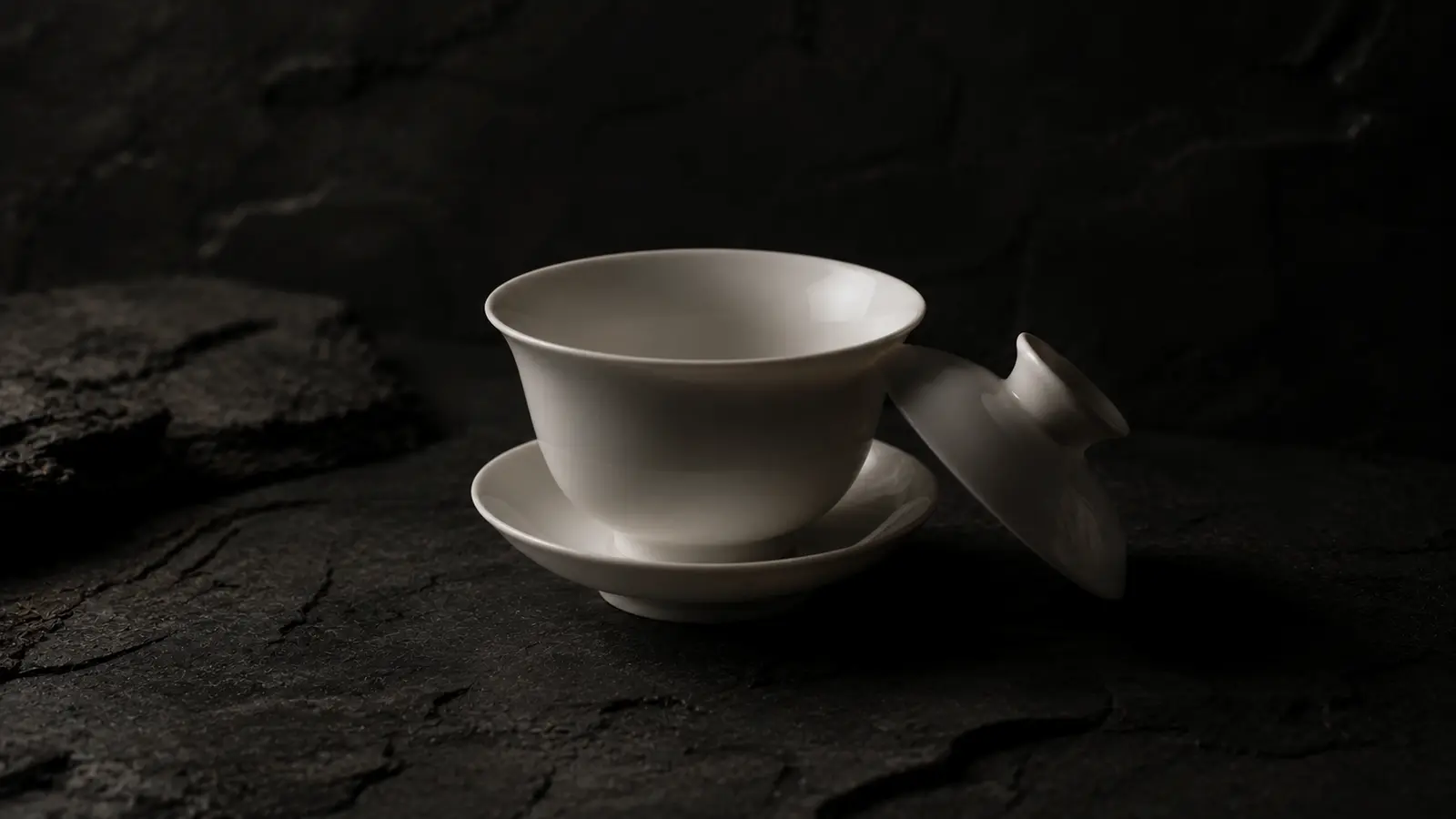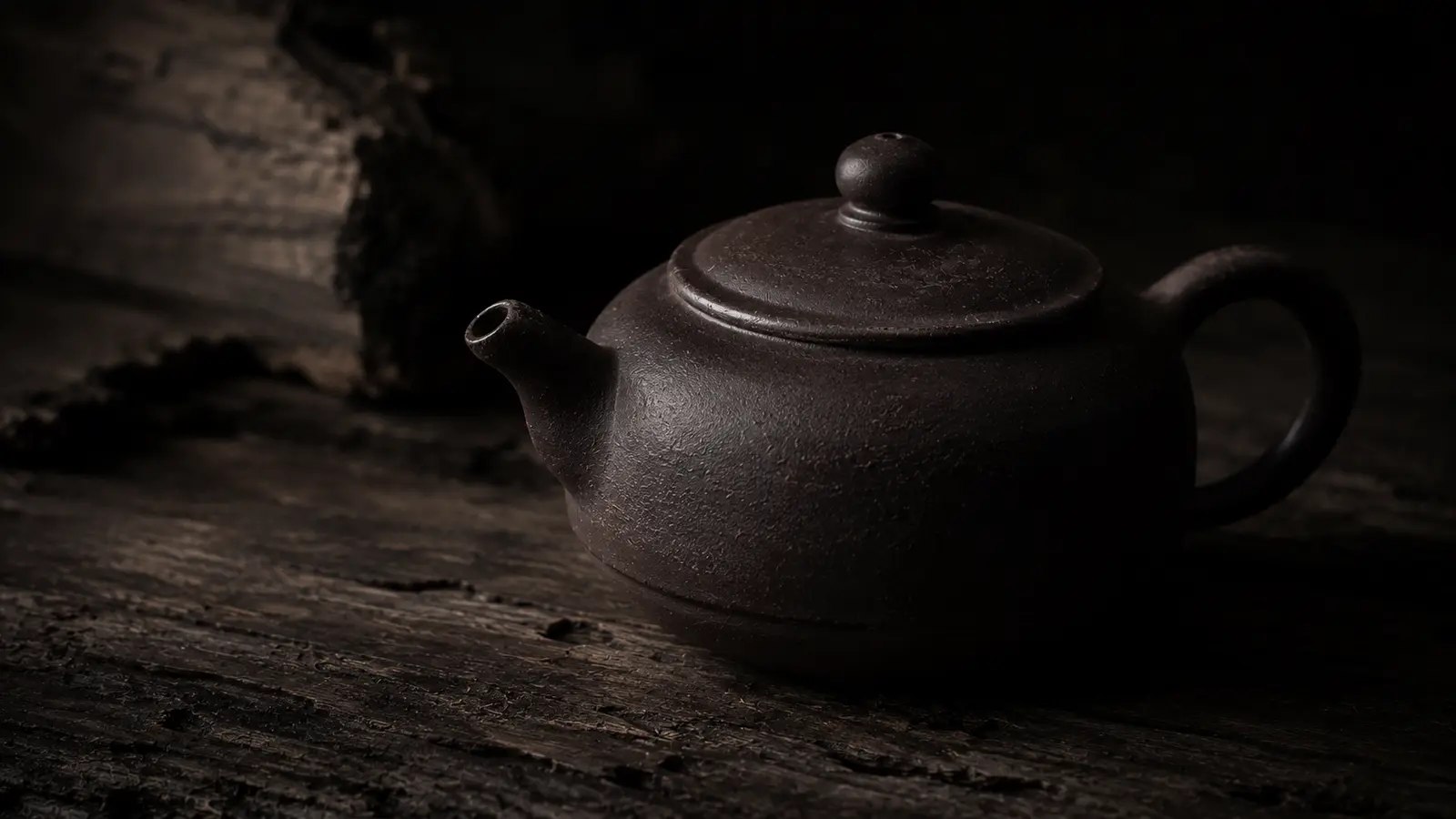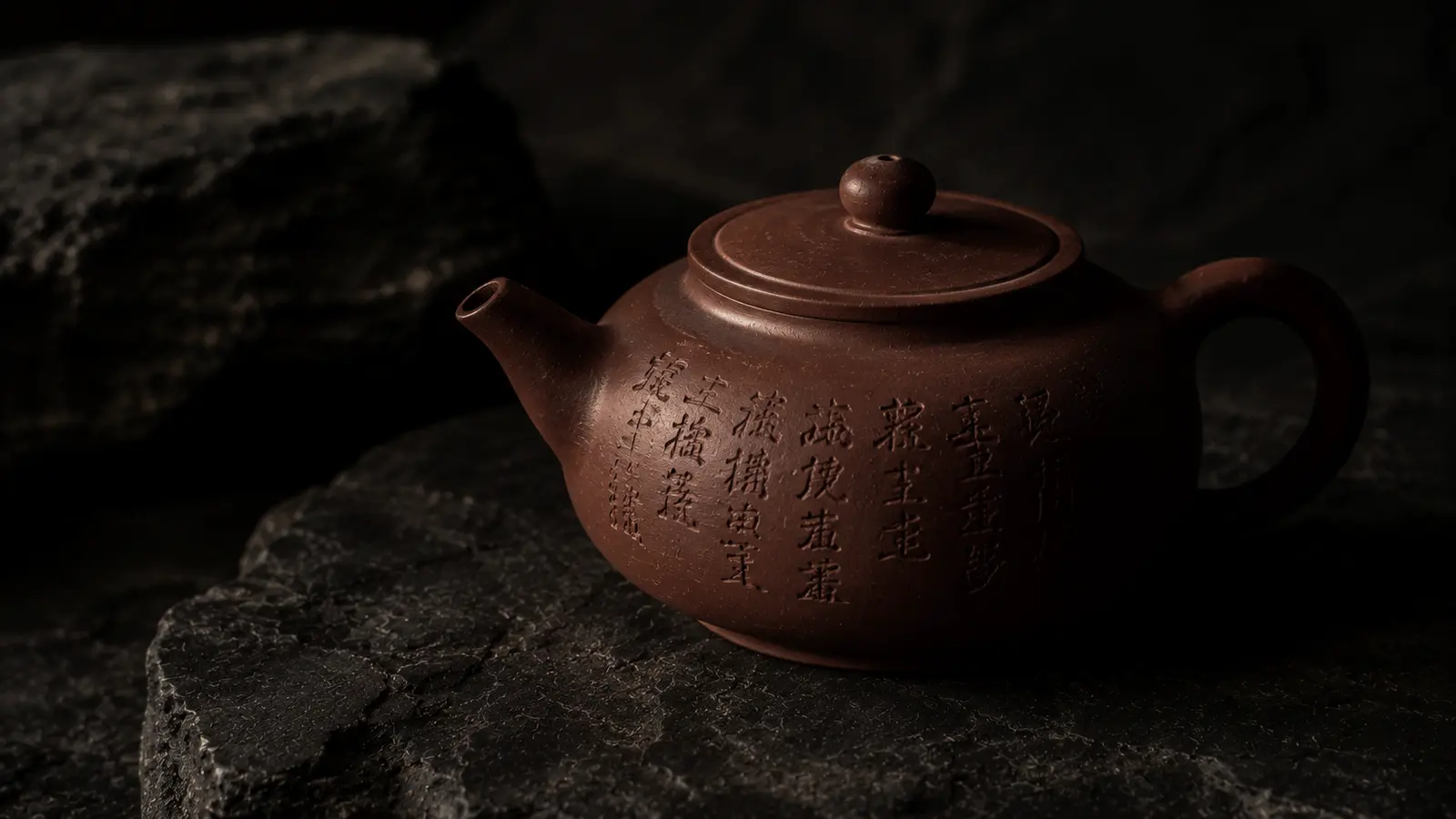
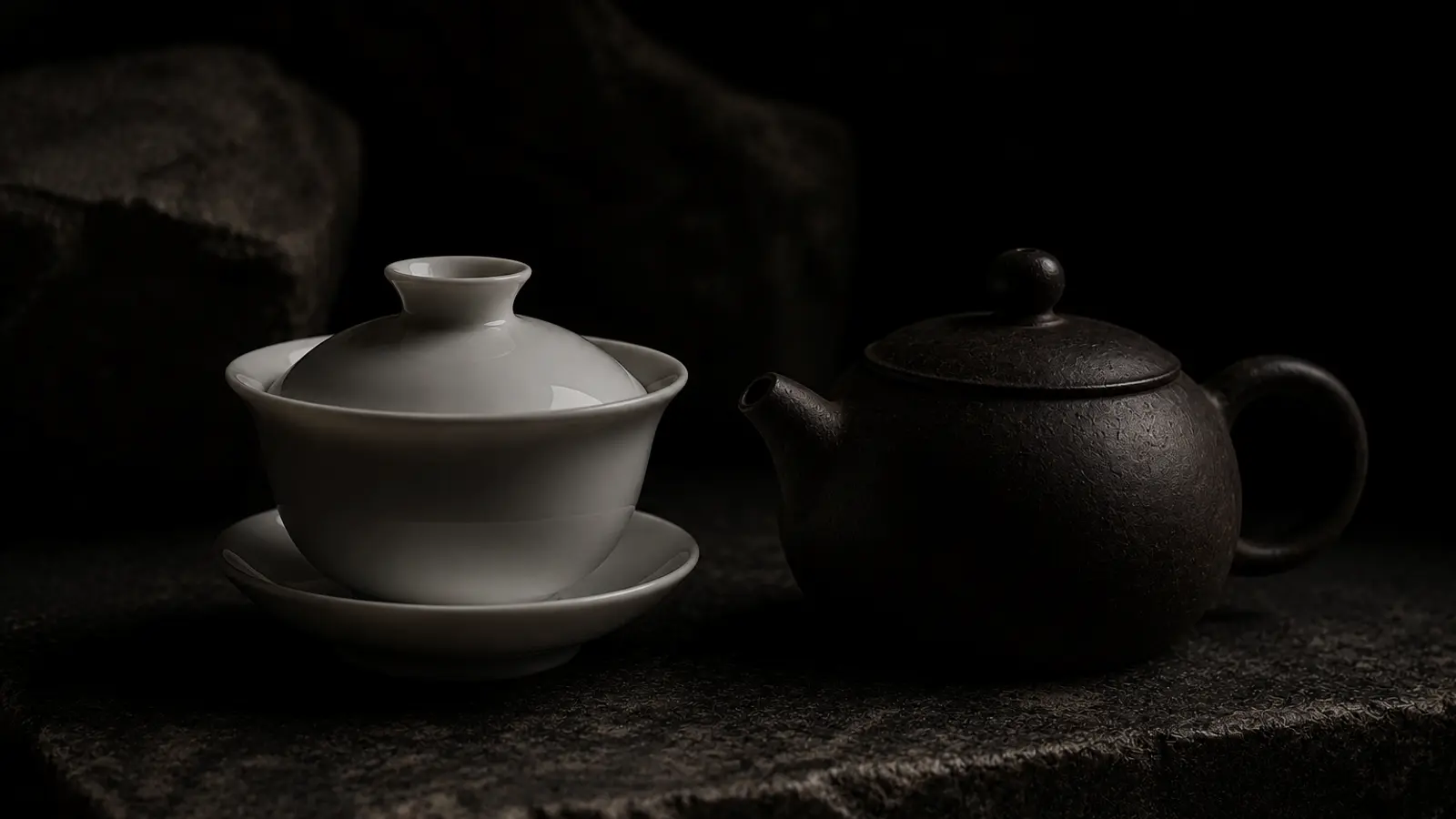
The two vessels sitting on my desk right now tell the whole story. On the left: a 110ml white porcelain gaiwan (蓋碗) I’ve used almost every morning for two years. On the right: a Jian Shui Shi Piao (建水石瓢) that arrived last week from a specialist Yunnan craft vendor, still waiting to be seasoned for the dancong wulong I’m drinking obsessively this spring. These two pieces represent different philosophies about what a brewing vessel is supposed to do — and choosing between them is the first real decision any serious gongfu (功夫) brewer has to make.
The short answer: start with the gaiwan, always. Add clay later, deliberately, when you know exactly what you’re committing to. The long answer is what follows.
What Is the Difference Between a Gaiwan and a Yixing Teapot?
A gaiwan is a porcelain lidded bowl that brews any tea neutrally without absorbing flavor. A Yixing teapot is made from porous zisha clay that absorbs tea oils over time, gradually seasoning to enhance a single tea type. Gaiwans offer versatility; Yixing offers specialization.
At a Glance:
| Factor | White Porcelain Gaiwan | Yixing Clay Teapot |
|---|---|---|
| Flavor neutrality | Complete — contributes nothing | Accumulates seasoning over time |
| Versatility | Brew any tea type | Best dedicated to one tea type |
| Heat retention | Lower — cools faster | Higher — retains heat longer |
| Cleaning | Soap and water fine | Rinse only, never soap |
| Entry cost | $15–$40 for quality | $60–$300+ for verified authentic |
| Time investment | Ready immediately | Months to years of seasoning |
What Each Vessel Actually Does
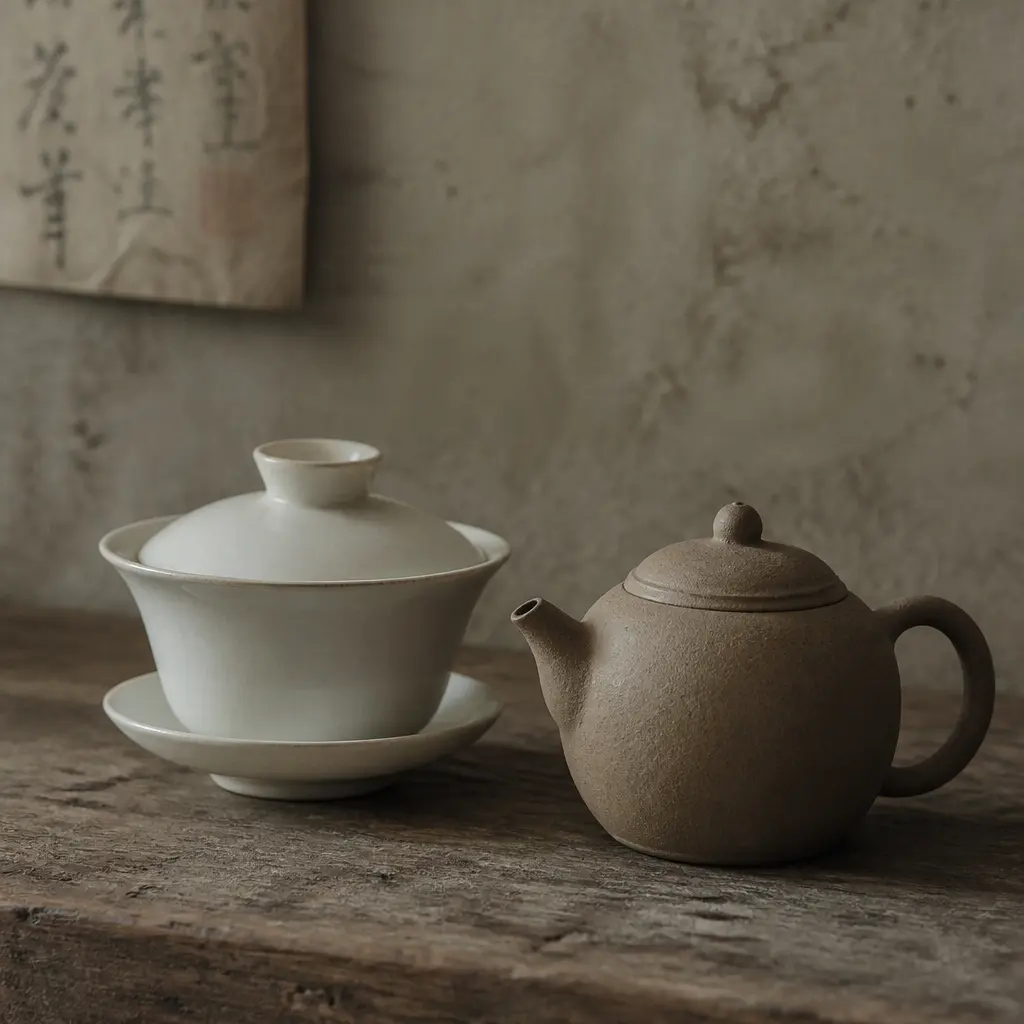
Before comparing them, you need to understand what each vessel is engineered for — because they’re solving different problems.
The Gaiwan: Neutrality as a Feature
A gaiwan is a lidded bowl with a saucer. Nothing more. In its most useful form — a white porcelain one — it contributes absolutely nothing to the tea. Porcelain is non-porous and vitrified at high temperatures, which means it doesn’t absorb tea oils, doesn’t retain aromas between sessions, and doesn’t alter the chemistry of the water passing through it.
That neutrality is the point. Think of a fine wine glass: its job is to get out of the way and let the wine speak. A porcelain gaiwan does the same. Every flavor nuance you taste comes from the tea itself, not from the vessel’s history or material properties.
This makes the gaiwan the analytical tool of the tea world. When I need to evaluate a new sheng pu-erh (生普洱茶) cake, understand what a specific harvest year from a specific mountain tastes like, or compare two dancong roast levels side by side, the gaiwan is the only honest choice. The vessel introduces zero variables.
The Yixing Teapot: Accumulated Character
Yixing (宜興) teapots are made from zisha clay (紫砂泥) — a category of ore-bearing mineral clay found in a specific deposit in Jiangsu Province, China. The defining characteristic of zisha is its double-porous microstructure: it breathes and absorbs at a microscopic level. Over hundreds of brewing sessions, the clay soaks up tea oils, tannins, and aromatic compounds. The pot slowly seasons, building up layers of absorbed material that begin to influence subsequent brews.
A well-seasoned Yixing dedicated to aged sheng pu-erh over five years of daily use is a fundamentally different object than a new one. The seasoning adds a softening quality, a quiet depth, a sense of integration that you can’t replicate in porcelain. Some experienced drinkers describe it as the pot “remembering” the tea.
The wine analogy here is a decanter — though even that falls short. A decanter is passive. A Yixing teapot is active in a slower, longer sense: it accumulates and then gives back.
The Material Science
Understanding why these vessels behave differently means looking briefly at what they’re made of.
Porcelain is clay fired at 1,200–1,400°C into a fully vitrified, glass-like structure. At that density, there are no meaningful pores. Nothing enters; nothing leaches out. Tea brewed in porcelain tastes exactly like the tea and the water — no more, no less.
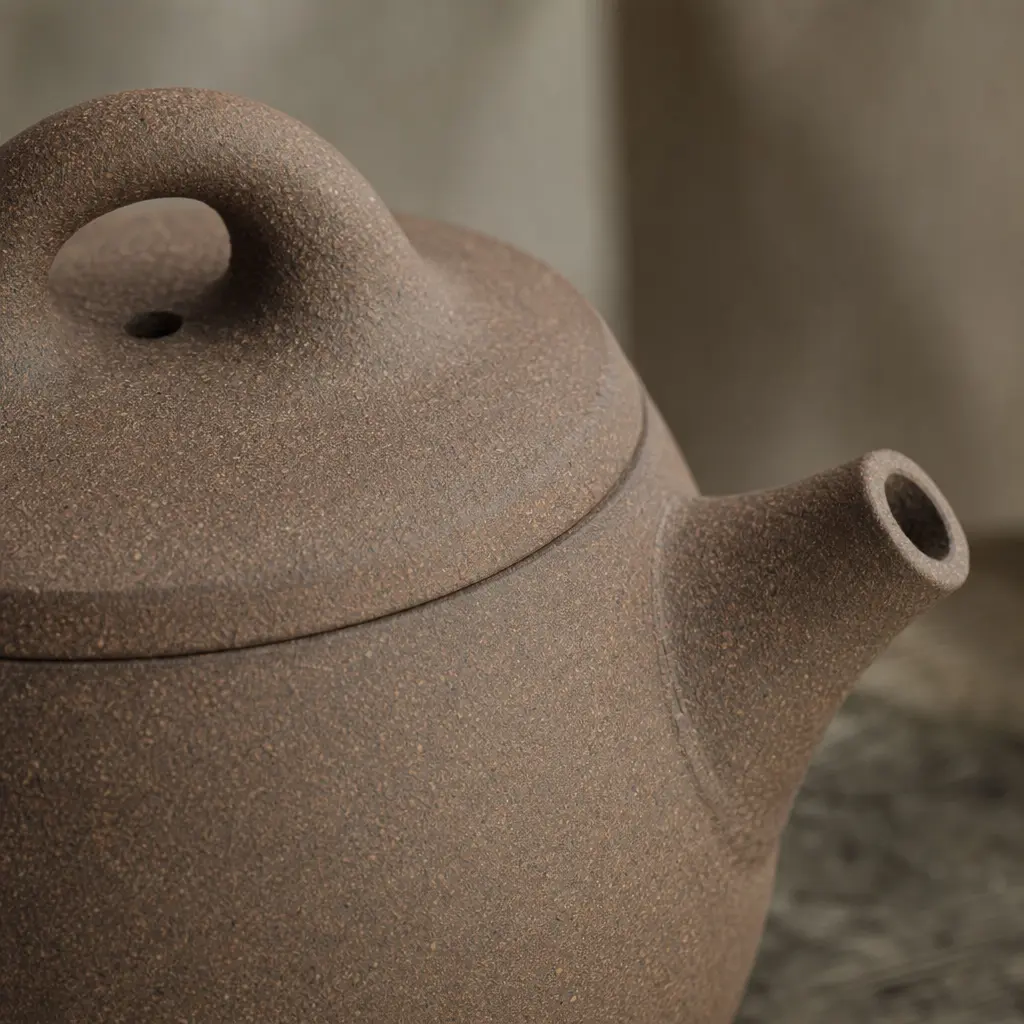
Zisha clay fires at a lower temperature (typically 1,100–1,200°C, varying by clay type) and retains a micro-porous structure. Under an electron microscope, the clay shows interconnected pore channels that allow gas exchange — this is why a Yixing pot keeps tea warm longer than glass or thin porcelain, and why the absorbed compounds from prior sessions remain present in the clay walls.
There are several distinct zisha clay types, each with different porosity and flavor contributions:
- Zini (紫泥) — the classic purple clay; moderate porosity; suits most teas
- Zhuni (朱泥) — dense red clay with higher iron content; very fine pores; traditionally paired with tieguanyin and dancong
- Duanni (段泥) — pale buff or yellow clay; more porous than zini; often recommended for aged pu-erh and roasted wulongs
- Hongni (紅泥) — red clay, distinct from zhuni; less common
The clay type matters because different porosities suit different teas. Zhuni’s density makes it reactive and expressive for high-aroma wulongs. Duanni’s openness suits the earthier, more complex profiles of aged pu-erh.
A note on provenance: genuine Yixing zisha from authenticated sources in Yixing’s Huanglongshan deposit is increasingly scarce and commands premium prices. The market contains a large volume of pots made from blended or substitute clays, some with chemical colorants. I’ll address this in the cost section.
Head-to-Head Comparison
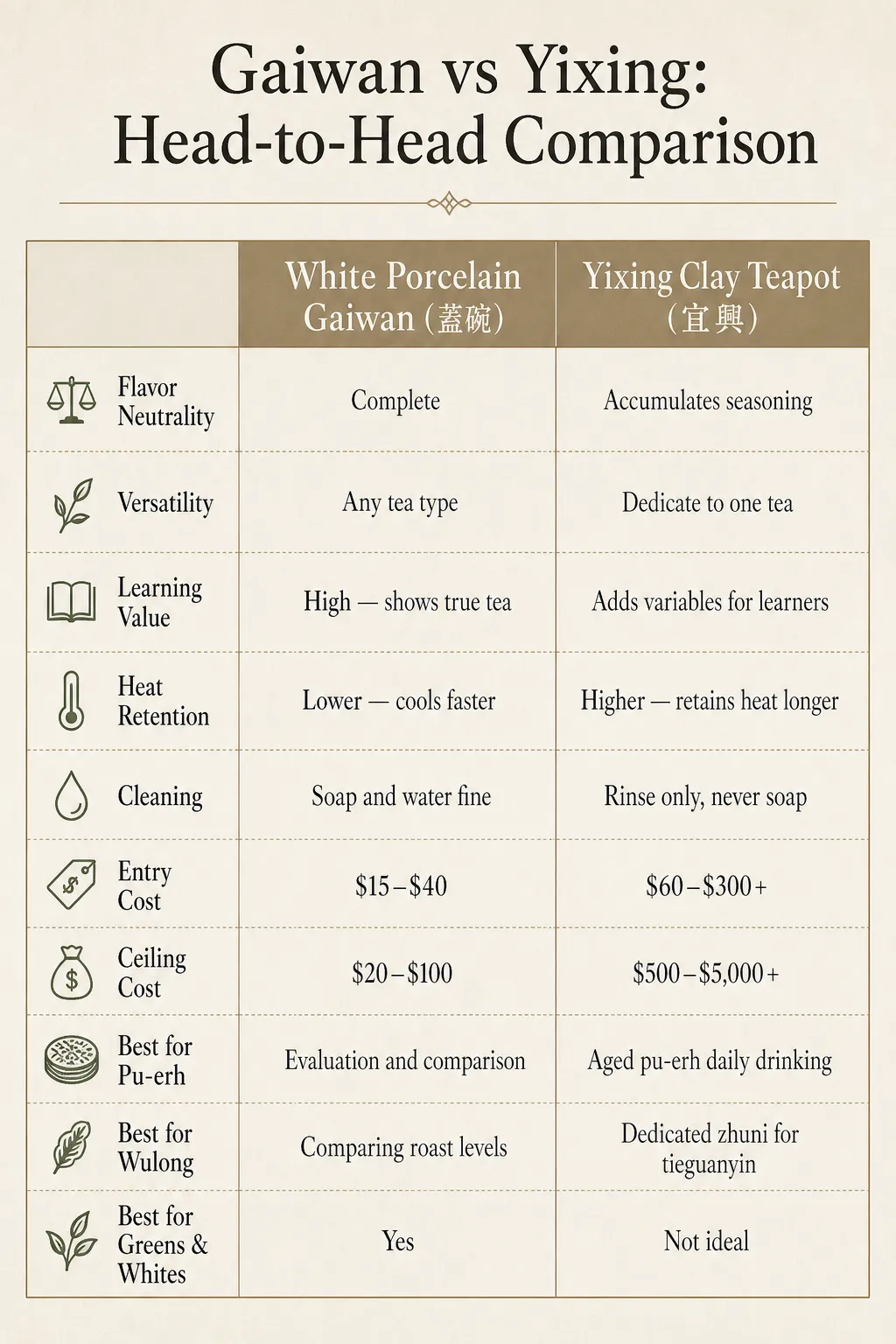
| Factor | White Porcelain Gaiwan | Yixing Clay Teapot |
|---|---|---|
| Flavor neutrality | Complete — contributes nothing | Accumulates seasoning over time |
| Versatility | Brew any tea type | Best dedicated to one tea type |
| Learning value | High — shows the true tea | Lower — adds variables for learners |
| Daily ritual | Functional, efficient | More intentional, ceremonial |
| Heat retention | Lower — cools faster | Higher — retains heat longer |
| Durability | Chips, but doesn’t stain | Chips, but staining patinas beautifully |
| Cleaning | Soap and water fine | Rinse only, never soap |
| Entry cost | $15–$40 for quality | $60–$300+ for verified authentic |
| Ceiling cost | $20–$100 for fine porcelain | $500–$5,000+ for master-made antique |
| Best for pu-erh | Evaluation and comparison | Aged pu-erh daily drinking |
| Best for wulong | Comparing roast levels | Dedicated zhuni for tieguanyin |
| Best for greens/whites | Yes | Not ideal — too hot, wrong seasoning |
| Time investment | Ready immediately | Months to years of seasoning |
When the Gaiwan Wins
Tasting and Evaluating New Teas
If you’ve just received a sample of 2005 Menghai or a dancong from a vendor you’ve never tried, brew it in the gaiwan. You need to know what the tea tastes like on its own terms before any vessel influences the reading. This is non-negotiable for anyone trying to develop their palate.
I keep my white porcelain gaiwan as my primary evaluation tool even now, after years of daily brewing. When a new cake arrives, the gaiwan gets it first, always.
Comparing Teas Side by Side
Side-by-side comparison only works if both vessels are neutral. Two different gaiwans eliminate the vessel variable entirely. Comparing the same tea in a well-seasoned Yixing versus a gaiwan tells you something about the pot, not just the tea — which can be interesting, but it’s not a fair evaluation of the tea itself.
Learning Your Palate
Beginners benefit enormously from the gaiwan’s transparency. Every flaw in technique shows up immediately: a leaf-to-water ratio that’s too high, water that’s too hot for a green oolong, a steep that ran 30 seconds too long. The gaiwan reports everything honestly. This feedback loop accelerates learning faster than any other vessel.
Versatility Across Tea Types
I brew sheng pu-erh, aged white tea, dancong, tieguanyin, and occasionally Japanese gyokuro — all in the same white porcelain gaiwan. No vessel conflict, no residual flavors crossing between sessions, no commitment to one tea type. A single quality gaiwan covers everything.
Green Teas and White Teas
These delicate teas need lower water temperatures (75–85°C for most greens; 80–90°C for aged whites) and benefit from a vessel that doesn’t retain heat aggressively. The gaiwan’s faster heat dissipation is an advantage here, not a liability. For a full breakdown of temperature by tea type, see the tea brewing water temperature guide.
When the Yixing Wins
Daily Drinking of One Tea You Know and Love
This is the core use case for Yixing, and it’s specific: you’ve identified a tea type you drink every single day, you understand its flavor profile intimately from extensive gaiwan sessions, and you’re ready to deepen your relationship with it.
Dedicating a zhuni pot to a specific tieguanyin you’ve sourced consistently for two years means that pot slowly becomes attuned to that tea. The seasoning adds integration, warmth, and a quiet complexity that the gaiwan alone can’t produce. This isn’t magic — it’s accumulated chemistry. But the effect is real, and experienced drinkers notice it.
Aged Pu-erh
Among all tea types, aged sheng pu-erh (陳年生普洱) is most commonly cited as benefiting from clay brewing. The reasoning makes sense: well-aged sheng has complex, sometimes sharp young notes (qi, bitterness, astringency) that a well-seasoned duanni or aged zini pot rounds and integrates. The clay’s porosity allows the compressed flavors room to express more fully, and the seasoning from previous pu-erh sessions provides harmonic context.
I’d still evaluate any new aged pu-erh purchase in the gaiwan first. But for the cakes I already know, that’s where clay becomes compelling.
Personal Ritual and Ceremony
There’s a dimension to Yixing brewing that goes beyond flavor chemistry. A dedicated pot, used daily, cleaned with care, and never touched by soap develops a personal relationship with its owner that a gaiwan doesn’t quite replicate. The patina on the exterior is literal history — compressed into the clay are traces of every session you’ve ever brewed.
For brewers drawn to the meditative dimension of gongfu tea practice, the Yixing teapot carries a weight of intention and continuity. This isn’t nothing. It’s not measurable, but it’s real.
Cost Analysis: What You’re Actually Paying For
Gaiwan Pricing
A quality white porcelain gaiwan costs $15–$40. At that price range, you can find well-made, thick-walled pieces from Chinese producers with good pouring geometry and a comfortable lid knob. Jingdezhen (景德鎮) porcelain in this range is reliable.
Fine porcelain gaiwans — thin-walled, hand-painted, from named producers — run $50–$100+. For daily brewing purposes, the $20–$30 range is entirely sufficient. The tea doesn’t know the difference.
Yixing Pricing: The Complicated Truth
This is where I need to be direct about the market reality.
Under $40: Almost certainly not genuine zisha. Pots at this price point are typically made from blended clays, inferior ore, or substitute materials with chemical colorants added to simulate the appearance of premium clay. They may still function as teapots, but they won’t season the same way, and some inferior clays have raised health concerns about leaching.
$60–$150: Entry-level authenticated zisha territory. Factory-made from verified clay sources. These are serviceable, honest pots that will season genuinely over time. Yunomi and a handful of other vetted Western-market vendors operate in this range with reasonable provenance transparency.
$150–$300: Well-made workshop pots with named craftspeople, better clay selection, more refined finishing. This is where the brewing experience begins to noticeably differ from entry-level.
$300–$5,000+: Master-grade and artist-signed pots. The craftsmanship is extraordinary, the clay provenance is documented, and the seasoning potential is exceptional. These are for collectors and dedicated daily drinkers who have years of practice behind them.
My Jian Shui (建水) Shi Piao (石瓢) from a specialist Yunnan craft vendor sits in a different category entirely. Jian Shui pottery is made in Yunnan Province from a distinct red clay, not Yixing zisha, and it has its own character — a slightly different porosity, a different heat profile. It’s genuinely excellent and priced accessibly (typically $40–$120 for quality pieces), and it represents a meaningful alternative for those interested in Yunnan clay traditions outside the Jiangsu production center.
The Jian Shui piece is new to my practice, and I won’t claim firsthand seasoning data on it yet. But the clay quality, construction, and initial dry-pot aroma are promising.
The Verdict: A Clear Sequence
The gaiwan vs Yixing debate has a clean answer when you reframe it as a sequence rather than a binary choice.
Step 1: Buy a gaiwan first. A $20–$30 white porcelain gaiwan from a reputable source is the right starting point for every tea drinker regardless of experience level. Use it to explore teas, develop your palate, and identify the one or two tea types you return to consistently.
Step 2: Identify your daily tea. After six months to a year of regular gaiwan practice, you’ll know which tea you brew most days. That’s the candidate for a dedicated clay pot.
Step 3: Research the right clay type for that tea. Tieguanyin and dancong point toward zhuni. Aged pu-erh points toward duanni or aged zini. Roasted wulongs work well with most standard zini. Don’t buy a pot before you know what tea it’s for.
Step 4: Buy once, buy well. A $100–$150 verified authentic Yixing teapot from a reputable source will last decades and season beautifully. Buying a $25 pot that isn’t genuine zisha wastes both money and months of seasoning effort.
Step 5: Keep the gaiwan. The clay pot doesn’t replace the gaiwan — it supplements it. I still use my white porcelain gaiwan almost every day. It’s for evaluation, exploration, and anything outside my dedicated pot’s tea type.
Seasoning a New Clay Teapot: The Basic Process
If you’ve just acquired a new Yixing or Jian Shui teapot, here’s the standard approach I follow:
- Rinse thoroughly with hot water several times, including the interior, lid, and spout.
- Simmer gently — place the pot in a pot of cold water, bring slowly to a low simmer (not a rolling boil), and hold for 10–15 minutes. Some brewers add spent tea leaves to the simmering water. This removes manufacturing dust and opens the pores. Do not do this with older or antique pots.
- Let cool completely in the water. Remove gently.
- Brew your first sessions. The first 5–10 sessions are “sacrificed” — brew your intended tea at full strength, let it sit in the pot for 10–15 minutes, then discard. This begins the seasoning.
- Dry between sessions. Always leave the lid ajar after use. Never seal the pot while damp.
- Never use soap. Ever. Soap strips the absorbed tea oils and can leave a soapy residue that persists for dozens of brews.
- Be patient. A pot isn’t meaningfully seasoned until 50–100 full sessions. The best pots I’ve used or read about are five to ten years of daily use into their seasoning.
A Note on Fakes and the Authentic Yixing Market
The Yixing market has a significant authenticity problem, and anyone buying without guidance will almost certainly encounter it. After genuine Huanglongshan zisha ore became protected and scarce in the 1990s, counterfeit production exploded — pots made from inferior local clays, mixed clays, or clay from other provinces, colored with iron oxide and other additives to simulate premium grades.
Red flags for inauthentic pots:
- Price under $50 for what’s described as high-grade zisha
- Suspiciously uniform color that looks painted rather than intrinsic to the clay
- No documentation of maker or clay source
- Extremely smooth, almost plastic-feeling exterior (high-quality zisha has a subtle texture)
- Strong chemical or sulfuric smell when hot water is poured in
I rely on a short list of vendors with transparency about clay sourcing — ones that specify clay origin, artisan background, and offer Jian Shui alternatives alongside standard Yixing selections. For high-end investment pieces, the Taiwanese market has stricter authentication norms, and several dealers there operate with documented provenance.
Practical Brewing Parameters: Same Tea, Two Vessels
To make the difference concrete, here’s how I’d approach the same aged sheng pu-erh in each vessel.
White porcelain gaiwan (110ml):
- Leaf: 7g compressed sheng
- Water: 95°C
- Rinse: 5 seconds, discard
- Steep 1: 10 seconds
- Steep 2: 12 seconds
- Steep 3–6: Add 5 seconds per steep
- Result: Clean, precise, shows every nuance — bitterness, camphor, huigan (回甘, the returning sweetness), storage character if present
Seasoned Yixing duanni (100ml), after 2+ years of pu-erh sessions:
- Same leaf weight, same temperature
- Same timing
- Result: The edges are softer, the bitterness integrates faster, there’s a background warmth that seems to come from the pot itself rather than the leaf. The huigan is still present but arrives in a more rounded shape.
Neither result is better in absolute terms. They’re answering different questions.