Gongfu tea equipment is one of those topics where the internet makes everything feel more complicated — and more expensive — than it actually is. I’ve seen beginner setups that cost $500 and produced mediocre tea, and $40 setups that produced some of the best cups I’ve tasted in years. The equipment matters, but not in the way most guides suggest.
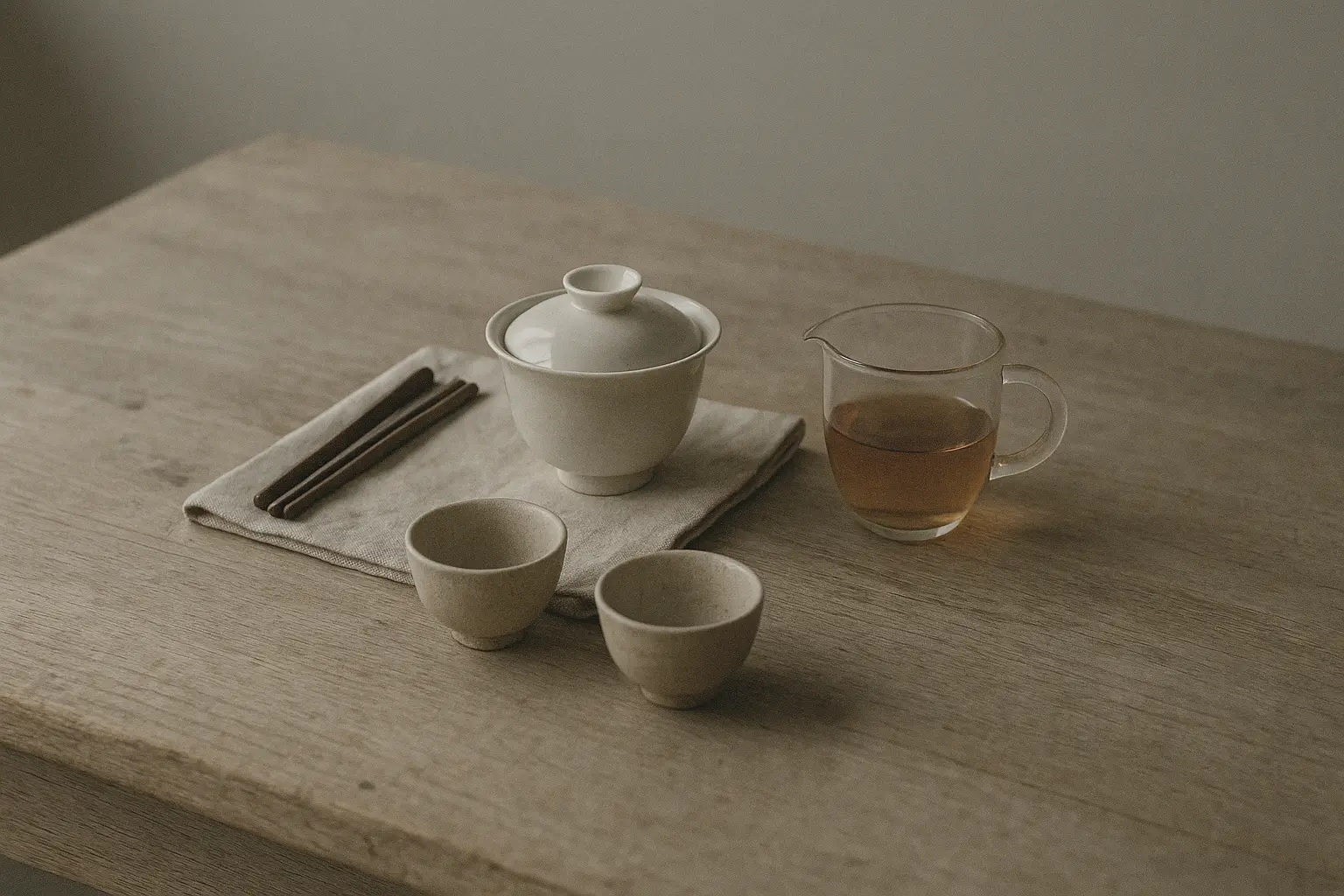
Here’s the honest version: a gaiwan (蓋碗), a fairness pitcher, two cups, and any kettle that boils water is all you need to brew gongfu-style tea properly. Everything else is either a quality-of-life upgrade or a refinement that pays off only after you’ve built a baseline practice.
This guide breaks gongfu tea equipment into three tiers — Starter, Intermediate, and Serious — and explains exactly what each piece does, why it matters (or doesn’t), and what to look for when you buy.
What Gongfu Brewing Actually Requires
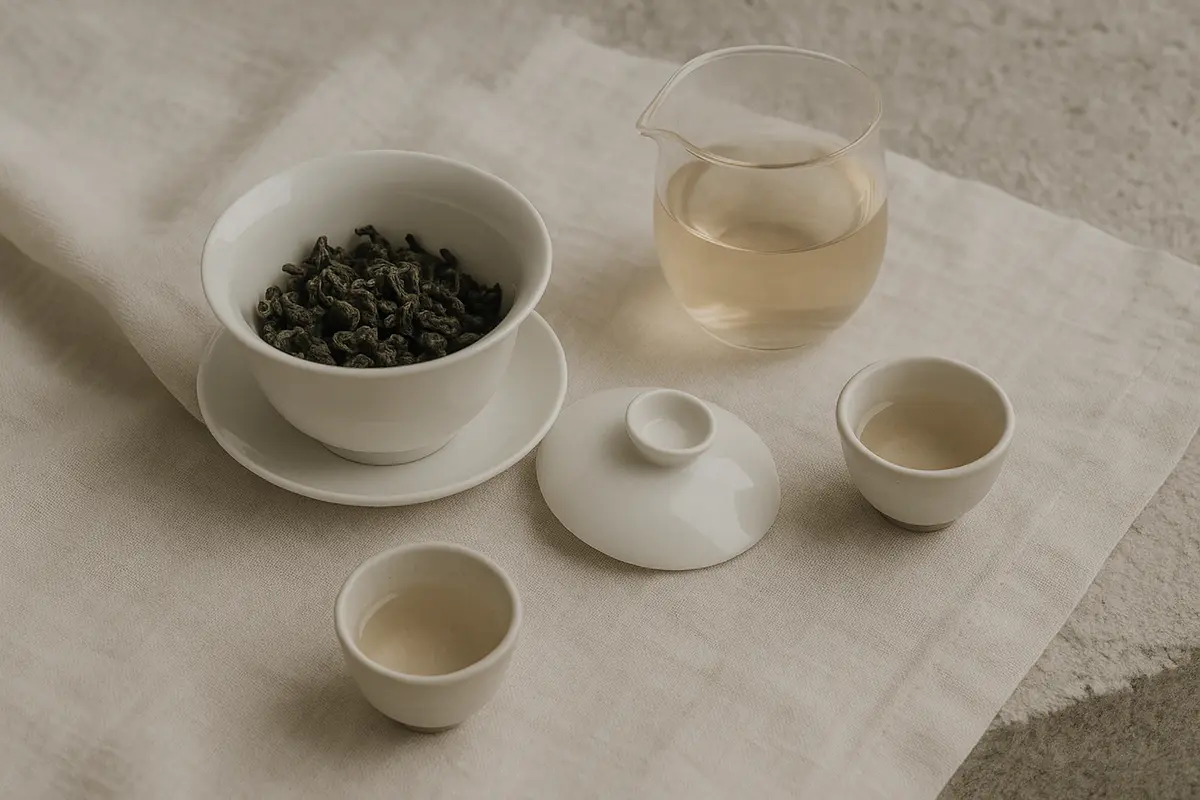
Before going through equipment, it helps to understand what gongfu brewing (功夫茶) is trying to accomplish. The method uses a high leaf-to-water ratio, a small brewing vessel, and very short steeping times — often 5 to 20 seconds — repeated across many infusions. The result is a series of evolving cups that reveal how a tea changes as it opens up.
The equipment exists to support that goal. Every piece either helps you control variables (temperature, leaf weight, steep time) or makes the process cleaner and more repeatable. Keep that function in mind as you read through each item.
Think of it the way I think about wine: you don’t need a $200 Riedel decanter to drink a great bottle of Burgundy. A clean glass and an open bottle will do. The expensive gear removes friction and adds precision, but it doesn’t replace the quality of what’s in the bottle. Same principle applies here.
Tier 1: The Starter Setup ($30–50)
This is everything you functionally need. Nothing here is a compromise — it’s a complete, working gongfu setup.
The Gaiwan (蓋碗)
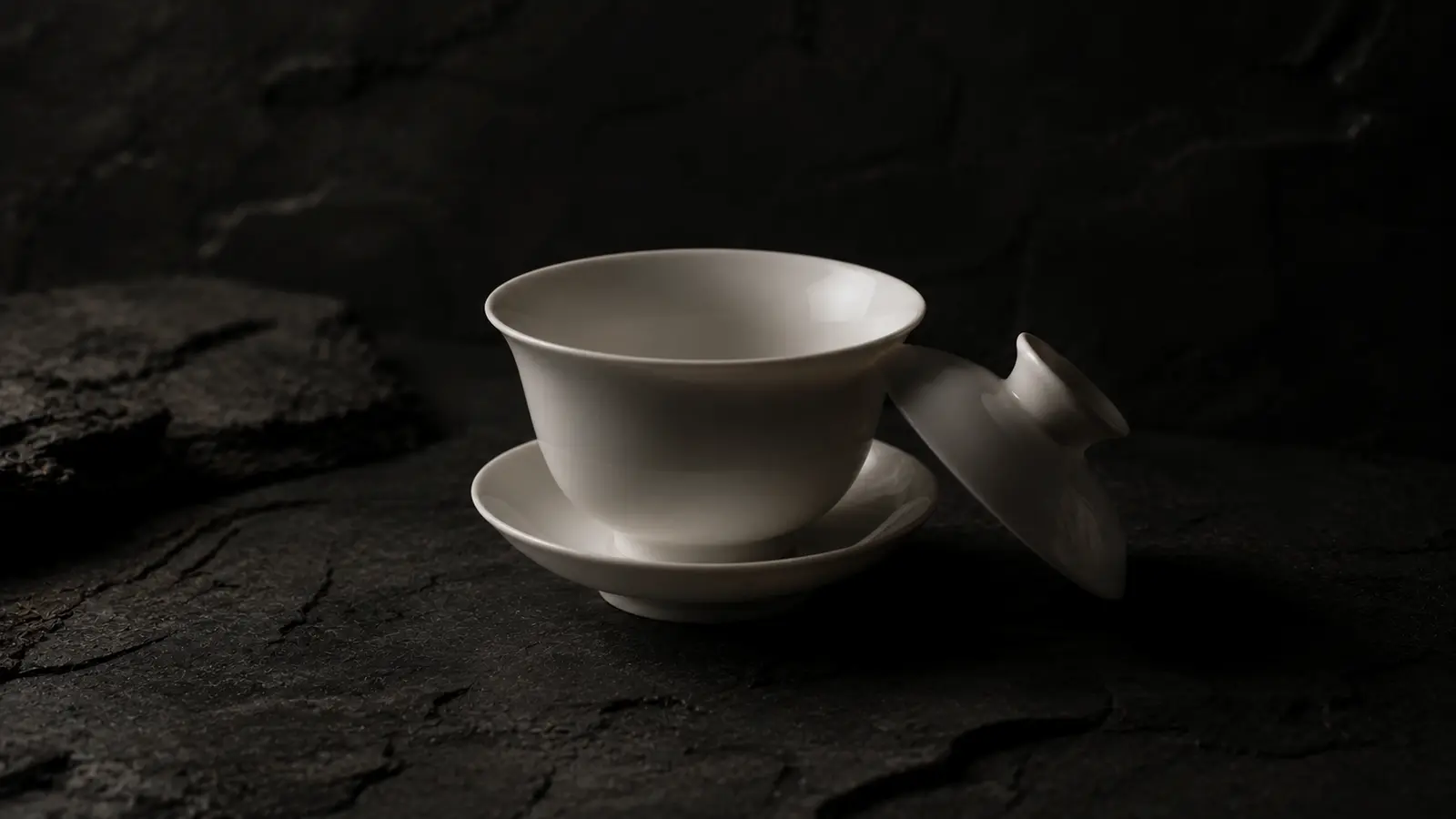
The gaiwan is your brewing vessel. It’s a lidded bowl with a saucer, typically 80–150ml, and it works for every category of tea. Green, white, oolong, sheng puerh (生普洱), shou puerh (熟普洱), black — a gaiwan handles all of them without imparting flavor or requiring any seasoning.
What to look for:
- Size: 100–110ml is the sweet spot for beginners. Large enough to handle easily, small enough to produce proper gongfu concentrations.
- Lip thickness: This is the most overlooked spec. A thin, rolled lip makes the gaiwan dramatically easier to pour from without burning your fingers. Thick lips trap heat and make a clean pour nearly impossible. Pick up the gaiwan and check the lip before you buy.
- Flare angle: A wider flare on the bowl means more surface area exposed when you tilt it, which makes controlling pour speed easier. Steep-sided gaiwans look elegant but are harder to pour quickly.
- Material: Porcelain is the right call for a starter gaiwan. It’s neutral, easy to clean, shows the liquor color clearly, and doesn’t break a budget. Expect to pay $8–18 for a functional porcelain gaiwan.
Avoid anything with elaborate patterns on the inside — they make it harder to see the color of your tea. White or light celadon interiors are ideal.
The Fairness Pitcher / Chahai (茶海)
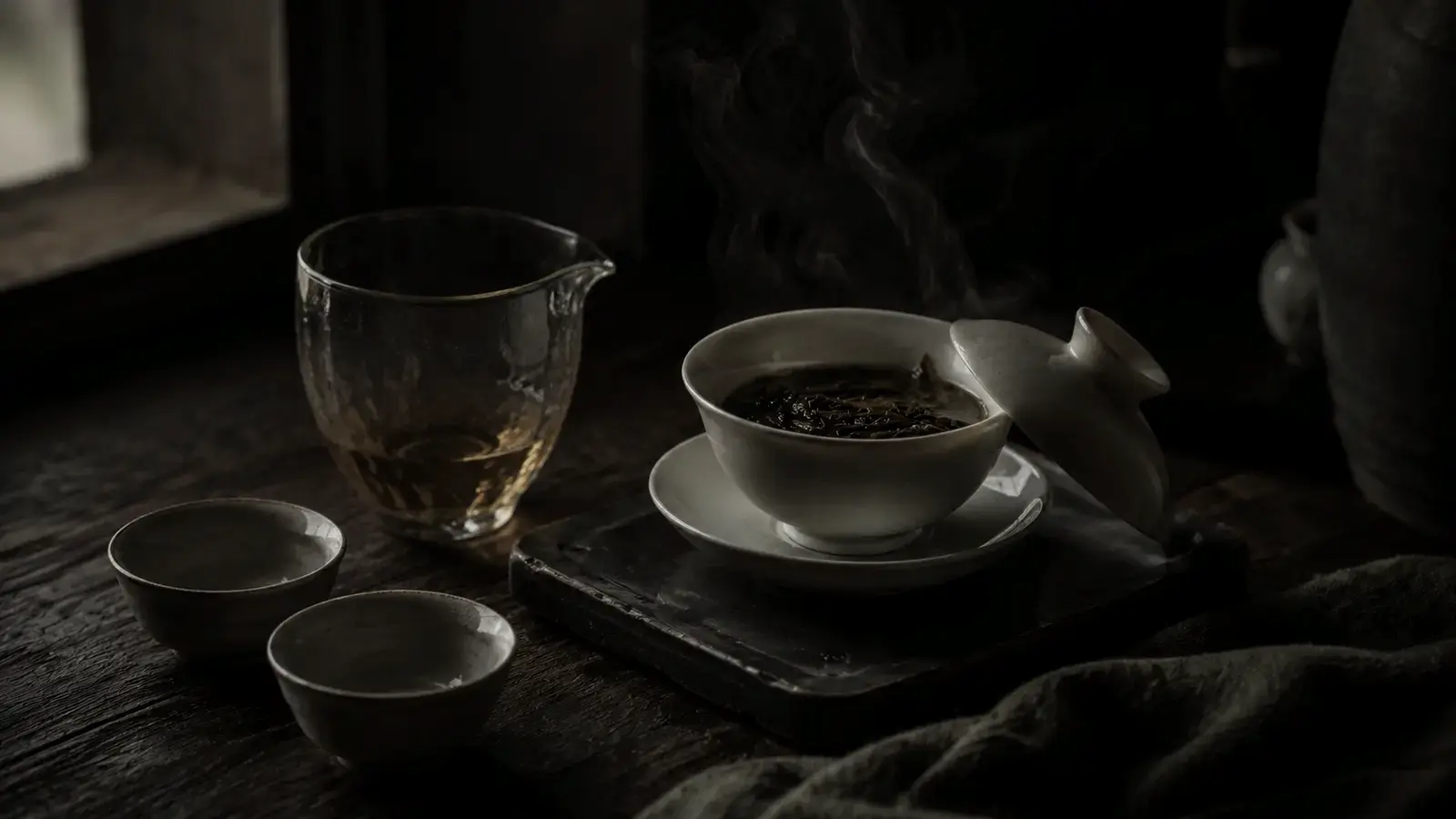
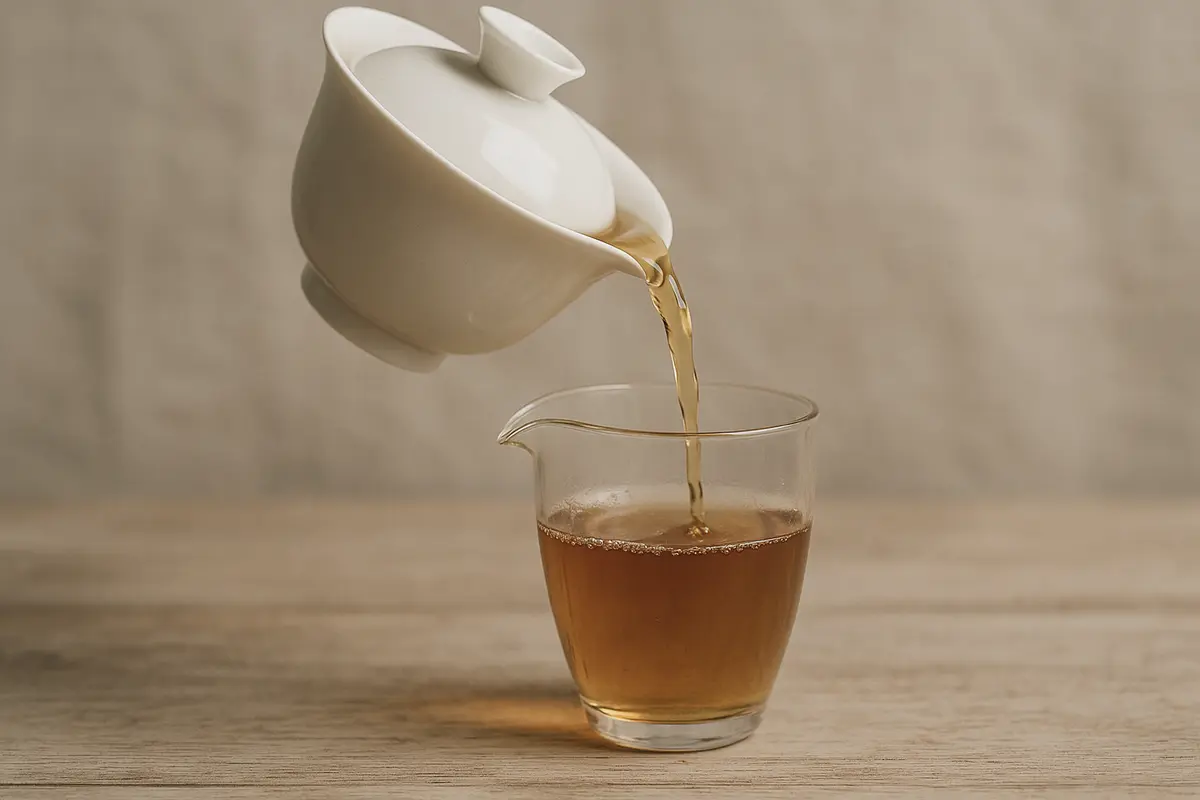
The fairness pitcher — also called a chahai or pitcher cup — is the decanter you pour into immediately after steeping. Without it, you pour from the gaiwan directly into cups, which means the first cup gets weaker tea and the last cup gets the strongest and most concentrated pour. The chahai equalizes everything.
It does one other thing: it lets you see your liquor. A good chahai is clear glass, and the moment you pour into it you can read the color and clarity of the brew. That feedback is genuinely useful.
What to look for:
- Material: Clear borosilicate glass. You want to see the tea. Ceramic pitchers work but defeat the visual feedback purpose.
- Spout design: The spout should pour cleanly without dripping. Pick it up and tip it — any hesitation in the pour or drip back toward the handle is a design flaw you’ll fight with every session.
- Volume: Match it to your gaiwan. A 100ml gaiwan produces roughly 80–90ml of liquid per infusion. A 150–200ml chahai gives you comfortable headroom.
- Handle vs. no handle: Both work. Handleless chahai look cleaner; handled versions are easier to pour quickly. Personal preference.
Budget: $8–15 for a glass chahai that works perfectly.
Cups (茶杯)
Small cups are not an affectation — they serve a function. A 30–50ml cup means you finish a pour in two or three sips, which keeps the tea at a reasonable temperature throughout and forces you to pay attention to each mouthful. Compare that to drinking gongfu-strength tea from a 200ml mug: it goes cold, the concentration is disorienting, and you lose the sense of how the tea changes across infusions.
What to look for:
- Volume: 30–50ml per cup is standard. Smaller (20ml) is used for particularly concentrated teas; larger defeats the purpose.
- Thin walls: Thin-walled cups show temperature change quickly and don’t mask the aroma the way thick walls can. They also feel better to hold.
- Straight vs. flared sides: Straight sides retain aroma better (useful for high-fragrance oolongs). Flared sides let it dissipate (sometimes preferred for aged teas). Either works as a starter.
- Quantity: Two cups is enough to start. Buy a set of three or four if you ever brew with others.
Budget: $2–5 per cup for functional porcelain; $8–15 for something nicer. Two cups at $10 total is reasonable.
The Kettle
Any kettle that boils water works for a starter setup. A basic electric kettle or stovetop kettle is fine. The limitation is that you can’t control temperature precisely, which matters more for delicate teas (greens and light oolongs brew best at 175–185°F / 80–85°C) than for robust ones (puerh and most blacks are fine at full boil, 212°F / 100°C).
For a starter setup, a simple workaround: boil water, then either let it sit for 2–3 minutes to drop to ~185°F, or add a small amount of cold water. It’s imprecise, but it works well enough to learn on. For a full breakdown of temperatures by tea type, see the tea brewing water temperature reference guide.
Starter kettle budget: $15–25.
Starter Setup Total
| Item | Budget Range |
|---|---|
| Porcelain gaiwan (100–110ml) | $8–18 |
| Glass chahai (150–200ml) | $8–15 |
| 2–3 porcelain cups (30–50ml each) | $6–15 |
| Basic electric kettle | $15–25 |
| Total | $37–73 |
Tier 2: The Intermediate Setup ($80–150 additional)
Once you’ve brewed consistently for a few months, certain friction points become clear. The intermediate tier addresses the ones that actually affect cup quality.
Variable Temperature Kettle
This is the single most impactful upgrade. Temperature control is not optional once you’re brewing greens, light oolongs, or high-quality white teas — brewing a delicate Taiwanese high-mountain oolong at 212°F scorches it; the same leaf at 190°F opens cleanly.
What to look for:
- Temperature range: You want settings from at least 160°F to 212°F in 5°F increments. Some kettles offer a dial; others are programmable.
- Hold function: A kettle that holds temperature for 30–60 minutes is worth the small premium. It means you’re not racing to pour before the water cools.
- Gooseneck vs. standard spout: A gooseneck gives you pour control. For gongfu into a gaiwan it matters less than for pour-over coffee, but a gooseneck still reduces the chance of splashing.
- Capacity: 0.8–1.0L is enough for a gongfu session. Larger kettles take longer to heat and are overkill.
Budget: $40–80 for a functional variable temperature kettle.
Digital Scale
A 0.1g-resolution pocket scale costs $10–15 and is, gram for gram, the highest-value purchase you can make in tea. Here’s why: most gongfu ratios are expressed by weight — typically 5–8g of leaf per 100ml of water, depending on tea type. Without a scale, you’re guessing. Guessing introduces a variable that makes your steep times meaningless. You can’t learn from a session where you don’t know how much leaf you used.
Once you’ve brewed the same tea dozens of times and internalized what 6g of a particular oolong looks and feels like, you can brew by eye. Until then, the scale removes a variable you don’t need.
What to look for:
- 0.1g resolution minimum (0.01g is overkill for most sessions)
- Auto-off that doesn’t trigger too quickly
- Tare function
- Compact enough to fit on your tea surface
Tea Tray (茶盤)
The tea tray is a slatted or draining surface that catches overflow water — from warming the gaiwan, rinsing cups, and the inevitable spills of fast gongfu pours. Without one, you need a towel, a dedicated table, and constant vigilance. With one, you brew freely.
What to look for:
- Drainage: Either a removable reservoir tray underneath, or a tube that drains into a waste water container. The reservoir style is simpler; the tube style handles higher-volume sessions better.
- Size: Big enough to hold your gaiwan, chahai, and cups with room for your hands. 30cm × 20cm is a reasonable minimum.
- Material: Bamboo is lightweight and affordable ($15–30). Solid wood looks better but requires more maintenance. Resin/plastic is the easiest to clean. Stone or ceramic slabs are beautiful but expensive and heavy.
Budget: $15–40 for a functional bamboo or resin tray.
Better Cups
With an intermediate budget, it’s worth investing in a set of cups that rewards attention. Thin-walled glazed porcelain or unglazed clay cups in the 30–40ml range will noticeably change how you experience aroma and texture.
What to look for:
- Thin walls: If you can see light through the cup wall when held to a bulb, you’re in the right territory.
- Consistent volume across a set: Pour the same amount into each cup and check visually. Quality sets are consistent; cheap ones aren’t.
Tier 3: The Serious Setup ($200+ additional)
This tier is for practitioners who have developed a real daily practice and know what they want from their equipment. The returns are real but incremental — you’re optimizing a system that already works.
Clay Teapot (紫砂壺 / Yixing)
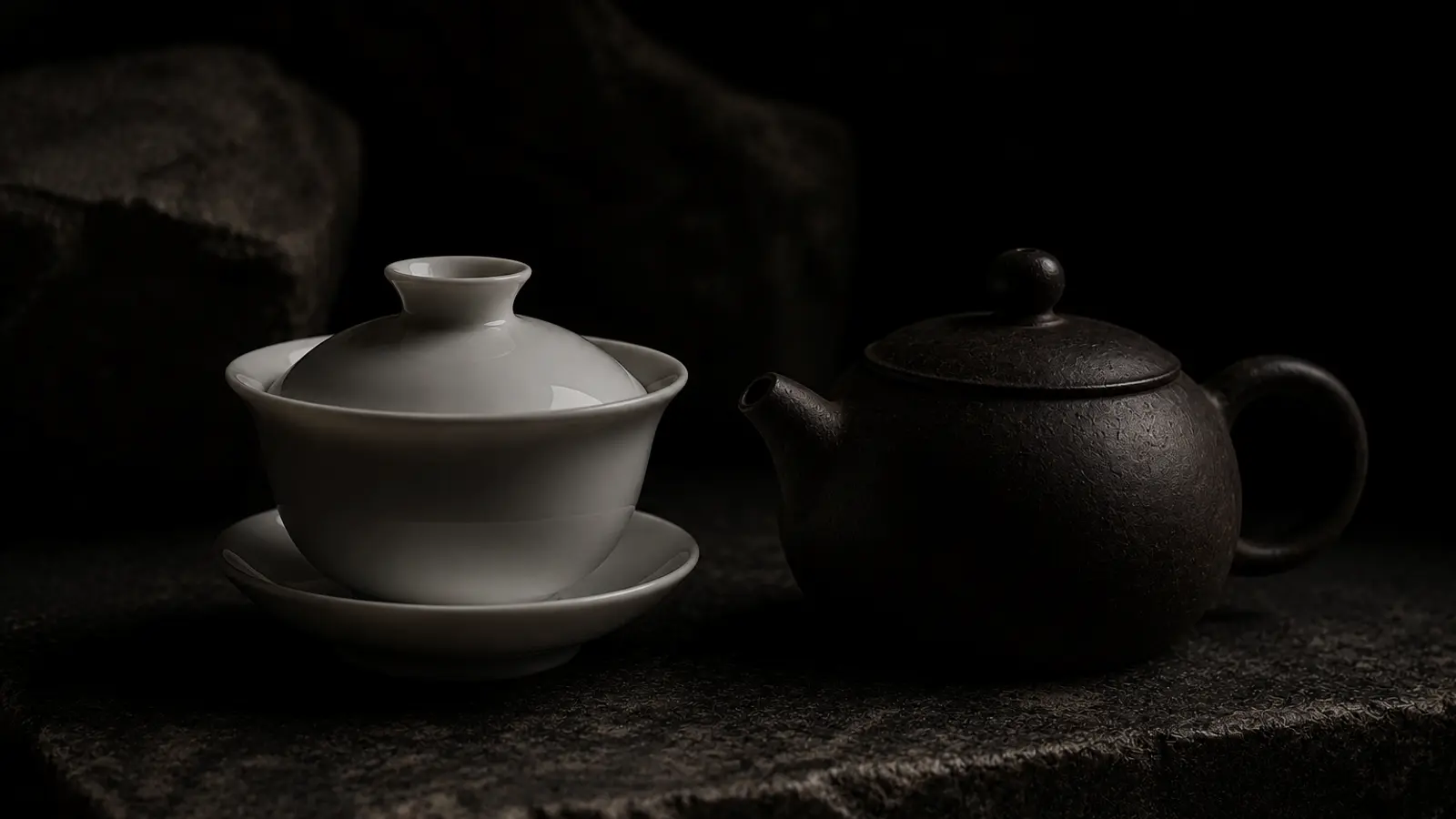
A clay teapot — most commonly Yixing (宜興) zisha clay — is the most discussed and most misunderstood piece of gongfu equipment. The genuine advantage of a seasoned clay pot is that the clay is slightly porous and absorbs trace oils from repeated brewing, which over time adds a subtle depth to the cup. The practical requirement is that you dedicate the pot to one category of tea (usually one type of oolong, or puerh) so those absorbed flavors complement rather than clash.
A quality Yixing pot from a reputable source runs $60–300+ for handmade pieces from known workshops. Beware fakes — the market is flooded with machine-pressed pots sold as handmade. Research before buying.
For most practitioners, the gaiwan remains the more practical daily tool. I use both: the gaiwan when I’m tasting critically or brewing something new, a dedicated pot when I want a more meditative session with a familiar tea.
High-End Kettle
The upgrade here is typically from a functional variable temperature kettle to something like a hand-hammered copper kettle or a precision stainless gooseneck designed for slow, controlled pours. The functional difference over a mid-range kettle is small; the aesthetic and tactile difference is significant. If you care about the ritual as much as the result, this matters to you.
Budget: $80–250.
Tea Table (茶桌)
A dedicated tea table — with built-in drainage, a slatted surface, and storage for equipment — replaces the tea tray and elevates the entire setup. These range from simple wooden tables with removable trays to elaborate hardwood pieces with integrated plumbing. They are unambiguously a luxury item.
If you brew daily and have the space, a tea table makes the practice feel deliberate and permanent. If you’re brewing on a kitchen counter or traveling, skip it entirely.
Storage Setup
At the serious tier, you’re likely accumulating aged or aging teas that require managed conditions. Sheng puerh (生普洱) in particular benefits from controlled humidity (60–70% RH) and airflow. A dedicated storage space — even a small cabinet with humidity monitoring — extends the life and improves the trajectory of any aged tea collection.
The Optional Accessories
These items are frequently sold as essential. They’re not, but some are genuinely useful once you have the basics covered.
Tea Pick (茶针)
A pointed tool for breaking compressed puerh cakes and bricks without destroying the leaves. Necessary if you drink compressed teas; irrelevant otherwise. Cost: $5–20.
Tea Tongs (茶夹)
For handling hot cups without burning your fingers, typically used when rinsing cups with boiling water. A useful courtesy when brewing for guests; optional for solo sessions. Cost: $5–15.
Tea Scoop (茶则)
A small scoop or paddle for measuring loose leaf from a canister to your gaiwan. Nice to have; a regular spoon works equally well. Cost: $5–20.
Tea Pet (茶宠)
A small clay figurine kept on the tea tray and “fed” with overflow tea water. No functional purpose. Entirely delightful. Cost: $5–50.
Setup Comparison at a Glance
| Tier | Key Equipment | Approximate Cost | Best For |
|---|---|---|---|
| Starter | Gaiwan + chahai + 2 cups + basic kettle | $37–73 | Anyone beginning gongfu |
| Intermediate | + Variable temp kettle + scale + tray + better cups | $130–230 total | 3+ months of regular practice |
| Serious | + Clay teapot + high-end kettle + tea table + storage | $400–1000+ total | Daily practice, aging teas |
How to Prioritize If You’re Starting Now
Buy this in this order:
- Gaiwan — 100ml porcelain, thin lip, white interior
- Glass chahai — clear borosilicate, clean-pouring spout
- Two or three small cups — 30–50ml, thin walls
- Basic kettle — whatever you have or the cheapest electric option
- Scale — the moment you want your sessions to be repeatable
- Variable temperature kettle — the moment you start brewing greens or light oolongs
- Tea tray — whenever the cleanup friction starts bothering you
- Everything else — only when you know why you want it
The gaiwan comes first because it’s the vessel. Everything else serves the vessel. You can skip every other piece on this list for a month and lose almost nothing. Skip the gaiwan and you’re not doing gongfu.
A Note on Buying
I’m not going to recommend specific vendors here — the market changes and regional availability varies too much for those recommendations to age well. What I will say: buy your gaiwan in person if you possibly can. Hold it. Check the lip. Pour water into it and pour it out over a sink. You’ll know immediately whether it works for your hands. If you’re buying online, look for sellers who show close-up shots of the lip and give actual dimensions, not just nominal volume.
For the chahai and cups, photos are enough to evaluate most options. For a clay teapot, do serious research on provenance before spending meaningful money — that category has the highest ratio of overpriced mediocrity to genuine value of anything in the gongfu world. If you’re also considering Jian Shui pottery as an alternative clay option, it’s worth understanding how it differs from Yixing before committing.