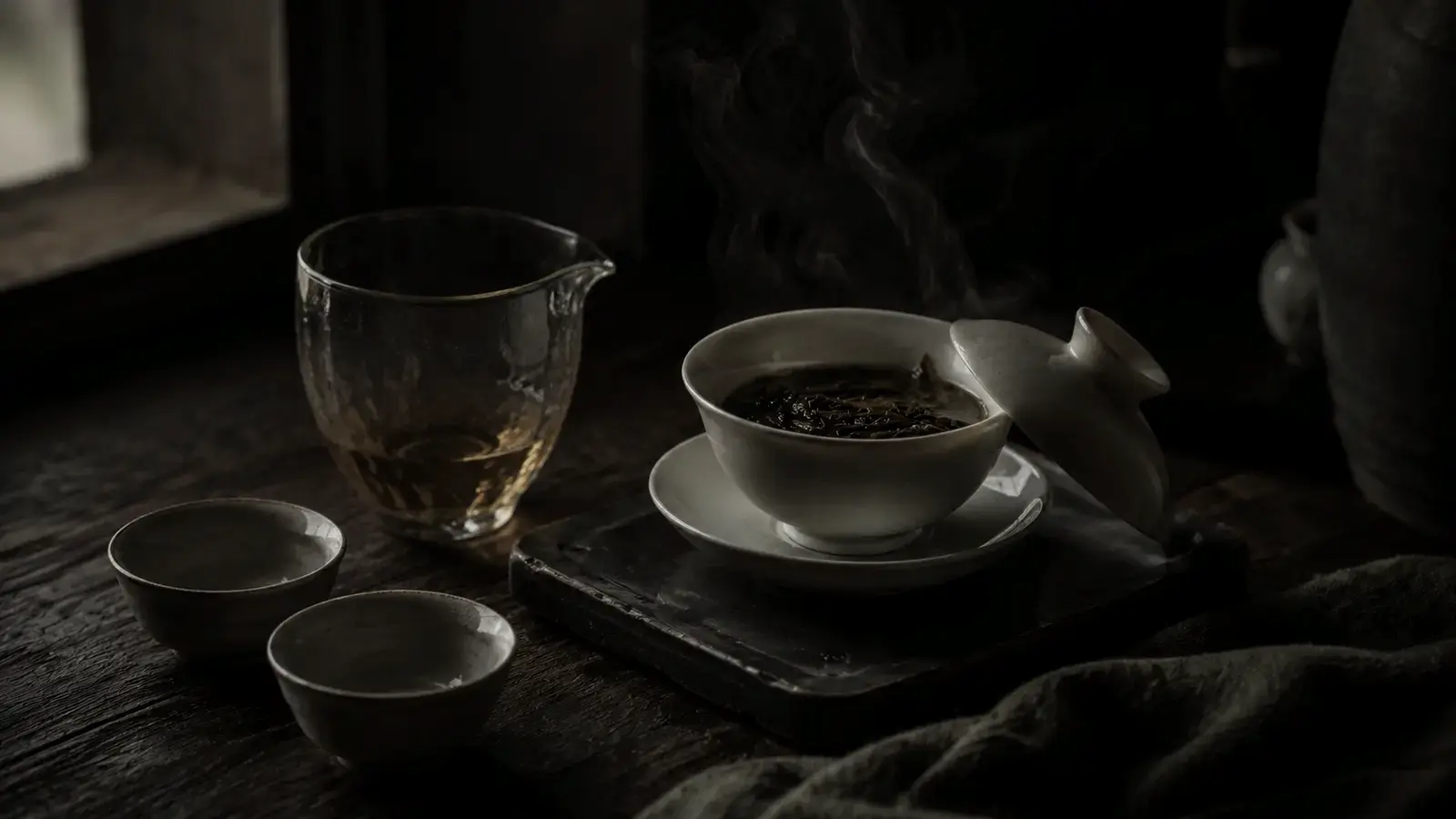
Gongfu brewing is the method that extracts more complexity from tea than any other approach. Small vessel. High leaf ratio. Multiple short infusions. The tea changes with every pour — the first steep is one experience, the fifth is another, the tenth is another still. A single session with 7 grams of quality pu-erh can produce 15 distinct snapshots of the same leaf, each revealing compounds that the last one didn’t reach.
The word gongfu (功夫) means skill through practice. It’s the same word behind kung fu. The implication is the same: this is not something you master from reading. It’s something you develop by doing it every day until your hands know what your mind hasn’t articulated yet.
I brew gongfu every day. Sometimes twice. The morning session is analytical — I’m tasting something new, paying attention, taking notes. The evening session is not analytical at all. It’s the hour where the noise stops. The measuring and pouring and waiting give my hands something deliberate to do and my mind somewhere specific to be. I didn’t start this practice for the tea. I started because I needed the ritual. The tea turned out to be worth staying for.
This guide covers everything: the method, the equipment, the parameters for every tea type, and the adjustments that come from practice. If you’ve never brewed gongfu, you can follow this and have a working session in thirty minutes. If you’ve been brewing for years, the parameter tables and vessel guidance may refine what you already do.
The Core Method
Gongfu brewing has four variables. That’s it. Everything else is refinement.
Leaf-to-water ratio. The standard is approximately 1:15 by weight — 7 grams of leaf per 100ml of vessel capacity. This is dramatically more leaf than Western brewing (which uses roughly 1:50). The concentrated ratio is the point. More leaf in less water means faster extraction, which means you can use shorter steep times, which means you get more steeps, which means you experience the tea’s full arc of expression rather than a single averaged-out cup.
Water temperature. Different teas extract differently at different temperatures. Too hot and you pull tannins and bitterness from delicate green tea. Too cool and you fail to extract the deep compounds from aged pu-erh. Temperature is the single biggest variable affecting flavor — more than leaf amount, more than steep time, more than vessel choice. A complete temperature reference is at Tea Brewing Water Temperature.
Steep time. Short and progressive. The first steep is brief — 5 to 15 seconds depending on the tea. Each subsequent steep adds time as the leaves release their compounds more slowly. A typical session runs: 8s, 10s, 12s, 15s, 20s, 25s, 35s, 45s, 60s, 90s, 120s. That’s eleven steeps. The early steeps are bright and aromatic. The middle steeps are where body and complexity peak. The late steeps are sweet and soft as the leaf gives its last reserves. This progression IS the gongfu experience.
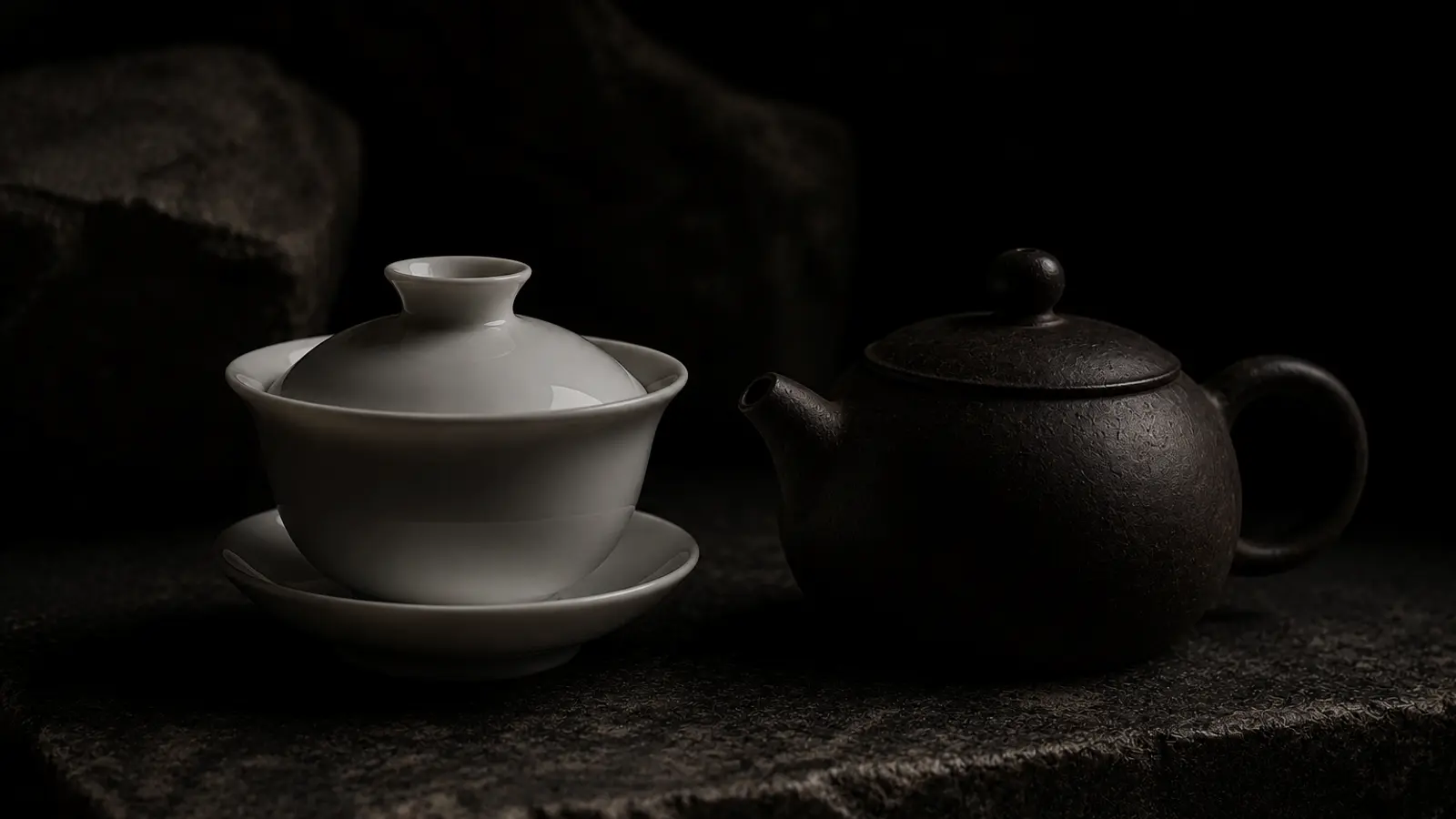
Vessel. A lidded vessel that pours cleanly and allows you to control steep time precisely. The standard is a gaiwan (盖碗, lidded bowl) — 100 to 120ml capacity. The alternative is a clay teapot (Yixing, Jian Shui, or Korean celadon) — same size range, different material properties. More on vessel choice below.
That’s the method. Everything that follows is detail.
The Setup
What You Need (Minimum)
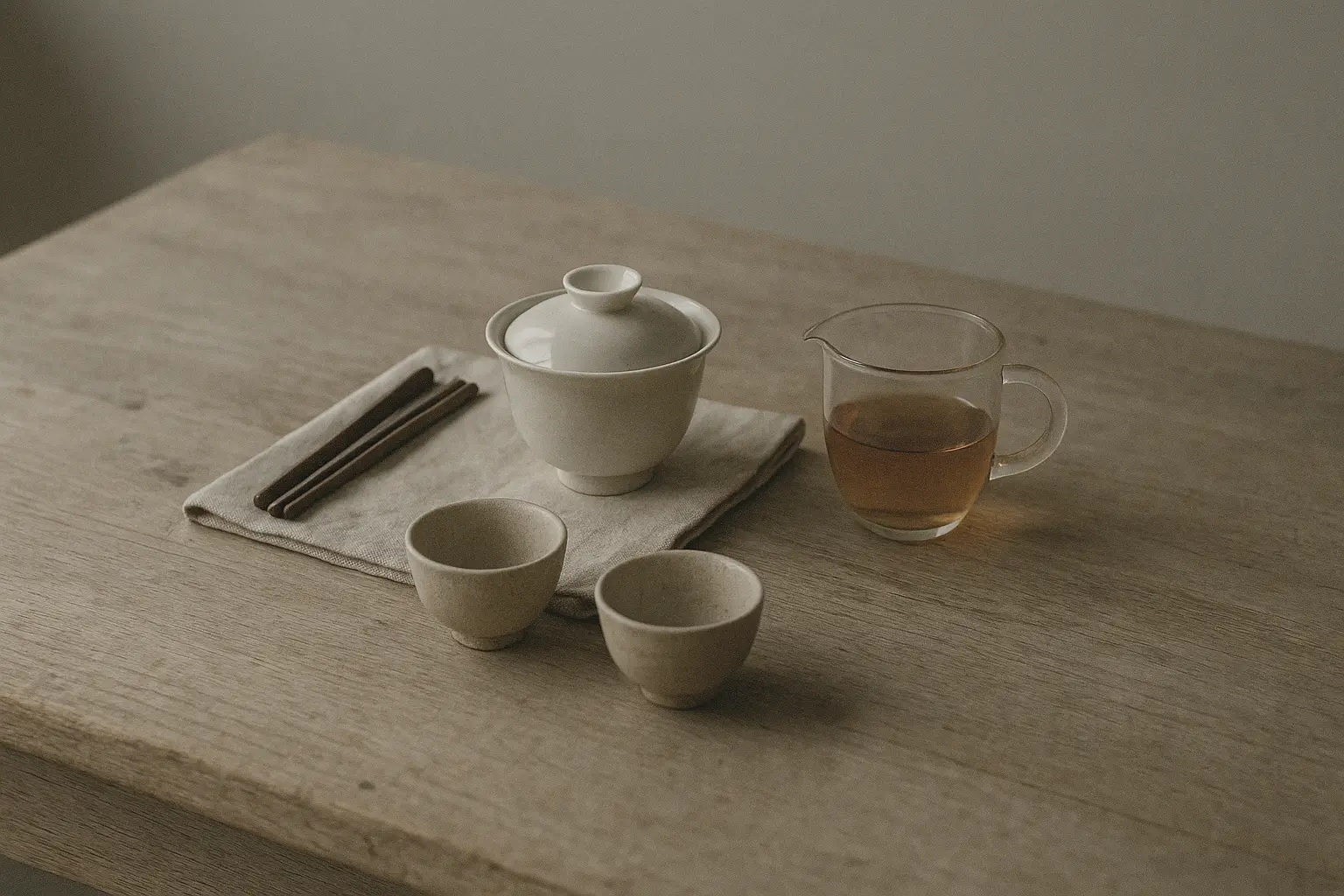
A gaiwan, a fairness pitcher, and cups. Under $30 total. This is the entire barrier to entry.
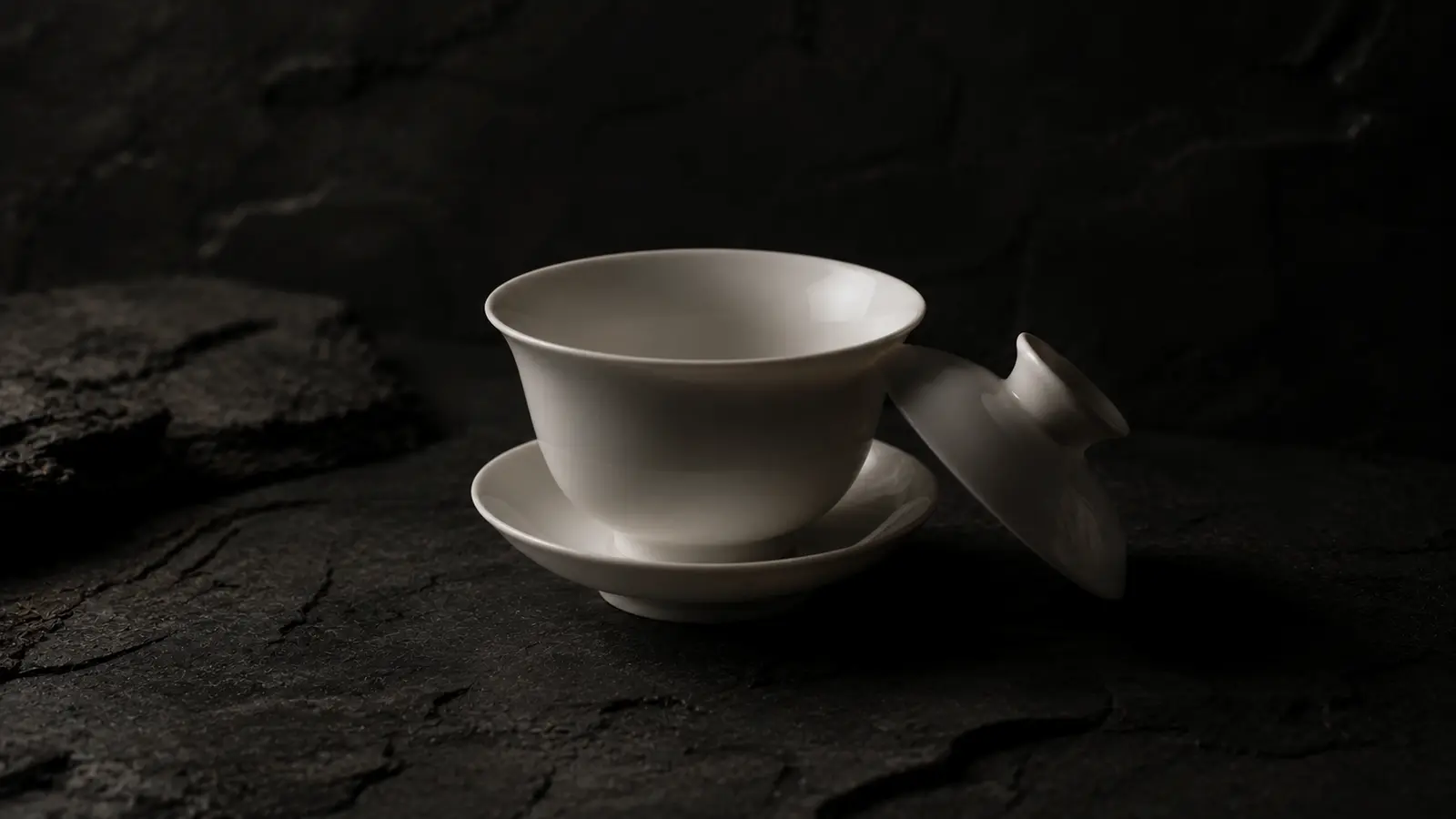
Gaiwan (盖碗). White porcelain, 100-120ml capacity. Porcelain is neutral — it doesn’t absorb flavor or add character. What you taste is the tea and nothing else. This is why every tasting note on Steep Atlas is brewed in a white porcelain gaiwan — the vessel is controlled so the tea is the only variable. Look for a thin lip (easier to pour without burning your fingers), a lid that fits without wobbling, and a flared rim that directs the pour. Your First Gaiwan: A Complete Buying Guide covers selection in detail.
Fairness pitcher (公道杯, gongdao bei). A small glass or porcelain pitcher, 150-200ml. After steeping, you pour the liquor from the gaiwan into the pitcher. This serves two purposes: it stops the steep (leaves are no longer in contact with water) and it equalizes the brew (the first liquid out of the gaiwan is lighter than the last, but the pitcher mixes them). Glass is ideal because it lets you see the liquor color — a meaningful data point in tea evaluation.
Cups. Small — 30 to 60ml. Two or three. The small volume forces you to drink slowly and pay attention. Each sip is deliberate. If you’re brewing alone, one cup is enough. The size feels strange at first. It stops feeling strange after three sessions.
What Makes It Better (Upgrades in Order of Impact)
A digital scale. $15-25. This is the single most impactful equipment upgrade you can make after the basic setup. I resisted using a scale for weeks. I thought I could eyeball leaf amounts. I was wrong. At 5 grams instead of 7 grams, pu-erh reads as thin and sweet without structure — a fundamentally different and worse experience. The day I started measuring was the day my brewing improved more than any other single change. Measure every session until your hand calibration is reliable. Then keep measuring anyway.
A variable-temperature electric kettle. $40-80. Set the temperature, the kettle holds it. No guessing, no thermometer juggling. When you’re brewing green tea at 75°C and switching to pu-erh at 100°C in the same afternoon, preset temperature control saves real time and eliminates a variable. Look for 1°C increments, a hold function, and a gooseneck spout if you also make pour-over coffee.
A tea tray or draining surface. $20-50. Gongfu brewing involves water — rinses, discards, overflow. A tea tray with a draining reservoir catches the mess. Not essential (you can brew over a towel or a baking sheet) but it makes the practice sustainable at a desk or table without cleanup anxiety. I use a simple bamboo tray that fits on my work surface.
A clay teapot. $50-300+. Once you know what tea you drink daily, a dedicated clay teapot (Yixing zisha, Jian Shui purple clay, or Korean celadon) adds a dimension that porcelain cannot. Porous clay absorbs tea oils over hundreds of sessions, building a patina that enhances the tea it’s dedicated to. One pot, one tea type — the vessel develops memory. This is not superstition; porous clay demonstrably retains aromatic compounds. But don’t buy a clay pot before you know what you’re drinking. The gaiwan comes first. Gaiwan vs Yixing: Choosing Your Brewing Vessel covers the decision in full.
Parameters by Tea Type
This is the reference table I wish existed when I started. Every tea type, with specific parameters confirmed through my own sessions.
| Tea Type | Leaf (per 100ml) | Water Temp | First Steep | Progression | Expected Steeps |
|---|---|---|---|---|---|
| Young sheng pu-erh (1-5 years) | 6-7g | 90-95°C | 8-10s | +3-5s per steep | 10-15 |
| Aged sheng pu-erh (10+ years) | 6-7g | 95-100°C | 10-15s | +5s per steep | 12-20+ |
| Shou pu-erh (ripe) | 7-8g | 95-100°C | 10-15s | +5-10s per steep | 8-12 |
| Wuyi yan cha (rock oolong) | 6-7g | 95-100°C | 8-10s | +3-5s per steep | 8-12 |
| Light oolong (Tieguanyin, Taiwan high mountain) | 6-7g | 90-95°C | 10-15s | +5s per steep | 8-15 |
| Dancong oolong | 7-8g | 95-100°C | 5-8s | +3-5s per steep | 10-15 |
| Dian Hong (Yunnan red tea) | 5-6g | 85-90°C | 8-10s | +5s per steep | 6-10 |
| Korean green tea (nokcha) | 4-5g | 75-80°C | 15-20s | +10s per steep | 4-6 |
| Chinese green tea (Longjing, Bi Luo Chun) | 4-5g | 75-80°C | 10-15s | +5-10s per steep | 4-7 |
| White tea (Silver Needle, White Peony) | 5-6g | 80-85°C | 15-20s | +10s per steep | 6-10 |
| Liu Bao / hei cha (dark tea) | 7-8g | 100°C | 10-15s | +5-10s per steep | 8-12 |
Notes on the table:
Shou pu-erh takes the highest dose (7-8g). This is not arbitrary. At 5-6g, shou reads as sweet but thin — pleasant but structureless. At the full dose, the body, the chocolate density, and the coating mouthfeel emerge. I learned this the hard way across several sessions where I thought shou was “too sweet” before realizing I was simply using too little leaf.
Dancong oolong steeps fast and punishes overextraction. The first steep is the shortest on the table — 5-8 seconds. Dancong’s aromatic volatiles release rapidly. Push past 15 seconds on an early steep and the astringency dominates the aroma. Respect the speed.
Green tea gets cooler water and less leaf. The amino acids that produce sweetness and umami extract at low temperatures. The catechins that produce bitterness extract at high temperatures. At 75°C, you get the sweetness. At 100°C, you get punishment. There is no debate about this — the chemistry is clear.
Vessel Choice: When to Use What
The vessel is not neutral. Different materials interact with the tea differently and serve different purposes.
White porcelain gaiwan — the analytical tool. Shows the tea exactly as it is. Doesn’t absorb, doesn’t add, doesn’t flatter or conceal. Use this when: tasting something new, comparing two teas, evaluating quality, writing tasting notes, or anytime precision matters more than comfort. Every session documented on Steep Atlas uses this vessel. It’s the control variable.
Clay teapot (Yixing, Jian Shui, Korean celadon) — the daily companion. Absorbs tea oils over time and adds a dimension of warmth and depth that porcelain cannot. Use this when: you’ve identified a tea you drink daily and want a vessel dedicated to it. The seasoning effect is real — a Yixing pot that has brewed 200 sessions of shou pu-erh adds a subtle depth to every future session of shou brewed in it. Don’t use a clay pot for comparative tasting — you can’t tell what’s the tea and what’s the pot.
Korean gaewan (개완) or dawan (다완) — the contemplative vessel. Thicker walls, textured surfaces, semi-porous body that seasons but more slowly than Yixing. The dawan (wide tea bowl held with both hands) forces a different kind of attention — slower, more physical, grounding. I reach for Korean vessels on evenings when the session is about settling, not analyzing. The wider opening releases more aroma toward the nose. Both hands on the bowl is a different nervous system signal than one hand on a gaiwan handle. Korean Teaware for Gongfu Brewing covers this in depth.
Glass — the transparency tool. Some brewers use a glass gaiwan or glass teapot to watch the leaves unfurl. This is especially rewarding with tightly rolled oolongs and with Longjing, where the leaves stand upright in the water. Glass adds no flavor but loses heat faster than porcelain.
The Rinse
Pour boiling water over the dry leaves. Wait two to three seconds. Pour off. Discard the liquid.
This is not about washing the tea. Quality tea from reputable sources doesn’t need washing. The rinse serves three purposes: it hydrates compressed leaf material (critical for pu-erh cakes that need moisture to begin opening), it raises the vessel temperature to brewing range, and it gives you a preview of the wet leaf aroma — the first real data point of the session.
For young sheng and green tea: one rinse, discarded immediately.
For shou pu-erh and aged sheng: two rinses. The first wakes the leaf. The second begins extraction. Aged tea that has been compressed for years needs this double hydration to open fully.
For loose-leaf tea (Dian Hong, Longjing, dancong): one quick rinse or skip entirely. These leaves don’t need hydration and a rinse can strip the first steep’s delicate top notes.
Smell the wet leaves after the rinse. This is your first impression. In wine terms, it’s the nose before the first sip. What you smell here — floral, earthy, fruity, vegetal, smoky, camphor — tells you what to expect and often reveals character that the liquor itself doesn’t emphasize.
The Session Arc
A gongfu session is not a cup of tea. It’s a sequence. Understanding the arc changes how you experience it.
Steeps 1-2: The opening. Light, aromatic, often deceptively simple. Surface compounds extract first — volatile aromatics, light sugars, the bright top notes. Don’t judge the tea here. This is the overture, not the symphony.
Steeps 3-5: The core. This is where the tea declares itself. Body peaks. Flavor complexity peaks. Huigan arrives (or doesn’t). Cha qi emerges (or doesn’t). The middle steeps are where quality reveals and mediocrity hides. If you’re evaluating a new tea, these are the steeps that matter most.
Steeps 6-8: The plateau. Good tea holds. The flavor may shift — sometimes dramatically, sometimes subtly — but complexity sustains. Sweetness often increases as bitter compounds are exhausted and residual sugars dominate. This is where gushu (ancient tree) material separates from plantation tea — gushu holds its depth, plantation tea drops off.
Steeps 9+: The fade. The tea gives its last reserves. Flavors simplify but often reveal a sweet, clean, mineral character that the earlier steeps masked. Some of my most surprising tasting discoveries have come in late steeps — a marine note from a 2021 Thai sheng at steep 8-9, a dried fruit sweetness from a 2006 aged shou at steep 6-7 that the earlier steeps’ chocolate had concealed. Don’t stop too early.
How to know when the session is over. The steep time has extended past 120 seconds and the liquor is pale with minimal flavor. Or you’re satisfied. Both are valid endpoints. There is no obligation to extract every last compound from the leaf. Some sessions I stop at steep 8 because the tea said what it needed to say. Some sessions I push to steep 15 because the tea keeps talking.
Gongfu as Practice
I want to be direct about something this guide could easily leave unsaid.
I have anxiety. Most of my adult life has involved some form of managing a brain that doesn’t idle well. The gongfu method is the most effective grounding practice I’ve found — more effective than meditation apps, breathing exercises, or the various techniques therapists have suggested over the years.
The reason is simple: gongfu demands just enough attention to occupy the mind without overwhelming it. Measure the leaf. Heat the water. Watch the temperature. Pour. Count. Pour off. Smell. Taste. Repeat. For thirty to sixty minutes, there is nothing else. Not because you’re forcing focus, but because the process doesn’t leave room for anything else. Your hands are busy. Your senses are engaged. The noise can’t compete with the signal.
This is not a health claim. I’m not saying tea cures anxiety. I’m saying the ritual structure of gongfu brewing — the precision, the repetition, the sensory attention — creates a container for presence that works for me every evening. If you came to this page because you’re looking for something to do with your hands and your attention at the end of the day, the method works for that too.
The Journal is where I write about this more directly.
Common Mistakes
Underdosing. The most common and most damaging. Use a scale. 7g per 100ml for pu-erh and oolong. 5g for green and white tea. Eyeballing consistently underestimates because dry tea leaves look like more than they weigh.
Oversteeping early. The first three steeps should be short — under 15 seconds for most teas. New brewers tend to steep too long early in the session, which front-loads the extraction. The tea tastes strong on steep 2 and thin by steep 6 because all the compounds were pulled out too fast. Keep early steeps short. Let the tea build.
Boiling water on green tea. At 100°C, green tea releases catechins faster than amino acids. The result is bitter, astringent, and unpleasant. At 75°C, amino acids dominate. The result is sweet, umami, and clean. This single variable is why most people think they don’t like green tea. They’ve been scalding it.
Ignoring the rinse aroma. The wet leaf after the rinse is the most information-dense moment in the session. Smell it. What you detect here — floral, earthy, smoky, fruity, marine — tells you what the tea is going to do before the first real steep.
Using too large a vessel. A 200ml gaiwan requires 14g of leaf to maintain the correct ratio. That’s expensive and unnecessary. Stay at 100-120ml. The smaller volume means less leaf per session, faster pours, and more control over steep time.
Where to Go Next
If you’re setting up your first gongfu station: Your First Gaiwan covers selection, and The Complete Guide to Gongfu Tea Equipment walks through every piece from essential to optional.
If you want to understand the evaluation framework used on this site: The Steep Atlas Tasting Protocol explains the ten dimensions scored in every session.
If you’re choosing between vessel types: Gaiwan vs Yixing: Choosing Your Brewing Vessel covers when porcelain wins and when clay wins.
If you’re calibrating water: Tea Brewing Water Temperature: The Complete Reference has the chart for every tea type.
Brew something today. The guide is useful only if the gaiwan is wet.
Frequently Asked Questions
What does gongfu mean?
Gongfu (功夫) means skill through practice. In tea, it refers to a brewing method that uses a small vessel, a high leaf-to-water ratio, and multiple short infusions to extract the full range of a tea’s expression. The same word gives its name to kung fu — in both cases, the idea is mastery through disciplined repetition.
What equipment do I need for gongfu brewing?
At minimum: a 100ml white porcelain gaiwan, a glass fairness pitcher, and two small cups. Total cost under $30. A digital scale and a temperature-controlled kettle are the two most impactful upgrades after that. Everything else — tea trays, tongs, clay pots — is optional until you know what you want.
Is gongfu brewing difficult to learn?
The mechanics take one session to learn — pour water on leaves, wait, pour off. The skill develops over months: learning to read the tea’s feedback, adjusting steep times by feel, calibrating water temperature to the specific leaf. It is not difficult. It is a practice. Like anything worth doing, the depth reveals itself over time.
Can you brew any tea gongfu style?
Technically yes. Practically, gongfu works best with teas that have enough complexity to reward multiple steeps: pu-erh, oolong, dark tea, and some red and white teas. Delicate green teas and light white teas can be brewed gongfu but the parameters require more precision — lower temperatures, lighter doses, shorter steeps. Japanese green teas are traditionally brewed in smaller vessels with similar principles but different technique.
How many steeps can you get from gongfu brewing?
It depends on the tea. Quality pu-erh: 10-20+ steeps. Oolong: 8-15 steeps. Red tea: 6-10 steeps. Green tea: 4-7 steeps. The steep count is partly a function of tea quality — ancient tree material with complex biochemistry produces more steeps than plantation tea. One of the most reliable indicators of quality is how many steeps the tea sustains before the flavor collapses.