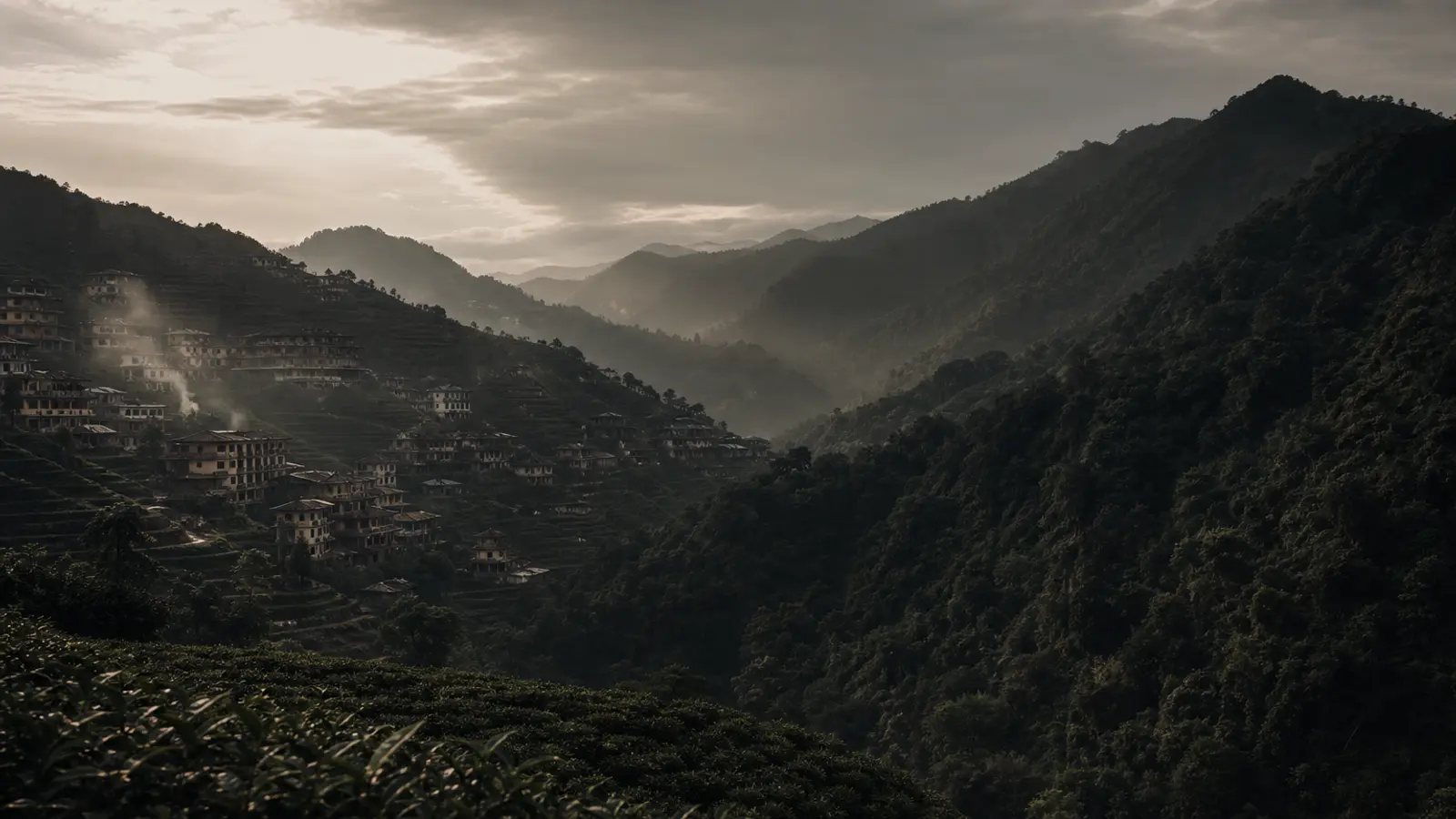
The 2005 Ban Zhang — Guangdong dry-stored, 21 years — was the best tea I’d ever had. This 2000 Bulang Mountain Mushroom Tuo is its older sibling: same mountain range, 5 more years, Kunming dry storage instead of Guangdong. Bulang Mountain (布朗山), 1,400-1,800m elevation. Sun-dried maocha compressed into a mushroom-shaped tuo, then stored 26 years in Kunming dry conditions — cool altitude at 1,900m, 40-60% humidity. The question this morning was whether 5 extra years on Bulang takes it even higher. The answer is more complicated than yes or no.
Dry Leaf
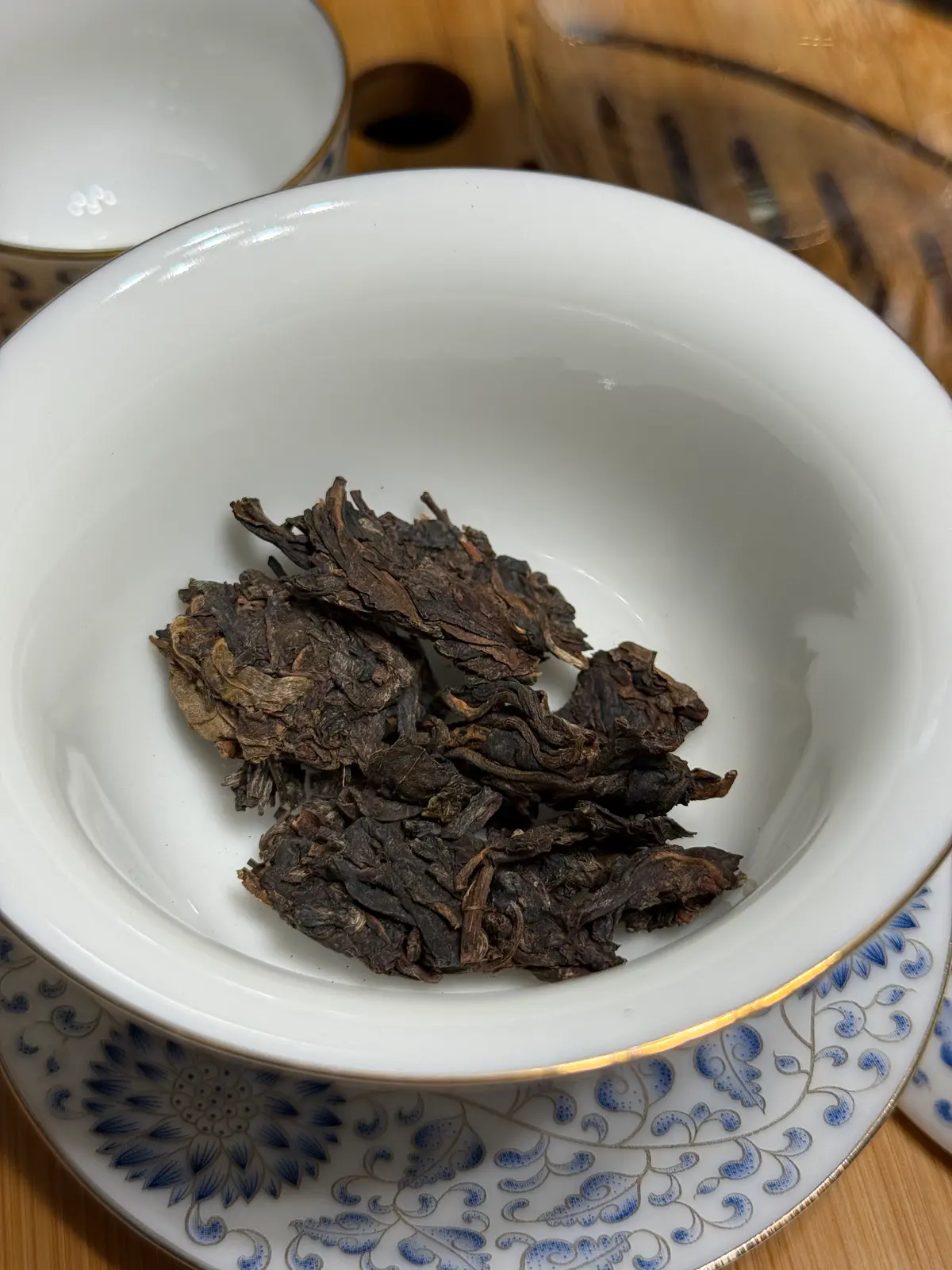
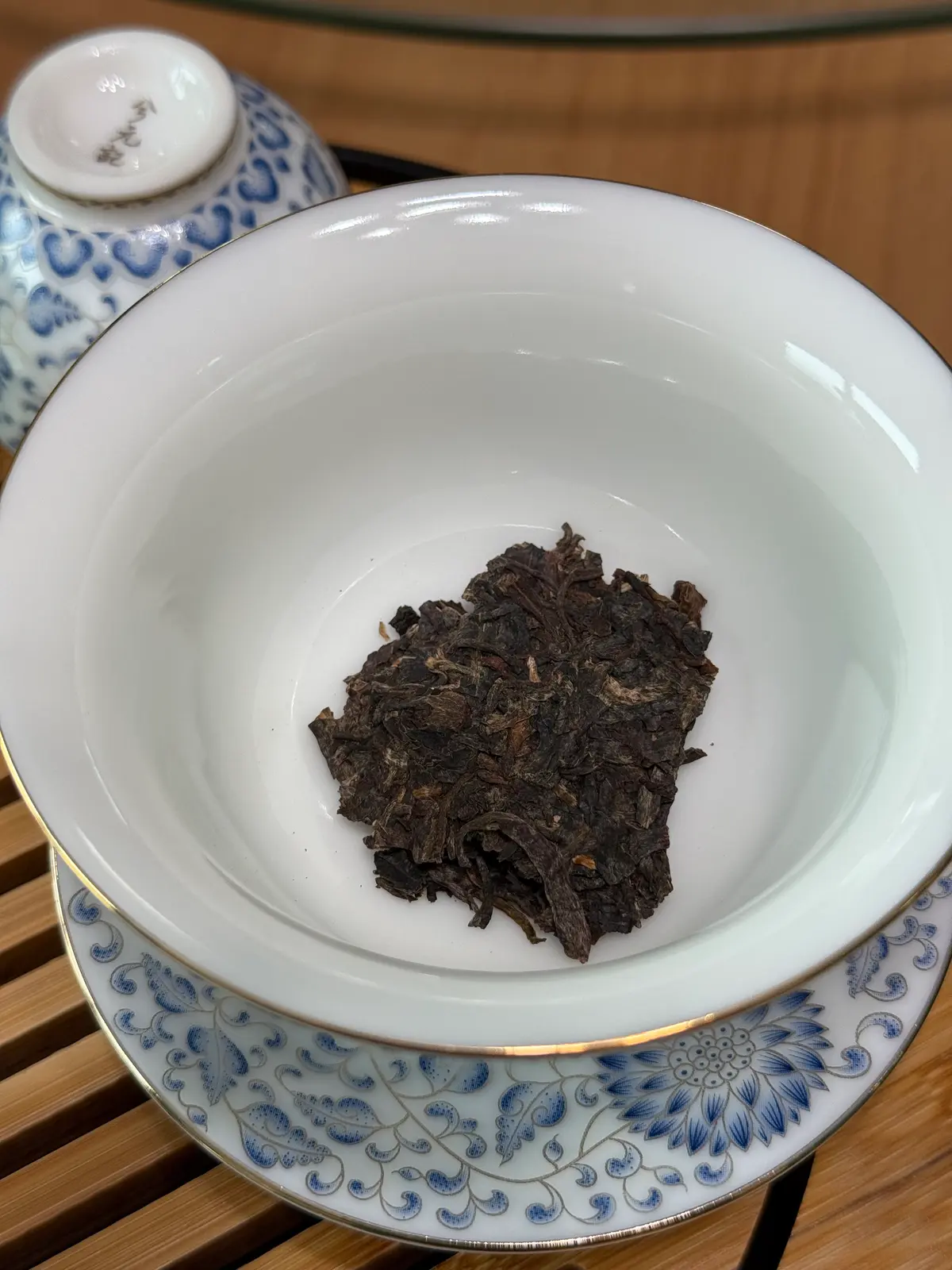
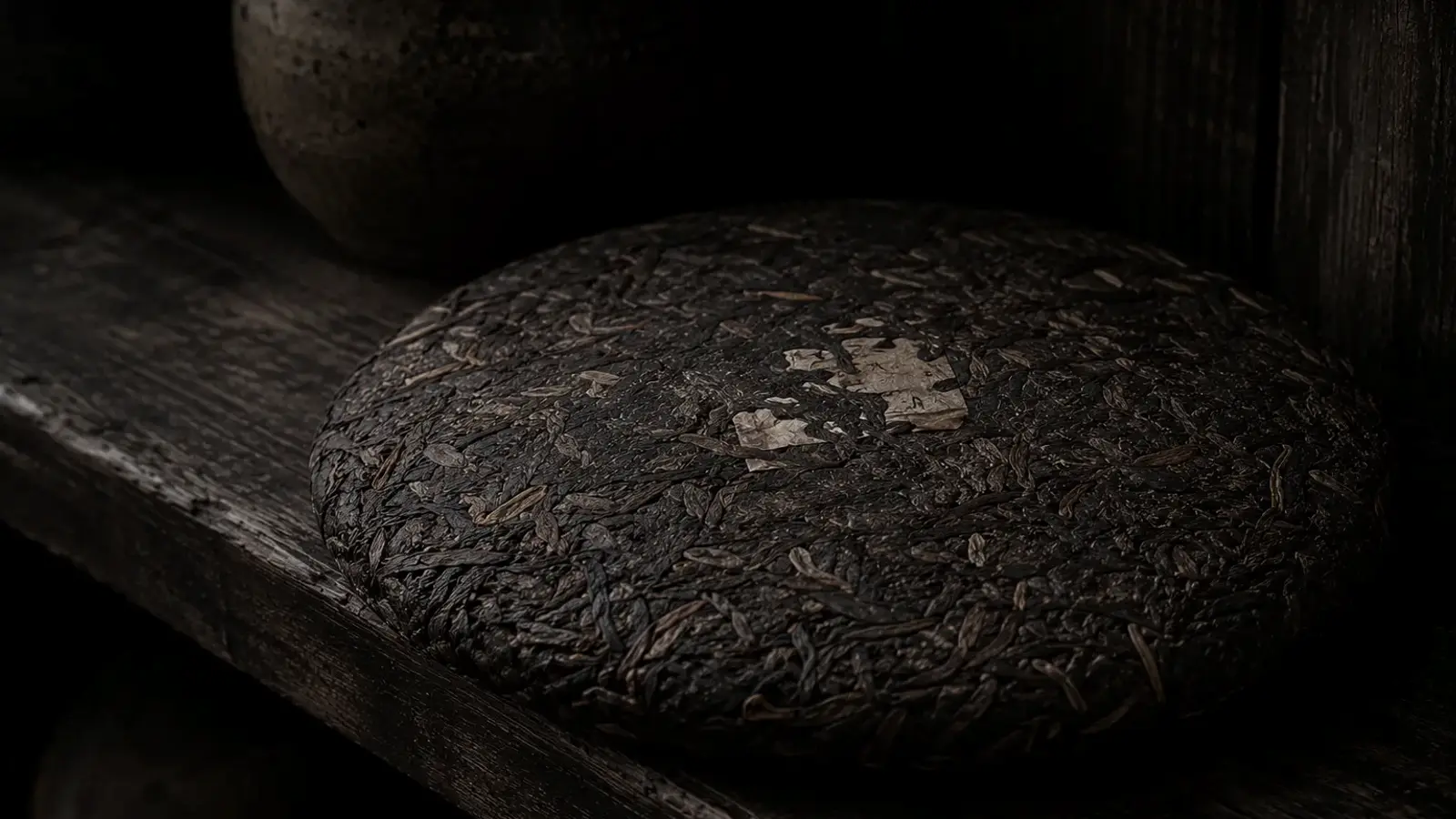
Mushroom tuo — a distinctive compressed shape like a small mushroom cap with a hollow center. Dense compression after 26 years of storage. Breaking into it with a tea pick requires patience. The leaf is dark, tightly pressed, and aged.
The Session
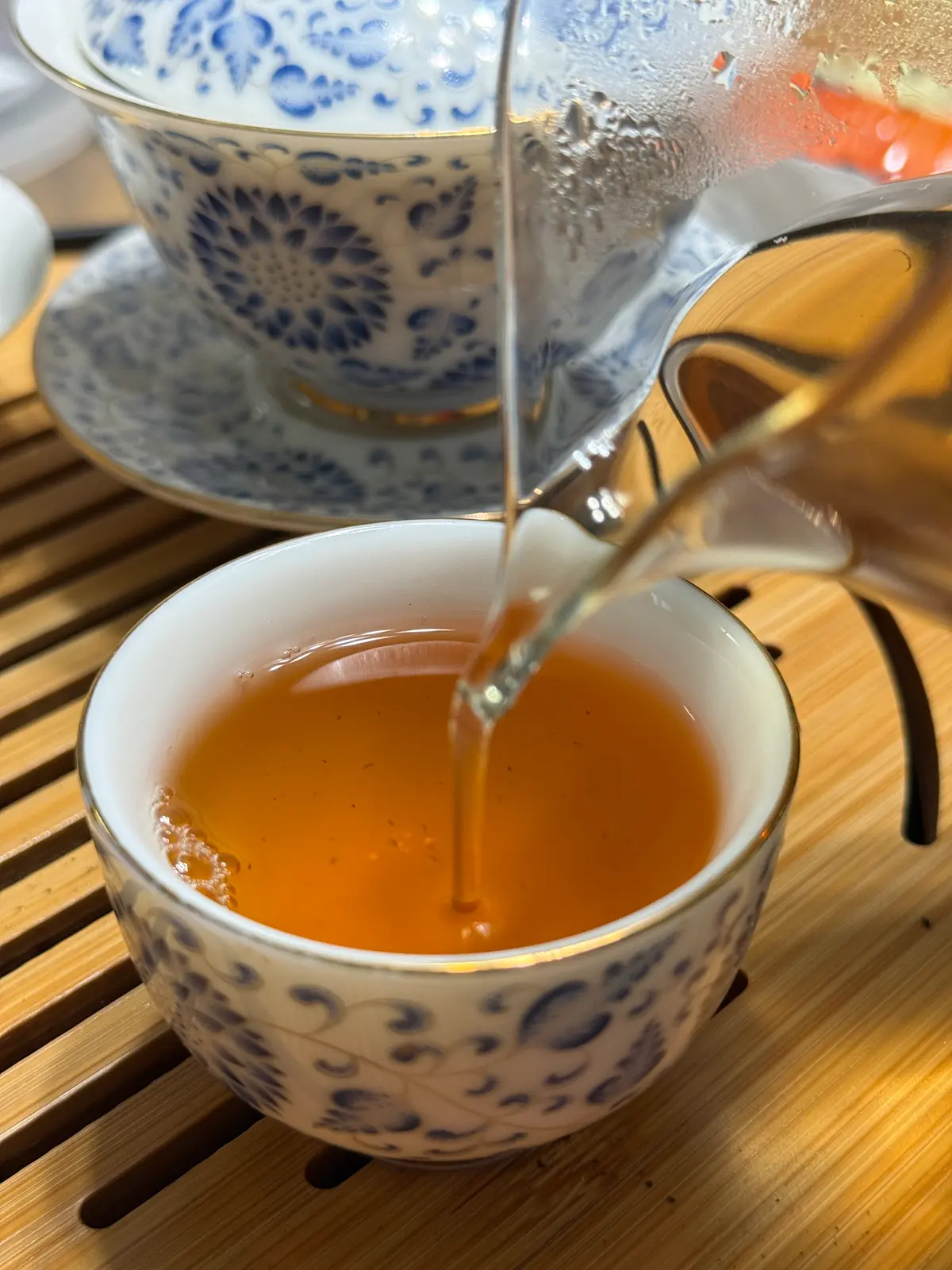
The first steep is bitter. But it’s not the bitterness of the First Contact shou that punched and sat there. This bitterness has style. It has direction. It knows where it’s going. It’s the bitterness of a very dry, sophisticated wine — a Barolo, a Nebbiolo that grips your palate with tannin and dryness, and you keep reaching for your glass because the structure itself is compelling. You’re not enduring the bitterness. You’re appreciating it.
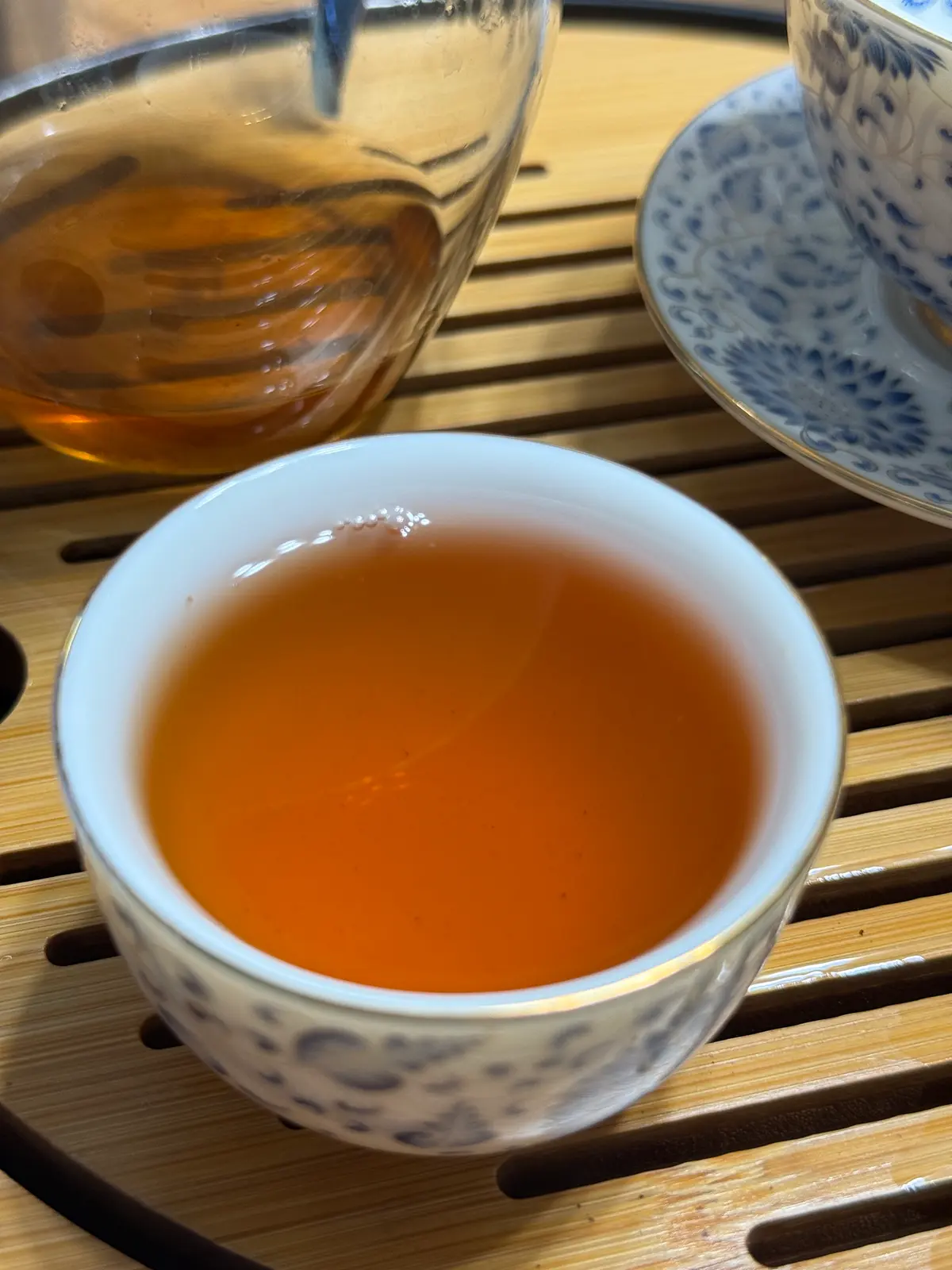
The dryness is part of the experience. Tannins dry the tongue, dry the cheeks, create a textural landscape that smooth teas don’t have. In the first three steeps, this dryness coexists with a lingering sweetness that arrives after each swallow — the huigan working to balance the tannin. The architecture is beautiful: bitterness as the scaffold, sweetness as the reward, dryness as the texture that makes you pay attention.
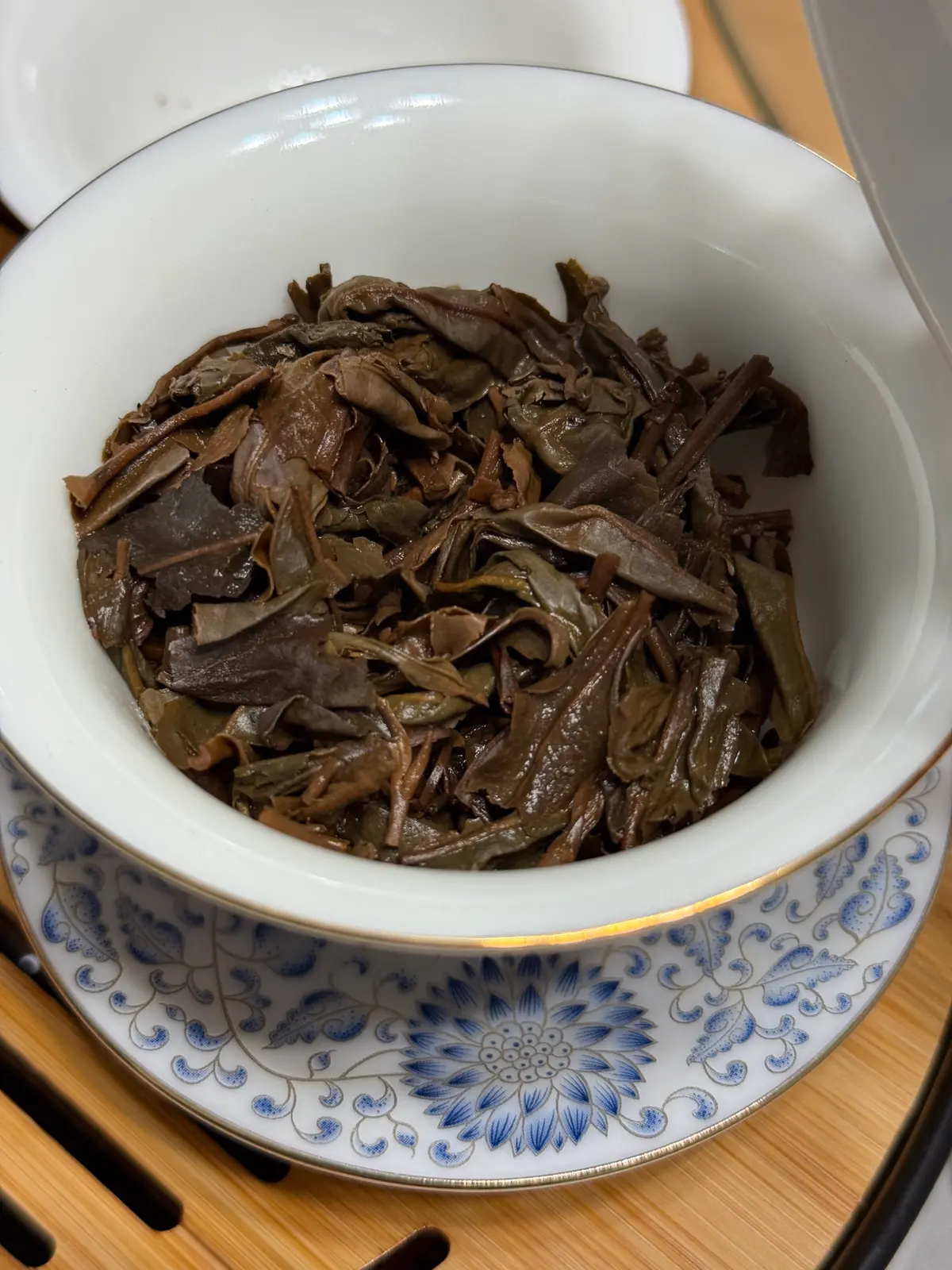
But the life is short. By steep 5-6, the tannin accumulation becomes too much. The sweetness that was holding up its end of the bargain in the early steeps can no longer compensate. The dryness goes from “sophisticated” to “fatiguing.” The session effectively ends — not because the tea has nothing left, but because my palate has hit its tannin ceiling.
Flavor Profile
Front: Structured bitterness — purposeful, styled, architectural. Not aggressive. Sophisticated.
Mid: The dry tannic grip that creates the wine parallel — this is the closest any tea has come to replicating the mouthfeel of a serious dry red wine.
Finish: Lingering sweetness, present and real, working to balance the bitterness. In steeps 1-3 it succeeds. By steep 5-6 it’s outmatched.
Mouthfeel & Huigan
The mouthfeel is grip. Not silk (Yiwu), not velvet (Chocolate Noir), not liquid velvet (Zi Ya). This is tannic grip — intentional, demanding, wine-like. The dryness is the feature, not a flaw.
The huigan operates beautifully in the early steeps — bitterness converting to sweetness with the same Bulang drama as the 2005 Ban Zhang. But the tannin load from Kunming dry storage is higher than the Guangdong-stored Ban Zhang, and by the mid-session the tannin accumulation outpaces the huigan’s ability to compensate. The sweetness is still there but it’s shouting into a wind of dryness.
Qi Notes
First Saturday morning without waking anxiety in recent memory. The session was meditative and focused. Bulang Mountain qi at 26 years — warming, grounding, present.
Value Assessment
25g sample of aged Bulang Mountain material. At 26 years old with genuine Bulang Mountain terroir, Kunming dry-stored, this represents real aged material at a sample price.
Verdict
This tea taught something more valuable than a flavor preference. It taught a storage preference.
The 2005 Ban Zhang (Guangdong dry-stored, 21 years) was the best tea I’ve had. This 2000 Bulang Tuo (Kunming dry-stored, 26 years) is from the same mountain family with 5 more years — and it’s clearly less integrated. The bitterness is more preserved, the tannin more aggressive, the sweetness less able to hold the balance.
The difference is storage climate. Guangdong’s warmer conditions converted more of the harsh polyphenols over 21 years. Kunming’s cool, dry conditions preserved them for 26 years. More preservation sounds better in theory. In practice, for this palate, it means more tannin than sweetness can balance.
Storage preference confirmed: Guangdong dry or warm tropical over Kunming dry. Warmer storage integrates bitterness better and produces the balance this palate craves — bitterness with sweetness, structure with smoothness, power with grace.
The Bulang terroir is still home. The question is no longer which mountain — it’s how that mountain’s tea was stored. Same raw material, different climate, different result. Terroir gets you 70% of the way. Storage decides the final 30%.
Bitter with style. But style alone isn’t enough without integration.
This tea's strongest axis is Astringency (8/10).