Lao Man’e (老曼峨) is not a tea you ease into. It is the bitterness benchmark of all sheng pu-erh — the material that experienced collectors reach for when they want to test their tolerance and serious producers study when they want to understand what extreme polyphenol expression actually means in a cup. Lao man e pu-erh divides opinion cleanly: newcomers frequently find it undrinkable on first encounter, while drinkers who have spent years building bitterness tolerance through progressive sheng consumption treat it as a holy grail.
The reason for that devotion is the reversal. Lao Man’e’s bitterness does not simply fade — it converts, rapidly and dramatically, into one of the strongest huigan (回甘, returning sweetness) experiences in Yunnan. The more extreme the bitterness, the more pronounced the sweetness that follows. Understanding that sequence is the entire key to this tea.
What Makes Lao Man’e Pu-erh So Bitter
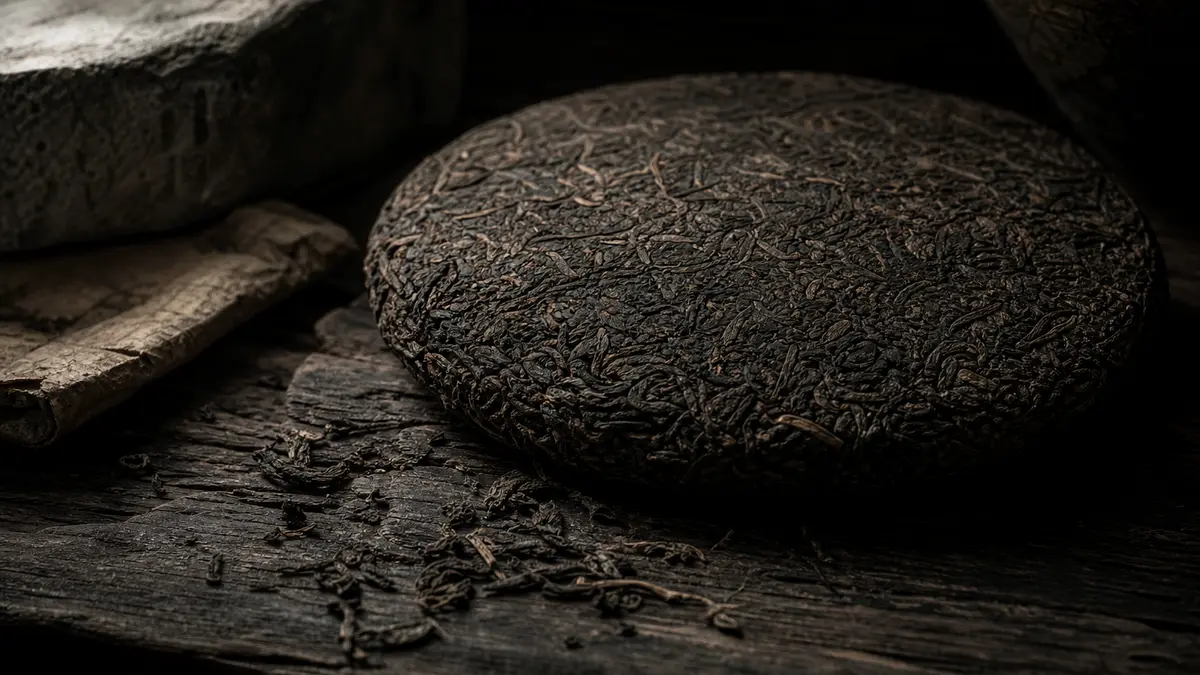
The village of Lao Man’e sits on Bulang Mountain (布朗山) in Xishuangbanna (西双版纳), at approximately 1,600 meters elevation, adjacent to the more famous Lao Ban Zhang (老班章) village. The Bulang people have cultivated tea here for over a thousand years, and both villages share broadly similar altitude, climate, and ancient-tree heritage.
The distinction is the compound ratio in the leaf. Lao Man’e material consistently shows high concentrations of catechins and polyphenols relative to theanine and other amino acids. In sheng pu-erh, bitterness scales with catechin content; sweetness and umami scale with amino acids. Lao Man’e tips that ratio hard toward the bitter end — harder than almost any other material from Yunnan’s famous mountains.
This is not a processing artifact. You cannot adjust fermentation or kill-green parameters to significantly change it. The bitterness is intrinsic to the leaf itself, and it appears consistently across different producers and harvest years. It is what the terroir of this specific village produces.
The Bulang Mountain Context
Bulang Mountain is one of Yunnan’s six famous ancient tea mountains in Xishuangbanna. The Bulang ethnic minority (布朗族) who inhabit these villages consider themselves descendants of the original tea cultivators of the region — a claim supported by the presence of ancient tea trees, some estimated at several hundred years old, growing in and around the village.
Lao Man’e sits close enough to Lao Ban Zhang that the villages share a watershed. The microclimate differences are subtle: slightly different aspect, slightly different soil mineral composition, the accumulated genetic divergence of tea trees tended by separate communities over centuries. These small differences produce the dramatic flavor divergence between the two teas.
Where Lao Ban Zhang (老班章) is often described as the king — powerful but balanced, bitter but structured, with prestige that now commands prices of $100–$400+ per 100g for authenticated material — Lao Man’e is the bitter warrior. Less famous, less expensive, and in some respects more extreme.
The Huigan Reversal: Why Bitter Converts to Sweet
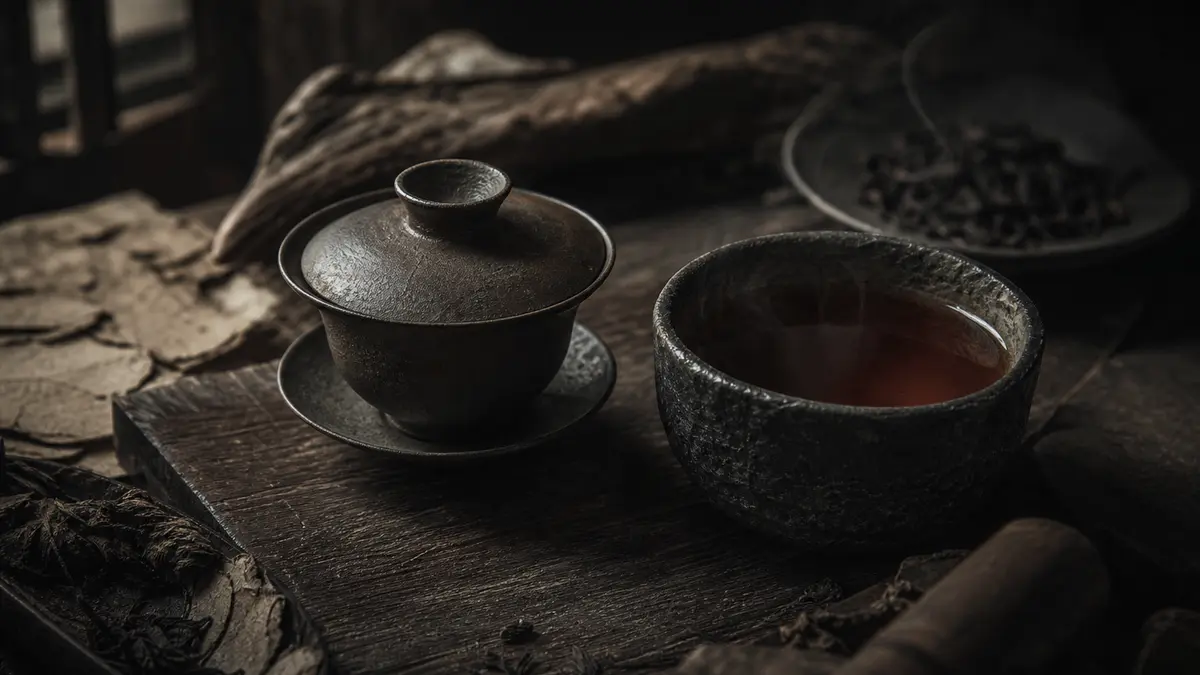
The physiological mechanism behind huigan (回甘) in high-bitterness pu-erh involves salivary stimulation and the binding behavior of polyphenols in the mouth. High catechin concentrations interact with proteins in saliva, triggering a compensatory surge of saliva production after the initial bitterness peak. This increased saliva flow — combined with the lingering aromatic compounds from the tea — produces the sensation of sweetness even when no additional sugars are present.
In Lao Man’e, this reversal is unusually dramatic because the initial bitterness is unusually intense. The gap between the bitter peak and the sweet trough is wider than in almost any other material from Yunnan. Drinkers who push through the first steep and wait 30–60 seconds typically describe a sweetness that spreads from the throat forward into the mouth — what Chinese tasters call 喉韻 (hóuyùn), throat resonance.
This is why experienced drinkers seek it out. The bitterness is not the point; the reversal is.
Lao Man’e vs. Lao Ban Zhang: An Honest Comparison
| Attribute | Lao Man’e (老曼峨) | Lao Ban Zhang (老班章) |
|---|---|---|
| Bitterness intensity | Extreme — Yunnan benchmark | High — powerful but more balanced |
| Huigan strength | Extremely strong | Strong |
| Sweetness profile | Dramatic reversal, wide arc | Integrated sweetness throughout |
| Aroma | Forest floor, camphor, dark fruit | Similar with more pronounced floral lift |
| Aging potential | Excellent | Excellent |
| Typical price per 100g (authentic) | $15–$60 | $100–$400+ |
| Fame factor | Regional reputation | Global prestige |
| Authentication difficulty | Moderate | Severe — rampant counterfeiting |
The price gap is the critical observation. Lao Ban Zhang’s global reputation has generated one of the most severe counterfeiting problems in all of tea — the vast majority of material sold under that name is either blended with lower-grade leaf or fabricated entirely. Lao Man’e, lacking equivalent marketing mythology, faces less counterfeiting pressure and trades at dramatically lower prices despite comparable or superior raw intensity.
For a drinker who wants the extreme bitter-to-sweet experience that defines Bulang Mountain material, Lao Man’e is arguably the most honest value proposition in the category.
The Brunello di Montalcino parallel is useful here. Brunello is built on Sangiovese’s structural tannin — grippy, austere, demanding in youth, transformative with age. You do not drink a young Brunello for comfort. You drink it understanding that the structure you are experiencing is the same structure that will produce complexity in fifteen years. Lao Man’e operates identically: the bitterness you encounter in a fresh cake is the raw material of what the tea becomes with storage and time.
How to Brew Lao Man’e Pu-erh
The brewing approach determines whether Lao Man’e is an ordeal or a revelation.
Equipment: A porcelain or thin-walled gaiwan (蓋碗) is the right vessel. It gives you control, shows you the liquor color accurately, and does not absorb or soften the flavor the way a seasoned Yixing pot might. Save the Yixing for when you know this tea well.
Leaf weight: Start at 5g per 100ml of water. If you have significant sheng experience, 6g is appropriate. If Lao Man’e is your first encounter with intense Bulang material, drop to 4.5g until you establish your tolerance.
Water temperature: 95–100°C. This material does not reward temperature reduction the way some delicate greens or whites do. Lower temperatures suppress the full aromatic extraction along with the bitterness, and you lose the complexity. Brew it hot and manage the experience through steep time instead.
Steep sequence:
- Rinse: 5 seconds, discard. This wakes the leaf and removes any surface dust from compressed cake.
- Steep 1: 8 seconds. Taste carefully. This steep will be bitter. Sit with it.
- Steep 2: 10 seconds. The bitterness remains high. Pay attention to what happens in your throat 30–45 seconds after swallowing.
- Steep 3 onward: Extend by 5–8 seconds per steep. By steep three, the huigan should be arriving with increasing clarity. This is the tea opening.
- Later steeps: Lao Man’e ancient-tree material has significant stamina — quality leaf can produce 10–14 steeps before fading.
What to watch for: The huigan arrival timing. In early steeps it may take 30–60 seconds to appear. As the session progresses and the leaf fully opens, the reversal accelerates — sometimes arriving within 10–15 seconds after swallowing. Tracking that timing across steeps is one of the genuine pleasures of brewing this material.
Who Should Drink Lao Man’e
Not everyone, and not immediately. This is not a criticism of the tea — it is an honest map of the territory.
Newcomers to sheng pu-erh should approach Lao Man’e the way a wine student approaches a young Barolo: with respect for what it is and realistic expectations about the timeline for appreciation. Spending time first with the wider category — medium-intensity sheng from accessible mountains, building familiarity with the bitter-to-sweet arc in less extreme materials — creates the palate context that makes Lao Man’e legible rather than punishing.
For drinkers who have moved through that progression and find themselves seeking a more demanding benchmark, Lao Man’e is a natural next step. It is also a useful calibration tool: if you find Lao Man’e manageable and the huigan genuinely pleasurable, you have developed real bitterness tolerance. That is meaningful information about where your palate has arrived.
Experienced collectors who have been deterred by Lao Ban Zhang’s pricing and authentication difficulties will find Lao Man’e a serious alternative. The intensity is there. The ancient-tree character is there. The price reflects the village’s lower profile rather than any compromise in quality.
Storage and Aging
Lao Man’e sheng ages in the same pattern as other intense Bulang material — perhaps more dramatically, given the higher initial bitterness concentration. The polyphenols that drive bitterness are also the primary substrate for the oxidative and microbial transformations that define aged sheng character.
Young material (0–5 years) is confrontational. The bitterness is at its maximum, the aromatics are raw, and the tea demands either dilution or significant bitterness tolerance. This is the correct time to buy if you intend to age.
Material in the 8–15 year range begins to show integration. The bitterness softens slightly while the huigan deepens and slows — the reversal arc becomes longer and more complex rather than simply sharp. The aromatic profile shifts from camphor and raw forest toward dried fruit, wood, and mineral.
Aged Lao Man’e beyond 20 years is rare and, when authentic, commands prices that reflect its combination of scarcity and intensity. The transformation from the tea’s young profile to its aged expression is among the more dramatic in the pu-erh category.
Store under the standard sheng conditions: consistent temperature around 20–25°C, 65–75% relative humidity, good airflow, away from odor sources. The same principles that govern all sheng pu-erh storage apply here — the material’s intensity gives you no special margin for error in either direction.
A Tea That Earns Its Reputation
Lao man e pu-erh is not subtle, not forgiving, and not designed for casual sessions. It is a tea built around the most extreme expression of a specific sensory phenomenon — the bitter-to-sweet reversal — that sits at the center of Chinese tea aesthetics. The drinkers who love it do so with full knowledge of what it is.
The value case is real. The intensity is genuine. The experience, for the right palate at the right moment, is singular.