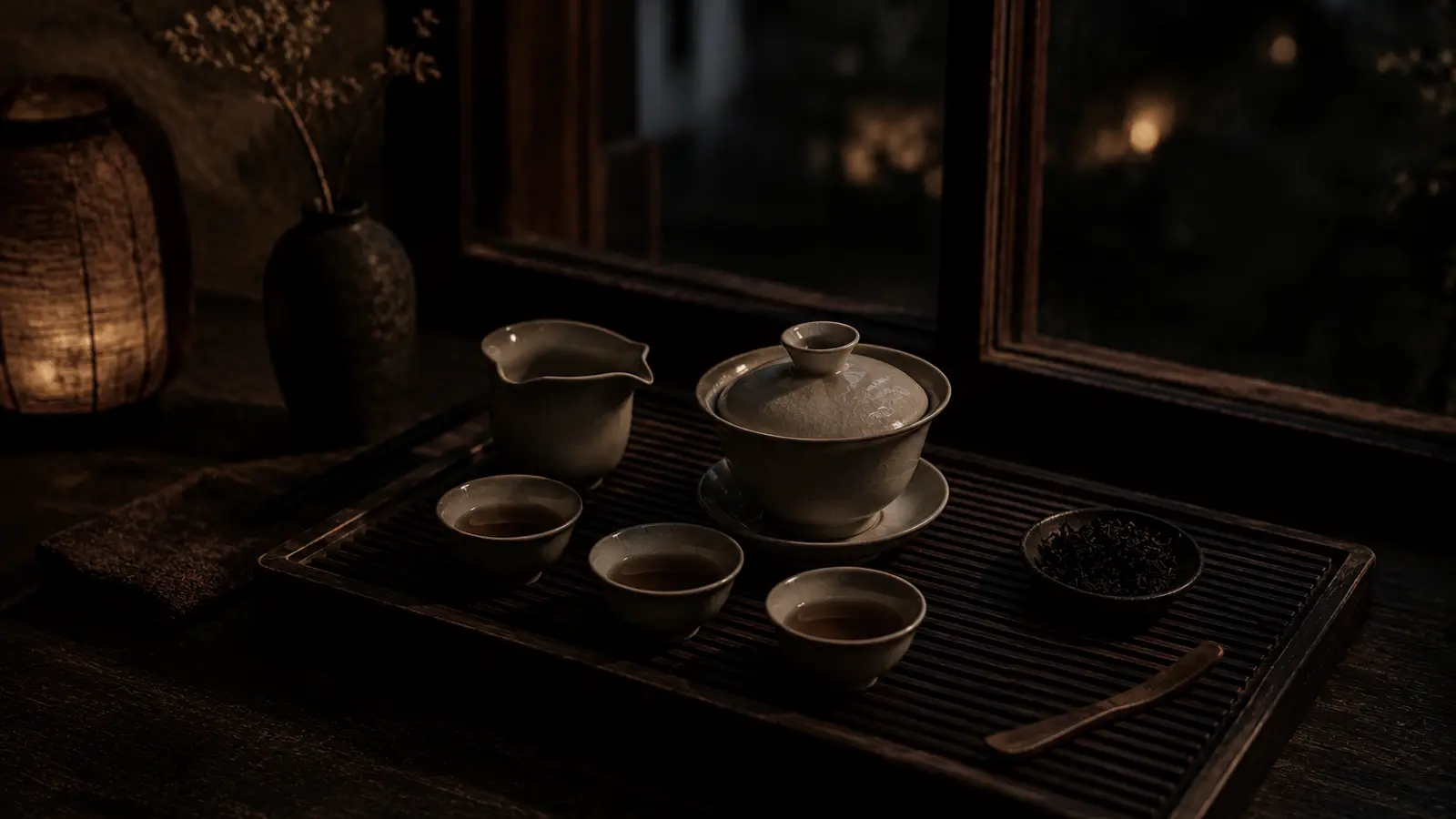
Most articles on this topic tell you to drink chamomile or make a mocktail. I am not going to do that.
If you drink wine seriously—if you care about terroir, producers, vintages, the way a bottle opens over an hour in the glass—then chamomile is not a replacement for anything. It’s a category error. You weren’t drinking wine for the ethanol. You were drinking it for the ritual, the complexity, the way a good bottle gives you something to think about while the evening slows down.
That ritual is completely reconstructible in tea. Not approximately. Exactly—with a few aspects that are, honestly, better.
I say this as someone who spent years with a serious wine cellar and now drinks tea instead of wine most evenings. What follows is the honest account of why I made that shift, how the frameworks map, and exactly what to drink if you want to do the same.
Why Wine Drinkers Are Already Primed for Serious Tea
The things that make wine intellectually compelling are not unique to wine. They are features of any agricultural product that varies meaningfully by place, year, producer, and handling. Wine drinkers have simply spent decades building the vocabulary for these features.
Consider the framework:
Terroir. In wine: limestone versus clay, altitude, aspect, drainage. In tea: the mineral-heavy soils of Wuyi (武夷) versus the granite-derived profiles of certain Yunnan mountains, the difference between tea grown at 1,400 meters versus 1,800 meters on the same range.
Varietal character. In wine: the aromatic intensity of Riesling versus the structural weight of Nebbiolo. In tea: the stone-fruit and honey of Dancong (单丛) oolongs versus the camphor-and-leather of aged Yiwu (易武) sheng pu-erh.
Vintage. In wine: the 2010 Burgundies, the 2015 California heat years. In tea: the 2005 storage-aged sheng that went through humid Guangdong warehousing before the industry shifted toward drier storage, or the 2018 Bulang pressing from a year with late frost that shortened the harvest window.
Producer philosophy. In wine: négociant versus domaine, interventionist versus hands-off. In tea: factory-processed shou pu-erh versus boutique stone-pressed sheng, wet storage versus natural dry aging.
Progression over time. In wine: how the first pour differs from the wine an hour later in the glass. In tea: the same but multiplied—you get eight to fifteen distinct steeps from a single session, each one shifting as the leaf opens and exhausts.
If you have spent time learning wine seriously, you have already built the cognitive architecture for tea. You are not starting from zero. You are translating.
What Gongfu Brewing Offers That Nothing Else Does
The word gongfu (功夫) means skill applied with effort over time. Gongfu brewing—using a small vessel, high leaf-to-water ratio, and rapid successive steeps—is not a slow-down ritual in the sense of chamomile at bedtime. It is an engaged practice.
Here is the specific thing it offers that no other alcohol replacement provides: a multi-steep progression that unfolds exactly like tasting a flight.
When you open a serious bottle of wine and pour it into a decanter, you are watching a single thing evolve over time. The wine at pour tastes different from the wine at thirty minutes, different again at an hour. This is part of what makes a good bottle engaging—it’s dynamic, not static.
Gongfu tea is more dynamic. A session with a good aged shou pu-erh (熟普洱, shóu pǔ’ěr) typically runs twelve to fifteen steeps over ninety minutes. The first steep is fast—ten seconds—and delivers a vivid, sharp impression of the tea’s top notes. The third steep is the peak, often. By the eighth steep, the tea has softened into a completely different character. The fifteenth steep, if the leaf still has something left, is meditative and mild.
You are tasting the same material in twelve different states. This is not a metaphor for wine tasting—it is structurally identical to it, but more extended.
The other thing gongfu offers is physical engagement. Pouring correctly from a gaiwan (蓋碗) without burning yourself takes practice. Gauging steep time without a timer, reading the liquor color, keeping water at 95°C (203°F) in a variable-temperature kettle—these small acts of attention are grounding. They keep you in the present moment in a way that pouring a glass does not.
The Honest Reason I Stopped Drinking Wine at Night
I want to be direct about this because most articles on this topic are either moralizing or vague, and I find both useless.
I stopped for two reasons, one discovered and one suspected.
The discovered reason: diminishing returns. I was drinking wine that objectively merited attention—good producers, interesting vintages, things I had paid real money for and cellared properly. But after two glasses, I was not actually tasting. I was consuming. The ritual was real at the beginning and disappeared by the end. I was essentially paying for complexity and then eliminating my ability to perceive it.
The suspected reason: my sleep doctor flagged some patterns consistent with sleep apnea, and alcohol—even moderate amounts—significantly worsens sleep apnea by relaxing pharyngeal muscles. This is not a moral claim. It is a physiological one. For people who wake frequently, feel unrefreshed, or snore, alcohol at night is actively counterproductive to the sleep they’re trying to achieve. I am not telling you to stop drinking. I am telling you what happened when I did.
The result: I sleep better. My mornings are clearer. I have, to my own surprise, not missed the wine in the way I expected to.
What I have missed—or what I might have missed, if the tea hadn’t replaced it—is the ritual. The considered selection of what to open. The attention to what’s in the glass. The hour of unhurried engagement. That part is completely intact in a gongfu session. More intact, actually, because the tea keeps demanding attention.
The Evening Session: How to Structure It
An evening gongfu session for the wine-drinker replacement should take about sixty to ninety minutes. This is not a rushed cup before bed. It is an event.
Timing and Setup
I start my session around 8:00–8:30 PM, which gives most of the caffeine time to clear before midnight. Aged teas are low enough in caffeine that this timing works for most people. If you are caffeine-sensitive, start earlier or use the teas I list below specifically for their low caffeine content.
The physical setup:
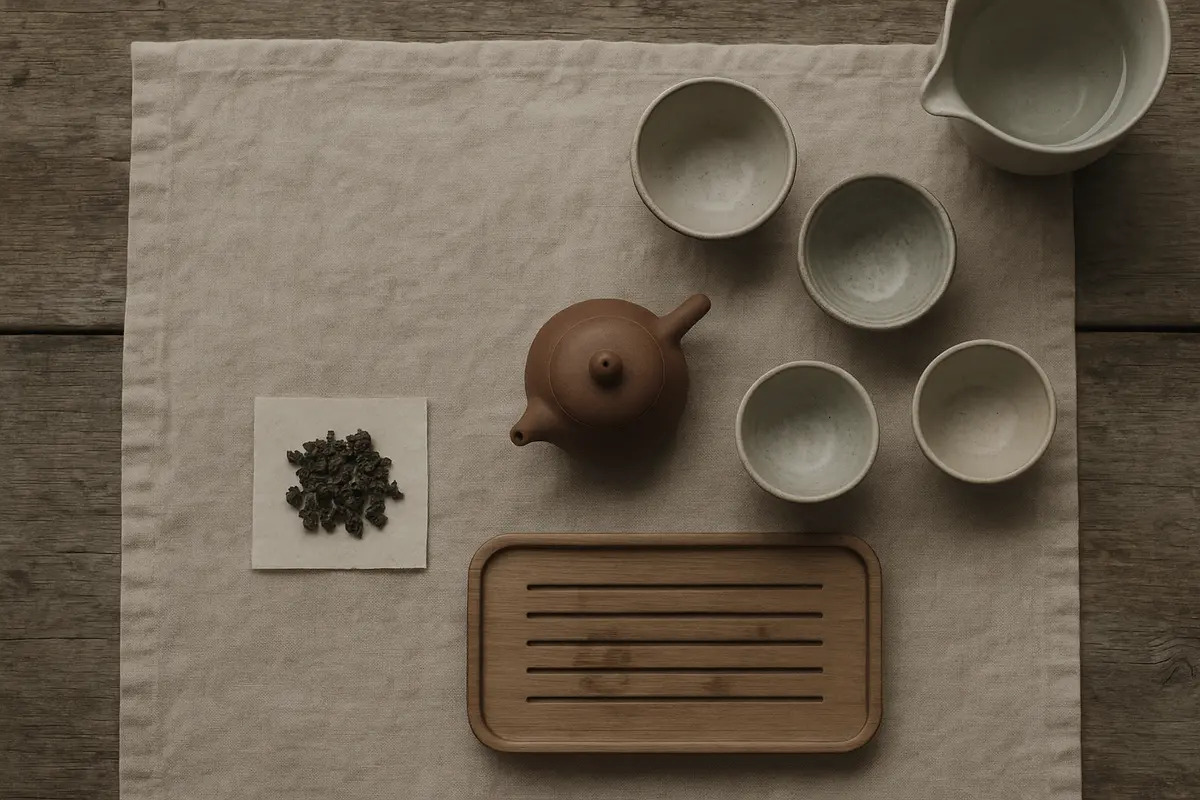
- Variable-temperature electric kettle capable of holding 95–100°C (203–212°F)
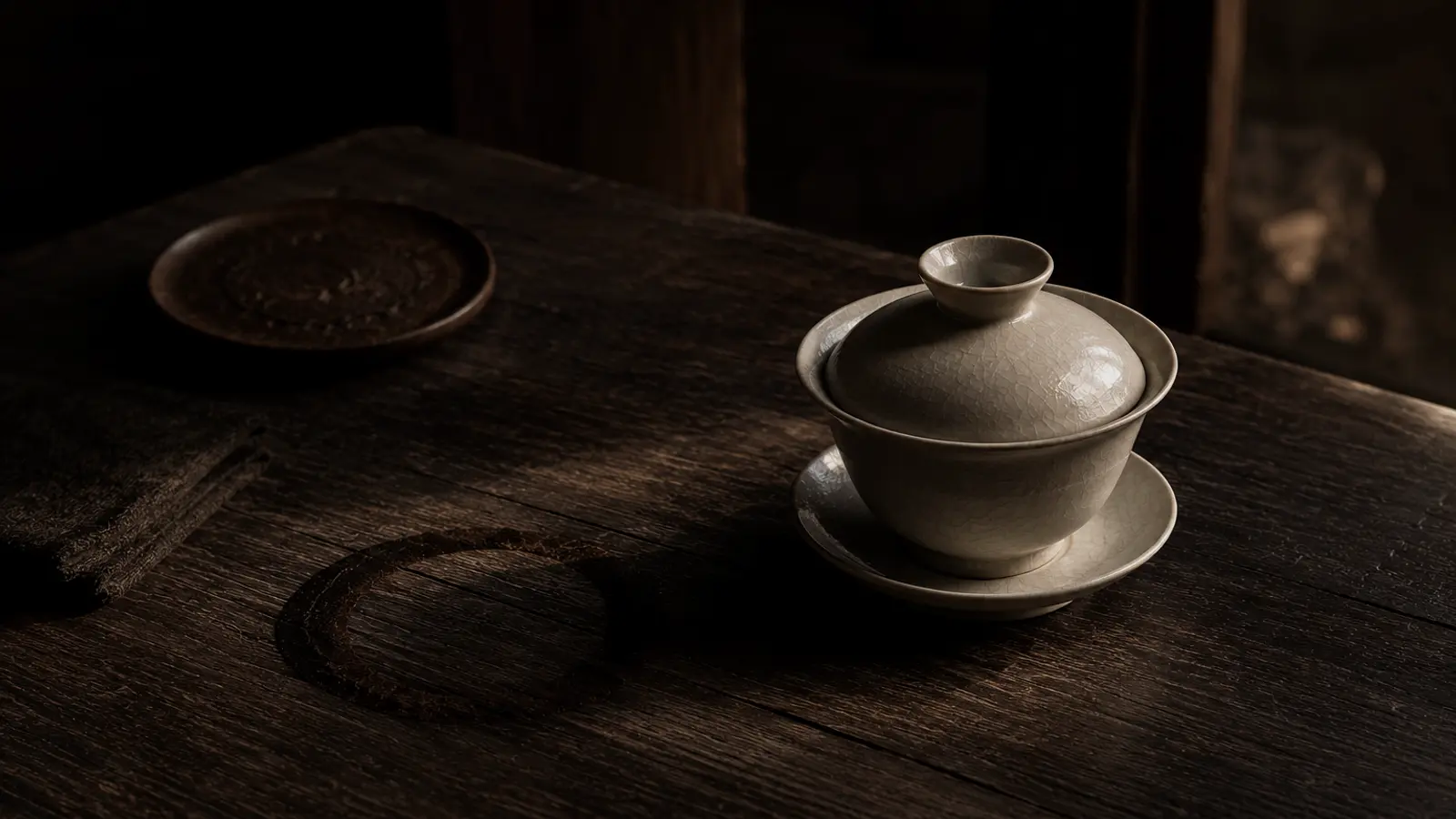
- A gaiwan (蓋碗) in the 80–120ml range, or a small Yixing teapot if you’ve developed a preference for a specific clay’s interaction with aged pu-erh
- A fair cup (公道杯, gōngdào bēi) to decant from the gaiwan before pouring
- Two or three small tasting cups, 30–40ml each
- A tea tray or surface that handles spills without stress
- Good light—you want to see the liquor color change across steeps
This setup costs less to assemble than a single mid-tier bottle of wine. A decent gaiwan is $15–40. A basic variable-temperature kettle is $30–60. Small cups are $5–20 each. The barrier is lower than people assume.
The Ritual Sequence
Rinse the vessel. Pour boiling water into the gaiwan, swirl, discard. This warms the ceramic and removes any storage dust from the leaf. For aged teas especially, I do two quick rinses.
The awakening steep. Add 6–8 grams of leaf to a 100ml gaiwan. Pour just-boiled water, steep for ten seconds, pour out and discard. This is not the first drinking steep—it’s the leaf opening. Smell the gaiwan lid after this steep. That’s your first sensory data point.
Steep one through three. These are fast: 10, 15, 20 seconds. These are typically the most vivid steeps—high top notes, maximum aromatic intensity. This is your “first pour” equivalent.
Steep four through eight. The tea settles into its character. Steep times lengthen: 25, 30, 40, 50, 60 seconds. This is where aged teas show their complexity—the huigan (回甘, the sweet returning sensation at the back of the throat) becomes more pronounced, the body thickens, the base notes emerge.
Steep nine onward. Long steeps now, 90 seconds to several minutes. The tea is softening. These later steeps are often the most meditative part of the session.
Between steeps, you’re not doing anything. You’re drinking, noticing, maybe reading. This is the replacement for what the wine glass was doing.
The Best Evening Teas for This Practice
These are teas I recommend specifically for nighttime use based on complexity, low caffeine relative to flavor intensity, and warming character.
Aged Shou Pu-erh (熟普洱)
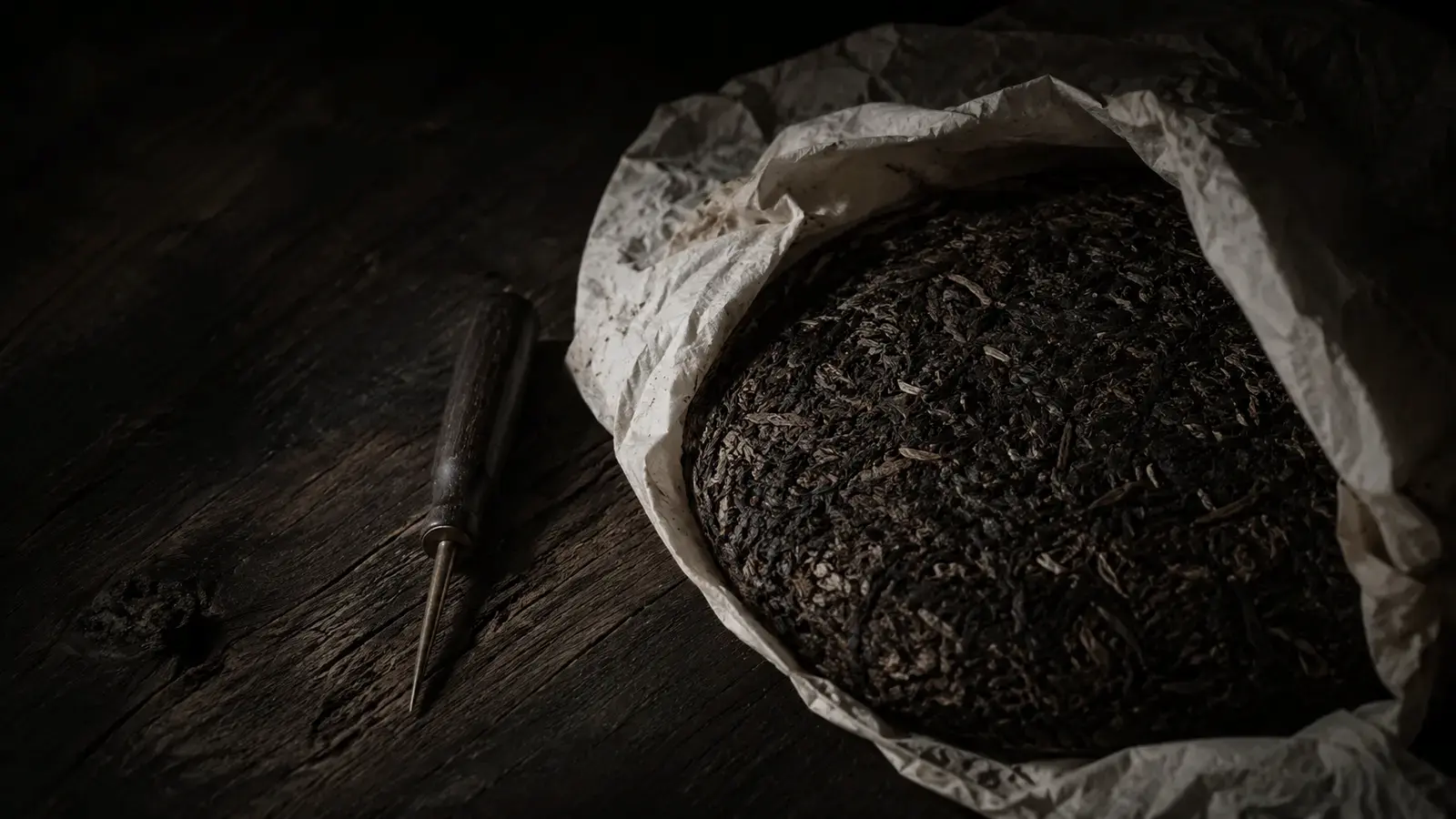
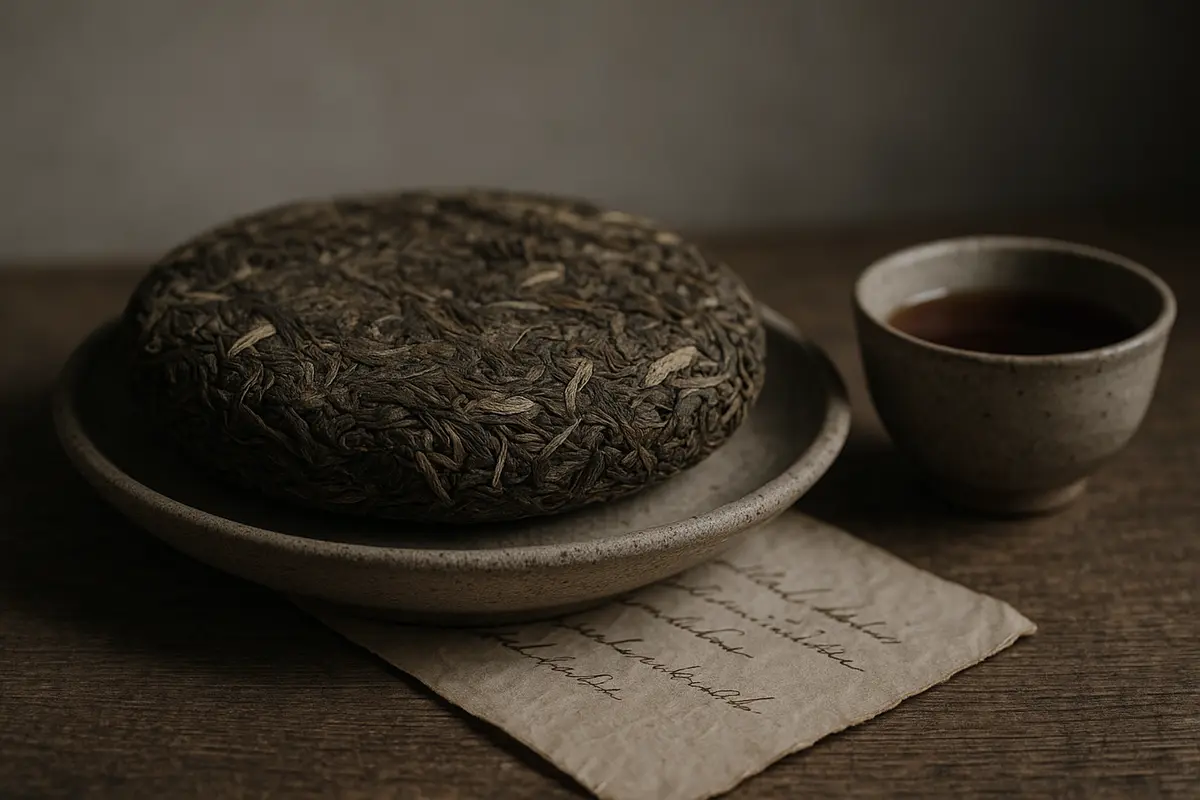
My primary evening tea. Shou pu-erh undergoes accelerated post-harvest fermentation—a process that significantly degrades caffeine content while creating the compressed earthy, dark, warming flavors that make aged pu-erh compelling. A cake (饼, bǐng) from 2010 or earlier, properly stored, will drink like forest floor, dark chocolate, dried dates, and something mineral that I can only describe as ancient.
The comparison to aged red wine is not forced. The structural weight and the way the flavor evolves across steeps is genuinely analogous to a well-aged Côtes du Rhône or a softer Bordeaux.
What to look for: Storage history matters as much as production date. Dry-stored shou is cleaner and more mineral; traditionally humid-stored shou is earthier and more primal. Both are valid. Prices for quality aged shou (2008–2012 range): $30–80 for a 357g cake, which represents 20–30 sessions.
Well-Aged Sheng Pu-erh (生普洱)
Raw pu-erh with 15+ years of age is a different experience from young sheng—which is too caffeinated and often too astringent for evening use. Aged sheng mellows into camphor, dried fruit, leather, stone, and sometimes a fascinating medicinal quality that wine can’t duplicate.
These are more expensive than aged shou and harder to source authentically. Buying from established vendors with provenance documentation matters here. A good 15-year-old sheng will cost $60–200+ for a 357g cake depending on the factory and mountain.
Liu Bao (六堡茶)
Liu Bao is a post-fermented tea from Guangxi province that has been aged and stored in baskets traditionally. It’s less well-known in Western markets than pu-erh but is, in my experience, the most evening-appropriate tea in existence. The flavor profile is earthy but clean, with notes of areca nut, dark forest, mild sweetness, and a genuinely soothing quality that isn’t sedation but stillness.
Caffeine in aged Liu Bao is very low. It brews well in a gaiwan or a simple teapot. Prices are generally lower than comparable aged pu-erh—a reasonable quality aged Liu Bao (10+ years) might run $20–50 for 250g.
Heavily Roasted Oolongs
Two categories here:
Roasted Tieguanyin (铁观音): The traditional heavy-roast style—not the modern floral green style—produces a tea with dark caramel, toasted grain, dried apricot, and a round body that is genuinely warming. A Tieguanyin that has been roasted and then rested for a year post-roast has integrated its roast character and drunk smoothly. Caffeine is moderate but the roasting process does reduce it somewhat.
Wuyi Yancha (武夷岩茶): Rock oolongs from the Wuyi mountains—Da Hong Pao (大红袍), Rou Gui (肉桂), Shui Xian (水仙)—are the most wine-like teas in existence to a wine drinker’s palate. The “rock” character (岩韵, yán yùn) is a genuine mineral intensity derived from the volcanic basalt and red clay of the Wuyi cliffs. These have more caffeine than shou pu-erh, so I save them for earlier evening use (before 7:30 PM) or for evenings when I’m staying up. Prices for quality Wuyi yancha: $30–100+ per 50g for legitimate cliff-garden material.
What You Actually Gain
I want to be specific about this because vague wellness claims are not useful.
Sleep quality. Removing alcohol from evening consumption improves sleep architecture measurably—specifically reducing disruption of REM sleep. If you are a wine drinker who wakes at 3 AM and can’t return to sleep, removing the wine is likely a direct intervention. This is not a small thing. The difference is significant enough that most people who try this for two weeks do not want to go back.
Morning clarity. There is no hangover spectrum with tea. Even after a long session with a high-caffeine tea, you wake up clean. The low-grade cognitive fog that accumulates over weeks of regular moderate drinking is subtle enough that you may not notice it until it’s gone.
The ritual stays. This is the thing most people don’t believe until they experience it. The hour of considered selection, preparation, attention, and sensory engagement is fully present in a good gongfu session. You are not giving up the ritual. You are keeping the ritual and removing its cost.
Financial reallocation. Quality aged pu-erh and Liu Bao are not cheap, but they are not as expensive as wine relative to the number of sessions they provide. A $50 cake of aged shou pu-erh provides 25 substantial sessions. A comparable level of wine evening-over-evening costs significantly more.
Tea qi (茶氣). This is a term worth knowing: 茶氣 (chá qì) refers to the somatic experience that good tea—particularly aged pu-erh—produces. It is distinct from a caffeine effect. Practitioners describe warmth spreading from the chest, a mild clearing of the head, a quality of focused calm. I was skeptical of this until I began paying attention. What I can say is that after a long session with a quality aged sheng or shou, I feel a specific kind of grounded alertness that is categorically different from what alcohol produces, and which I find more desirable. For a deeper look at this phenomenon, what qi in tea actually means is worth reading before you dismiss it.
The Gongfu Session as Grounding Practice
One thing alcohol does that I want to acknowledge honestly: it works. It reliably produces a state change. After a hard day, two glasses of wine delivers a measurable shift in anxiety and tension. This is real and it is why people drink.
Tea does not chemically produce that exact state change. It does something different. The preparation—the physical acts of heating water, weighing leaf, pouring and timing and attending—is in itself a pattern interrupt. You cannot ruminate effectively while managing a gongfu session. The attention demands are too constant.
What the session produces is not sedation but presence. The evening moves differently when you’re tracking the color shift from steep four to steep seven, when you’re noticing the huigan (回甘) on the fifth steep that wasn’t there on the third.
This is not meditation in any formal sense. It is engaged sensory attention. For many people—particularly those who drank wine in the evening specifically to decompress from mental activity—this is actually more effective. You are not numbing the mental activity. You are redirecting it toward something specific, pleasurable, and harmless.