The second Yiwu. The second time peach appeared in my cup from this mountain. The first time was the 2006 Yiwu, Kunming dry-stored — cool, slow, 23 years in mountain air. This 2003 is Banna-stored — Xishuangbanna’s humid tropical climate, 23 years of warm, fast aging. Yiwu terroir at 1,200-1,500m elevation, sun-dried maocha compressed into cake, then aged 23 years in Banna’s humid tropical conditions. Everything about the storage is different. The peach is the same.
Dry Leaf
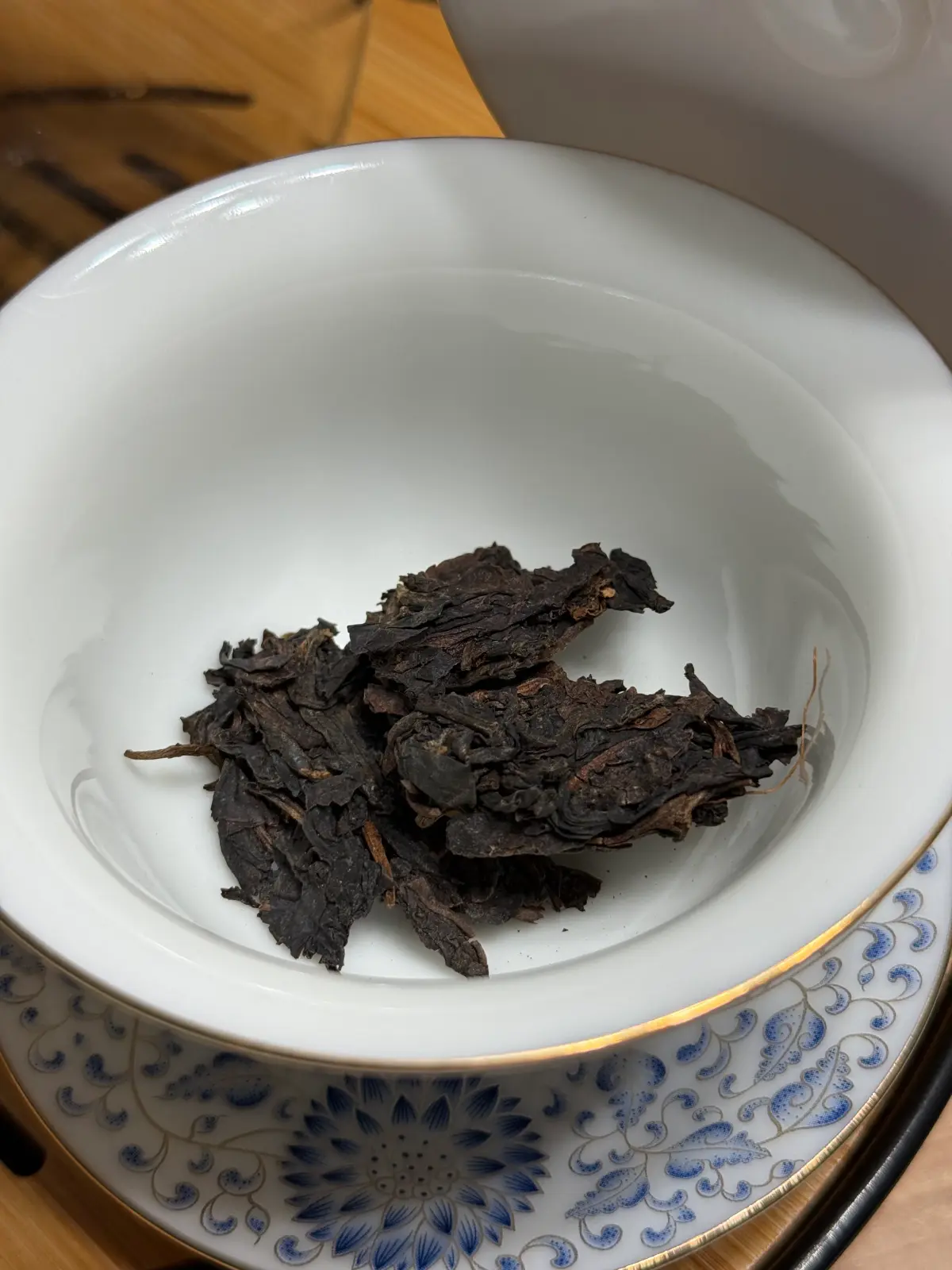
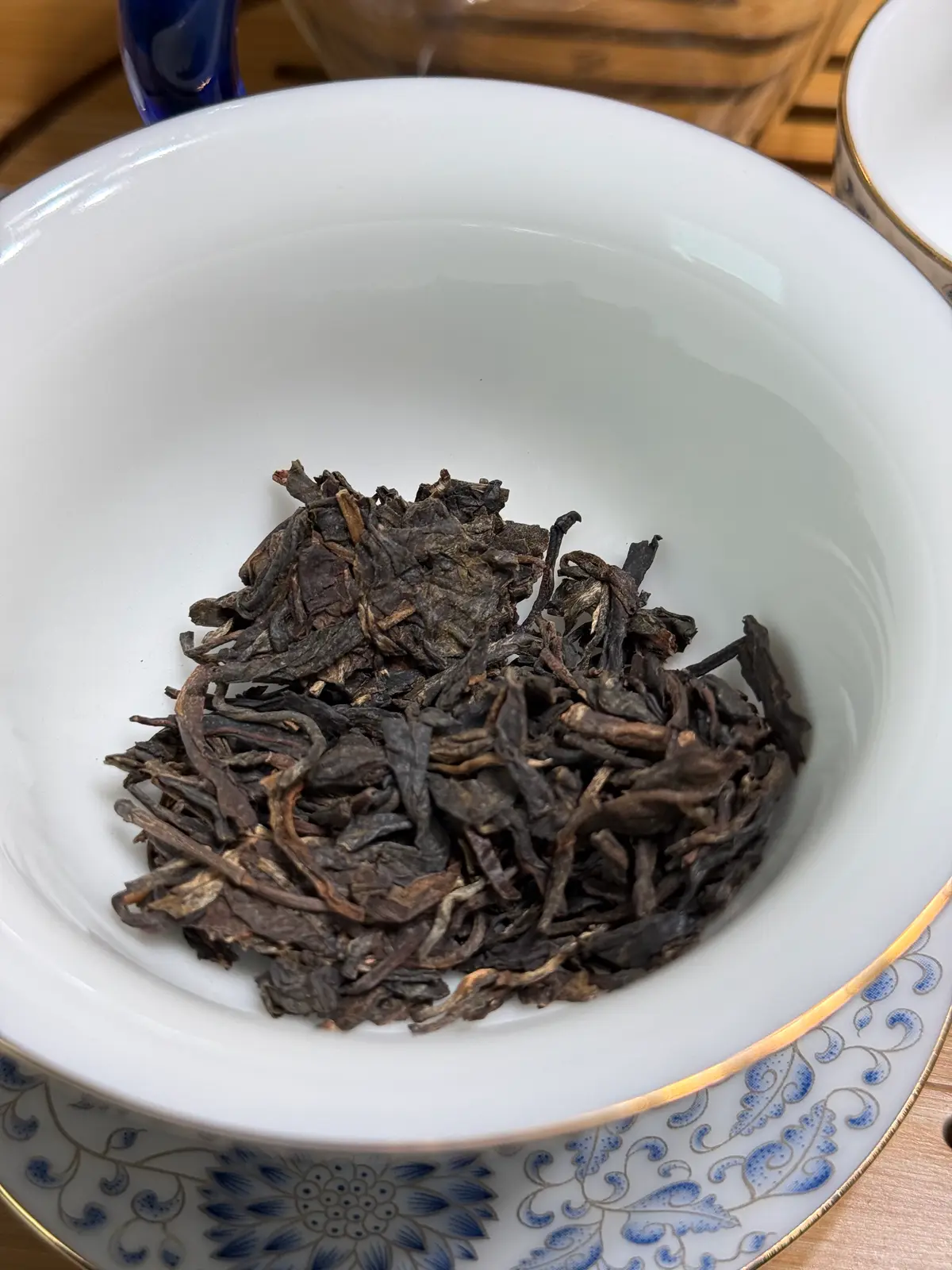
23-year-old compressed cake. Banna-stored leaf tends to be darker than Kunming-stored equivalents — the humid tropical conditions accelerate oxidation and transformation. Breaking off a piece for the gaiwan.
The Session
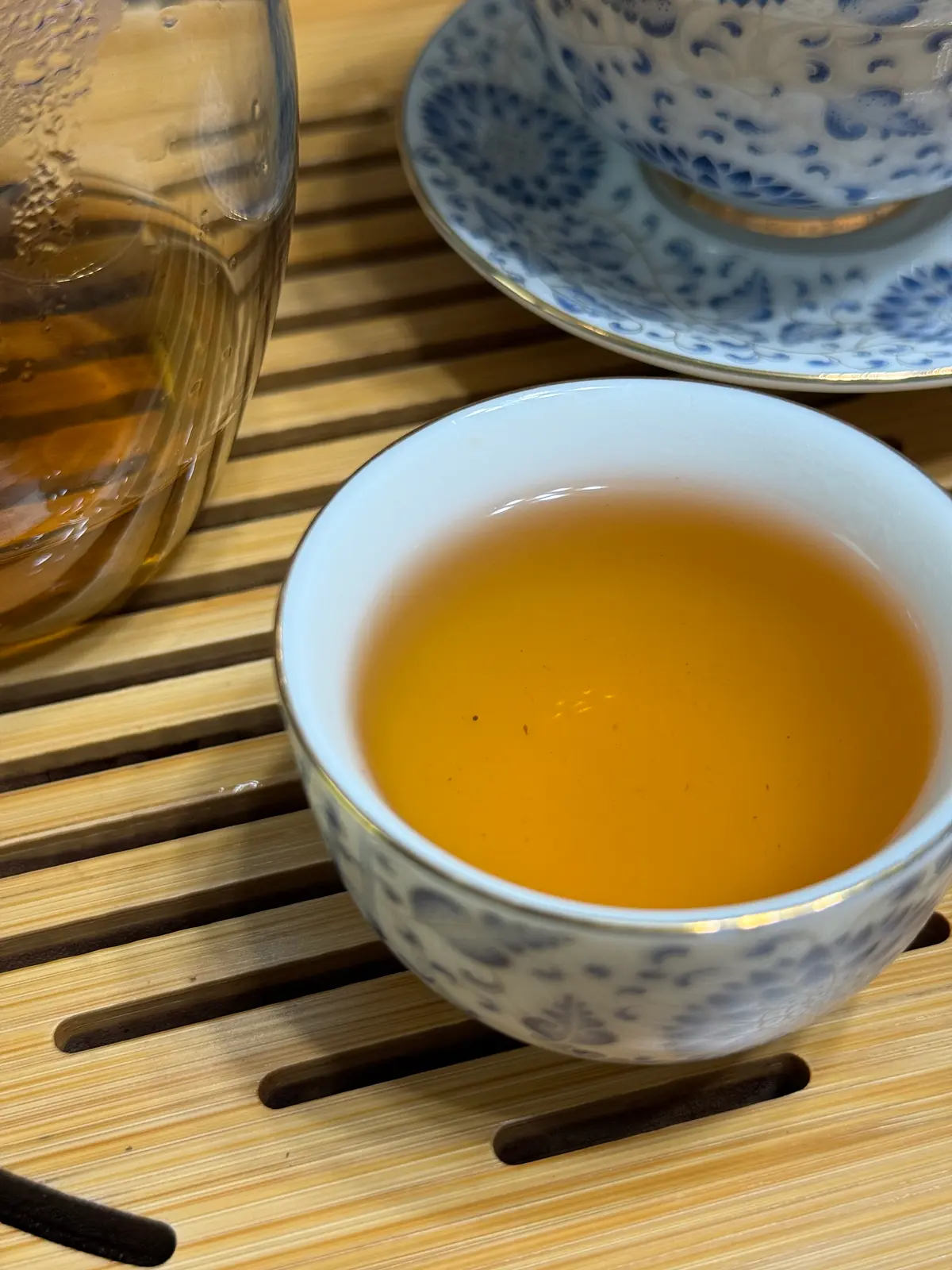
The peach hit on the first steep. Immediate. Unmistakable. Almost infused-tasting in its intensity. I wrote the same thing I wrote about the 2006 Kunming Yiwu: “How is there so much peach flavor?” But this time, the question carried a different weight — because this is a completely different storage environment producing the same note from the same mountain. The peach isn’t an artifact of how the tea was stored. It’s an artifact of where the tea grew. Yiwu produces peach the way Chambertin produces black cherry. It’s the vineyard, not the cellar.
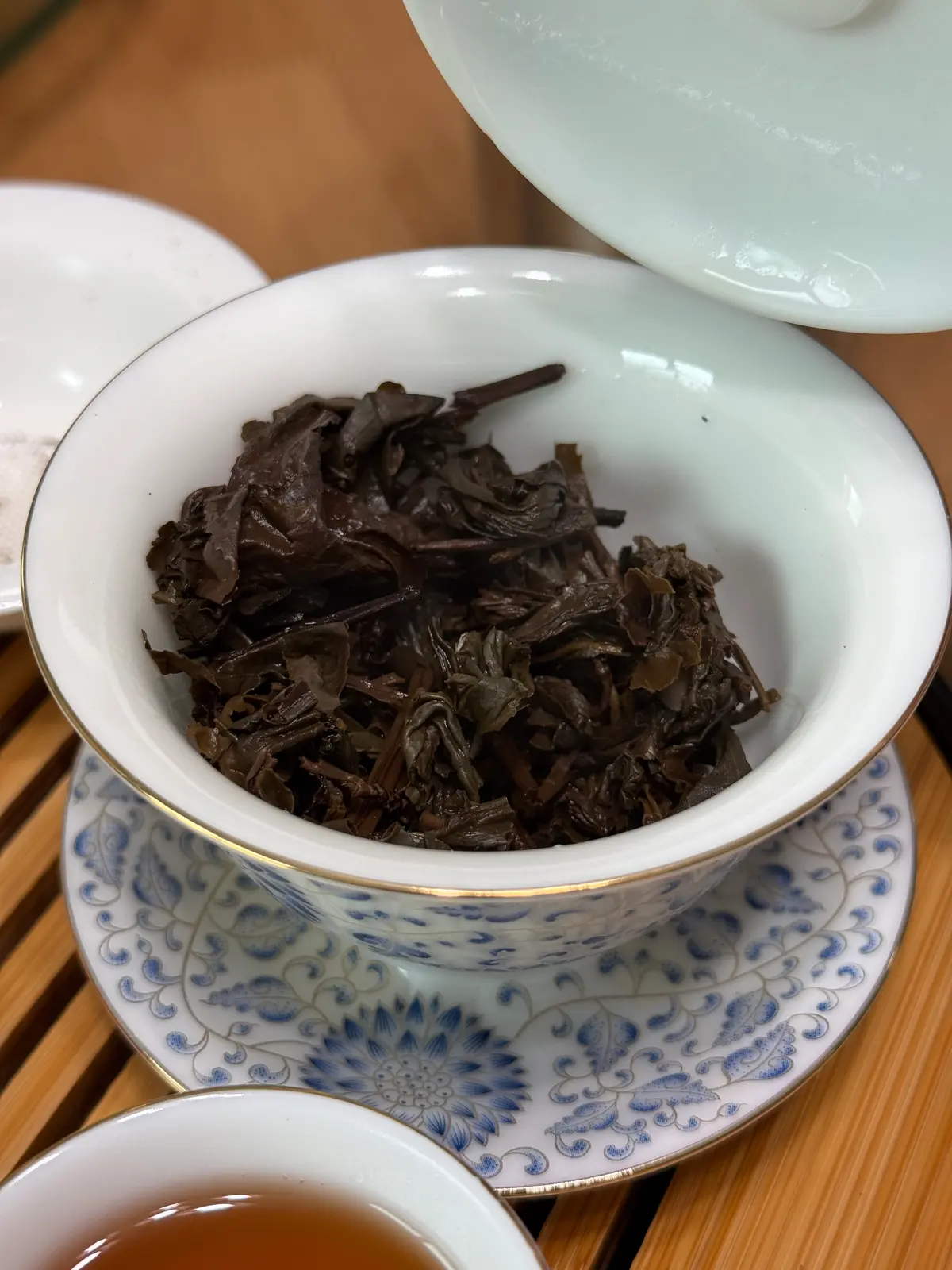
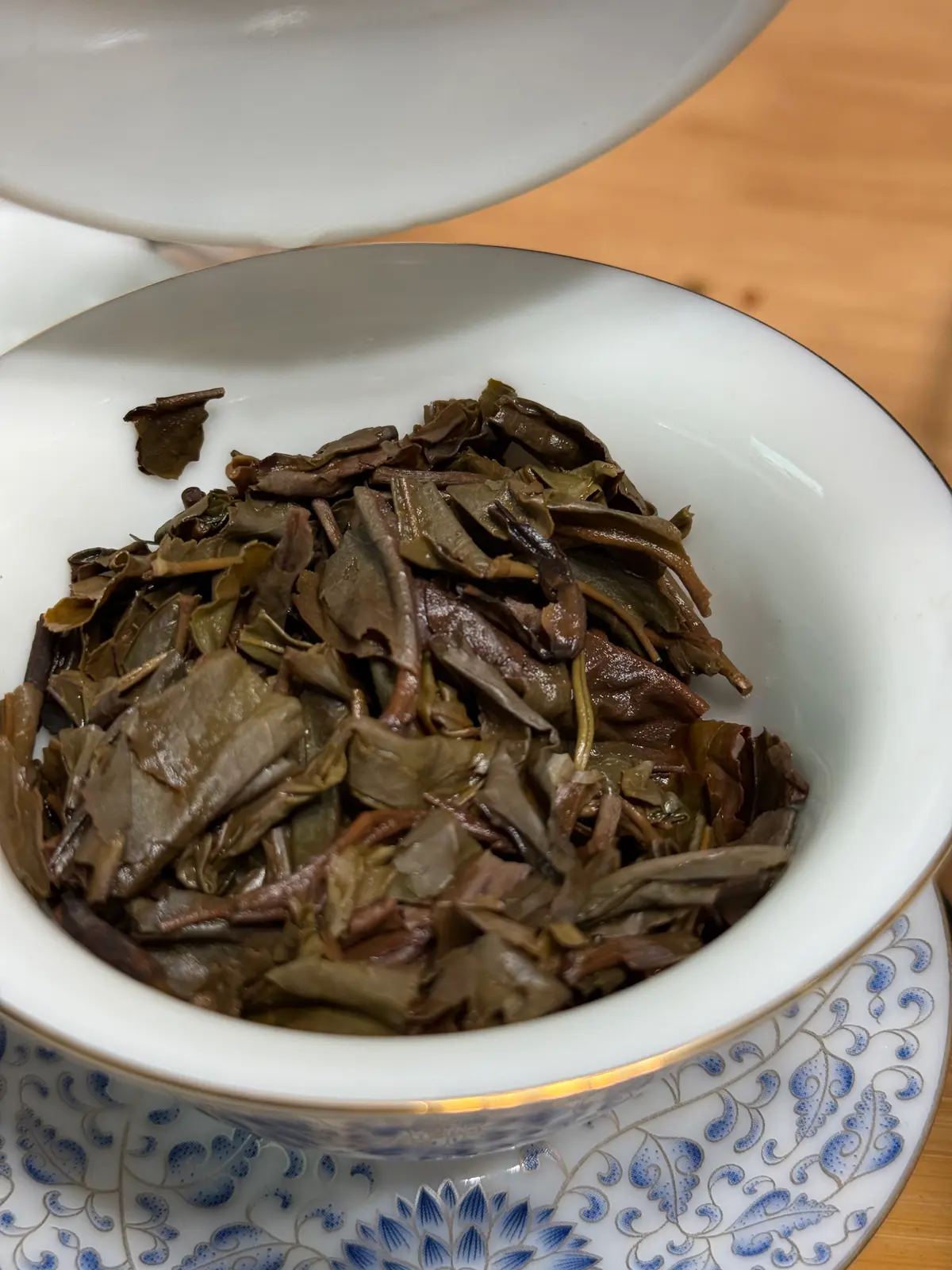
But the wrapping around the peach is different. The wet leaves smell like chestnuts roasting on an open fire. Wood fire. Warm, nutty, caramelized. The Kunming-stored Yiwu smelled like 편백나무 — cool, resinous, mentholated. This Banna Yiwu smells like a hearth. Kunming preserved brightness. Banna developed warmth. Same core, different clothing.
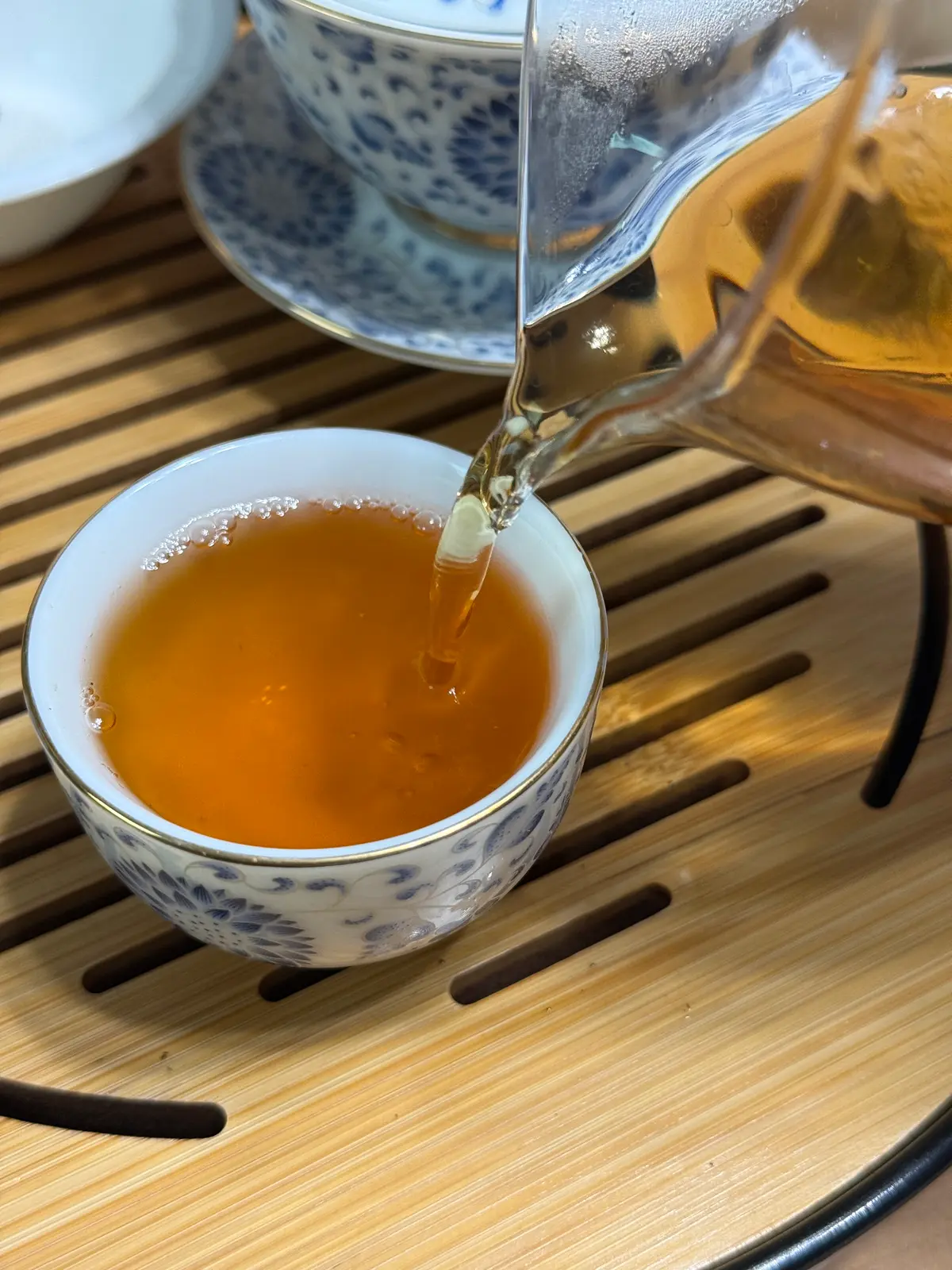
A slight bitterness arrived in the second steep — and it was welcome. Not the sophisticated dry-wine bitterness of the Bulang Mushroom Tuo. Not the dark chocolate punch of Meng Song shou. A gentle, architectural bitterness that functions as a buffer. It stops the peach sweetness from becoming too sweet. It provides the frame that makes the sweetness meaningful. This is the same principle I discovered in the 2005 Ban Zhang — “sweet but not overly sweet because it has bitterness to hold up the structure” — now expressed through Yiwu’s gentler idiom.
Tannins appeared later and lightly. Not the tannin load that exhausted my palate by steep 5-6 on the Kunming-stored Bulang Tuo. Banna’s warmer, more humid storage has been working on those polyphenols for 23 years — converting harsh tannin into softer, more integrated compounds. The tannin here is texture, not assault. It adds a final layer of complexity without fatigue.
Flavor Profile
The front is peach — the Yiwu terroir signature now confirmed across two storage conditions. Intense, persistent, almost juicy. The mid brings the architectural bitterness — gentle, buffering, preventing cloying sweetness. The finish is light tannin — late-arriving, soft-edged, textural rather than structural. The entire profile is more integrated than the Kunming-stored Yiwu, suggesting that Banna’s humid aging produces better harmony between the flavor components.
Mouthfeel & Huigan
Smoother and more integrated than the Kunming-stored 2006 Yiwu. The humid Banna storage softened the mouthfeel while preserving the essential Yiwu character. The tannin grip that made the Bulang Tuo fatiguing by mid-session is absent here — replaced by gentle texture.
The huigan is a continuous low-level interplay rather than a dramatic conversion event. Sweetness and bitterness coexist and trade positions across steeps. The bitterness doesn’t dominate then convert — it buffers. It holds space for the sweetness to occupy without becoming cloying. This is the Yiwu version of huigan: not dramatic, but persistent and elegant.
Aroma Profile
The critical finding: the wet leaf aroma is “chestnuts roasting on an open fire” — warm, nutty, wood fire, caramelized. This is Banna humid storage’s signature on Yiwu material. The Kunming-stored Yiwu produced 편백나무 (cool, resinous cypress). Same mountain, different storage, different aromatic profile. The core peach survives both. The wrapping changes.
This confirms the aromatic hierarchy: terroir determines the core (peach = Yiwu). Storage determines the expression (편백나무 = cool dry / chestnuts = warm humid). Both are beautiful. Both are real. The mountain speaks the same word through different translators.
Qi Notes
Not strongly noted this session — 1 PM post-travel, relaxed Sunday energy.
Value Assessment
A 23-year-old Banna-stored Yiwu at sample pricing represents exceptional value for aged material from pu-erh’s most historically prestigious mountain.
Verdict
This tea answered the question the 2006 Yiwu raised. The peach is in the mountain. Not in the storage. Not in the processing. Not in the water. Yiwu grows peach into its leaves and 23 years of transformation reveals it, regardless of whether those years were spent in cool Kunming or humid Xishuangbanna.
The Banna storage added its own gift: chestnuts on fire, better tannin integration, a warmer embrace. This is arguably the more harmonious of the two Yiwu teas — the humid storage smoothed the edges that Kunming’s dry climate preserved. For this palate, which craves sweetness with architecture but not tannin fatigue, the Banna-stored Yiwu delivers more balanced pleasure across the full session.
Two Yiwu teas. Two storage conditions. One mountain’s signature surviving both. This is what terroir means: the place is louder than the process. The peach is in the mountain.
This tea's strongest axis is Aroma (9/10). Notably low: Mineral.