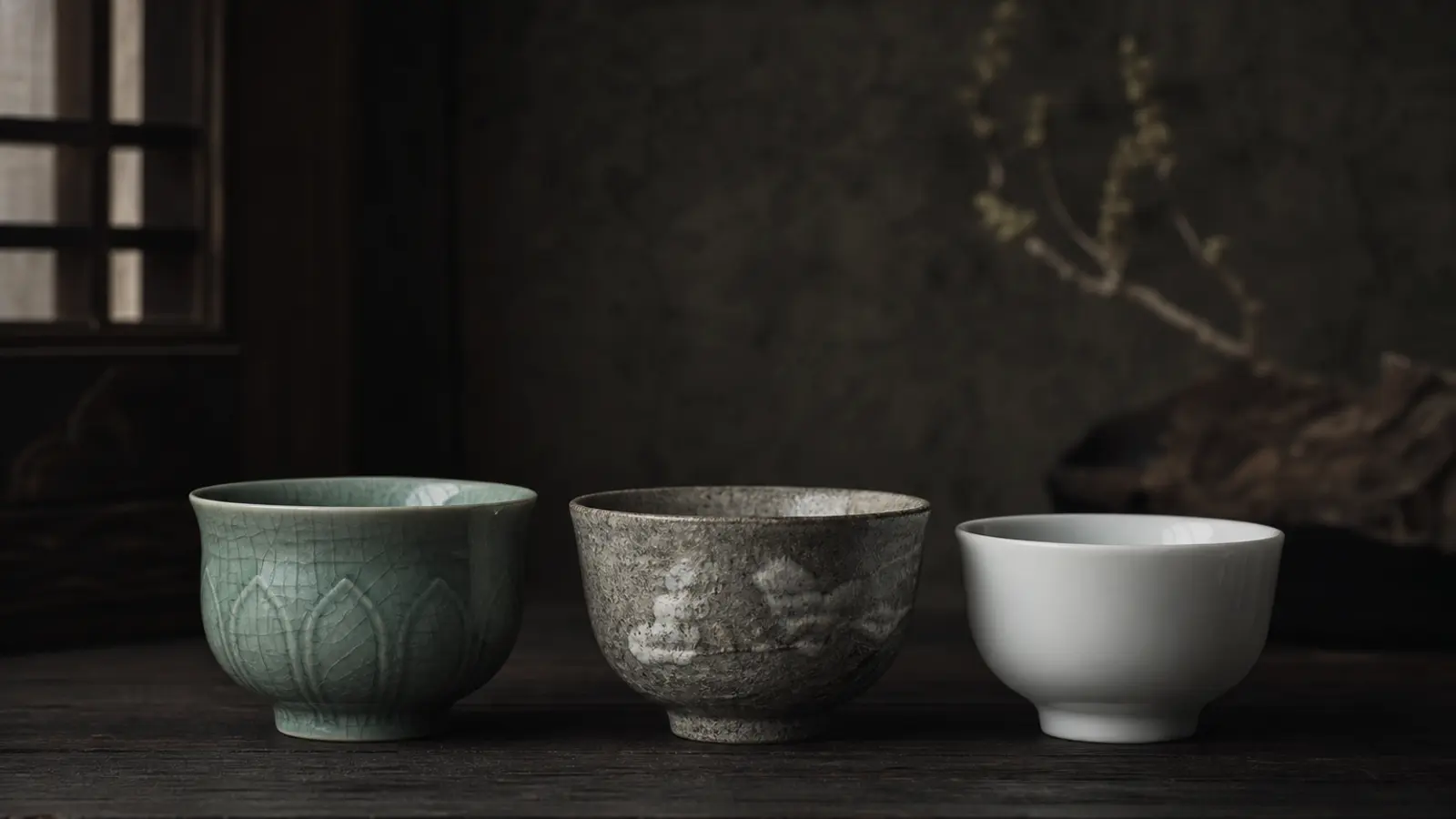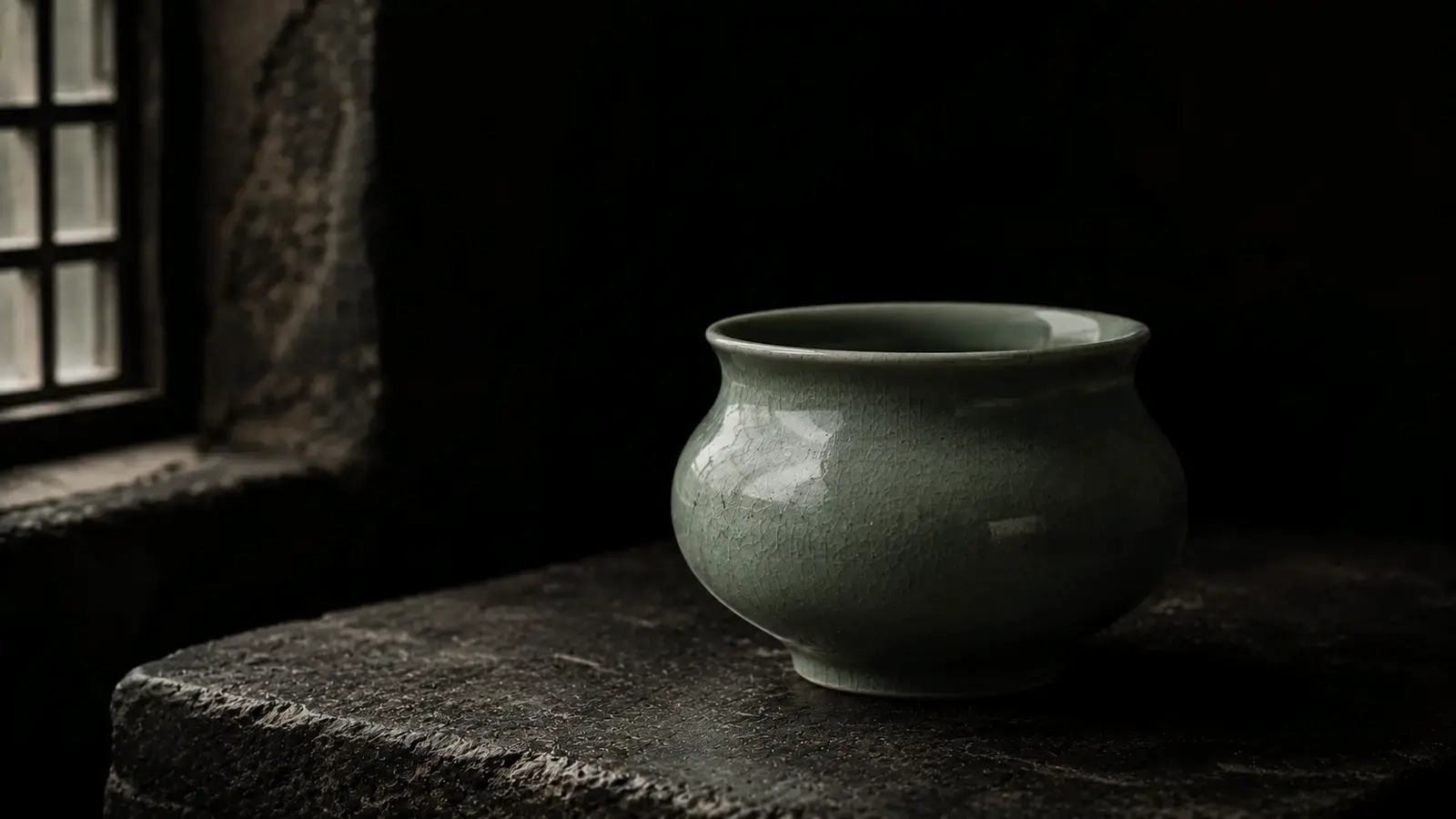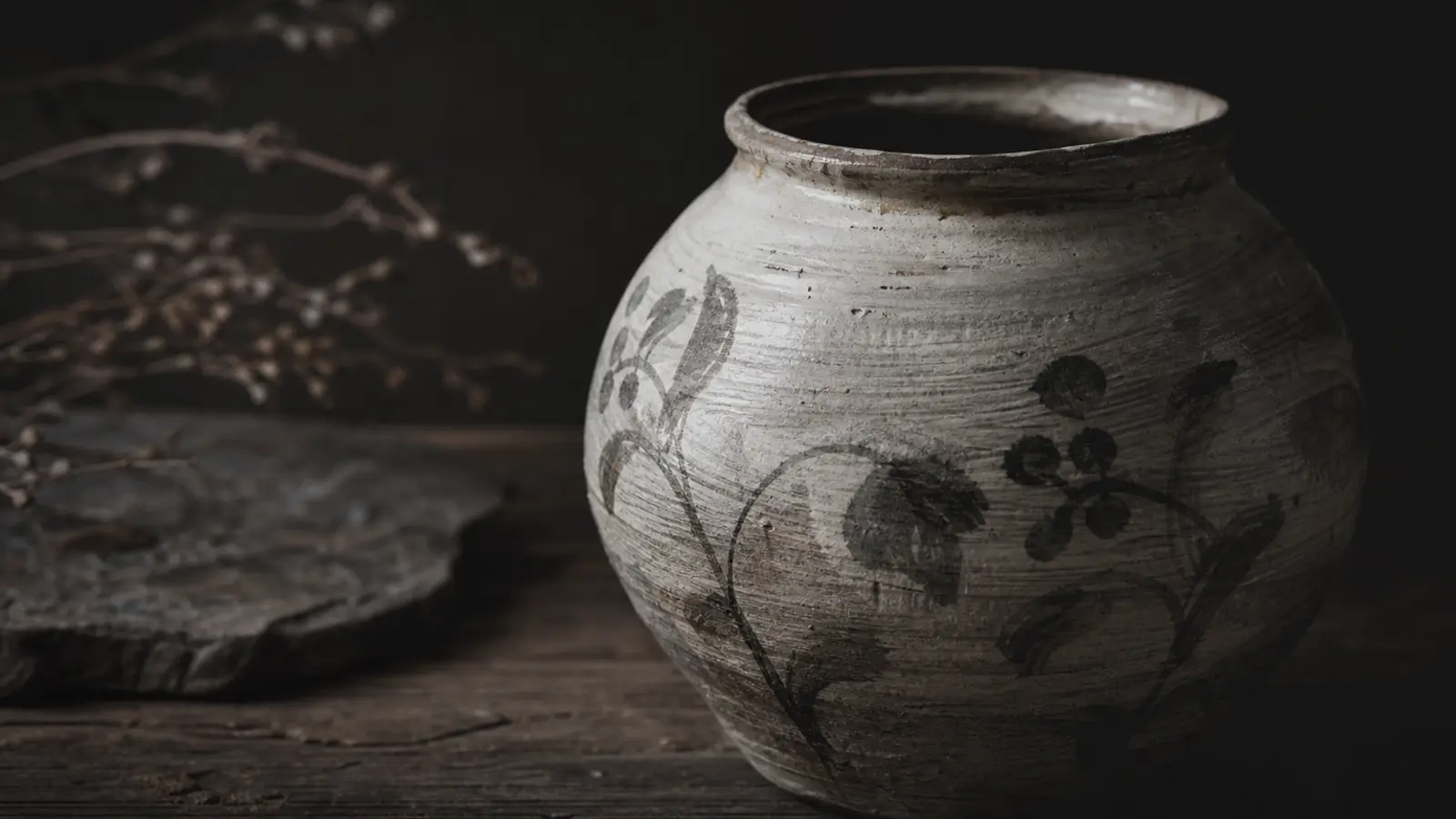
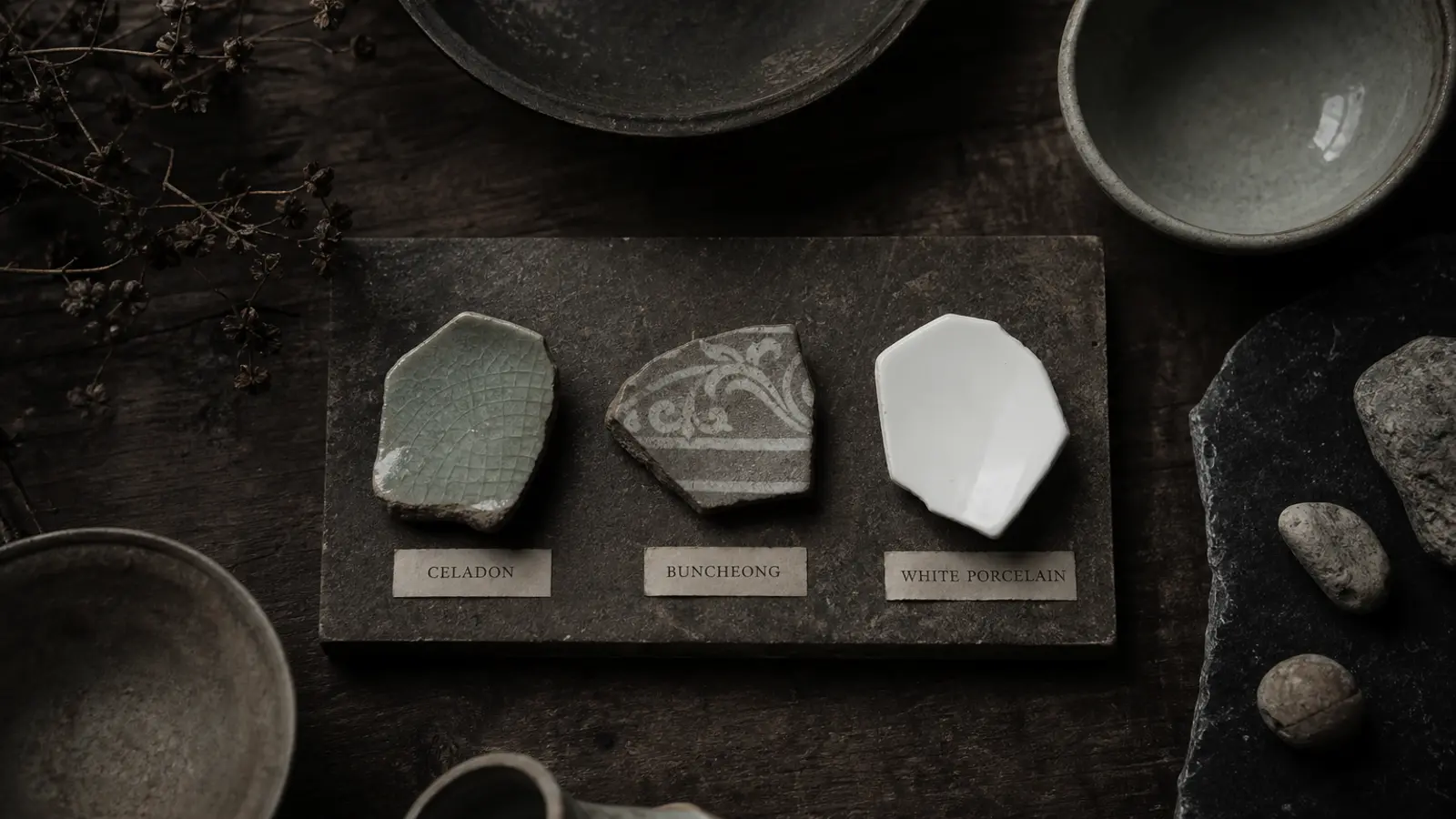
Korean pottery terminology encompasses materials, techniques, motifs, and vessel types refined over a thousand years of ceramic tradition. From the jade-hued celadons of the Goryeo dynasty to the austere white porcelains of Joseon, Korean ceramics developed a distinct vocabulary that differs meaningfully from Chinese and Japanese equivalents. This glossary covers the terms you’ll encounter in galleries, auction catalogs, vendor listings, and scholarly writing — organized by category, with Hangul, Hanja where applicable, standard romanization, and a working definition for each entry.
Use this page as a reference. Return to it when a listing or museum label uses a word you don’t recognize.
Materials (재료 / 소지)
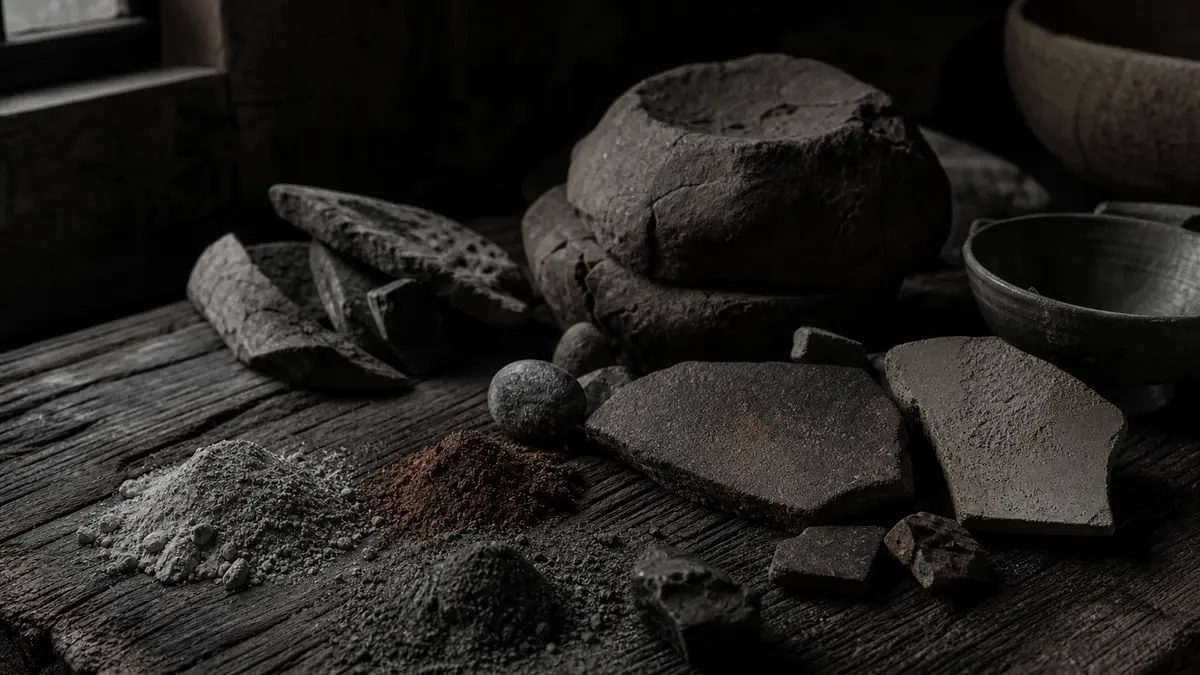
The material category covers both the clay body and the glaze type. In Korean ceramics, these two elements are often named together as a compound term — “cheongja” names both the body and the characteristic blue-green glaze simultaneously.
| Hangul | Hanja | Romanization | Translation | Description |
|---|---|---|---|---|
| 청자 | 靑磁 | Cheongja | Celadon | High-fired stoneware with iron-bearing glaze that fires blue-green; peak production under Goryeo (918–1392) |
| 백자 | 白磁 | Baekja | White porcelain | Pure, translucent porcelain associated with Joseon Confucian aesthetics; the dominant court ware from the 15th century onward |
| 분청사기 | 粉靑沙器 | Buncheong | Punch’ong ware | Transitional ware between Goryeo celadon and Joseon white porcelain; characterized by white slip decoration on a gray-green body |
| 홍청자 | 紅靑磁 | Hongcheongja | Red celadon | Rare variant firing to a reddish or copper tone due to reduction atmosphere variations; highly collectible |
| 철유 | 鐵釉 | Cheolyoo | Iron glaze | Dark brown-to-black glaze produced by high iron content in the glaze material |
| 천목 | 天目 | Cheonmok | Tenmoku (Korean usage) | Korean-produced iron-glaze ware in the tenmoku tradition; often used for tea bowls (다완) |
| 흑유 | 黑釉 | Heugyoo | Black glaze | Generic term for black-glazed wares; related to but distinct from 천목 in firing technique |
Bisaek: The Color Standard
비색 (翡色, bisaek) deserves special treatment. It translates literally as “kingfisher color” — a reference to the iridescent blue-green of the kingfisher’s plumage — and describes the specific glaze quality considered the pinnacle of Goryeo celadon achievement. The Chinese envoy Xu Jing, visiting Korea in 1124, described Goryeo celadon as having a color unlike anything produced in China. Bisaek is the term Korean ceramic historians and collectors use to name that color precisely. When you see it in a listing, it signals the seller is claiming top-tier glaze quality. For a deeper look at how bisaek developed within the broader Goryeo tradition, see Why Goryeo Celadon Was Named After Jade.
Techniques (기법 / 技法)
Korean potters developed a suite of decorative techniques, several of which — most notably sanggam — have no direct equivalent in Chinese or Japanese ceramic traditions.
| Hangul | Hanja | Romanization | Translation | Description |
|---|---|---|---|---|
| 상감 | 象嵌 | Sanggam | Inlay | Design incised into clay body, filled with white or black slip, then glazed over; unique to Goryeo celadon |
| 음각 | 陰刻 | Eumgak | Incised / engraved | Design carved into the clay surface so it recedes below the glaze plane |
| 양각 | 陽刻 | Yanggak | Relief | Design modeled or applied to stand above the clay surface |
| 박지 | 剝地 | Bakji | Sgraffito / ground-removal | Slip applied to surface, then scraped away in areas to reveal the clay body beneath; creates a two-tone contrast |
| 투각 | 透刻 | Tugak | Pierced / reticulated | Clay wall cut through entirely, creating openwork panels; structurally complex and time-intensive |
| 진사 | 辰砂 | Jinsa | Copper-red underglaze | Copper oxide decoration applied under the glaze; fires bright red under correct reducing atmosphere; technically demanding |
Sanggam in Practice
Sanggam (상감) defines Goryeo celadon more than any other single technique. The process requires the potter to incise or stamp the design while the clay is leather-hard, pack each channel with contrasting slip, scrape the surface smooth, then apply the celadon glaze and fire at temperatures above 1,200°C. The entire sequence must be controlled precisely — too much moisture in the slip causes cracking; too little makes the fill fall away during firing. When a piece carries complex sanggam decoration and a clean bisaek glaze, it represents hundreds of decisions executed correctly across weeks of work.
Motifs (문양 / 紋樣)
Decorative motifs on Korean ceramics carry symbolic meaning derived from Taoist, Buddhist, and Confucian traditions. Recognizing them helps you read a piece’s iconographic program.
| Hangul | Romanization | Translation | Symbolic Meaning |
|---|---|---|---|
| 운학문 | Unhangmun | Cloud-and-crane pattern | Longevity, transcendence; the signature motif of Goryeo celadon |
| 매화 | Maehwa | Plum blossom | Perseverance, early spring, integrity; associated with scholars |
| 국화 | Gukwa | Chrysanthemum | Autumn, longevity, nobility |
| 모란 | Moran | Peony | Wealth, prosperity, beauty; common on large Goryeo celadon vessels |
| 연꽃 | Yeonkkot | Lotus | Buddhist purity; appears frequently on ritual and temple wares |
| 포도 | Podo | Grape vine | Abundance, fertility; particularly common in late Goryeo and early Joseon |
| 어문 | Eomun | Fish pattern | Abundance, freedom; often rendered in pairs on water vessels |
| 용문 | Yongmun | Dragon pattern | Royal authority; five-clawed dragons reserved for royal use |
The 운학문 (cloud-and-crane) motif is so strongly identified with Goryeo celadon that it functions almost as a shorthand for the period. A sanggam celadon ewer with white-inlaid cranes flying between blue-black clouds is among the most recognized images in Korean art history. When you see this combination of technique (sanggam) and motif (unhangmun), you are looking at the defining achievement of Goryeo ceramic culture.
Vessels (다기 / 茶器)
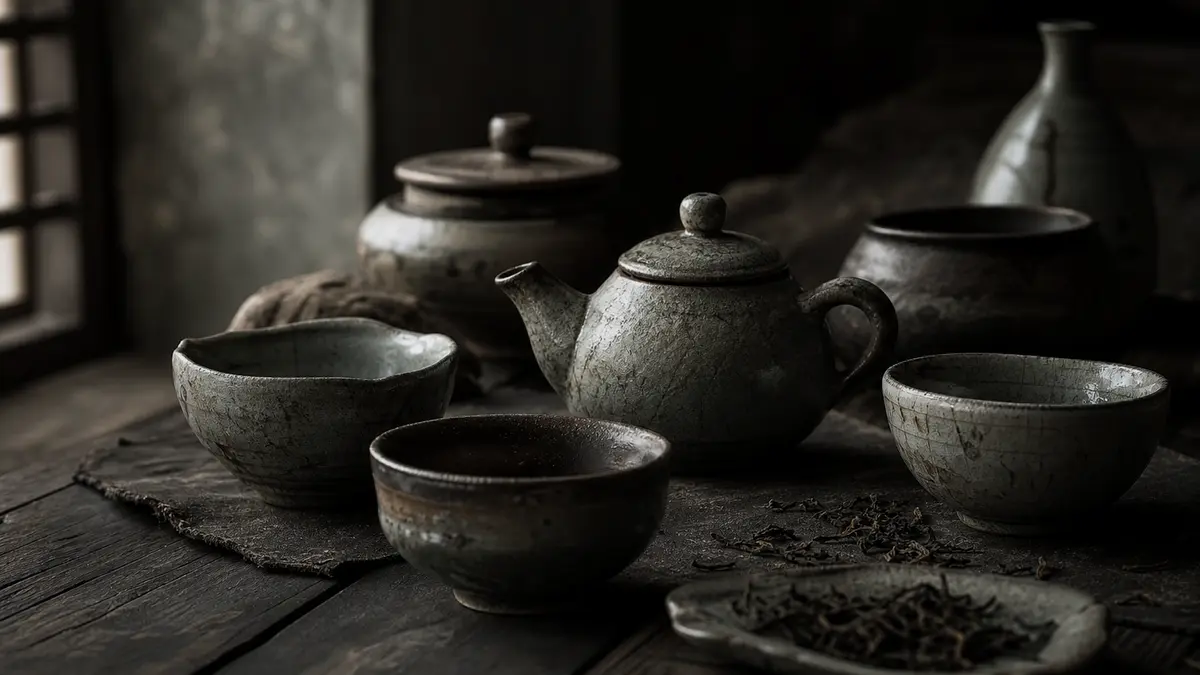
Korean tea vessel terminology maps onto a functional taxonomy. The primary compound term is 다기 (茶器, dagi) — “tea ware” as a category. Individual vessel types are named by function.
| Hangul | Hanja | Romanization | Translation | Function |
|---|---|---|---|---|
| 다기 | 茶器 | Dagi | Tea ware | Collective term for the full set of tea utensils |
| 다관 | 茶罐 | Dagan | Teapot | The brewing vessel; holds leaves and hot water during steeping |
| 숙우 | 熟盂 | Sugoo | Cooling pitcher | Intermediate vessel; water poured from kettle into 숙우 to cool before entering the 다관 |
| 찻잔 | 茶盞 | Chatjan | Tea cup | Standard drinking cup, typically small (30–80 ml) for multiple infusions |
| 잔받침 | 盞받침 | Janbachchim | Saucer / cup stand | Support placed under the 찻잔; protects the tea table and stabilizes the cup |
| 퇴수기 | 退水器 | Toesuggi | Waste water bowl | Receives rinsing water and used tea liquor; essential in Korean tea ceremony (다례, darye) |
| 차호 | 茶壺 | Chaho | Tea caddy / canister | Storage vessel for loose leaf tea; ideally airtight |
| 다완 | 茶碗 | Dawan | Tea bowl | Wide-mouthed bowl used for whisked tea (matcha-style) or contemplative sipping; associated with Seon Buddhist tea culture |
| 개완 | 蓋碗 | Gaewan | Lidded bowl | Korean equivalent of the Chinese gaiwan (蓋碗); lid, bowl, and saucer used together for brewing and drinking |
Dawan vs. Gaewan
The 다완 (茶碗, dawan) and 개완 (蓋碗, gaewan) are often confused by newcomers. The dawan is open — no lid — and is the vessel associated with traditional Korean Buddhist tea culture, used for a single serving brewed bowl-style. The gaewan has a lid, a bowl, and a saucer, and functions more like the Chinese gaiwan (蓋碗) as a multi-infusion brewing and drinking tool. Both are present in contemporary Korean tea practice (다례, darye), but they signal different brewing registers: dawan tends toward meditative ceremony; gaewan toward repeated steeping of high-quality loose leaf.
Quality Terms and Market Vocabulary (품질 용어)
These terms appear in auction listings, gallery labels, and vendor descriptions. Understanding them protects you as a buyer and helps you evaluate claims accurately.
| Hangul | Hanja | Romanization | Translation | What It Signals |
|---|---|---|---|---|
| 무균열 | 無龜裂 | Mugyunyeol | No cracks / crack-free | Piece is free of firing cracks, post-fire damage, and kiln flaws |
| 作 | 作 | Jak | Made by / work of | Suffix indicating authorship: 홍길동作 means “work of Hong Gildong” |
| 명장 | 名匠 | Myeongjang | Master craftsman | Officially designated by the Korean government; highest recognition for living craft practitioners |
| 명작 | 名作 | Myeongjak | Masterwork | Informal term for an exceptional individual piece; not a legal designation |
| 오동박스 | 桐box | Odong bakseu | Paulownia wood box | Handmade paulownia storage box, often signed by the maker; signals the piece is considered exhibition-quality |
| 재현품 | 再現品 | Jaehyeonpum | Reproduction | Piece made in the historical style; not antique; honest sellers label this clearly |
| 국보 | 國寶 | Gukbo | National Treasure | South Korean government designation for objects of supreme national cultural significance |
| 보물 | 寶物 | Bomul | Treasure | Designation one tier below 국보; still among the most significant cultural artifacts in the country |
| 지방문화재 | 地方文化財 | Jibang munhwajae | Regional cultural property | Designated significant at the provincial rather than national level |
The Paulownia Box Signal
The 오동박스 (paulownia box) deserves emphasis for buyers. In Japanese ceramics, paulownia boxes (桐箱, kiribako) are standard museum-quality packaging. Korean practice follows similar logic. When a contemporary 명장 ships a piece in a hand-jointed, lacquered paulownia box with a signed certificate inside the lid, the box itself is part of the object’s provenance record. For antique pieces, an original box with period-correct calligraphy documenting the piece’s history adds material value. When a listing mentions “오동박스 포함” (paulownia box included), treat it as a signal — though not a guarantee — of quality-tier presentation.
Reproduction vs. Antique
재현품 (reproduction) is not a term of shame in Korean ceramic culture. Master potters spend careers reconstructing historical techniques to revive lost aesthetic traditions. A 재현품 by a certified 명장, attempting to recreate Goryeo sanggam celadon using period-approximate materials and wood-firing, is a significant artwork. The term simply means the piece was not made during the historical period it references. Always confirm whether a piece is antique or 재현품 before purchasing; reputable galleries label this without ambiguity.
Comparative Tables: Key Distinctions
Cheongja vs. Baekja vs. Buncheong
| 청자 (Cheongja) | 백자 (Baekja) | 분청사기 (Buncheong) | |
|---|---|---|---|
| Period | Goryeo (918–1392) | Joseon (1392–1897) | Early–Mid Joseon (15th–16th c.) |
| Body | Gray-green stoneware | White porcelain | Gray stoneware |
| Glaze | Blue-green celadon | Clear or white | White slip, often decorated |
| Aesthetic | Refined, aristocratic | Austere, Confucian | Vernacular, expressive |
| Signature technique | 상감 (sanggam inlay) | Cobalt blue underglaze | 박지 (sgraffito), 분장 (slip) |
| Modern collectibility | Very high | High | High; strong contemporary revival |
Decorative Technique Quick Reference
| Technique | Surface Treatment | Visual Result |
|---|---|---|
| 상감 (Sanggam) | Incise, fill with slip, glaze | Multi-toned inlaid design under glaze |
| 음각 (Eumgak) | Carve into surface | Recessed lines, glaze pools in grooves |
| 양각 (Yanggak) | Build up from surface | Raised relief, glaze thins over high points |
| 박지 (Bakji) | Apply slip, scrape away | Two-tone contrast, clay vs. slip |
| 투각 (Tugak) | Cut through clay wall | Openwork, light passes through |
| 진사 (Jinsa) | Copper oxide under glaze | Bright red marks on blue-green or white ground |
Using This Glossary
A few practical notes on how these terms function in real contexts:
Auction listings in Korea typically follow the pattern: [artist or period] + [ware type] + [technique or motif] + [vessel type]. For example: 고려청자 상감운학문 매병 translates as “Goryeo celadon, sanggam cloud-and-crane motif, maebyeong (plum vase).” Breaking it into those four components — period/ware, technique, motif, vessel — makes any listing readable.
Museum labels often abbreviate or use Hanja-heavy formal names. The 국보 and 보물 designations appear with numbers (국보 제68호 = National Treasure No. 68). These numbers correspond to the official Cultural Heritage Administration registry and can be cross-referenced for provenance details.
Contemporary maker’s marks follow the 作 suffix pattern. Living 명장 designees often include a certificate (작품증명서, jakpum jeungmyeongseo) with commissioned pieces, documenting the maker’s name, government designation number, the piece’s firing date, and the clay and glaze materials used. If you are sourcing pieces directly, where to buy Korean teaware covers vetted options organized by format and price range.
The vocabulary here is not exhaustive — Korean ceramic scholarship uses hundreds of specialized terms. But this set covers the language you’ll encounter most often as a tea drinker engaging with Korean ceramic culture, whether you’re reading gallery notes, evaluating a purchase, or simply trying to understand what you’re holding in your hands.