I’ve been drinking Da Hong Pao for weeks — first a Bangkok shop version that taught me toasty warmth, then a Premium AA that blew my mind with roses and strawberry I never knew existed inside rock oolong, then a Wild version that added raw mineral depth. This 13-year aged Da Hong Pao is the final chapter: what happens when time replaces fire as the dominant force in yan cha.
A note on age: the label says “13 Years Aged,” which was likely accurate at the time of labeling. Harvested 2006, tasted 2026 — this tea is approximately 20 years old. It has been lightly re-roasted three times across its lifetime by a craft roaster, each firing stabilizing and deepening the transformation.
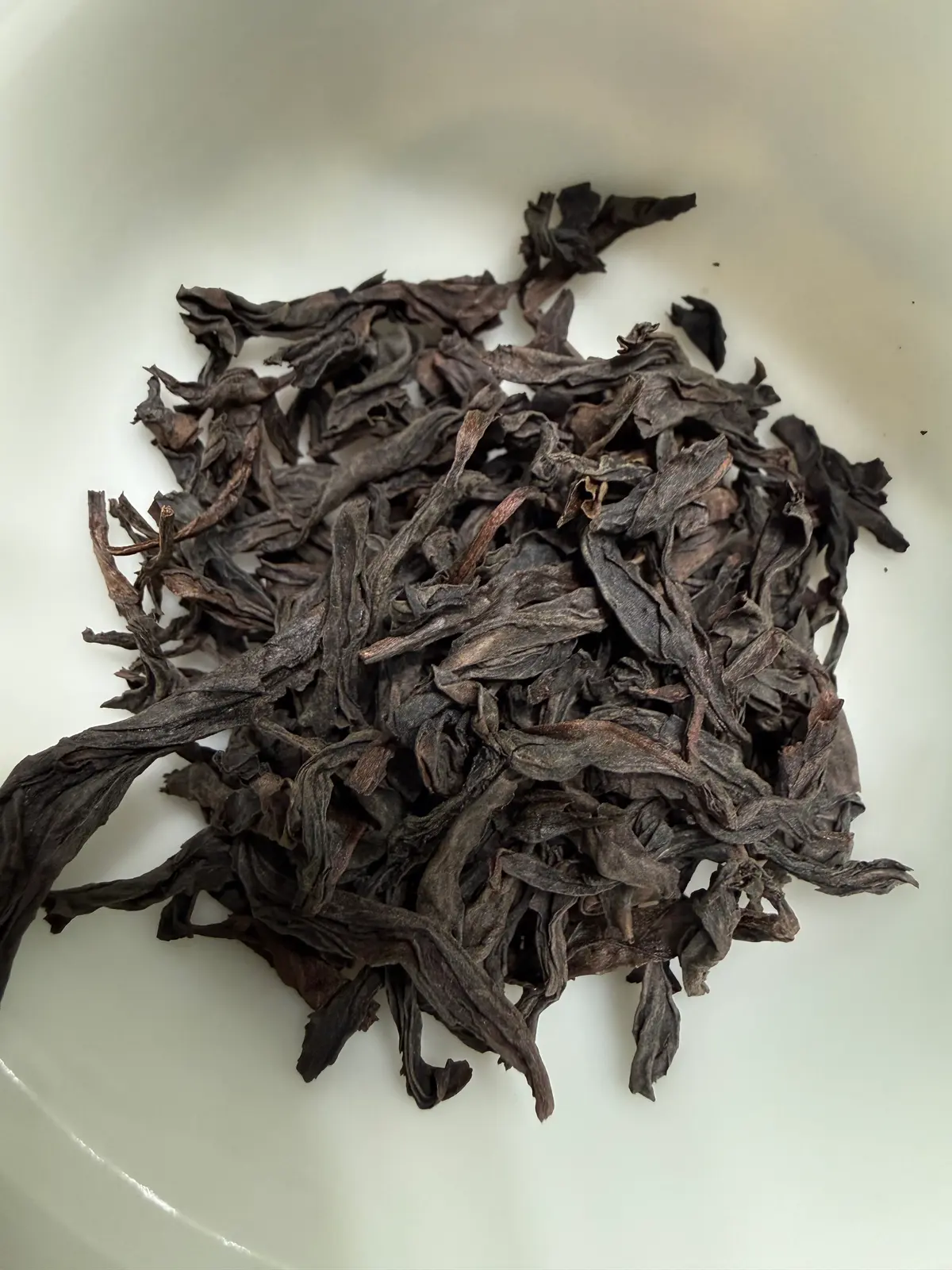
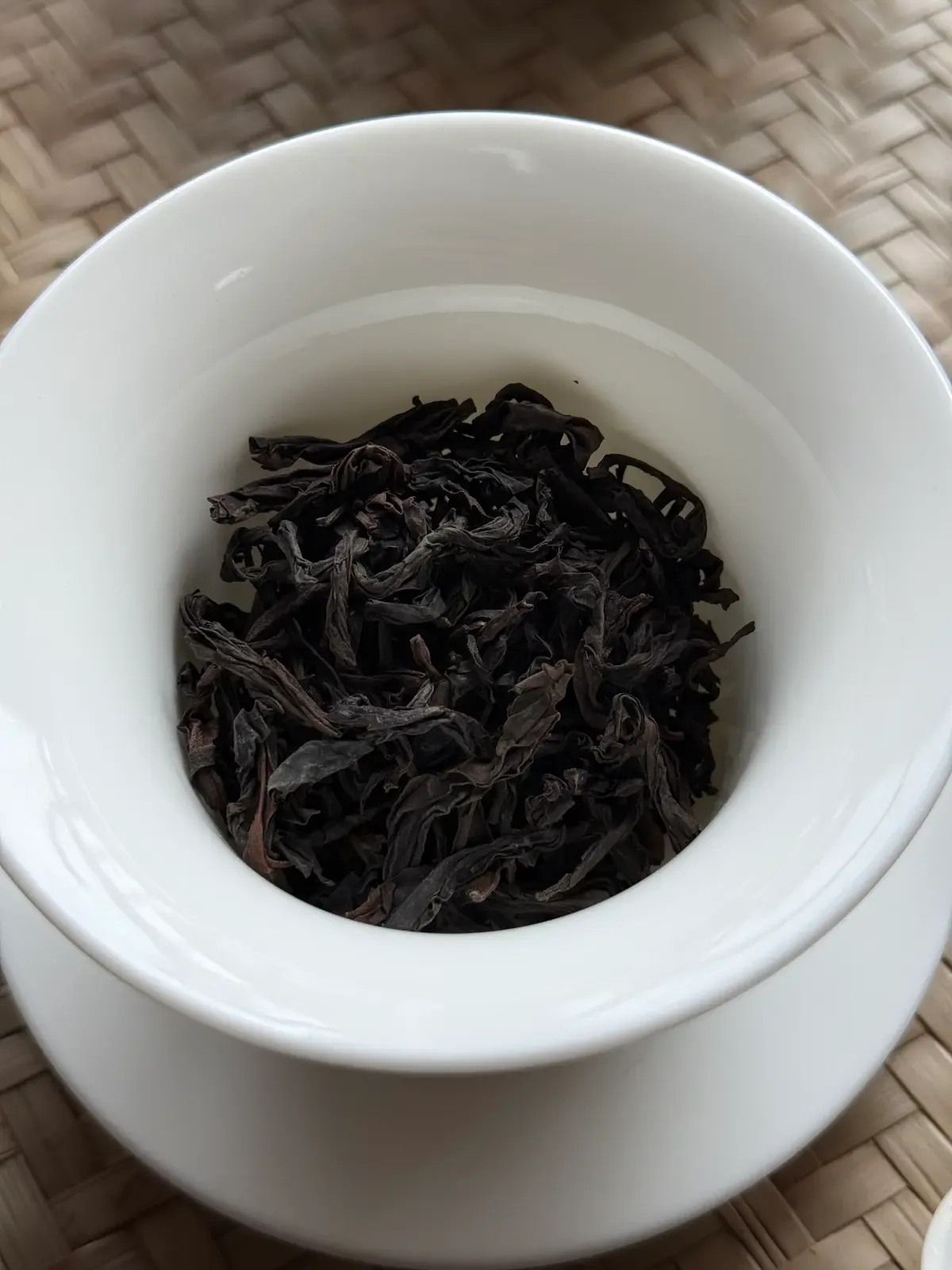
Dry Leaf
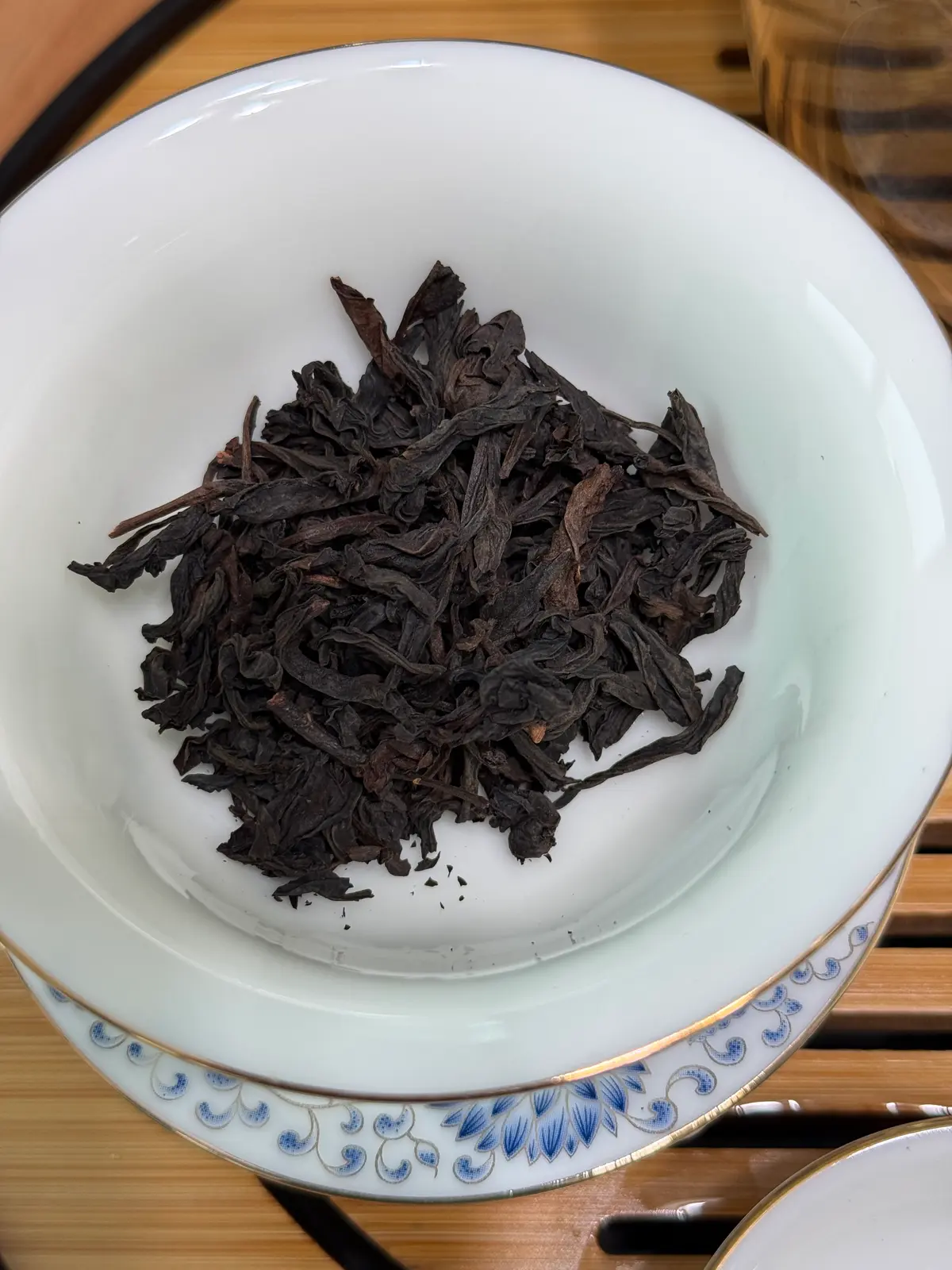
The leaves are tighter and darker than the young versions. The aroma is concentrated — marzipan, almond, a density that the young AA didn’t have. Where the AA smelled like a garden, this smells like a library. Aged, contained, waiting.
The Session
The first steep stopped me. Caramel — not a hint of caramel, not “caramel-like.” Actual caramel. A slightly burnt brown sugar sweetness that landed on my palate fully formed. This is not a note that exists in young Da Hong Pao. I’ve now had four versions of this tea across different ages and roast levels. The young ones give roses and strawberry. This one gives caramel and vanilla. That transformation is two decades of chemistry happening in silence. The profile reminded me of barrel-aged whiskey — the same caramel-vanilla-warm wood character that oak imparts to bourbon over years in the cask. No barrel was involved here, but time performed the same alchemy.
The viscosity struck me immediately. The liquor has visible thickness when poured — I could see it was not water. I love thick tea now. It’s become one of my primary quality markers. If a tea feels thin and watery, I move on. This one coats.
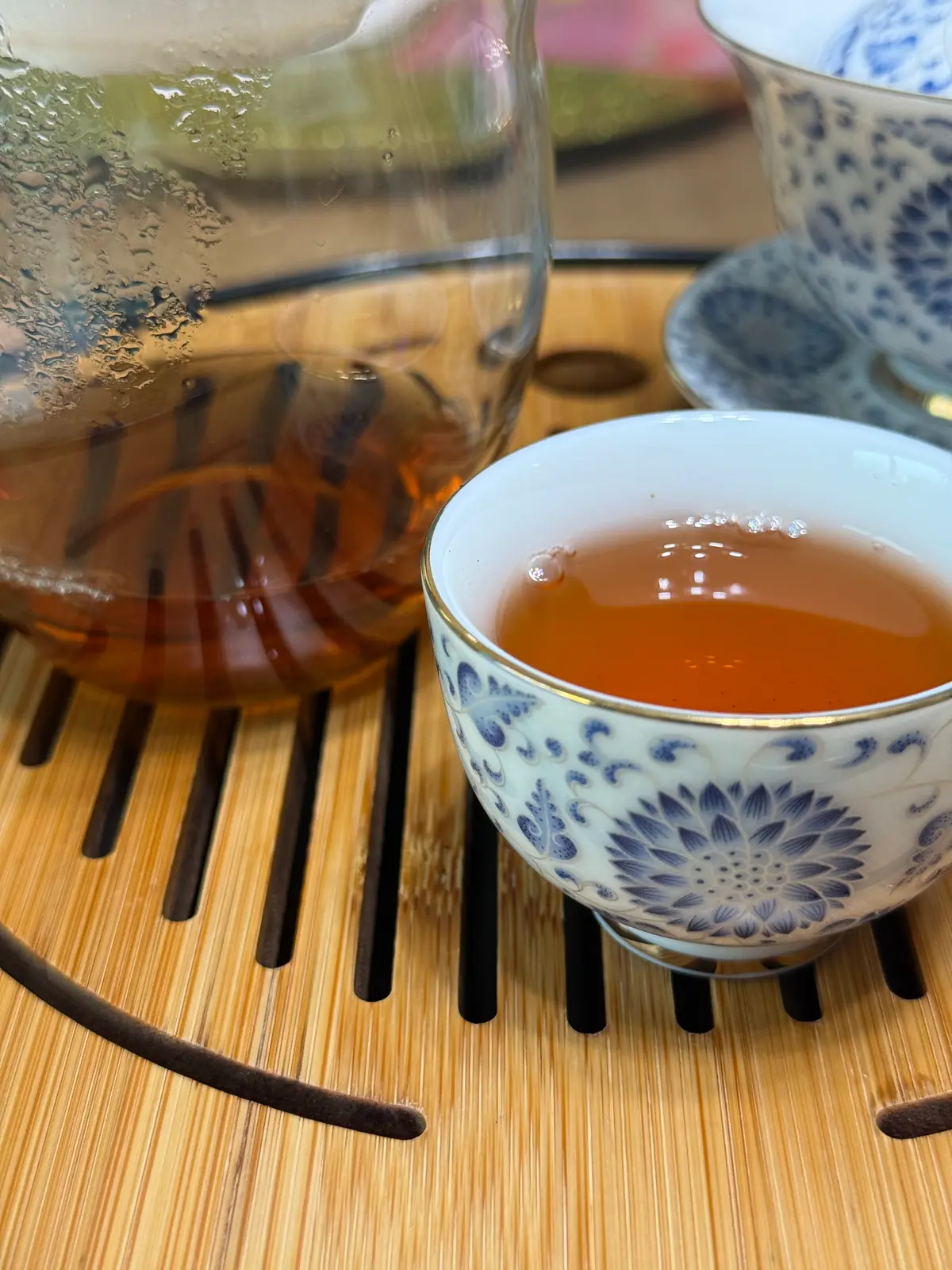
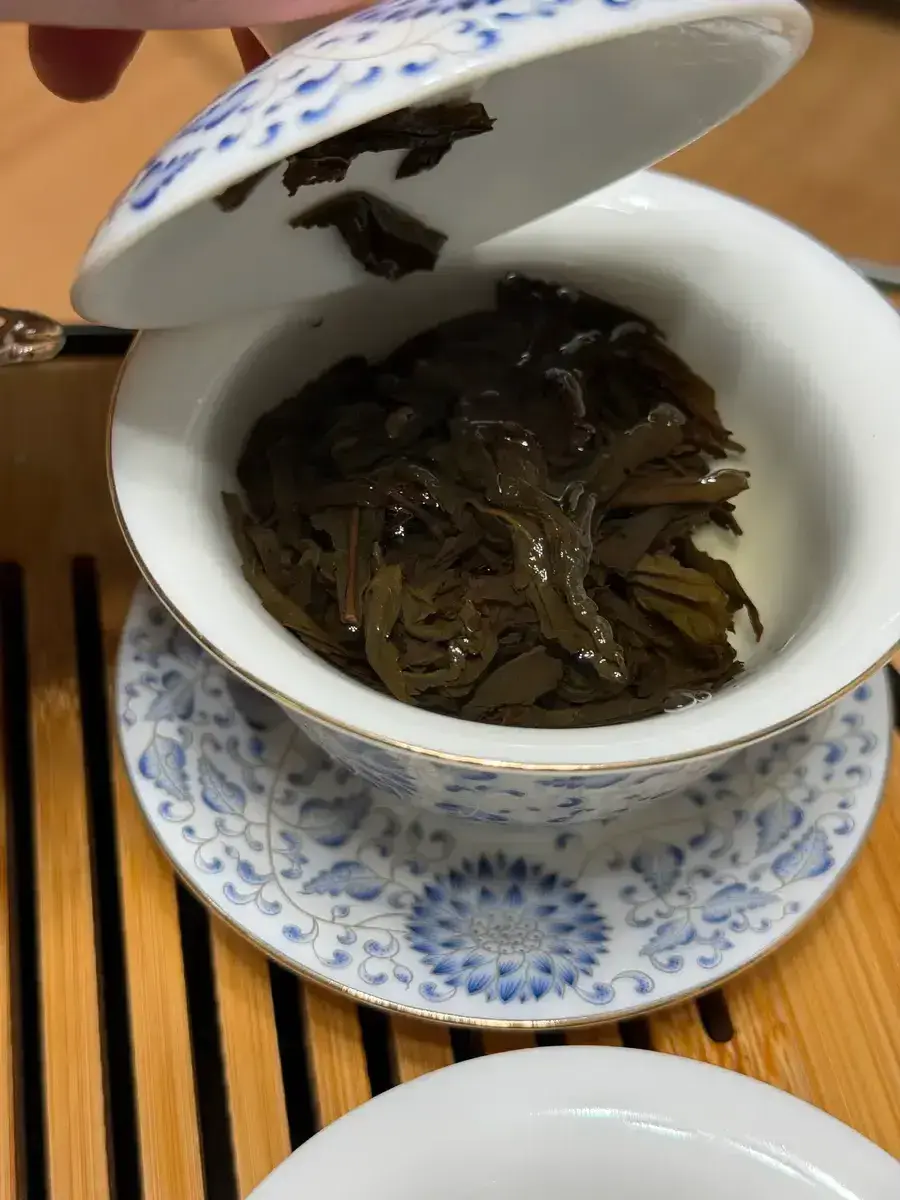
The second steep ran slightly long — 13-15 seconds instead of 10. The color deepened to a rich amber that was genuinely beautiful in the glass pitcher. Bitterness arrived with structure. The wet leaves had this sharp, acute scent — not painful and not bad. Just a focused sharpness, like something concentrated and alive. Nothing smooth about it. It demanded attention.
And then — a ghost. At the very back of the second steep, at the end of the swallow, a tinge of strawberry sweetness trying to push through from underneath the roast and age. A hint. A memory. The same strawberry that exploded from the young AA version, now buried under two decades of transformation, still alive but barely audible. Finding that ghost fruit was one of the most fascinating moments in my tea education. It’s proof that the young tea is still in there, just transformed beyond recognition.
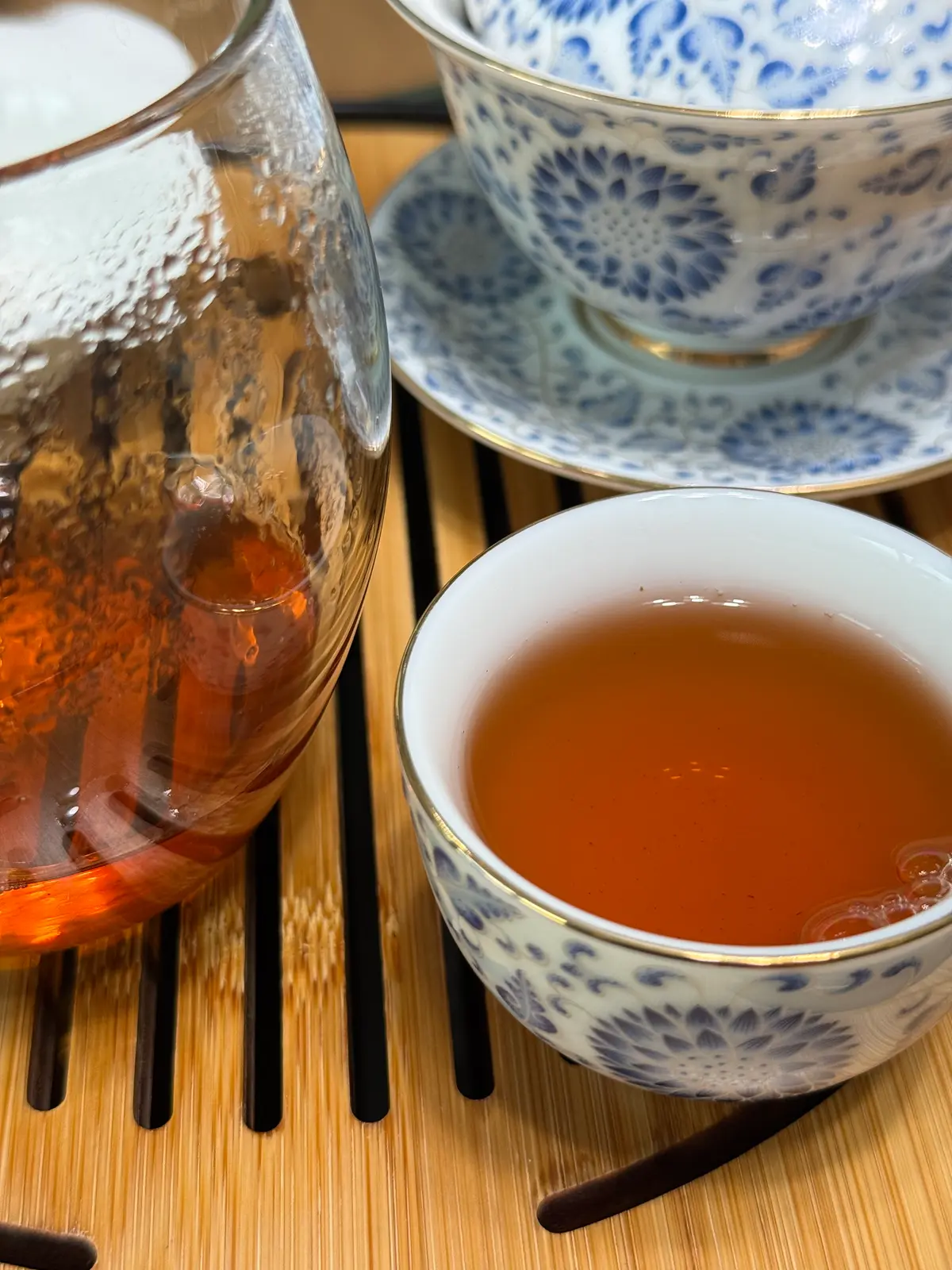
Steeps 3-4 shifted. The intensity dropped. Bitterness, dryness, and tannins moved forward. The caramel sweetness faded. The tea revealed its skeleton — mineral, roast, structure. Still lovely, but in an austere way. The generous sweetness of the early steeps gave way to something more demanding, more architectural. The tea was done seducing and was now just being itself.
Flavor Profile
Front: Caramel — burnt brown sugar, vanilla, roasted currant. This is the aged signature, the compounds that only years of slow transformation create.
Mid: Structure and bitterness, an architectural framework that prevents the sweetness from feeling hollow.
Finish: Where the ghost strawberry lives — a barely perceptible echo of the fruit that dominates the young version, now serving as a whisper underneath the aged roast character. From steep 3 onward, the finish becomes dry, tannic, mineral — the aged yan cha equivalent of an old Barolo’s tannin structure after the fruit has been absorbed.
Mouthfeel & Huigan
The viscosity is the defining physical characteristic. Thick, coating, substantial. The liquor has weight. This is consistent across every tea I’ve rated highly — body and density are non-negotiable for my palate.
Huigan operates differently here than in pu-erh. In aged sheng, bitterness converts to sweetness — a dramatic transformation. In aged yan cha, the sweetness and bitterness coexist and interplay rather than converting. The caramel is sweet, the roast is bitter, and they dance together across the palate simultaneously. Less dramatic than pu-erh’s huigan arc, but more sophisticated in its layering.
Qi Notes
The session was on a rainy, gloomy afternoon — drizzle on and off, grey sky. The warming quality of this tea matched the mood perfectly. Grounding warmth that suited the contemplative atmosphere. This is a tea for grey days.
Value Assessment
For an approximately 20-year-old aged yan cha that has been re-roasted three times across its lifetime by a craft roaster, this represents exceptional value. Aged yan cha from reputable sources typically commands significant premiums.
Verdict
This tea completed a four-part Da Hong Pao education: shop-grade (baseline), Premium AA (revelation — roses and strawberry), Wild (terroir — raw mineral), and now Aged (time — caramel, vanilla, ghost fruit, structure). Each version taught something the others couldn’t. The aged version confirms that yan cha rewards patience as profoundly as pu-erh does — the transformation from roses to caramel is as dramatic as sheng’s transformation from berry to camphor. The viscosity and structural complexity place this firmly in the territory my palate consistently gravitates toward: sweetness with architecture, never sweetness alone.
A different satisfaction than the Ban Zhang sheng, which remains the best tea tasted to date. The Ban Zhang is the summit — raw power and earned sweetness through bitterness. This aged Da Hong Pao is the fireside — warmth, complexity, caramel and ghost fruit on a rainy afternoon. Both belong in the collection. I will seek out aged yan cha as a category. The door is open.
This tea's strongest axis is Body (9/10). Also notable: Aroma, Flavor Transition, Cha Qi.