Some teas whisper their terroir. Others carve it into your palate with geological precision. This wild Da Hong Pao (野生大紅袍) from Tong Mu Guan village represents the latter category — unmediated rock translated directly into liquid form.
Overview
Tong Mu Guan sits inside the Wuyi Mountain National Nature Reserve, the same village famous as the birthplace of Lapsang Souchong (正山小種). The wild-growing tea bushes here receive full terroir pressure with zero human intervention shaping the plant or softening mineral uptake. No cultivation, no fertilizer, no compromise. What reaches the cup is pure geological expression.
This Spring 2025 harvest embodies the concept of rock bone (岩骨) at its most literal. Where cultivated Da Hong Pao often balances mineral character with fruit or floral notes, this wild variant strips away everything but stone.
Dry Leaf
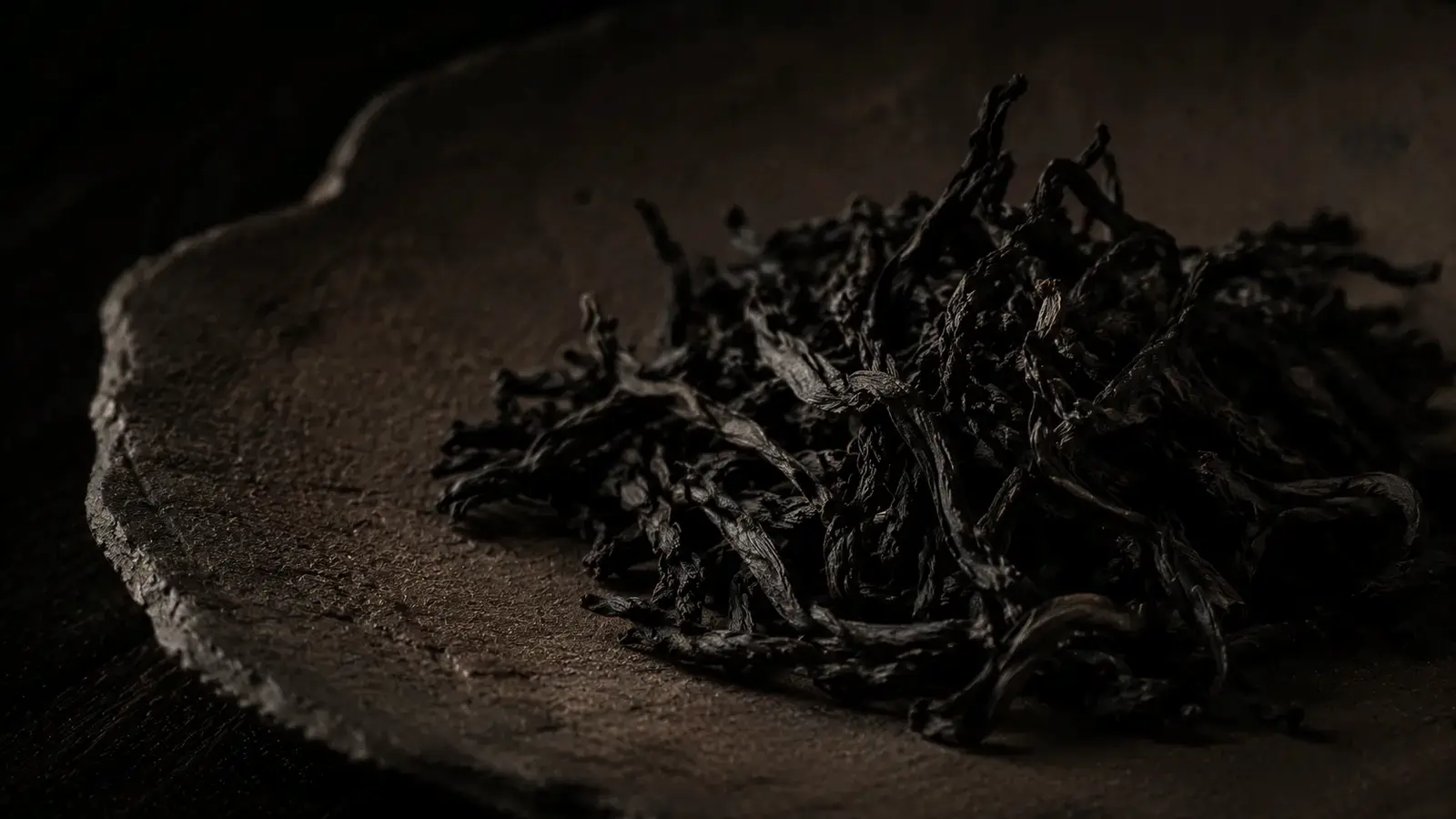
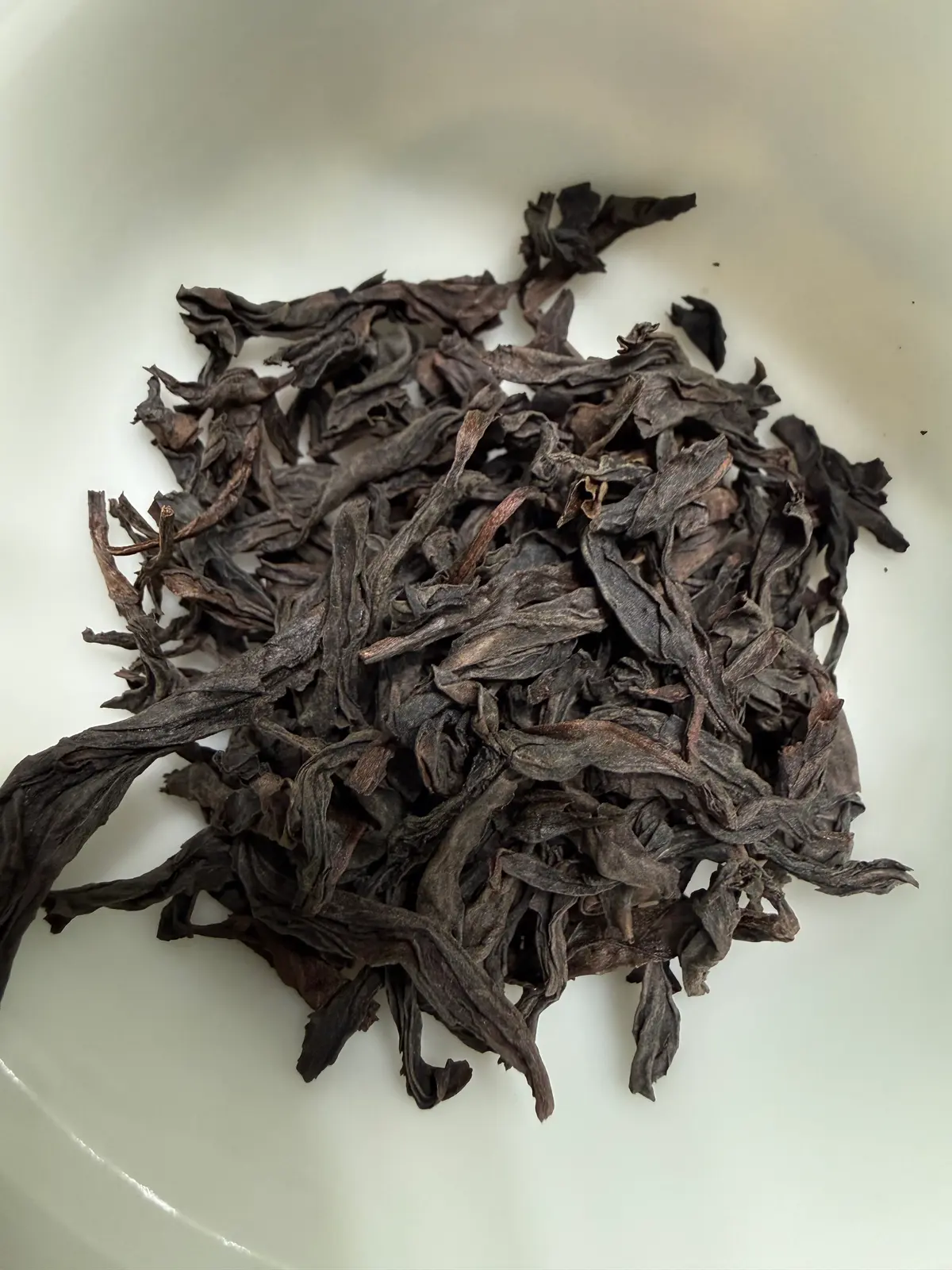
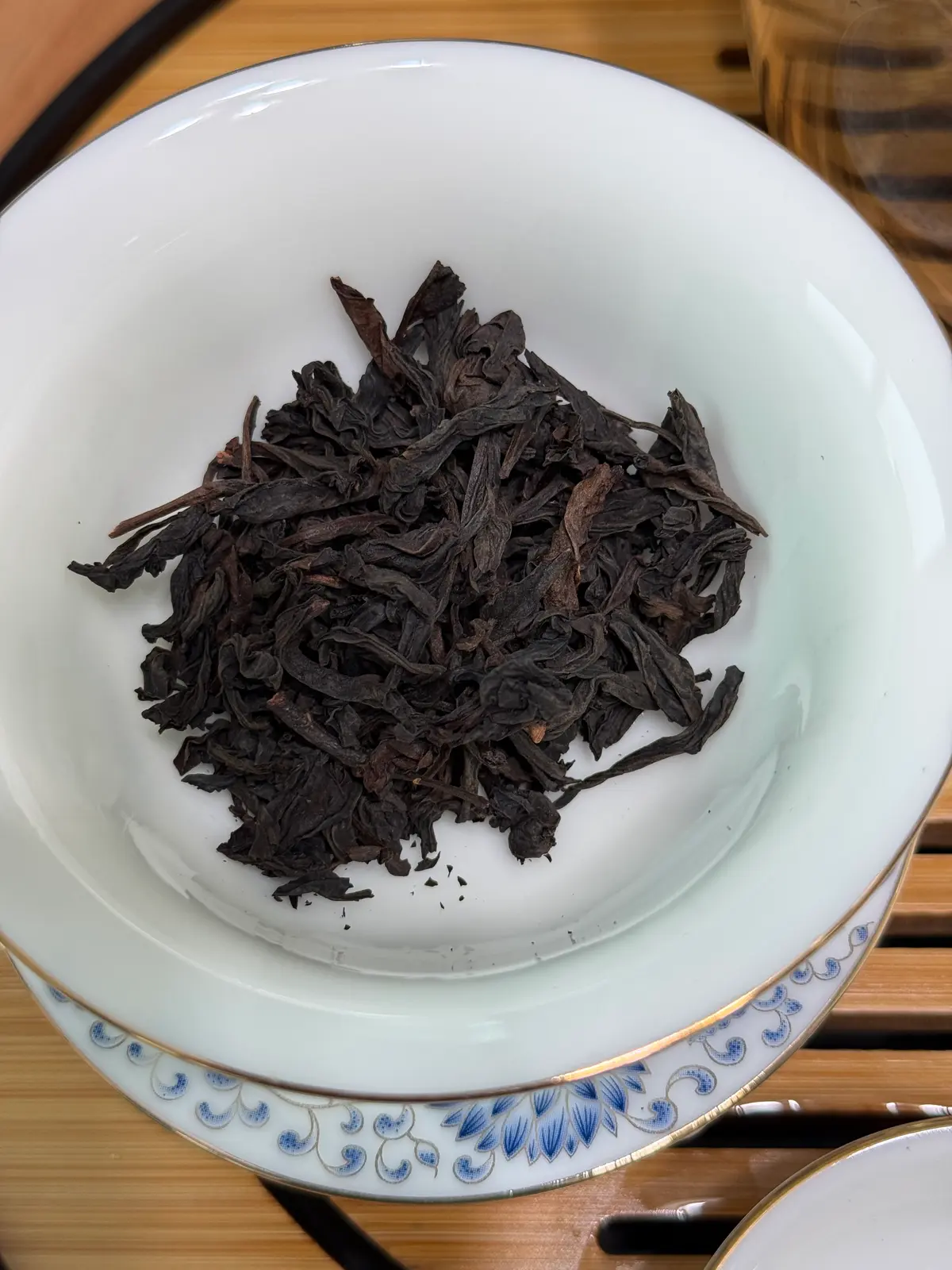
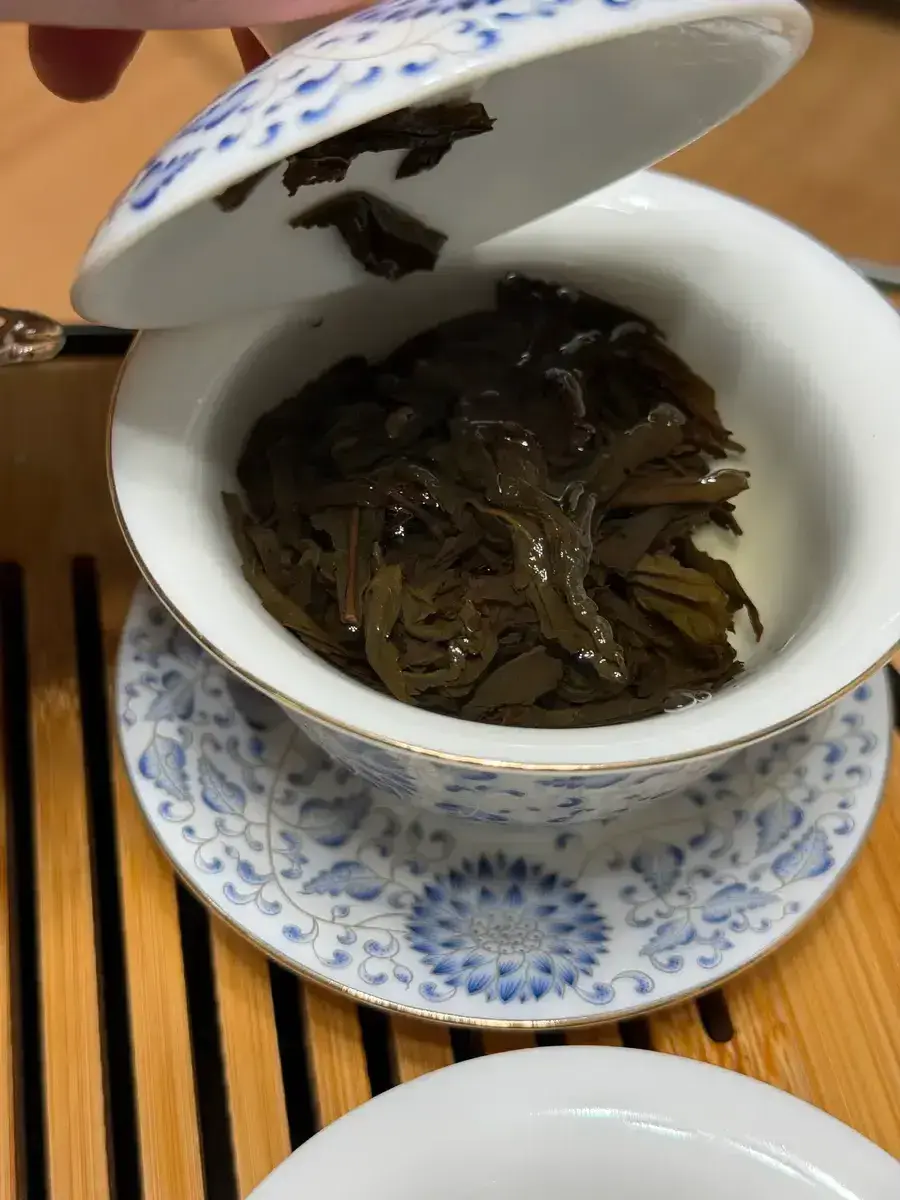
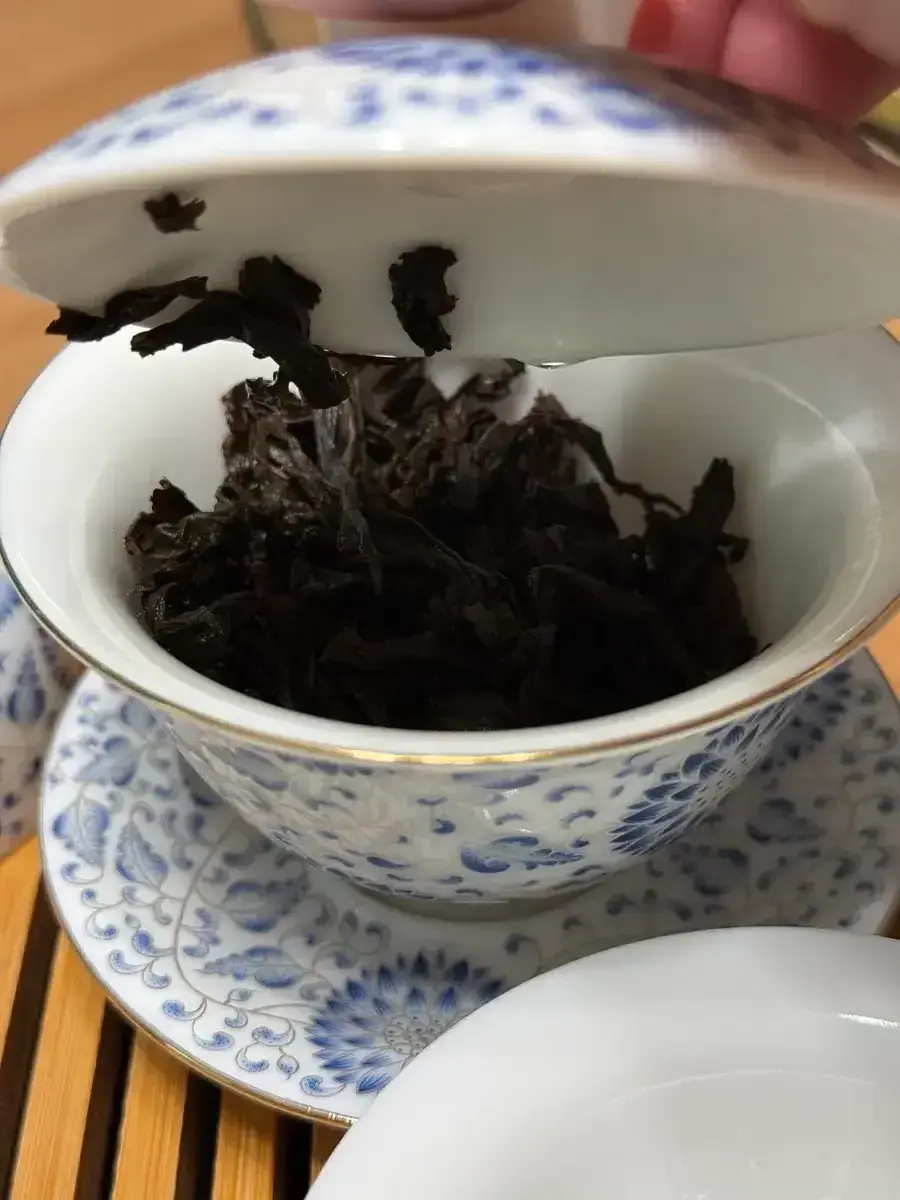
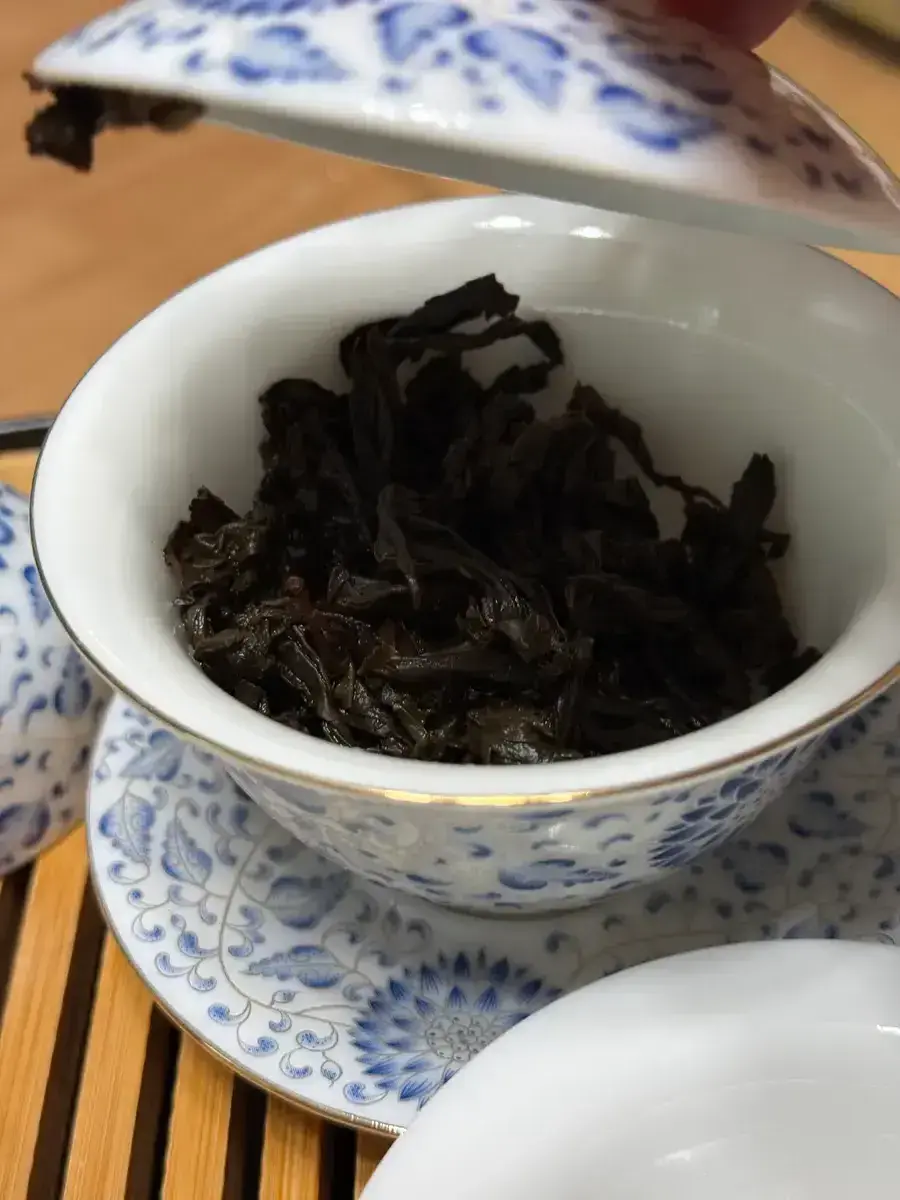
The dry leaf appears dark, irregular, and twisted with a wiry structure and matte finish. No glossy sheen here — the surface reflects the austere character to come. The aroma stays restrained: dry stone, charcoal, and faint resinous warmth buried deep. The leaf doesn’t announce itself or promise easy pleasures.
The Session
Brewed at 95°C in a 100ml gaiwan (蓋碗) with approximately 5g of leaf, this tea revealed its character gradually across seven productive steeps.
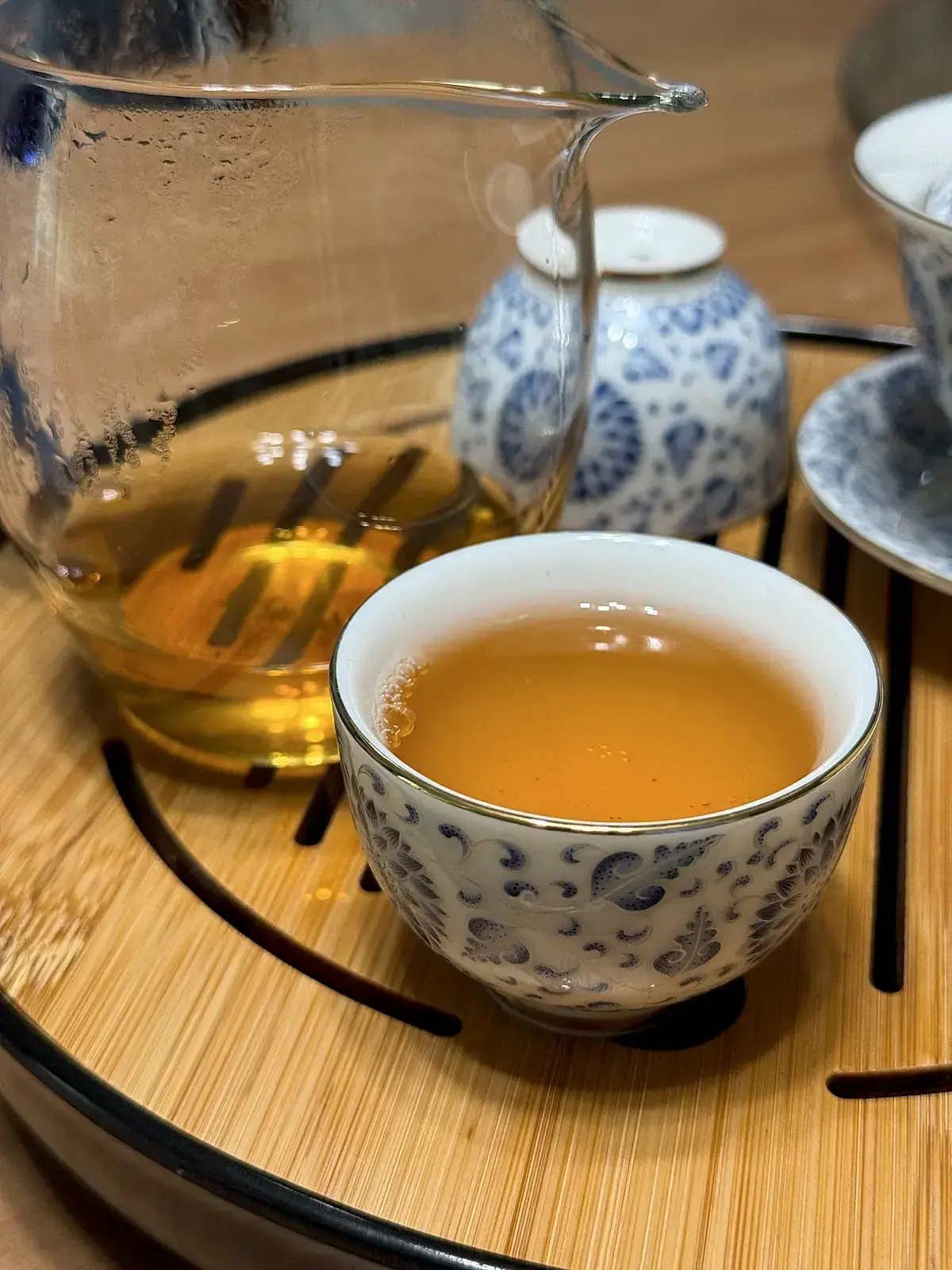
Steep 1 (10s): Immediate mineral density strikes the palate. No sweetness on entry, no fruit, no flowers. Dry, stony, weighty. The flavor sits on the tongue like something heavy and precious — a first hint of the “liquid gold” character to come.
Steep 2 (10s): The metallic richness fully develops. This isn’t bitterness or sweetness but a third quality entirely — warm, lustrous, coating. Like biting into something elemental. Faint charcoal roast provides backdrop but stays subordinate to the mineral core.
Steep 3 (15s): Rock bone at its most literal expression. Wet granite, heated iron, warmth radiating from center of tongue outward. Cedar notes emerge mid-palate, possibly sandalwood, adding resinous depth without softening the stone foundation.
Steep 4 (20s): The first hint of sweetness appears, but geological sweetness — like licking a warm stone sitting in the sun. Not fruit, not floral, not sugar. Pure mineral pleasure.
Steep 5 (30s): Still dense, still golden. Cedar note strengthening. Finish extending. The tea deepens rather than evolving laterally.
Steep 6 (45s): Austere beauty reaches its peak. The tea isn’t giving more complexity — it’s concentrating what it already showed into distilled essence.
Steep 7 (60s): Thinning slightly but the mineral core holds. Clean, dry, warm fade with no harsh edges.
The wet leaf aromatics stayed mineral-forward throughout: heated stone, granite after rain, subtle dried herb. No floral lift, no fruit. The character remains rooted in earth and stone.
Flavor Profile
Front: Dry mineral density dominates — stone, granite, warm metal with zero sweetness or fruit on entry.
Mid: “Liquid gold” develops — lustrous, heavy, warm metallic richness that sits with physical weight on the palate. Cedar and dried herb notes provide complexity without masking the mineral foundation.
Finish: Long, dry, warm conclusion. Heated stone and faint resinous wood linger. The pleasure comes from geological rather than botanical qualities.
Mouthfeel & Huigan
The mouthfeel runs heavy, dense, and coating — noticeably drier than cultivated Da Hong Pao. Weight defines the experience. This tea has gravity. Oily but not slick, substantial without being cloying.
Traditional huigan (回甘) barely applies here. No bitterness-to-sweetness conversion occurs. Instead, warm mineral resonance returns — the mouth stays coated with stone-warmth long after swallowing. This isn’t a sweet tea. The pleasure comes from density and depth.
Qi Notes
Grounding and focused qi (氣) matches the flavor profile. The mineral weight translates to physical settling — steady gravity rather than lifting energy. Perfect for concentrated work or meditation.
Value Assessment
Without vendor or price information, value assessment remains incomplete. However, authentic wild-grown tea from Wuyi Mountains village commands premium pricing due to scarcity and protected origin status.
Verdict
This represents what gold would taste like if gold carried flavor — pure mineral lustre and weight without compromise. Not the sweetness of cultivated rock oolong, not fruit, not flowers. Just unmediated stone translated to liquid form.
The wine parallel runs to Savennières from the Loire Valley — Chenin Blanc grown on schist and volcanic rock. Bone-dry, zero residual sugar, all pleasure derived from mineral tension and texture.
This tea's strongest axis is Mineral (9/10). Also notable: Body.