Tea for anxiety is a real topic with real science behind part of it. It also carries a lot of noise. Let’s get into the signal.
The Core Distinction: Two Completely Different Mechanisms
Before anything else, you need to understand that “calming tea” describes two fundamentally different categories of drink operating through two fundamentally different biological pathways. Conflating them is the source of most confusion in this space.
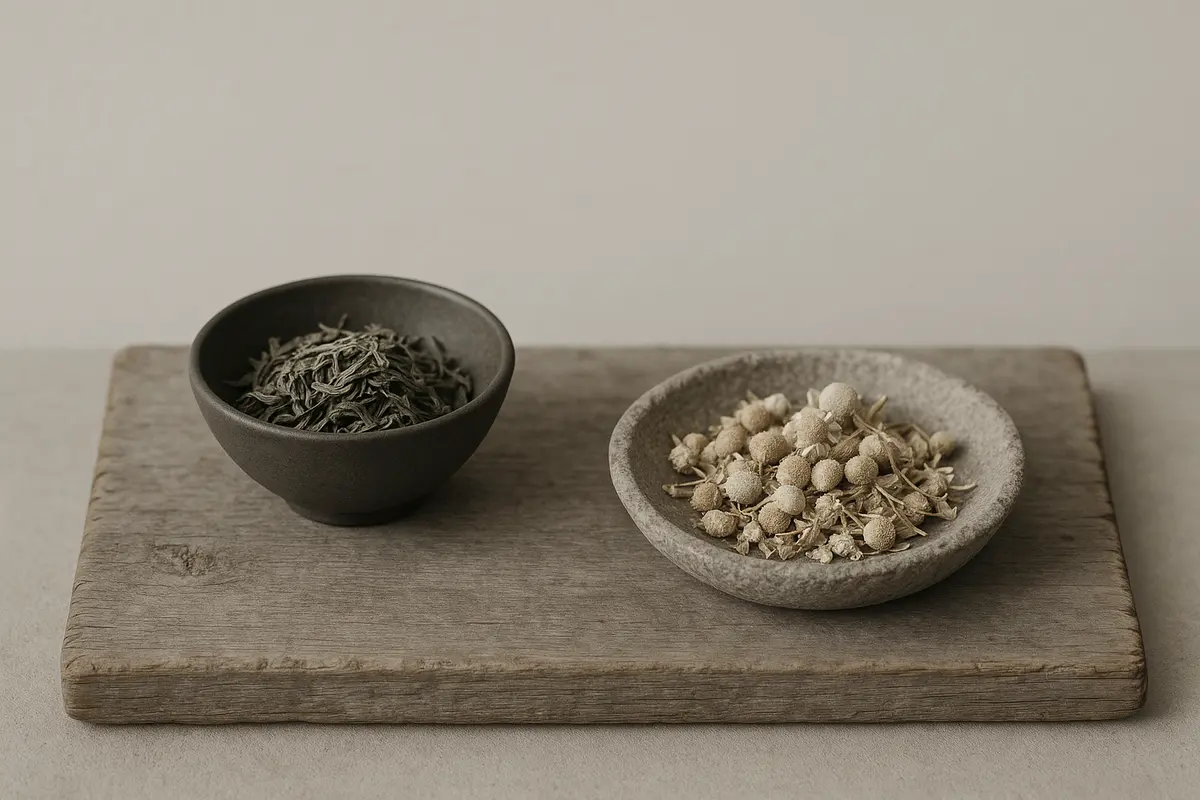
Category One: Camellia sinensis teas with L-theanine. This includes all true teas—green, white, oolong, black, pu-erh, yellow. The relevant compound is L-theanine (茶氨酸, cháāmiànsuān), an amino acid that promotes calm alertness without sedation. This is not about relaxation in the “sleepy” sense. It is about a specific neurological state.
Category Two: Herbal infusions that promote sedation. Chamomile, valerian, passionflower, lemon balm. These work through mechanisms that suppress the central nervous system—calming closer to the way a mild sedative calms. The relevant compounds include apigenin (in chamomile), which binds GABA-A receptors, and valerenic acid (in valerian), which also modulates GABA.
These are useful for different situations and different times of day. Conflating them leads to advice like “drink matcha at night to relax”—which ignores the 60–80 mg of caffeine in a serving of matcha. Clarity here matters.
L-Theanine: What the Research Actually Shows
What L-Theanine Is
L-theanine is an amino acid found almost exclusively in Camellia sinensis (and in trace amounts in one species of mushroom). When you drink a cup of green tea, you are consuming a compound that does not occur in virtually any other food source on earth.
After ingestion, L-theanine crosses the blood-brain barrier—this is the critical piece—and has documented effects on brain activity and neurotransmitter systems. This is Tier 1 knowledge: established, replicated research.
Alpha Brain Wave Activity
The most consistent finding in L-theanine research is its promotion of alpha brain wave activity. Alpha waves (8–12 Hz) are associated with relaxed alertness—the mental state you are in during light meditation, or when you are deeply focused on something you enjoy. They decrease when you are stressed (which drives you toward higher-frequency beta wave dominance) and increase when you are calm but engaged.
A 2008 study by Nobre et al. in Asia Pacific Journal of Clinical Nutrition found that 50 mg of L-theanine increased alpha wave activity compared to placebo, with effects most pronounced in individuals who reported higher baseline anxiety. A 2019 randomized controlled trial by Hidese et al. published in Nutrients showed that 200 mg/day of L-theanine over four weeks reduced stress-related symptoms and improved sleep quality in healthy adults.
These are not extraordinary doses. They are within range of what heavy tea drinkers consume daily.
L-Theanine and Caffeine Together
Here is the part that matters practically: the cognitive effect of L-theanine is significantly shaped by the presence of caffeine. When consumed together—as they naturally are in any cup of tea—L-theanine modulates caffeine’s stimulant effect. Multiple studies show the combination produces better sustained attention and less jitteriness than caffeine alone.
This is why experienced tea drinkers often describe a different kind of alertness from tea versus coffee. It is not anecdote—it has a biochemical basis. The ratio of caffeine to L-theanine varies by tea type and preparation method, but the interaction is real.
Neurotransmitter Effects
L-theanine also appears to influence serotonin, dopamine, and GABA systems, though the mechanisms are less cleanly established than the alpha wave data. I am noting these as Tier 2 knowledge—the research is promising but less conclusive. The alpha wave finding is where I have the most confidence.
Which Teas Have the Most L-Theanine?
This is where tea type becomes genuinely important for anyone using tea for anxiety strategically.
Shade-Grown Teas Are the Highest Source
Shading a tea plant before harvest—typically for three to four weeks—creates a specific stress response. Without direct sunlight, the plant cannot convert L-theanine into catechins (the bitter antioxidants) via photosynthesis as efficiently. Theanine accumulates in the leaves.
The result: shade-grown teas contain dramatically more L-theanine than their sun-grown counterparts.
Matcha (抹茶): Shade-grown for 3–4 weeks, then stone-ground whole leaf into powder. Because you consume the entire leaf, you get everything in it. A well-made bowl of matcha—about 2 grams of powder—delivers roughly 20–45 mg of L-theanine. Higher-grade ceremonial matcha from reputable Japanese sources trends toward the upper end.
Gyokuro (玉露): Shade-grown for 3–5 weeks, then processed as whole leaf (not powdered). Brewed correctly—low temperature, around 140°F (60°C), with a small amount of leaf—gyokuro extracts significant theanine while moderating caffeine extraction. A 3-gram serving at low temperature gives roughly 15–30 mg of L-theanine.
Sun-grown green teas: Sencha, dragonwell, mao feng—these have meaningful L-theanine but significantly less than shade-grown equivalents. Roughly 6–12 mg per 8 oz serving depending on grade and preparation.
Oolongs, black teas, pu-erh: Processing degrades some theanine, but these teas still contain it. Black tea and heavily oxidized oolongs land lower on the scale—3–8 mg per serving. Shou pu-erh (熟普洱) and aged sheng pu-erh (生普洱) have been less studied for theanine content specifically, but given the extensive fermentation in shou, I would expect degradation of theanine and caffeine both. This is partly why shou is my evening tea.
| Tea Type | Typical L-Theanine per Serving | Caffeine per Serving | Notes |
|---|---|---|---|
| Matcha (2g, ceremonial) | 20–45 mg | 60–80 mg | Whole leaf consumed |
| Gyokuro (3g, low temp) | 15–30 mg | 35–55 mg | Shade-grown, careful brewing matters |
| Sencha (3g) | 8–15 mg | 25–40 mg | Sun-grown, lower theanine |
| Oolong (3g) | 5–10 mg | 30–50 mg | Varies by oxidation level |
| Black tea (2.5g) | 3–8 mg | 40–70 mg | Most theanine degraded |
| Shou pu-erh (5g, later steepings) | 2–6 mg | 5–20 mg | Evening use; caffeine low in later steeps |
| Chamomile (herbal) | 0 mg | 0 mg | No theanine; sedative via apigenin |
The Herbal Tea Question: Sedation vs. Calm Focus
Chamomile, valerian, passionflower, lemon balm, lavender—these are all legitimate options for stress and sleep support. They are just doing something categorically different from L-theanine.
Chamomile contains apigenin, a flavonoid that binds to GABA-A receptors in the brain. GABA is the primary inhibitory neurotransmitter—increasing its activity reduces neuronal excitability, which is why GABA-active compounds (including benzodiazepines at the extreme end) cause sedation. Chamomile is a mild version of this. The evidence for chamomile in anxiety is genuinely decent—a 2016 long-term trial in the journal Phytomedicine found that chamomile extract significantly reduced generalized anxiety disorder symptoms, with relapse prevention over 26 weeks.
Valerian is stronger. Valerenic acid inhibits the breakdown of GABA and also acts directly on GABA-A receptors. The research on valerian for sleep is more consistent than its anxiety data, and I find the taste deeply challenging—earthy in a way that tests my patience. But it works.
Lemon balm (Melissa officinalis) inhibits GABA transaminase, the enzyme that breaks down GABA, leading to increased GABA levels. Reasonable evidence for acute stress reduction in several small trials.
These herbs are not something I would reach for at 2 PM when I need to do focused work. That is what gyokuro is for. These are evening, sleep-adjacent tools.
The Gongfu Ritual as Anxiety Management
This is where I move from established science into what I would call Tier 2 territory—emerging evidence for ritual and mindfulness as anxiety interventions—and then into my own Tier 3 personal experience.
Why Gongfu Forces Presence
Gongfu brewing (功夫茶) is not compatible with multitasking. That is not a bug—it is the central feature.
To brew gongfu style, you are managing: water temperature (typically within a 10°F window depending on the tea), leaf-to-water ratio (I work in grams, not scoops), steep times that change with each infusion, the visual and aromatic cues that tell you when to pour. Your hands are busy. Your attention has an object. There is no room for the recursive, ruminative thought loops that characterize anxiety.
The neuroscience of mindfulness practice is reasonably well established. Focused attention on sensory experience—tactile, visual, olfactory—activates the present-moment processing systems and competes with the default mode network activity that underlies self-referential, anxious thinking. Gongfu brewing is a structured sensory practice that happens to produce excellent tea. The attentional demands are not incidental.
I am not claiming gongfu is meditation. I am saying it has structural features that produce similar attentional effects, and those effects are measurable.
The Sensory Specifics
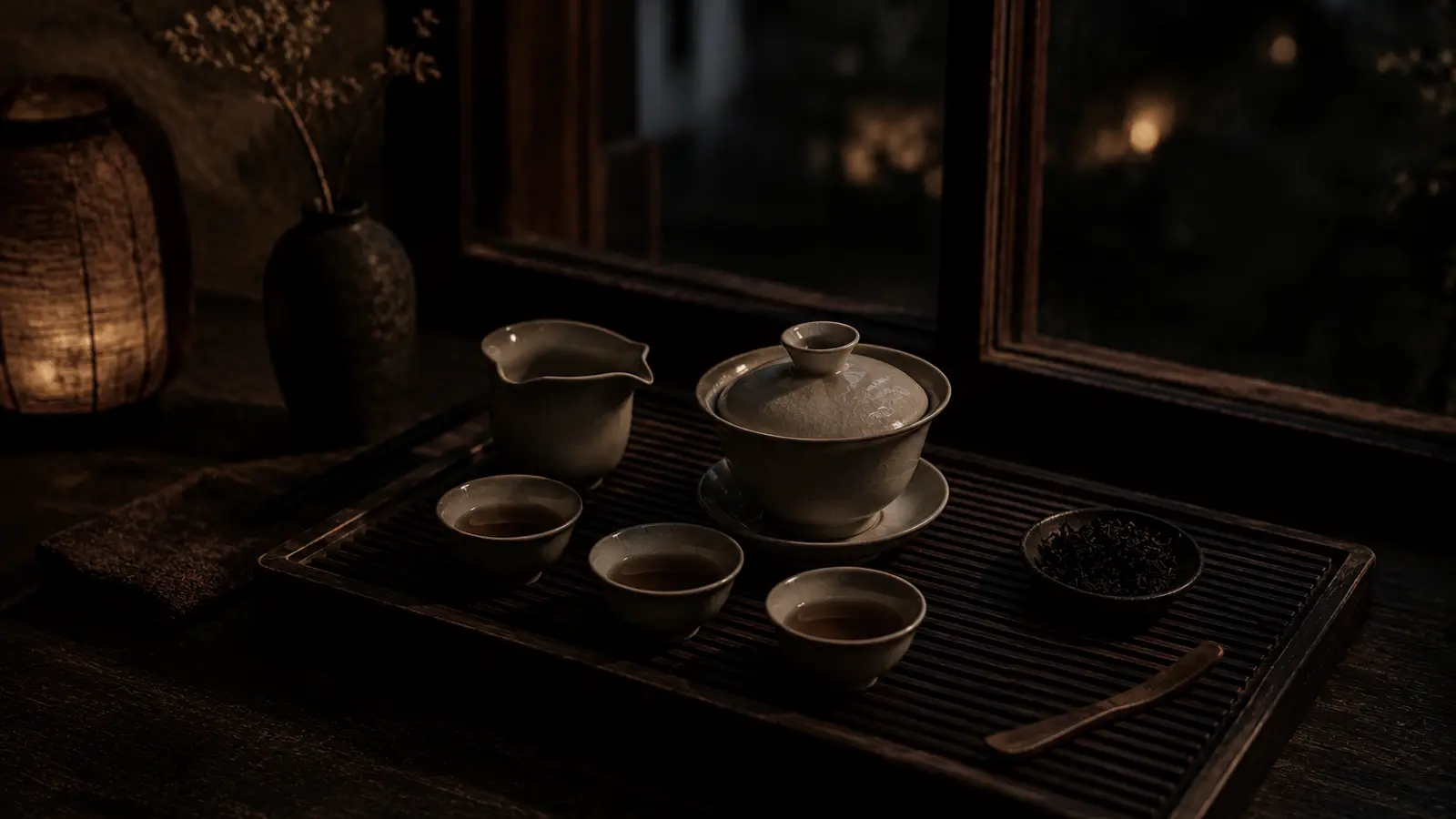
When I sit down to brew, I am handling a gaiwan (蓋碗) or small teapot that has been preheated with boiling water—I can feel the warmth through the porcelain. I am watching dry leaf, noting its moisture and fragrance. I am pouring water in a specific motion, watching the color of the liquor change with each steep. I am smelling the wet leaf and the empty cup after drinking.
This is a full sensory engagement protocol. It cannot be rushed without degrading the result, and degrading the result is immediately apparent in the cup. The feedback loop is tight and immediate.
That accountability to quality in the moment is itself grounding.
My Own Experience: What Actually Changed
I am going to be direct about what I know from my own life, labeled clearly as personal experience (Tier 3).
I stopped drinking alcohol approximately two years ago as part of a health protocol. Sleep issues—including suspected sleep apnea—were a factor, and anxiety was both a cause and a consequence of my drinking. I was using alcohol to manage evening anxiety, which was producing worse anxiety over time through rebound effects, sleep disruption, and blood sugar volatility.
When I stopped, I needed a replacement ritual. Not just a substance swap—an actual ritual with similar properties: something that required attention, that had sensory richness, that marked a transition point in the day.
Wine had given me all of that. I had spent years in serious wine appreciation and genuinely mourned losing that specific engagement. Gongfu tea turned out to be the most honest replacement I found—not because it gets you anywhere near the same neurological place, but because the craft depth is comparable and the attentional demands are real.
What I can say with confidence is this: the combination of removing alcohol, establishing a daily gongfu practice, and drinking in a way that aligns tea type with time of day (shade-grown teas earlier, shou pu-erh in the evening) produced a measurably better anxiety baseline for me. I cannot isolate which variable drove most of the improvement. I am not claiming tea cured my anxiety. I am saying the ritual structure plus the actual pharmacology of L-theanine plus removing a depressant that was actively worsening my baseline added up to something real.
My Evening Protocol
Late evenings, I brew shou pu-erh. Specifically, I work with well-aged shou rather than young production—the fermentation in older shou has mellowed the more aggressive compost notes, and the flavor is genuinely complex in the kind of way that rewards attention.
I use 6–8 grams in a small clay pot, multiple quick steepings starting at about 10 seconds, water around 205°F (96°C). Later steepings pull 20–40 mg of caffeine or less—some research suggests very late steepings of fermented pu-erh contain almost negligible caffeine. Combined with the warmth of the liquid, the complexity in the cup, and the ritual of the brewing itself, this is my current evening anchor.
I want to be honest: I do not know how much of the shou pu-erh’s calming effect is pharmacological versus ritual versus placebo. What I know is that it works for me and it does not interfere with sleep the way tea earlier in the day might.
Practical Protocol: Using Tea for Anxiety Strategically
If you are approaching this practically, here is how I would think about tea as a tool for anxiety management.
Morning and Focused Work: Shade-Grown Green Teas
If you need calm, sustained focus without the caffeine anxiety that coffee can produce, matcha or gyokuro is your tool. The L-theanine-to-caffeine ratio in shade-grown teas is the highest of any commonly consumed beverage. Brew gyokuro at 140–150°F (60–65°C) with 3–4 grams and a small vessel (60–80 ml) for 60–90 seconds. The first steep of a high-grade gyokuro should be almost sweet, with minimal bitterness—that is the theanine you are tasting.
For matcha, use 2 grams of ceremonial grade, 2 oz of water at 175°F (80°C) for chasen preparation, or cold-froth it if you prefer. Higher grade means more theanine and less bitterness, which is not snobbery—it is chemistry.
Afternoon: Oolongs or Light Green Teas
Moderate caffeine, moderate theanine. An aged oolong or a lightly oxidized Taiwanese oolong brewed gongfu style is a reasonable afternoon companion—enough caffeine to maintain alertness, not so much that it drives anxiety, and the ritual value is intact.
Evening: Low-Caffeine Camellia Sinensis or Herbal
Shou pu-erh in later steepings, or hojicha (焙じ茶)—a roasted green tea where high-temperature roasting converts much of the caffeine into other compounds, leaving a warm, woody cup with minimal caffeine. Both pair well with the evening wind-down.
If sleep is the primary goal, pair later steepings of shou with chamomile as a standalone herbal or blend.
Caffeine Sensitivity
If you are caffeine-sensitive, you can still access L-theanine. Low-temperature brewing extracts proportionally more theanine relative to caffeine. Cold brew green tea over 8–12 hours in the refrigerator produces a smooth cup with significantly less caffeine than hot brewing. Alternatively, L-theanine supplements (100–200 mg doses are commonly studied) provide the compound without caffeine—though you lose everything the ritual provides.
What Tea Cannot Do
I want to be direct about limits.
Tea is not a treatment for clinical anxiety disorders. If you have generalized anxiety disorder, panic disorder, PTSD, or OCD, L-theanine and chamomile are not substitutes for evidence-based care—therapy, medication, or both. They may be useful adjuncts. They are not primary interventions.
The ritual value I describe is real for me, but it required building. A practice you dread or find frustrating will not produce the attentional benefits I am describing. The first weeks of gongfu brewing are awkward—equipment decisions, learning to control temperature, breaking the boil-and-pour habit. The grounding effect compounds over time as the practice becomes automatic enough to be meditative rather than stressful.
Also: the L-theanine doses in tea are real but modest. Supplement doses studied in research typically run 100–200 mg. A single serving of matcha delivers 20–45 mg, gyokuro 15–30 mg. Multiple cups across a day can push you into research-relevant territory, but you are not getting 200 mg from one bowl of matcha. Manage expectations accordingly.
Summary: How I Think About This
Three distinct tools, three distinct purposes:
-
L-theanine from shade-grown Camellia sinensis: Calm focus, alpha wave promotion, caffeine modulation. Tier 1 evidence. Best sources: matcha, gyokuro. Morning to early afternoon.
-
Herbal teas with GABA-active compounds: Mild sedation, sleep support. Tier 1–2 evidence depending on compound and claim. Best sources: chamomile, valerian. Evening and pre-sleep.
-
Gongfu ritual as mindfulness practice: Forced presence, sensory grounding, attentional training. Tier 2 evidence as a category; personal experience strongly positive. Any time of day with appropriate tea choice.
These are not miracle interventions. They are real tools that work through real mechanisms, layered into a daily practice over time. For me, that layer plus removing alcohol added up to a meaningfully different baseline. Your mileage will vary, but the mechanisms are honest.
Note: The second occurrence of “Gongfu brewing” in the “What Tea Cannot Do” section was left unlinked per the first-occurrence-only rule, as the link was already used earlier in the article.