Most tea vs coffee articles read like a pharmaceutical comparison. Here are the antioxidant milligrams. Here is the EGCG content. Here is a bar chart of adenosine receptor activity. These articles miss the point entirely.
Both tea and coffee are craft beverages with centuries of agricultural refinement behind them, flavor complexity that rivals fine wine, and ritual dimensions that serve real psychological needs. The question isn’t which one has more catechins. The question is: what do you actually want from the thing you put in your mouth every morning?
I drink both. I come down clearly on the side of tea as a deeper practice — this site exists because of that conviction — but I’m not going to pretend coffee is inferior. It wins in certain categories decisively. What follows is an honest comparison.
The Quick Answer: How Tea and Coffee Actually Differ
Tea vs coffee is less a competition than a choice between two fundamentally different experiences. Coffee is optimized for speed, intensity, and social ubiquity. Tea is optimized for complexity, ritual, and — in its more serious forms — the kind of obsessive depth that collectors and connoisseurs chase across a lifetime.
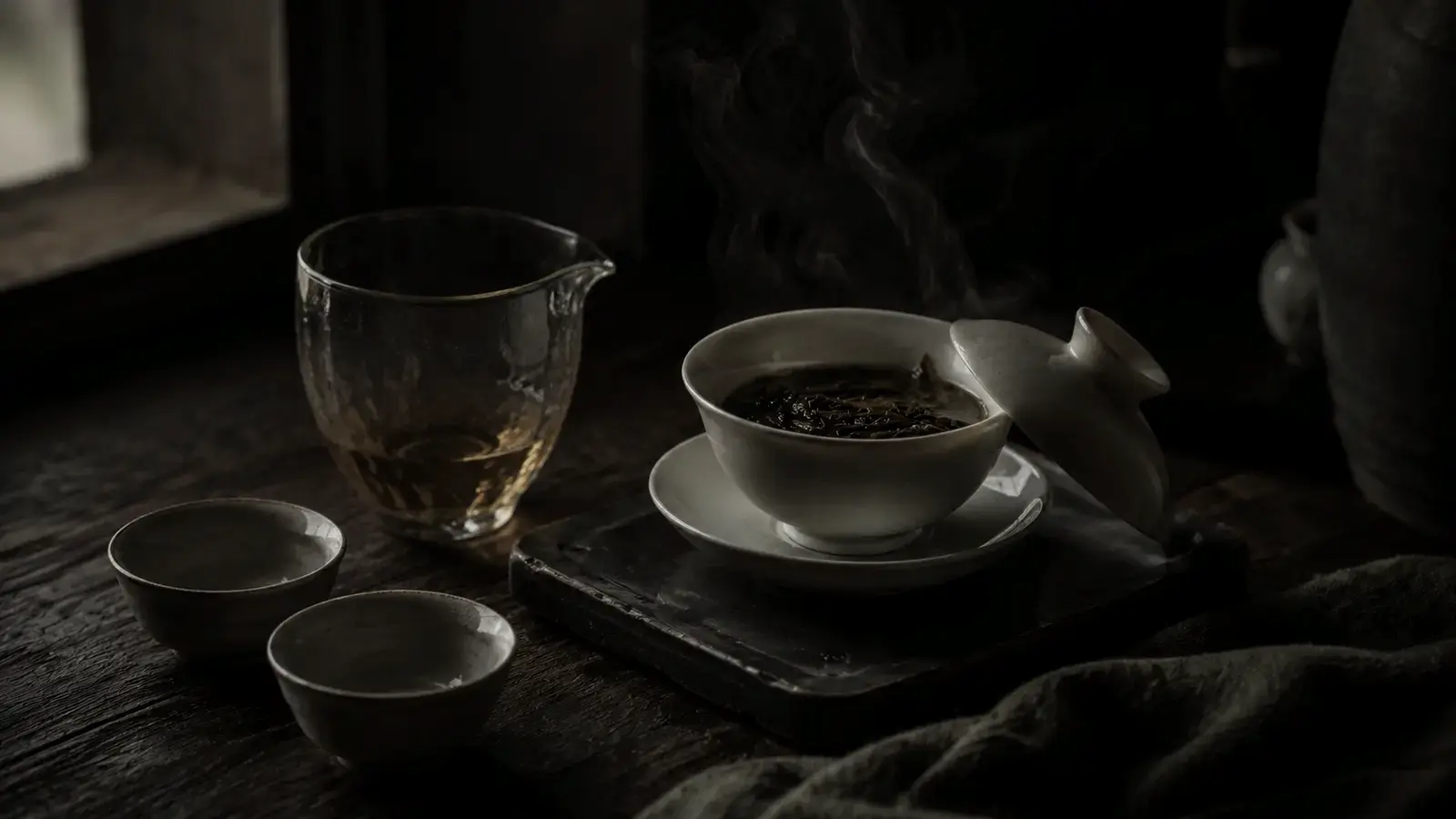
If you need to be functional in four minutes and don’t want to think about it, coffee wins. If you want to spend a Saturday morning watching a single 8-gram portion of aged pu-erh (普洱茶) evolve across twelve steeps, tea has no competition.
Most people don’t realize they get to choose.
At a Glance:
| Dimension | Tea | Coffee |
|---|---|---|
| Caffeine | 30–70mg/steep; buffered by L-theanine | 80–150mg/cup; rapid spike-and-crash |
| Flavor range | Vast — green, oolong, pu-erh, white, black | Rich but narrower — roast level and origin |
| Brew time | 3 min (Western) to 2+ hours (gongfu) | 3–5 min |
| Cost at home | $0.25–$8/session | $0.75–$6/brew |
| Aging potential | Yes — pu-erh improves over decades | No — degrades within weeks of roasting |
| Best for | Ritual, complexity, afternoon calm | Speed, intensity, morning lift |
Caffeine: The Mechanics Actually Matter Here
The caffeine conversation is worth having carefully because the difference isn’t just quantity — it’s delivery mechanism.
Coffee dumps 80–150mg of caffeine in a single hit. Your bloodstream absorbs it rapidly. Adenosine receptors get blocked hard. Cortisol spikes. You get the lift, and then, 2–3 hours later, the withdrawal. This is not a moral failing of coffee; it’s just pharmacology.
Tea delivers 30–70mg per steep, and it does so alongside L-theanine (茶氨酸), an amino acid found almost exclusively in Camellia sinensis. L-theanine crosses the blood-brain barrier and promotes alpha wave activity — the brain state associated with relaxed alertness, the same state you enter in light meditation. It blunts the caffeine spike without reducing the focus benefit.
The result: tea drinkers commonly report a calmer, more sustained energy with none of the jitter-crash cycle. This isn’t placebo. The combination has been studied directly, and the synergistic effect is well-supported in the literature.
In gongfu brewing (功夫茶), where you re-steep the same leaves 6–10 times over 30–60 minutes, total caffeine across the session can reach 80–120mg — comparable to drip coffee — but absorbed gradually and buffered by L-theanine throughout. The experience is categorically different from the espresso shot even when the total caffeine load is similar.
If you have anxiety, this matters enormously. The fast caffeine spike from coffee is a documented anxiety trigger in sensitive individuals. Tea’s modulated delivery is not.
Flavor Complexity: Surprisingly Close, With One Key Difference
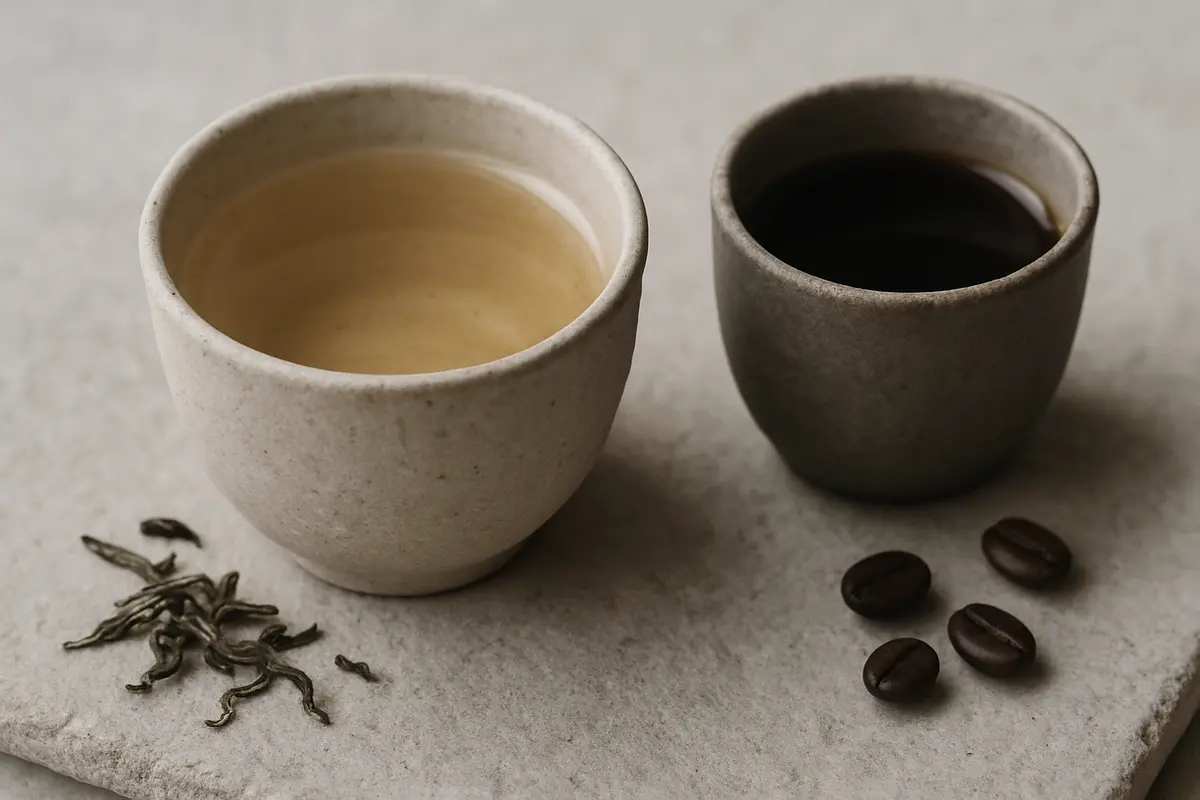
Specialty coffee people love pointing out that roasted coffee contains approximately 800 identified aroma compounds — more than wine, more than almost any other food product. It’s a fair point.
What’s less commonly acknowledged: specialty tea contains 750+ identified volatile compounds. The complexity is comparable. Both beverages reward the kind of attention you’d give a serious wine.
But tea offers something coffee cannot: steep-by-step evolution within a single session.
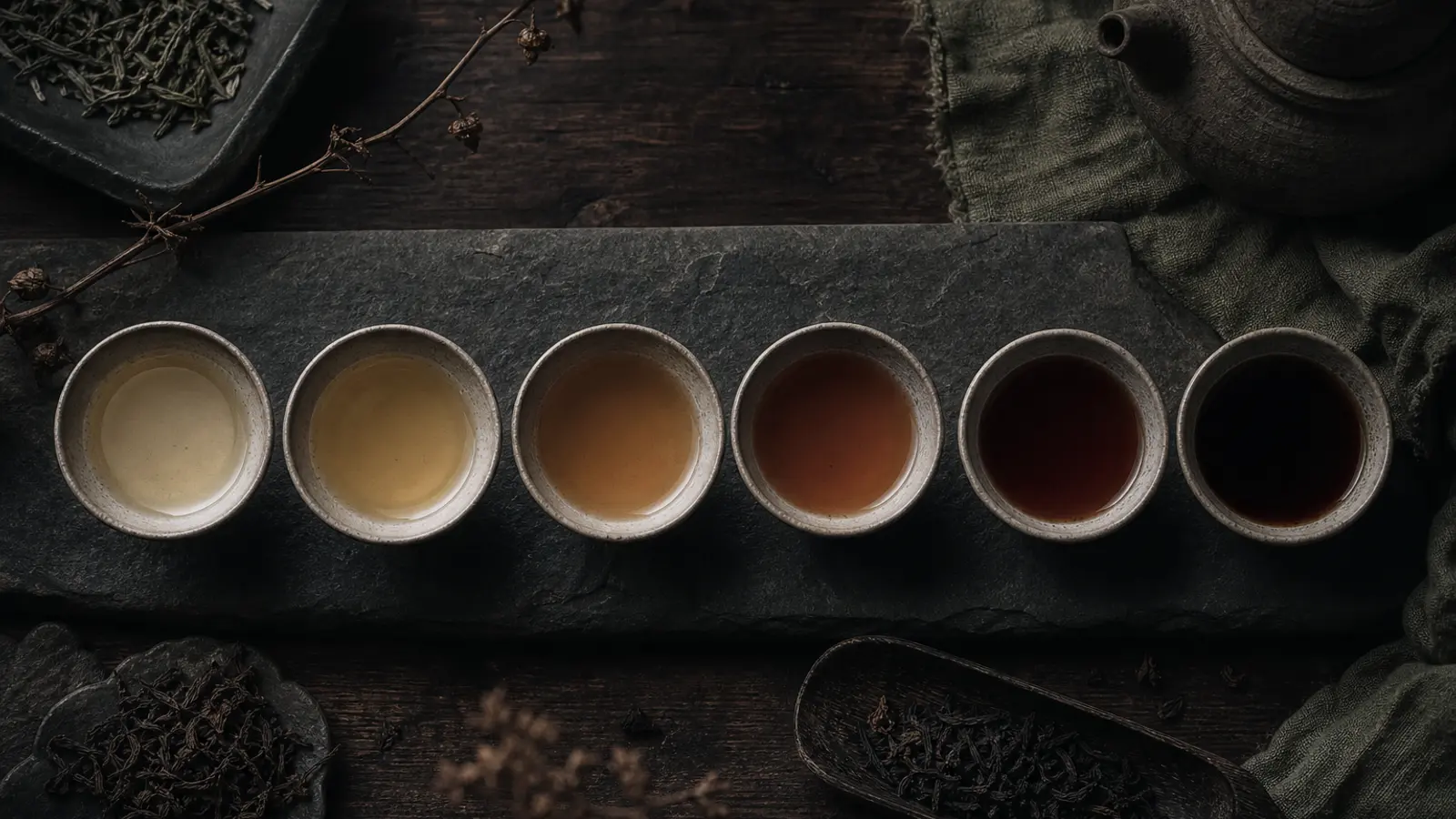
When you brew a great sheng pu-erh (生普洱茶) gongfu style, the first steep is bright and floral. The third steep deepens into stone fruit. The sixth steep shifts toward forest floor and dried herbs. The ninth steep may be quiet and mineral, almost transparent. You’re watching the same leaves transform across two hours. No two steeps are identical.
Coffee is static by comparison. A pour-over is excellent from first sip to last, but it doesn’t evolve. You get one expression.
This isn’t a knock on coffee. Static perfection is its own virtue — consistency is genuinely hard to achieve. But if you’re drawn to the idea of a beverage that moves, that reveals itself over time, coffee can’t give you that.
The Ritual Dimension
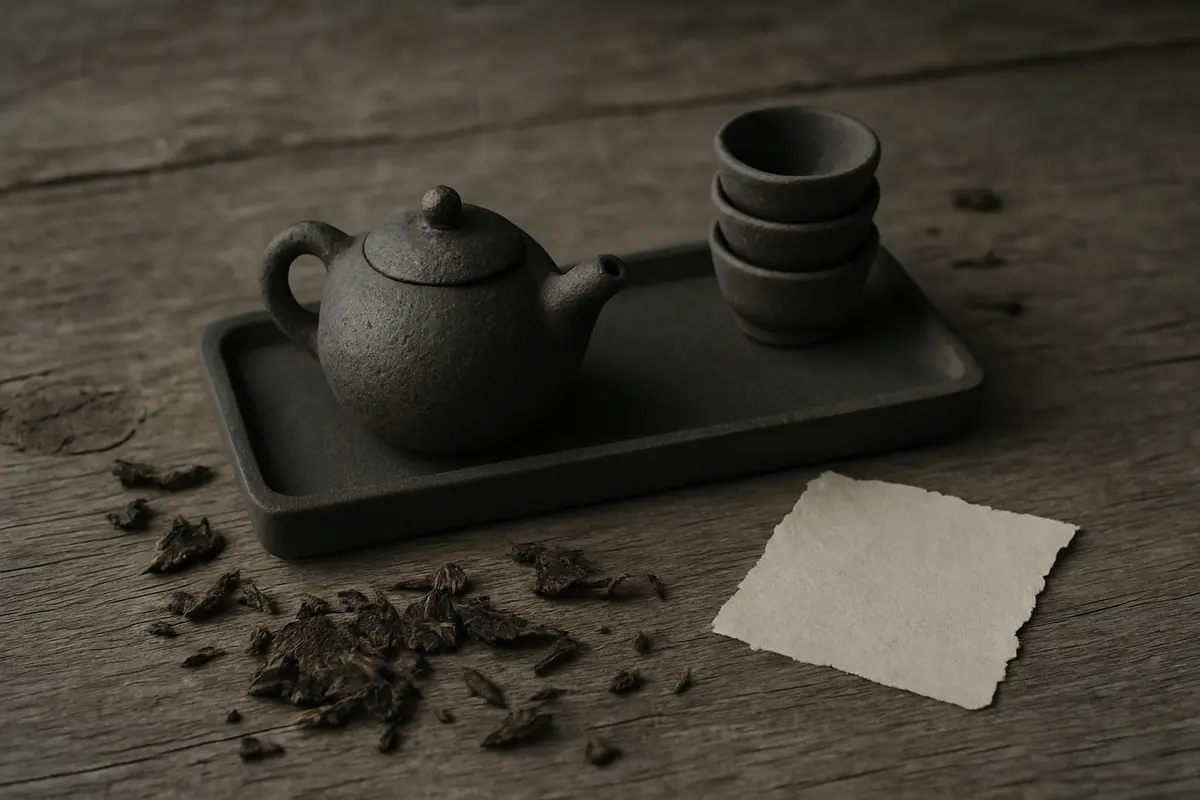
The espresso ritual takes 30 seconds. Grind, tamp, pull, drink. It’s efficient, tactile, slightly meditative. I’m not dismissing it.
The gongfu tea session takes 30–45 minutes minimum. You heat water to a specific temperature (80–95°C depending on the tea), rinse the leaves, pour the first steep at 10 seconds, watch the liquor color, note the aroma from the empty cup (hui xiang, 回香), adjust timing for the second steep, and so on. It’s slow by design.
These rituals serve different needs. Coffee’s speed serves the morning sprint — get caffeinated, get out the door. Gongfu tea’s slowness is the point. It’s a structured reason to sit still, to pay attention to small sensory details, to practice something like mindfulness without calling it that.
The Japanese tea ceremony (茶道, chadō) and the Korean tea ceremony (다례, darye) formalized this slowness into spiritual practice centuries ago. The Chinese scholar tradition of sitting with tea during creative work draws on the same principle. You’re not brewing tea to get caffeine. You’re brewing tea to arrive somewhere.
Both rituals are valid. They’re solving different problems.
Cost Per Session: Tea Wins Decisively
This comparison surprises people.
| Beverage | Entry Quality | Mid-Range | Serious |
|---|---|---|---|
| Specialty coffee (café) | $3–4 per drink | $5–7 per drink | $8–15 for competition-grade |
| Specialty coffee (home) | $0.75–1.50 per brew | $1.50–3.00 | $3–6 for micro-lot |
| Quality loose-leaf tea (home) | $0.25–0.50 per session | $0.50–2.00 | $2–8 for exceptional material |
A quality pu-erh cake (餅茶, bǐng chá) — a 357-gram compressed disc of aged tea — bought from a reputable vendor runs $30–80 for solid mid-range material. That cake provides 40–50 sessions at 7–8 grams per session. The math comes out to $0.60–2.00 per session.
The serious gongfu enthusiast spending $150 on a premium aged sheng cake is still paying $3–4 per session — matching a decent café latte, but getting a two-hour experience with 8–10 steeps from leaves that have been aging for a decade.
Coffee simply cannot compete on value at the serious level. A $50 bag of micro-lot single-origin coffee is gone in a week.
The Collector and Aging Dimension
This is where the comparison diverges most dramatically, and where tea looks most like wine.
Coffee doesn’t age. Green coffee beans have a shelf life of 12–18 months before oxidation degrades quality. Roasted beans are at peak within two weeks. There are interesting experiments in barrel-aged coffee, but they’re novelties. Coffee is a fresh-crop beverage.
Tea — specifically pu-erh, but also some oolongs and white teas — ages. Properly stored sheng pu-erh undergoes continuous microbial and enzymatic transformation over years and decades. A 2006 cake tastes nothing like a 2016 cake from the same factory. A 1990s Hong Kong warehouse storage tea has developed flavors that have no parallel elsewhere: deep forest, dried jujube, camphor, aged leather, wet stone.
This creates a collector market with real parallels to wine. There are storage facilities, vintage assessments, regional terroir debates (Yiwu vs. Lincang vs. Menghai), and a secondary market where significant money changes hands. A legendary 7542 from the 1980s will cost hundreds of dollars for a small sample.
You do not have to engage with any of this to enjoy tea. But it exists, and it has no equivalent in coffee. If the idea of accumulating a cellar of beverages that improve over time appeals to you — the same impulse that drives wine collecting — tea is the only non-alcoholic beverage that offers it. For a deeper look at how this aging process actually works, how pu-erh tea ages explains what happens at 5, 10, and 20 years.
Complete Comparison Table
| Category | Tea | Coffee |
|---|---|---|
| Caffeine per serving | 30–70mg (per steep) | 80–150mg (per drink) |
| Caffeine delivery | Gradual, L-theanine modulated | Fast spike, quicker crash |
| Cost per session (home) | $0.50–2.00 | $0.75–3.00 |
| Prep time (minimum) | 3–5 min (Western style) | 2–4 min (drip/pour-over) |
| Ritual depth (maximum) | 30–90 min (gongfu) | 10–15 min (manual methods) |
| Flavor compounds | 750+ identified | 800+ identified |
| Session evolution | Yes (multiple steeps) | No |
| Aging potential | Yes (pu-erh, some oolongs, white) | No (months, not years) |
| Health research quality | Strong, especially green tea | Strong, especially for Parkinson’s and type 2 diabetes |
| Learning curve | Moderate to steep | Low to moderate |
| Social ubiquity (Western) | Low | High |
| Anxiety friendliness | Higher | Lower |
Where Coffee Wins: Honest Assessment
I want to be direct about where coffee genuinely outperforms tea.
Speed and convenience. An Aeropress takes four minutes. A Nespresso capsule takes thirty seconds. If your morning is chaotic and you need caffeine fast, nothing in the tea world matches this. Even a quick Western-style steeping of loose-leaf requires kettle heating and at least minimal attention.
Social infrastructure. In most Western countries, coffee shops are everywhere. Good tea is available in very few places outside of specialty shops and East Asian restaurants. If you want to participate in a work coffee run or meet someone “for coffee,” coffee wins by default.
Immediate intensity. The blunt force of a good espresso — that concentrated, slightly bitter, roasted hit — satisfies something that tea’s more nuanced flavors don’t. Some mornings you don’t want complexity. You want a hammer.
Lower learning curve. A bag of decent ground coffee and a French press will produce something good on your first attempt. Tea rewards attention and technique; it also punishes inattention more noticeably. Overbrewed green tea is nearly undrinkable. Overbrewed coffee is merely mediocre.
How Coffee Drinkers Typically Enter Tea
If you’re a committed coffee person curious about tea, the worst entry point is generic green tea. It’ll taste like lawn clippings compared to what you’re used to, and you’ll conclude tea isn’t for you.
The right entry points depend on what you love about coffee:
If you love coffee’s body and earthiness: Start with shou pu-erh (熟普洱). It’s wet-processed to accelerate aging, producing a dark, full-bodied, earthy brew with none of the astringency that scares off coffee drinkers. Brew it strong. It genuinely has coffee-like weight in the cup.
If you love roast character: Try a heavily roasted Taiwanese oolong (烏龍茶) — dongding (凍頂) or a charcoal-roasted high-mountain style. The roast creates caramelized, toasty notes that coffee drinkers recognize immediately.
If you love espresso’s concentration and intensity: Try yancha (岩茶), the rock oolong from Wuyi Mountain. The mineral character, the concentrated brew volume, and the deep roast make yancha the closest tea experience to espresso in terms of sensory intensity.
If you love the ritual of pour-over: The gongfu method maps directly onto the pour-over mindset. Same obsession with water temperature, grind-equivalent (leaf size and cultivar), pour timing, and tasting for extraction quality. The vocabulary is different; the sensibility is identical.
”Is Tea Better Than Coffee?” — The Actual Answer
The framing of “better” is the wrong framing. These beverages are solving different problems with different tools.
Tea is better if you want:
- A slower, more meditative morning ritual
- Sustained energy without jitters or crash
- Flavor that evolves across a session
- Something to collect and age
- Lower long-term cost
- A practice with genuine depth that rewards years of attention
Coffee is better if you want:
- Maximum speed and convenience
- Social participation in Western caffeine culture
- Blunt, immediate stimulation
- Minimal setup and equipment investment
- A universal language that works in every city in the world
Most serious tea people I know still drink coffee sometimes. The choice isn’t permanent. But if you’ve never given quality loose-leaf tea a serious three-month trial — with decent equipment, proper technique, and actual good material — you haven’t made an informed choice. You’ve just defaulted.