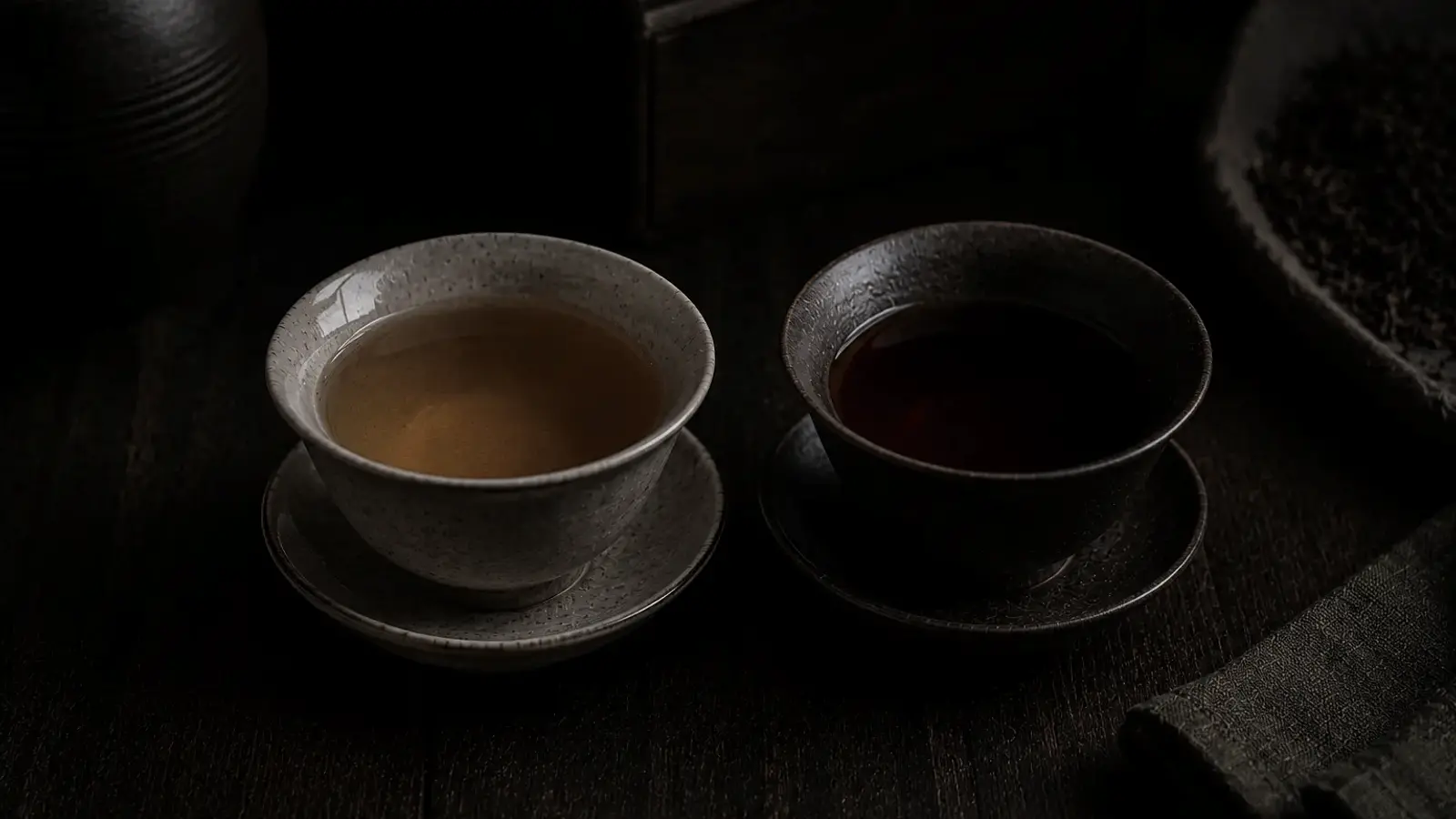
I went in expecting sheng. What poured out looked like shou. Dark amber, dense, approaching opacity. For a moment I questioned whether the label was wrong — this couldn’t be raw pu-erh. Then I tasted it, and the dimensionality hit immediately. This is sheng. It’s just spent 38 years becoming something that exists in the space between categories.
The Convergence
This needs to be stated directly because it’s the central lesson of this tea: aged sheng and shou are approaching the same destination from opposite directions. Shou gets there in 45 days through forced microbial fermentation. Aged sheng gets there in decades through patient natural transformation. At 38 years, the visual gap between them has nearly closed — the liquor is as dark as shou, the body is as smooth as shou, the earthiness overlaps with shou.
But “nearly” is everything.
Shou’s fermentation is powerful but uniform. It transforms the leaf comprehensively and quickly, producing a consistent, resolved, single-voiced result. Chocolate. Earth. Wood. Smooth. That voice is beautiful — it’s why a certain craft shou became my most-reached-for tea. But it’s one voice.
This 1988 sheng has been transformed by a slower, more selective process. Thirty-eight years of gradual oxidation, microbial activity, and chemical rearrangement — happening at the pace of seasons rather than days. The result: multiple voices surviving simultaneously. The dark aged character is there, but underneath it, tropical fruit persists. The smoothness is there, but it has grain and texture that shou’s uniform smoothness doesn’t. The earthiness is there, but medicinal herbs and camphor weave through it in ways that fermentation would have obliterated.
One reviewer captured it perfectly: the tea starts like dark chocolate shou and ends as tropical fruit. No shou in existence makes that journey. Shou starts as chocolate and stays as chocolate. This sheng starts as chocolate and reveals a tropical forest hiding underneath.
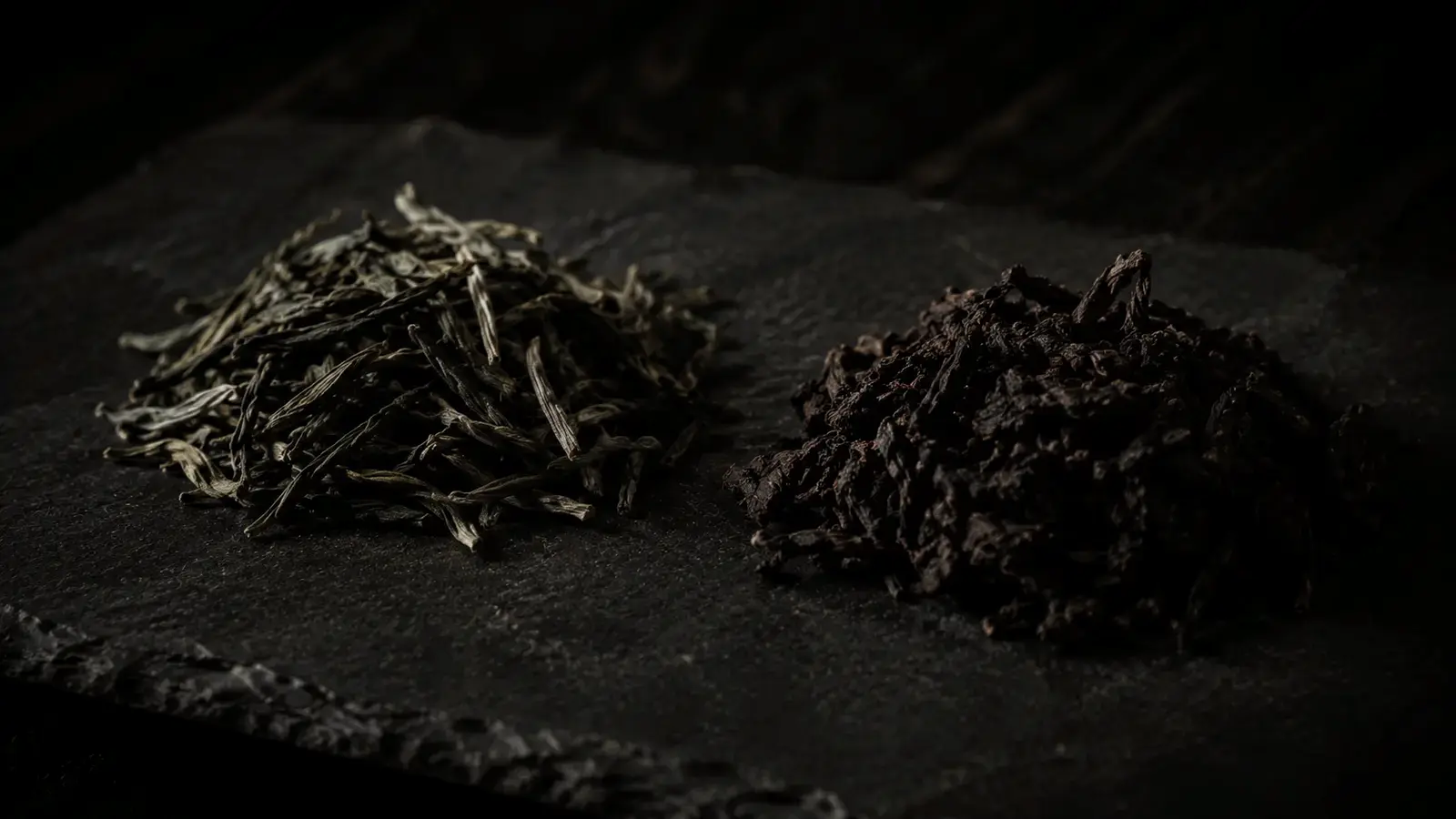
Dry Leaf
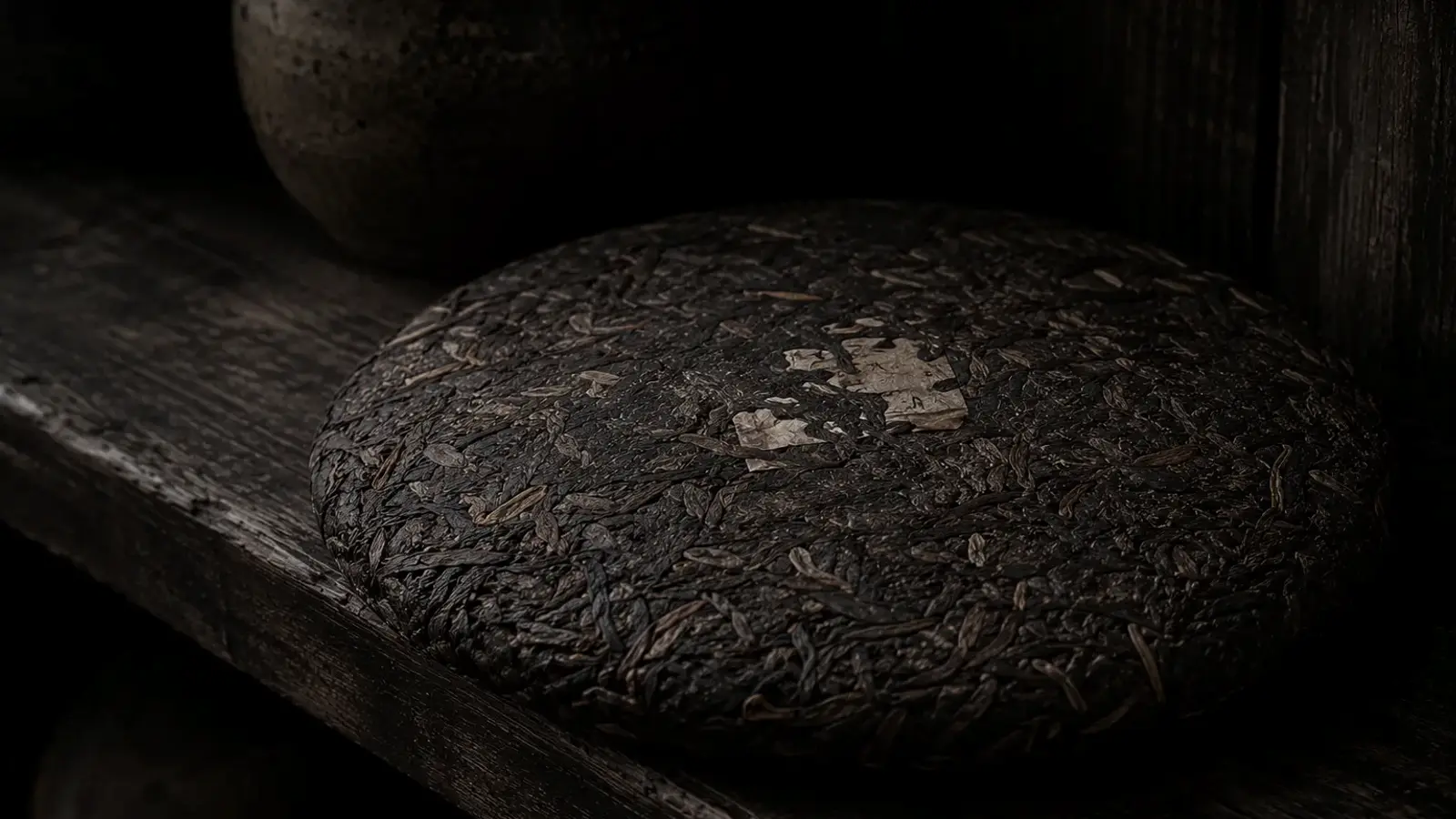
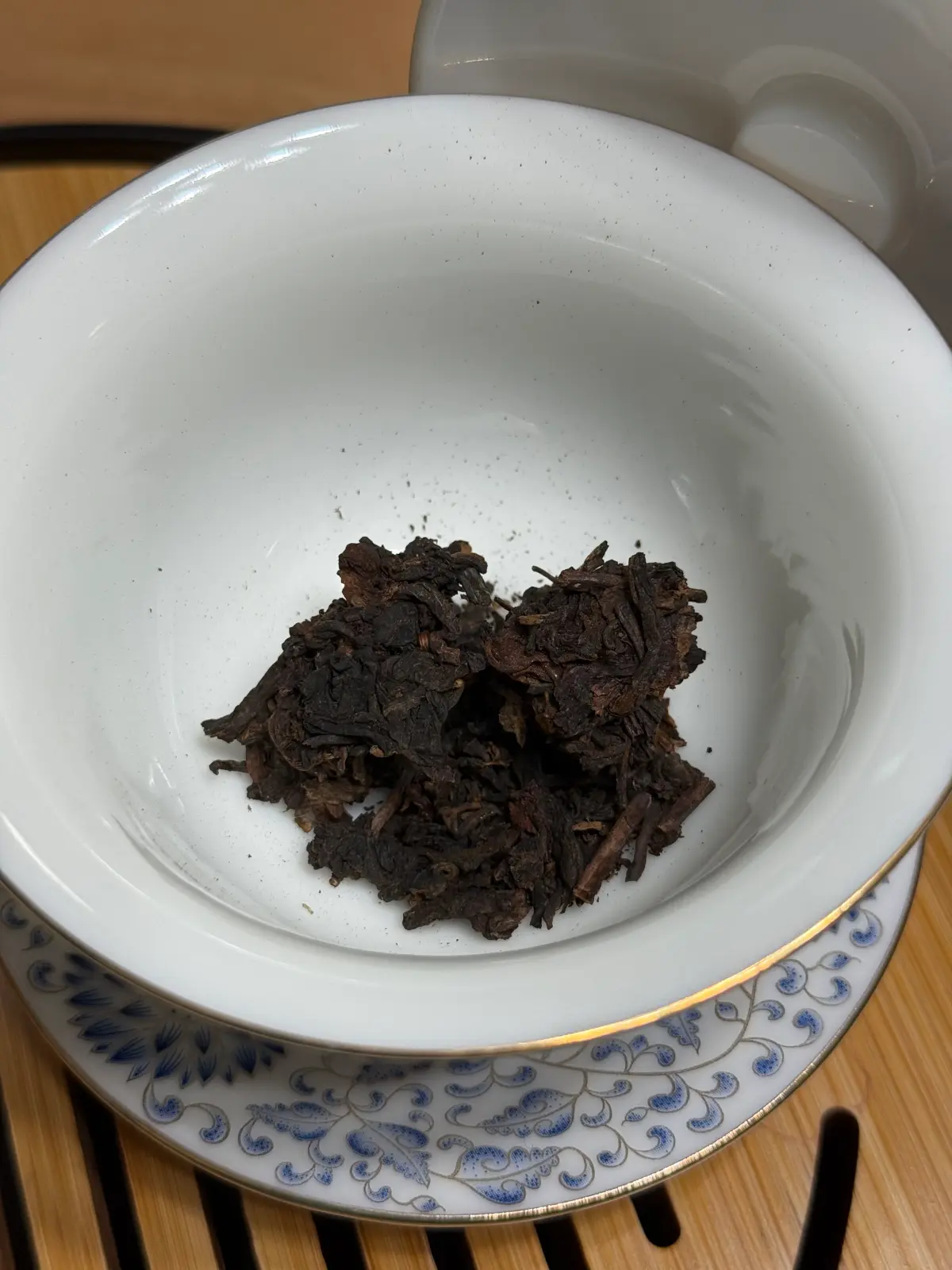
38 years old. The cake has been in the factory warehouse since 1988 — authenticated original production, not the marketplace counterfeits that circulate under this label. The dry leaf is quiet. Aged sheng reveals itself in water, not in the hand.
The Session
Third session with this tea. The first was cut short by cha zui — brewed on an empty stomach after a morning Dian Hong, the qi overwhelmed me with dizziness. The second was truncated by an anxiety period. This third session, weeks later, was the one it deserved: Saturday morning, full stomach, calibrated scale, and a palate educated by 30+ sessions across every major tea category and Yunnan terroir.
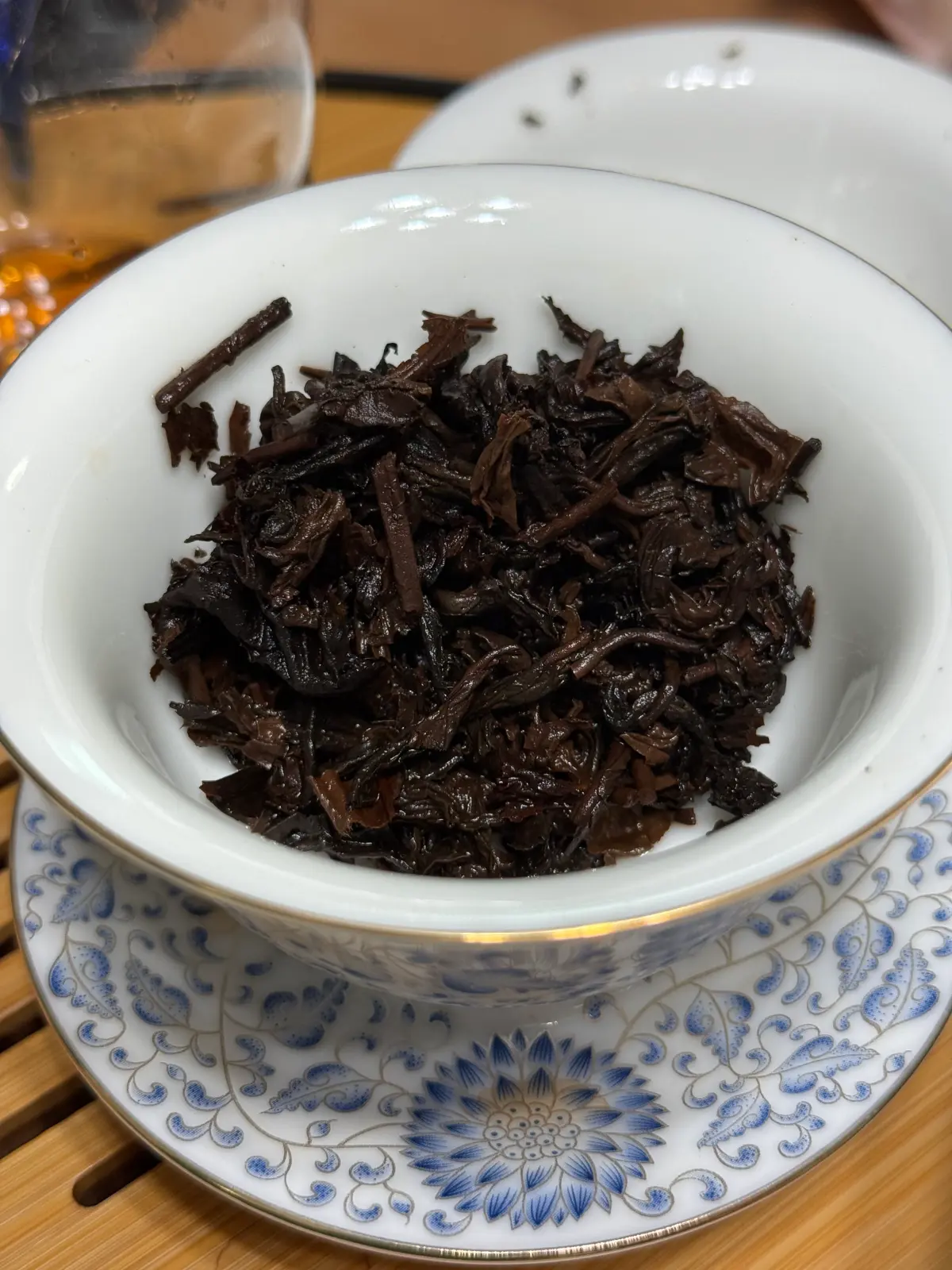
The wet leaves confirmed the signature: 편백나무 (hinoki cypress). The same camphor-resinous-wood aromatic family detected across a purple bud shou (목욕탕), a Meng Song shou (한증막), and a 2006 Yiwu sheng (subtle, sweet version). But here, in its 38-year-old form, the camphor is most fully expressed — clean, warm, resinous, almost mentholated. This is not a borrowed echo like Mengku’s faint peach. This is the source note. The 편백나무 belongs to aged sheng from this region the way peach belongs to Yiwu.
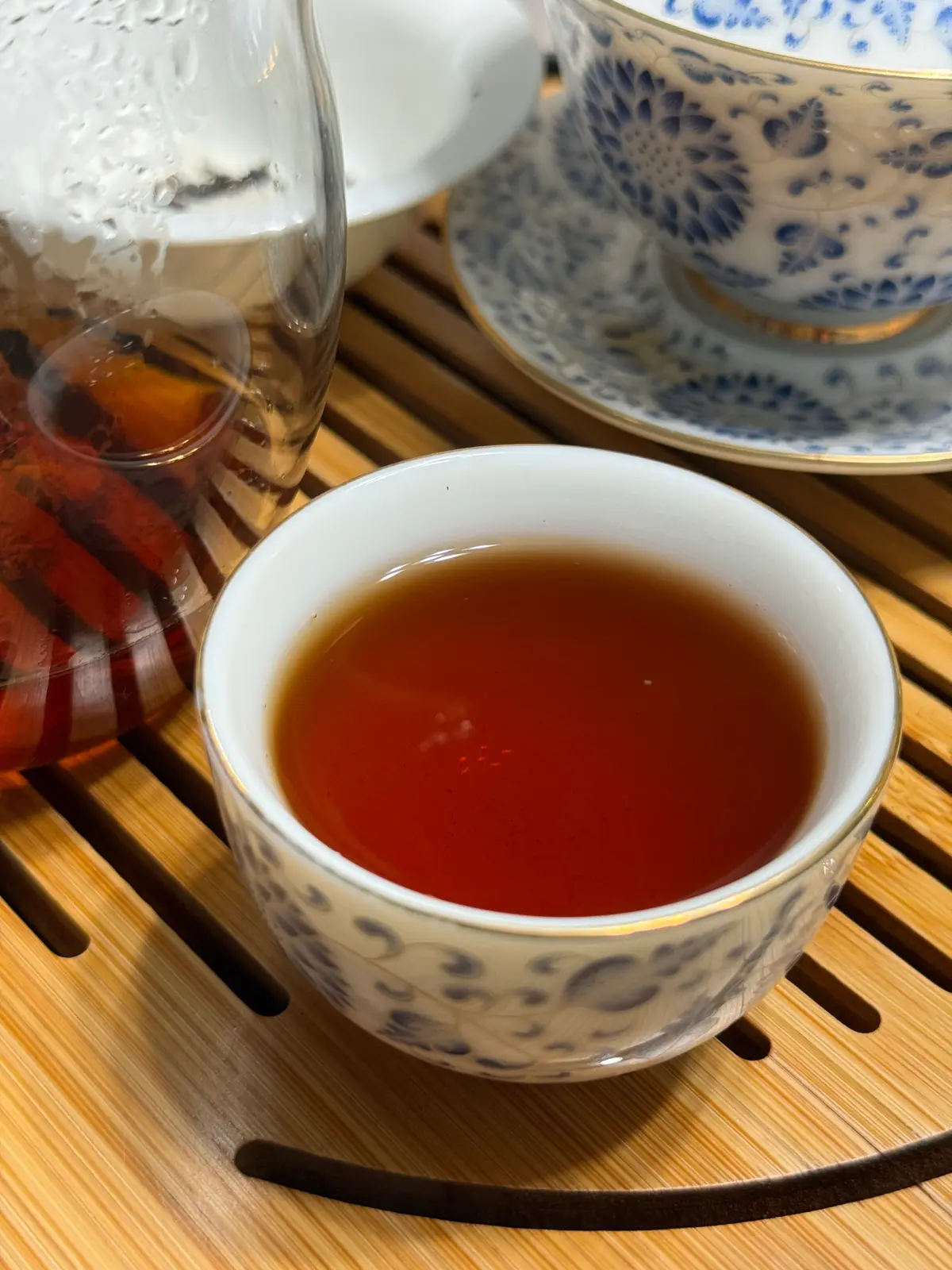
The liquor poured dark — dark enough to confuse the eye. But the first sip dissolved the confusion. Shou delivers its flavor as a single integrated statement. This tea delivered its flavor as a conversation — wood and tropical fruit talking simultaneously, medicinal herbs threading through sweetness, dark chocolate yielding to tree sap and vanilla in the same swallow. The flavors didn’t replace each other across steeps the way they do in younger teas. They coexisted within each steep, shifting emphasis like light moving across a painting.
The smoothness is beyond anything in my collection. I wrote “sooo smoooooth” during my first session when I had almost no reference points. Now, having tasted 30+ teas including aged Yiwu silk and Bulang grip and shou velvet, the descriptor holds. This tea is smoother than all of them. But it’s a smoothness with dimension — not the uniform polish of shou, which feels like sliding over glass. This feels like sliding over aged wood that has been touched by thousands of hands. Smooth, but with history in the grain.
Flavor Profile
The front is dark, aged, almost shou-like — dark chocolate, earth, wood. The convergence is most visible here. But even in the opening, there’s a three-dimensionality that shou doesn’t produce. Multiple vectors moving at once.
The mid is where the tea’s identity crystallizes. Medicinal, nutty, herbaceous, and flowery notes emerge — cumin, tree sap, nutmeg, fenugreek, vanilla, orange blossom. This is a vocabulary that doesn’t exist in shou. Fermentation consolidates flavor into broad categories (chocolate, earth, wood). Natural aging over 38 years preserves micro-compounds that create this extraordinary specificity — not “spice” but cumin and nutmeg and fenugreek individually. Not “sweet” but vanilla and tree sap as distinct entities. The richest palette of hues in the wood-nut spectrum I’ve encountered.
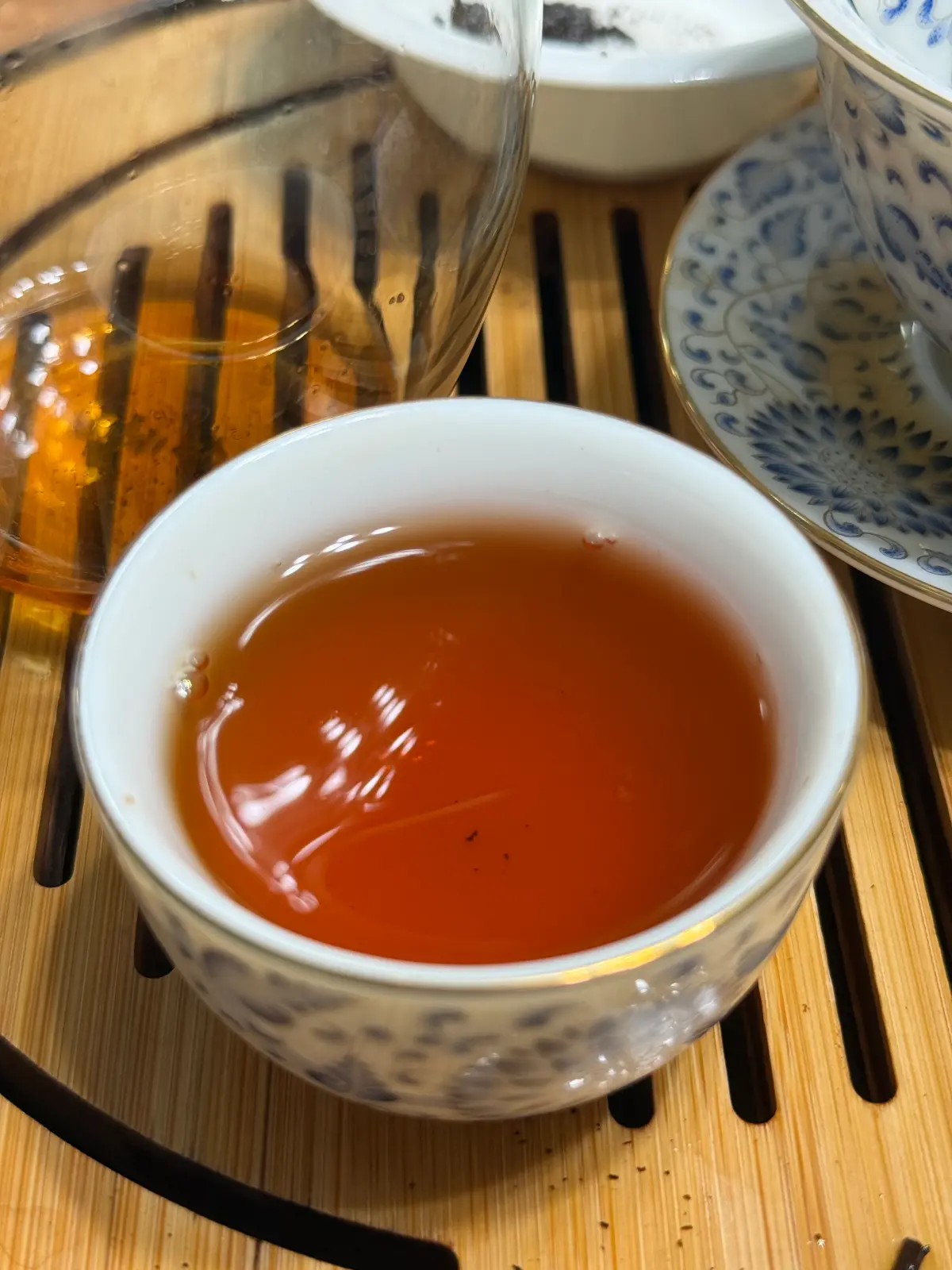
The finish reveals the hidden sheng. One reviewer found that the tea started off like dark chocolate shou but ended as tropical fruit. Another found earthy and woody notes reminiscent of a tropical forest — fruity notes like ripe mangosteen. This tropical fruit survival is the proof that natural aging preserves what fermentation destroys. The volatile esters that create fruit notes are obliterated by shou’s aggressive wet-pile process. Thirty-eight years of gentle transformation kept them alive, buried under layers of aged character, waiting to emerge in the finish.
Mouthfeel and Huigan
The smoothness is the summit. Smoother than any craft shou’s velvet. Smoother than the 2006 aged shou’s silk. Smoother than the Yiwu’s warmth. The smoothness doesn’t try. It just is.
The density of the liquor delivers power through softness rather than force.
The huigan is omnipresent rather than episodic. It doesn’t arrive as a conversion event (Bulang style) or as a gentle buffer (Yiwu style). It’s woven into every sip. The sweetness is structural — part of the tea’s architecture rather than a separate sensation.
Qi Notes
Dense but delicate. Four words that capture what no other tea in the collection produces. Dense — you feel it. The warmth, the calm, the spreading physical sensation is real and unmistakable. Delicate — it doesn’t overpower. It doesn’t cause cha zui when properly managed (eating first is non-negotiable). It settles into the body like a warm tide rising slowly. One reviewer described drinking it as feeling like rich meaty soup rather than a tea. That’s the qi expressing through the body as nourishment rather than stimulation.
Previous sessions: Session 1 caused cha zui (lesson: eat first). Session 2 was anxiety-shortened. Session 3 (today): the qi expressed as sustained contemplative calm that lasted well past the session. The tea changes how the morning feels.
The 편백나무 Signature
This tea is where the household aromatic signature was first discovered. 편백나무 — hinoki cypress, Korean sauna wood, jjimjilbang. The camphor-terpene-resinous family that has since been detected across a purple bud shou (목욕탕), a Meng Song shou (한증막), and a 2006 Yiwu sheng (subtle, fruity version).
In this 38-year-old sheng, the 편백나무 is most fully expressed. It’s the source note. The others were echoes. Long tropical warehouse storage at 38 years produces camphor more prominently than any other storage condition or terroir in the collection. The 편백나무 belongs to this tea.
The Convergence Thesis
Why does this matter beyond personal tasting?
The pu-erh world is built on a fundamental question: does aged sheng converge with shou? The factory answer (1970s Menghai): yes, so we invented shou to shortcut the process. The collector answer: no, because what’s lost in the shortcut is irreplaceable.
This 1988 proves both sides right. At 38 years, aged sheng visually converges with shou — the color, the darkness, the smoothness overlap. A blind taster might confuse the first sip. But by the second swallow, the dimensionality announces itself. The fruit that fermentation kills. The aromatic specificity that fermentation consolidates. The textural grain that fermentation polishes away. These survive natural aging because the transformation was gradual enough to preserve them.
Shou is a photograph — clear, resolved, immediate. Aged sheng is a painting — layered, alive, interpretive.
Both are valuable. Both are real. The photograph tells you exactly what it is. The painting tells you something different each time you look.
Verdict
The summit tea. Not because it’s the most intense (that’s Bulang), or the most revelatory (Yiwu’s peaches), or the most comforting (a certain craft shou I reach for nightly). Because it exists in a place that no other tea can reach — the border between sheng and shou where 38 years of patient transformation created something that neither category fully contains.
The tea started its life as something like a young sheng — bright, berry, gentle. Thirty-eight years later, it tastes like a tropical forest floor lit by camphor. Every year between then and now is in the cup. Every season, every humidity fluctuation, every microbial generation that lived and died on these leaves contributed to what’s here.
This is what patience tastes like. This is what time does when you trust it.
This tea's strongest axis is Aroma (9/10). Also notable: Body, Flavor Transition, Finish Length, Steep Endurance, Cha Qi. Notably low: Astringency.