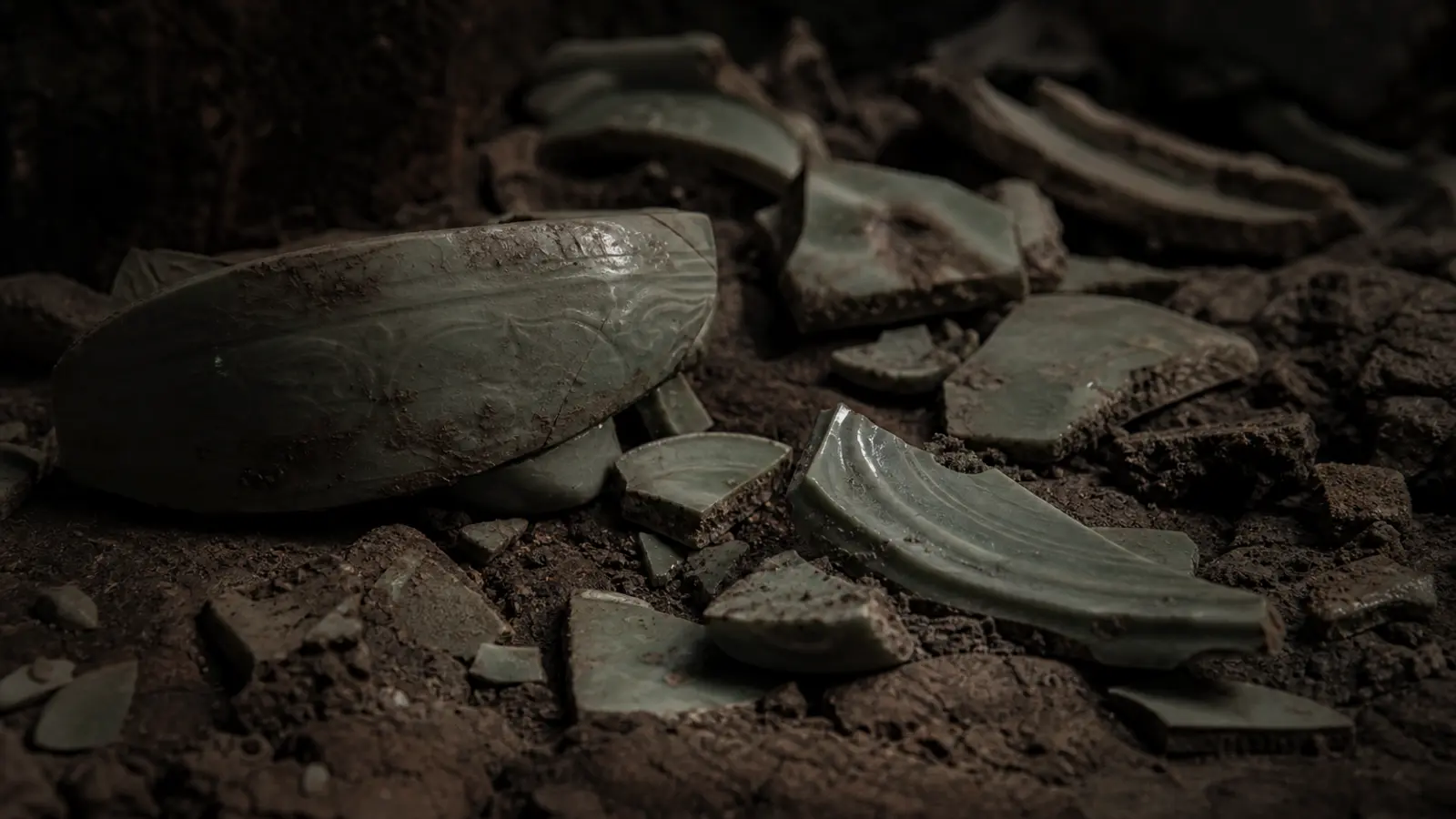
Gangjin (강진) is the birthplace of Korean celadon — the specific, archaeologically documented landscape where ninth-century potters first perfected the jade-green glaze that would come to define an entire dynasty’s aesthetic ambition and influence ceramic traditions across East Asia. This is not a loose claim of heritage. Over 180 identified kiln sites line the hills and valleys of this quiet county on South Korea’s southwestern coast, spanning roughly five centuries of continuous production. For anyone who handles Korean teaware — or drinks from a celadon cup and wonders where that luminous green began — Gangjin is the answer.
If you know wine: Gangjin is to Icheon (이천) what the Côte d’Or is to broader Burgundy. Icheon is the modern hub for Korean ceramics, a thriving center of contemporary studios and market activity. Gangjin is the origin point — the specific terroir where the tradition was born, where the clay and the fire and the local knowledge first converged into something that Chinese Song Dynasty scholars called first under heaven.
Geography & Location
Gangjin county sits on the southern coast of Jeollanam-do (전라남도), South Jeolla Province, roughly at 34.6°N, 126.8°E. The landscape is a mix of low coastal hills, tidal flats, and river valleys that cut through gentle mountain terrain. The Tamjin River (탐진강) drains the interior, and the kiln sites cluster primarily around the Sadang-ri (사당리) and Yongwun-ri (용운리) areas in Daegu-myeon (대구면), a sub-district about 15 kilometers south of the county center.
The coastline matters. Gangjin’s position gave potters direct access to maritime trade routes. During the Goryeo dynasty (고려, 918–1392), finished celadon could move by boat to the capital at Gaegyeong (개경, modern Kaesong) far more efficiently than overland transport allowed. This logistical advantage — quality clay underfoot, fuel wood in the surrounding hills, and a sea lane to the aristocratic market — concentrated production here rather than elsewhere.
The 180-plus kiln sites are not scattered randomly. They follow ridgelines and hillsides where natural slope assisted the draft of climbing kilns, and where proximity to streams provided water for clay processing. Walking the excavated sites today, the density is striking — this was an industrial landscape, not a scattered collection of artisan workshops.
Climate & Elevation
Gangjin sits at low elevation, mostly between sea level and 200 meters where the kiln sites are concentrated. The climate is humid subtropical, tempered by the coastal position. Summers are hot and wet; winters are mild by Korean standards, rarely dropping far below freezing. Annual rainfall exceeds 1,400 millimeters.
The climate influenced production cycles. Potters historically worked through much of the year, but firing schedules had to account for monsoon humidity and fuel-wood moisture content. The mild winters meant kilns could operate in cooler months when reduced humidity made firing conditions more predictable.
For contemporary studios, this climate remains a factor. Drying raw pieces demands careful management during the humid summer months, while winter provides more stable conditions for the critical bisque and glaze firings.
Soil & Terroir
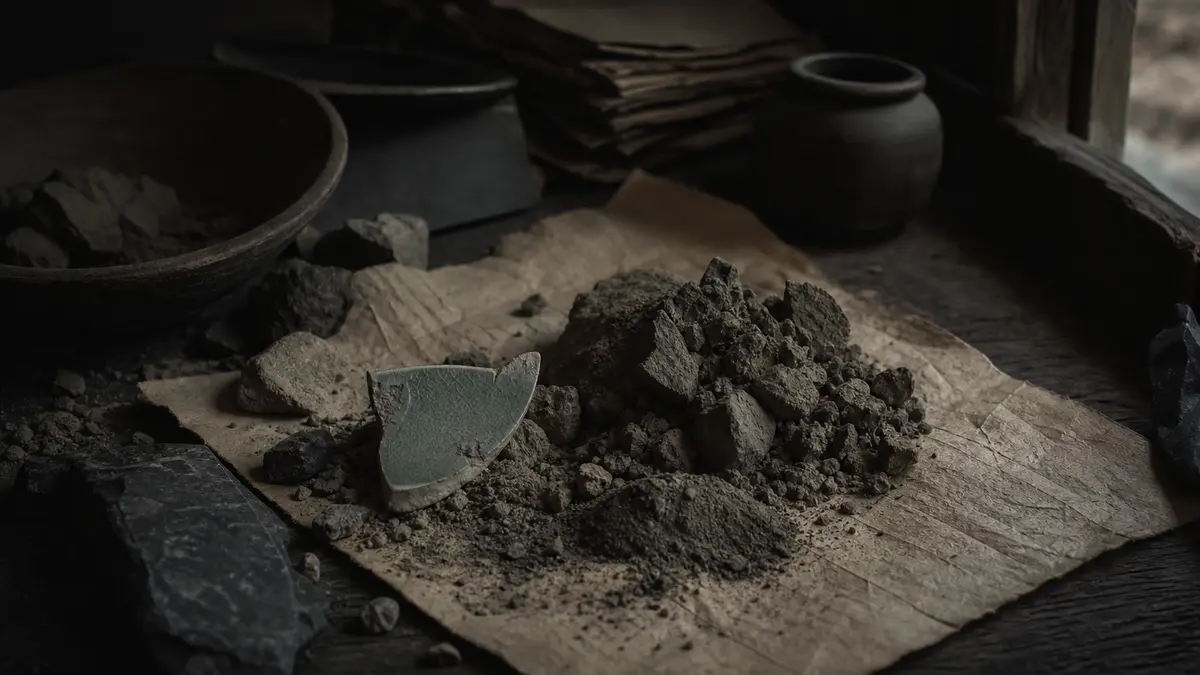
The local clay is the foundation of everything. Gangjin’s geology provides a fine-grained, iron-bearing clay body that, under reduction firing, produces the characteristic gray-green stoneware body that takes celadon glaze beautifully. The iron content is moderate — enough to contribute to the glaze interaction but not so much that the body fires dark or coarse.
The specific feldspar and silica content of Gangjin’s clay allowed potters to achieve thin, elegant walls without sacrificing structural integrity during high-temperature firing. Multiple sources report that the local clay deposits, while not unlimited, have sustained production from the ninth century through the present day, with contemporary potters still sourcing locally.
This is terroir in the truest sense. The same word we use for wine applies here with equal precision: a convergence of geology, microclimate, and accumulated human knowledge tied to a specific place. Gangjin clay is not interchangeable with clay from other regions. The glaze chemistry that produces bisaek responds differently to different clay bodies, different mineral compositions, different kiln atmospheres. What Gangjin potters achieved was not a transferable recipe — it was a place-specific mastery.
Key Cultivars & Tea Types
The term “cultivars” maps imperfectly onto ceramics, but the analogy holds if we think in terms of distinct ceramic types and decorative traditions that Gangjin produced.
Bisaek Celadon (비색청자)
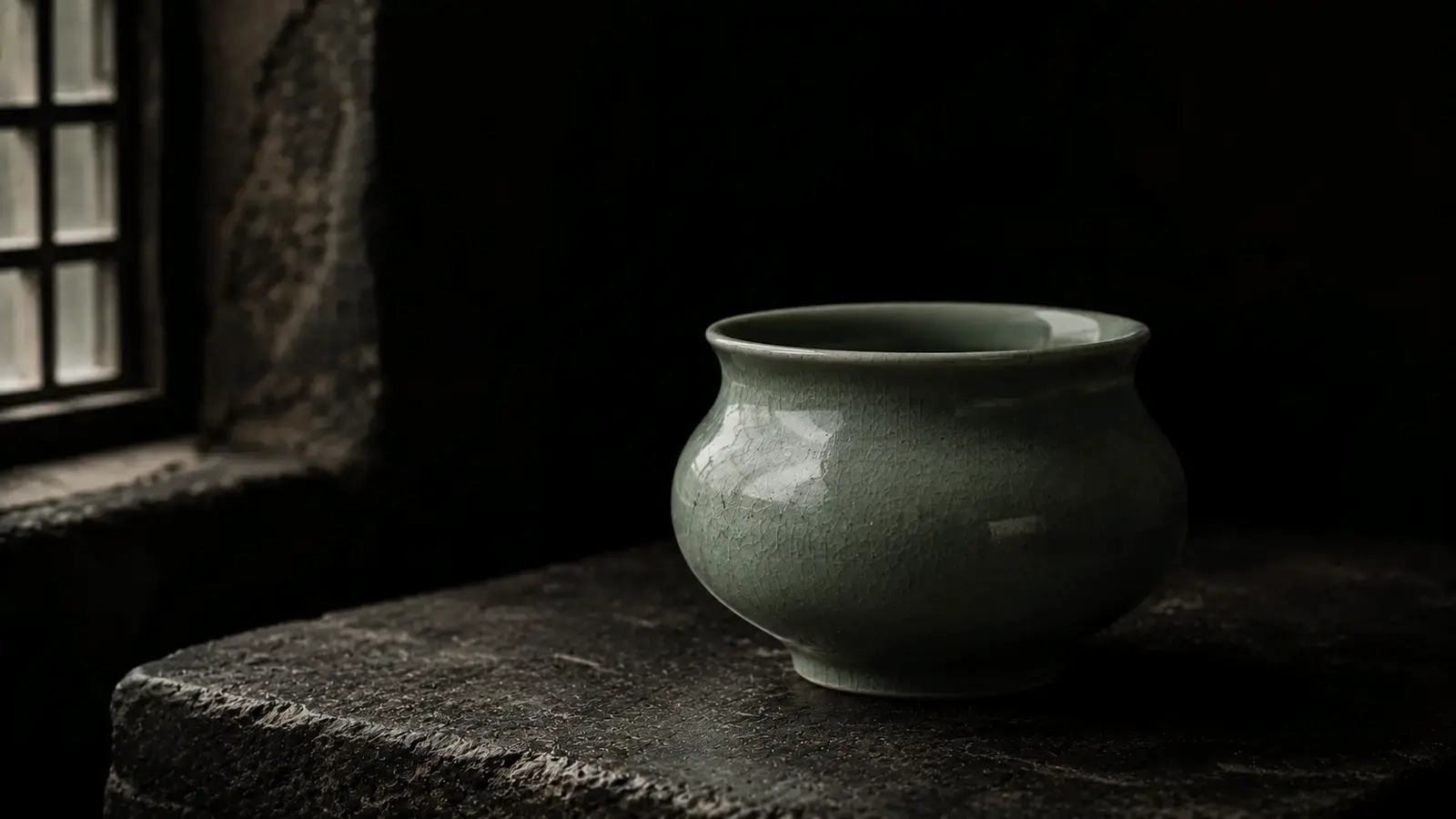
The signature achievement. Bisaek (비색) translates literally as “jade color” or “kingfisher color” — a specific shade of blue-green produced by iron oxide in the glaze reduced in a low-oxygen kiln atmosphere. At its finest, bisaek celadon has a translucent, almost wet quality, as though the surface holds light rather than reflecting it. The Chinese term tianxia diyi (天下第一) — “first under heaven” — was applied to this glaze by Song Dynasty commentators, an extraordinary acknowledgment from a civilization that considered its own ceramic tradition supreme.
Sanggam Celadon (상감청자)
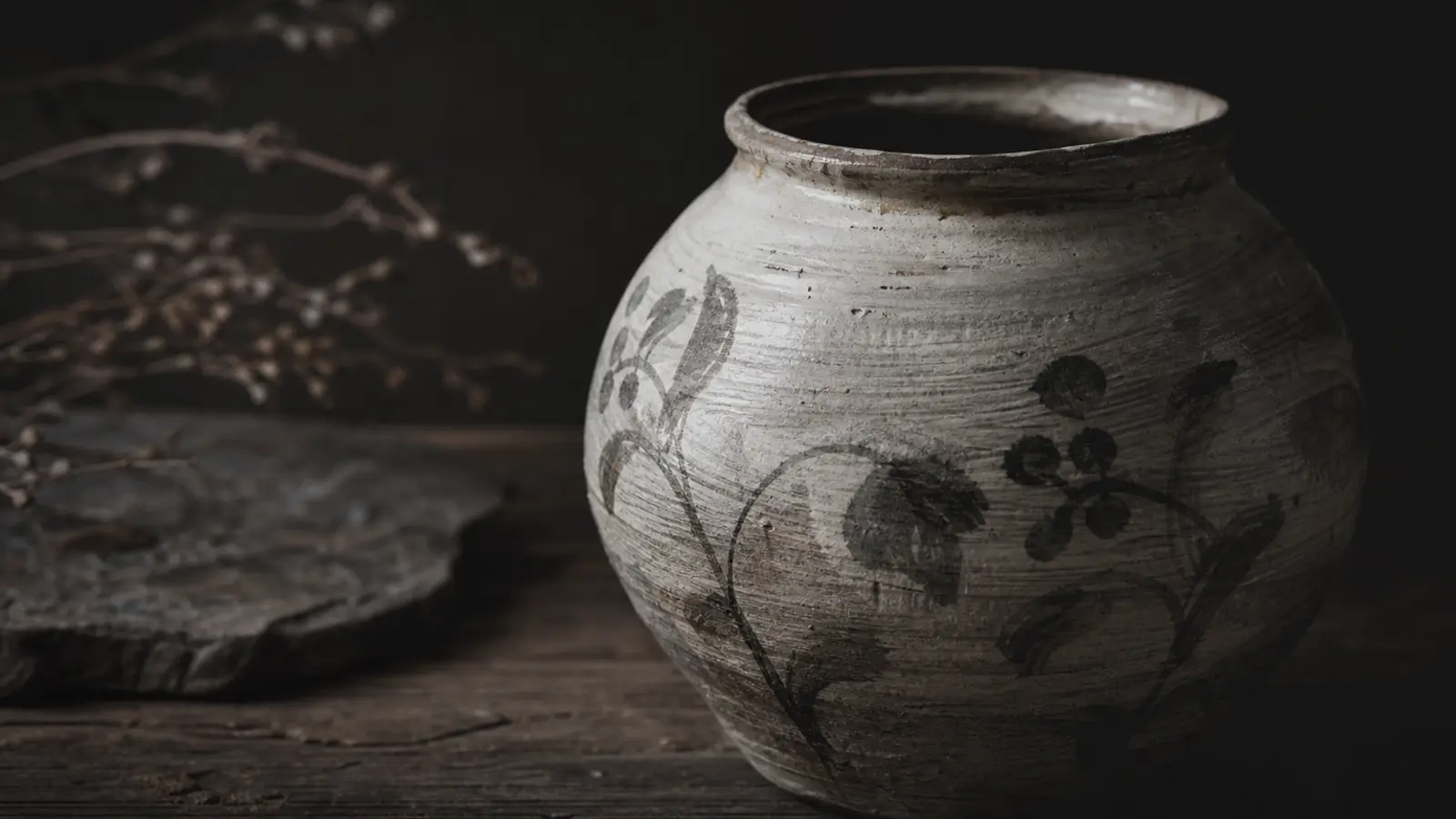
The second major innovation, and one that belongs entirely to Korea. Sanggam (상감) is the inlay technique: designs are carved or stamped into the leather-hard clay body, and the recesses are filled with contrasting slip — white clay (백토, baekto) for light elements, iron-rich clay (자토, jato) for dark ones. After the excess slip is scraped away and the piece is bisque-fired and glazed, the inlaid designs appear beneath the translucent celadon glaze with remarkable clarity.
No Chinese or Japanese ceramic tradition independently developed this technique. It is a uniquely Korean contribution to world ceramics. The most celebrated sanggam pieces feature cranes, clouds, lotus flowers, and willow branches — motifs drawn from both Buddhist and secular Goryeo culture — rendered with a precision that still looks startling eight centuries later.
Plain and Incised Wares
Not all Gangjin production was elite. The kiln sites also produced simpler wares with incised or carved decoration, mold-pressed designs, and utilitarian forms. These pieces tell us that the Gangjin kilns operated across a spectrum from imperial commissions to broader market production.
Processing Traditions
Celadon production at Gangjin followed — and in contemporary studios still follows — a demanding sequence.
- Clay preparation. Local clay is weathered, washed, and refined to remove impurities. The levigated clay is aged, sometimes for months, to improve plasticity.
- Forming. Wheel-throwing for vessels, slab construction for architectural elements. Gangjin potters achieved remarkably thin walls — some Goryeo pieces have walls under 3 millimeters thick.
- Trimming and carving. Once leather-hard, pieces are trimmed on the wheel and any incised, carved, or sanggam decoration is applied.
- Inlay (for sanggam pieces). White or iron slip is pressed into carved recesses, excess removed, surface smoothed.
- Bisque firing. A preliminary firing around 800–900°C hardens the body.
- Glazing. The celadon glaze — primarily feldspar, silica, and a small percentage of iron oxide — is applied by dipping, pouring, or brushing.
- Glaze firing. This is the critical step. Pieces are fired in a climbing kiln (등요, deungyo) to approximately 1,250–1,300°C in a reduction atmosphere. Reduction means the kiln is starved of oxygen at peak temperature, forcing the iron oxide in the glaze to convert from ferric (Fe₃⁺) to ferrous (Fe²⁺) state. This chemical conversion produces the green color. The difference between a flat, grayish glaze and a luminous bisaek is a matter of precise temperature control and reduction timing.
The climbing kiln design — a long, multi-chambered structure built along a hillside — was essential to reaching and sustaining the temperatures required. Archaeological evidence from Gangjin shows kilns of varying size, some exceeding 40 meters in length, with multiple firing chambers that allowed potters to exploit temperature gradients.
Contemporary Gangjin studios maintain this reduction-atmosphere firing tradition. Some use modern gas kilns for consistency; others fire with traditional wood for the subtle atmospheric effects. The local clay and the fundamental chemistry have not changed.
Characteristic Flavor Signatures
In ceramic terms, the “flavor signature” of Gangjin celadon is recognizable to anyone who has handled enough Korean ceramics.
Visual. The bisaek glaze at its best is a soft, saturated blue-green with depth — not a surface coating but a luminous field that appears to have dimension. Compared to Chinese Longquan (龍泉) celadon, which tends toward a more olive or gray-green, Gangjin bisaek runs bluer, closer to the color of still water reflecting a clear sky.
Tactile. The glaze surface is smooth but not glassy. It has a subtle warmth under the fingers, a quality that makes Gangjin celadon teaware particularly pleasant to hold. The body beneath is dense and rings clearly when tapped.
Formal. Goryeo-period Gangjin pieces tend toward elegant, spare forms — melon-shaped vases, lobed cups, chrysanthemum-form bowls. The proportions are precise without being rigid. There is a confident restraint to the best Gangjin work that parallels the best Burgundy: nothing excessive, nothing missing.
For teaware specifically, Gangjin celadon cups and bowls are prized for how the glaze color interacts with the color of tea liquor. A pale green or gold tea in a bisaek cup creates a visual interplay that is part of the aesthetic experience of Korean tea culture — the practice known as darye (다례).
Quality Indicators & Authentication
Distinguishing genuine Gangjin-origin celadon — whether historical or contemporary — involves several markers.
For historical pieces:
- Provenance documentation and, where available, thermoluminescence dating
- Kiln furniture marks (spur marks on the base where the piece rested during firing)
- Clay body color when examined at the foot ring — Gangjin clay fires to a characteristic gray
- Glaze quality: authentic bisaek has micro-bubbles within the glaze layer that contribute to its depth; flat, uniform green glazes are suspect
For contemporary pieces:
- Studio provenance — a named potter working in Gangjin with documented training lineage
- Local clay sourcing — studios that import clay from elsewhere are producing celadon-style work, not Gangjin celadon in the terroir sense
- Reduction firing evidence — oxidation-fired pieces lack the bisaek character regardless of glaze recipe
The Gangjin Celadon Museum (강진청자박물관) is the authoritative reference for archaeological context. Its collection includes fragments and intact pieces from the surrounding kiln sites, along with kiln furniture, saggar remains, and other production evidence. For anyone serious about understanding what historical Gangjin celadon actually looks like — as opposed to modern reproductions — the museum collection is essential.
Price Ranges
Contemporary Gangjin celadon teaware varies widely based on the potter’s reputation, the complexity of decoration, and firing quality.
- Simple cups and tea bowls from emerging potters: $30–$80 per piece
- Sanggam-inlaid cups and teapots from established studio potters: $100–$400
- Master-potter work (recognized by Korean cultural heritage designations): $500–$3,000+ for individual pieces
- Festival purchases at the annual Gangjin Celadon Festival (강진청자축제): pricing tends to be more accessible, with potters offering work directly; expect $20–$150 for functional teaware
Historical Goryeo-period celadon, when it appears at auction, commands dramatically higher prices — significant pieces have sold for hundreds of thousands of dollars. But that market is irrelevant to the tea drinker looking for a beautiful cup.
The international export market adds shipping and gallery markup. Purchasing directly in Gangjin — either at studios or during the festival — typically represents the best value, though it obviously requires the trip.
The Living Tradition
What makes Gangjin exceptional is not just the archaeological record but the continuity. Contemporary potters in the area work with local clay, fire in reduction atmospheres, and practice sanggam inlay in direct inheritance from the Goryeo tradition. This is not revival — it is continuation. Several Gangjin potters hold Korean government designations as Intangible Cultural Heritage holders (무형문화재) for celadon techniques.
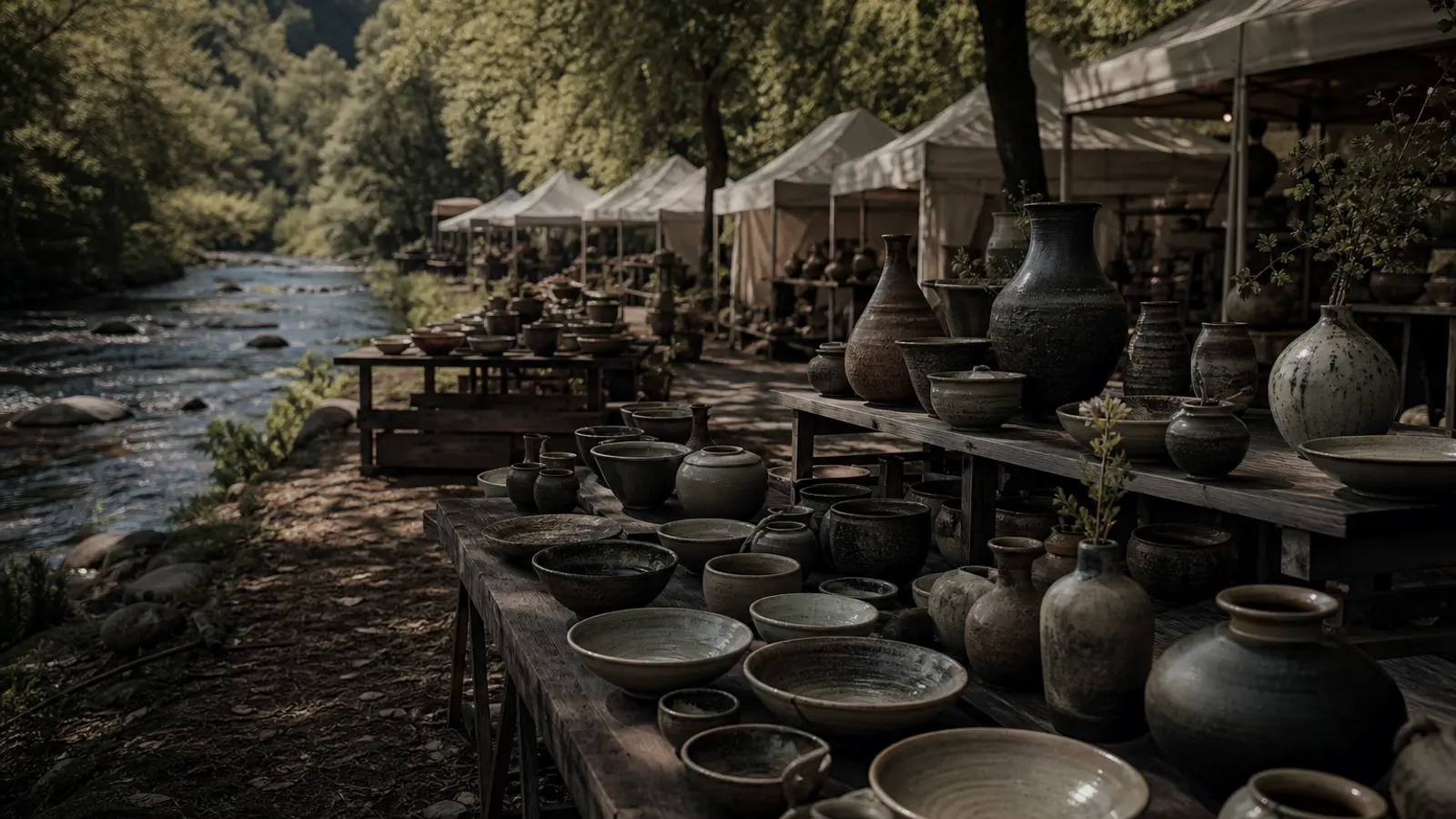
The annual Gangjin Celadon Festival, held each summer, brings this tradition into public view. The festival includes kiln demonstrations, hands-on workshops, exhibitions of historical and contemporary work, and direct sales from working potters. For collectors interested in celadon lineage — in holding a cup that connects to a thousand-year-old tradition through material, technique, and place — the festival is worth the journey to South Jeolla Province.
Gangjin will never have the commercial density of Icheon or the international profile of Japanese pottery towns like Mashiko or Arita. Its significance is more specific and more profound. This is where it started. The hills still hold the kiln ruins. The clay is still in the ground. The glaze still turns green in the reduction fire. For anyone who cares about where things come from — and if you are reading this site, you probably do — Gangjin is a pilgrimage.