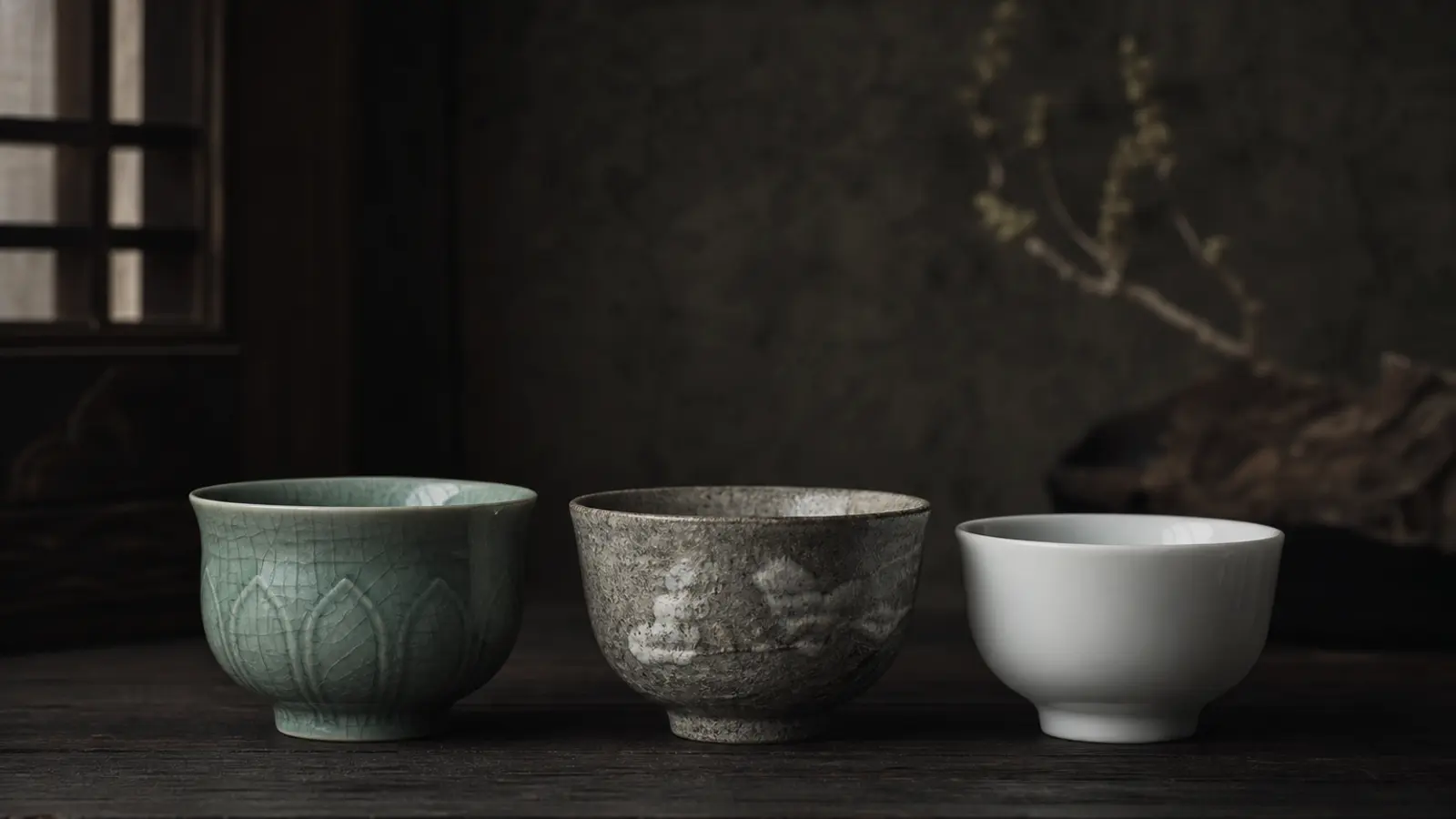
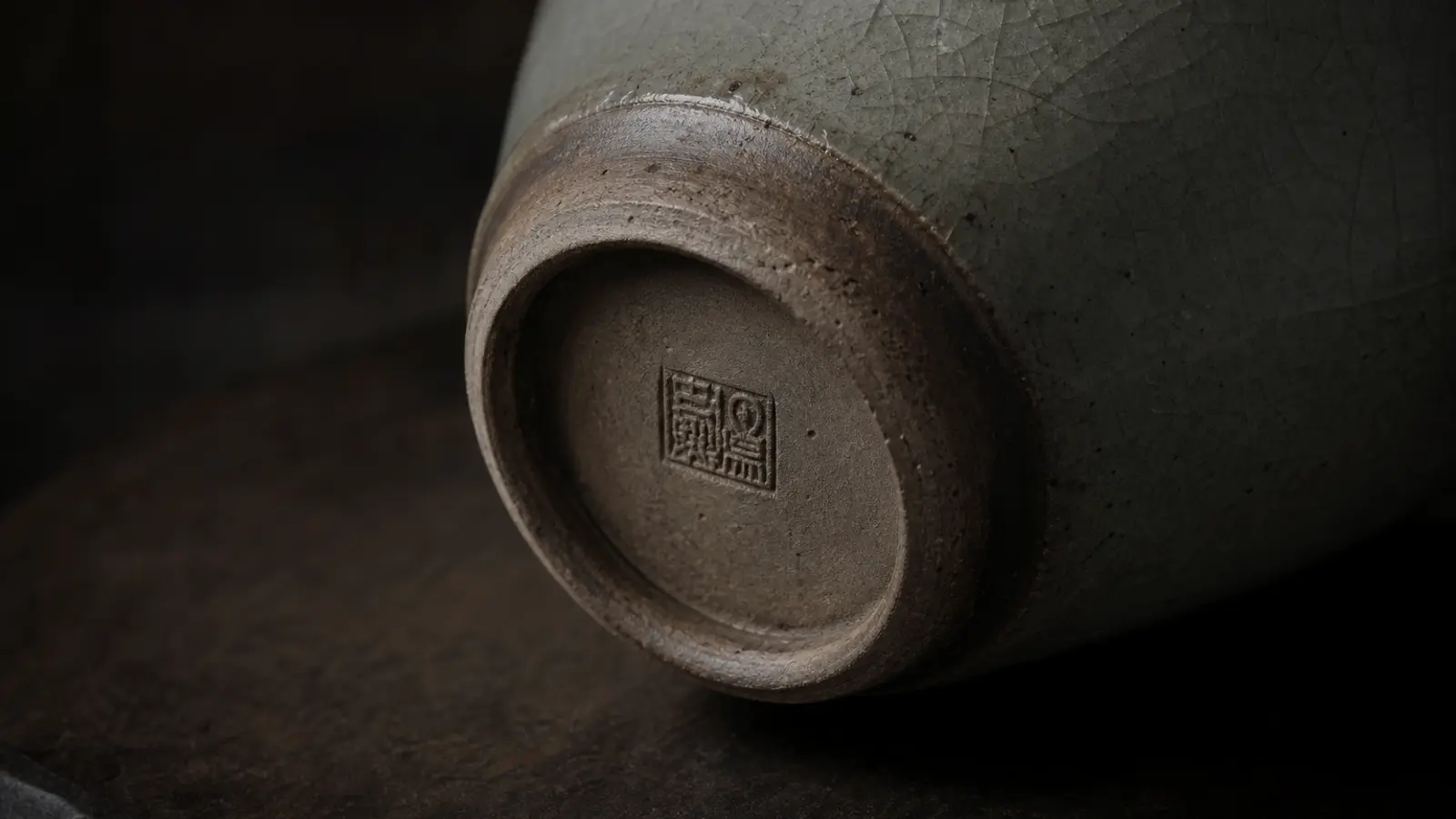
Identifying Korean pottery involves reading the potter’s seal (인장 injang) on the foot ring, recognizing the clay body and glaze characteristics of the three major traditions — celadon (청자), buncheong (분청사기), and white porcelain (백자) — and understanding the regional and historical conventions that distinguish authentic craft from production work.
Identifying Korean pottery involves reading the potter’s seal, examining the foot ring and clay body, understanding regional glaze characteristics, and verifying maker attribution — skills that separate informed collecting from speculative buying. No single marker tells the whole story. But when you learn to read them together, the base of a Korean ceramic vessel becomes a document.
This guide walks through each marker in sequence, from the seal outward.
Korean Pottery Marks and Stamps
The Potter’s Seal (인장 Injang): Where to Look First
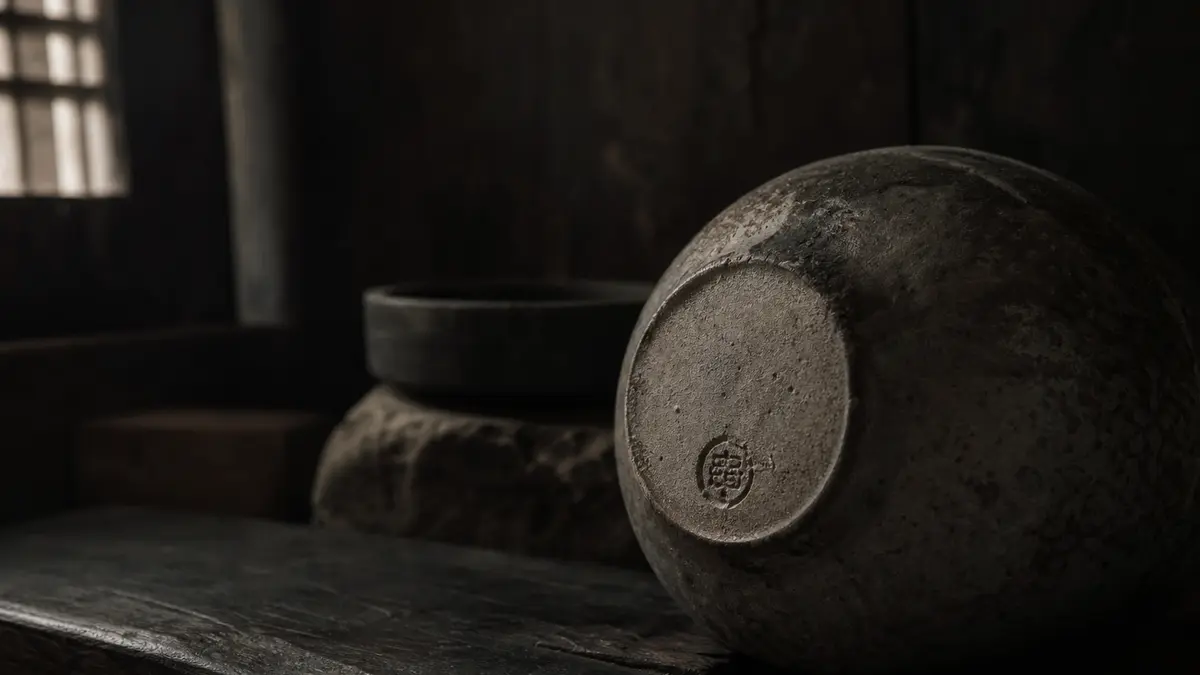
Most established Korean potters use a personal seal impressed or painted into every piece they make. The seal — called an 인장 (injang) — typically carries the potter’s art name (호 ho) rendered in Hangul or Hanja characters, pressed into wet clay before the bisque firing and so fused permanently into the body of the work.
Look for it on the foot ring or the flat base immediately inside the foot ring. The impression is usually small — 1 to 2 centimeters — and can be easy to miss under a thick glaze drip or dark shadow. Tilt the piece in raking light and run a fingertip across the base.
Some potters use multiple seals: one for their personal art name, one for their workshop name (방 bang or 요 yo). A dual-seal piece from a named workshop is easier to research than a single-seal piece, because workshop records sometimes survive when individual studio documentation does not.
What you should not rely on: printed or paper labels, stickers, or certificates of dubious origin sold separately from the piece. The seal is in the clay. Everything else is supplementary.
Reading the Foot Ring (굽 Gup)
Experienced collectors turn a Korean ceramic over before they look at the glaze surface. The foot ring (굽 gup) is the unglazed ring at the base of the vessel where the piece sat in the kiln, and it exposes what the rest of the glaze conceals: the raw clay body and the hand of the maker.
Hand-trimmed vs. machine-trimmed: A hand-trimmed foot ring shows slight irregularity — small tool marks from the trimming loop, a profile that varies slightly around the circumference. It will not be perfectly round when measured precisely. A machine-trimmed ring is geometrically uniform. This distinction matters because most serious studio potters in the Korean tradition trim by hand, and machine trimming is characteristic of production ware.
Foot ring height and angle: Historical Korean foot rings — particularly on Goryeo celadon (고려청자) and Joseon buncheong (분청사기) — tend to be relatively tall and slightly angled outward. Contemporary potters working consciously in these traditions often follow similar proportions. A low, wide, blunt foot ring is more characteristic of export or tourist ware.
Kiln sand and spur marks: High-fire Korean stoneware and porcelain were traditionally fired on sand or clay pads. You may see small granular textures on the base, or tiny spur marks — triangular indentations left by the ceramic supports used to separate pieces in the kiln. These are period-authentic signatures on historical pieces and deliberate references on some contemporary traditionalist work.
Clay Color and Regional Tradition
The clay visible at the foot ring is one of the most reliable regional identifiers in Korean ceramics. Three traditions dominate serious collecting, and each has a characteristic clay body.
Icheon celadon (이천청자): Icheon potters in Gyeonggi Province use a clay that fires to a gray-blue body under the characteristic jade-green celadon glaze. At the foot ring, you see a pale gray with a faint blue undertone. The region has been a continuous center for celadon production since the Joseon period revival of Goryeo-era techniques.
Buncheong (분청사기): The buncheong tradition uses a coarser stoneware clay with visible grog and mineral particles. The body fires to a gray or brownish-gray. The coarser texture is functional — it accepts the white slip applications central to buncheong decoration — and visible at any unglazed surface.
Gwangju Bunwon white porcelain (광주 분원 백자): Joseon-era official kilns at Gwangju in Gyeonggi Province produced the canonical Korean white porcelain (백자 baekja). The clay is highly refined, fires pure white, and has a fine-grained surface at the foot ring. Contemporary potters working in this lineage use similarly refined porcelain clays, and the contrast between the white body and any glaze pooling at the foot is immediately distinctive.
Celadon vs Buncheong: Key Visual Differences
Glaze Characteristics and Surface Decoration
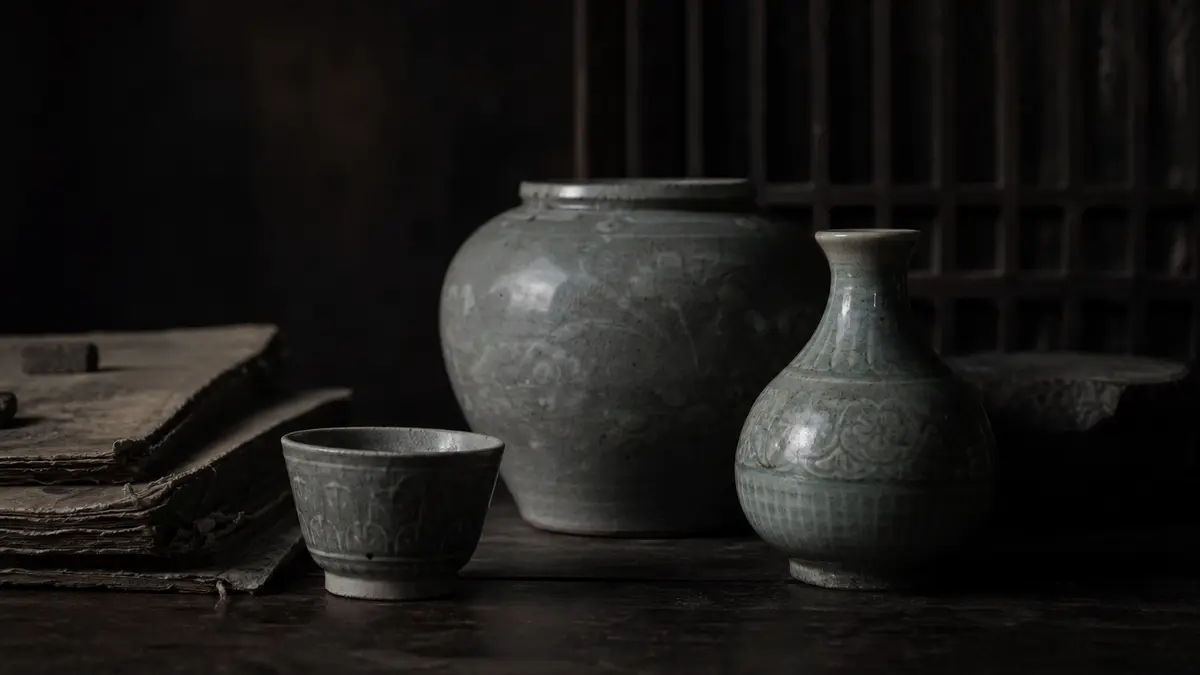
Glaze reading is where identification becomes most nuanced, because glaze responds to clay body, firing atmosphere, kiln temperature, and application thickness simultaneously. Experience matters here in ways that description can only approximate.
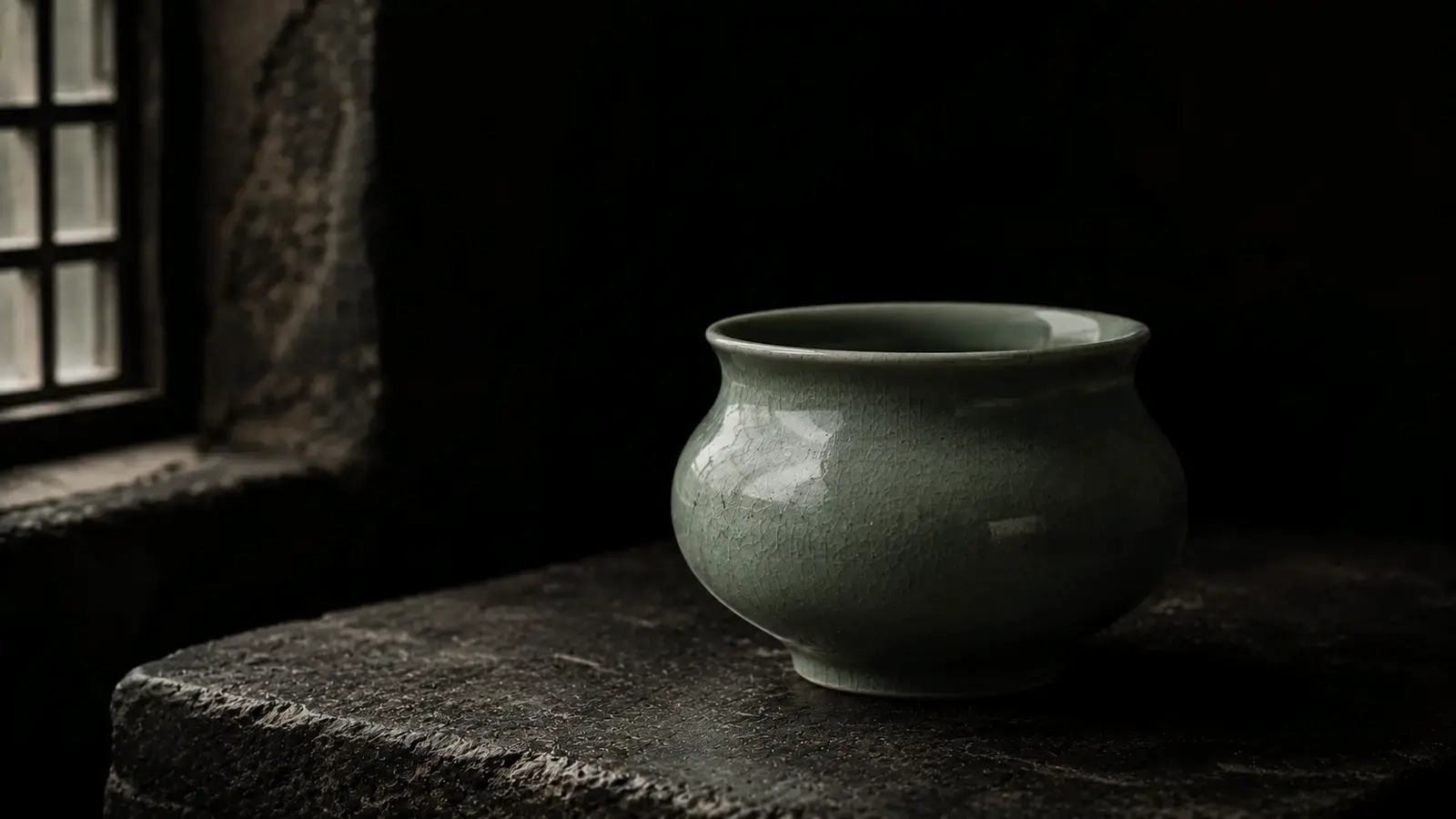
Celadon crazing (균열 gyunyeol): Natural crazing — the network of fine cracks in the glaze surface — is not a defect in Korean celadon. It is a characteristic. Goryeo celadon (10th–14th century) develops a specific crazing pattern determined by the thermal expansion differential between the clay body and the glaze. Contemporary celadon potters who fire in traditional reduction kilns produce similar crazing. Artificially induced crazing in lower-fire ceramics looks different: the craze lines are often wider, more uniform, and lack the slight color depth that comes from decades of tannin absorption in a genuinely old piece.
Buncheong surface techniques: The buncheong tradition encompasses several distinct surface approaches, each leaving a different visual signature:
- 분장 (bunjang): Full white slip coating applied by dipping or pouring, covering the clay body entirely. The slip surface is smooth and white, often with subsequent brushwork or stamped decoration visible through or into the slip.
- 박지 (bakji): Sgraffito technique where the slip is applied and then areas are scraped away to reveal the gray clay beneath, creating two-tone patterns. Scraping tool marks are visible at close inspection.
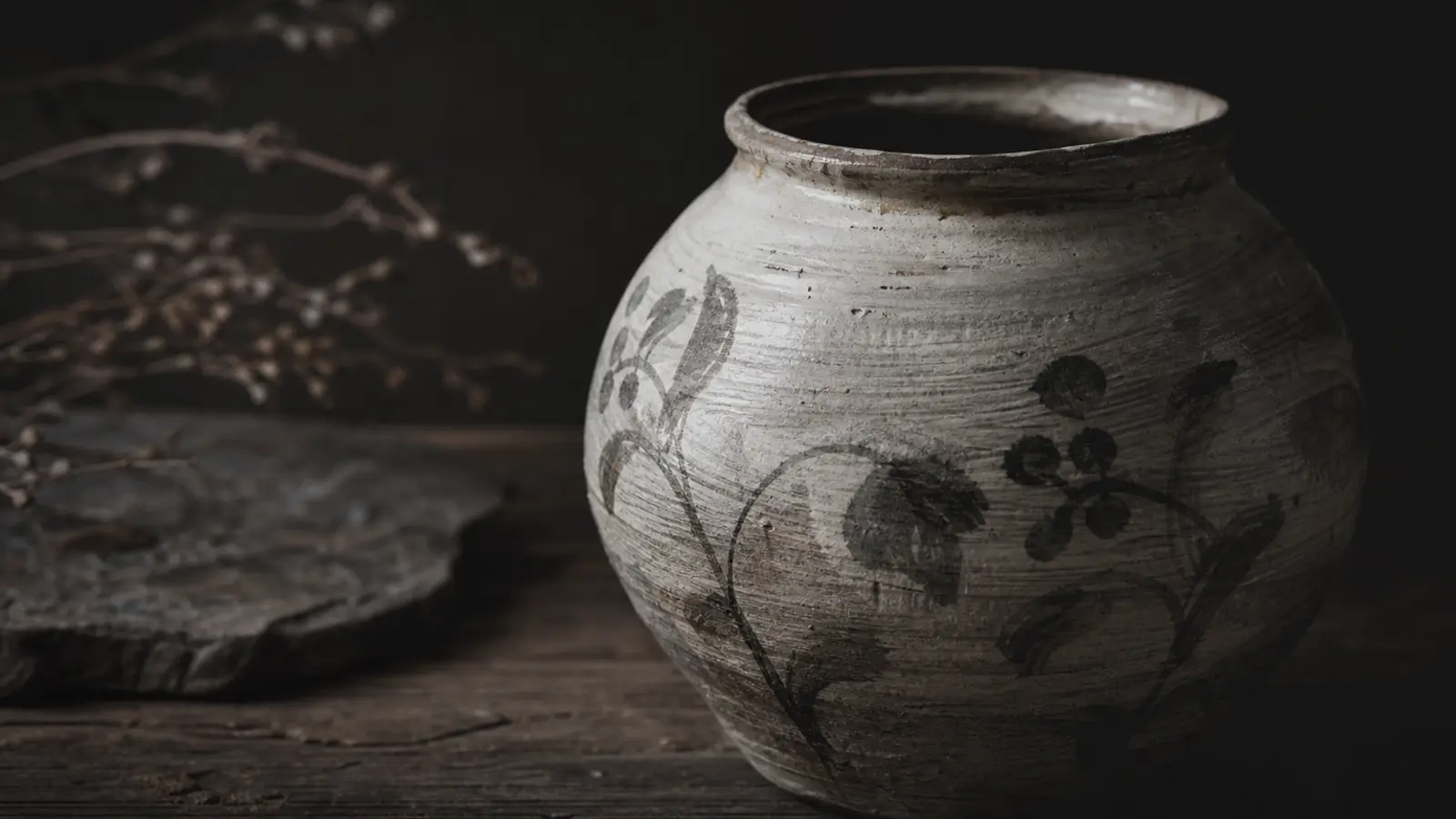
- 귀얄 (gwiyeol): Slip applied with a coarse brush, leaving visible brushstroke texture across the surface. The stroke pattern is regular but not mechanical.
- 철화 (cheolhwa): Iron oxide painting applied over slip or directly onto the clay, firing to brown-black brushwork. The painting quality varies significantly between studio potters and production ware.
Being able to name the technique you’re looking at is the first step toward evaluating whether it’s executed well.
Dynasty and Period Identification
Collectors working with historical pieces — or evaluating contemporary work against historical standards — need working familiarity with the defining characteristics of each major period.
Goryeo celadon (고려청자, 10th–14th century): The Goryeo period produced what many ceramics historians consider the apogee of East Asian celadon work. The glaze color ranges from blue-green to jade; the finest examples show a translucent depth that Goryeo potters called 비색 (bisaek, “jade color”). The defining inlay technique — 상감 (sanggam) — involves incising designs into leather-hard clay and filling the incisions with white or dark slip before glazing. Sanggam inlay is labor-intensive and technically demanding; crude inlay on a piece claiming Goryeo period attribution is a strong warning sign.
Joseon buncheong (분청사기, 15th–16th century): Buncheong emerged in the early Joseon period as a regional adaptation of celadon traditions. Forms are often more casual and asymmetric than Goryeo work; decoration is energetic and sometimes deliberately rough. The tradition ended abruptly following the Japanese invasions of 1592–1598, which destroyed most kiln sites and displaced the potter communities. Authentic Joseon buncheong shows age characteristics — staining, wear at the foot ring, specific crazing patterns — that are difficult to reproduce consistently.
Joseon baekja (백자, 15th–19th century): White porcelain dominated the official Joseon court aesthetic. Forms follow specific proportional conventions that evolved through the period — early Joseon baekja tends toward fuller, rounder forms; late Joseon toward more refined and spare profiles. The cobalt blue underglaze decoration (청화 cheongwha) on decorated pieces uses imported cobalt of varying quality, and the blue tone shifts accordingly across periods.
Understanding these period conventions helps you evaluate how a contemporary potter relates to the tradition — whether they’re in genuine dialogue with historical forms or applying a surface aesthetic without structural understanding.
Verifying Master Designation
The Korean Crafts Foundation (한국공예디자인문화진흥원) maintains a database of legitimate 명장 (myeongjang, national master craftsperson) and 무형문화재 (intangible cultural heritage) designations. These designations are government-issued, numbered, and publicly verifiable.
If a piece is sold with a claimed master attribution, the process is straightforward: ask for the designation number and the potter’s registered name. Cross-reference against the Foundation’s database. Any legitimate designation will be there. A seller who cannot provide a verifiable designation number — or who responds to the request with vague assurances — is telling you something.
Master-designated Korean potters typically provide certificates of authenticity (감정서 gamjeongso) with significant pieces. These certificates note the piece’s title, dimensions, firing method, and the potter’s designation number. They are not infallible — certificate forgery exists — but a coherent certificate that matches a verifiable designation is meaningful documentation.
Which Korean Pottery for Which Tea?
For pu-erh and aged tea sessions — celadon or buncheong. The unglazed foot ring and natural clay body of Korean stoneware do not impart flavors into the liquor, and the thick walls retain heat across long gongfu sessions. For green tea and light oolong — white porcelain (baekja) or a thin-walled celadon cup, which lets color and aroma register cleanly. For daily drinking — a buncheong bowl or cup built for use rather than display holds up to handling and rewards the informality of everyday sessions.
Putting the Markers Together
No single marker authenticates a Korean ceramic piece. The seal can be forged. The clay can be sourced from the right region by the wrong maker. The glaze can be technically accomplished without artistic depth.
What you’re building, as a collector, is a convergent case. A hand-trimmed foot ring with appropriate clay color, a legible seal that matches a known potter’s documented mark, surface decoration consistent with the claimed tradition, and — where significant money is involved — a verifiable designation or independent expert assessment. When the markers align, confidence builds. When they conflict, that conflict is itself information worth understanding before you buy.
The base of a Korean ceramic vessel is where the work is most exposed and least performed. Start there.