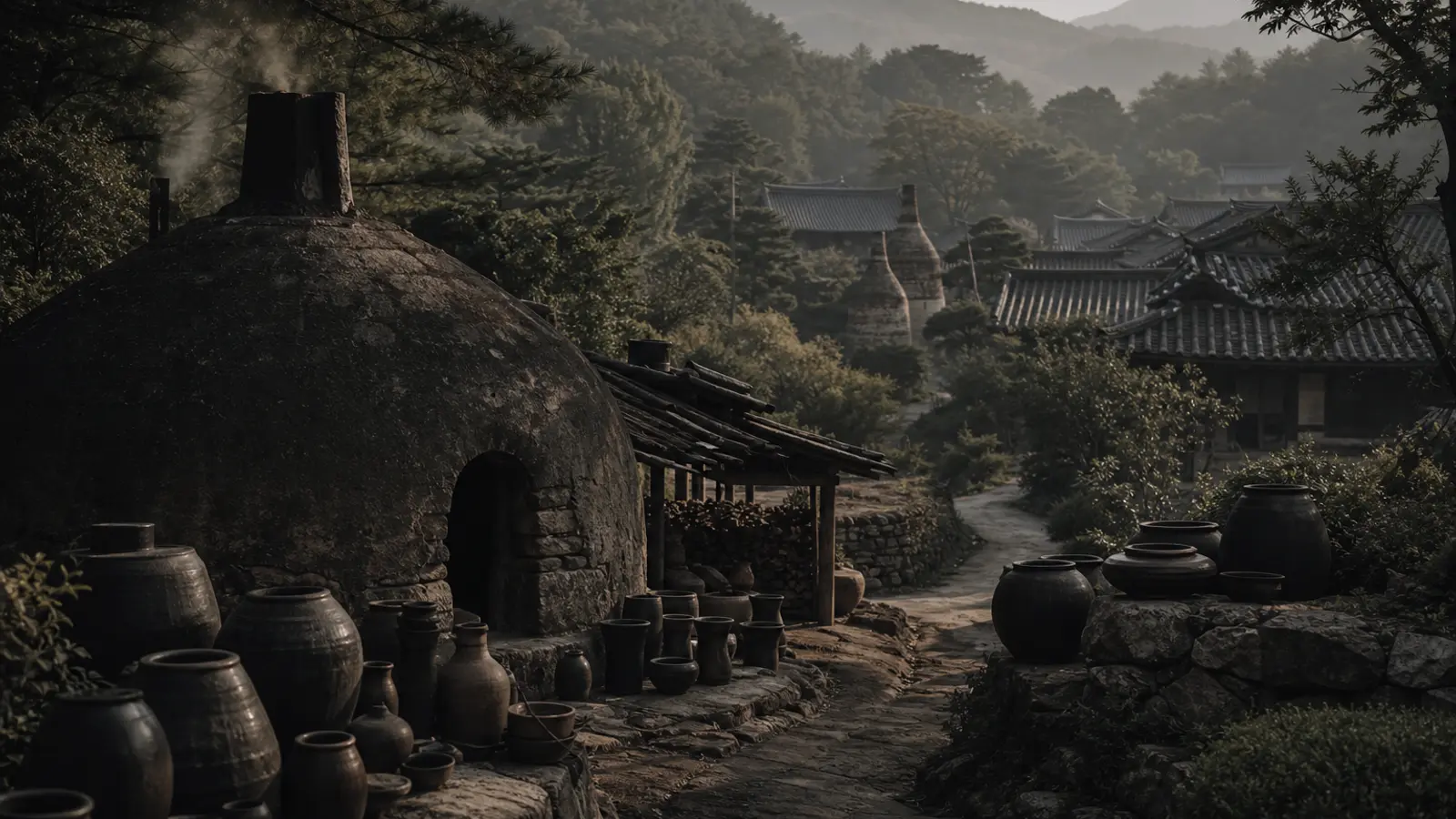
Icheon (이천) is the center of Korea’s living ceramic tradition — a UNESCO Creative City of Crafts with over 300 active pottery studios producing celadon, white porcelain, and contemporary teaware within a single city’s boundaries. Located 80 kilometers southeast of Seoul in Gyeonggi Province (경기도), this is where Korea’s ceramic past is actively reconstructed, debated, and extended into new forms. If you care about icheon pottery, you care about the entire arc of Korean material culture.
Think of Icheon as the Beaune of Korean ceramics. Beaune isn’t the largest city in Burgundy, but it’s where the density of producers, the weight of tradition, and the infrastructure of commerce converge into a single address. Icheon functions the same way for Korean pottery — concentrated, competitive, and historically loaded.
Geography & Location
Icheon sits in the southeastern corner of Gyeonggi Province, roughly centered at 37.27°N, 127.44°E. The terrain is low hills and river valleys, with elevations ranging from around 50 to 200 meters above sea level. The Bokha Stream (복하천) and its tributaries thread through the area, and the surrounding hills historically provided both the clay deposits and the wood fuel that made ceramics production viable here for centuries.
The city is accessible from Seoul in about an hour by car via the Yeongdong Expressway (영동고속도로), and intercity buses run frequently from Seoul’s Gangnam Express Bus Terminal. This proximity to the capital has been central to Icheon’s role — close enough to serve the court and the merchant class historically, close enough for day-tripping ceramics buyers today.
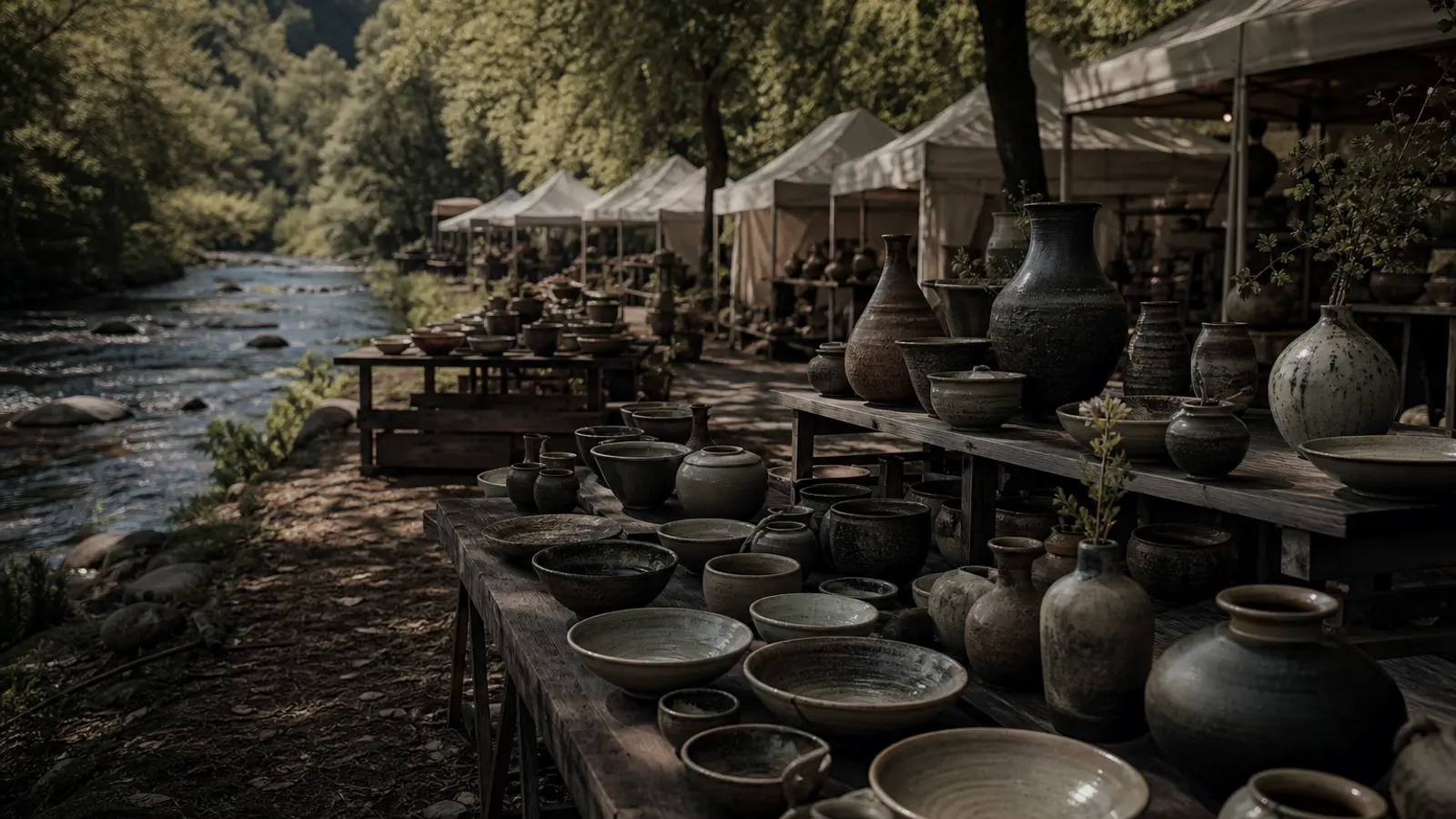
The pottery studios cluster in several distinct zones, with the heaviest concentration along the Sindun-myeon (신둔면) and Saeum-dong (사음동) areas. These aren’t isolated ateliers hidden in remote valleys. They line the roads, shoulder to shoulder in some stretches, with showrooms fronting the street and kilns out back. The density is the point.
Climate & Elevation
Gyeonggi Province has a humid continental climate with significant seasonal variation — cold, dry winters and hot, humid summers. January averages around -3°C; August pushes past 25°C with high humidity. Annual rainfall sits around 1,300 mm, concentrated heavily in the July–August monsoon season.
For ceramics, the climate matters less for growing anything and more for the kiln calendar. Traditional wood-firing schedules had to account for seasonal humidity affecting clay drying times and kiln behavior. The monsoon months historically slowed production. Today, with gas and electric kilns supplementing wood-fired ones, production runs year-round, but potters working with traditional wood kilns still time major firings around drier periods in spring and autumn.
Soil & Terroir
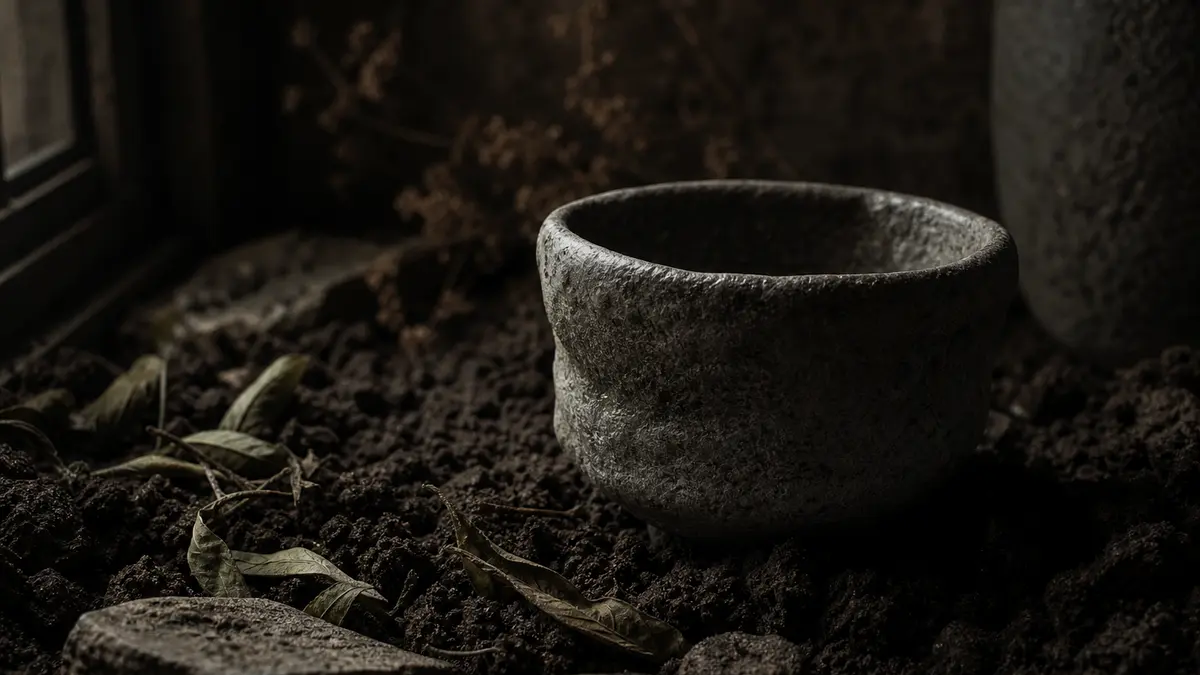
The clay deposits around Icheon are what brought potters here in the first place. The region’s soil includes veins of white kaolin-type clay and iron-bearing stoneware clay suitable for both porcelain and celadon production. Multiple sources describe the local clay as having the fine particle structure and relatively low impurity levels needed for high-temperature stoneware and porcelain bodies.
This is the ceramics equivalent of terroir. The raw material — local clay, local feldspar for glazes — historically defined what a region could produce. Icheon’s clays supported the full range: the iron-bearing bodies needed for celadon, the white clays needed for porcelain. Today, many potters supplement local clay with materials sourced from other regions or import refined clay bodies, but the tradition of local material use persists in studios emphasizing historical authenticity.
Key Cultivars & Tea Types
In a tea origin profile, this section maps the plant material. For a ceramics capital, the equivalent is the range of pottery traditions actively produced. Icheon covers the full Korean spectrum.
Goryeo Celadon (고려청자)
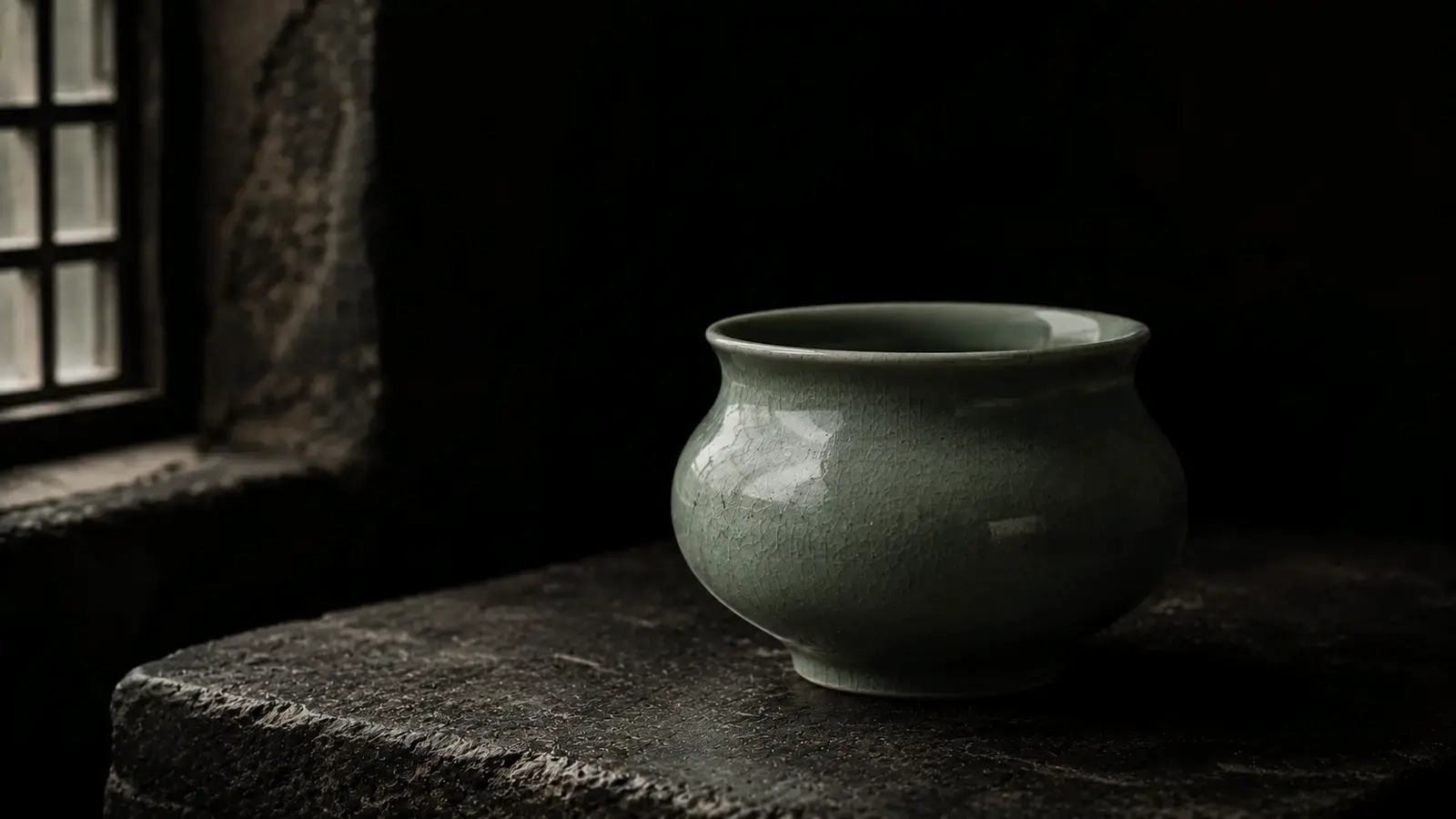
The city’s identity centers on the Goryeo celadon revival. The original Goryeo dynasty (918–1392) celadon — with its jade-green glaze called bisaek (비색, literally “secret color”) — is considered the pinnacle of Korean ceramic achievement. The sanggam (상감) inlay technique, where designs are carved into the clay body and filled with contrasting white or black slip before glazing, is uniquely Korean. Classic motifs include crane-and-cloud patterns (운학문, unhangmun) and willow landscapes.
When the Goryeo dynasty fell and the Joseon dynasty rose, celadon production essentially ceased. The techniques went dormant for centuries. Icheon became the center of modern efforts to reconstruct these methods — potters working from archaeological shards, historical texts, and years of glaze chemistry experimentation to recover the bisaek color and sanggam precision. Several designated masters (명장, myeongjang) and cultural heritage holders (무형문화재, muhyeong munhwajae) maintain studios in Icheon dedicated specifically to this revival work.
Joseon White Porcelain (백자)
The Joseon dynasty (1392–1897) shifted Korean aesthetics from celadon’s jade greens toward the austere purity of white porcelain (백자, baekja). Icheon produces both plain white ware and pieces decorated with underglaze cobalt blue (청화백자, cheonghwa baekja) in the Joseon tradition. The best examples pursue the same Confucian restraint that defined the originals — clean forms, minimal decoration, surfaces that let the material speak.
Buncheong (분청사기)
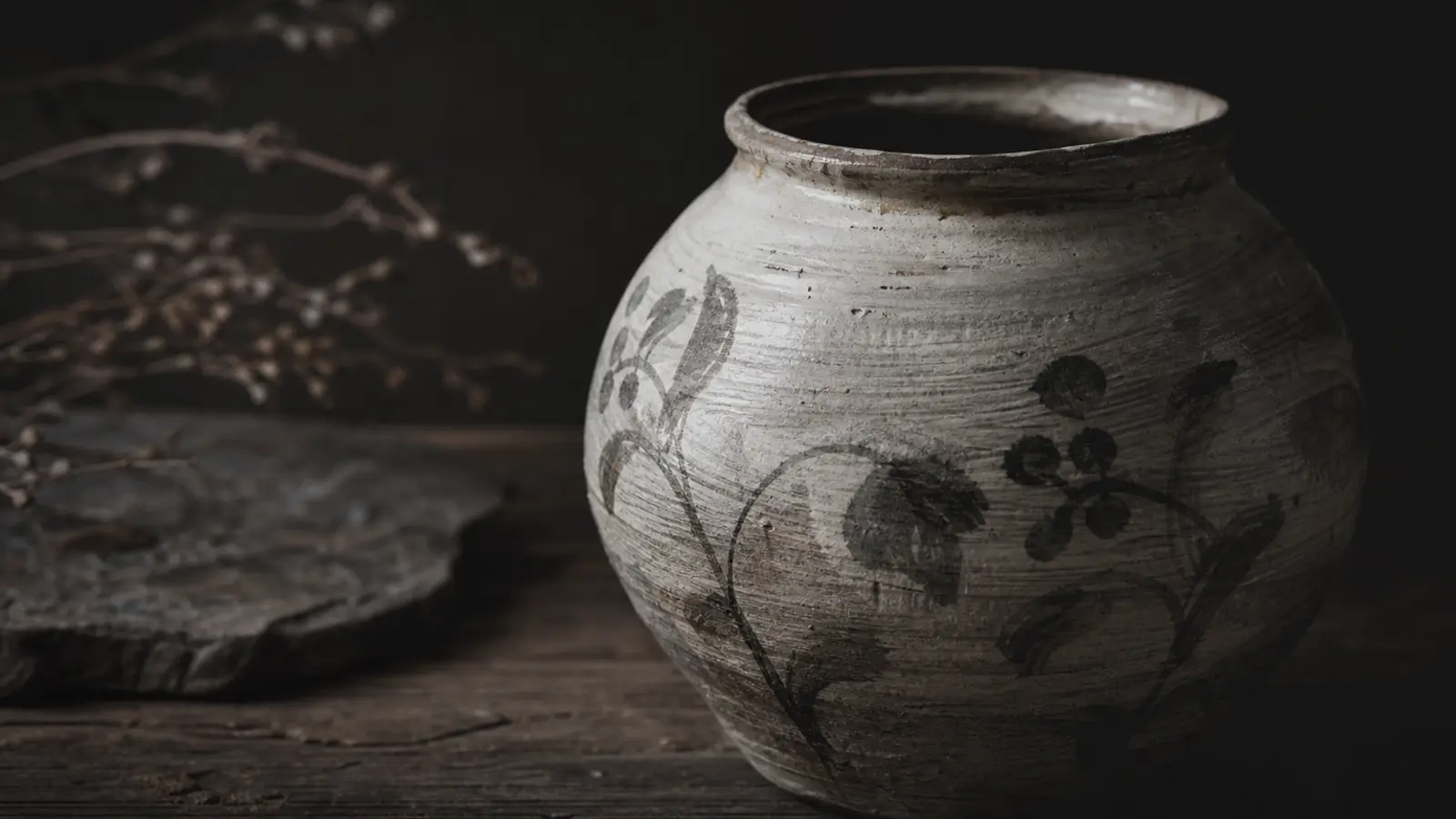
Buncheong (분청) stoneware bridges the Goryeo–Joseon transition historically and aesthetically. It uses a gray stoneware body with white slip decoration — stamped, brushed, carved, or dipped. The style has an earthy spontaneity that contrasts with both celadon’s refinement and white porcelain’s austerity. In Icheon, contemporary buncheong work tends toward expressive, sometimes almost abstract surface treatments that attract collectors looking for something less formal.
Contemporary Teaware
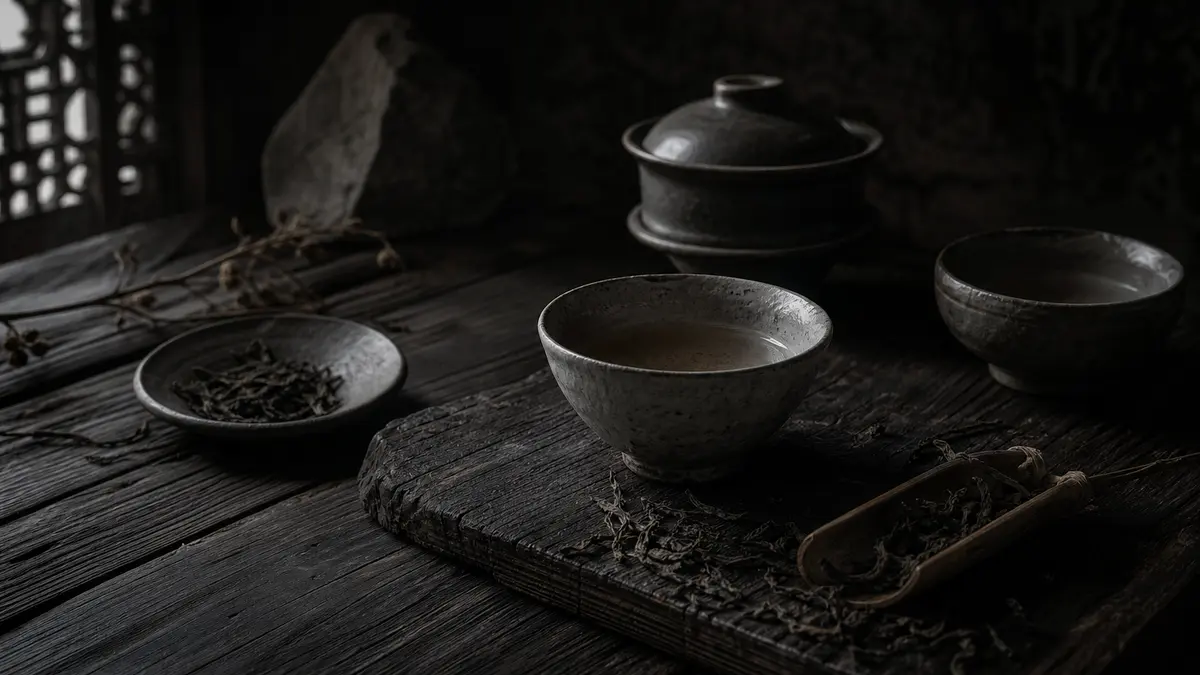
Beyond historical reproduction, a significant segment of Icheon’s potters produce functional teaware designed specifically for Korean tea practice (다례, darye). This includes gaewan (개완, lidded cups), chatjan (찻잔, tea cups), and daegwan (다관, teapots). These pieces often blend traditional techniques with contemporary aesthetics — a celadon glaze on a modern form, or a buncheong texture on a compact teapot scaled for single-session brewing.
Processing Traditions
Ceramic “processing” parallels tea processing in that raw material transforms through controlled steps, and the specifics of each step shape the final product.
The traditional sequence runs: clay preparation (mining, aging, wedging) → forming (wheel-throwing, slab building, or molding) → drying → bisque firing → glazing → final firing. For celadon, the critical variables are the iron content of the glaze, the reduction atmosphere in the kiln, and the peak temperature — typically between 1,250°C and 1,300°C. The bisaek color emerges only when iron oxide in the glaze is reduced (oxygen-starved) at the right temperature for the right duration. Too much oxygen and the green shifts toward yellow-brown. Too little control and the color becomes murky.
Wood-fired kilns (장작가마, jangjak gama) remain in use among traditionalist potters, particularly for major pieces and festival demonstrations. The climb kiln (등요, deungyo), built into a hillside with multiple chambers at increasing elevations, is the historical form. Gas kilns now handle the majority of production work, offering more consistent temperature control and the ability to maintain precise reduction atmospheres.
For sanggam inlay work, the additional steps between forming and glazing are painstaking: carving the design into leather-hard clay, pressing white or dark slip into the carved channels, scraping the surface clean so only the inlaid design remains, then glazing over the whole piece. The precision required at each stage is why genuine sanggam work commands significantly higher prices.
The Icheon Ceramics Festival (이천도자기축제)
The annual Icheon Ceramics Festival takes place each May and runs for approximately two weeks. It is the largest ceramics event in Korea and one of the most significant in Asia. The festival grounds and surrounding ceramics villages host working kiln demonstrations, live throwing exhibitions, gallery shows, and — critically — direct sales from hundreds of participating potters.
For buyers, the festival matters because it compresses the market. Potters who might otherwise sell only through their own showrooms or through Seoul galleries bring work to a single location. Prices at the festival tend to be competitive — this is a producing region, not a retail markup chain. Studio density in Icheon already creates price competition unusual in the Korean ceramics market, and the festival intensifies it.
The festival also offers rare access to kiln firings. Watching a wood-fired climb kiln in operation — the heat distortion at the stoke holes, the color shifts in the flame that indicate atmosphere changes — provides context that no showroom visit can replicate. Understanding what the fire does to the glaze transforms how you evaluate a finished piece.
What a Visitor Finds
Outside festival season, Icheon remains fully accessible. Most studios maintain showrooms that are open daily or by appointment. A typical visit involves browsing finished work, watching potters at their wheels (many studios have open workshop areas), and purchasing directly. Some studios offer hands-on experiences — a session at the wheel, or painting underglaze decoration on a bisque-fired piece that the studio will glaze and fire for shipping.
The price range is enormous. Simple functional cups start around $10–15. Well-made teaware sets from skilled but undesignated potters run $50–200. Work by recognized masters and cultural heritage holders can reach thousands of dollars for significant pieces. The competition among 300-plus studios keeps prices for everyday functional ware notably lower than equivalent pieces sold through Seoul galleries, where markup is standard.
For tea-focused visitors, the priority is the teaware studios. Look for potters who drink tea themselves — their work tends to reflect practical understanding of how a cup sits in the hand, how a teapot pours, how a glaze surface interacts with the liquid. The best Korean teaware has a tactile intelligence that comes from the maker’s own practice with tea.
Why Icheon Matters for Tea
Korean tea culture (다례, darye) is inseparable from Korean ceramics. The vessel shapes the experience. A celadon chatjan with its jade-green interior changes how you perceive the color of a green tea liquor. A rough buncheong cup retains heat differently than smooth porcelain. A well-made daegwan with a precisely drilled strainer produces a clean pour that a mediocre teapot simply cannot.
Icheon matters because it is where the full range of Korean ceramic traditions — celadon, white porcelain, buncheong, and contemporary work — coexists in active production, in competition with one another, and in direct contact with the buyers who use them. This isn’t a museum. It’s a working production region where tradition and commerce and craft collide daily.
The UNESCO Creative City designation, awarded in recognition of Icheon’s living craft ecosystem, confirms what anyone who visits already knows: this small city punches absurdly above its weight in the global ceramics landscape. For anyone building a Korean tea practice, Icheon is where the teaware comes from — not abstractly, but literally. The cup in your hand was likely shaped within a few kilometers of several hundred other potters doing the same work, pushing each other, arguing about glazes, and firing kilns that continue a tradition interrupted by dynasties but never fully broken.