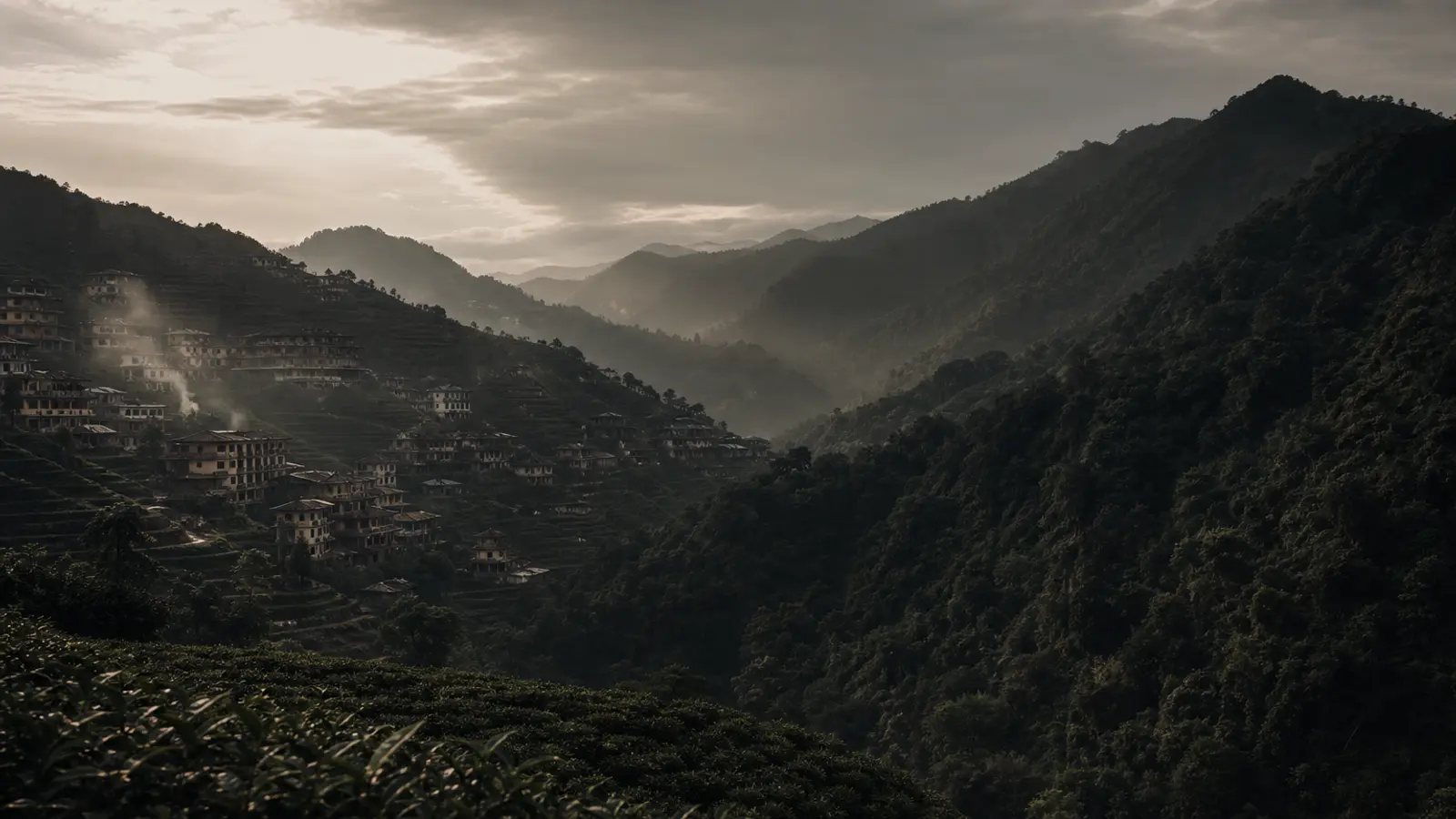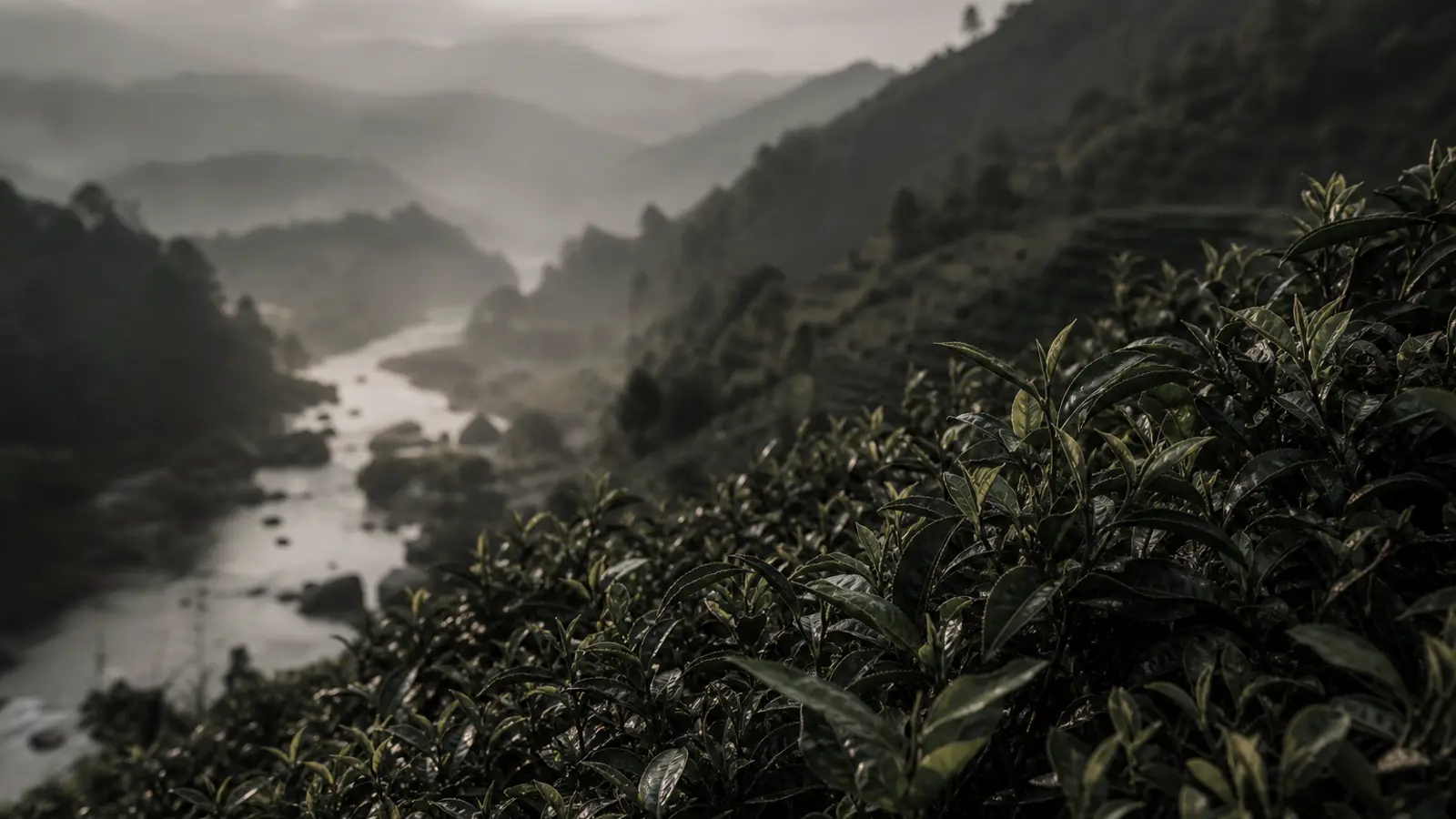
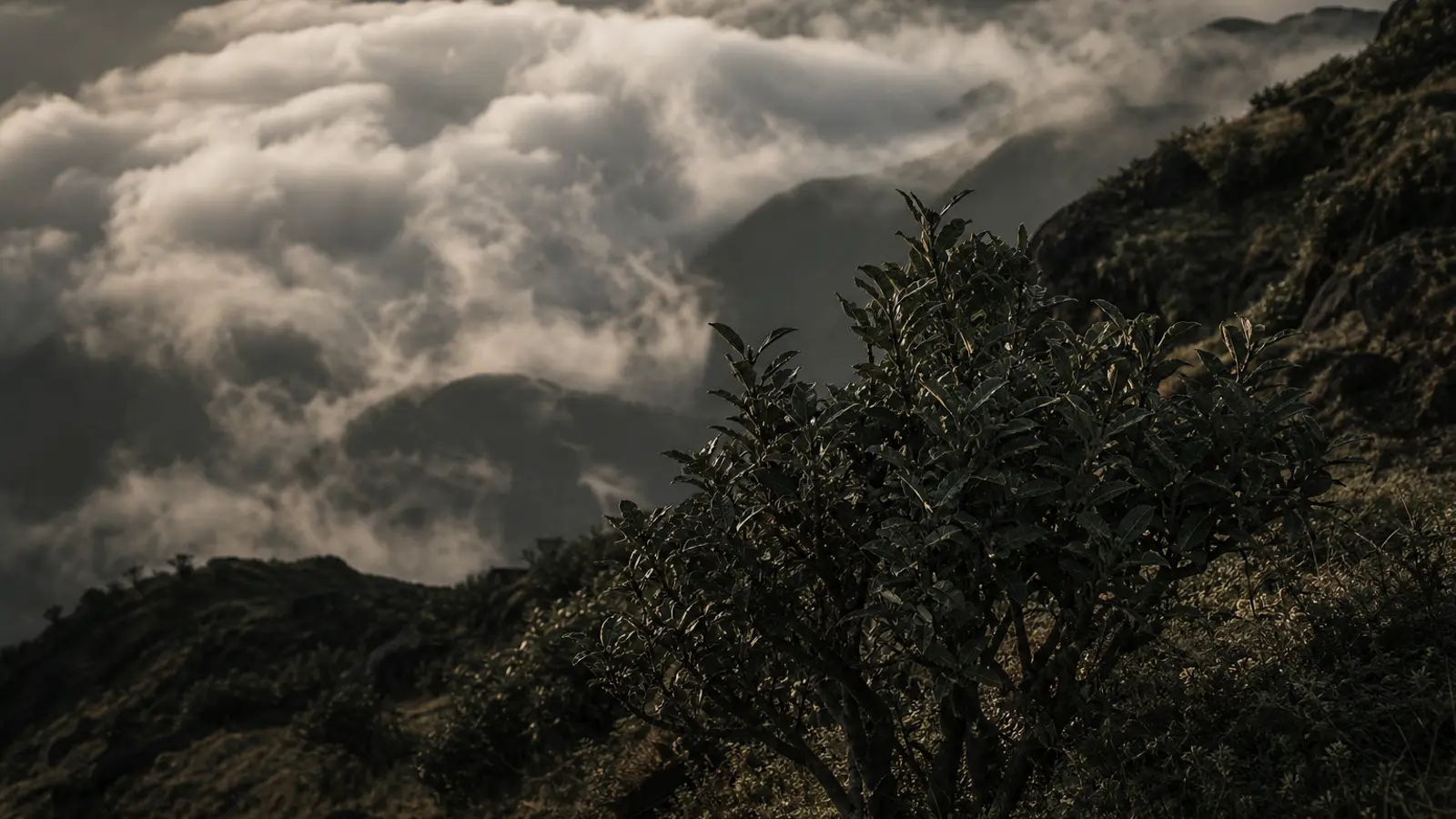
Baiyingshan pu-erh is one of the better-kept secrets in Yunnan. The mountain sits in northern Lincang prefecture above 2000 meters — positioning it among the highest-elevation ancient tree production zones in the entire province. The trees are genuinely old. The terroir is distinctly alpine. The cup quality competes with teas that cost three to five times more.
The reason you can still buy it at reasonable prices comes down to one thing: Baiyingshan (白莺山) has no celebrity. It lacks the auction records, the collector mythology, and the international fan base that has turned Bingdao (冰岛) and Laobanzhang (老班章) into financial instruments as much as teas. For anyone who drinks rather than invests, that obscurity is an opportunity.
What Makes Baiyingshan Pu-erh Different
Elevation as Terroir
The same logic that makes high-altitude wine regions prized applies directly here. At 2000 meters and above, temperatures swing dramatically between day and night. UV radiation is intense. The growing season is shorter. Trees respond by slowing their growth and concentrating their chemistry — more polyphenols, more aromatic precursors, more of the compounds that make a tea interesting in the cup.
The wine parallel I find most useful is high-altitude Gewurztraminer from Alsace or Alto Adige. In both cases, you have an unusual growing location that produces unexpected aromatic complexity — floral, almost exotic notes — in a variety that wouldn’t necessarily signal “serious” to a casual observer. Baiyingshan makes the same kind of case: an origin that challenges assumptions about what great terroir looks like.
Lincang as a broader region already sits higher than Xishuangbanna’s famous mountains. Baiyingshan pushes that advantage further. The result is a profile that doesn’t fit neatly into the standard Lincang descriptor set — it’s cleaner, more lifted, and more complex than many lower-elevation productions from the same prefecture.
Ancient Trees, Relatively Undisturbed
The gushu (古树) trees on Baiyingshan are genuinely ancient by any reasonable standard. More importantly, they’ve remained relatively undisturbed compared to their more famous counterparts. Fame creates pressure: tourist traffic, overpicking, aggressive pruning to maximize yield, and the slow replacement of old trees with higher-productivity cultivars. The mountains that collectors have discovered and celebrated for decades have often paid a quality cost for that attention.
Baiyingshan’s relative obscurity has worked in its favor here. The trees haven’t been managed into higher productivity at the expense of the qualities that make gushu worth seeking out. That’s a real distinction, and it won’t last indefinitely as the tea world’s attention continues expanding into less-known origins.
The Sensory Profile: What Baiyingshan Tastes Like
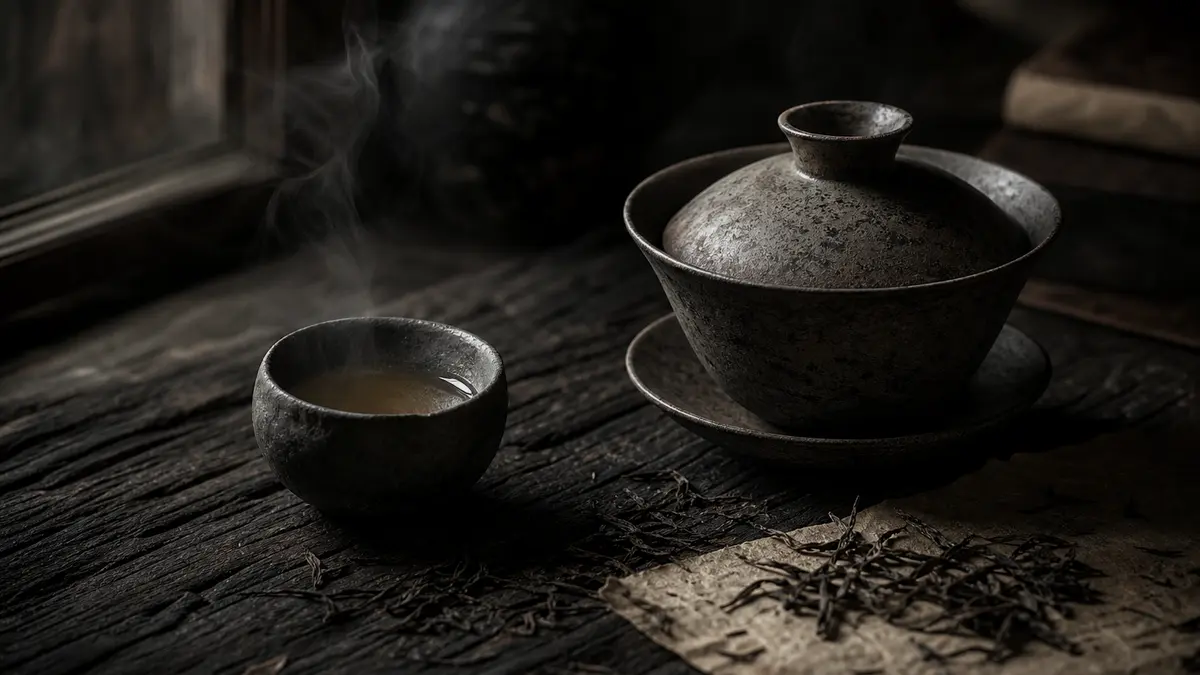
The defining characteristic is the combination of thick body and clean clarity. Most thick-bodied teas carry some astringency — the two qualities tend to travel together because high polyphenol content drives both. Baiyingshan disrupts that expectation. The liquor is dense and coating without being grippy or drying.
Shan Ye Qi Yun: The Wild Energy
The term shan ye qi yun (山野氣韻) — mountain-wild energy — describes a quality found in genuinely high-altitude, minimally managed gushu that’s difficult to reduce to a single flavor descriptor. It’s more an impression than a note: a sense of vitality and complexity that registers as the tea unfolds across multiple steepings. You notice it most clearly when it’s absent from lower-quality material made to look similar.
In Baiyingshan specifically, this manifests as a persistent floral-herbaceous quality in the nose and a clarity in the aftertaste that feels alpine rather than tropical. The huigan (回甘) — the sweet returning aftertaste that marks quality gushu — appears reliably and lingers through the mid-steepings.
Steeping Behavior
Good Baiyingshan aged sheng holds up through eight to twelve steepings with careful gongfu brewing. The early steepings show the most aromatic lift; the middle steepings develop the body and huigan; the late steepings are quiet but still coherent. Flat, one-dimensional material that fades after four steeps is a quality signal worth paying attention to.
The Value Case: Why Baiyingshan Costs Less Than It Should
Tea pricing in Yunnan is a function of fame as much as quality. The famous mountains — Laobanzhang, Bingdao, Yiwu (易武), Nannuo (南糯) — carry premiums built over decades of collector attention, auction records, and international media coverage. A gram of certified Bingdao ancient tree material can cost more than a gram of exceptional wine.
Baiyingshan sits outside that mythology. It doesn’t have a flagship producer who built its reputation in the international market. It doesn’t appear regularly in high-profile auctions. The people who know it tend to be either local traders or enthusiasts who’ve done serious research into Lincang’s less-charted territory.
That gap between quality and price is real, and it’s accessible now in a way that may not persist. Every origin that gets written about seriously, covered in the tea media, and sourced by Western vendors with sophisticated buyer bases eventually sees its prices move. Baiyingshan is earlier in that cycle than most.
How to Brew Baiyingshan Pu-erh
Use a gaiwan for initial sessions — it gives you the most direct access to the tea’s actual character without the influence of an absorbent clay pot. A 100–110ml gaiwan with 7–8 grams of leaf and water around 95–100°C works well. Early steepings can be quite short (10–15 seconds) given how readily high-quality gushu material opens up.
Pay attention to the transition between steep three and steep five. That’s typically where the difference between genuine gushu and blended or plantation material becomes most apparent. Genuine ancient tree material maintains complexity and develops new layers in this range. Younger or blended material often peaks early and then flattens.
If you’re evaluating a Baiyingshan sample for the first time, let it run the full course rather than stopping after a few steepings. The late-steeping behavior — around steep seven through ten — tells you a great deal about the root depth and complexity of the source material.
Buying Baiyingshan: What to Look For
Authenticity is the central challenge with any gushu, and Baiyingshan is no exception. The market for ancient tree pu-erh involves significant fraud at every price point, and the relative obscurity of Baiyingshan means there are fewer established reference points for what genuine material tastes like.
A few practical signals: single-mountain sourcing with some traceability to a specific producer or village is more trustworthy than generic “Lincang high mountain” labeling. Pricing that’s conspicuously low for claimed gushu — below roughly $30–40 per 100g for claimed ancient tree material — should trigger skepticism rather than enthusiasm. Genuine Baiyingshan gushu commands a premium over plantation material even if it doesn’t command a Bingdao premium.
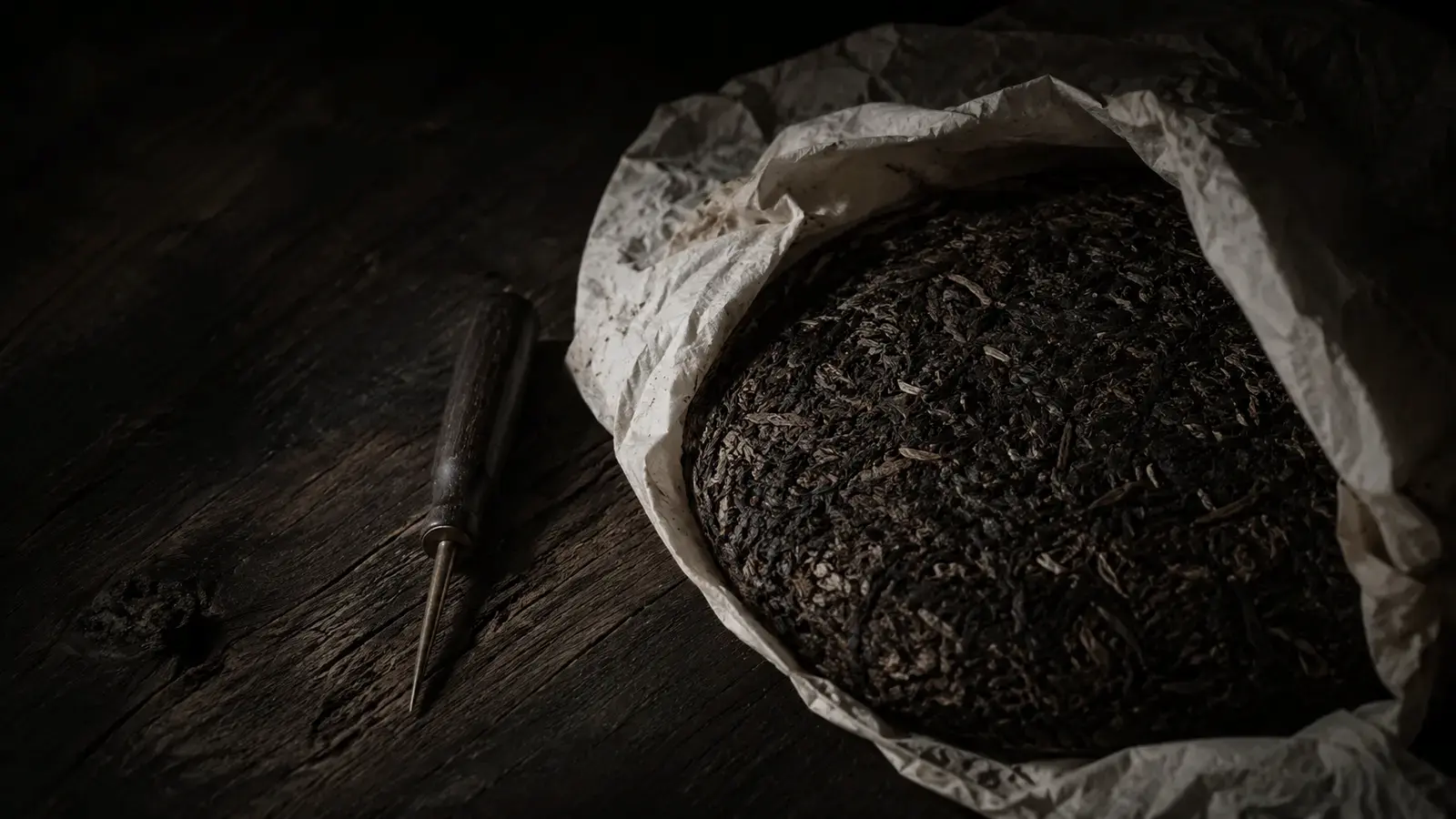
The pressing on cakes should be moderately loose rather than machine-compressed to a hard disk. The dry leaf should show the natural variation in size and color that comes from unmanaged ancient trees rather than the uniformity of cultivated plantation rows.
The Broader Context: Lincang’s High-Altitude Edge
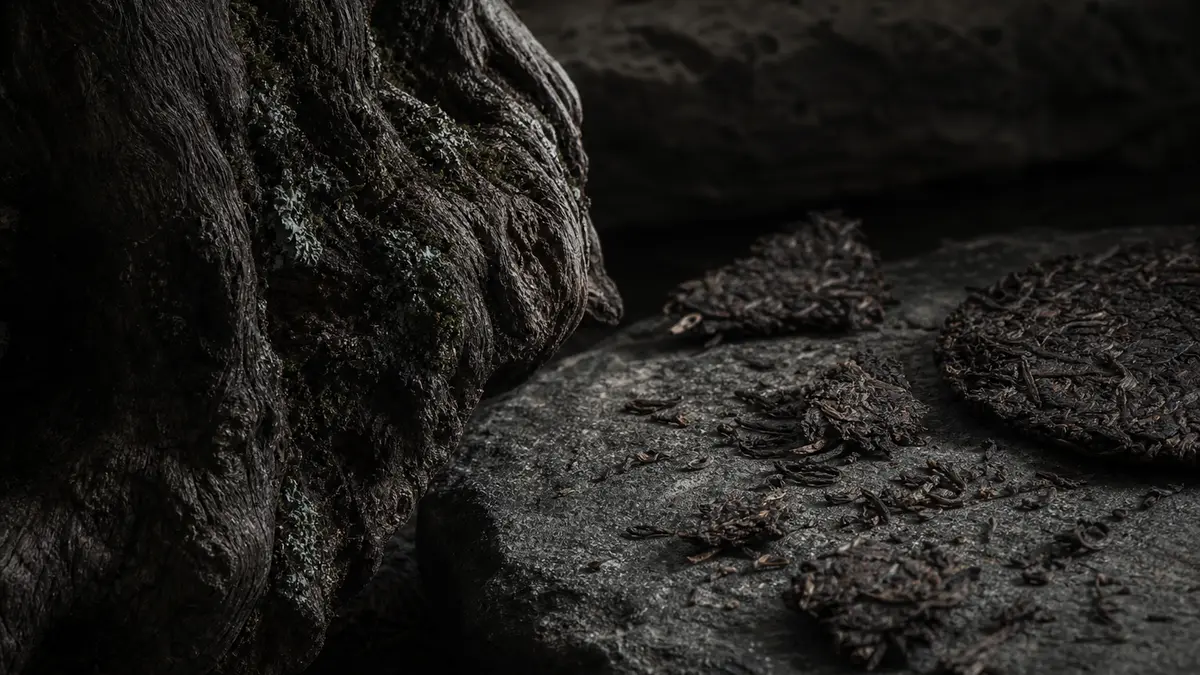
Northern Lincang has produced serious gushu for decades without receiving proportionate international attention. The prefecture sits at higher average elevations than Xishuangbanna, and its ancient trees have distinct character — often described as more austere and mineral than Xishuangbanna’s warmer, fruitier productions.
Baiyingshan represents the high-altitude extreme of that tendency. It’s Lincang’s terroir logic pushed to its limits: colder, higher, slower, more concentrated. Understanding it in the context of the broader Lincang profile helps clarify why it tastes the way it does and why it ages the way it does — the higher tannin structure built at altitude gives it a longer development arc as sheng.
For anyone building a serious sheng collection, that aging potential combined with current accessible pricing makes Baiyingshan worth investigating seriously before the wider market catches up to what northern Lincang’s highest-elevation gardens can produce.