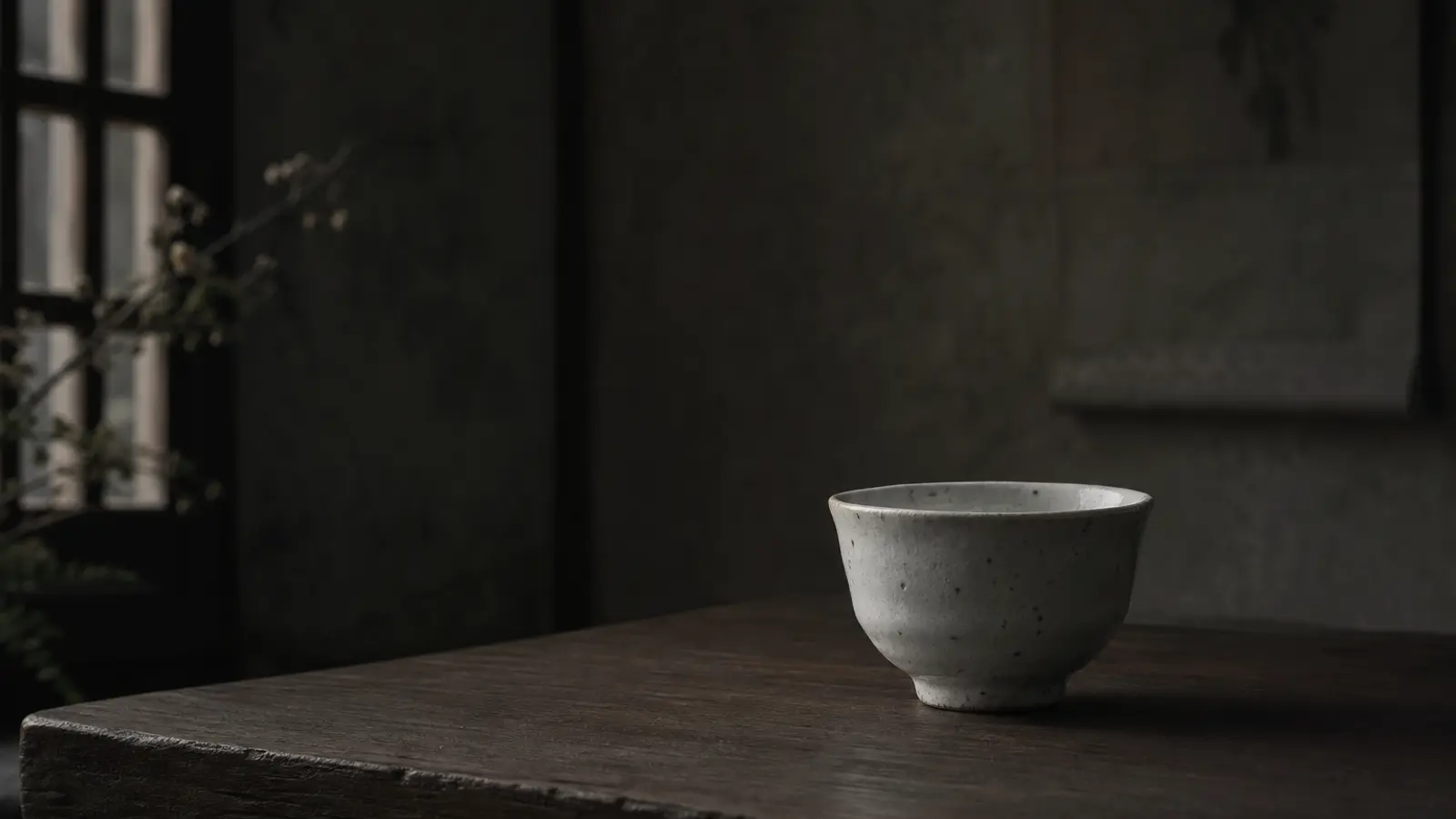
Sobakham (소박함) is the Korean aesthetic principle of understated simplicity — beauty rooted in restraint, honesty of material, and the acceptance of natural imperfection. It is the conceptual key to understanding why Korean teaware looks and feels the way it does: thicker walls, textured surfaces, and a refusal to polish beyond the point of honesty. Related to but distinct from Japanese wabi-sabi, sobakham finds beauty not in aestheticized decay but in simply not trying too hard.
The word does not translate neatly into English. “Simplicity” gets close but misses the warmth. “Humility” captures the posture but not the visual quality. Sobakham is all of these folded into a single sensibility: beauty that does not announce itself.
Think of it like old-vine Grenache grown in galets roulés. The terroir doesn’t declare itself with pyrotechnics. It simply is what it is — stones, sun, deep roots — and the wine arrives in the glass with quiet authority. Sobakham works the same way in clay.
The Sobakham Korean Aesthetic: Roots and Meaning
소박함 derives from 소박하다 (sobakhada), meaning plain, unadorned, simple. But in Korean cultural usage it carries no connotation of poverty or lack. A sobakham object is not impoverished. It is complete in its plainness.
The philosophical roots sit primarily in Korean Confucian thought and folk sensibility rather than in Zen Buddhist aesthetics. Joseon-era (조선, 1392–1897) scholars valued restraint as a marker of moral cultivation. Ornamentation beyond what was necessary signaled vulgarity. The ideal was a life — and an object — that showed no more than what was honest.
This is why you find sobakham in places far beyond the tea table. It appears in the white walls and dark timber of hanok (한옥) architecture. In the unhurried pacing of traditional Korean music. In the plain white porcelain that Joseon potters produced for centuries while their Chinese and Japanese contemporaries pushed ever further into color and complexity.
The Moon Jar: Sobakham Made Visible
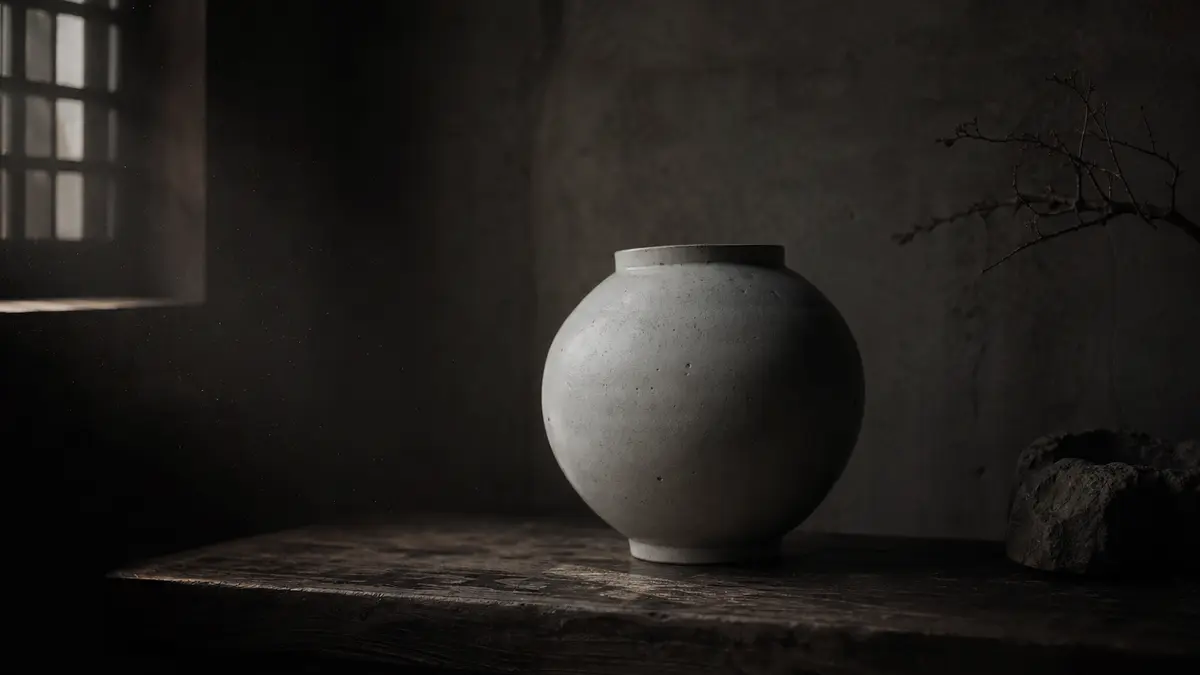
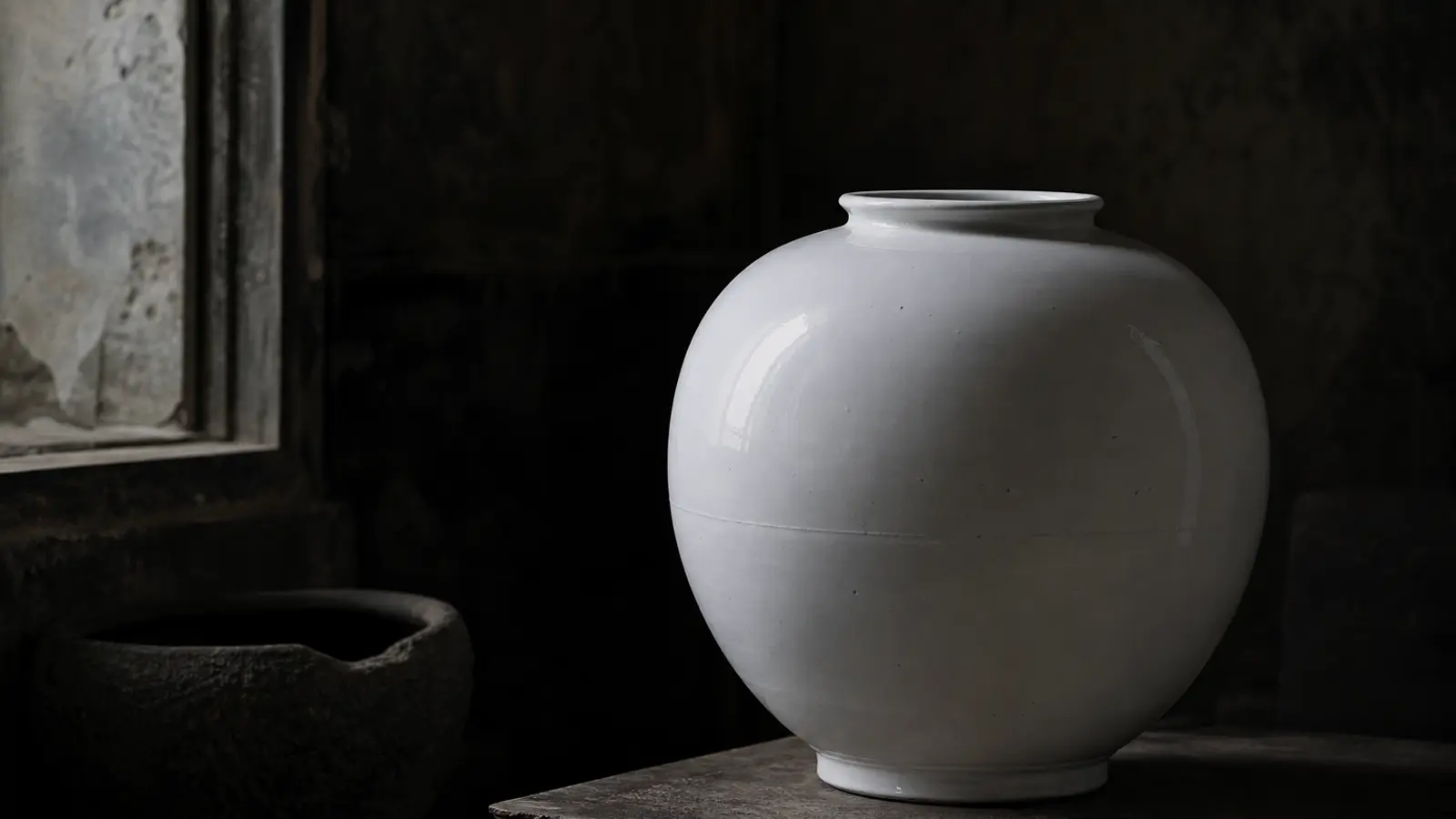
No single object embodies the sobakham korean aesthetic more purely than the Joseon moon jar (달항아리, dalhanari). These large white porcelain vessels — sometimes 40 cm or more in diameter — were formed by joining two thrown hemispheres at a central seam. The seam was not hidden. The two halves never align perfectly. The result is a form that is almost spherical but not quite, almost symmetrical but not quite, almost perfect but honestly not.
That “almost” is the entire point.
A moon jar does not attempt perfection and fall short. It is not a flawed sphere. It is a jar made simply, with the natural asymmetry that arises when two pieces of clay meet and the potter does not obsess over correcting the join. The irregularity is not cultivated. It is accepted.
This distinction matters enormously when comparing Korean aesthetics to Japanese or Chinese ones. A Song Dynasty (宋代) potter at Jingdezhen might have rejected a vessel with a visible seam as a technical failure. A Japanese potter working within wabi-sabi (侘び寂び) might have exaggerated the seam as a philosophical statement. The Joseon potter simply left it.
Sobakham and Wabi-Sabi: A Necessary Distinction
Western tea culture often reaches for wabi-sabi when trying to describe Korean ceramics. The comparison is understandable — both aesthetics value imperfection and naturalness — but it collapses a real philosophical difference.
Wabi-sabi emerges from Zen Buddhist thought. Its core insight is that all things are impermanent, incomplete, and imperfect, and that recognizing this truth is a form of enlightenment. A cracked glaze is beautiful because it testifies to impermanence. Decay is beautiful because it points toward the nature of existence. There is spiritual weight in the flaw.
Sobakham carries no such metaphysical burden. Its imperfections are not symbolic. They are simply what happens when a potter works with honest materials and does not overwork them. A potter who makes a bowl with deliberate roughness — engineering the appearance of chance — practices wabi-sabi. A potter who makes a bowl simply and lets the roughness happen naturally practices sobakham.
The difference is subtle. It is also real, and you can feel it when you hold the vessels side by side.
Where Sobakham Shapes Korean Tea Culture
Teaware: Weight, Texture, Restraint
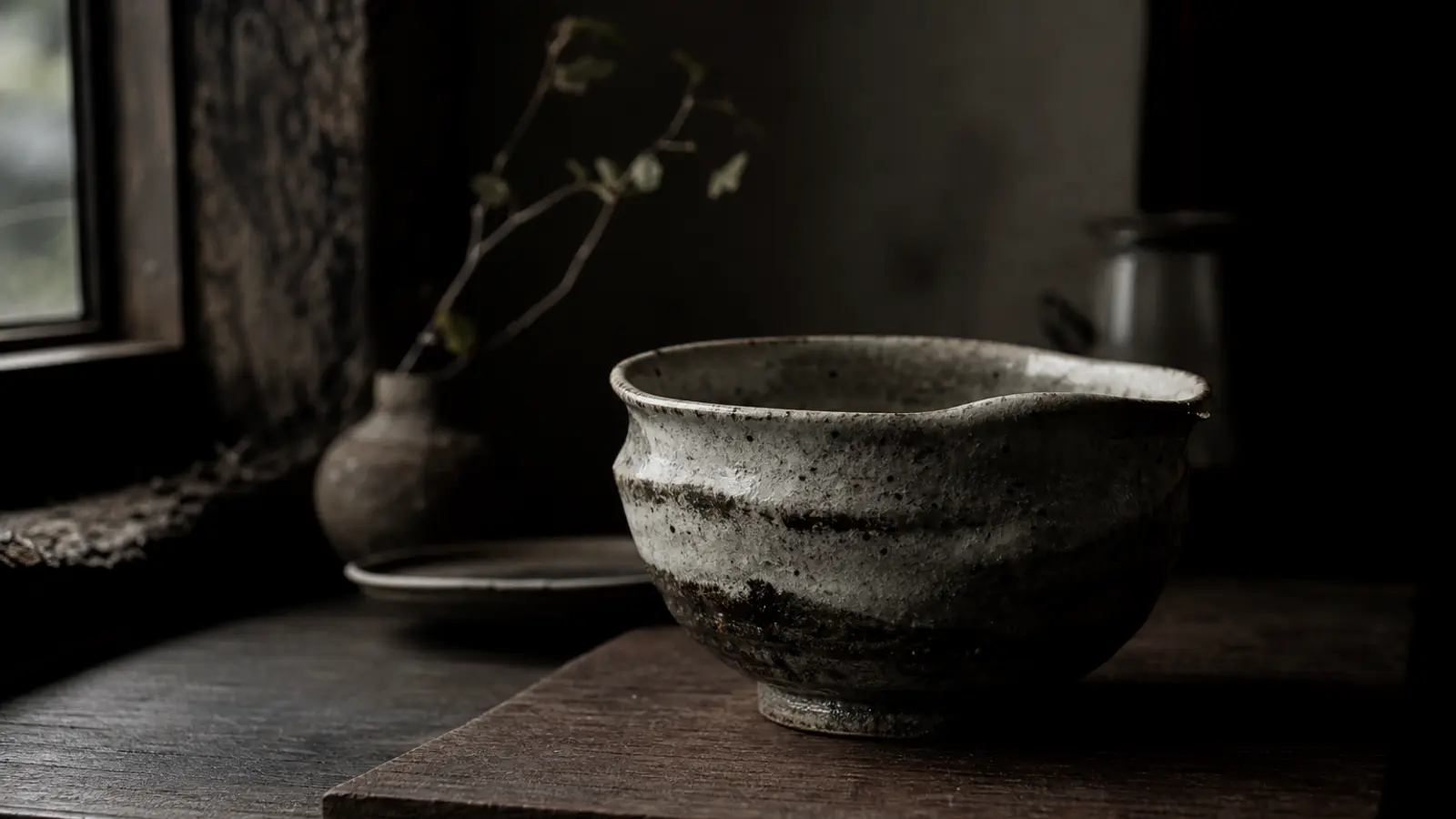
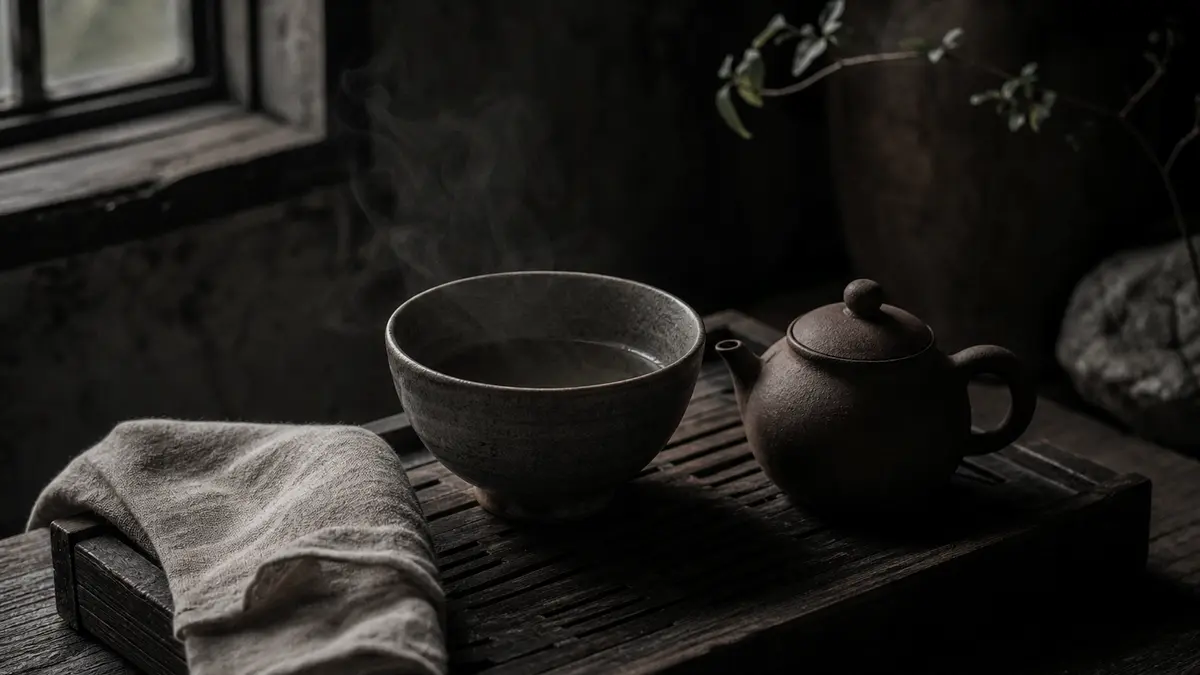
Korean tea cups (찻잔, chatjan) and tea bowls (사발, sabal) tend to be thicker-walled than their Chinese or Japanese counterparts. This is not a technical limitation. It is a choice that carries sobakham through to the tactile experience.
Thicker walls mean more thermal mass. The cup absorbs heat before it reaches your hand, creating a different temperature relationship between you and the tea. Textured surfaces — particularly in buncheong (분청, buncheong) ware, where slip is brushed or stamped over coarser stoneware bodies — grip the fingers differently. They warm differently. Over months and years of use, they develop patina differently.
Korean teaware’s visual restraint serves a practical function as well: it focuses attention on the tea rather than the vessel. A pale celadon cup with minimal decoration becomes a stage for the liquor’s color. A rough stoneware bowl lets you notice the aroma (향, hyang) without distraction. The vessel steps back.
The Korean Tea Ceremony: Darye
Darye (다례), the Korean tea ceremony, embodies sobakham in practice. Compared to the highly codified Japanese chanoyu (茶の湯), darye is simpler in structure. There is no single rigid school of prescribed movements. The emphasis falls on seasonal harmony, quiet attention, and sincere hospitality rather than on choreographed ritual.
A darye setting typically involves fewer tools than a Japanese tea ceremony. The gestures are unhurried but not formalized into exact sequences that must be memorized. The host’s attention goes to the guest and the tea — not to performing the ceremony correctly.
This is sobakham applied to action: do what is necessary, do it with care, do not add what is not needed.
Buncheong Ware: Sobakham’s Clay
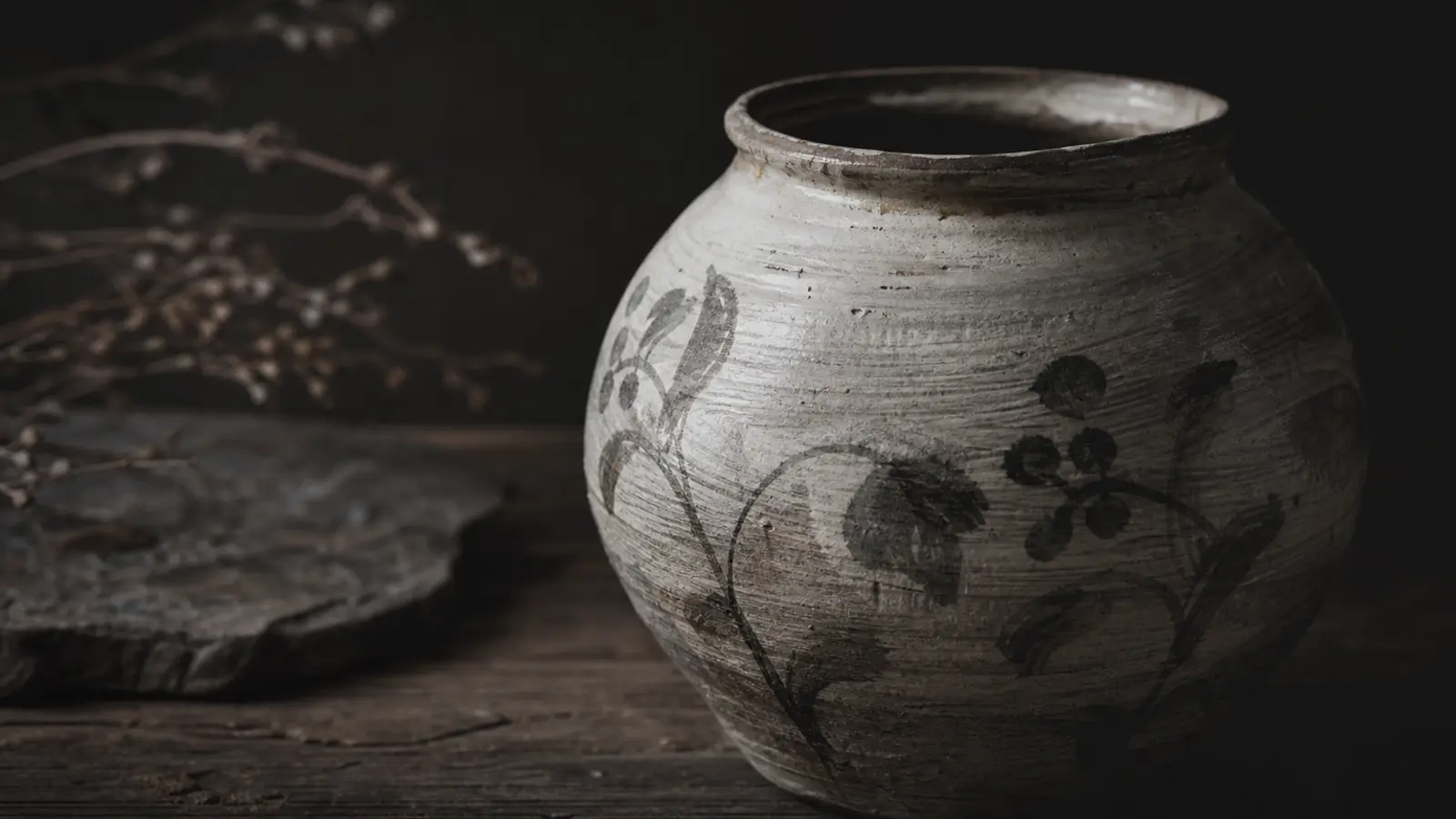
If the moon jar is sobakham in porcelain, buncheong (분청사기, buncheong sagi) is sobakham in stoneware. Buncheong emerged in the early Joseon period as potters applied white slip over gray or brown stoneware bodies using techniques that were quick and unprecious — brushing, dipping, stamping, or scratching through the slip to reveal the clay beneath.
The results are visually warm and texturally alive. A buncheong tea bowl might show brush marks where the slip was applied in a few fast strokes. The coverage is uneven. The clay peeks through. The glaze pools in some areas and thins in others.
None of this is accidental in the sense of being uncontrolled. The potter knows what the materials will do. But sobakham means not intervening to make the result look more finished than the process naturally produces. The brush marks stay because hiding them would be dishonest.
Why Sobakham Matters for Tea Drinkers
Understanding the sobakham korean aesthetic changes how you evaluate Korean teaware. It recalibrates the eye.
If you come from Chinese gongfu practice, you may be accustomed to evaluating a gaiwan (蓋碗) by its precision — the thinness of the walls, the exactness of the lid fit, the evenness of the glaze. Those are valid criteria for Chinese porcelain. They are the wrong criteria for Korean ware.
If you come from Japanese practice, you may look for deliberate aesthetic imperfection — a Raku bowl’s controlled crackle, a chawan’s intentionally warped rim. Those are valid readings of wabi-sabi. They miss what sobakham is doing.
Korean teaware made in the sobakham tradition asks to be evaluated by different standards: Does the clay feel honest? Does the form serve its function without excess? Does the surface reveal rather than conceal the process? Does the vessel step aside and let the tea forward?
When the answer is yes, you are holding sobakham. Not a philosophy of decay. Not a performance of humility. Just a cup, made simply, that does not try to be more than what it is.
That restraint, in the end, is why it endures.