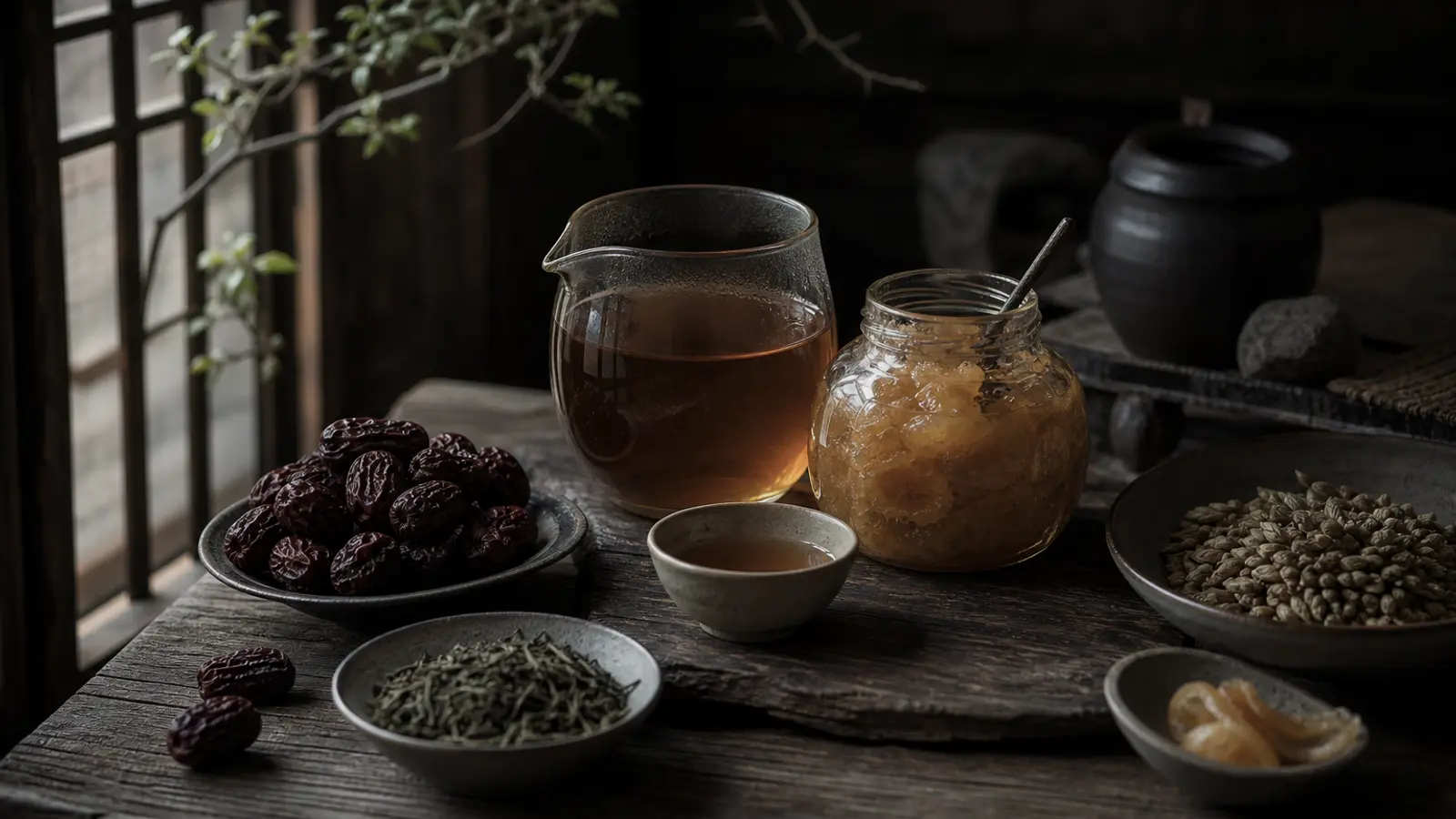
Korean tea culture extends far beyond Camellia sinensis green tea. The Korean word cha (차, 茶) encompasses a broad family of traditional infusions — grain teas, fruit teas, herbal preparations — that Koreans have consumed daily for centuries alongside, and often more frequently than, leaf tea. Understanding this broader landscape of korean traditional tea puts Korean green tea in its proper cultural context and reveals a drinking culture as layered and deliberate as any on earth.
If you come to Korean tea expecting a mirror of Chinese or Japanese practice, you will be confused. In China and Japan, cha means leaf tea first and everything else second. In Korea, cha means all of it — the roasted barley water on the restaurant table, the yuzu marmalade dissolved in a hot cup, the medicinal herbal tonic simmered for hours. These are not lesser teas. They are the foundation.
The Grain Teas: Korea’s Daily Hydration
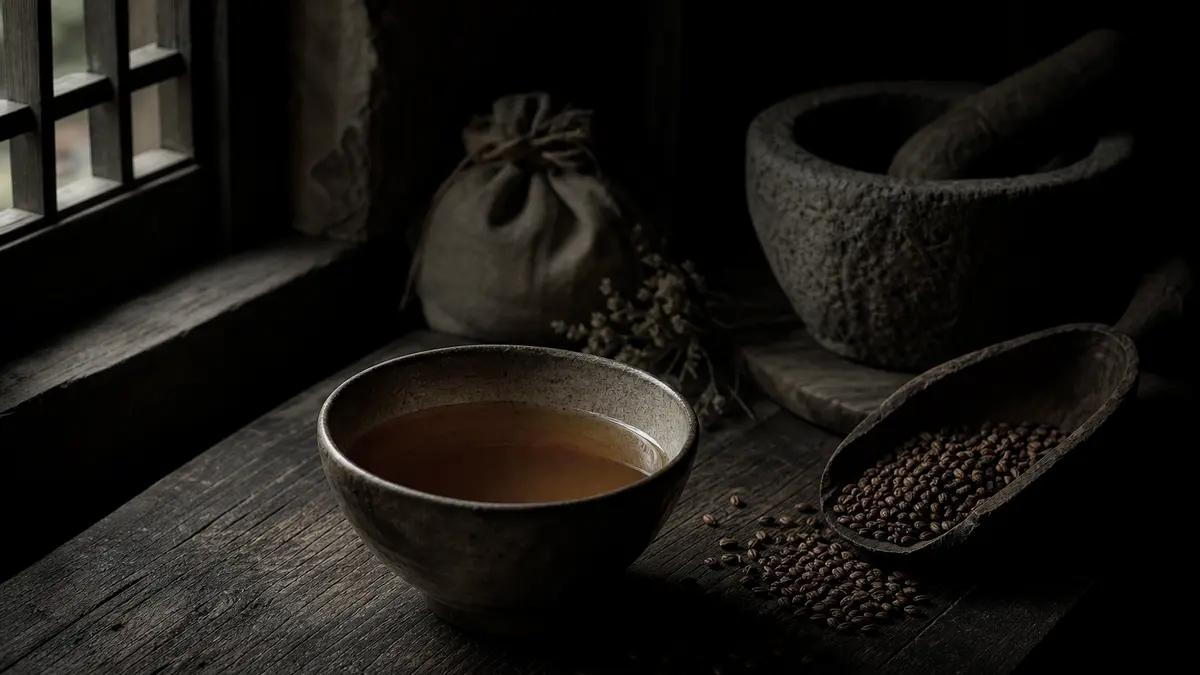
Walk into any Korean restaurant, and before you order, a pitcher appears on the table. It contains either 보리차 (boricha) or 옥수수차 (oksusucha). This is the baseline. This is what daily Korean drinking actually looks like.
보리차 (Boricha) — Roasted Barley Tea
Boricha is the single most consumed daily beverage in Korea. Roasted barley kernels are steeped in large batches — often several liters at a time — then served hot in winter and cold in summer. The flavor is nutty, toasty, and clean, with a gentle sweetness that comes from the Maillard reactions during roasting.
There is no caffeine. There is no fuss. Korean households keep a large pot or pitcher of boricha in the refrigerator the way American households keep filtered water. It is hydration with character — not a special occasion, not a ritual, just life.
The preparation is dead simple: roughly 2–3 tablespoons of roasted barley per liter of water, boiled for 10–15 minutes or cold-steeped overnight. Some families roast their own barley at home, though pre-roasted packets are standard. The quality range is narrow — this is a democratic drink.
옥수수차 (Oksusucha) — Roasted Corn Tea
Oksusucha follows the same logic as boricha but uses roasted corn kernels. The result is sweeter, milder, with a buttery quality that children especially favor. It is served just as widely and prepared identically — large batch, hot or cold, always available.
In some households and restaurants, boricha and oksusucha are blended together. The combination balances the nuttiness of barley with the sweetness of corn. Neither one is considered superior. They are interchangeable staples.
현미차 (Hyeonmicha) — Roasted Brown Rice Tea
Hyeonmicha rounds out the grain tea trio. Roasted brown rice produces a warmer, slightly more vegetal infusion than barley. It is less ubiquitous than boricha but appears regularly in home kitchens and as a blend component.
If you have encountered genmaicha (玄米茶) in Japanese tea — green tea blended with roasted rice — you already know this flavor. Hyeonmicha is the rice component on its own, without the Camellia sinensis leaves.
Fruit and Citrus Teas: Seasonal Sweetness
Korea’s fruit teas occupy a different register. Where grain teas are neutral and constant, fruit teas are seasonal, sweet, and often associated with specific health benefits.
유자차 (Yujacha) — Yuzu Citrus Tea
Yujacha has become Korea’s most internationally visible traditional drink, largely through the export of jarred yuzu marmalade that now sits on grocery shelves worldwide. The preparation: yuzu citrus (유자, yuja) is sliced — rind, flesh, and all — and preserved in sugar or honey to create a thick, fragrant syrup. A generous spoonful goes into a cup. Hot water dissolves it into a bright, sweet-tart, intensely aromatic drink.
This is a winter beverage. Koreans reach for yujacha when the cold sets in, when a sore throat threatens, when comfort is needed. The high vitamin C content of yuzu is part of the appeal, but the real draw is sensory — few drinks deliver that immediate burst of citrus fragrance.
Yujacha is not subtle. It is not contemplative. It is direct pleasure, and that is its role.
매실차 (Maesilcha) — Green Plum Tea
Maesilcha is made from 매실 (maesil), Korean green plums that are harvested in early summer and preserved in sugar for months to produce a concentrated extract called 매실청 (maesilcheong). This extract, diluted in hot or cold water, yields a tart, refreshing drink that Koreans associate with digestive health.
The tartness of maesilcha is distinctive — sharper than yujacha, less sweet, with a quality that I can only compare to a good verjus. It is a summer drink by instinct, though the extract keeps year-round.
대추차 (Daechucha) — Jujube Tea
Daechucha sits at the sweet, warming end of the spectrum. Dried jujube fruits (대추, daechu) are simmered for an extended period — sometimes hours — until the liquid becomes a deep, concentrated, almost syrupy drink. The flavor is rich, dates-like, with honey and caramel notes.
This is a cold-weather drink, often served to guests, associated with hospitality and nourishment. In traditional Korean medicine, jujubes are considered warming and blood-building. Daechucha is what you make for someone who is tired, cold, or recovering.
Korean Herbal Tea: The Hanbang Tradition
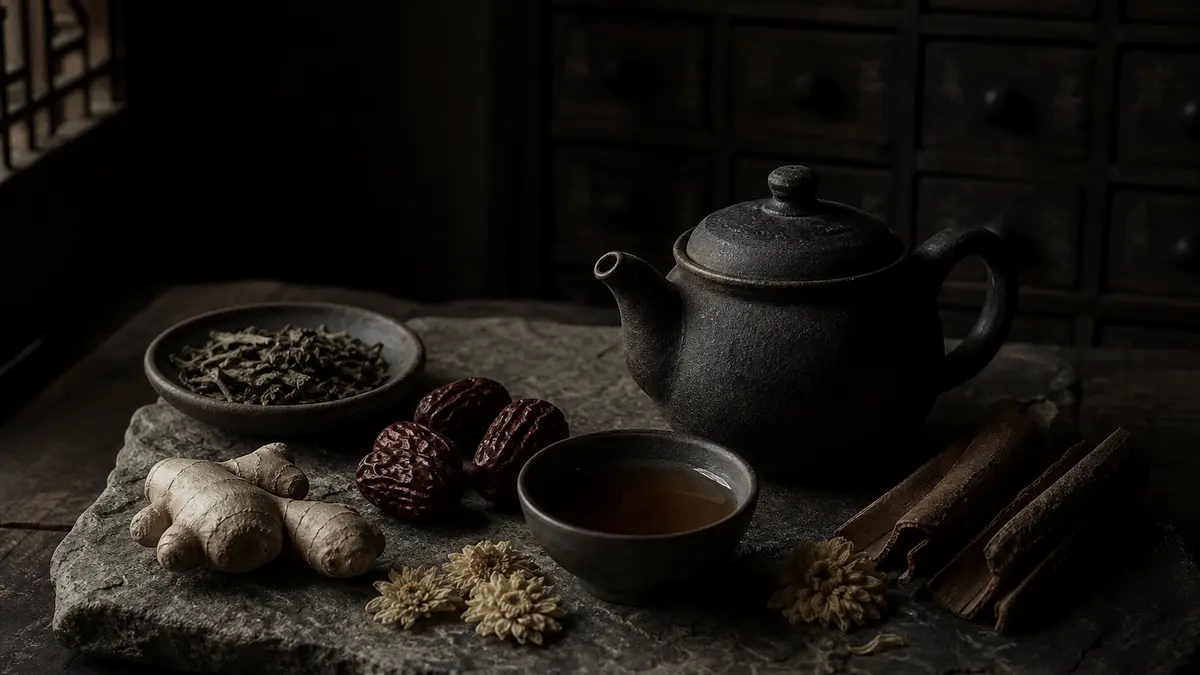
Korea’s herbal teas cannot be separated from 한방 (hanbang), the Korean system of traditional medicine. These are not casual infusions. They are preparations rooted in centuries of medical theory about warming and cooling properties, constitutional types, and seasonal appropriateness.
쌍화차 (Ssanghwacha) — The Herbal Tonic
Ssanghwacha is the flagship of Korean medicinal teas. It is a specific formulation, not a category — a blend of 당귀 (danggui, angelica root), 작약 (jakyak, peony root), 황기 (hwanggi, astragalus), and several other herbs simmered together into a dark, complex, bittersweet tonic.
The taste is assertive. Earthy, rooty, with a medicinal bitterness that resolves into something almost sweet. Koreans drink ssanghwacha when they feel depleted — after illness, during periods of overwork, in the deep cold of winter. It is considered deeply restorative and warming.
Modern Korean convenience stores sell bottled ssanghwacha alongside energy drinks. This is not a relic. It is a living tradition adapted to contemporary life.
인삼차 (Insamcha) — Ginseng Tea
Korean ginseng (인삼, insam, specifically Panax ginseng) needs no introduction — it is Korea’s most famous herbal export. Insamcha is prepared by simmering fresh or dried ginseng root, sometimes with jujubes or honey to balance the bitterness.
The flavor is earthy, slightly bitter, with a distinctive sweetness that lingers. Quality ginseng — particularly 홍삼 (hongsam, red ginseng) that has been steamed and dried — produces a richer, more complex infusion. The price range is enormous, from a few dollars for commodity ginseng tea bags to hundreds for aged root.
The Hanbang Framework: Why These Drinks Exist
These traditional Korean drinks are not random. They reflect hanbang principles that organize foods and beverages along axes of warm and cool, supplementing and draining, yin and yang. Boricha is considered cooling and neutral — appropriate for daily consumption without imbalance. Ssanghwacha is warming and tonifying — appropriate when the body is depleted. Yujacha is warming but also dispersing — appropriate when cold pathogens threaten.
This framework runs deeper than folk wisdom. Korean traditional medicine is a formalized system with centuries of written scholarship, and its influence on daily food and drink choices remains strong even among Koreans who would not describe themselves as hanbang practitioners. The seasonal rotation of beverages — cooling grain teas in summer, warming herbal tonics in winter, citrus teas at the onset of cold season — is hanbang logic made habitual.
The Bridge to Nokcha: Why Korean Green Tea Is Different
Here is the key insight that this entire landscape illuminates: in Korea, green tea (녹차, nokcha) is not the everyday drink. That role belongs to boricha and its grain tea relatives.
Nokcha is the deliberate drink. The contemplative one. The one prepared with specific water temperatures, weighed leaf quantities, timed steeps, and — in the context of 다례 (darye), the Korean tea ceremony — philosophical intention.
This distinction explains everything about Korean green tea culture that might otherwise seem puzzling. Why is Korean tea ceremony so quiet and meditative? Because nokcha occupies the space reserved for mindful practice, not casual consumption. Why is high-quality Korean green tea so expensive relative to volume consumed? Because it is a specialty product, not a commodity staple. Why do many Koreans describe themselves as non-tea-drinkers even though they consume boricha daily? Because in their mental framework, “tea” means nokcha — the serious stuff — and boricha is just water with personality.
The parallel to wine is almost exact. Most French people drink water, coffee, and inexpensive table wine daily. But when they sit down with a bottle of Burgundy, the attention changes. The glass matters. The temperature matters. The conversation pauses. Korean nokcha occupies that Burgundy position — not the daily drink, but the one that commands presence.
Understanding Korean Tea Types in Full Context
When I encounter someone who has discovered Korean tea through a jar of yujacha at the grocery store, or through boricha at a Korean restaurant, I see an opportunity. These traditional korean drinks are genuine, valuable, and worth understanding on their own terms. They are also the front door to something deeper.
The grain teas teach you about Korean pragmatism — the culture’s instinct for clean, unfussy, daily sustenance. The fruit teas teach you about Korean seasonality — the attention to what the body needs as the year turns. The herbal teas teach you about hanbang — the medical philosophy that underlies so much Korean food culture.
And all of it, taken together, teaches you why nokcha matters differently in Korea than green tea matters in China or Japan. It is not the default. It is the exception. And exceptions, by definition, carry weight.
If boricha is the everyday water of Korean life, nokcha is the moment you stop and pay attention. That distinction — between drinking and drinking — is the heart of Korean tea culture. Everything else follows from there.