The history of Korean tea is not a story of unbroken continuity. It is a story of interruption — and of what a culture does to survive one.
Over twelve centuries, Korean tea endured Mongol invasions, a full dynastic shift in state philosophy, thirty-five years of colonial suppression, a devastating war, and the pressures of rapid industrialization. Each of those forces could have ended the tradition permanently. None did. What exists today in the tea gardens of Hadong and Boseong is not ancient practice preserved in amber. It is tradition rebuilt through deliberate cultural will — which makes it, in some ways, more remarkable than traditions that were never interrupted at all.
Origins: The Ninth-Century Planting That Started Everything
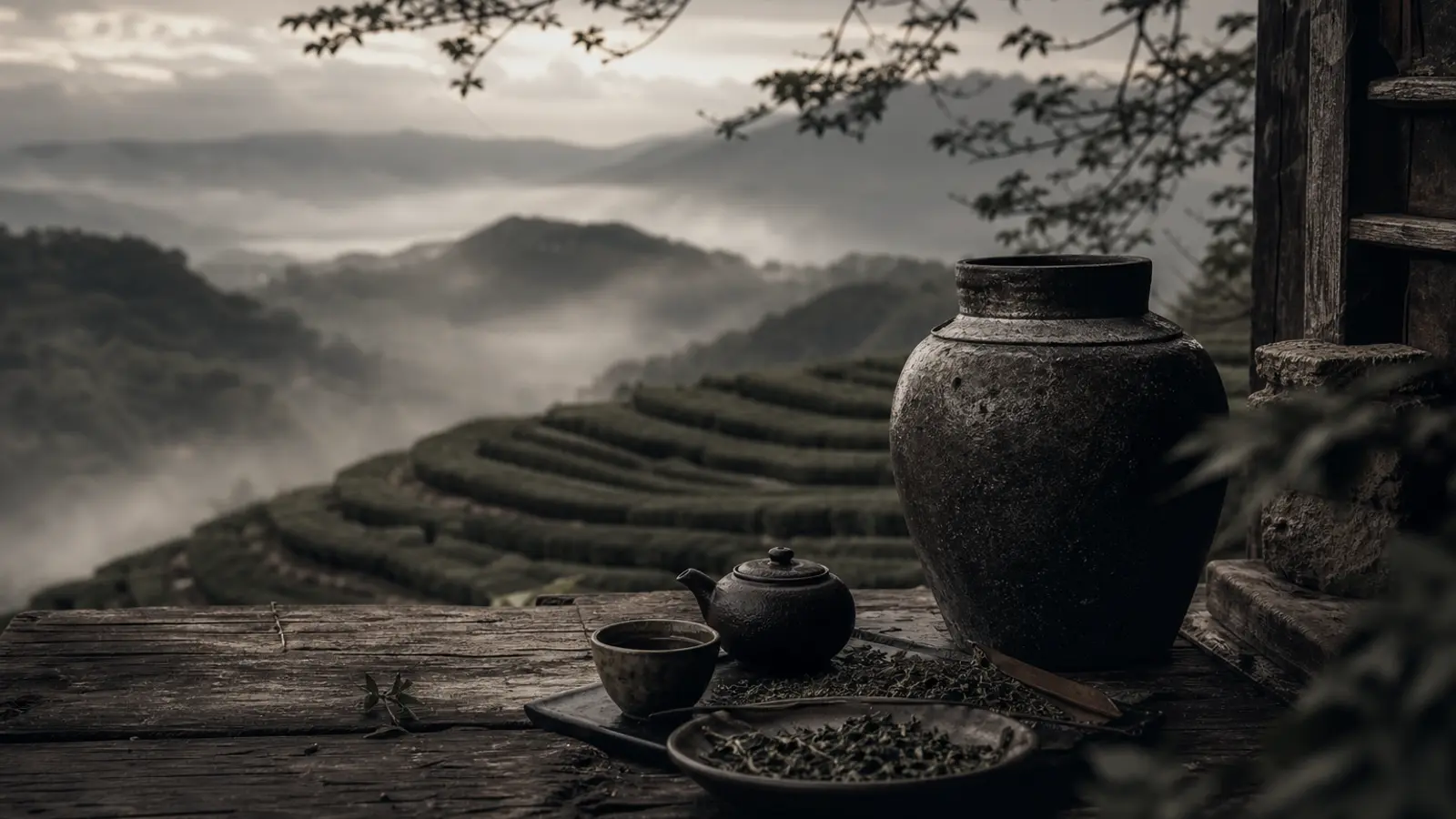
The anchor date for Korean tea history is 828 CE. In the third year of Silla King Heungdeok’s (흥덕왕) reign, a monk named Daeryeom (대렴) returned from Tang Dynasty China carrying tea seeds. According to the Samguk Sagi (삼국사기), the king ordered the seeds planted on the slopes of Jirisan (지리산) mountain, in the region now known as Hadong county (하동군) in South Gyeongsang Province.
Whether this account is precise history or partly legendary, the material result is the same: Hadong has continuous tea cultivation heritage exceeding one thousand years. Wild tea plants in the Hwagae valley (화개계곡) area are plausibly descended from that original planting, and the county maintains this origin story as both cultural identity and commercial distinction.
Korean contact with tea likely predates 828 CE — diplomatic missions to China brought back cultural knowledge throughout the Three Kingdoms period — but the Jirisan planting represents the moment tea cultivation became intentional state policy. From that point forward, Korean tea has an unbroken, if often troubled, documentary trail.
The Goryeo Dynasty: Tea’s Golden Age
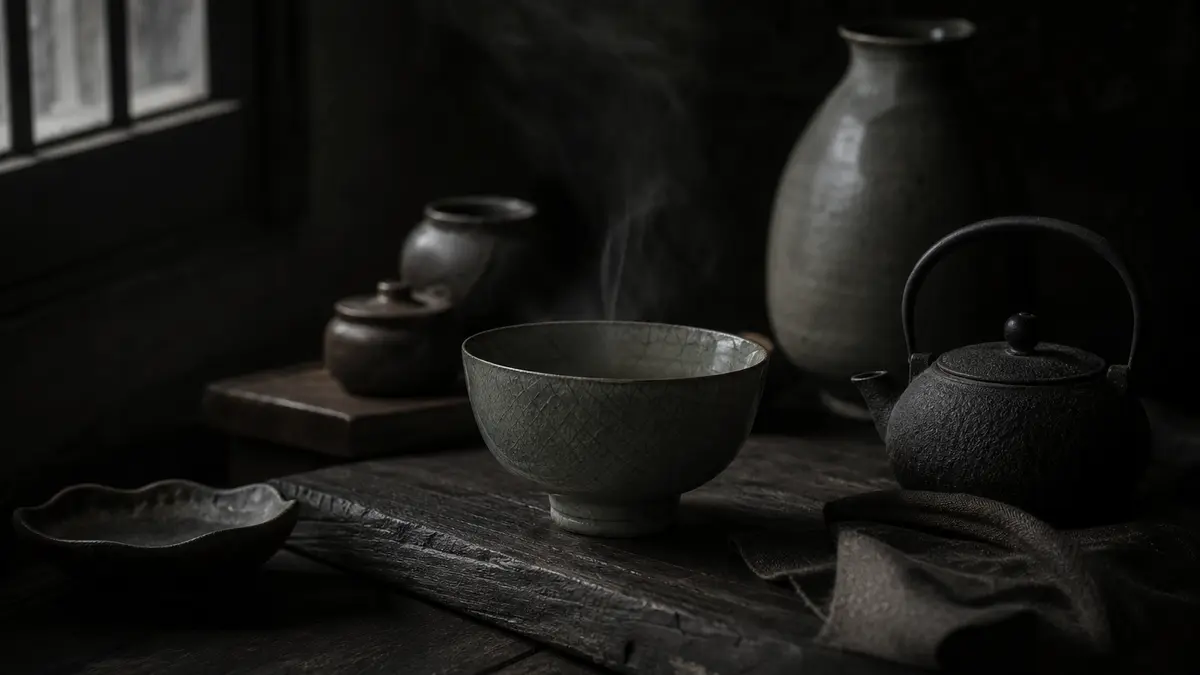
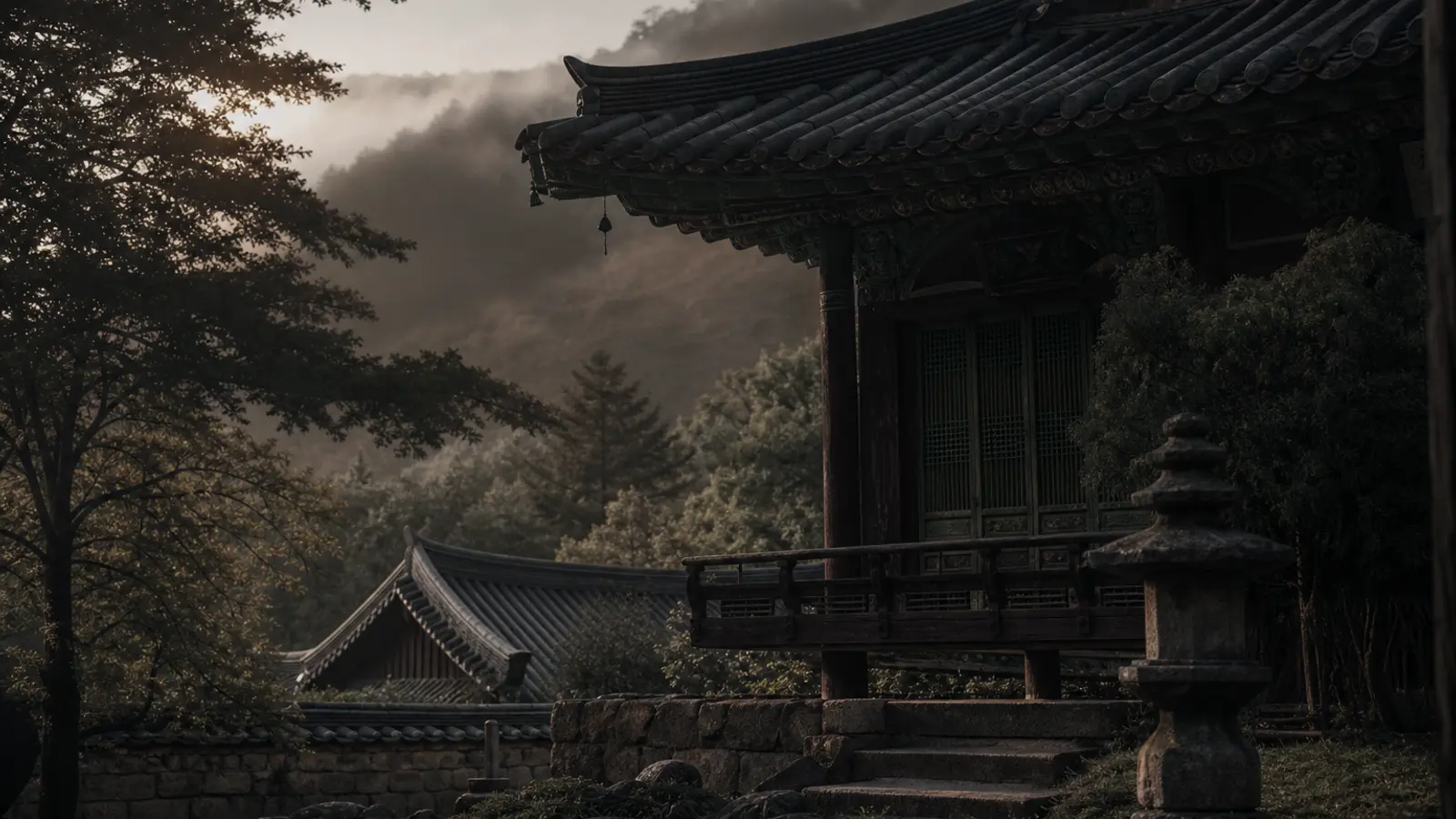
The Goryeo Dynasty (고려, 918–1392) represents the high point of traditional Korean tea culture (한국 차 역사). Buddhism was the state religion, and Buddhist practice and tea were inseparable. Monasteries cultivated tea, monks drank it as part of meditation discipline, and the Goryeo court formalized tea ceremony as part of royal ritual.
This is also the period that produced Korea’s most celebrated ceramic tradition. Goryeo celadon (고려청자) — the translucent jade-green pottery that remains among the most prized ceramics in the world — was developed during this era, and tea culture was a primary driver of its refinement. The relationship between Korean tea and Korean ceramics runs this deep: they evolved together. You cannot understand one without the other.
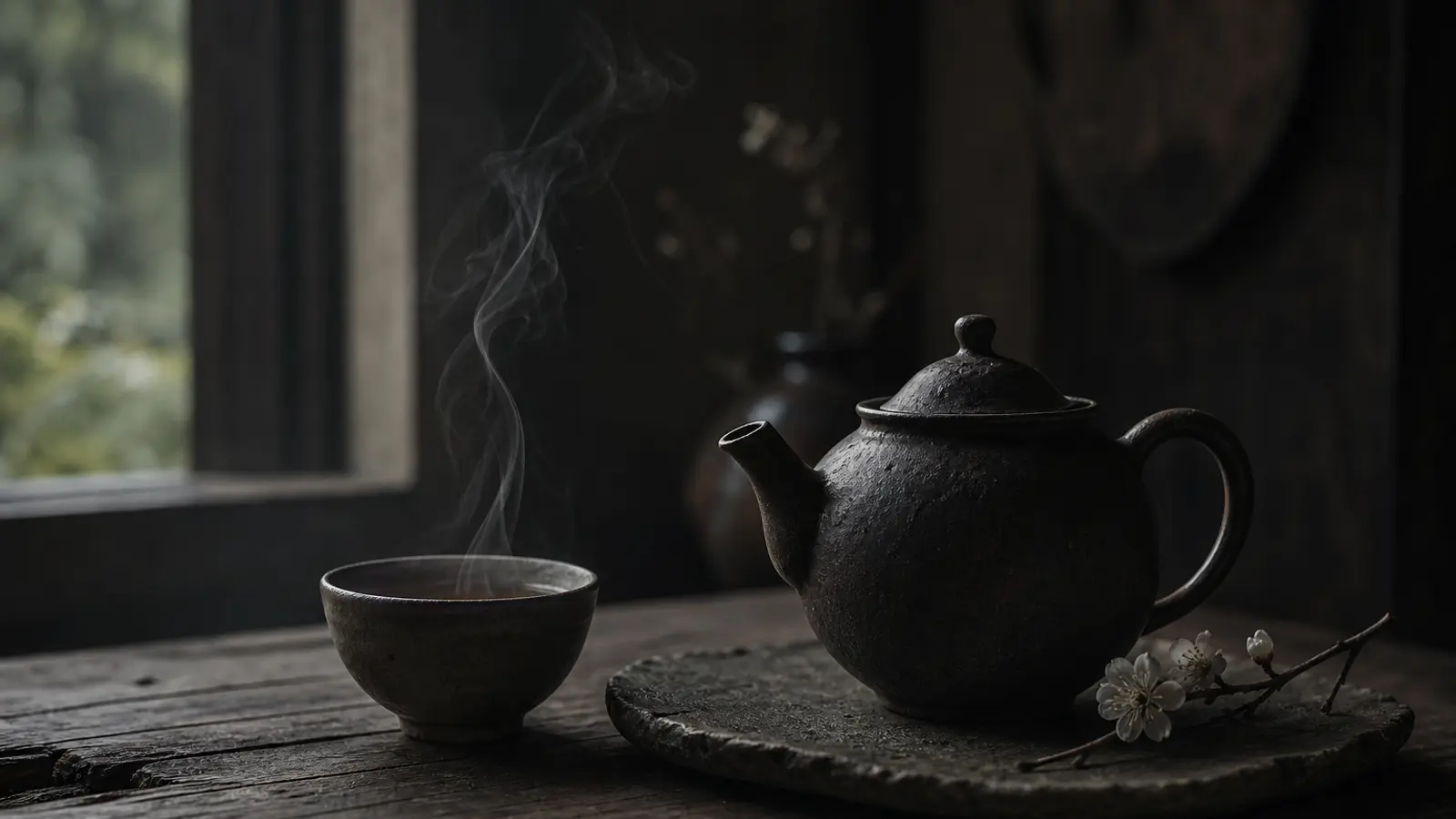
The formalization of 다례 (darye, the Korean tea ceremony) also traces to this period. Unlike the Japanese 茶道 (chado), which emphasizes choreographed ritual and aesthetic austerity, darye was oriented toward offering and hospitality — tea as a means of expressing respect and connection rather than as a discipline unto itself. This distinction, rooted in Goryeo-period practice, persists in contemporary Korean tea culture.
The first Korean tea texts emerged during this period as well, scholars recording cultivation methods, preparation techniques, and the philosophical dimensions of tea drinking. These texts would later become crucial when revivalists needed sources to reconstruct what colonialism had disrupted.
The Joseon Dynasty: Survival at the Margins
The Joseon Dynasty (조선, 1392–1897) transformed Korean society through the wholesale adoption of Neo-Confucian philosophy as state ideology. Buddhism was demoted from state religion to a suppressed tradition. The monasteries that had been the primary sites of tea culture lost their central social position.
The ceramics shift tells the story efficiently. Goryeo celadon, with its lush glaze and Buddhist associations, gave way to Joseon white porcelain (백자) — restrained, morally austere, reflecting Confucian values of simplicity and propriety. The same cultural logic that produced white porcelain deprioritized tea ceremony in court life.
But tea survived in two places.
First, Buddhist temples (사찰). Temple tea ceremony (사찰 다도, sachal dado) continued in mountain monasteries throughout the Joseon period, insulated from court ideology by geographic remove and religious continuity. The monks kept cultivating, kept brewing, kept transmitting knowledge. When revivalists needed living practitioners to learn from in the twentieth century, they went to the temples.
Second, among scholars. A strand of Korean literati maintained private tea practice throughout the Joseon period, framing it as a scholarly pursuit rather than a Buddhist one — compatible with Confucian ideals of self-cultivation. This intellectual tradition would eventually produce the most important figure in Korean tea history.
Choui Seonsa: The Man Who Wrote Korean Tea Back Into Existence
초의 선사 (Choui Seonsa, 1786–1866) was a Zen monk, painter, calligrapher, and poet. He is also the reason Korean tea culture has a coherent intellectual framework today.
Working from his hermitage on Duryunsan mountain (두륜산) in South Jeolla Province, Choui composed two texts that together constitute the philosophical foundation of Korean tea. The first, 동다송 (Dongdasong, “Song of Korean Tea”), written around 1830, systematically described Korean tea cultivation and preparation while arguing that Korean tea was equal to — and in some respects superior to — Chinese tea. The second, 다신전 (Dasinjeon, “Classics of Tea Spirit”), adapted classical Chinese tea scholarship to the Korean context.
These were not purely academic exercises. Choui was responding to a real crisis: by the early nineteenth century, tea culture had contracted so severely in Korea that it was in danger of losing its intellectual legitimacy. His texts were acts of cultural argument — assertions that Korean tea was worth practicing, worth refining, worth transmitting.
His relationships with leading Joseon scholars of the period, including the neo-Confucian writer Dasan Jeong Yak-yong (정약용), helped circulate his ideas beyond monastic circles. Without Choui’s writing, it is harder to imagine what the twentieth-century revival would have had to build on.
The Colonial Period: Near-Erasure
The Japanese colonial period (1910–1945) is the defining trauma in Korean tea history (한국 차 역사), and understanding it is essential to understanding why Korean tea is less globally known than Chinese or Japanese tea.
Japanese colonial administration systematically promoted Japanese cultural forms and suppressed or marginalized Korean equivalents. In tea, this meant the advancement of Japanese-style production methods — industrial cultivation, Japanese processing standards, Japanese ceremony forms — over Korean traditional practices. Korean tea gardens were converted to Japanese-style production, abandoned, or absorbed into Japanese commercial networks. The transmission of traditional knowledge, which depends on direct practice from one generation to the next, was interrupted.
Thirty-five years is more than one full generation. In craft traditions, that gap is close to catastrophic. The knowledge that should have passed from masters to apprentices during those decades either was not passed at all or survived only in fragments, in monastery corners, in isolated practitioners who had no institutional support.
This is the direct answer to a question often asked in Western tea circles: why is Korean tea less known than Japanese or Chinese tea? It is not because Korean tea is less interesting or less historically significant. It is because an occupying power spent thirty-five years suppressing it. The traditions that continued uninterrupted in China and Japan had the institutional infrastructure to build export markets and cultural prestige. Korea did not have that option.
The colonial period also explains the intensity of feeling around Korean tea revival today. For many Korean producers and practitioners, making tea is not simply an occupation or a hobby. It is a form of cultural reclamation.
Post-War Recovery: Rebuilding from the Ground Up
The liberation of 1945 did not immediately restore Korean tea culture. The Korean War (1950–1953) devastated the peninsula’s infrastructure and population, leaving little bandwidth for cultural reconstruction. The decades immediately following the war were focused on survival and economic development.
The rebuilding of Korean tea was slow, deliberate, and driven by specific individuals.
효당 최범술 (Hyodang Choi Beomseol, 1904–1979) was a Buddhist monk and independence movement figure who re-established tea cultivation in Hadong after liberation. Working to revive both the physical gardens and the cultural knowledge that had nearly been lost, he represents the first generation of post-colonial Korean tea recovery. His work made it possible for others to build on.
Through the 1970s and 1980s, the 보성 다원 (Boseong tea plantations, 보성군) in South Jeolla Province expanded significantly, developing into what became the most commercially productive tea region in Korea. Boseong’s terraced green hills — now one of Korea’s most photographed landscapes — are largely a product of this postwar development push. The region’s industrial-scale production stabilized Korean tea’s economic foundation during the recovery period, even as it prioritized quantity over the artisan methods that revivalists would later emphasize.
The Korean Tea Renaissance: Cultural Recovery as Conscious Project
The acceleration of Korean tea culture (한국 차 역사) that began in the early 2000s has a different character from the postwar rebuilding. It is less about survival and more about depth — recovering not just the practice of making tea but the full cultural framework that makes the practice meaningful.
Several strands are running simultaneously.
Wild tea recovery. 야생차 (yasaengcha, wild tea plants) that survived the colonial period — descendants of centuries-old plantings, maintained by no one, growing in mountain forests — are being identified, mapped, and harvested. These plants represent unbroken genetic and geographic continuity with pre-colonial Korean tea. Producers who work with wild material are not simply making good tea; they are making a historical argument about continuity.
Lost category revival. 황차 (hwangcha, yellow/partially oxidized Korean tea) was largely absent from Korean tea culture through most of the twentieth century — either lost during the colonial period or overshadowed by green tea production. In the past two decades, producers have worked from historical texts and regional memory to reconstruct hwangcha processing. The results vary, but the better examples — tea that sits in character between green and black, with a mellow sweetness and minimal astringency — represent genuine recovery of a category that was nearly erased.
Temple tea as living tradition. Buddhist temples (사찰) remain active sites of tea culture. 사찰 다도 (sachal dado, temple tea ceremony) has been documented, taught, and in some cases standardized to enable transmission to practitioners outside monastic life. The temples that maintained tea practice through the worst decades of the twentieth century are now recognized as the keepers of the most direct line of continuity.
Ceramics renewal. Young Korean potters are producing teaware that engages seriously with the Goryeo and Joseon ceramic traditions while incorporating contemporary perspectives. The dialogue between Korean tea and Korean ceramics — inseparable since the Goryeo period — continues in a new register.
Scholarly and institutional support. Universities, cultural foundations, and government bodies have invested in documenting, teaching, and promoting Korean tea history. The international profile of Korean tea is growing, though it remains far smaller than Chinese or Japanese tea.
What Survives and What It Means
Korean tea culture today is not a seamless continuation of ninth-century practice. It cannot be. The colonial interruption was real, the losses were real, and honest accounting requires acknowledging them.
What exists instead is something arguably more meaningful: a living tradition that knows its own history, including its trauma. Contemporary Korean tea practitioners tend to have an acute awareness of what was lost and why, and that awareness shapes how they approach their work. Making tea in Hadong today means making tea in the place where Daeryeom planted seeds in 828 CE, in a landscape that was nearly stripped of that heritage within living memory, by people who chose to rebuild it anyway.
The Korean tea renaissance is not nostalgia. It is cultural intelligence — the recognition that a practice worth keeping is worth the effort of reconstruction.
For the outside observer approaching Korean tea for the first time, this history is not background information. It is part of what you are tasting. The huigan (回甘) that returns in a well-made Korean green tea, the quiet depth of a properly processed hwangcha, the particular stillness of a temple tea ceremony — these exist because specific people in specific generations refused to let them disappear.
That is the 1,200-year story. And it is not finished.