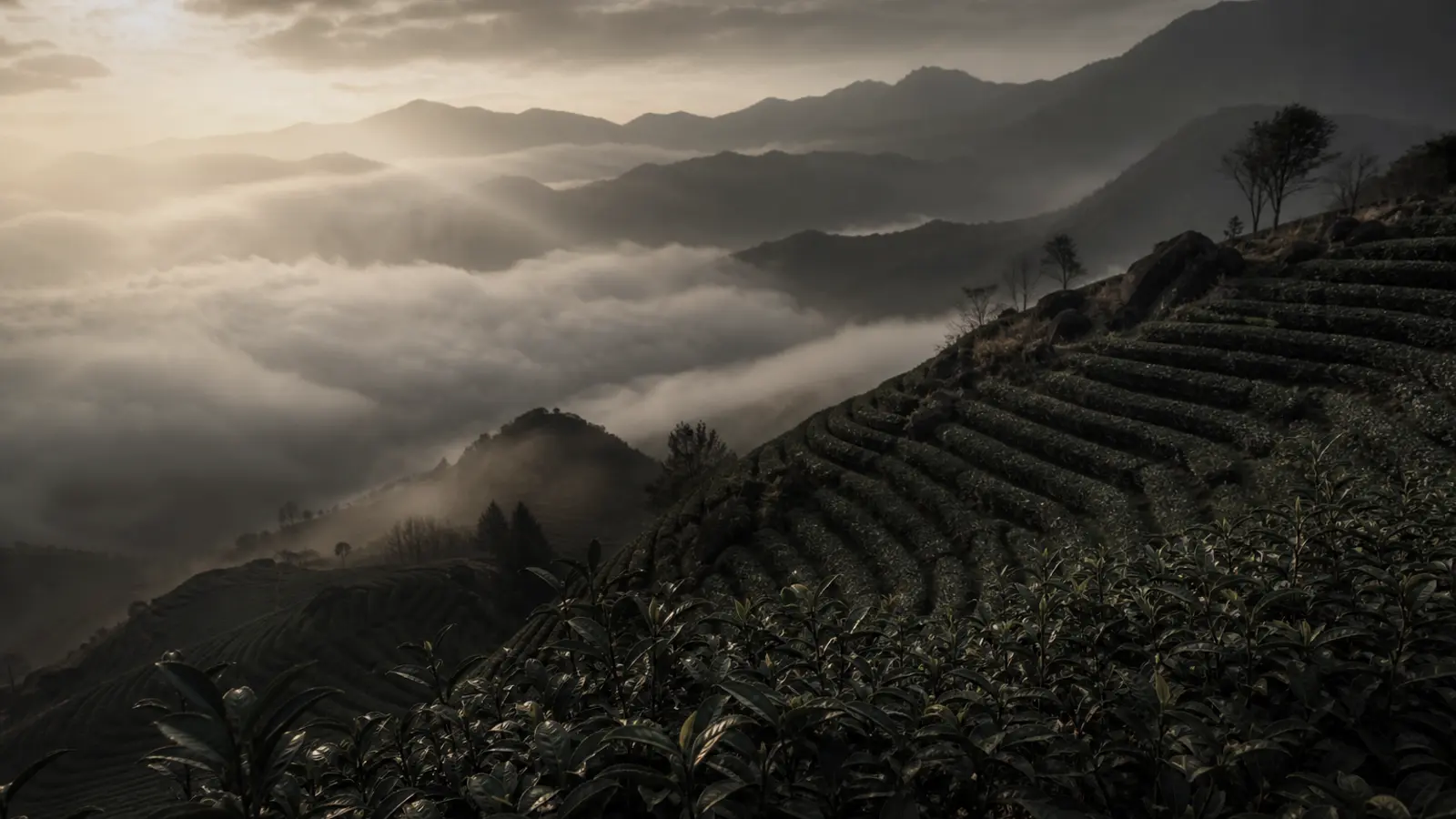
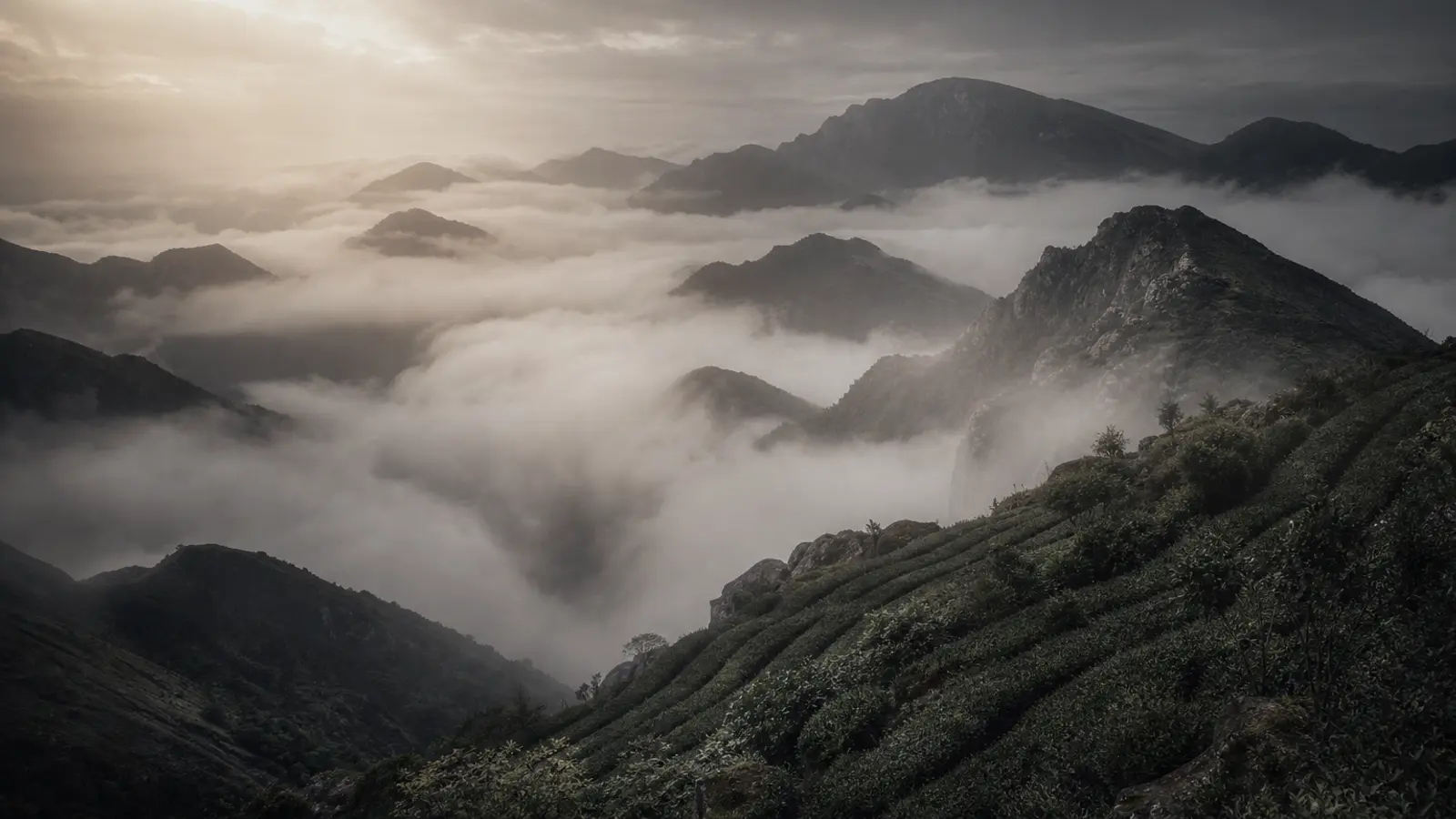
Da Yu Ling (大禹嶺) oolong is the highest commercially produced tea in Taiwan. Grown at elevations above 2400 meters in the Central Mountain Range, it represents what many consider the single finest expression of Taiwanese high mountain oolong — ethereal and crystalline and impossibly delicate, with a sweetness that seems to come from the air itself rather than the leaf. If Taiwan’s gaoshan cha (高山茶) tradition is a spectrum running from accessible to transcendent, Da Yu Ling sits at the far end, in a place where Camellia sinensis barely survives and, because of that, produces something extraordinary.
The wine parallel is hard to avoid: Da Yu Ling is the La Tâche of Taiwanese oolong. Tiny production from an extreme site that yields something no other location can replicate. The price reflects genuine scarcity and genuine quality — not marketing, not hype, but the basic economics of a handful of gardens at the edge of viability producing a few hundred kilograms per season.
I have Da Yu Ling on order as of this writing and will update this profile with firsthand tasting data when the tea arrives. What follows draws on published research, extensive secondhand sourcing, and my experience with other high mountain Taiwanese oolongs that bracket Da Yu Ling in elevation.
Geography & Location
Da Yu Ling sits along the Central Cross-Island Highway (中橫公路, Zhōnghéng Gōnglù) where it crosses the spine of Taiwan’s Central Mountain Range, roughly at the border of Nantou County (南投縣) and Hualien County (花蓮縣). The coordinates place it near 24.18°N, 121.28°E, though the scattered gardens span several kilometers of roadside terrain.
The name translates literally as “Great Yu Ridge,” referring to the legendary emperor Yu the Great (大禹), who tamed China’s catastrophic floods in ancient mythology. The name was given when the highway was carved through these mountains in the 1950s and 1960s — an engineering project that itself bordered on mythic difficulty.
Tea gardens here are scattered between 2200 and 2700 meters above sea level. The “90K” designation — which appears on some of the most sought-after Da Yu Ling lots — refers to the 90-kilometer marker on the highway, identifying the specific section of road near the garden. This kind of granular provenance matters. At Da Yu Ling, a difference of 200 meters in elevation can shift the character of the tea.
To put the altitude in context: Ali Shan (阿里山) sits at roughly 1000–1600 meters. Li Shan (梨山) reaches 1800–2200 meters. Da Yu Ling starts where Li Shan ends. At 2500 meters, you are above most cloud forests, in a zone where temperatures drop below freezing regularly in winter and fog wraps the slopes for much of the growing year. This is the extreme upper boundary of where tea can grow commercially.
Climate & Elevation
The climate at Da Yu Ling is defined by one word: stress. And stress, in tea as in wine grapes, drives concentration.
Day-night temperature differentials of 10–15°C are standard. During the growing season, daytime temperatures might reach 20–25°C before plunging to 8–12°C at night. This diurnal swing slows the plant’s metabolism dramatically. Leaves grow slowly. Cell walls thicken. The plant accumulates L-theanine (テアニン) — the amino acid responsible for savory sweetness and mouthfeel — at significantly higher concentrations than at lower elevations.
Winter brings freezing temperatures and dormancy. The growing season compresses to just two viable harvest windows: spring (typically late April to May) and autumn (October). Some years, weather disrupts even these narrow windows. There is no summer harvest.
Fog is constant and consequential. It blankets the gardens for much of the growing season, functioning as a natural diffuser that reduces UV radiation reaching the leaf surface. Lower UV stress means the plant converts less L-theanine into catechins (the polyphenolic compounds responsible for bitterness and astringency). The result is a leaf that is biochemically predisposed toward sweetness and body rather than bite.
Annual rainfall is substantial — Taiwan’s Central Mountain Range intercepts Pacific moisture systems — but the steep terrain and rocky substrate ensure fast drainage. The plants are rarely waterlogged.
Soil & Terroir
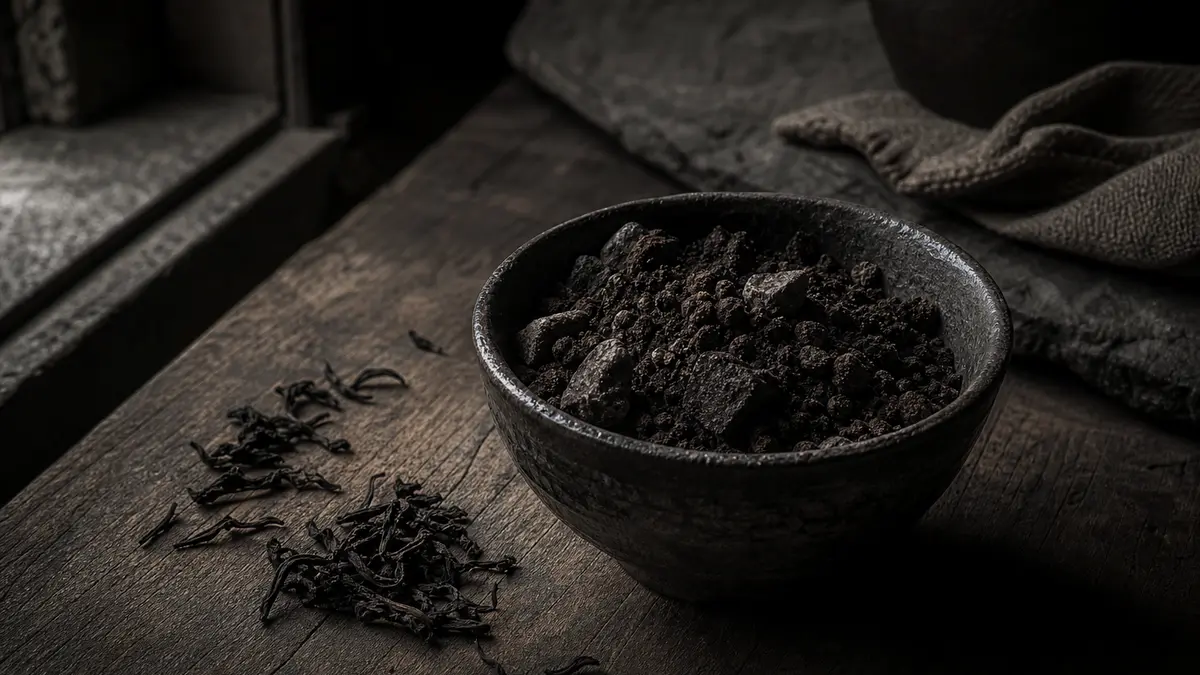
The soil at Da Yu Ling is rocky mountain substratum — thin, well-drained, and mineral-rich. This is not the deep, fertile loam of a lowland tea garden. The roots must work to find nutrients, and the root-to-shoot ratio likely favors the root system, concentrating flavor compounds in the limited leaf growth.
The geological foundation is sedimentary and metamorphic rock, part of the broader tectonic upheaval that created Taiwan’s central spine. The mineral character that Da Yu Ling drinkers describe — that clean, stone-like sweetness in the finish — likely traces at least partly to this substrate, though I’m cautious about drawing direct lines from geology to cup. What I can say is that the combination of altitude, temperature stress, fog diffusion, and lean soil produces a leaf with a biochemical fingerprint distinct from any other Taiwanese origin.
The terroir concept applies here with unusual precision. You cannot replicate Da Yu Ling’s conditions at a lower elevation. You cannot irrigate your way to a similar result. The character of this tea is place-dependent in the most literal sense, which is why the wine parallel — specifically the Burgundian concept of climat — feels so apt. Da Yu Ling is a single, unrepeatable site.
Key Cultivars & Tea Types
The dominant cultivar at Da Yu Ling is Qingxin (青心, also written 青心烏龍, Qīngxīn Wūlóng), sometimes called Luanze Oolong. This is the same cultivar that defines most premium Taiwanese high mountain oolong, and for good reason: Qingxin is thin-leaved, aromatic, and particularly responsive to elevation-induced stress. It amplifies the high mountain effect rather than masking it.
Some gardens reportedly include small amounts of Jin Xuan (金萱, TTES #12) or other cultivars, but Qingxin dominates the prestige lots. At Da Yu Ling’s elevation, the cultivar’s naturally delicate character becomes almost impossibly refined — the aromatic compounds that produce orchid and lily notes at 1500 meters become something more translucent, harder to name, at 2500 meters.
All commercially significant Da Yu Ling production is lightly oxidized oolong, typically in the 15–25% oxidation range. The leaves are rolled into the tight ball shape (球形, qiúxíng) characteristic of Taiwanese high mountain oolong. Light roasting, if applied at all, stays minimal — the goal is transparency, allowing terroir to speak without the caramelized overlay that heavier roasting introduces.
Processing Traditions
Da Yu Ling processing follows the standard Taiwanese high mountain oolong method, but the raw material demands particular care.
- Harvest: Hand-picked, typically one bud and two or three leaves. The picking standard is strict — at these prices, no farmer sends inferior leaf to market.
- Withering (萎凋, wěidiāo): Solar withering is brief and careful, often supplemented by indoor withering given the unpredictable mountain weather.
- Tossing and bruising (浪青, làngqīng): The leaf edges are gently bruised to initiate oxidation. This step is calibrated to achieve the light oxidation level that preserves Da Yu Ling’s translucent aromatics.
- Kill-green (殺青, shāqīng): Heat is applied to halt oxidation, locking in the desired level.
- Rolling (揉捻, róuniǎn): The leaves are rolled into tight balls through repeated cycles of rolling and light drying.
- Drying (乾燥, gānzào): Final drying stabilizes the tea for storage. Minimal or no additional roasting.
The skill lies in restraint. The processor’s job with Da Yu Ling leaf is to not interfere — to preserve the biochemical gifts that altitude and fog have already written into the leaf. Over-oxidation muddies the clarity. Over-roasting obscures the mineral sweetness. The best Da Yu Ling processing is nearly invisible.
Characteristic Flavor Signatures
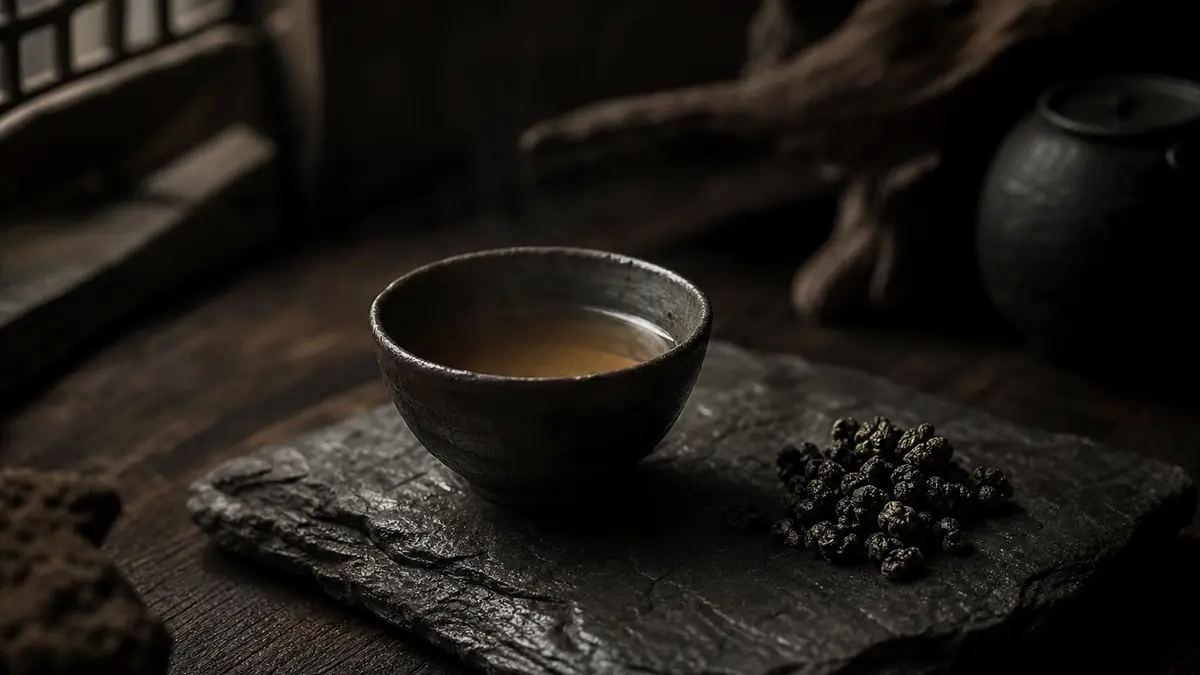
The word most used to describe Da Yu Ling oolong is ethereal, and for once the adjective earns its keep.
Aroma: Floral — orchid (蘭花, lánhuā) and lily — but so delicate the scent seems to float rather than land. There is sometimes a cool, almost mentholated high note, as if the leaf retained something of the mountain air. In a warmed gaiwan (蓋碗), the fragrance of the wet leaf is enough to stop a conversation.
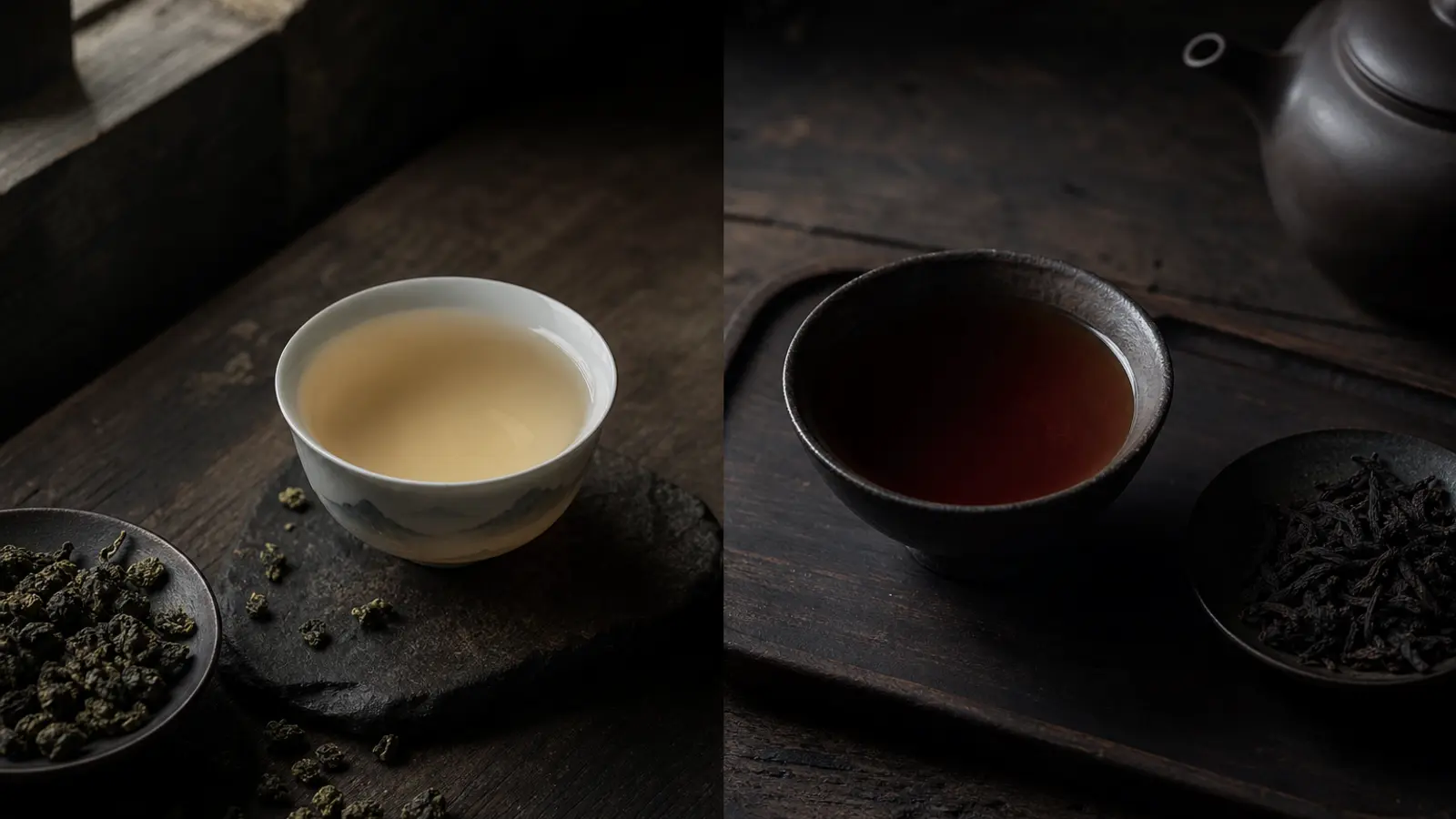
Liquor: Pale gold, crystalline, with a viscosity that reads as creamy without heaviness. The body has a silk-like quality that I associate with very high L-theanine levels.
Taste: The initial sip is sweet and clean — not sugary, but the kind of sweetness you find in cold mountain spring water. Floral notes thread through the mid-palate. The finish is where Da Yu Ling announces itself: a mineral-sweet huigan (回甘) that persists for minutes, building slowly and lingering long after the swallow.
Evolution: Complexity reveals itself across 8–12 steeps with gentle evolution rather than dramatic shifts. The early steeps emphasize florals and sweetness. Mid-steeps deepen into a creamy, slightly buttery register. Late steeps often show a clean minerality and sustained sweetness with the florals fading to whispers.
Brewed at 90–95°C with 6g per 120ml gaiwan, the first steep can be as short as 30 seconds, extending gradually. Da Yu Ling does not punish over-steeping the way some greener oolongs do — its low astringency provides a wide margin for error — but precision rewards you with better-defined aromatics.
Quality Indicators & Authentication
Authenticity is the central problem with Da Yu Ling. The name commands a price premium that incentivizes mislabeling. Multiple sources report that the volume of tea sold as “Da Yu Ling” in Taiwan and internationally far exceeds what the tiny growing area could possibly produce.
Indicators of genuine Da Yu Ling:
- Dry leaf: Tight, uniform ball-rolled leaves. Color should be deep green with minimal browning. The aroma of dry leaf should be clean and sweetly floral, not roasty or musty.
- Liquor clarity: Genuine Da Yu Ling produces an exceptionally clear, pale gold liquor. Cloudiness or excessive color suggests lower-elevation substitution or processing issues.
- Persistence: The huigan should be long — measured in minutes, not seconds. This is the most reliable sensory marker and the hardest to fake. Lower-elevation teas may taste pleasant but lack the mineral-sweet finish that lingers and builds.
- Steep count: Genuine Da Yu Ling from healthy bushes should sustain 8–12 steeps without collapsing. The evolution should be gradual and graceful.
- Provenance documentation: Reputable sources can typically identify the specific garden or at least the elevation zone. The “90K” designation, referring to the highway kilometer marker, is one such specificity.
The best defense against counterfeits is comparative experience. If you have tasted well-sourced Li Shan at 2000+ meters, you have a reference point. Da Yu Ling should read as a step beyond — more translucent, more persistent, more quiet in its power.
Price Ranges
Da Yu Ling is the most expensive regularly produced Taiwanese oolong, and the prices reflect real supply constraints rather than artificial inflation.
| Grade | Price per 100g (USD) | Notes |
|---|---|---|
| Standard production | $30–80 | Genuine Da Yu Ling from established gardens, standard seasonal harvest |
| Select lots / named gardens | $80–150 | Specific garden provenance (e.g., 90K), premium picking standard |
| Competition-grade | $100–200+ | Award-winning lots or extremely limited micro-productions |
These are international retail prices. In Taiwan’s domestic market, prices for top lots can run higher during peak demand, particularly for spring harvest. Conversely, some Taiwanese tea shops maintain relationships with specific farmers that yield slightly lower pricing for loyal buyers.
For perspective: a 50g pouch of genuine Da Yu Ling at $15–40 — which sounds modest until you realize this is $30–80 per 100g — falls in the range of a good bottle of Burgundy. A competition-grade lot at $200 per 100g is the price of a village-level Burgundy from a top producer. Given that 100g of Da Yu Ling, brewed gongfu-style, yields 15–20 sessions, the per-session cost sits between $1.50 and $13. By that metric, it is one of the more reasonable luxuries in food and drink.
The government’s restriction on new plantings means supply cannot expand. As demand for premium Taiwanese oolong grows internationally, the price trajectory for genuine Da Yu Ling points in one direction.
The Extreme Edge
What makes Da Yu Ling singular is not one factor but the convergence of all of them at an extreme. The elevation, the fog, the temperature stress, the lean soil, the Qingxin cultivar, the restricted production — remove any one element and you get a different tea. A very good tea, possibly, like the excellent oolongs from Li Shan just a few hundred meters lower. But not this tea.
The experience of drinking Da Yu Ling, according to multiple seasoned tasters whose palates I trust, is less about tasting something and more about tasting a place. The tea is transparent enough that the terroir shows through without mediation. This is what I mean by the La Tâche parallel — it is not that Da Yu Ling tastes like Pinot Noir, obviously, but that it shares the same relationship to its site. The place makes the thing. The thing cannot exist without the place.
I’ll have more to say when my Da Yu Ling from the 90K garden arrives and I can sit with it across multiple sessions. Until then, this profile represents the best synthesis I can offer of research, secondhand sourcing, and the contextual understanding that comes from serious time with Li Shan and Ali Shan oolongs that frame Da Yu Ling from below. The gap between 2000 meters and 2500 meters, by every credible account, is not incremental. It is a different register entirely.