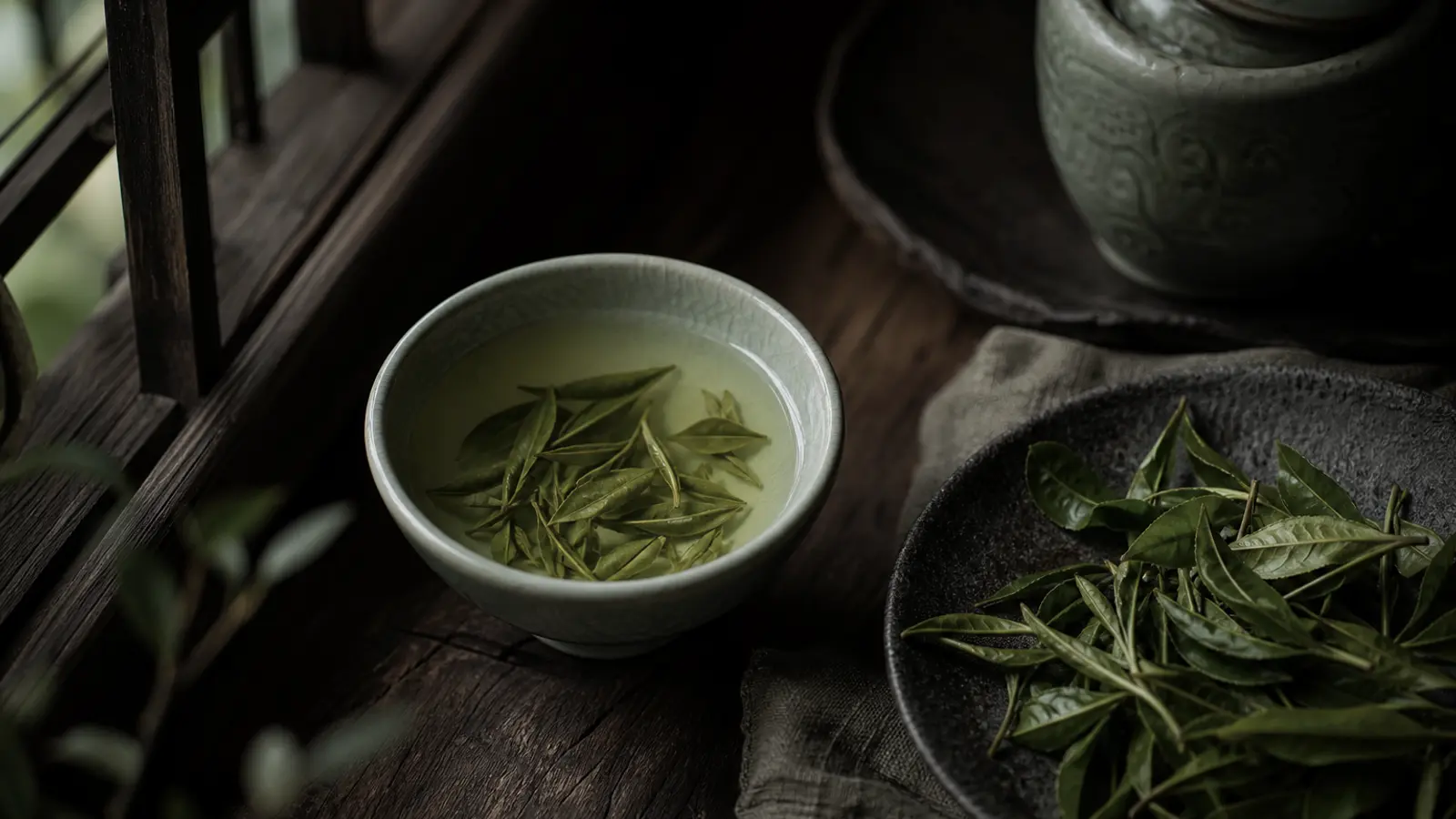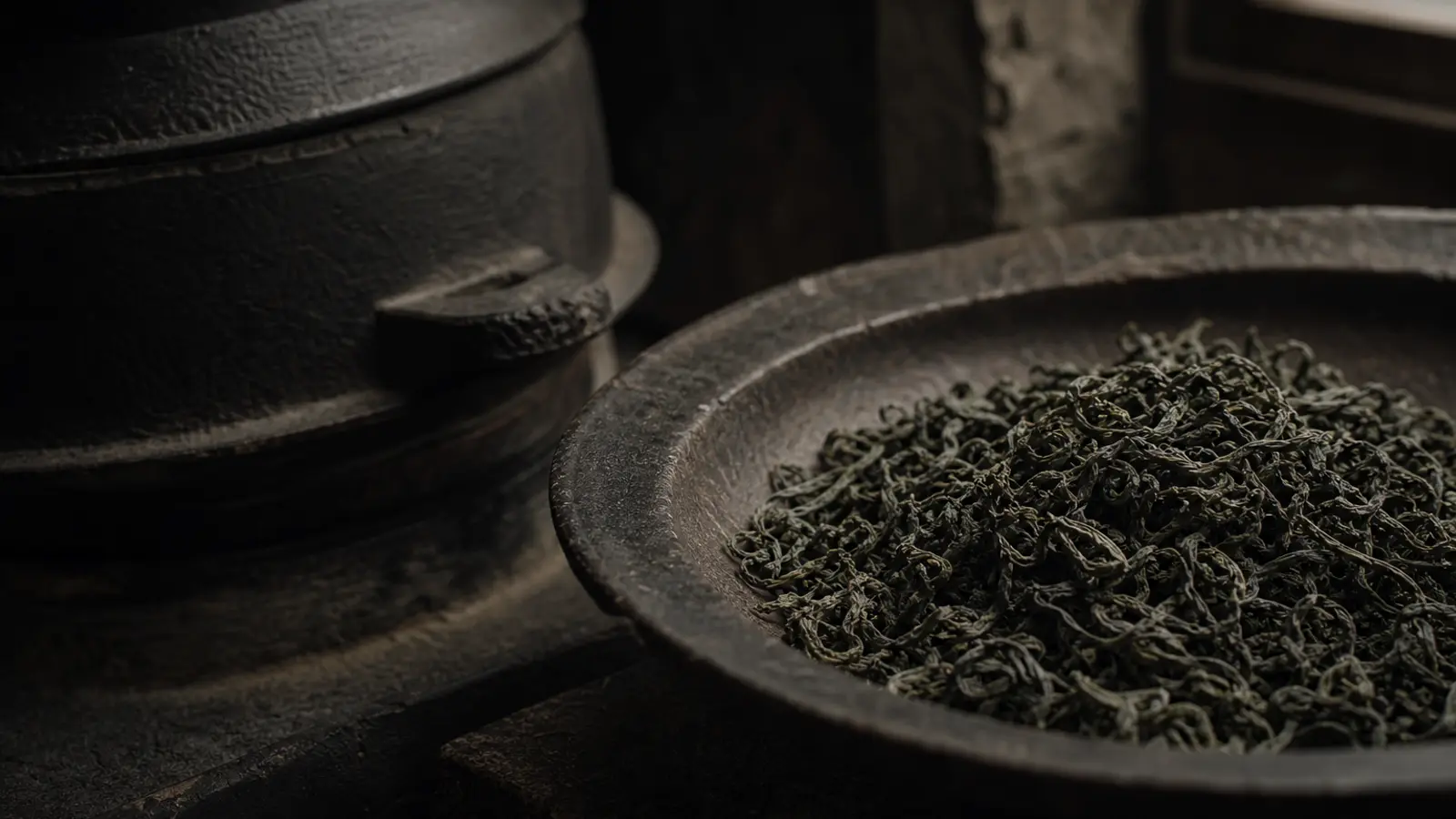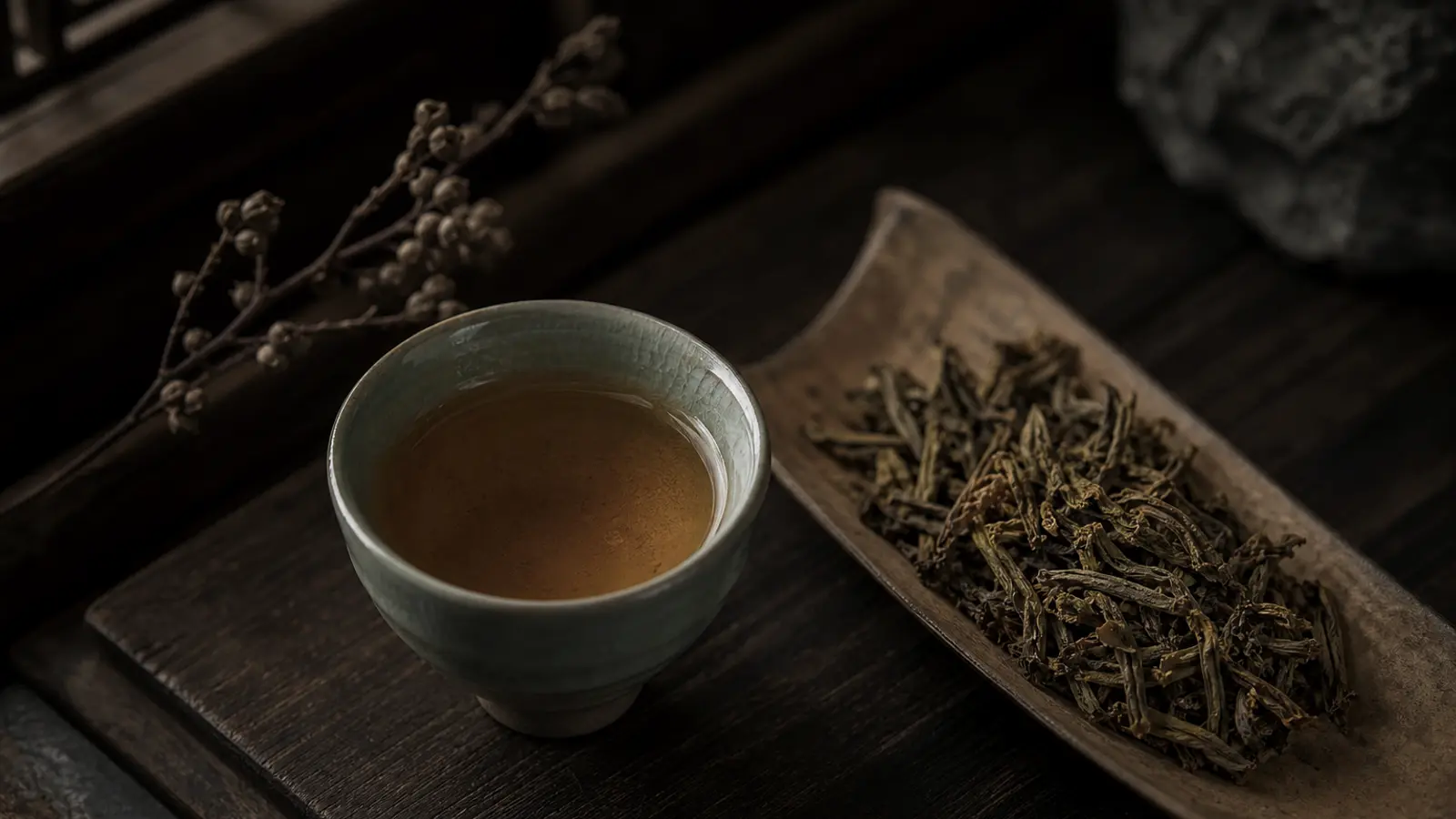
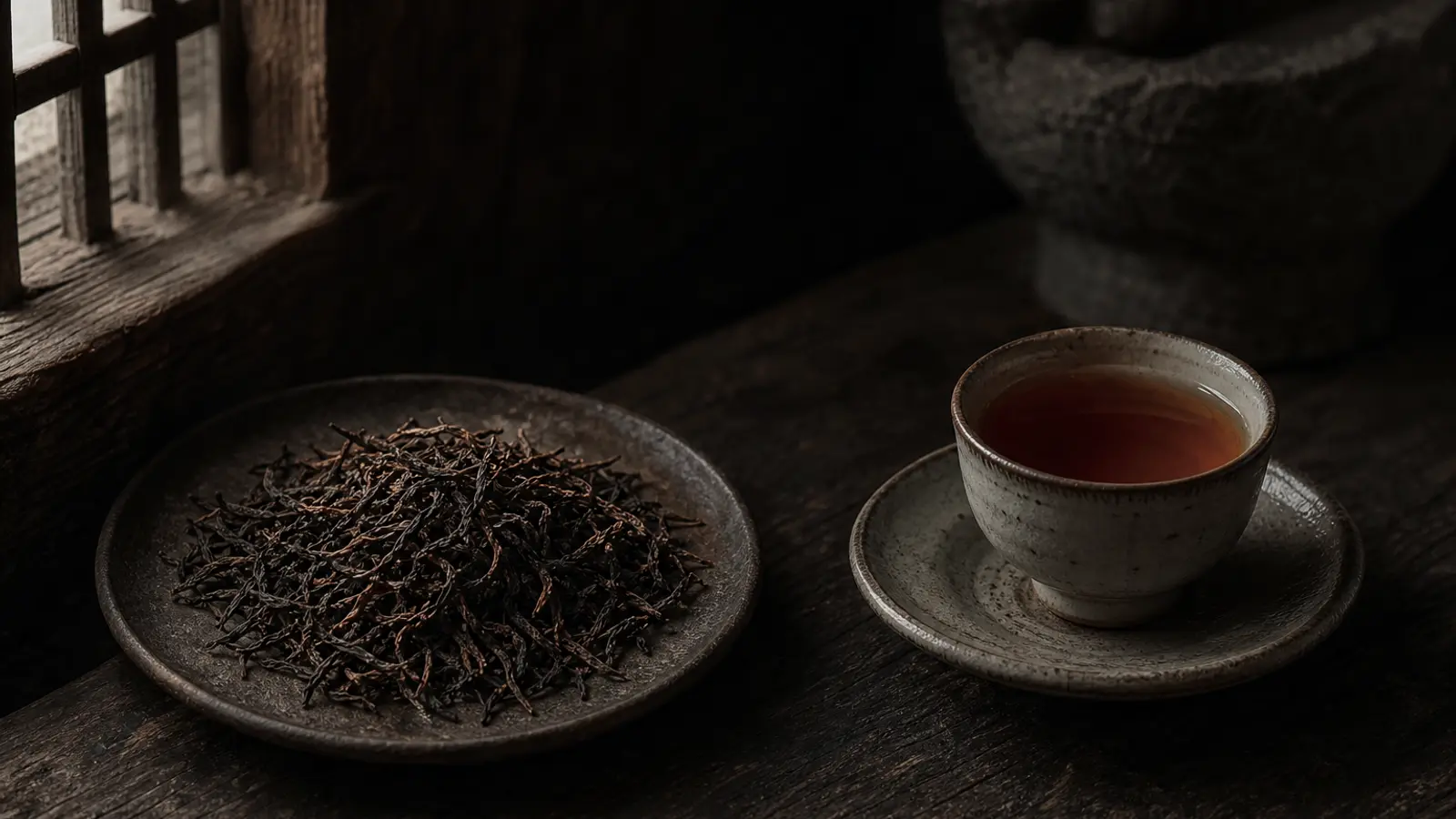
Korean hongcha (홍차, 紅茶 — literally “red tea,” the term used across East Asia for what the West calls black tea) is a small but growing category in Korean tea production. It is fully oxidized tea made from Korean cultivars and Korean terroir, and it offers a character distinct from Chinese, Indian, or Sri Lankan black tea. If you drink Korean tea at all, you probably know nokcha (녹차), the green tea that dominates the peninsula’s output. Hongcha is the other side of the leaf — the same raw material pushed through complete oxidation to produce something unexpected.
Think of it this way: Korean black tea is like English sparkling wine. A cooler-climate producer applying a well-established technique to local terroir, producing results that surprise people who assumed the traditional sources had a monopoly.
Why Korea Makes So Little Black Tea
Korea is a green tea country. The vast majority of tea cultivated in Hadong (하동), Boseong (보성), and Jeju (제주) is processed as nokcha or, increasingly, as hwangcha (황차) — the partially oxidized “yellow tea” that has become Korea’s signature semi-oxidized style. Hongcha represents a tiny fraction of total output.
The reasons are historical and economic. Korean tea culture revived in the twentieth century around green tea traditions. The domestic market developed around nokcha. Producers had no established hongcha tradition to build on — unlike China’s centuries-deep relationship with red tea processing, or India’s colonial-era infrastructure for CTC and orthodox black tea.
What changed is artisan curiosity. Producers in Hadong and Jeju — regions with the strongest terroir identity — began experimenting with full oxidation processing, partly to diversify their offerings and partly because the international specialty market showed interest in single-origin black teas from unusual sources. The category is young. It may not have reached its ceiling yet.
How Korean Hongcha Is Processed
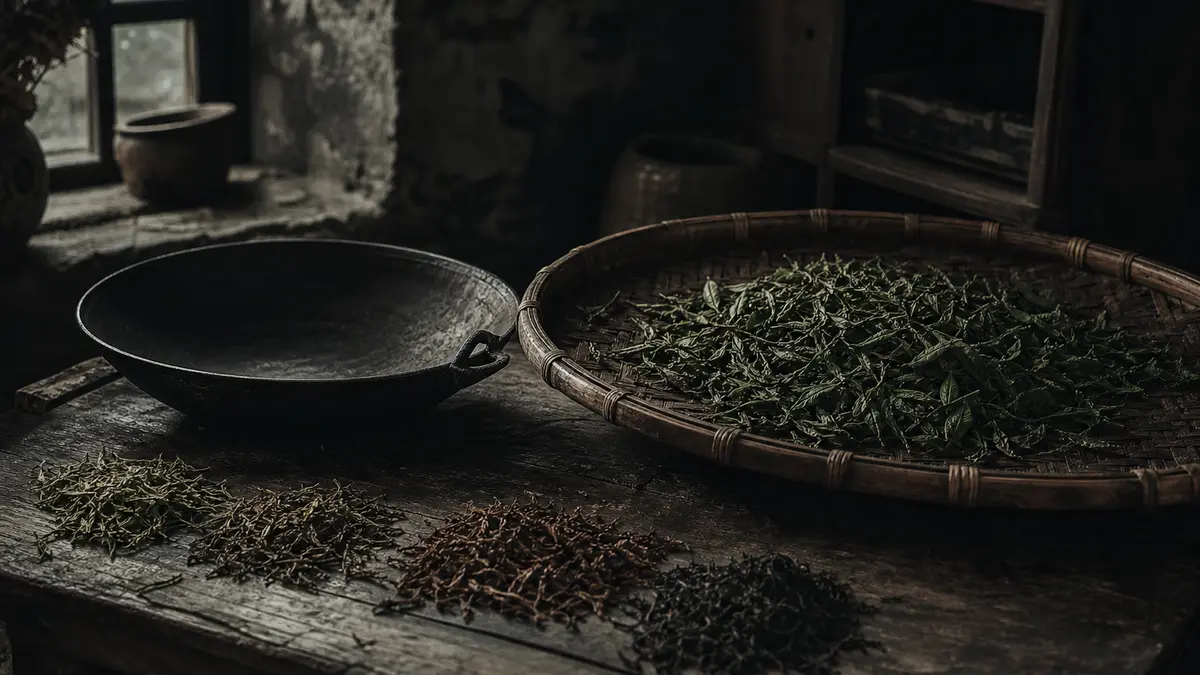
Korean hongcha follows the standard black tea production sequence:
- Withering (위조, 萎凋): Fresh leaves are spread and allowed to lose moisture, softening the leaf for rolling. Duration varies by producer, but 12–18 hours is common.
- Rolling (유념, 揉捻): The withered leaves are rolled — by hand or machine — to break cell walls and release enzymes that initiate oxidation.
- Oxidation (산화, 酸化): The rolled leaf is spread in a humid environment and allowed to oxidize fully, typically for 4–6 hours until the leaf turns copper-brown. This is the step that defines hongcha.
- Drying (건조, 乾燥): Heat is applied to halt oxidation and stabilize the leaf for storage.
Some Korean producers use a modified technique that complicates this neat sequence. They begin with a partial kill-green (살청, 殺靑) — a brief heat application before rolling — and then allow oxidation to proceed. This creates a tea that sits somewhere between traditional hongcha and hwangcha in character: fully oxidized in theory, but with a softer, rounder profile because the initial heat suppresses some of the sharper enzymatic reactions. Whether this still qualifies as “hongcha” or represents its own category is a matter of ongoing debate among Korean tea producers. I find the distinction worth noting because it explains why some Korean black teas taste less like black tea than you’d expect.
Flavor Profile of Korean Black Tea
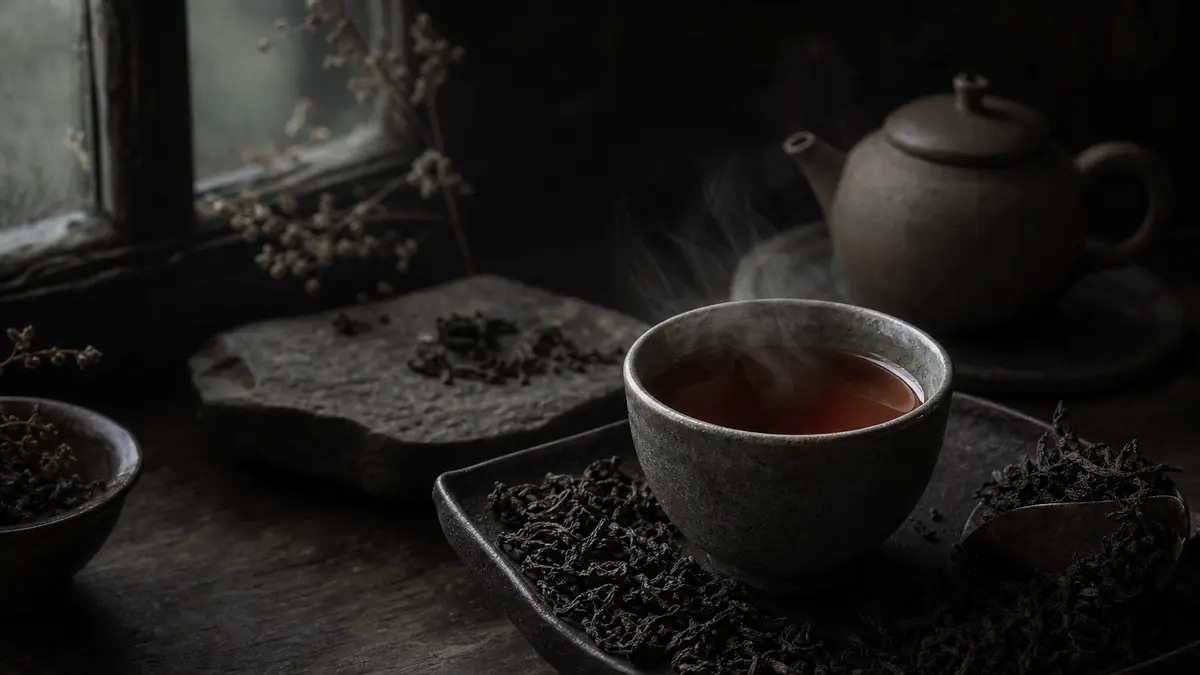
If your reference point for black tea is Assam — malty, tannic, robust — Korean hongcha will recalibrate your expectations. The flavor sits in a different register entirely.
Korean hongcha has a gentler, sweeter character. Less maltiness. Less tannin. More floral lift. The Korean cultivars and cooler growing conditions produce a tea with inherent sweetness and a lighter body than most South or Southeast Asian black teas. The closest comparison in the broader tea world is Chinese Dian Hong (滇紅, Yunnan red tea) — another fully oxidized tea that emphasizes sweetness and honey notes over the brisk, astringent punch of a Ceylon or Kenyan black.
Terroir matters here, as it does across all Korean tea:
- Hadong hongcha (하동 홍차): Made from wild-grown or semi-wild material in the Jiri-san mountain valleys, Hadong hongcha carries the concentration and mineral complexity that yasaeng-cha (야생차, wild tea) terroir imparts to all Hadong tea. Expect deeper sweetness, some stone-fruit character, and a lingering huigan (回甘) that green tea drinkers from the region will recognize.
- Jeju hongcha (제주 홍차): Grown in the volcanic soil of Jeju Island, this hongcha carries a distinct mineral undertone — a basalt-driven quality that gives the tea a subtle savory edge beneath the floral sweetness. Jeju’s cultivars tend to produce a brighter, more aromatic cup.
In both cases, the tea rewards a lighter brewing approach than you’d use for Indian black tea. I brew Korean hongcha at 90–95°C rather than a full boil, using about 4g per 150ml gaiwan (蓋碗), steeping 15–20 seconds for the first infusion and adding 5–10 seconds per subsequent round. It opens up over 5–7 steeps — another departure from the one-steep Western black tea model.
Pricing and Market Reality
Korean hongcha is premium-priced relative to the global black tea market. Expect to pay $40–$100 per 100g for artisan production. That sounds steep next to a box of English Breakfast, but it’s actually lower than equivalent-grade Korean green tea, which commands even higher prices.
The pricing reflects realities that aren’t going away:
- Small production scale. We’re talking about individual producers making tens or hundreds of kilograms, not industrial estates.
- Artisan labor. Much of the processing is done by hand, particularly for Hadong wild-picked material.
- Limited supply. Korean tea-growing land is finite, and most of it is committed to nokcha.
The domestic Korean market absorbs most of the hongcha produced. International availability is limited to specialty Korean tea retailers, and the selection is thin compared to what you’d find browsing a Yunnan pu-erh catalog. This is a category where you take what’s available and explore from there.
Korean Hongcha as a Bridge Tea
For drinkers who come from the pu-erh, Dian Hong, or orthodox black tea world and want to explore Korean tea, hongcha is the most accessible entry point. The processing category is familiar. The brewing approach overlaps. You already have the palate vocabulary to describe what’s happening in the cup.
From hongcha, the natural next step is hwangcha — Korea’s partially oxidized tea that sits between green and black in processing. And from hwangcha, the path leads to nokcha, the green tea heart of Korean tea culture. Each step asks you to recalibrate toward lighter oxidation and more delicate processing, but hongcha gives you a foothold.
The reverse is also true. If you’re a Korean nokcha drinker curious about what full oxidation does to the same leaf material, hongcha answers that question directly. Same cultivars, same terroir, radically different processing — and a cup that reveals how much of what you taste in tea comes from the maker’s choices rather than the plant alone.
Where Korean Hongcha Goes from Here
The category is young enough that quality continues to develop as producers refine their oxidation techniques. Multiple reports from Korean tea competitions suggest that the best hongcha entries are improving year over year — producers are learning how to manage the full oxidation window for their specific cultivars, rather than simply applying Chinese or Taiwanese red tea protocols to Korean leaf.
This is the pattern with any emerging tea category. The technique is borrowed, but the terroir is local. Over time, the processing adapts to the material rather than the other way around. Korean hongcha is still in that adaptation phase, which makes it an interesting category to watch — and to drink now, before the rest of the market catches on.