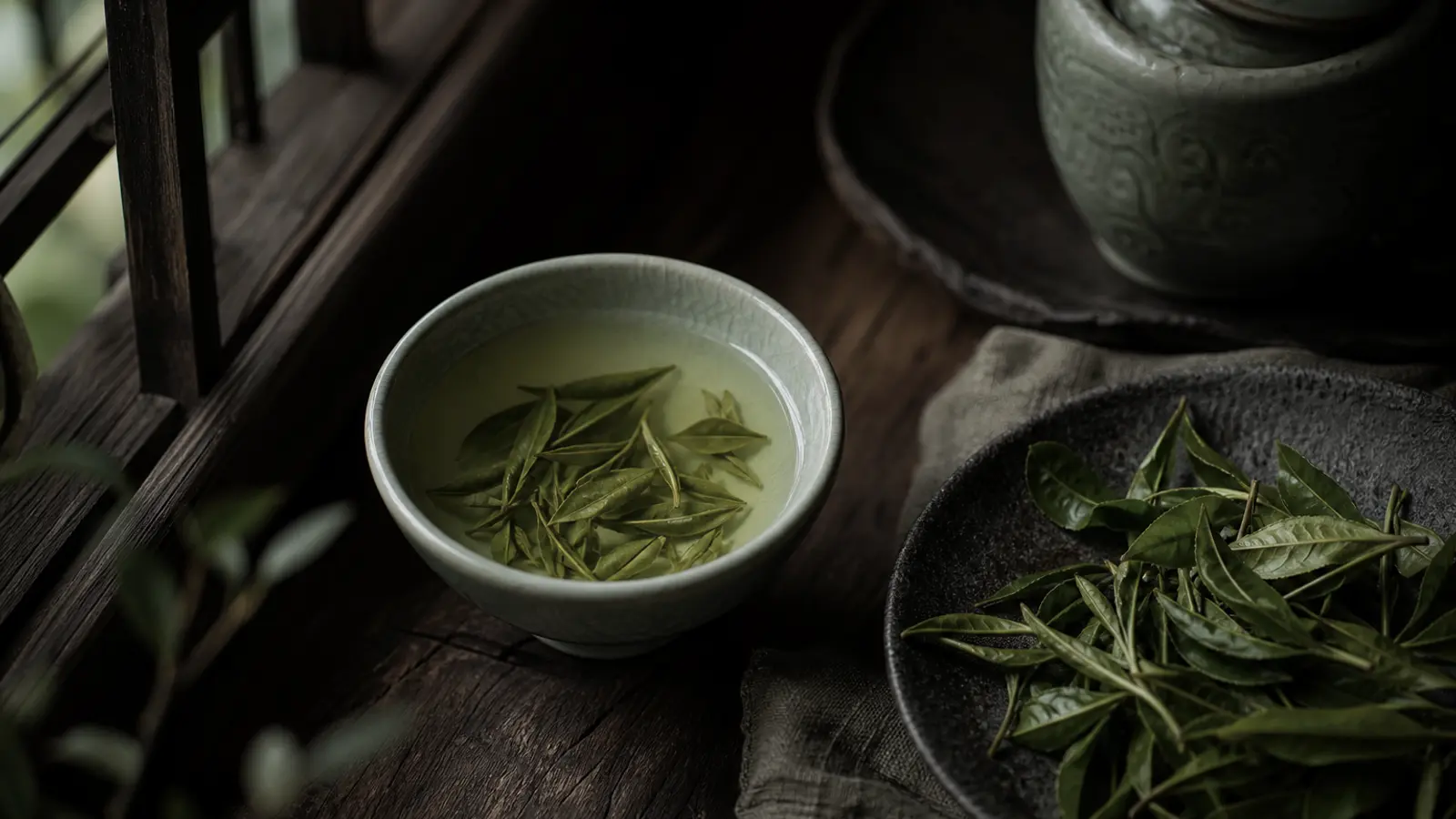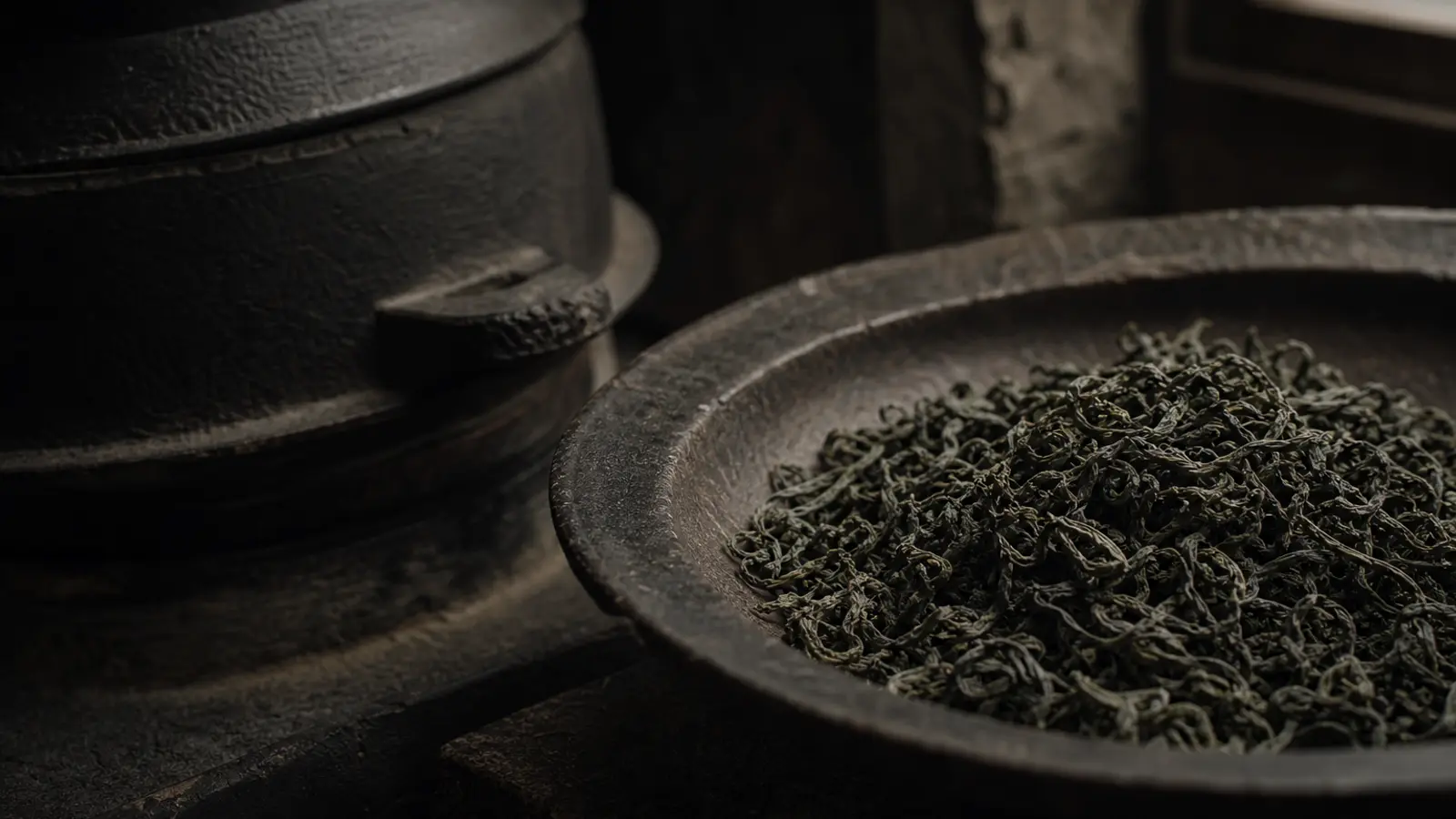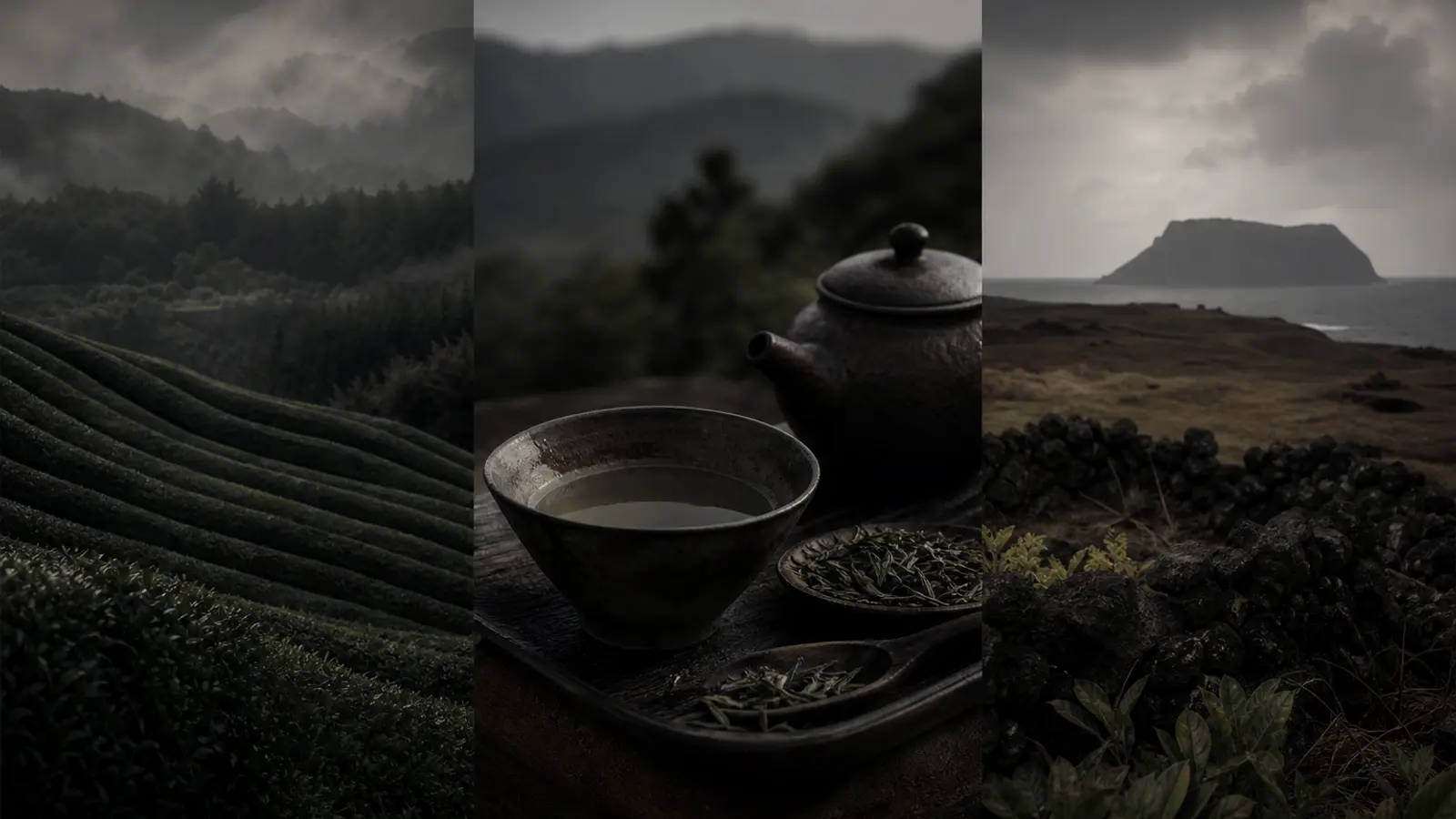
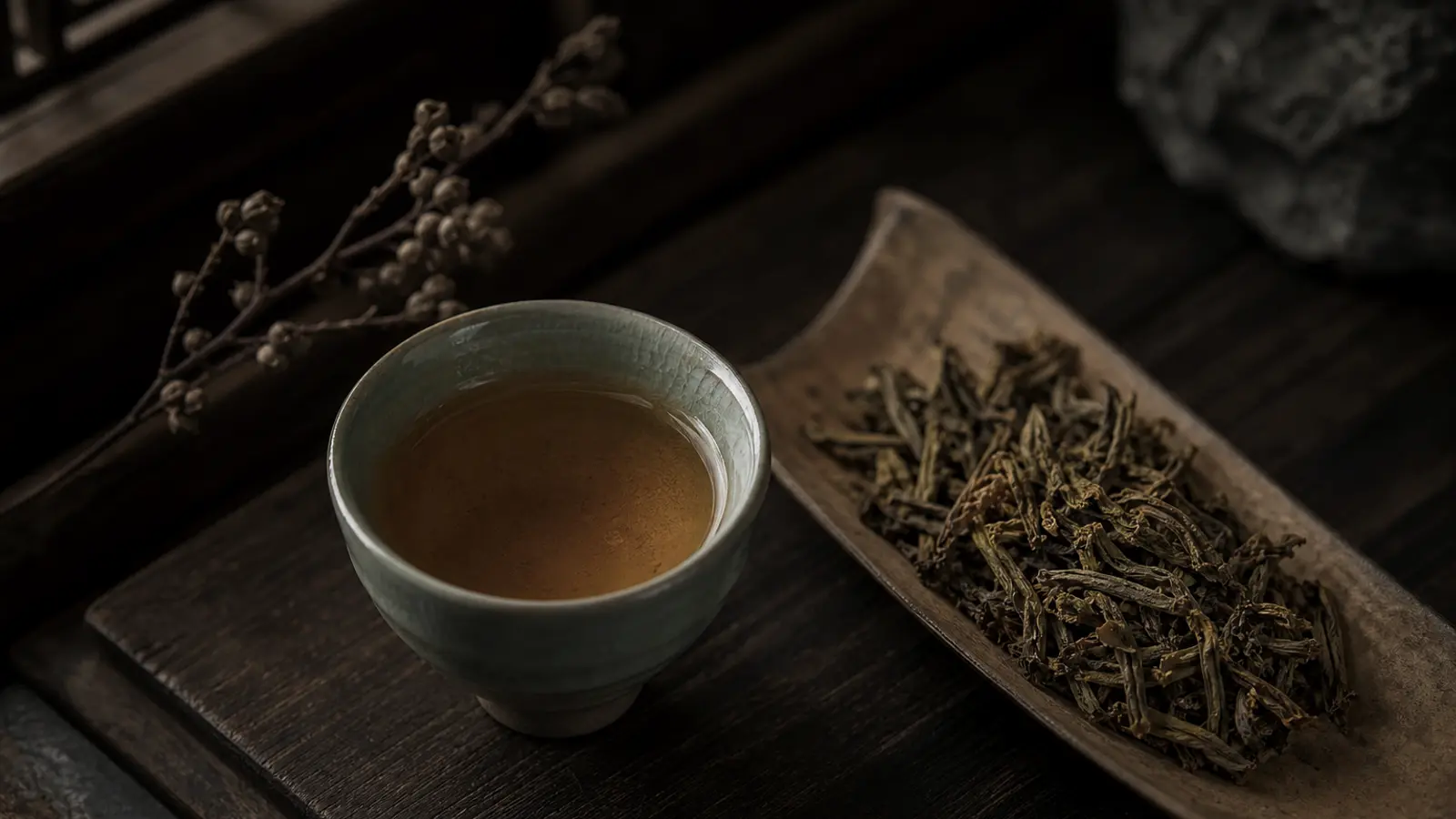
Hwangcha (황차, 黃茶) is Korean partially oxidized tea — occupying the gentle middle ground between green tea’s brightness and oolong’s depth. Made by allowing 10-40% oxidation before pan-firing, hwangcha produces honey and stone fruit notes with low astringency that neither Korean green tea nor full oolong achieves. It is sometimes called Korean yellow tea, though its processing differs from Chinese yellow tea.
What Hwangcha Actually Is
Korean hwangcha is a partially oxidized tea. After picking, the leaves are allowed to oxidize — intentionally, in a controlled way — before the maker arrests that process with heat through pan-firing. The oxidation level varies significantly by producer: some target 10–15%, producing a tea that sits just barely above green; others push to 35–40%, approaching the light end of the oolong spectrum. That range produces meaningful variation in cup character, and it’s one reason hwangcha is hard to define in a single sentence.
What unifies the category is the outcome: warmer cup character than Korean green tea (nokcha, 녹차), less astringency, and a softness on the palate that makes hwangcha the more forgiving style for evening drinking.
Korean Hwangcha vs. Chinese Yellow Tea: A Critical Distinction
This confusion deserves its own section because the naming overlap causes real problems.
Chinese yellow tea (黄茶, huangcha) is made using a technique called menhuang (闷黄), or “sealed yellowing.” After kill-green (the heat step that stops oxidation), the tea is wrapped or covered while still warm and moist, held in that state for hours or days. Microbial and enzymatic activity during this sealed period mellows the chlorophyll and creates the category’s characteristic smoothness and faint fermented quality. Junshan Yinzhen (君山銀針) from Hunan is the classic example.
Korean hwangcha does none of this. There is no menhuang step. The yellow character comes from oxidation before the heat step, not from post-kill-green resting. Structurally, Korean hwangcha is closer to a lightly oxidized oolong than to any Chinese yellow tea. The name is a translation coincidence, not a processing relationship.
| Feature | Korean Hwangcha (황차) | Chinese Yellow Tea (黄茶) |
|---|---|---|
| Key processing step | Partial pre-fire oxidation (10–40%) | Sealed yellowing (闷黄) after kill-green |
| Processing analogy | Light oolong | Distinct — no close analogue |
| Primary flavor notes | Honey, stone fruit, toasted grain | Mellow, slightly fermented, sweet |
| Astringency | Low | Very low |
| Caffeine relative to green | Lower (oxidation reduces catechins) | Slightly lower |
The History: A Category Almost Lost
Partially oxidized tea has been made on the Korean peninsula for centuries. Historical records suggest that Korean tea culture before the modern era included a range of oxidation levels — not just the fully un-oxidized green style that dominates today. The reduction of hwangcha to a footnote is largely a consequence of the Japanese colonial period (1910–1945), during which Korean cultural practices, including tea traditions, were systematically suppressed or redirected. Post-liberation, Korean tea revival efforts in the mid-20th century focused on nokcha as the primary form, and the partially oxidized styles were not recovered with the same urgency.
The result is that hwangcha today represents a category recovery project as much as it represents an existing tradition. Contemporary artisans in Hadong (하동) and Boseong (보성) — the two primary Korean tea regions — are actively reconstructing and refining hwangcha production, drawing on historical references, experimentation, and in some cases guidance from oolong-producing regions.
This makes hwangcha one of the more intellectually interesting categories in Korean tea: it’s both ancient in concept and genuinely new in practice.
Hadong Hwangcha and the Wild Terroir Advantage
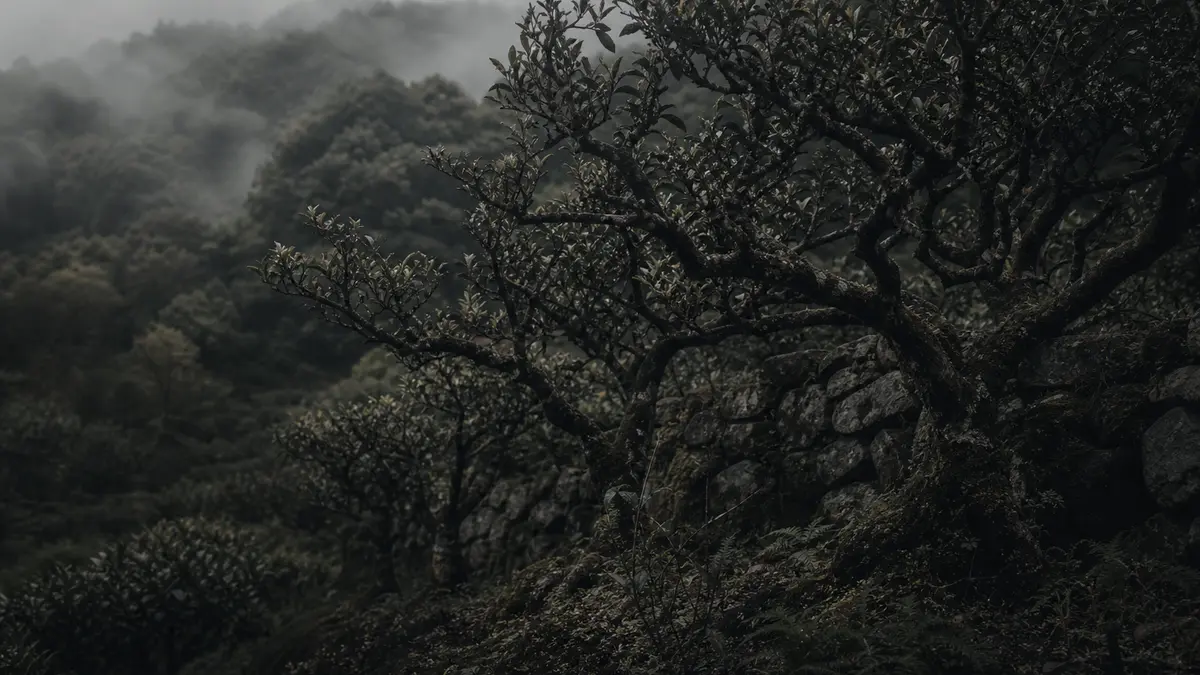
Not all hwangcha is equal, and the material it starts with matters enormously. Hadong, in South Gyeongsang Province along the Seomjingang River valley, has the most compelling raw material: wild-grown or semi-wild tea trees (야생차, yasaengcha) descended from plants that have grown without cultivation for generations.
Wild-grown Hadong leaf applied to partial oxidation produces hwangcha of a different order. The terroir character of the material — mineral, slightly savory, with a structural depth that plantation leaf rarely has — combines with the warmth of partial oxidation to create something that surprises anyone expecting light Korean tea. I’ve brewed Hadong hwangcha alongside well-regarded Wuyi yancha (武夷岩茶) for comparison, and while they’re fundamentally different teas, the mineral backbone and complexity in the Hadong material holds its own in that conversation.
Boseong hwangcha, made from cultivated plantation leaf, tends toward cleaner, more consistent expression — easier to approach, less unpredictable, and still a significant step above what most Western tea drinkers assume Korean tea offers.
What Hwangcha Tastes Like
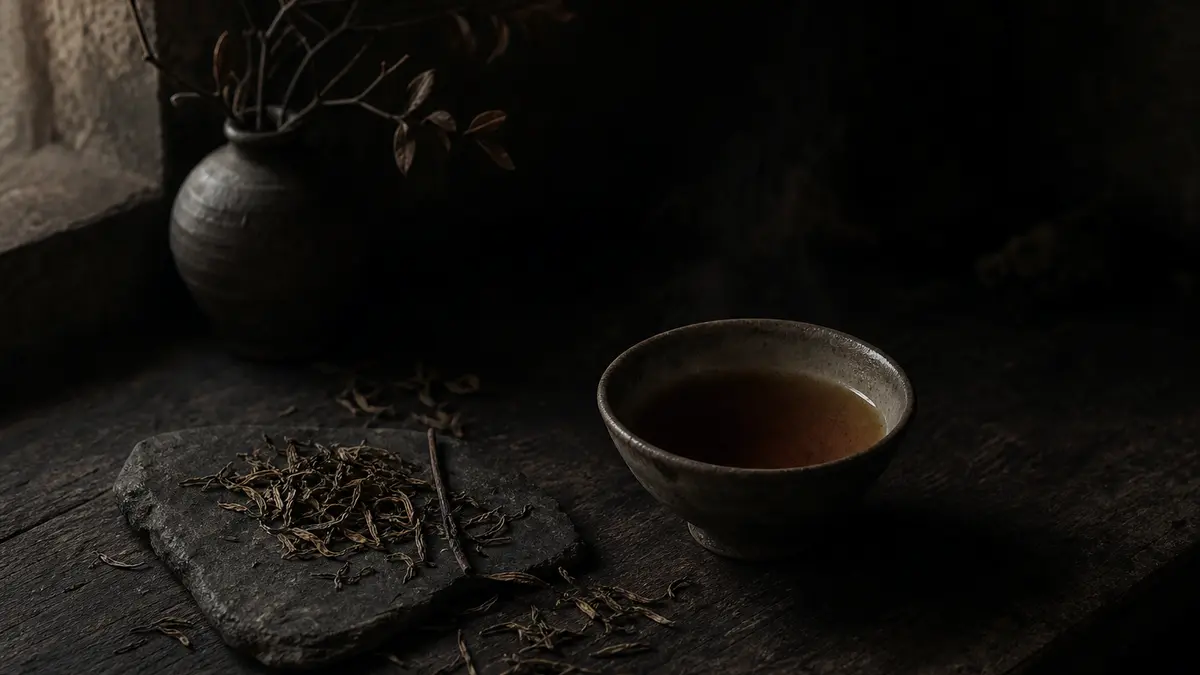
The flavor profile of hwangcha shifts along its oxidation range, but some descriptors appear consistently:
- Honey — the most reliable note, appearing even in lightly oxidized examples
- Stone fruit — peach and apricot, more pronounced at 25–40% oxidation
- Toasted grain — a gentle roasted quality from pan-firing, present at all levels
- Dried flowers — chrysanthemum or osmanthus at higher oxidation
- Mineral — particularly in wild-grown Hadong material
What’s largely absent: the sharp grassiness of Korean green tea, the heavy roast of a hojicha-style product, and the tannic bite of a strong black tea. Hwangcha is soft. That softness, combined with genuine complexity, is its main selling point.
The catechin content is measurably lower than in green tea — oxidation converts catechins into other compounds — which means the caffeine load is reduced and the astringency is minimal. For anyone who finds green tea too sharp in the evening, hwangcha is a practical alternative with more cup character than most herbal options.
The Orange Wine Parallel
If you’re trying to place hwangcha conceptually, consider the orange wine analogy: hwangcha is to Korean green tea what orange wine is to white wine. Same base material, same general tradition — but the orange winemaker gives the grape skins contact time and exposure that changes the color, texture, and aromatic profile entirely. You get something warmer, more structured, and more complex than the unoaked white you started with, from exactly the same raw material.
Korean hwangcha works the same way. The tea plant is the same. The terroir is the same. The deliberate oxidation step produces a different experience — not better, not worse, but distinctly more complex for certain contexts.
How to Brew Hwangcha
Hwangcha is forgiving by Korean tea standards, which makes it a good entry point for exploring Korean tea beyond green.
Parameters:
- Water temperature: 85–90°C. Boiling water exaggerates bitterness in the oxidized fractions; sub-80°C undersells the aromatic complexity.
- Leaf-to-water ratio: 5g per 100ml is a reliable starting point. Hwangcha handles generous leaf amounts without turning harsh.
- Vessel: A gaiwan (蓋碗) gives you the most control and lets you observe the leaf. A small Korean ceramic teapot or a Yixing-style pot also works well.
- First infusion: 30–45 seconds. Let the leaf open before pushing extraction time.
- Subsequent infusions: Add 10–15 seconds per steep. Good hwangcha delivers 4–6 infusions before the leaf is spent; wild-grown Hadong material sometimes pushes further.
The huigan (回甘) — the returning sweetness after the swallow — is one of the pleasures of well-made hwangcha. It’s subtler than in a good sheng puerh but distinctly present in quality examples.
What to Pay and What to Expect
Artisan-produced hwangcha runs $25–50 per 50g. That price reflects small-batch production and the care involved in getting partial oxidation right — overshooting turns the tea toward black; undershooting produces something indistinguishable from green. The skill window is genuinely narrow.
At the lower end of that range, you’ll find competent Boseong production with clean honey and grain character. At the upper end, Hadong wild-material hwangcha from named producers offers the depth and terroir complexity that justifies the price for anyone serious about Korean tea.
Production volumes are small. Hwangcha remains a niche even within Korea, where most tea drinkers default to nokcha without knowing the partially oxidized alternative exists. That’s beginning to change as Korean artisan tea culture attracts international attention — but for now, finding hwangcha outside Korea requires effort and some willingness to buy from specialist importers.
A Category Worth Knowing
Hwangcha doesn’t fit neatly into any of the familiar tea categories Western drinkers navigate. It’s not Chinese yellow tea. It’s not oolong, though it processes in that direction. It’s not Korean green tea, though it starts with the same plant. It is its own thing — recovered from near-extinction, produced in small quantities by artisans who are still defining what it can be, and capable of expressing Korean terroir in a way that green tea alone cannot.
For anyone building a serious engagement with Korean tea, hwangcha is not optional. It fills a specific sensory space — evening drinking, warmer months, contexts where green tea feels too sharp — and it carries a history worth understanding.