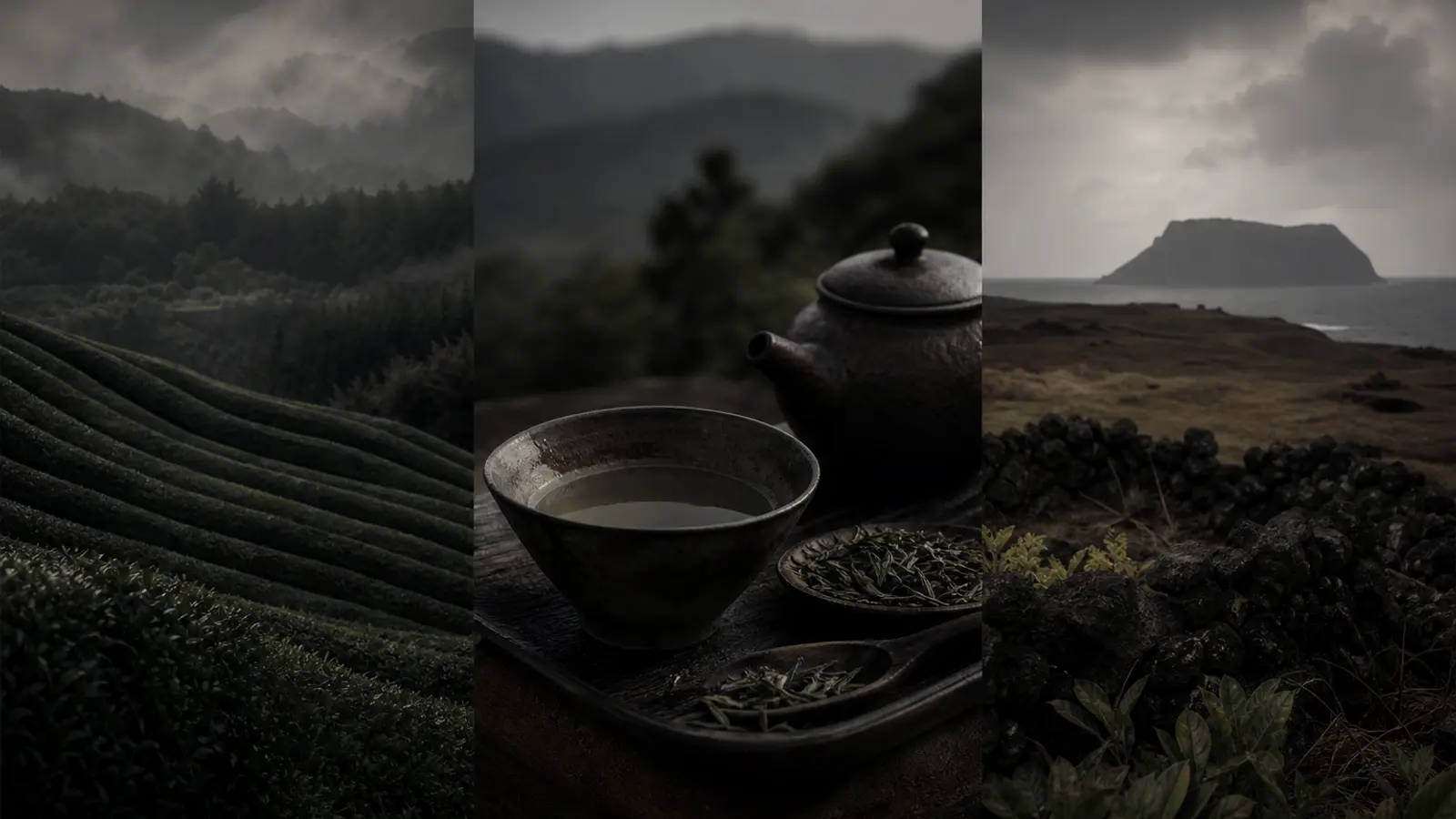
Korea’s three tea regions produce green tea with distinct character shaped by different geography, climate, soil, and production tradition. Boseong’s (보성) coastal plantations, Hadong’s (하동) wild mountain slopes, and Jeju’s (제주) volcanic island each create tea unavailable from the other two. Understanding the differences between Boseong vs Hadong vs Jeju is fundamental to navigating Korean tea — the same way understanding Champagne vs Burgundy vs Santorini reframes how you think about wine.
This isn’t a trivial distinction. The gap between these three regions is wider than many drinkers expect from a single country’s tea production. Different soil chemistry, different elevations, different microclimates, different cultivar populations, and — critically — different production philosophies mean that a cup from Hadong’s Jirisan slopes shares almost nothing with a cup from Jeju’s volcanic plantations except the word “Korean.”
Korean Tea Regions Compared: The Full Breakdown
Before diving into each region, here is the comparison at a glance:
| Factor | Boseong (보성) | Hadong (하동) | Jeju (제주) |
|---|---|---|---|
| Location | South Jeolla Province, southern coast | South Gyeongsang Province, Jirisan Mountain | Volcanic island, 80 km off southern coast |
| Elevation | 50–400 m | 200–700 m | 200–600 m (Hallasan slopes) |
| Soil type | Decomposed granite | Rocky granite mixed with forest humus | Volcanic basalt, extreme drainage |
| Climate | Maritime subtropical | Continental-maritime, cold winters | Oceanic subtropical (warmest region) |
| Primary production | Steaming and pan-firing; plantation scale | Pan-firing (덖음 deokkeum); artisan families | Steaming dominant; corporate scale |
| Characteristic flavor | Clean, bright, accessible, consistent | Concentrated, complex, wild-forest depth | Mineral undertone, stony, volcanic |
| Price range (USD/100 g) | $15–$60 | $30–$200+ | $20–$80 |
| Best for | Entry point; daily Korean green tea | Terroir expression; connoisseur exploration | Mineral distinction; unique geology |
| Wine parallel | Champagne — large houses, grower gems beneath | Old-vine hillside Burgundy — wild, artisan | Santorini — volcanic island, tourism overlay |
Now let me walk through each region in detail.
Boseong: Korea’s Champagne
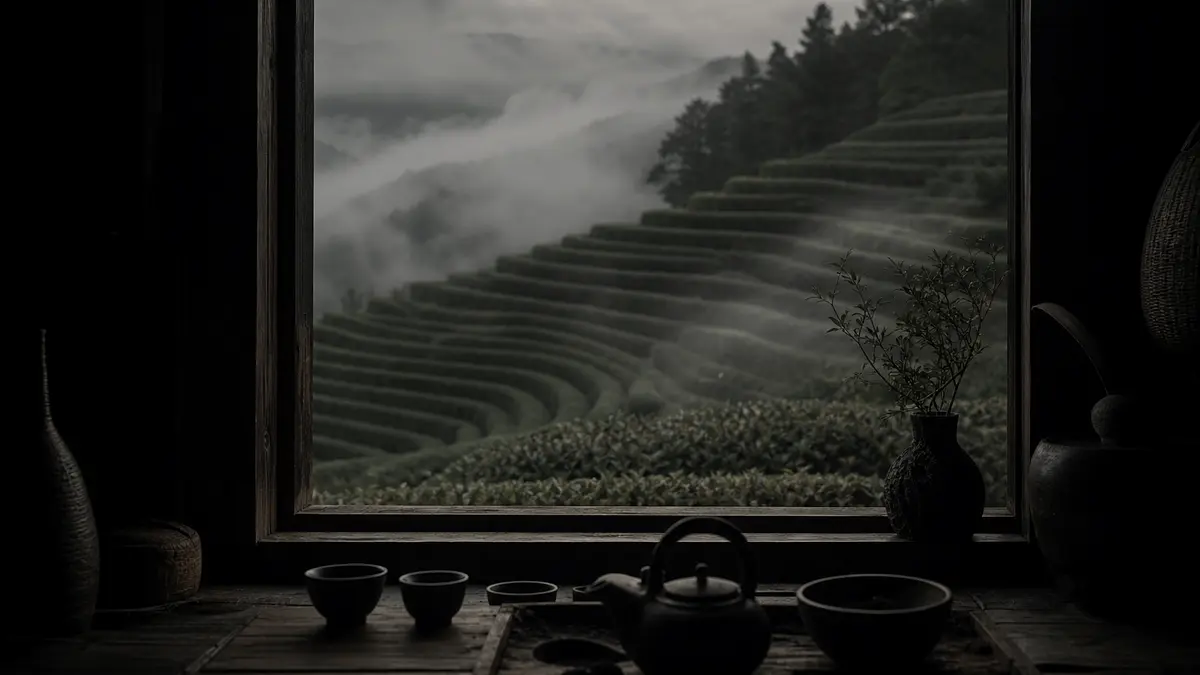
Boseong sits along the southern coast of South Jeolla Province (전라남도), where rolling hills meet maritime air. The terraced plantations here — particularly Daehan Tea Plantation (대한다원) — are the most photographed tea landscapes in Korea, the image most foreigners associate with Korean tea. That fame is earned. Boseong produces roughly 40% of Korea’s total tea output.
Geography and Growing Conditions
The elevation is modest: 50 to 400 meters. The soil is decomposed granite, well-draining and slightly acidic — solid tea-growing ground, though without the mineral complexity of volcanic or heavily forested soils. The maritime subtropical climate provides consistent rainfall and relatively mild winters, which supports large-scale cultivation.
These conditions favor plantation production. Rows of evenly pruned bushes, mechanical harvest for lower grades, hand-picking for premium lots. The consistency is the point.
Production and Character
Boseong producers use both steaming (증제 jeungje) and pan-firing (덖음 deokkeum) methods, depending on the maker and the target product. The steamed teas lean toward Japanese-style brightness; the pan-fired teas carry a roasted warmth. Both styles tend toward clean, accessible cups — vegetal without being aggressive, sweet without being cloying.
The Champagne parallel holds up well here. Large houses dominate production and market presence. They set the baseline of quality and style. But underneath that commercial layer, smaller grower-producers in Boseong make more distinctive, site-specific work. These smaller lots rarely leave the domestic market.
What to Expect in the Cup
Bright green liquor. Clean, upfront flavors — steamed marine sweetness or toasty pan-fired grain, depending on method. Moderate body. A pleasant, accessible drink that doesn’t demand intense attention to enjoy. For many Korean tea drinkers, Boseong is Korean green tea.
Pricing reflects the commercial scale: $15 to $60 per 100 g covers the range from everyday grade to premium ujeon (우전) from established producers.
Hadong: Korea’s Burgundy
Hadong occupies the opposite end of the spectrum. Located in South Gyeongsang Province (경상남도), climbing the slopes of Jirisan (지리산) — Korea’s second-highest mainland mountain — Hadong is where Korean tea began. Wild tea plants (야생차 yasaeng-cha) here date back over a thousand years, seeded according to tradition during the Silla Dynasty.
Geography and Growing Conditions
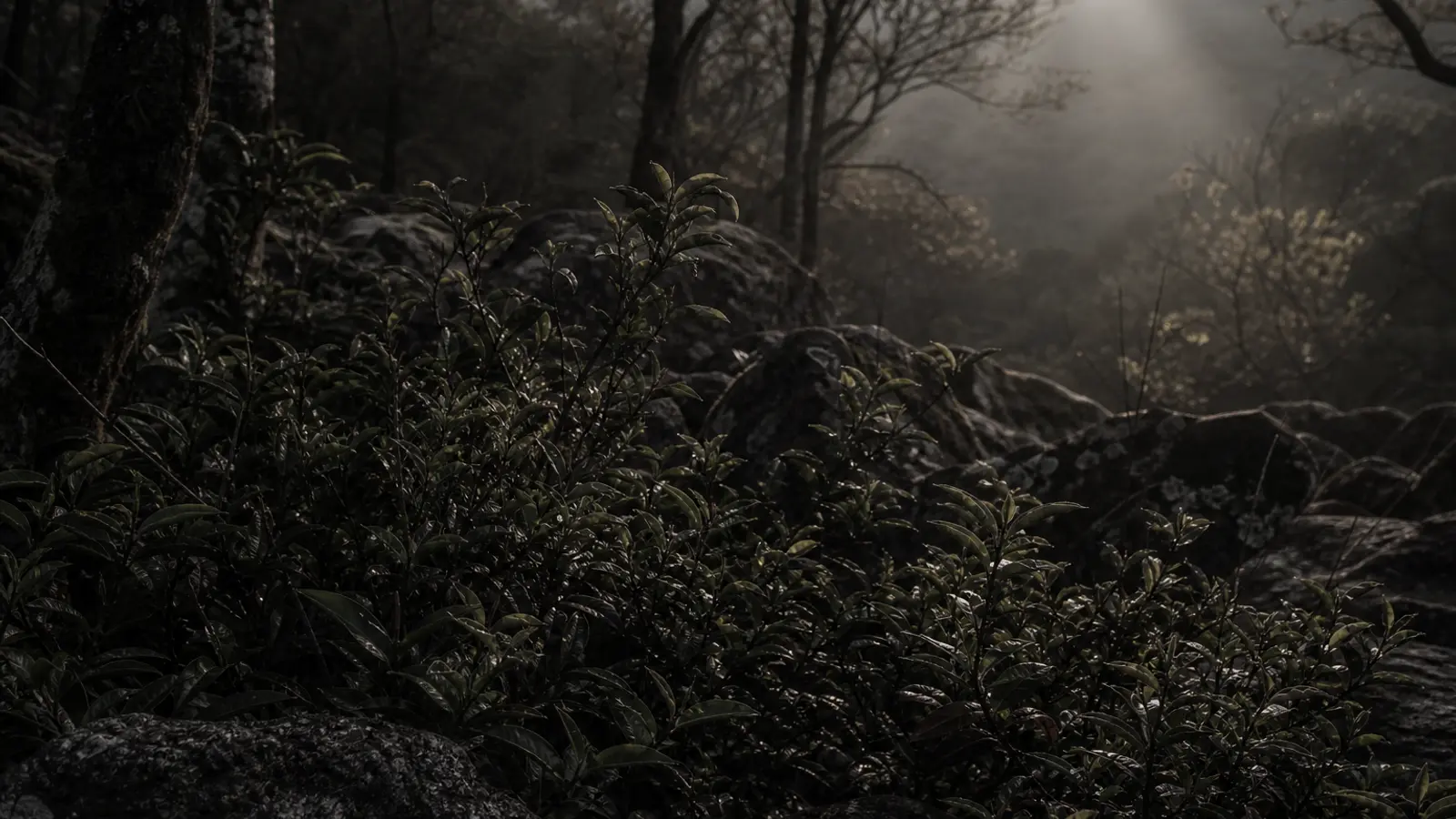
Elevation ranges from 200 to 700 meters, and it matters. The higher slopes experience genuinely cold winters and significant temperature swings between day and night. The soil is rocky granite mixed with centuries of accumulated forest humus — leaf litter, decomposed organic matter, mycorrhizal networks. These aren’t plantations. Many Hadong tea plants grow semi-wild under forest canopy, their roots threading through rock.
The continental-maritime climate here is harsher than Boseong’s. Less consistent rainfall. Colder winters stress the plants. That stress, as in viticulture, produces concentration.
Production and Character
Hadong’s production tradition is overwhelmingly pan-firing (덖음 deokkeum), executed by artisan families who have worked specific mountain plots for generations. The process is hands-on: small batches fired in iron cauldrons (가마솥 gamasot), rolled by hand, dried with a sensitivity to each lot’s moisture content and leaf size. No two batches are identical.
The wild and semi-wild plants — with deep, unimpeded root systems pulling minerals from granite and organic matter — produce leaves that carry a quality Korean tea culture calls sanya giwun (산야기운): the energy or spirit of wild mountains. It is not a marketing term. It describes something real in the cup — a depth, a resonance, a dimension that plantation tea cannot replicate regardless of how skillfully it is processed.
The old-vine Burgundy parallel is the most accurate I can offer. Hadong tea at its best has the concentration of a Chambertin — not because of power, but because of completeness. Every sip reveals another layer. The aftertaste (회감 hoegam, analogous to the Chinese huigan 回甘) lingers and evolves.
What to Expect in the Cup
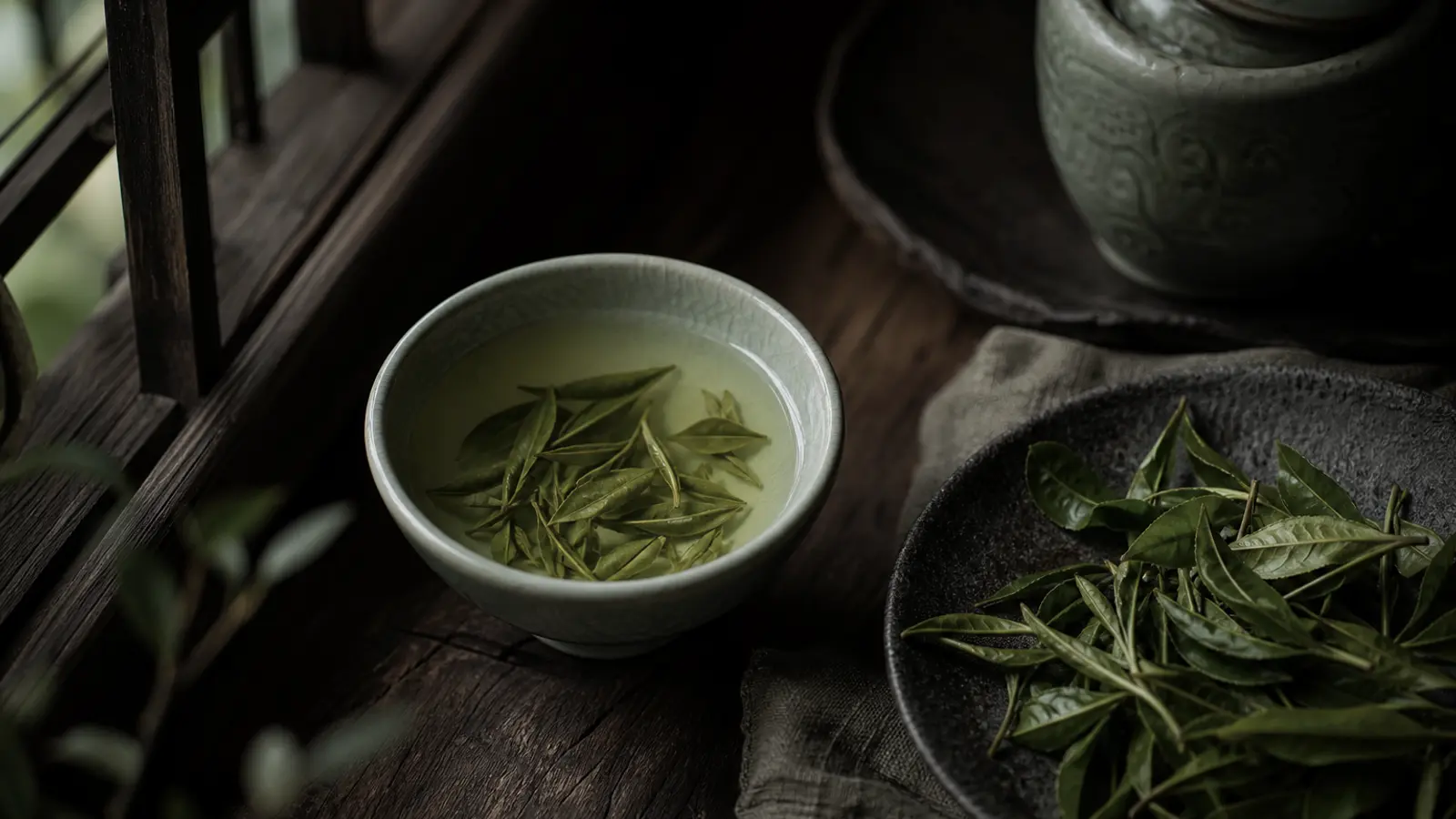
Deeper color than Boseong — golden-green to amber depending on the firing. The aroma carries forest floor, roasted grain, sometimes dried wildflowers. In the mouth: concentration, complexity, a savory-sweet interplay that builds over multiple infusions. The best Hadong teas reward gongfu-style brewing in a gaiwan (蓋碗) or small Korean teapot, revealing new dimensions across six or seven steeps.
This quality comes at a cost. Premium Hadong yasaeng-cha, particularly early-spring grades like ujeon (우전) and sejak (세작), ranges from $30 to well over $200 per 100 g. The scarcity is real — yields from wild mountain plants are a fraction of plantation output.
Jeju: Korea’s Santorini
Jeju Island (제주도) sits 80 kilometers off Korea’s southern coast, a volcanic landmass dominated by Hallasan (한라산), the country’s highest peak. Tea grows on Hallasan’s lower slopes, at elevations between 200 and 600 meters.
Geography and Growing Conditions
The defining factor is geology. Jeju’s soil is volcanic basalt — porous, mineral-rich, and so well-draining that water passes through quickly, forcing tea plants to develop extensive root systems. This is a direct parallel to the extreme drainage of volcanic soils in Santorini’s vineyards or, in a tea context, the rocky terrain of Wuyi Mountain (武夷山) in Fujian.
The climate is oceanic subtropical, making Jeju the warmest of Korea’s three tea regions. Mild winters, high humidity, consistent ocean influence. These conditions support vigorous growth but also mean Jeju tea generally carries less of the stress-induced concentration found in Hadong.
Production and Character
Jeju tea production is dominated by Osulloc (오설록), the tea subsidiary of Amorepacific (아모레퍼시픽), Korea’s largest cosmetics conglomerate. Osulloc operates large, well-maintained plantations and produces both premium and mass-market teas. The production methods lean toward steaming, and the commercial output is polished, clean, and often blended or flavored for the consumer market.
That corporate layer can obscure something genuinely distinctive happening in the terroir. When you isolate single-origin, minimally processed Jeju green tea, a mineral undertone emerges that is absent from mainland Korean tea. It is a stony, almost saline quality — not harsh, but present, structural. The volcanic basalt communicates through the leaf the same way Wuyi’s rock terroir communicates through yancha (岩茶), though the result tastes nothing like oolong.
The Santorini parallel captures the tension of Jeju perfectly: a volcanic island with a genuinely distinctive terroir, overlaid with heavy tourism and commercial production that most visitors experience first. The terroir is real. You just have to look past the gift shops.
What to Expect in the Cup
Bright, clean liquor — often lighter in color than Hadong tea. Upfront umami and marine sweetness, similar to steamed Japanese greens, but with that volcanic mineral finish: a flinty, almost chalky persistence on the palate. The body is lighter than Hadong, the flavor more linear, but that mineral thread adds a dimension Boseong tea doesn’t possess.
Pricing ranges from $20 to $80 per 100 g. The Osulloc premium blends sit at the higher end, while less marketed single-origin Jeju lots sometimes offer the best value for genuine terroir expression.
The Boseong Hadong Difference, Distilled
Boseong produces Korea’s most commercially available green tea from cultivated plantation rows with consistent, approachable character. Hadong grows wild and semi-wild tea in mountain valleys with more complex, mineral-driven terroir expression. Jeju’s volcanic island soil and subtropical climate produce a distinctive, umami-leaning profile unlike any mainland Korean tea.
How Korean Tea Terroir Shapes the Cup
Terroir is not an abstraction here. Three measurable factors create the differences between these regions:
-
Soil chemistry. Decomposed granite (Boseong) provides clean mineral access. Forest humus over granite (Hadong) adds organic complexity and micronutrient diversity. Volcanic basalt (Jeju) delivers a distinct mineral profile heavy in iron and magnesium, with extreme drainage stressing roots.
-
Temperature stress. Hadong’s cold winters and dramatic diurnal temperature shifts force plants to accumulate defensive compounds — the same mechanism that concentrates flavor in high-altitude wine grapes. Boseong and Jeju, with milder climates, produce smoother but less concentrated leaf.
-
Plant age and root depth. Hadong’s wild plants, some over centuries old, have root systems meters deep, drawing minerals from geological layers young plantation bushes cannot access. This is directly analogous to old-vine depth in wine — a 70-year-old Barossa Shiraz vine produces juice a 5-year-old vine cannot approach, and the mechanism is the same.
The Verdict: Choosing the Best Korean Tea Region for You
If you want consistency and accessibility, start with Boseong. It is Korean green tea at its most approachable, with good quality available at every price point.
If you want depth and terroir expression, invest in Hadong. Seek out artisan-produced yasaeng-cha from specific Jirisan plots. Expect to pay more. Expect the cup to reward the cost.
If you want mineral distinction, explore Jeju beyond the commercial offerings. The volcanic terroir creates something genuinely unique when the production lets it speak.
If I could only buy from one region, the answer is Hadong. The wild-grown artisan production represents the highest ceiling in Korean tea — and, arguably, one of the most distinctive green tea terroirs in East Asia. The concentration, the sanya giwun (산야기운), the depth across multiple infusions — these are qualities no other Korean region can replicate, and few tea regions anywhere in the world can match.
That said, the smartest approach is to drink all three. Side by side, they teach you what terroir means in a Korean context — the same leaf species, the same country, three radically different cups. That lesson is worth the price of admission.