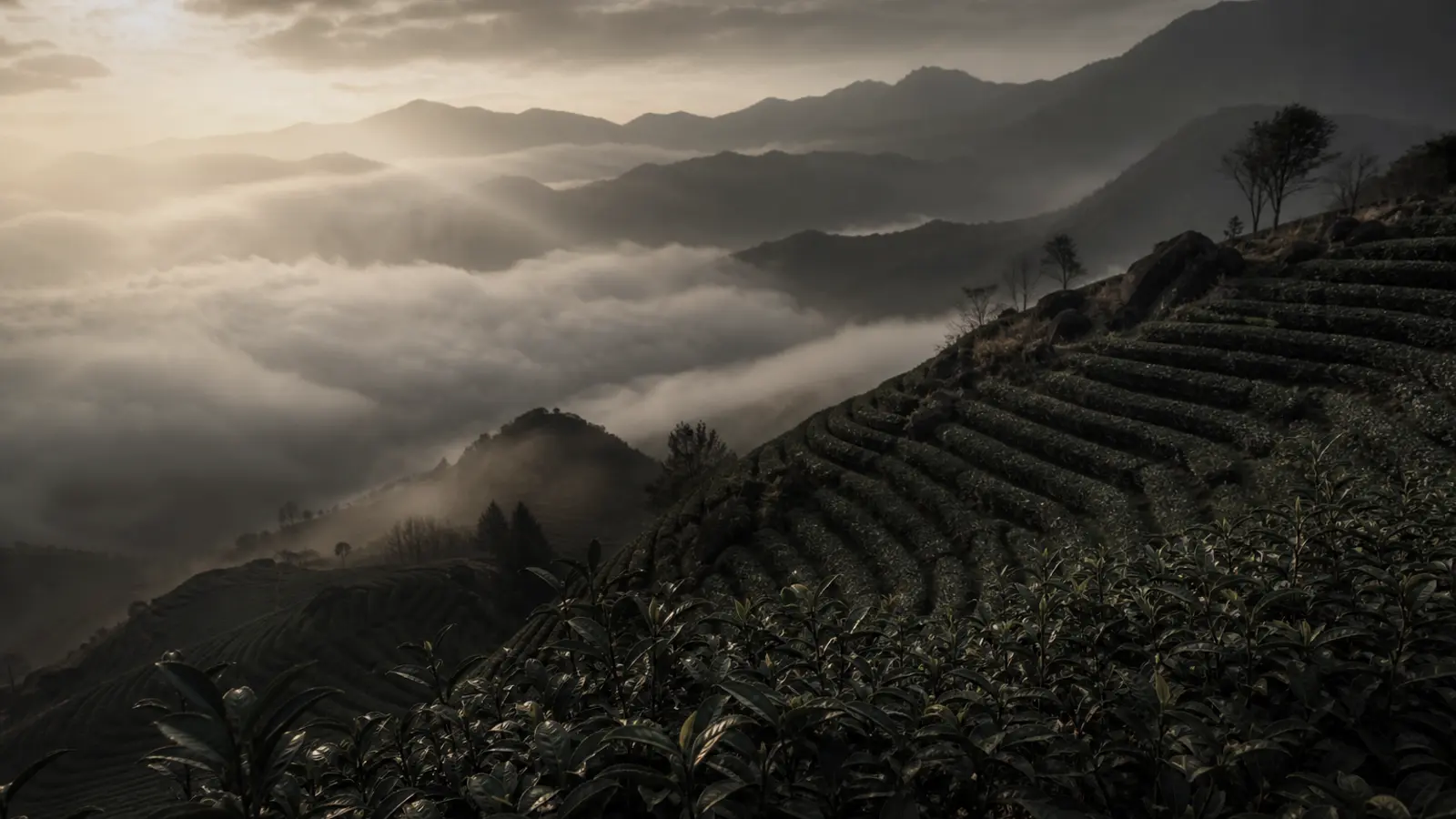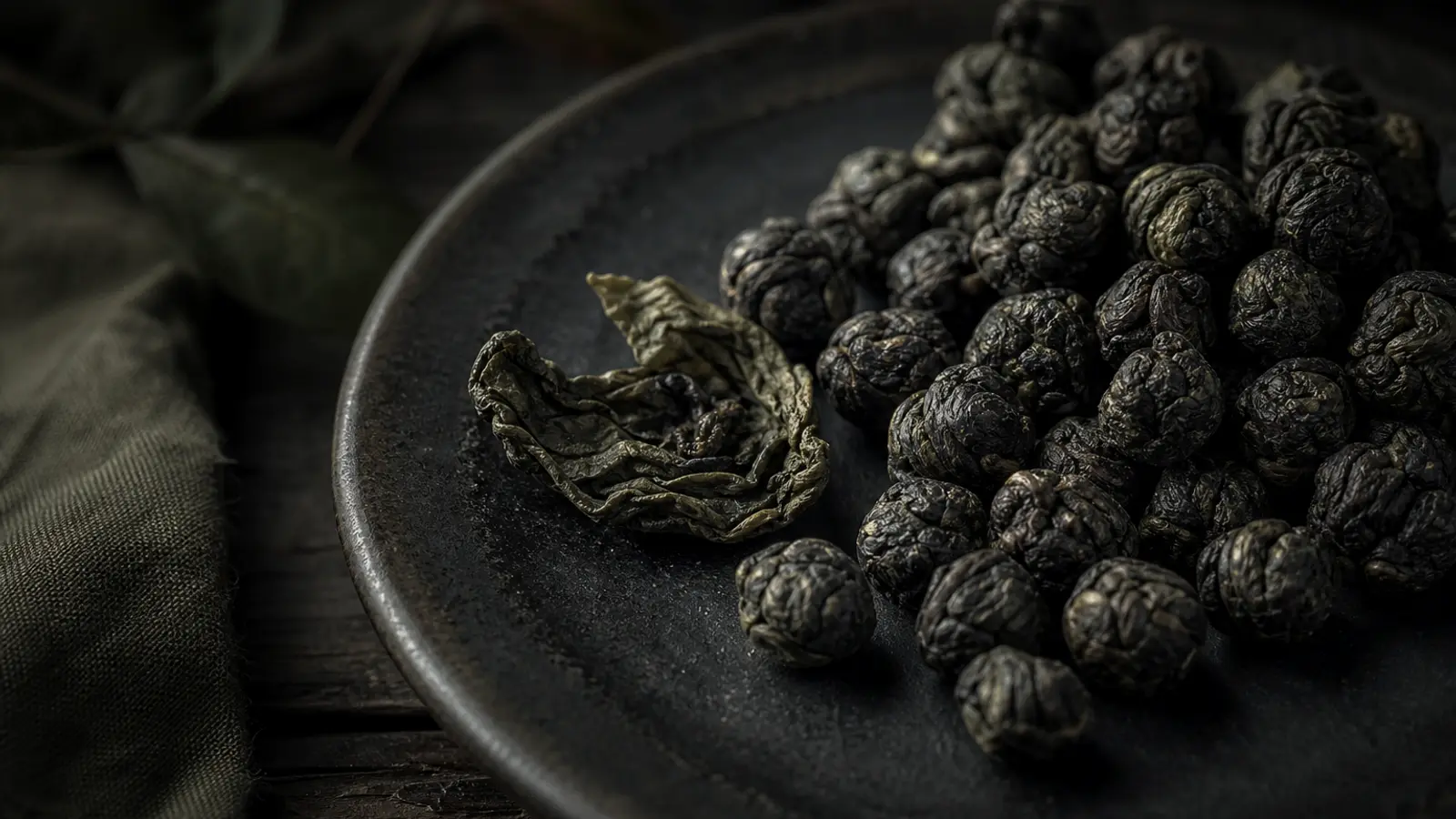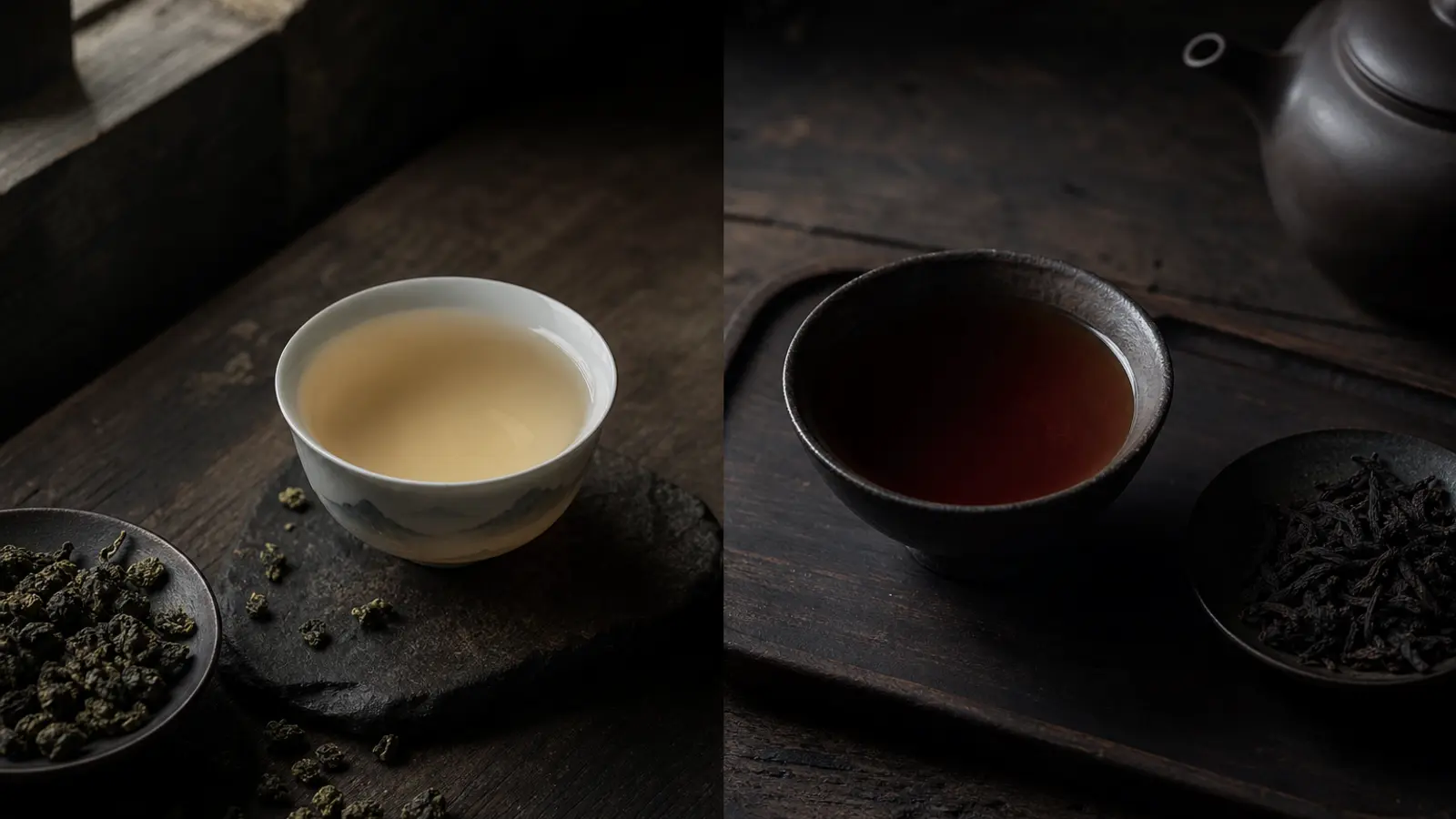
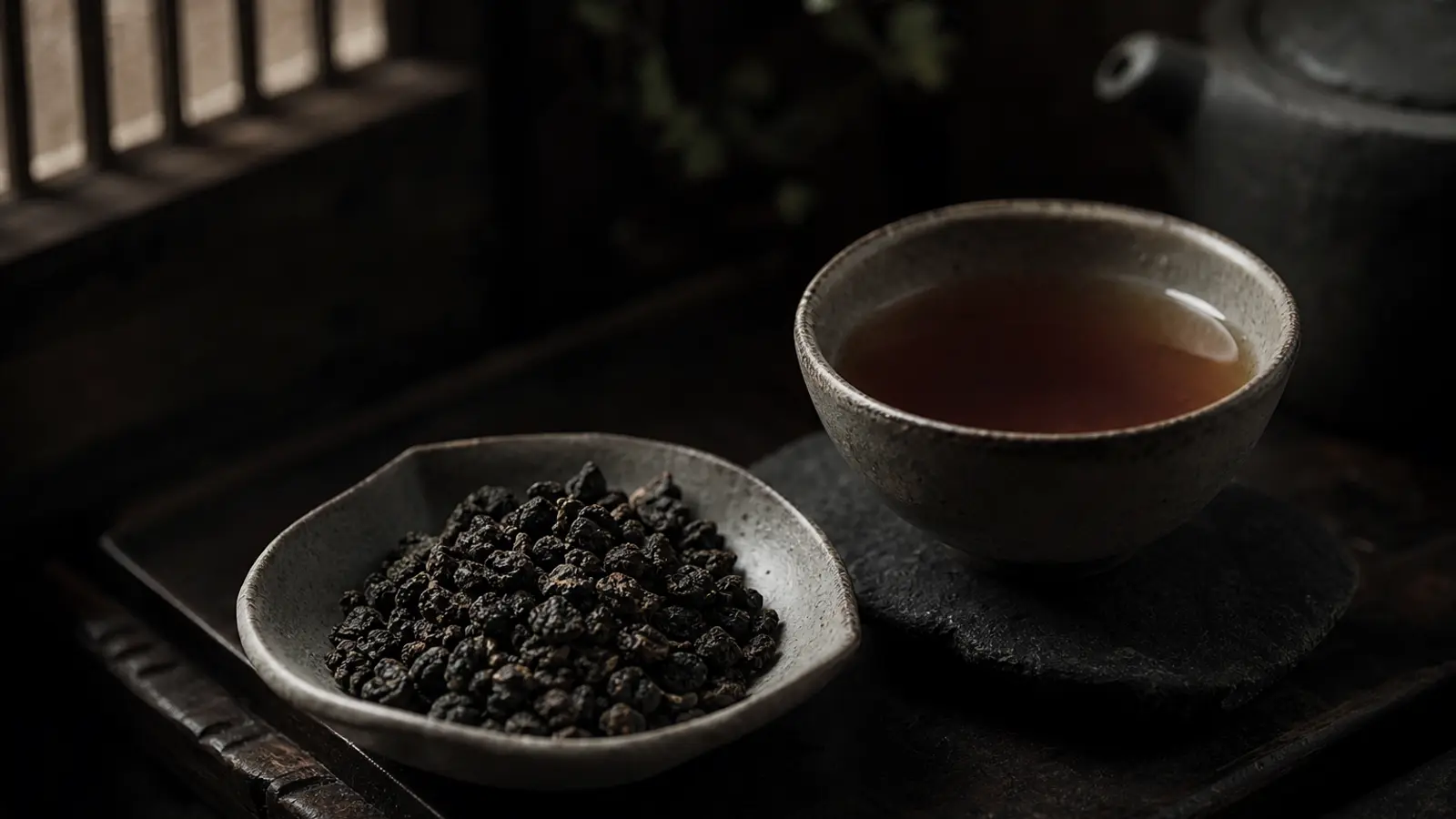
Dong Ding (凍頂, Frozen Summit) oolong is the original Taiwanese oolong — the tea that established Taiwan’s oolong identity long before high mountain growing became the prestige category. Grown at a relatively modest 600–800 meters in Nantou County’s Lugu Township (鹿谷鄉), dong ding oolong is defined not by altitude but by roasting. Medium oxidation combined with multiple rounds of charcoal or electric roasting produces a warm, toasted character that the unroasted high mountain styles deliberately omit. This is the tea that built Taiwan’s reputation.
History: From Wuyi Seedlings to Taiwan’s Signature Oolong
The story of Dong Ding oolong traces to 1855, when a scholar named Lin Fengchi (林鳳池) brought oolong tea seedlings from the Wuyi Mountains (武夷山) in Fujian province back to Lugu. Those Wuyi-origin plants — likely from the Qingxin (青心) cultivar family — adapted to Nantou’s volcanic soils and subtropical humidity. Over generations, Taiwanese processing evolved a distinctive style: ball-rolled like all Taiwanese oolong, but medium-oxidized at 30–40% and roasted in a manner that bridged the light floral character emerging in Taiwanese tea culture with the darker, mineral-driven roast of its Wuyi ancestor.
For the better part of a century, Dong Ding was synonymous with Taiwanese oolong. There was no meaningful distinction to draw — if you drank Taiwanese oolong, you drank something in this style. The high mountain movement began in earnest in the 1980s, when producers pushed tea cultivation above 1,000 meters into the ranges of Alishan (阿里山), Lishan (梨山), and Shanlinxi (杉林溪). Those high-elevation teas — lightly oxidized, unroasted, crystalline in the cup — captured the market’s imagination. Prestige shifted upward in altitude.
But Dong Ding remains the foundation. Without it, there is no Taiwanese oolong tradition to build upon.
Processing: Where Roasting Defines the Tea
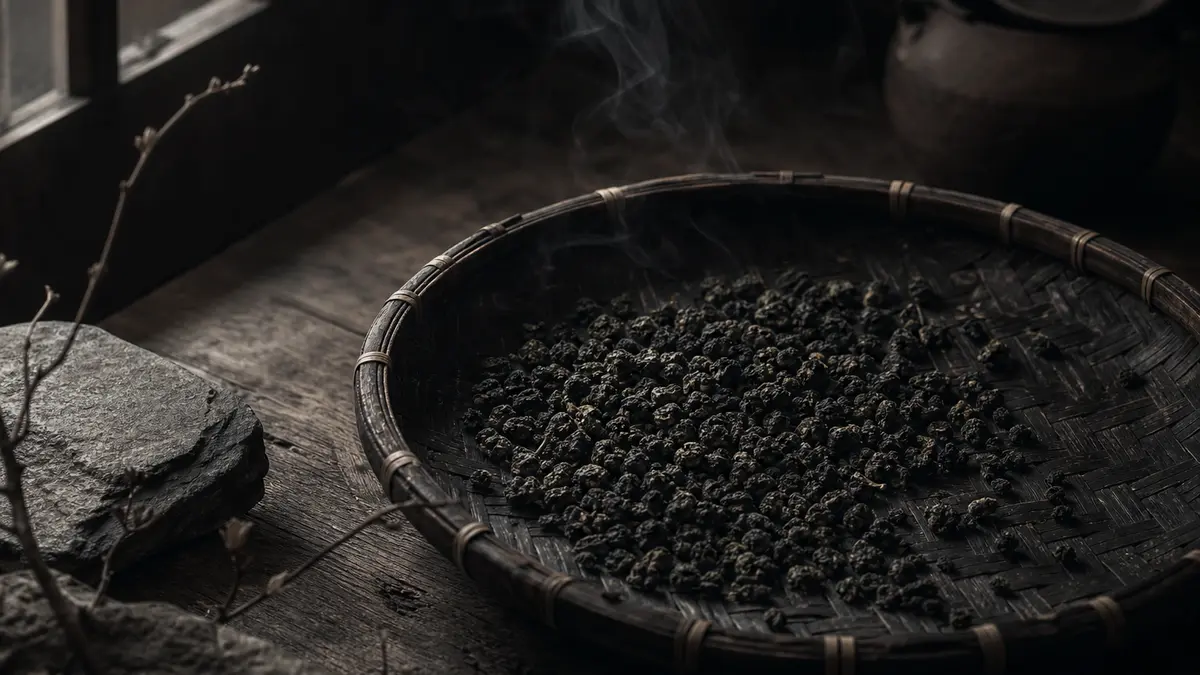
Dong Ding follows the standard Taiwanese oolong template through its initial stages: withering, tossing and bruising to initiate oxidation, fixation (kill-green), and ball-rolling into the tight spherical shapes that characterize Taiwan’s oolongs. The Qingxin Oolong (青心烏龍) cultivar dominates production, the same variety used in most high mountain oolongs.
The Roasting Step
The key departure from high mountain oolong is what happens after rolling. Dong Ding undergoes 2–5 rounds of slow roasting at controlled temperatures, typically 100–120°C, using traditional bamboo basket dryers (烘籠, hónglóng) over charcoal or modern electric ovens. Each round lasts hours, and the tea rests between rounds — sometimes for days, sometimes for weeks — allowing moisture to redistribute and flavors to integrate.
Each successive round of roasting adds depth. The first round drives off residual moisture and stabilizes the leaf. Subsequent rounds build the toasted grain and caramel notes, and in skilled hands, introduce dark honey and a subtle smokiness that never crosses into char. A master roaster reads the tea at every stage, adjusting temperature and duration based on how the leaf responds.
The roasting also serves practical functions. It increases the tea’s shelf stability dramatically — a well-roasted Dong Ding holds its character for a year or more without significant degradation, while a lightly oxidized high mountain oolong begins to flatten within months unless stored carefully. Roasting also reduces the green, vegetal astringency that lightly oxidized oolongs can carry, producing a smoother, more approachable cup.
Oxidation Level
Dong Ding’s oxidation level typically falls in the 30–40% range — heavier than the 15–25% common in high mountain oolongs, but lighter than the 60–80% found in traditional Wuyi yan cha (岩茶). This medium oxidation develops fruit and floral complexity without pushing the tea into the fully dark, roasty territory of its Fujian ancestors. The combination of medium oxidation and roasting is what gives Dong Ding its particular identity: neither green nor dark, but something warm and settled in between.
Flavor Profile of Dong Ding Oolong
Warm and toasted. That’s the first impression, and it sets the tone for everything that follows.
Caramel and roasted grain arrive on the front of the palate — think toasted rice, brown sugar, a whisper of roasted barley. The mid-palate opens to orchid and stone fruit, the same floral notes that high mountain oolongs celebrate, but here filtered through the roast. The florals are present; they’re simply not leading. They appear as undertones, giving the cup lift and preventing the roast from becoming one-dimensional.
The finish is clean and sweet, with a gentle huigan (回甘) — the returning sweetness that good oolong delivers after the swallow. Notably absent is the bitterness and mineral intensity of heavily roasted Wuyi yan cha. Dong Ding’s roast is softer, rounder, less aggressive. It warms without scorching.
This warmth is the quality that defines Dong Ding’s place in a tea drinker’s rotation. Where high mountain oolongs feel like spring — bright, crisp, transparent — Dong Ding feels like autumn. It is the evening oolong, the cold-weather oolong, the tea you reach for when you want something that settles into the chest rather than dancing across the palate.
Dong Ding vs. High Mountain Oolong
This is the comparison most people want, and it deserves clarity rather than diplomacy.
| Dong Ding Oolong | High Mountain Oolong | |
|---|---|---|
| Elevation | 600–800 m | 1,000–2,600 m |
| Oxidation | 30–40% | 15–25% |
| Roasting | 2–5 rounds, 100–120°C | Minimal or none |
| Primary notes | Caramel, toasted grain, stone fruit | Floral, buttery, alpine |
| Body | Medium to full, warm | Light to medium, crisp |
| Shelf stability | Excellent (12+ months) | Moderate (best within 6 months) |
| Defining quality | Roastmaster’s skill | Terroir transparency |
High mountain oolong is transparency — the mountain speaking through the cup. Dong Ding is transformation — the maker speaking through the roast. Both are valid. Both reward attention. But they attract different palates.
The wine parallel I keep returning to: Dong Ding is oaked Chardonnay to high mountain oolong’s Chablis. Same grape (Qingxin cultivar in both cases), but the roasting, like oak, adds a dimension of warmth and complexity at the cost of some transparency. If you prefer structure and warmth — what I think of as the Barolo palate, drawn to tannin and depth — Dong Ding may resonate more than the delicate high mountain styles. If you prefer purity and minerality, you’ll gravitate uphill.
Both are excellent. The preference is personal, and insisting one is objectively better misses the point entirely.
Brewing Dong Ding Oolong
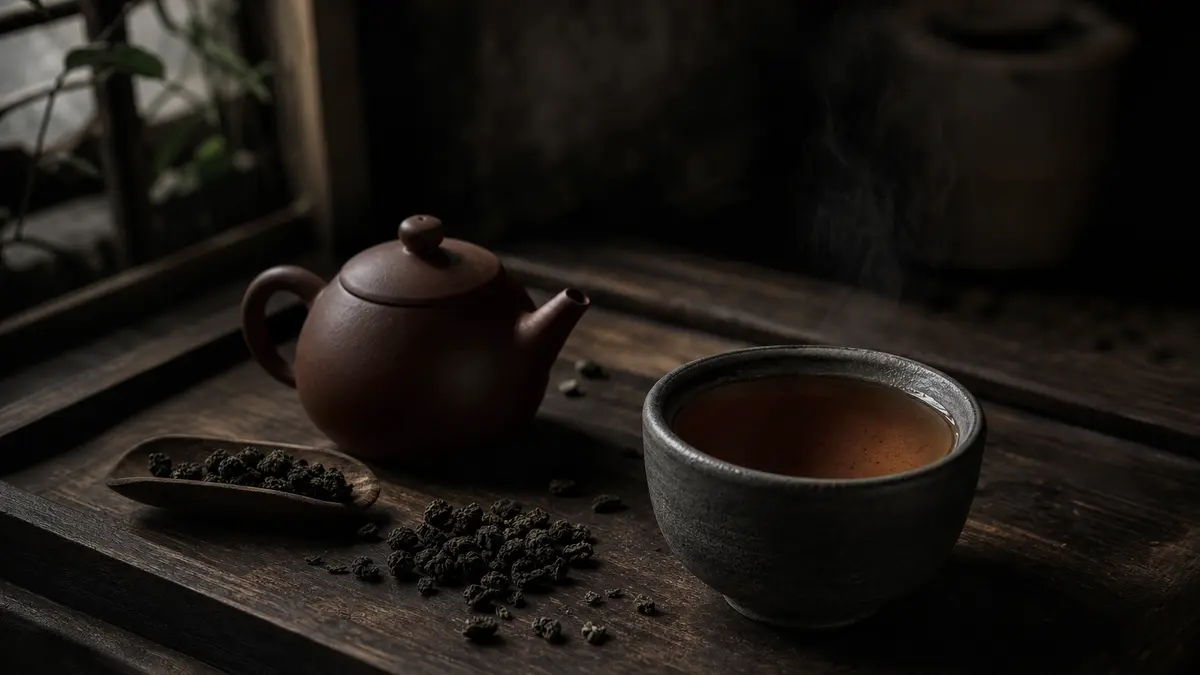
Dong Ding is forgiving compared to lightly oxidized oolongs. The roasting smooths out the leaf’s rough edges and gives you a wider margin on temperature and steep time.
Gongfu Parameters
- Leaf: 6–7 g per 100 ml gaiwan (蓋碗)
- Water temperature: 95°C (just off the boil)
- Rinse: One quick rinse, 5 seconds — the tight ball-rolled leaves need this to begin opening
- First steep: 30 seconds
- Subsequent steeps: Add 5–10 seconds per round
- Expected steeps: 6–8 from quality leaf
Western-Style Brewing
- Leaf: 3–4 g per 200 ml
- Water temperature: 92–95°C
- Steep time: 3 minutes for the first infusion, adding 30 seconds for subsequent rounds
- Expected infusions: 3–4
Dong Ding rewards higher temperatures. The roasted leaf needs heat to fully express its toasted depth. Dropping below 90°C flattens the caramel and grain notes and pushes the floral character forward in a way that doesn’t quite cohere — you lose the integration that roasting creates. Use near-boiling water and let the tea show you what it is.
Current Status: Undervalued and Reviving
Traditional Dong Ding has been declining in prestige for decades as high mountain oolongs dominate Taiwan’s domestic and export markets. Much of the tea produced in Lugu today has drifted toward the high mountain style — lighter oxidation, minimal roasting — to chase current market preferences. The result is tea grown at Dong Ding elevations but processed like Alishan oolong, which satisfies nobody who knows what either style should taste like.
But a revival of traditional roasting among quality-focused producers is underway. This parallels the return to traditional Tieguanyin (鐵觀音) in Anxi (安溪), where a generation of light-processing imitation is giving way to renewed respect for the roasted, medium-oxidized original. In Lugu, a small but dedicated cohort of roasters — many of them competition veterans — are producing Dong Ding with deep, carefully layered roast profiles that reward the same attention you’d give a serious Wuyi yan cha.
Competition-grade Dong Ding from these serious producers is exceptional tea. It is also, at the moment, undervalued. While top-shelf Lishan or Dayuling (大禹嶺) oolongs command $30–$80 per 100 g at the international retail level, comparable-quality Dong Ding frequently sits at $15–$35 per 100 g. The market hasn’t caught up with the quality. For a tea drinker willing to explore roasted Taiwanese oolong, this is an opportunity.
What to Look for When Selecting Dong Ding
A few markers distinguish well-made Dong Ding from the commodity-grade versions:
- Tightly rolled, dark olive to brown leaves. Avoid leaves that look bright green — that suggests minimal roasting and a departure from the traditional style.
- Dry leaf aroma of toasted grain and dark sugar. If it smells primarily floral with no roast note, it has been processed in the high mountain style regardless of its origin.
- Clean roast in the cup. The toast should feel integrated and warm, never smoky or acrid. Harsh smokiness indicates rushed roasting at too-high temperatures.
- Returning sweetness (huigan). After the swallow, a clean, lingering sweetness should rise in the throat. This is the sign of quality leaf underneath the roast — the roast enhances the base material, but it cannot create sweetness that isn’t there.
- Multiple infusion endurance. Good Dong Ding yields 6–8 gongfu steeps with evolving character. If the tea collapses after three steeps, the leaf quality is thin.
Dong Ding oolong isn’t flashy. It doesn’t have the altitude cachet of Lishan or the exotic appeal of aged pu-erh. What it has is depth, warmth, and a century and a half of Taiwanese craft. It is the tea that started everything on the island, and in the hands of a skilled roaster, it remains one of the most satisfying oolongs you can drink.