
Every tea vendor selling pu-erh (普洱茶) wants you to believe it will melt fat, detoxify your liver, reverse aging, and balance your chi. Almost none of them cite a single study. Health blogs recycle the same three bullet points without a journal name in sight.
The actual research is more interesting than the marketing—and more honest. There are real, documented pu-erh tea benefits backed by published clinical work. There are also genuinely promising areas where the science is preliminary. And there are outright fictions dressed up as health claims that you should recognize and ignore.
This article lays it all out using an explicit three-tier framework: what is established, what is emerging, and what is marketing noise. I will cite specific studies by name so you can look them up yourself.
How I’m Evaluating the Evidence: Three Tiers
Before anything else, here is the framework I use throughout this piece:
Tier 1 — Established: Multiple independent human studies, statistically significant effects, plausible mechanism, replicated findings.
Tier 2 — Emerging: Promising animal studies or small human trials, effects in the right direction but not yet definitive. Worth knowing, not worth overstating.
Tier 3 — Marketing Claims: No credible scientific support, or claims so vague they cannot be falsified. I name these and explain why they fail.
One more thing to hold in mind: most pu-erh research focuses on shou (熟普洱, “ripe” or pile-fermented) pu-erh, not sheng (生普洱, “raw”). The two styles have substantially different microbial and chemical profiles. I will flag which type each study used, because the benefits are not necessarily interchangeable.
What Makes Pu-erh Biochemically Unique
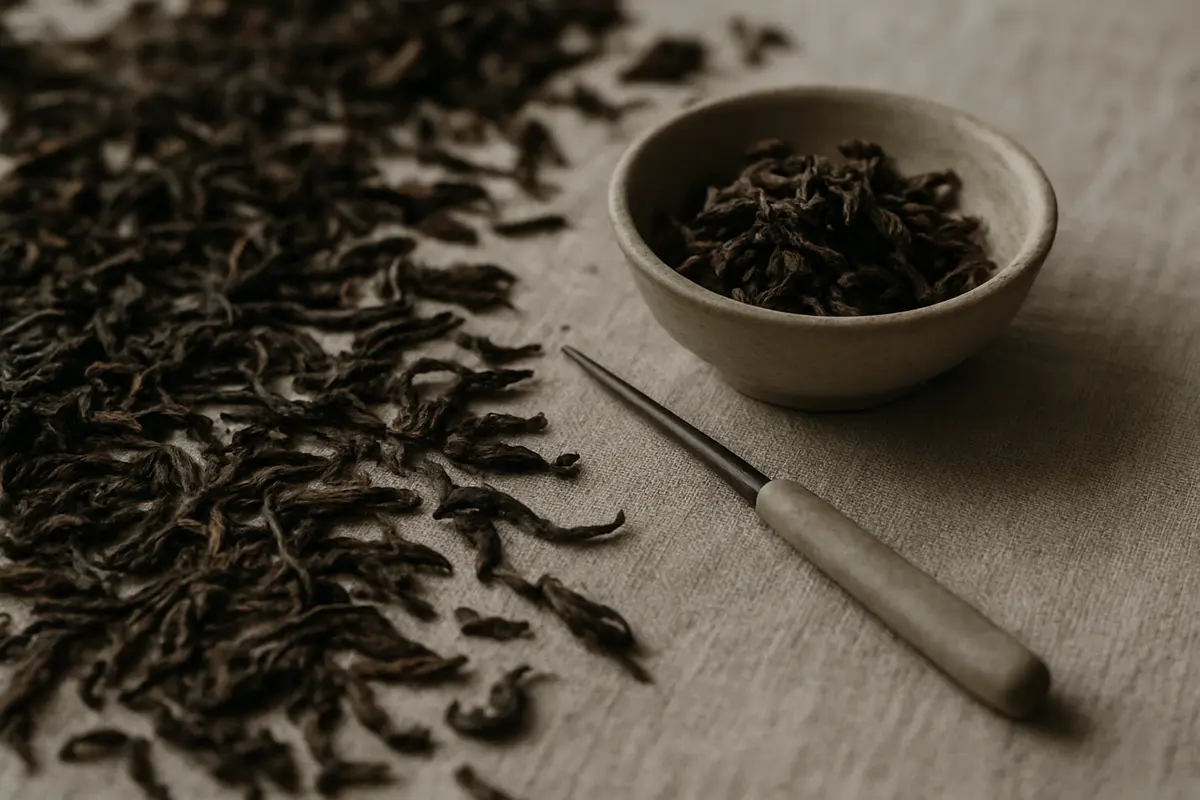
To understand why pu-erh might have distinct effects compared to other teas, you need a quick primer on what fermentation does to the leaf.
Green tea, white tea, and oolong are all oxidized to varying degrees, but pu-erh undergoes genuine microbial fermentation. Shou pu-erh goes through a controlled pile-fermentation process (渥堆, wò duī) lasting 45–60 days, during which bacteria and fungi—primarily Aspergillus niger and other molds alongside various bacteria—transform the leaf’s chemical composition dramatically.
This fermentation produces two categories of compounds that are largely absent from non-fermented teas:
Theabrownins (茶褐素): Large, complex polyphenol-derived pigments formed during microbial processing. These are the dark, reddish-brown compounds that give shou pu-erh its characteristic color and are believed to be central to the lipid-modifying effects documented in clinical literature.
Gallic acid and its derivatives: Produced in higher concentrations in post-fermented teas than in green or oolong. Gallic acid has documented antioxidant and anti-inflammatory properties, though it appears in many plant foods.
The microbial metabolites produced during fermentation also include short-chain fatty acids and other compounds that interact with gut flora in ways that are only beginning to be understood.
This is not true of any other mainstream tea category. The fermentation step is what gives pu-erh a plausible mechanistic basis for effects that go beyond what you would expect from antioxidants alone.
Tier 1: What the Research Has Established
Lipid Metabolism and Cholesterol Markers
This is the strongest body of evidence for pu-erh tea benefits, and it centers on shou pu-erh’s effects on blood lipids.
The foundational work in the published literature includes a controlled trial published in Experimental Gerontology (2011) by Huang et al., which found that subjects consuming pu-erh tea extract showed significant reductions in LDL cholesterol and triglycerides compared to controls. A study in the International Journal of Obesity (2009) by Hou et al. examined obese subjects and found that daily pu-erh consumption for 12 weeks produced statistically significant decreases in triglycerides and LDL while modestly increasing HDL (“good”) cholesterol.
In Chinese clinical literature, a 2015 study published in Food & Function (Chen et al.) isolated theabrownins from shou pu-erh and demonstrated that these compounds, administered to hyperlipidemic subjects, reduced total cholesterol, LDL, and triglycerides at levels comparable to early-stage pharmacological intervention.
The proposed mechanism runs through bile acid metabolism: theabrownins appear to inhibit pancreatic lipase activity (reducing fat absorption in the gut) and to modulate cholesterol synthesis pathways in the liver. Animal studies using rat models have confirmed these pathways at the cellular level.
What this means practically: If you drink 3–5 cups of shou pu-erh daily as part of an otherwise reasonable diet, there is legitimate peer-reviewed support for modest improvements in lipid markers. This is not a substitute for statins in someone with clinical hypercholesterolemia. It is a dietary habit with real supporting data.
Gut Microbiome Modulation
The second well-supported area involves pu-erh’s influence on gut bacteria composition.
A 2019 study in the Journal of Agricultural and Food Chemistry (Zhao et al.) used 16S rRNA sequencing—the gold standard for gut microbiome analysis—to track changes in gut flora after subjects consumed shou pu-erh for eight weeks. The results showed increased populations of Lactobacillus and Bifidobacterium species alongside reductions in certain pathogenic bacterial families. This is the same directional shift associated with probiotic supplementation, achieved through a beverage rather than a pill.
The mechanism here is more direct than you might expect: shou pu-erh’s pile fermentation process produces compounds that act as prebiotics—food for beneficial bacteria—while the tea’s polyphenols selectively suppress certain gram-negative bacteria.
Sheng pu-erh, by contrast, has a very different fermentation profile since it ages slowly over years in the presence of ambient microorganisms rather than being industrially pile-fermented. Preliminary data suggests sheng also modulates gut flora, but the specific bacterial shifts differ, and this research is less developed.
What this means practically: Drinking shou pu-erh regularly appears to support a healthier microbial environment in the gut, which has downstream effects on digestion, immune function, and metabolic health. The effect is real; its long-term clinical significance is still being quantified.
Tier 2: Emerging Evidence Worth Watching
Pu-erh Tea and Weight Management
I am going to be careful here because this area attracts the most marketing hyperbole.
Several small human trials have shown modest reductions in body weight, BMI, and waist circumference with regular pu-erh consumption. A 2016 study in Nutrients (Huang et al.) followed 59 overweight adults over 12 weeks; those drinking pu-erh daily lost an average of 2.2 kg more than controls. That is a real effect, but the sample size is small, the duration is short, and the population was specific.
The proposed mechanisms include pancreatic lipase inhibition (reducing dietary fat absorption), mild caffeine-driven thermogenesis, and gut microbiome changes that influence energy extraction from food.
What this does not support: Pu-erh as a “fat-burning” beverage. The effect sizes in the literature are modest. No study demonstrates that drinking pu-erh produces meaningful weight loss independent of dietary context. If you drink it with cream and sugar alongside a high-calorie diet, nothing happens.
Cardiovascular Markers Beyond Cholesterol
Animal studies—primarily in rat models—show pu-erh consumption reducing markers of arterial inflammation, improving endothelial function, and reducing oxidative stress in vascular tissue. These are plausible pathways to cardiovascular benefit.
Human data here is thin. The cholesterol studies I cited above provide indirect cardiovascular evidence, but dedicated human trials on blood pressure, arterial stiffness, or cardiac event rates do not exist at meaningful scale. The animal data is promising enough to note; it is not enough to claim pu-erh prevents heart disease.
Antioxidant Activity
Pu-erh does contain significant antioxidant compounds. Gallic acid, EGCG (though in lower concentrations than green tea), and various phenolic compounds all show free-radical-scavenging activity in vitro.
Here is the honest caveat: antioxidant activity is not unique to pu-erh, and the in vitro evidence for antioxidants does not translate cleanly to in vivo health outcomes. Green tea, black tea, white tea, and dozens of other plant foods have comparable or higher antioxidant levels. If antioxidant activity is the entire basis of a health claim, it is not a pu-erh-specific benefit.
Tier 3: Marketing Claims to Set Down
”Detox” and Liver Cleansing
“Detox” is not a medical concept. The liver and kidneys detoxify the body through continuous, autonomous biochemical processes that no beverage meaningfully accelerates. There are no published clinical studies showing that pu-erh enhances liver detoxification function in healthy adults. Zero. The claim is borrowed from a marketing vocabulary that sounds scientific but describes nothing specific.
If you have liver disease, consult a physician, not a tea vendor.
Fat-Burning Miracle
This collapses under scrutiny. The modest effects on fat absorption documented in the literature operate through lipase inhibition—a mechanical reduction in how much dietary fat you absorb from a meal—not through triggering some metabolic fat-burning state. The effect is real but small, and it says nothing about stored body fat. Characterizing pu-erh as a fat burner is a distortion of the underlying mechanism.
Anti-Aging Effects
I have not found a single published human study demonstrating that pu-erh consumption slows aging, reduces wrinkles, extends lifespan, or produces any measurable anti-aging outcome in humans. There is in vitro work showing that pu-erh extracts reduce cellular oxidative stress markers in cell cultures—but cell cultures are not humans, and “reduced oxidative stress in a petri dish” has not translated into anti-aging outcomes in human trials for any compound.
The anti-aging claim exists because it sells product. Do not buy it.
Honest Limitations in the Research Base
Even the Tier 1 findings come with caveats I want to name explicitly, because intellectual honesty matters more than building a more compelling case.
Most studies focus on shou, not sheng. The pile fermentation of shou pu-erh creates the compounds most associated with studied benefits. Sheng pu-erh, which undergoes slow ambient aging without industrial fermentation, has a different chemical profile. The benefits may or may not transfer. Right now, the evidence base for sheng pu-erh health benefits is much thinner.
Sample sizes are frequently small. Many of the studies I cited have 30–60 participants. These produce real signal, but they are not large-scale randomized controlled trials. Replications in different populations by independent research groups would strengthen the evidence substantially.
Predominantly Chinese research populations. Nearly all clinical pu-erh research has been conducted in China, primarily with Chinese subjects. Gut microbiome composition, dietary context, and baseline metabolic health all vary across populations, and effects may not replicate uniformly in Western subjects eating different diets.
Industry funding. Some pu-erh research has been funded by producers or regional government bodies with commercial interests in positive outcomes. This does not invalidate findings, but it is worth knowing when evaluating study significance.
Extract vs. brewed tea. Several studies use concentrated pu-erh extracts at doses that would require drinking 8–12 cups of tea per day to replicate. Be suspicious when studies translate easily to supplement product claims.
The Benefit Nobody Talks About: Gongfu Practice as Behavioral Medicine
This one is real, documented in the broader mindfulness literature, and almost never appears in pu-erh health articles because it is not pharmacological.
Brewing tea using the gongfu (功夫茶) method—weighing leaves, heating water to a precise temperature, executing short successive steeps in a gaiwan (蓋碗) or small teapot—requires your full attention. You cannot do it on autopilot. The practice occupies the same cognitive space as breathing exercises or body-scan meditation: it interrupts rumination, grounds you in sensory experience, and forces a slow-down.
Mindfulness practices have a robust evidence base for reducing cortisol levels, lowering perceived stress, and improving markers of psychological wellbeing. The gongfu tea ritual delivers these effects not through any compound in the leaf but through the structured attention it demands.
This is not a small thing. Chronic stress is a documented driver of metabolic dysfunction, cardiovascular disease, and immune dysregulation. A daily practice that reliably reduces stress has real health value. It happens to involve pu-erh because pu-erh’s complexity and range of steepings make it particularly well-suited to gongfu brewing—but the behavioral benefit applies to any tea brewed attentively.
I think this is one of the most honest arguments for building a pu-erh practice: not “the compounds will fix your cholesterol” but “the ritual will give you a daily pause that accumulates into something meaningful.”
Sheng vs. Shou: Are the Benefits the Same?
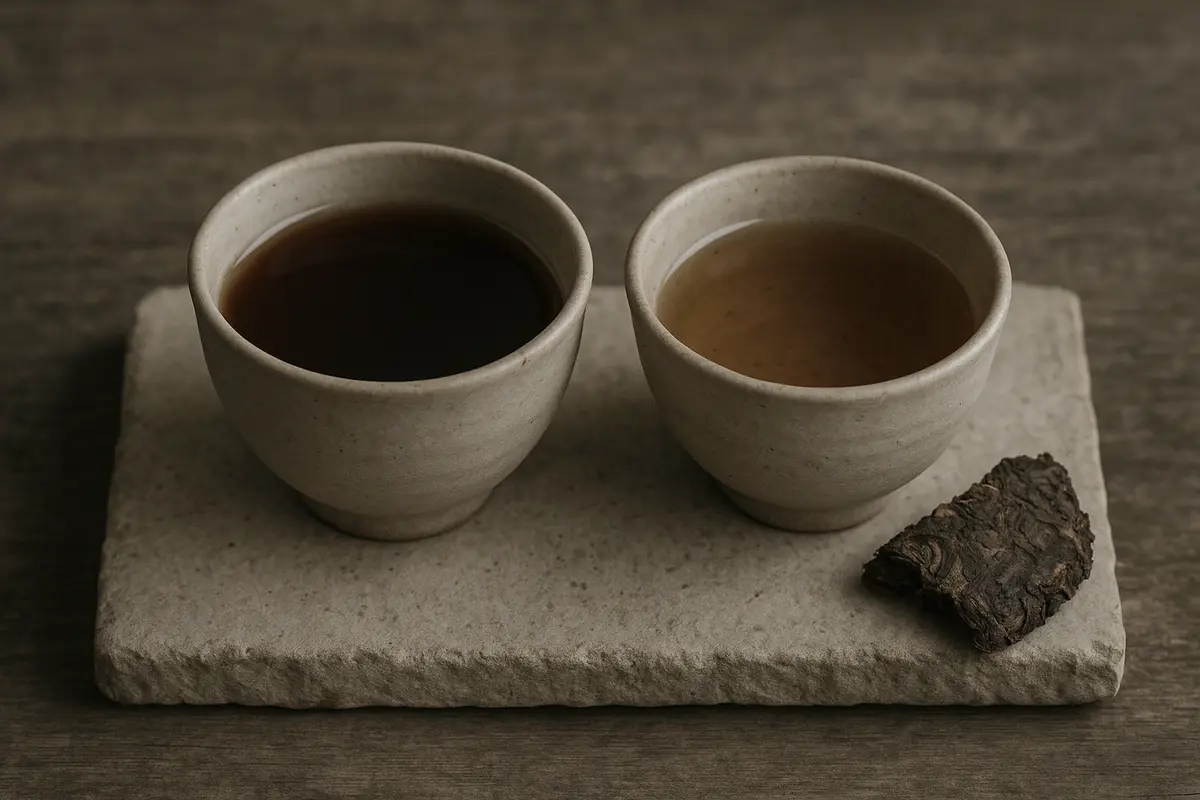
Because most research is on shou, I want to address sheng directly rather than leave you with a misleading equivalence.
Shou pu-erh’s benefits are tied to its pile fermentation—the bacterial and fungal processing that produces theabrownins, increases gallic acid, and generates prebiotic compounds. All of this happens in 45–60 days.
Sheng pu-erh undergoes slow, ambient aging over years or decades. The microbial activity is real but different in character—lower intensity, different organism populations, progressively changing chemical profile as the tea ages. A fresh sheng is chemically closer to a light oolong than to a shou. A 20-year-old sheng has developed its own complex compound profile, but it has not been studied in the same clinical detail. To understand more about how this transformation unfolds, see how pu-erh tea ages.
The honest answer is: we do not know whether sheng delivers the same lipid and microbiome effects as shou. The mechanisms that have been documented for shou may not apply equally to sheng, and the research to resolve this question does not yet exist.
Practical Guidance: How to Drink Pu-erh for Its Benefits
If you want to optimize for the documented benefits rather than the theoretical ones, here is what the evidence supports:
- Drink shou pu-erh as your primary pu-erh choice if you are interested in the lipid and gut microbiome effects specifically.
- Aim for 3–5 cups daily. This is the range used in most positive lipid studies. One ceremonial session with multiple short steeps can easily produce this volume.
- Brew it properly. Gongfu brewing at 95–100°C (203–212°F) with 5–8 grams per 100 ml, with multiple short steeps of 10–30 seconds, extracts the compounds you want. Grandpa style (long-steep, low-ratio) also works for daily volume.
- Drink it plain or with minimal additions. Adding milk or sugar does not nullify the tea’s compounds, but it adds calories and may interfere with polyphenol absorption.
- Be consistent. All positive studies involved daily consumption over weeks. Weekend-only tea drinking is unlikely to produce the documented effects.
- Source clean material. Improperly stored pu-erh can develop mycotoxins from undesirable mold growth. Buy from vendors who can speak to their storage conditions and supply chain.
Is Pu-erh Tea Good for You? A Direct Answer
Yes, with appropriate precision.
Shou pu-erh has meaningful supporting evidence for modest improvements in LDL cholesterol, triglycerides, and gut microbiome composition. These are Tier 1 claims backed by published clinical work. There is emerging evidence for modest weight management support, though effect sizes are small. The gongfu practice itself delivers stress-reduction benefits that are real and behavioral.
What pu-erh does not do: detoxify your body, burn stored fat, prevent cancer, or reverse aging. These claims exist to sell product and are not supported by clinical evidence.
The honest case for pu-erh as part of a health-oriented lifestyle is genuinely good. It does not need embellishment. A beverage with documented lipid benefits, prebiotic properties, and a ritual structure that supports daily mindfulness is worth drinking—assessed honestly, on its actual merits.